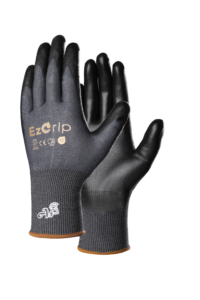
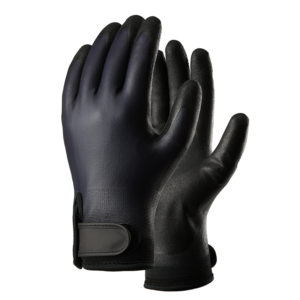
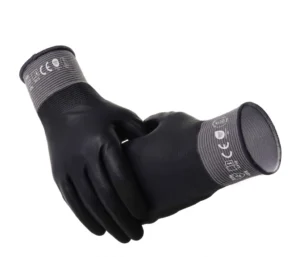
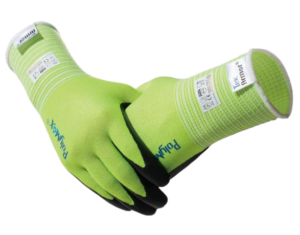
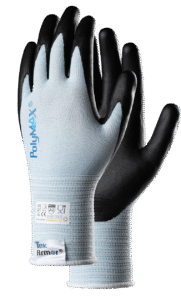
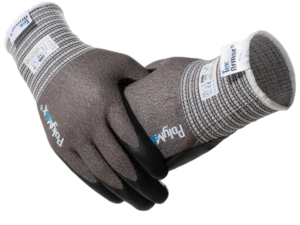
Defend your workforce against severe lacerations and sharp material hazards. Knitted with advanced HPPE, fiberglass, and stainless steel core yarns, our cut-resistant collection delivers certified ANSI and EN388 protection tailored for metal stamping, glass handling, and heavy blade operations.
Working with sharp sheet metal, broken glass, or heavy blades requires absolute confidence in your PPE. At SQG, we engineer our laceration-resistant series using proprietary high-performance polyethylene (HPPE) and our patented TekArmor® fibers. This sophisticated yarn blending process allows us to achieve extreme ANSI A2 to A9 cut ratings while maintaining the flexibility of a bare hand. As a dedicated source manufacturer, we supply the automotive, construction, and manufacturing sectors with reliable, highly dexterous anti-cut solutions that strictly comply with international mechanical hazard standards.
SQG® Engineered Safety Expertise And Technical Compliance Insights Across Zero-Tolerance Industrial Scenarios
Q1: What is the difference between ANSI and EN388 cut ratings?
ANSI (US) measures cut resistance using a scale from A1 to A9 based on the grams of weight needed to cut the fabric. EN388 (Europe) uses a Coup Test (levels 1-5) and a strict TDM-100 test (levels A to F). SQG manufactures gloves that comply with and proudly display both international testing standards.
Q2: What materials actually make the gloves cut-resistant?
We utilize a complex matrix of engineered yarns. The foundational layer is often high-performance polyethylene (HPPE). For extreme hazard levels (ANSI A5-A9), we seamlessly integrate microscopic strands of fiberglass and stainless steel directly into the yarn core, ensuring maximum blade resistance.
Q3: Are these safety gloves considered 100% "cut-proof"?
It is important to note that no fabric is entirely “cut-proof.” They are engineered to be highly “cut-resistant.” They provide a critical, life-saving delay and physical barrier against accidental slicing motions, but they are not designed to withstand deliberate, forceful stabbing or powered moving blades like bandsaws.
Q4: Do higher cut protection levels always result in thick, bulky gloves?
Historically, yes. However, utilizing advanced knitting machinery, SQG now produces ultra-thin 18-gauge cut-resistant gloves that achieve ANSI A3 or A4 ratings. This grants workers exceptional tactile sensitivity for handling tiny, sharp screws without the traditional bulk.
Q5: Which outer coating is best for handling oily, sharp metal parts?
For oily environments like metal stamping or automotive assembly, we highly recommend pairing our cut-resistant liners with a Sandy Nitrile or Micro-foam Nitrile coating. Nitrile resists oil degradation and provides a suction-like grip to prevent sharp metals from slipping out of the hands.
Q6: Can commercial washing ruin the cut-resistant properties?
No. The protective qualities are physically built directly into the core of the HPPE and steel fibers, not sprayed on as a chemical treatment. They are fully machine washable, allowing facilities to reuse them safely and significantly lower their overall PPE procurement costs.
Q7: Do you manufacture cut-resistant options for the food industry?
Yes. We offer uncoated, 100% food-safe cut-resistant knits (often in blue or white) that are easily sanitized. These are heavily utilized in commercial kitchens, meat processing plants, and fisheries to protect workers during rigorous slicing and butchering tasks.
Q8: What customization options are available for wholesale buyers?
Through our comprehensive OEM services, B2B distributors can specify exact cut levels, choose coating materials (PU, Latex, Nitrile), define liner colors to match corporate branding, and print private logos directly on the back of the hand for large-volume orders.