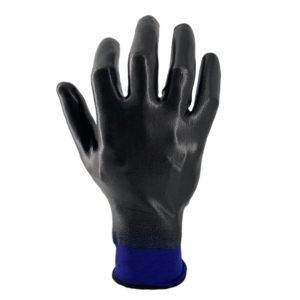
Protect agricultural workers from severe chemical exposure. Formulated specifically for farming and landscaping, our pesticide-resistant gloves deliver a verifiable, liquid-proof barrier for safely mixing fertilizers, spraying crops, and handling toxic agrochemicals.
Handling concentrated crop protection fluids and toxic fertilizers presents severe dermal absorption risks for farmworkers. SQG formulates specialized synthetic rubber gloves—primarily utilizing heavy-duty Nitrile and Neoprene blends—engineered explicitly to comply with the stringent ISO 18889 agricultural standards. These dense, liquid-proof polymers prevent dangerous agrochemicals from permeating through to the skin during mixing, loading, and field spraying. Supplying commercial farming operations and international agro-distributors, our direct-manufacturing capabilities ensure high-volume access to certified, life-saving chemical protection.
KNOWLEDGE BASE
Expert Answers on Agrochemical Hand Protection (FAQs)
Q1: What is the ISO 18889 standard for pesticide gloves?
ISO 18889 is the international standard that specifies the performance requirements for gloves worn by operators handling pesticide products. It ensures the gloves have passed strict chemical permeation and mechanical strength tests specific to agricultural hazards.
Q2: What is the difference between ISO 18889 Level G1 and G2?
Level G1 gloves are designed for handling diluted pesticides (like operating a tractor sprayer) and prioritize dexterity. Level G2 gloves are thicker and engineered for higher risk tasks, such as handling, pouring, and mixing highly concentrated pesticide formulations.
Q3: Why is Nitrile preferred over natural Latex for handling agrochemicals?
Many modern pesticides and agricultural solvents are petroleum-based. Natural latex degrades, swells, and loses its structural integrity when exposed to these chemicals. Synthetic Nitrile offers vastly superior resistance to oil-based agrochemicals and solvents.
Q4: Do you offer extended cuff lengths for spraying applications?
Yes. For overhead spraying or deep mixing, standard wrist-length gloves are insufficient. We manufacture extended 12-inch to 14-inch gauntlets that allow workers to securely tuck their chemical-resistant coverall sleeves inside (or over) the glove, preventing toxic runoff.
Q5: Should farmworkers choose unlined or flock-lined gloves?
Unlined gloves offer maximum tactile sensitivity and are easier to decontaminate inside and out. Flock-lined gloves (lined with fine cotton dust) absorb hand sweat, providing greater comfort during long shifts under the hot sun.
Q6: Can these gloves be reused after handling toxic chemicals?
Yes, but strict decontamination protocols must be followed. Workers must thoroughly wash the outside of the gloves with soap and water before removing them to prevent bare-skin contact with pesticide residue.
Q7: How do workers know when it is time to discard pesticide gloves?
Gloves should be inspected daily. If there are any signs of chemical degradation—such as swelling, cracking, stiffening, or discoloration—or any physical punctures, the gloves must be discarded and replaced immediately.
Q8: What are the bulk purchasing options for agricultural distributors?
As a direct B2B PPE factory, we support global agricultural supply chains. We offer scalable wholesale pricing, flexible MOQs, and private label OEM packaging tailored for large commercial farms, landscaping firms, and agrochemical retailers.