

Sourcing the right level 5 cut-resistant gloves is a top priority for safety managers and procurement professionals looking to eliminate severe lacerations in precision manufacturing and assembly lines. However, the ultimate challenge in safety procurement is balancing high-tier mechanical protection with the tactile dexterity workers need to remain productive. When protective gear is too bulky or stiff, operators secretly remove their gloves to handle small components, driving up workplace injury rates and exposing enterprises to costly liabilities. This comprehensive B2B sourcing guide cuts through the noise to analyze modern ANSI A5 and EN388 standards, evaluate the breakthrough of lightweight 18-gauge composite liners, and provide a data-driven blueprint to help your facility maximize PPE compliance while streamlining annual safety expenditures.
Introduction: The Critical Role of Level 5 Cut Resistant Gloves
In modern industrial manufacturing, automotive assembly, and metal fabrication facilities, hand injuries often occur in the blink of an eye. Every sharp metal edge or shard of broken glass poses a serious threat to the safety of frontline workers.
According to global occupational safety statistics, hand lacerations are not only the most common occupational injury among frontline workers but also the “number one culprit” behind unexpected production line downtime and high workers’ compensation costs for companies. Behind every accident lies a significant loss in terms of time and economic efficiency for the enterprise.
To minimize the risk of injury in these high-risk work environments, Level 5 cut-resistant gloves were developed. As an internationally recognized standard for protection in high-risk operations, they are widely hailed as the “golden line of defense” for workers’ hand safety. Traditional “Level 5 cut resistance” refers to gloves lined with high-performance composite yarns such as ultra-high molecular weight polyethylene (HPPE), aramid (Kevlar), or stainless steel wire, capable of withstanding high-intensity friction and sliding cuts from sharp tools.
However, many companies’ Safety Managers and Procurement Managers often face a dilemma when making bulk purchases: The market is flooded with products claiming to meet “Level 5” standards, but do they actually comply with the U.S. ANSI Cut Level A5 or the European EN 388 Level 5? Even more problematic is that many protective gloves are too bulky, leading workers to secretly remove them because they cannot perform fine motor tasks—thereby creating even greater safety hazards. Therefore, ensuring workers have a comfortable experience with high-dexterity cut-resistant gloves while pursuing ultimate protection is a must-learn lesson for every procurement manager.
Why is simply looking at the word “cut-resistant” far from enough?
Different fabric gauges (such as 13-gauge or 18-gauge) and different palm coatings (such as polyurethane [PU] or nitrile) directly determine how gloves perform when exposed to machine oil, high-temperature sparks, or precision assembly tasks. Choosing the wrong specifications not only fails to provide the necessary protection but can actually reduce work efficiency.
This guide is designed to bridge that information gap. We’ll set aside obscure, dry industry jargon and use hard data, charts, standardized metrics, and multi-dimensional operational comparisons to map out a clear path for B2B procurement and product selection. Whether you’re seeking an extremely durable, oil-resistant solution for a heavy-duty metal stamping shop or a lightweight liner for a precision electronics assembly line, this guide will help you quickly and accurately identify the industrial safety gloves best suited to your specific working conditions. You’ll be able to maintain your company’s safety standards while optimizing your overall procurement costs.
What Does “Level 5” Cut Resistance Actually Mean?
In the occupational safety and protective equipment industry, many people constantly talk about “Level 5 cut resistance,” but if you ask, “Under which standard is this Level 5?” they are often stumped. In fact, there are two mainstream international cut-resistant testing systems: the U.S. ANSI/ISEA 105 and the European EN 388. They use different testing machines, different units of measurement, and even have completely different rating logics. If you only look at the number “5” when purchasing, you are highly likely to end up with the wrong product that does not provide the appropriate level of protection.
ANSI/ISEA 105 Standard: The American Classification (U.S. Standard System)
The U.S. ANSI/ISEA 105 standard measures the vertical weight in grams (g) a straight blade requires to cut through a fabric. To eliminate the overly broad old “Level 5” classification (which lumped everything above 3,500g together), ANSI upgraded to a precise A1 to A9 system in 2016. Under current regulations, the traditional “Level 5” protection precisely aligns with ANSI Cut Level A5, certifying that the glove can withstand 2,200 to 2,999 grams of cutting force. This refinement allows Safety Managers to tailor hand protection accurately to exact workplace hazards.
EN 388 Standard: The European Framework
The European EN 388 standard employs a dual-test method to evaluate mechanical risks. The traditional Coup Test uses a rotating circular blade under constant pressure; a Cut Resistance Index ≥ 20.0 earns the traditional EN 388 Level 5 rating. However, because modern high-performance materials like stainless steel wires or glass fibers quickly dull the rotating blade and distort data, the updated standard mandates the TDM-100 Test (a linear blade method). Measured in Newtons (N) from A to F, true heavy-duty industrial protection is now represented by Level E (≥ 20 N) or Level F (≥ 30 N).
Direct Data Comparison: ANSI vs. EN 388 (Standard Data Comparison Table)
To help procurement managers quickly grasp the specifications when dealing with international suppliers, we have compiled the core data from both systems into the comparison table below:
| Rating System Categories | Core Mark Level | Cutting force tolerance range (quantitative indicator) | Safety Risk Assessment | Typical Applications |
| ANSI / ISEA 105 | Level A5 | 2,200 to 2,999 grams | High-Cut-Risk Environments | Heavy machinery assembly, handling of rough-edged sheet metal |
| EN 388 (Coup Test) | Level 5 | Cutting Index (Index) ≥ 20.0 | Traditional Maximum Protection | General metal machining, scrap metal recycling |
| EN 388 (TDM Test) | Level E | Load-bearing capacity ≥ 20 Newtons | Modern High-Strength Cut Protection | Automotive body stamping, industrial glass manufacturing |
| EN 388 (TDM Test) | Level F | Load-bearing capacity ≥ 30 Newtons | Extreme Mechanical-Risk Environments | Professional heavy-duty meat cutting, high-pressure contact with sharp tools |
Top Industries and Application Scenarios (Core Application Scenarios)
In B2B procurement, simply knowing that gloves meet the “Level 5” standard is not enough. Level 5 cut-resistant gloves face vastly different “additional challenges” depending on the specific working conditions in various industries. Some workshops are filled with heavy machine oil, while certain workstations require extremely high finger dexterity.
Below are four core industrial application scenarios that heavily rely on Level 5 cut resistance. By breaking down hazards into specific job roles, companies can effectively capture long-tail search traffic with clear purchasing intent and select the most suitable industrial safety gloves.
Metal Stamping & Heavy Fabrication
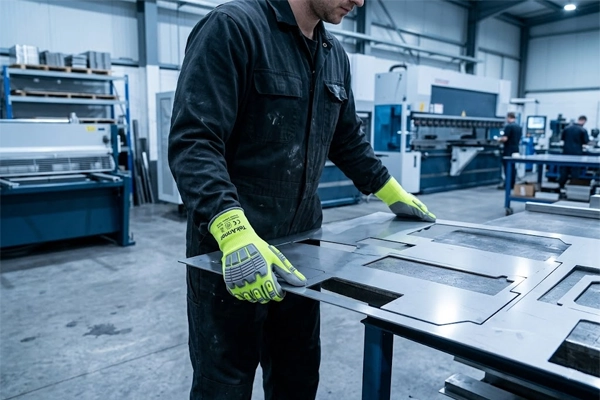
In metal stamping and heavy fabrication shops, workers deal daily with raw metal sheets that have not been deburred, sharp metal scraps, and massive stamping components.
On-the-Job Conditions: When stamped parts are ejected from the die, their edges are extremely sharp and covered with irregular metal burrs. When handling, stacking, or performing pre-welding operations, workers’ palms and fingers are subjected to intense, continuous friction and intermittent impacts.
Key Selection Criteria: The primary challenge here is “high-frequency sliding cuts.” Level 5 cut-resistant gloves used in this scenario must offer exceptional abrasion resistance. A composite yarn lining blended with stainless steel wires is typically recommended to withstand extremely sharp metal edges.
Glass Manufacturing & Logistics (Glass Manufacturing and Logistics/Warehousing)
Glass manufacturing, deep processing, and subsequent logistics handling, loading/unloading, and construction installation are among the industries with the most stringent cut-resistant requirements. Large sheets of flat glass are extremely heavy, and if they slip, the resulting cutting force can be devastating.
On-site Conditions: When handling flat glass, workers’ palms are subjected to heavy compressive forces for extended periods. Even more critical is the risk of severe puncture and deep lacerations that can occur instantly if industrial glass breaks unexpectedly during transport or installation.
Core Procurement Criteria: When selecting glass handling safety gloves, in addition to ensuring compliance with ANSI Cut Level A5, the gloves must provide exceptional grip strength on the palm. If the gloves slip and cause the glass to fall, even the highest cut resistance rating cannot prevent a safety disaster caused by the force of gravity.
Automotive Assembly & Powertrain Shops
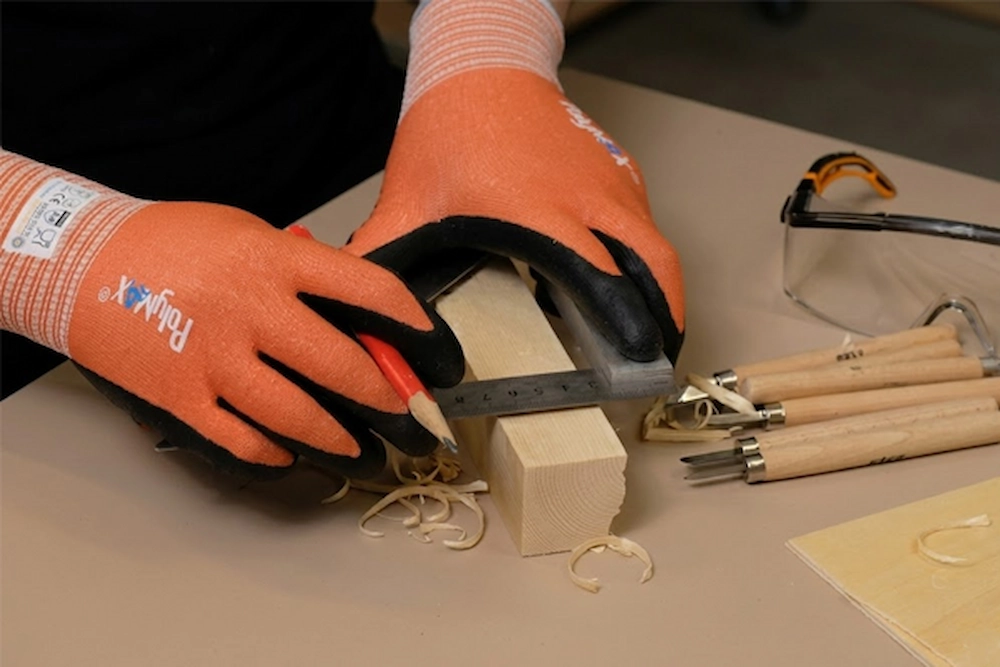
Automotive assembly and engine/powertrain shops are typically “hotspots for oil and grease.” In these environments, cut-resistant gloves must effectively address two major challenges: protection against sharp objects and resistance to liquid penetration.
On-the-Job Conditions: When workers assemble engine components, transmission gears, or handle body panels, their hands come into frequent contact with stamping oil, cutting fluids, and mechanical lubricants. Motor oil quickly penetrates ordinary fabrics, not only making the inside of the gloves sticky but also causing the surface to become extremely slippery, which can lead to tools slipping out of their hands.
Core Procurement Criteria: This scenario is the ideal application for nitrile-coated work gloves. Corporate buyers must select Level 5 cut-resistant gloves with palms coated in foam nitrile or sandy nitrile. This special coating acts like a micro-sponge, repelling and absorbing surface oils to ensure a strong, non-slip grip even when saturated with oil.
Construction & HVAC Duct Installation
Construction sites and HVAC duct installation are typically mobile work environments that place extremely high demands on workers’ manual dexterity.
On-site conditions: HVAC installers must use tools to cut sheet metal, assemble galvanized ducts, and tighten small self-tapping screws. Workers’ hands are not only at risk of cuts from sharp duct edges but also require frequent handling of various power tools and small components.
Key Selection Criteria: If gloves are too thick and stiff, workers cannot grip screws securely, often leading them to remove their gloves and work barehanded for convenience. Therefore, this scenario demands high-dexterity cut-resistant gloves. When purchasing, prioritize high-density, thin cut-resistant liners with 15-gauge or 18-gauge fabric, paired with a lightweight PU coating. This combination provides Level 5 protection while giving workers “bare-hand-like” tactile sensitivity.
Key Materials: What Goes into a Premium Level 5 Glove? (Core Materials and Quality Assurance)
The cut resistance rating is merely a performance metric; what determines a pair of gloves’ weight, comfort, breathability, and heat resistance is the core fiber material used in the knitted lining.
Products on the market that claim to be Level 5 cut-resistant gloves vary vastly in their base materials. For B2B buyers, understanding the following three mainstream cut-resistant fibers is essential to ensure the gloves purchased are perfectly suited for the real-world conditions of frontline production environments.
HPPE (High-Performance Polyethylene) — High-Performance Polyethylene Fiber
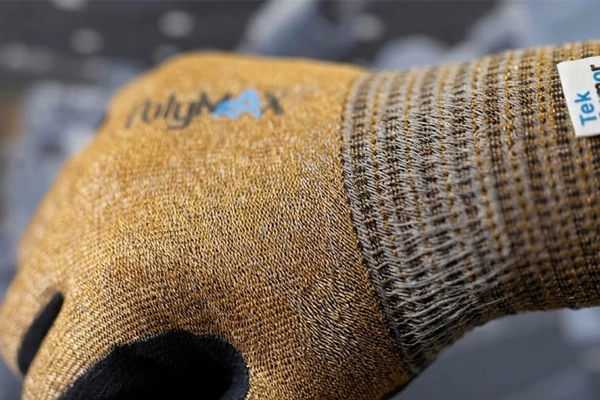
High-Performance Polyethylene (HPPE) is the most commonly used “star material” in modern, high-quality cut-resistant gloves. It is made from ultra-high-molecular-weight polyethylene fibers woven into a high-density fabric, and its molecular structure gives it remarkable tensile strength.
Material Advantages: The most notable features of HPPE are its extremely lightweight, cool feel, and excellent breathability. It overcomes the drawbacks of traditional cut-resistant gloves, which are often bulky and cause sweaty, stuffy hands.
Ideal Applications: It serves as the absolute cornerstone for creating high-dexterity cut-resistant gloves, making it exceptionally suitable for work environments such as automotive parts assembly and precision machinery manufacturing, where gloves must be worn for extended periods and fine finger movements are required.
Limitations: HPPE is not heat-resistant (its melting point is typically around 130°C), so it must never be used in tasks involving contact with high-temperature workpieces.
Kevlar® & Aramid Fibers
Aramid fibers (the most well-known of which is DuPont’s Kevlar®) are widely recognized as military-grade, high-performance synthetic fibers that offer exceptional thermal stability and inherent cut resistance.
Material Advantages: Kevlar® gloves provide robust Level 5 cut resistance while offering inherent heat resistance, spark resistance, and resistance to radiant heat. They do not melt or contribute to combustion. The fiber structure remains stable even during brief contact with sharp tools at temperatures as high as 300°C–400°C.
Ideal Applications: Widely used in metal casting, high-temperature welding, boiler maintenance, and industrial glass manufacturing facilities with hot surfaces.
Stainless Steel Mesh & Composite Yarns —— Stainless Steel Wire and Composite Yarns
When faced with extreme, almost extreme cutting risks, relying solely on synthetic fibers often fails to achieve the highest level of protection. In such cases, “composite yarns”—which are wrapped with ultra-fine metal wires—become the ideal choice.
Material Advantages: This material is created by using micron-sized stainless steel mesh or high-strength glass fiber as a core, tightly wrapped in HPPE or aramid fibers and woven into a composite fabric. It builds a “reinforced concrete”-like defense on a physical level, achieving a quantum leap in cut resistance.
Ideal Applications: Tailored for extreme conditions such as scrap metal recycling, heavy-duty sheet metal stamping, and scenarios requiring direct resistance to the sliding impact of high-pressure, heavy-duty tools.
Inside the SQG Lab: Why We Test Every Batch
At SQG’s manufacturing facility, we understand that a pair of cut-resistant gloves represents the safety of frontline workers and the lifeline of a company’s production. That is why we do not rely solely on third-party certifications on paper.
Every batch of next-generation HPPE composite yarn that leaves the SQG factory must pass rigorous in-house laboratory tests simulating tensile strength and physical cutting resistance before entering mass production. We focus on optimizing yarn density through precise computer-controlled processes. This approach maintains high grip strength and bare-hand dexterity while delivering superior mechanical abrasion resistance that far exceeds that of comparable products, ensuring consistent performance in demanding industrial safety glove applications.
B2B Selection Guide: Balancing Gauge and Palm Coating
In B2B bulk purchasing, selecting Level 5 cut-resistant gloves involves much more than simply looking at the cut-resistance rating label. To truly transform safety protection into productivity, corporate buyers must strike the perfect balance between two key technical specifications: fabric gauge, which determines hand dexterity, and palm coating, which determines adaptability to working conditions.
Only by precisely matching the inner lining material with the outer coating can gloves effectively block sharp objects without becoming a hindrance that reduces worker efficiency.
1. Fabric Gauge and Tactile Sensitivity
In the industrial glove industry, “gauge” refers to the number of stitches per inch. This is an extremely critical physical parameter: the lower the gauge, the thicker the yarn used in knitting, and the heavier the glove; the higher the gauge, the finer the yarn, and the lighter and thinner the glove, with a more refined feel.
Purchasing managers need to understand that protective performance is not simply equivalent to thickness. By utilizing advanced ultra-high molecular weight fibers, high-gauge gloves can still achieve top-tier Level 5 cut resistance. To help you make better gauge selections based on precision requirements, we have compiled the following quantitative technical comparison chart:
| Fabric Gauge | Lining Thickness | Agility Score (1–10) | Path to Achieving Level 5 Cut Resistance | Recommended for Precision Operations |
| 7-Gauge | Very thick and heavy | 3 / 10 | Reliant on thick, heavy-duty weaving using coarse steel wire and coarse cotton yarn | Outdoor scrap metal removal, heavy industrial foundries |
| 13-Gauge | Medium | 7.5 / 10 | High-density HPPE composite yarn lining | Construction sites, general on-site machining |
| 18-Gauge | Very thin and ultra-light | 9.5 / 10 | Top-tier ultra-fine technical fibers (higher cost) | Assembly of precision automotive electronic components, dashboard assembly |
Selecting a high-thread-count lining is a key process in manufacturing high-dexterity cut-resistant gloves, as it allows workers to maintain the same tactile sensitivity as bare hands when tightening small screws or operating touchscreens.
2. Palm Coatings and Environmental Adaptability
If the fabric lining of a glove determines the baseline for its “cut resistance rating,” then the palm coating directly determines the glove’s actual grip strength when exposed to machine oil, water, or chemical fluids.
A bare, uncoated knitted glove is completely defenseless against a steel plate covered in machine oil. When purchasing gloves for different liquid environments, it is essential to select the correct coating material category:
| Coating Material Categories | Grip in Dry Conditions | Grip in oily environments | Abrasion resistance (EN 388 data) | Key Application Benefits |
| PU (Polyurethane) | ⭐⭐⭐⭐⭐ | ⭐ | Approx. 1,000–2,000 cycles | Exceptional breathability and comfort, ideal for precision work in completely dry environments |
| Nitrile (Textured/Foam Nitrile) | ⭐⭐⭐⭐ | ⭐⭐⭐⭐⭐ | Over 8,000 cycles (extremely abrasion-resistant) | Effective barrier against engine oil and cutting fluids, with anti-slip grip |
| Latex (Wrinkled Latex) | ⭐⭐⭐⭐⭐ | ⭐ | Approx. 4,000 cycles | High tear resistance and puncture resistance for outdoor construction applications |
For the automotive industry or workstations where frequent contact with engine oil is required, nitrile-coated work gloves should undoubtedly be the first choice, as their performance in oily environments and their wear resistance are unmatched by other types of gloves.
3. The B2B Procurement Decision Path (Corporate Procurement Selection Decision Path)
Faced with a vast array of PPE product lines, what scientific approach should Safety Managers follow to complete large-scale product selection? To avoid wasting resources due to blind purchasing, companies are advised to establish a closed-loop procurement decision process using the following three-step method:
Step 1: Analyze Potential Occupational Hazards (Hazard Assessment)
First, assess the overall working conditions at the job site. In addition to the core risk of cuts, are there other hazards present, such as machine oil spills, coolant leaks, high-temperature sparks, chemical splashes, or severe mechanical vibrations? Only by comprehensively defining the hazards can the functional boundaries of protection be established.
Step 2: Select the Correct Gauge (Gauge Selection)
Select the gauge based on the precision requirements of different workstations. For heavy-duty palletizing or handling heavy metal scrap, a 7-gauge or 10-gauge glove is sufficient; for general-purpose machining, a standard 13-gauge is appropriate; and for precision assembly or circuit board repair requiring extreme fingertip sensitivity, a 15-gauge or 18-gauge—which involves higher manufacturing costs—is essential.
Step 3: Selecting the Optimal Palm Coating
Make your final selection based on the environmental conditions the skin will be exposed to. If the work environment is completely dry and requires extremely high breathability, select a PU coating; if the work conditions involve environments with engine oil, cutting fluids, or mineral oil lubrication, you must choose an oil-resistant Sandy Nitrile or foamed nitrile coating with strong grip, thereby selecting the safest and most cost-effective industrial safety gloves.
Product Spotlight: SQG 13-Gauge Nitrile-Coated Level 5 Gloves
After navigating the complexities of international cut-resistant standards, material classifications, and the logic behind gauge and coating combinations, the next step for corporate procurement is to find the ultimate solution that perfectly “bundles” these technical advantages.
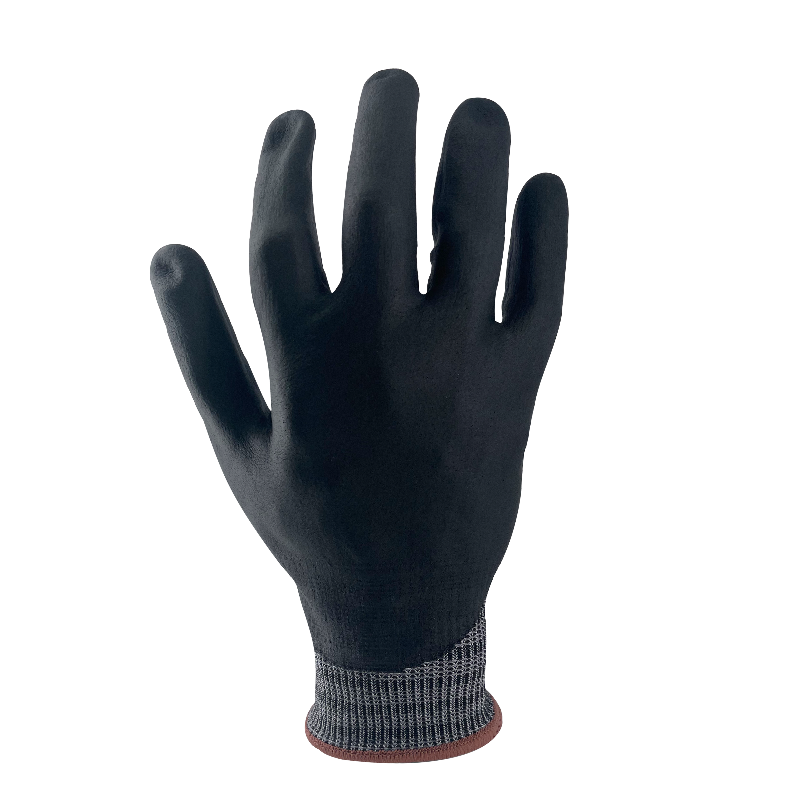
Designed for high-risk, oil-laden environments such as automotive manufacturing, metal stamping, and heavy-duty assembly, SQG’s flagship product—the SQG Industrial 13-Gauge Premium Nitrile Coated Cut Resistant Gloves—is the industry benchmark that seamlessly integrates all top-tier specifications to deliver both superior protection and operational efficiency.
Image: SQG Industrial 13-Gauge Premium Nitrile Coated Cut Resistant Gloves. (Source: Cappi Thompson / Getty Images)
Why Choose SQG Level 5 Gloves?
These gloves are not merely disposable safety supplies, but precision protective equipment specifically designed to address severe mechanical hazards in modern factories:
Double Certified
Traditional cut-resistant gloves often focus on standards for only one specific area, whereas the SQG Level 5 cut-resistant gloves have passed dual high-level cut-resistant safety certifications from internationally recognized authorities: ANSI A5 and EN388 Level 5 (as well as TDM Level E). This means that whether facing the gram-force pressure tests of the North American market or the Newton-force reciprocating cut tests of the European market, these gloves provide frontline workers with a comprehensive, hardcore shield, eliminating compliance risks for businesses.
18-Gauge Seamless TekArmor® Fit
To completely shatter the industry’s long-held belief that “high protection equals bulkiness and stiffness,” the SQG K5-288 innovatively features a revolutionary 18-gauge seamless TekArmor® A5/E liner. Compared to the bulky 13-gauge gloves commonly found on the market, the ultra-fine 18-gauge construction takes the glove’s lightness and snug fit to a whole new level. Combined with precise, anatomically contoured 3D cutting, the glove perfectly wraps around the palm and knuckles, acting as a worker’s “second skin.”
This high-density, thin cut-resistant technology not only provides frontline workers with bare-hand-like dexterity, allowing for smooth and effortless fine motor tasks such as tightening small screws or handling precision components, but also fully supports touchscreen functionality. Employees can operate CNC panels, PDAs, or mobile devices in the workshop without having to frequently remove their gloves, significantly improving operational efficiency in high-risk work environments. While providing top-tier safety protection meeting ANSI A5 / EN388 4X42E standards, it significantly reduces hand muscle fatigue caused by prolonged use of traditional, stiff gloves, encouraging workers to wear them proactively and consistently throughout the workday.
Specialized Sandy Nitrile Coating
Ordinary gloves instantly turn into an “ice rink” when exposed to stamping oil or cutting fluid, but the SQG’s palm features an exclusively developed micro-porous foamed sandy nitrile (Sandy Nitrile) impregnation process. This high-tech coating has a microstructure resembling tens of thousands of tiny sponges, which instantly spread out upon contact with slippery surfaces to absorb surface oil and fluids. Whether on greasy metal stamping workstations or damp automotive assembly lines, it delivers powerful, stable Anti-Slip Grip Strength, eliminating secondary safety incidents caused by tools slipping from the hands at the source.
B2B Procurement Channel: Unlock Your Customized Safety Upgrade
As a source factory specializing in industrial-grade hand protection (Industrial Safety Gloves Manufacturer), SQG not only guarantees high-quality products but also fully supports the OEM/ODM bulk procurement needs of global wholesalers, distributors, and multinational corporations. We offer comprehensive services tailored to your target market or specific production processes, including custom corporate logos, adjusted coating formulations, and proprietary packaging development.
Whether you are upgrading PPE configurations in existing workshops or seeking a long-term, stable supply chain partner, SQG will be your most reliable partner.
Total Cost of Ownership (TCO) for Procurement Managers
In large-scale B2B procurement of personal protective equipment (PPE), procurement managers and finance directors at many companies often fall into a common intuitive trap: mistakenly equating the “unit price of gloves” with the “true cost of procurement.”
However, as corporate decision-makers, it is essential to examine safety budgets from the macro perspective of Total Cost of Ownership (TCO). In harsh industrial environments, gloves are high-frequency consumables. What truly determines the overall annual safety budget is not the price list provided when signing a procurement contract, but rather the “actual daily usage cost” or “cost per wear” for each pair of gloves.
The TCO Evaluation Matrix: How the True Cost of Gloves Is Structured
To help companies see through the “price-gouging trap” behind low-cost, low-quality personal protective equipment, we can break down the true cost of a pair of gloves into the following three key dimensions:
| Cost Component | English Technical Terms (B2B Terms) | Technical Definition and Financial Implications (Definition) | Impact on Total Cost of Ownership (TCO) |
| Unit purchase price of gloves | Unit Price per Glove | The direct ex-factory unit price specified in the procurement contract | Numerator: A lower price may seem like a cost-saving measure at first glance, but it often hides hidden pitfalls such as frequent replacements and repeated purchases |
| Number of wash cycles | Wash Cycles | The maximum number of industrial machine washes the gloves can withstand without a decline in cut resistance | Denominator: A higher number of washes means the lifespan of each pair of gloves is extended |
| Single-use wear life | Lifespan per Wash | The actual number of days the gloves can remain in continuous service under real workshop conditions after each wash | Denominator: A longer duration reduces replacement frequency, which indirectly lowers warehouse management and manual distribution costs |
| Actual cost per day | Cost per Wear | Final financial performance metric: Unit price ÷ (Number of washes × Service life per wash) | Key Takeaway: Multiplying this figure by the number of employees reveals the company’s true annual total expenditure on personal protective equipment (PPE) |
Case Study: Cheap Gloves vs. SQG Premium Gloves (K5-288)
To illustrate the difference more clearly, we’ll use a typical manufacturing workshop with 100 frontline workers as an example to conduct a real-world financial comparison of two common types of Level 5 cut-resistant gloves available on the market:
| Cost Comparison Metrics | ❌ Option A: Low-end, poor-quality cut-resistant gloves | �� Option B: SQG High-Quality Cut-Resistant Gloves (K5-288) |
| Unit Price of Gloves | $2.00 / pair | $10.00 / pair |
| Lifespan per Use | Poorly made; wear life lasts only 2 days | High-density, ultra-durable construction; lasts up to 5 days per use |
| Number of Industrial Wash Cycles | 0 times (shrinks after one wash; cut-resistant fibers degrade immediately) | Withstands 10 cycles of industrial-strength machine washing without loss of protection |
| Total Days of Service (Pairs) | 1 time × 2 days = 2 days | 10 washes × 5 days/wash = 50 days |
| Cost per Wear | $1.00 / day ($2.00 ÷ 2 days) | $0.20 / day ($10.00 ÷ 50 days) |
| Annual Budget Estimate for a 100-Person Workshop | Approx. $30,000 / year | Approx. $6,000 / year (Save $24,000 right away!) |
Financial Conclusion: Cutting Safety Budgets by 80%
Based on the rigorous data comparison above, we can draw a conclusion that may seem counterintuitive but is, in fact, a hard-hitting business reality:
While premium Grade 5 gloves with high wash resistance and abrasion resistance may appear to have a higher unit price at first glance, their exceptionally long service life and outstanding resilience to industrial washing actually reduce a company’s annual comprehensive hand safety budget by up to 80% without the company even realizing it.
For large industrial conglomerates with hundreds or even thousands of workers, the TCO reduction resulting from this material upgrade can directly save the company tens of thousands of dollars in net profit annually. Choosing SQG-grade industrial safety gloves is not only the highest form of respect for employees’ lives but also a high-return investment in corporate assets.
For large industrial groups with hundreds or even thousands of workers, the TCO reduction resulting from this material upgrade can directly save companies tens of thousands to hundreds of thousands of dollars in net profit annually. Choosing SQG-grade industrial safety gloves is not only the highest form of respect for employees’ lives but also a high-return investment in corporate assets.
A Critical Safety Myth: Cut-Resistant vs. Cut-Proof (Safety Myth Alert)
In our discussions with safety managers at companies of all sizes, we’ve identified a particularly dangerous misconception: many people mistakenly equate “cut-resistant” with “cut-proof.” Some procurement personnel even believe that simply equipping workers with Level 5 cut-resistant gloves is equivalent to providing frontline employees with bulletproof vests for their hands.
This is an extremely dangerous misconception and often serves as the trigger for serious workplace accidents.
⚠️ Industrial Safety Warning
In the physical world, there is no such thing as a fabric glove that is absolutely “cut-proof.”
Level 5 or ANSI A5, as defined by international standards, was originally designed and tested to withstand sliding cuts from sharp objects under constant pressure—such as when a hand accidentally brushes against a jagged metal plate or a blade scrapes across the glove’s surface.
In the following extreme environments and high-risk mechanical situations, woven fabric cut-resistant gloves cannot provide absolute protection, and companies must mandate an upgrade to their protective measures:
Powered cutting tools and band saws: When faced with high-speed rotating electric saws, powered cutting tools on press brakes, or shearing machines, fabric gloves not only fail to provide protection but are highly susceptible to fibers getting caught, potentially pulling the worker’s entire hand into the machine and causing devastating entanglement injuries.
High-pressure puncture risks: When exposed to sharp steel needles, pointed awls, or high-pressure direct thrusts, woven fibers—due to their microscopic gaps—are highly susceptible to direct penetration. In such work conditions, be sure to consult safety experts to configure metal mesh or specialized heavy-duty mechanical puncture-resistant protective gear.
FAQ: Frequently Asked Questions
In B2B trade and supply chain management, buyers frequently raise the following key technical questions regarding the post-purchase maintenance and compliance-based customization of Level 5 cut-resistant gloves. We have organized these frequently asked questions (FAQs) to help you capture a wider range of long-tail search intent in Google searches.
Q1: Can Level 5 cut-resistant gloves be washed without compromising their protection?
Answer: Yes, provided the correct washing specifications are followed. Taking SQG’s Ace gloves as an example, because we use high-quality HPPE fibers with naturally stable chemical and physical structures, they fully support standard industrial laundering. Even after 10 wash cycles, their cut resistance remains unchanged.
Key Washing Tips: When washing Level 5 cut-resistant gloves, be sure to avoid using chlorine bleach. Chlorine rapidly degrades the molecular chains of high-performance fibers such as HPPE or Kevlar, causing a drastic drop in cut resistance. We recommend using a neutral detergent and drying at low to medium temperatures (no higher than 60°C).
Q2: How do I specify OEM requirements for custom cut-resistant gloves?
Answer: Our international trade and business management team can fully assist you with the entire process of overseas customization. As a source manufacturer (Industrial Safety Gloves Manufacturer) with core proprietary technology, SQG possesses an extremely flexible supply chain system.
We support comprehensive OEM/ODM customization services across the following parameters:
Fabric Gauge: You can freely specify different liner densities—such as 7-gauge, 13-gauge, 15-gauge, or 18-gauge—based on specific working conditions.
Special Coating Formulations: Customizable options include oil-resistant, high-grip Sandy Nitrile, foamed nitrile, ultra-thin polyurethane (PU), or abrasion-resistant latex.
Corporate Branding: We support customization of your exclusive corporate logo on the back of the hand, adjustments to product color schemes, and the development of custom bulk B2B packaging that complies with local market regulations.
Q3: Are these nitrile-coated gloves suitable for direct food handling?
Answer: Absolutely not. This is a very common procurement mistake. Gloves like those marketed by SQG, featuring industrial nitrile coatings, are specifically designed for industrial environments involving machine oil and heavy wear, such as machining, automotive manufacturing, and warehousing/logistics. The industrial additives in the coating do not meet food-grade compliance standards.
If you are seeking Level 5 cut-resistant gloves for food portioning, slaughterhouse processing, and kitchen preparation, the target product must have explicit FDA food-grade compliance certification. Such food-grade cut-resistant gloves are typically made of pure composite fabric without any palm-side dip coating, or they are metal gloves woven directly from food-grade stainless steel mesh to facilitate high-intensity disinfection and sterilization.
Conclusion & Call to Action for B2B Partners
Selecting the ideal pair of Level 5 cut-resistant gloves is no easy task. It is not merely a simple procurement of goods but a micro-scale safety project that concerns the lives of frontline workers and the operational compliance of businesses.
As we have thoroughly analyzed earlier, companies must comprehensively weigh international test data (such as the U.S. ANSI Cut Level A5 and the European EN388 Level 5), the degree of exposure to engine oil and other fluids in the work environment, and the direct impact of glove gauge on tactile sensitivity. Only by achieving a scientific match between the inner lining fibers and the outer coating can companies truly establish a flexible defense line that balances “absolute safety” with “efficient production.”
Partner with SQG: Factory-Direct Industrial Safety Solutions
As a specialized B2B industrial protective glove manufacturer with deep expertise in hand safety, SQG (sqgsafety.com) has long been committed to providing high-standard, reliable, and customized hand protection solutions to global wholesalers, distributors, major PPE suppliers, and procurement groups of large multinational corporations. We fully understand the cost challenges and technical barriers faced in global supply chain procurement, which is why we consistently prioritize quality control from the source.
We boast a comprehensive international trade service system and a team of seasoned international trade professionals. Led by our Business Manager, Lina, our dedicated commercial team offers one-stop OEM/ODM customization and sample development services:
Custom fabric gauge: Flexibly customize 7-gauge, 13-gauge, 15-gauge, or 18-gauge fiber linings to suit your specific precision tasks or heavy-duty environments.
Adjustment of specific coating parameters: We fine-tune the impregnation processes for Sandy Nitrile, foamed nitrile, latex, or polyurethane (PU) to meet your workshop’s requirements for oil resistance, abrasion resistance, or puncture resistance.
Exclusive Brand Visuals: We support comprehensive proprietary brand logo branding (Heat Transfer/Silk Screen) as well as the development of proprietary B2B wholesale packaging that complies with local regulatory requirements.
Whether you are seeking to improve the cost-effectiveness of PPE in your workshop, reduce overall workplace injury risks, or are looking for a long-term, stable, and responsive high-quality Chinese supply chain partner with direct factory sourcing, SQG will support you with rigorous testing data and flexible customization capabilities.


