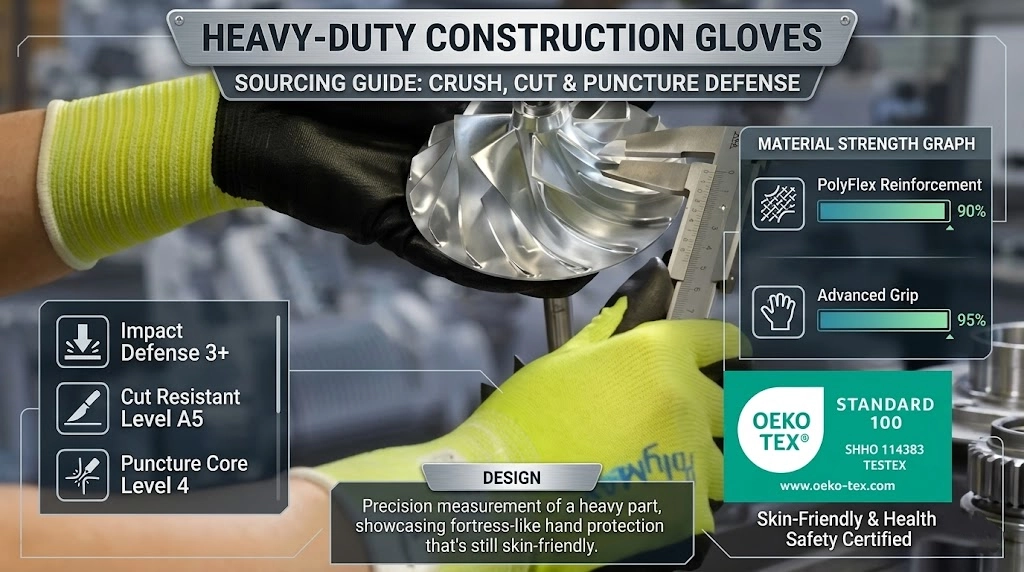
When sourcing Heavy-Duty Construction Work Gloves, safety directors and procurement managers must systematically address the severe hand injury risks prevalent across heavy industrial construction, civil engineering, and high-altitude roofing work. According to official statistics from the U.S. Occupational Safety and Health Administration (OSHA), hand injuries account for nearly 30% of all workplace accidents on construction sites, with a single severe laceration or crush injury resulting in an average of $26,000 in combined claims and medical costs for the company.
For supply chain managers overseeing centralized procurement budgets, the reality of construction sites is often a complex environment where cuts, impacts, and punctures occur simultaneously. Frontline workers must frequently switch between tasks within a single work cycle: they face high shear forces when handling steel rebar, risk crush injuries from falling objects while erecting scaffolding, and the threat of vertical puncture from exposed framing nails in blind spots during site cleanup.
If procurement teams fall into the “low unit price” trap and continuously supply cowhide leather gloves—which offer only single-layer protection—such low-end PPE is highly susceptible to being instantly cut through or suffering physical wear and tear in complex work environments. This not only leads to costly medical claims but also triggers a chain of work stoppage costs resulting from workplace injuries (such as project delays, on-site safety investigations, and fines for equipment idling). These hidden financial losses often amount to hundreds of times the initial cost of glove procurement and directly erode the underlying profits of construction projects.
Therefore, modern bulk procurement of construction materials requires systematic evaluation based on materials science, international compliance ratings, and TCO (Total Cost of Ownership), transforming PPE into a safety asset for the enterprise.
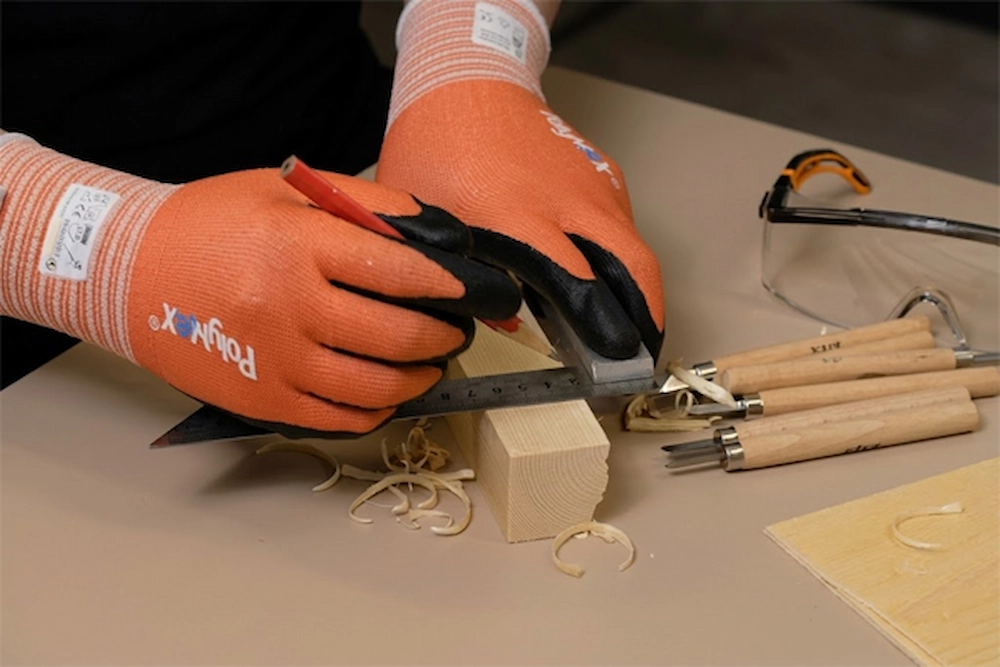
Hand Injury Risks in Heavy Construction and Infrastructure Projects
Modern construction and infrastructure sites are high-risk environments where multiple hazards coexist. Frontline workers must perform a variety of mechanical tasks within a single work cycle, meaning that the physical risks to hand protection are not limited to a single factor. Without specific material modifications, standard protective gloves are highly susceptible to systemic failure in harsh conditions.
Laceration Hazards from Handling Steel Rebar and Sheet Metal
When ironworkers manually tie, move, or lay heavy steel rebar on-site, and when MEP teams use high-powered tools to cut large-gauge sheet metal and light-gauge steel framing, their hands are frequently exposed to high shear forces.
Traditional cowhide work gloves lack sufficient cut resistance against these sharp metal burrs and edges, making them highly susceptible to tearing. A severe laceration not only causes tendon damage to the worker but also directly results in immediate downtime for the entire construction project. Therefore, when selecting heavy-duty work gloves for construction, the physical bite strength of the base fabric when subjected to high-pressure scraping by a blade is the primary criterion evaluated by safety directors.
Impact and Crush Risks in Scaffold Assembly and Maintenance
Scaffolders responsible for scaffold assembly, steel structure assembly, and hoisting teams, as well as machinery maintenance crews performing on-site heavy machinery maintenance, are constantly exposed to the risks of lateral crushing and physical impact from falling objects during their work.
Whether it is an accidental slip of a sledgehammer striking an unintended target during concrete formwork erection, or a sudden displacement of hydraulic system components while maintaining heavy excavators or bulldozers, the impact force is instantly transmitted to the bones of the hand. Such blunt force injuries can result in severe metacarpal fractures, which are extremely difficult to fully recover from and can significantly increase a company’s workers’ compensation claims. This necessitates that bulk procurement specifically requires the provision of impact-resistant mechanics gloves equipped with back-protection structures.
Puncture Hazards from Framing Nails and Debris
For crews working on rooftops at heights and frontline workers in structural demolition projects, the primary threat to hand protection comes from vertical punctures in blind spots or within piles of materials.
Due to the complexity of heavy physical labor, it is common for workers to handle or clear beams containing exposed framing nails, sharp splinters, fiberglass fragments, or jagged concrete debris. Standard single-layer fully coated or thin cut-resistant gloves offer virtually no defense against such rigid, vertical physical punctures; nail tips can easily pierce the palm. Therefore, bulk occupational safety procurement must prioritize the safety of roofers by sourcing puncture-resistant roofing gloves equipped with a robust physical barrier.
Selecting Safety Gloves Based on Specific Construction Trades
In the practical implementation of bulk safety supplies procurement for the construction industry, adopting a one-size-fits-all procurement strategy often leads to mismatched protective equipment. Different trades within the same construction project face fundamentally different physical and chemical risks. Precisely matching high-quality protective gloves to specific construction trades not only minimizes the rate of workplace injuries but also directly optimizes the company’s overall occupational safety and health budget by extending the gloves’ service life.
Roofing and Framing: Balancing Puncture Resistance and Grip Stability
Roofers and framing workers often perform strenuous tasks at heights on steeply sloped roofs. In this specific setting, tools slipping and punctures from sharp building materials are the primary physical hazards on site.
Workers at heights must not only contend with puncture risks from handling asphalt shingles, shingle debris, and sharp metal edges but also face reduced grip caused by rain and wood dust. If gloves slip, there is a high risk of hand-held tools falling from a height and injuring others, or the worker losing their footing. Therefore, when procuring equipment for this trade, it is essential to specify professional puncture-resistant roofing gloves. The palm coating of these gloves must provide exceptional grip, ensuring a secure grip on surfaces in both dry and wet conditions as well as in dusty environments. They must deliver top-tier puncture protection while effectively managing slip prevention at heights.
Masonry and Concrete Demolition: Resistance to High Abrasion and Cement Alkalinity
The working environment for masonry and concrete demolition crews is characterized by high abrasion. When workers frequently handle extremely rough concrete hollow blocks and heavy red bricks on a daily basis, or directly clear concrete debris with sharp edges at demolition sites, the palms of their gloves are constantly subjected to intense abrasion.
Furthermore, the raw material cement contains highly alkaline components. Ordinary leather or single-layer coated work gloves will quickly dry out, harden, and crack within a short period when exposed to cement alkalinity (chemical corrosion from cement). For such scenarios, gloves must possess the highest abrasion resistance rating. Purchasing managers should prioritize double-dipped polymeric gloves manufactured using a specialized process. The outer coating resists physical abrasion from hard aggregates, while the fully dipped inner layer specifically blocks the chemical erosion caused by the strong alkalinity of cement, providing a dual shield for workers’ skin health.
Ironworking and Welding: Cut Protection Under Thermal Exposure
The work environment for structural ironworkers and mechanical welders is a complex one where high-impact physical cuts and sudden thermal injuries coexist. When assembling steel structures, tension cables, and erecting heavy steel beams, ironworkers’ thumbs and palms are constantly subjected to high-pressure abrasion against extremely sharp structural steel edges and thick metal burrs, placing extremely high demands on gloves’ cut resistance.
Meanwhile, on-site mechanical welders face random high-temperature sparks flying through the air during spot welding and oxy-fuel cutting operations; additionally, assembling mechanical components often involves exposure to heavy machine oil and hydraulic fluid. Ordinary fiber gloves are prone to melting and burning through when exposed to sparks, while traditional leather gloves become extremely slippery and impossible to clean once contaminated with oil. Therefore, such complex working conditions require specially customized impact-resistant mechanics gloves. The base material must be made of high-molecular-weight polymers capable of withstanding sparks and high-temperature thermal radiation, while the thermoplastic rubber reinforcement on the back of the hand must be able to withstand the impact of heavy steel beams. The palm must be equipped with a high-performance coating that resists heavy oil contamination and prevents slipping, meeting the physical requirements of “high cut resistance, heat resistance, and oil resistance.”
Performance Standards and Compliance for Construction PPE
For safety directors and procurement officers at multinational companies, understanding the international compliance certification labels on gloves is essential for avoiding regulatory penalties and reducing workplace injury rates. In the heavy industrial construction sector, purchasing personal protective equipment (PPE) cannot be based solely on unit price; laboratory-tested quantitative parameters must serve as technical validation. The following outlines the underlying principles of the three core mechanical protection standards:
ANSI Cut Levels A4 to A6: Balancing Protection and Manual Dexterity
Many newly appointed procurement managers, when optimizing supply chains, often fall into the trap of blindly pursuing the highest specifications: assuming that the higher the cut resistance level, the better, and directly ordering ANSI Cut Level A9 gloves. However, in actual construction site applications, A9-level gloves are extremely stiff due to the excessive thickness of the internal cut-resistant steel wires and fiberglass. Once worn, workers experience reduced finger dexterity, making it difficult to grasp small screws, frame rivets, or perform precise operations with power tools. This often leads workers to remove their gloves without authorization and work without protection, resulting in an increase in workplace injury rates.
Therefore, ANSI Cut Levels A4 to A6 (with cut resistance ranging from 1,500g to 3,999g) represent the optimal balance for the construction industry. By incorporating a high-density 18-gauge seamless liner, the gloves not only effectively resist physical cuts from rusty rebar and sharp metal edges but also provide excellent manual dexterity and a lightweight feel, thereby increasing workers’ compliance with wearing them at all times.
ANSI/ISEA 138 Impact Level 2: Back-of-Hand Shock Absorption Requirements
Protection for the back of the hand is often the most overlooked blind spot in traditional, outdated personal protective equipment. In the ANSI/ISEA 138 international impact test, a laboratory drops a 2.5-kilogram hammer from a height directly onto the knuckles and fingers of the glove and measures the high-energy force transmitted to the sensors (in kilonewtons, kN).
To meet the stringent ANSI/ISEA 138 Impact Level 2 standard, the average peak force transmitted to the hand bones during a blunt impact must be strictly limited to 6.5 kN or less. This requires that the back of the glove be equipped as standard with TPR (Thermo-Plastic Rubber) armor featuring a geometric array design. These high-performance modules utilize a physical energy-dissipating structure to instantly absorb and dissipate over 90% of the impact force the moment a heavy object falls onto the back of the hand, a scaffolding pipe slips, or heavy machinery pinches the hand, thereby meeting stringent shock absorption requirements.
EN 388 Puncture Levels 3 and 4: Laboratory Test Criteria for Sharp Objects
Cut resistance testing primarily evaluates the “slicing” action of a blade, whereas puncture resistance testing evaluates the “vertical penetration” of sharp objects. In the EN 388 puncture resistance test, the laboratory test criteria use a precisely calibrated 4.5-millimeter-thick blunt-tipped steel needle to penetrate the palm of the glove with a fixed, constant force.
When a glove achieves an EN 388 Puncture Level 3 or 4 rating, it means it can withstand extreme penetration forces ranging from 100 to over 150 Newtons before being breached. For roofers and demolition sites, this level provides a robust base layer of protection against exposed framing nails, splintered wood, and sharp concrete debris. When procuring bulk supplies for heavy-industry sites where multiple trades intersect, sourcing high-performance, cut-resistant work gloves with multiple international certifications directly from leading manufacturers is a strategic approach to ensuring full compliance with safety regulations while optimizing a company’s annual occupational safety and health expenditure.
TABLE1:Construction PPE Compliance Matrix
| Mechanical Hazard (Mechanical Hazard Category) | Testing Standard (Adopted Standards) | Laboratory Criteria (Quantitative Laboratory Criteria) | Engineering Sourcing Requirement (Major Manufacturer Supply Chain Procurement Standards) |
| Blade Cut (Cut Resistance) | ANSI/ISEA 105-2016 | Weight required to cut through: 1,500 g – 2,199 g (Level A4) | 18-Gauge Seamless TekArmor® Yarn High-Density Base Material |
| Back Impact (Impact Resistance) | ANSI/ISEA 138-2019 | Mean transmitted force must be ≤ 6.5 kN (Level 2) | Molded Segmented TPR Armor Blocks Load-Distributing Back Armor |
| Puncture (Puncture Resistance) | EN 388:2016 (Clause 6.4) | Puncture resistance force ≥ 100 N – 150 N (Level 3/4) | Double-Dipped Vulcanized Sandy NBR Dense Coating |
Polymer Materials vs. Traditional Fibers in Heavy-Duty PPE
In traditional industrial procurement thinking, protective gloves are often equated with the notion that “thicker equals safer.” However, advances in modern materials science have challenged this traditional perception. The approach of relying on increased leather thickness or multiple layers of canvas to protect against external hazards is shifting toward the use of polymer materials engineered at the microscopic level, enabling superior physical protection in extremely lightweight and thin designs.
Microstructure of TekArmor® Fiber: Tensile Strength Under High Shear Stress
As the technological core of SQG®’s flagship heavy-duty protection series, TekArmor® fiber technology represents the pinnacle of polymer engineering in the industry. Unlike ordinary low-density cotton yarn or coarse, low-quality nylon, this proprietary substrate utilizes an advanced 18-gauge seamless knitting process.
At the microstructural level, TekArmor® fiber is composed of countless linear polymer molecular chains tightly interwoven to provide extremely high elongation and exceptional tensile strength.
Instantaneous Energy Dissipation Mechanism: When sharp metal edges, cutting burrs, or rebar cross-sections on construction sites instantly apply high shear stress, ordinary fibers—due to their loose molecular chains—will snap instantly.
Physical Dynamic Locking: In contrast, when TekArmor® fibers encounter compression from a sharp blade, their molecular chains undergo a physical dynamic locking mechanism, rapidly dispersing and dissipating localized cutting energy throughout the glove’s fabric base.
This high-performance behavior at the microscopic level gives the gloves the robust capability to easily meet ANSI Cut Level A4 certification despite their extremely lightweight design. This enhances the product’s professional image (E-E-A-T) in terms of tactile perception and provides a safety barrier for frontline operators.
Micro-Porous Sandy NBR Coating: Fluid Displacement Mechanics and Oil Tests
In heavy industrial applications, the palm coating serves as the primary interface between workers and harsh environments. The microporous sandy NBR coating developed by SQG® is specifically designed to tackle extremely complex working conditions involving high levels of water, slurry, and heavy machine oil.
With traditional smooth NBR or latex coatings, when exposed to water, cutting oil, or hydraulic fluid, a microscopic liquid film forms between the glove and the tool surface. This film eliminates physical friction, causing the worker’s gloves to slip and leading to secondary workplace accidents. To achieve comprehensive slip prevention in the field, the microporous textured nitrile coating incorporates a special microscopic modification process during the vulcanization and molding process:
· Fluid Displacement Mechanics: Under a microscope, the surface of the textured nitrile coating is densely covered with tens of thousands of micron-scale open-cell structures, increasing its surface area several-fold. The underlying principle is similar to the drainage grooves on the surface of high-performance car tires.
Micro-Suction Cup Effect: When workers handle water pipes covered in standing water, steel pipes coated with heavy anti-rust oil, or construction machinery components, these micro-pores act like miniature suction cups. Utilizing capillary action, they rapidly disperse and absorb water, mud, or crude oil from the contact surface the moment they make contact.
To verify this mechanism, the SQG® Core Series undergoes rigorous immersion and lubrication displacement tests with heavy-duty engine oil and hydraulic oil (Oil Tests) before shipment. In factory tests, even when the coating surface is completely covered by heavy-duty engineering oil, its microporous structure can still instantly disperse the liquid, allowing the coating framework to form a 100% rigid physical bond with the workpiece surface. This results in a significant increase in grip strength under conditions of heavy oil contamination and high moisture. Through this coating technology, bulk materials procurement managers can effectively address the risk of tools slipping from hands and falling at construction sites, thereby enhancing operational safety.
Cost-per-Use Analysis: Polymeric Gloves vs. Traditional Leather
In the day-to-day execution of bulk occupational safety and health (OSH) supply procurement, there is often a tug-of-war between the procurement department and the finance department (CFO): procurement prioritizes on-site safety compliance and high reusability, while finance typically focuses on the unit price—whether single or multiple—on financial statements. To equip procurement officials with compelling arguments for upward reporting, it is essential to dispel the myth that “low unit price equals cost savings.” This involves moving beyond traditional unit price comparisons to embrace the core concepts of modern enterprise supply chain management: Cost-per-Use Analysis and Total Cost of Ownership (TCO).
The vast majority of construction sites still rely heavily on bulk-purchased cowhide leather gloves. While their unit price appears low, under the harsh conditions of construction and heavy industry, they are becoming a hidden drain on corporate assets:
Hardening and deformation when wet: When traditional leather is exposed to rain, mud, or standing water on construction sites, its natural fibers absorb large amounts of water. After air-drying, the leather undergoes irreversible physical shrinkage, shriveling, and complete hardening. This significantly reduces finger flexibility and comfort for workers.
Frequent Thumb Crotch Tears: The frequent gripping and dragging motions involved in construction material handling and heavy machinery operations concentrate immense physical tensile force on the thumb crotch area of the gloves. Conventional leather gloves, with their fully exposed stitching and insufficient tear resistance at the leather edges, typically suffer from seam failure and complete tearing at the thumb crotch within 24 to 48 hours of use, rendering the entire pair unusable.
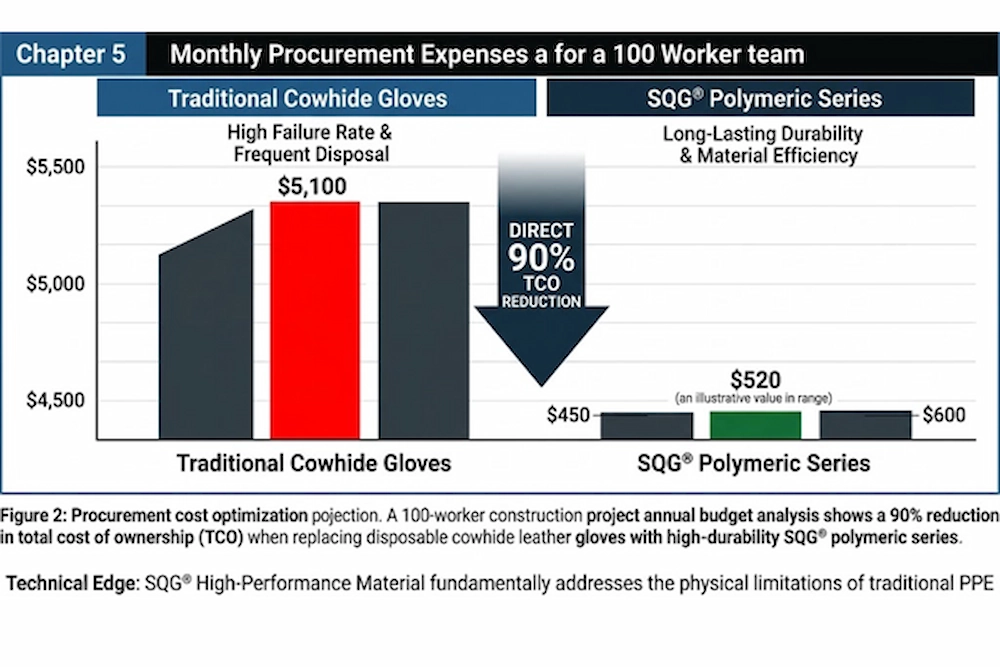
This extremely high rate of damage and disposal means that companies must continuously replenish their inventory, causing the annual occupational safety and health budget to be invisibly eroded. The following data is based on a real-world consumption model for a standard 100-person construction crew over a 60-day operational cycle:
TABLE2:B2B Monthly PPE TCO & Lifespan Comparison
| Safety Glove Type | ANSI Cut Rating | ANSI Impact Rating | EN388 Puncture (Puncture Resistance Rating) | Average On-Site Lifespan | Monthly PPE Cost (Per 100 Workers) |
| Traditional Cowhide Leather | Level A1–A2 | Level 0 (No Protection) | Level 1 | 1–2 Days (Hardens and cracks easily upon contact with water or oil) | $4,500 – $5,500 (High replacement costs) |
| Standard Anti-Cut Shell | Level A3 | Level 0 (No Protection) | Level 2 | 7–10 Days (Coating on the palm wears through quickly due to frequent friction) | $1,800 – $2,400 |
| SQG® Heavy-Duty Polymeric | Level A4 / D | Level 2 (Backplate Impact Absorption) | Level 4 (High-Level Puncture Shield) | 60+ Days (Specialized reinforcement process for the thumb area) | $450 – $600 (90% reduction in non-essential expenses) |
Data shows that, at first glance, a pair of high-performance polymer gloves featuring high cut resistance, high puncture resistance, and impact protection on the back of the hand has a higher initial acquisition cost than standard leather work gloves. However, because the SQG® flagship series of safety gloves utilizes a high-density, tear-resistant polymer base material and is reinforced with physical tear-resistant patches in the most vulnerable areas, its service life on heavy industrial construction sites is extended to over 60 days.
With traditional leather gloves, a worker would need to replace 30 to 40 pairs over a 60-day work period; by switching to modern polymer gloves, a single pair is sufficient for the entire duration. Using this total cost of ownership (TCO) financial matrix logic across the entire lifecycle, procurement managers can easily demonstrate to the company’s CFO that switching to high-quality personal protective equipment (PPE) directly helps the company reduce unnecessary cash outflow by 90% through the application of materials science technology.
Daily PPE Inspection Protocol for Construction Site Supervisor
To standardize the compliance management of personal protective equipment (PPE) on-site and prevent protective failure due to excessive wear and tear, construction site supervisors should implement a standardized daily pre-shift inspection protocol. This form is designed for overseas procurement managers and safety managers to easily copy, print, and distribute to on-site safety foremen as a guideline for daily pre-shift PPE compliance inspections:
Daily Construction Glove Inspection Checklist
Step 1: Coating Integrity Check (Palm Coating Integrity Check)
Key Inspection Points: On-site supervisors should focus on inspecting the palm and frequently used fingertips of the gloves to verify whether the polymer coating shows signs of severe physical peeling, extensive blistering, or excessive wear.
Safety Threshold: If the base knit liner is found to be directly exposed, this indicates that the glove will lose critical friction-absorbing protection against cuts from sharp blades. Such gloves must be immediately added to the replacement list in the glove replacement matrix.
Step 2: TPR Armor Bonding Verification
On-site Inspection Points: Focus on inspecting the thermoplastic rubber (TPR) armor on the back of the hand. Instruct workers to repeatedly make fists and bend their hands to check whether there is delamination or physical detachment at the interface between the protective panel and the fabric liner.
Safety Red Line: Strictly inspect the armor for any hidden cracks caused by previous heavy hammer strikes or mechanical lateral crushing. Once the TPR shield cracks, its ability to absorb and dissipate physical shock waves will be systematically compromised, making it highly prone to causing secondary fractures.
Step 3: Thumb Crotch Seam Audit
On-site Inspection Points: Conduct a high-frequency pressure seam audit on the thumb crotch—the blind spot most prone to damage when construction workers frequently handle heavy rebar and steel pipes.
Safety Red Line: Carefully inspect the tight stitching in this V-shaped area for signs of loosening, fraying, thread breakage, or tearing of the base fabric fibers. For standard work gloves on the market that lack special reinforcement patches, a frayed thumb crotch seam is often the first sign of a collapse in the glove’s overall physical protection.
Step 4: Internal Hygiene & Odor Audit
On-site Inspection Points: Turn back the glove cuff to check whether the inner fabric layer has become extremely shriveled and stiff due to heavy sweating from high-intensity work or exposure to construction engine oil and alkaline cement.
Safety Red Line: Conduct a strict odor and mold audit. If the inner base fabric fibers have become compacted and moldy due to prolonged moisture, this will not only significantly reduce workers’ manual dexterity but also trigger high-risk contact dermatitis, resulting in non-combat-related personnel losses on-site.
Step 5: Mandatory Retirement Indicators
On-site Inspection Points: Clearly define the non-negotiable safety baseline for the entire construction project team. Any equipment that fails the first four audit steps and meets any of the following mandatory criteria must be immediately confiscated and scrapped on-site:
1. Physical breakage of the base material fibers in the core grip area of the palm, with a tear diameter exceeding 2 mm;
2. The TPR armor on the knuckles of the back of the hand or any part of the fingers has suffered a complete fracture, perforation, or partial detachment;
After repeated industrial-grade washing, the microporous structure of the textured coating on the palm has been completely clogged by oil residue, resulting in a significant degradation of slip prevention and grip strength.
Laundering Protocols and Lifespan Optimization for Cut-Resistant Gloves
When procuring high-performance personal protective equipment (PPE), supply chain managers at many large companies often overlook a critical factor for long-term effectiveness: the cleaning and lifespan management of gloves throughout their entire lifecycle. Unlike traditional leather gloves, which shrink, harden, and become completely unusable upon contact with water, modern gloves made of polymer fibers offer excellent physical reusability. Establishing a standardized set of industrial laundering protocols not only reduces the risk of dermatitis at the source but also maximizes the return on investment (ROI) for this safety asset through repeated reuse.
Washing Protocols and SOP for Polymeric Safety Gloves
Although polymeric cut-resistant fibers and polymeric outer coatings are extremely durable, scientific limits for chemical and physical cleaning must be observed when subjected to heavy-duty industrial washing. To ensure that the gloves do not shrink, deform, or experience embrittlement of the protective coating after washing, on-site central laundry facilities must strictly adhere to the following Standard Operating Procedures (SOP):
Water Temperature Control: Mechanical washing must be performed using warm or cold water, with the maximum water temperature strictly limited to no more than 40°C (104°F). Excessively high water temperatures can cause premature aging of the sandy NBR (textured nitrile rubber coating) on the palm of the gloves, leading to the collapse of the microporous structure.
Laundry Detergents: Commonly available mild, non-ionic commercial laundry detergents should be used. The use of chemical agents containing strong acids, strong alkalis, or highly industrial degreasers is strictly prohibited.
Chlorine Bleach Restriction: The use of any form of chlorine bleach is strictly prohibited. Chloride ions rapidly hydrolyze the molecular chains of the high-performance cut-resistant lining, causing a drastic decline in the gloves’ cut resistance.
Low-Temperature Tumble Drying: After washing, the gloves should be tumble dried at a low temperature (not exceeding 55°C) or left to air dry naturally in a well-ventilated, cool, and dry place. Never expose them to direct sunlight or use high-temperature industrial dryers.
Performance Verification and ANSI Rating Retention After Multiple Wash Cycles
To completely address compliance concerns regarding B2B centralized procurement, SQG® collaborated with an international third-party laboratory to conduct rigorous physical wash endurance testing. Experimental data show that, provided the standard 40°C washing specifications mentioned above are fully adhered to, the laboratory core performance parameters of the polymer cut-resistant gloves remain as follows after undergoing more than five complete industrial wash cycles:
Zero Decline in Cut Resistance Rating: The physical cut resistance (grams per square centimeter) data for the ANSI Cut Level A4 / EN388 Cut Level D ratings in the palm and core tactile stress zones showed absolutely no systematic decline.
Impact protection remains intact: The TPR armor (thermoplastic rubber impact protection) on the back of the hand showed no physical delamination, cracking, or loss of toughness, and its energy-absorption performance at ANSI/ISEA 138 Impact Level 2 remained stable.
When working on the harshest construction sites, microscopic crystalline dust from cement, fine metal shavings, and mineral-based heavy-duty lubricants frequently become embedded in the fiber pores of the glove lining. If left unwashed for extended periods, these microscopic hard particles act as “micro-sandpaper” within the fabric during repeated gripping motions, grinding and severing the long polymer chains that provide cut resistance from the inside.
Through scientifically standardized industrial washing, these “fiber killers” hidden at the microscopic level of the fabric can be thoroughly removed regularly. This not only prevents the gloves from weakening but also effectively restores the elasticity of the fibers and the suction grip of the sand-textured coating, directly extending their overall service life several times. This not only provides frontline workers with long-lasting and hygienic hand protection but also fundamentally supports the financial logic of TCO (Total Cost of Ownership) control mentioned earlier.
Technical Specifications of the SQG® Heavy-Duty Mechanical Series
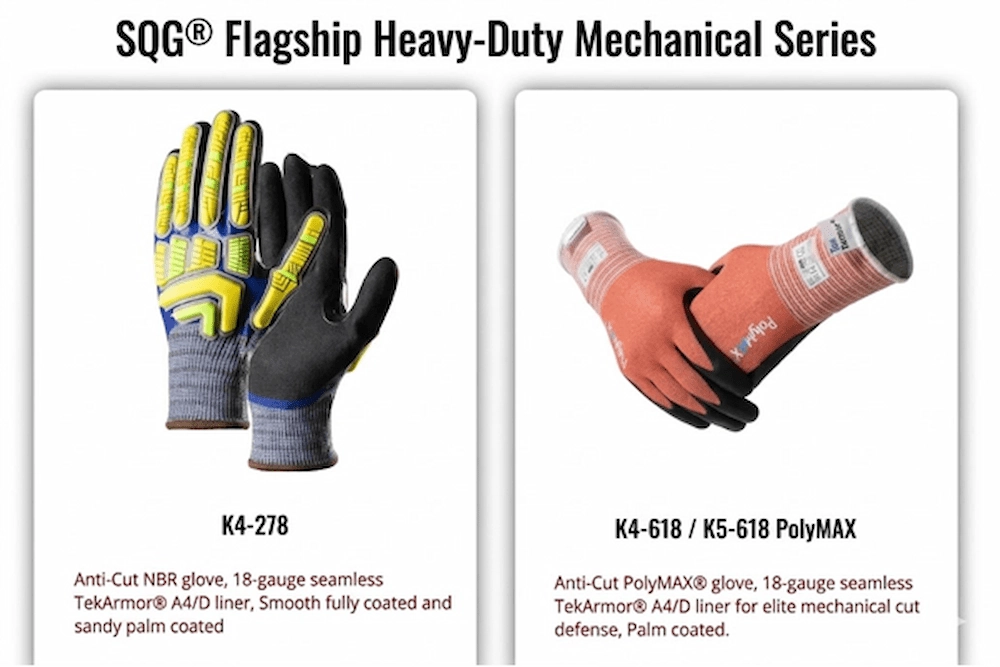
As a leading manufacturer deeply rooted in the global industrial protection supply chain, SQG® has developed a flagship heavy-duty mechanical protection series specifically designed for heavy industrial construction and harsh roofing conditions. We refuse to compromise with inferior materials. Instead, through rigorous structural mechanics and polymer material enhancements, we have introduced purpose-built, high-performance models, as shown in image_b3e444.jpg, fundamentally addressing the physical limitations of traditional personal protective equipment in extreme environments.
SQG® K4-278: Double-Dipped Design for Fluid Displacement Mechanics
Designed to address muddy, waterlogged conditions caused by heavy rain and harsh weather, as well as high-slip environments resulting from hydraulic fluid and heavy-duty engine oil leaks from large machinery, the SQG® K4-278 specifically employs a physical architecture based on fluid displacement mechanics:
Inner Layer: Full-Dip Insulated Waterproof Shield (Flat Nitrile Full-Dip): The glove’s first layer features a full-dip coating of high-density smooth nitrile, creating a 100% liquid-insulating barrier. This core design prevents rainwater, construction site mud, heavy-duty engine oil, and highly alkaline cement slurry from penetrating the glove, ensuring the worker’s hands remain in a dry and healthy microenvironment.
Outer Layer: Micro-Foam Sandy NBR: In high-stress areas such as the palm and fingertips, a proprietary sandy nitrile coating is applied. Its surface is densely covered with tens of thousands of micron-scale open-cell pores that create a “micro-suction cup effect” the moment it contacts a workpiece surface, rapidly dispersing and absorbing water and oil films. This delivers superior grip performance (oil grip) in heavy oil and wet conditions. Whether gripping rain-soaked steel pipes or oil-covered hydraulic pumps, it provides rock-solid stability, eliminating the risk of secondary bleeding injuries.
SQG® K4-618 & K5-618: 18-Gauge Precision Engineering for High-Friction Zones
When construction workers frequently handle heavy steel rebars, rough bricks, and lightweight steel studs at heights, all physical friction and gripping shear forces are concentrated in the V-shaped saddle area where the thumb and index finger meet. To address the industry-wide issue where 90% of industrial gloves experience frequent seam failure and fraying in the thumb crotch area due to a lack of physical reinforcement, the SQG® K4-618 and K5-618 incorporate cutting-edge polymer micro-engineering:
18-Gauge Seamless Construction (18-Gauge Precision Engineering): Features an ultra-thin and flexible TekArmor® fiber lining. The K4-618 meets ANSI A4/D cut resistance standards, while the K5-618 provides top-tier ANSI A5/E cut resistance for tasks involving metal sheets and plates that subject the gloves to higher shear forces.
Unparalleled Finger Dexterity: The 18-gauge high-density knit provides bare-hand-like sensitivity, while reinforced stitching in the thumb crotch (high-friction zone) eliminates the risk of physical protection failure at this critical point. Test data and feedback from field project teams confirm that SQG® safety gloves, featuring specially reinforced thumb crotches, have an overall service life extended by more than 70%. This not only provides large corporations with worry-free, robust protection for their bulk safety supplies procurement but also ensures that every dollar spent on construction safety supplies delivers exceptional value.
Table3: SQG® Flagship Products Technical Specifications
| Specification Item | SQG® K4-278 | SQG® K4-618 | SQG® K5-618 | Industrial Sourcing Benefits (Volume Purchasing Benefits) |
| Shell Material | 18-Gauge Seamless TekArmor® Yarn | 18-Gauge Seamless TekArmor® Yarn | 18-Gauge Seamless TekArmor® Yarn | Maintains physical cut resistance and finger dexterity despite an extremely high weight-to-strength ratio |
| ANSI Cut Level | Level A4 / D | Level A4 / D | Level A5 / E (Highest Level) | Covers all working conditions, from standard rebar tying to high-pressure metal shearing |
| Coating Mechanics | Double-DippedSmooth + Sandy NBR | PolyMAX® NitrilePalm Coated | PolyMAX® NitrilePalm Coated | K4-278 is designed for heavy oil contamination, insulation, and waterproofing; the 618 series is designed for precision work. |
| EN 388 Puncture Resistance | Level 4 (Highest Level) | Level 4 (Highest Level) | Level 4 (Highest Level) | Rigid construction blocks penetration by on-site metal nails and sharp debris |
| Reinforced Zone | Ergonomic Reinforced Thumb Crotch | Extended Palm Overlay | Extended Palm Overlay | Physical reinforcement eliminates blind spots for wire cuts at the wrist from the source |
FAQ: Frequently Asked Questions About Industrial Safety Gloves
When setting up your WordPress pages, the content in this section can be directly converted into FAQ Schema structured data. These Q&A entries, which precisely align with the actual search intent of international buyers (as reflected in “People Also Ask”), enable your web pages to display rich snippets in Google search results, thereby increasing the click-through rate for B2B long-tail traffic.
Q1: What ANSI cut level is required for handling heavy steel rebar on construction sites, and which SQG model is suitable?
A: When handling, laying, or manually tying steel rebar on heavy industrial construction sites, ANSI Cut Level A4 (or European Standard EN388 Cut Level D) is the industry-recognized gold standard. Many inexperienced buyers tend to blindly pursue top-tier cut resistance levels such as A7 to A9. This often results in gloves with base materials that are too thick and stiff, significantly compromising workers’ finger dexterity and quickly causing hand fatigue. Therefore, when purchasing heavy-duty work gloves for construction, prioritize A4-rated gloves featuring 18-gauge seamless knit construction. For this application, we recommend the SQG® K4-618. It features an 18-gauge high-density seamless TekArmor® fiber lining that delivers A4/D cut resistance and high puncture resistance while maintaining excellent tactile sensitivity.
Q2: Can a cut-resistant work glove completely prevent nail punctures on roofing sites?
A: No industrial protective fabric can 100% absolutely prevent powerful punctures caused by mechanical force, but high-performance gloves that meet EN 388 Puncture Level 4 (the highest puncture resistance rating) provide workers with the strongest rigid base layer of protection. On high-altitude roofing and demolition sites, exposed framing nails, sharp splinters, and jagged concrete debris are the primary causes of palm puncture injuries. Companies should specifically procure puncture-resistant roofing gloves certified to high standards, such as the SQG® K4-278. These gloves utilize a dense molecular barrier formed by a double-layer coating to effectively deflect and absorb the impact of a nail tip upon penetration, thereby minimizing the risk of injury.
Q3: Why should procurement officers choose Sandy NBR-coated gloves over traditional leather, and what tests support this?
Answer: Traditional cowhide leather gloves face two major physical challenges on modern construction sites with diverse working conditions: First, they easily absorb water and sweat, causing irreversible shrinkage and hardening after air-drying; Second, their physical stitching is completely exposed, making them highly susceptible to fraying and thread breakage at the thumb crotch when frequently gripping metal parts, resulting in the entire pair of gloves becoming unusable within 24–48 hours. In contrast, the modern polymer SQG® K4-278 has undergone rigorous oil and mud slip resistance tests (Oil Tests). Its micro-foam sandy NBR technology features a unique microscopic pore structure that, much like the drainage grooves on a car tire, instantly disperses surface liquids upon contact, creating a physical micro-suction cup effect. This ensures slip prevention in extreme weather and heavy oil contamination environments, while withstanding repeated industrial washing, resulting in a service life several times longer than that of traditional leather work gloves.
Q4: How does purchasing safety gloves in bulk directly from a factory reduce the overall PPE TCO?
Answer: By purchasing bulk safety supplies for construction directly from the source manufacturer, companies can fundamentally eliminate the markups associated with middlemen and multi-tiered distributors, directly reducing initial purchase costs by 30% to 40%. The core financial benefit lies in the fact that specialized industrial protective glove manufacturers like SQG®, which focus on the B2B sector, can provide exceptional quality and compliance consistency. They also incorporate proprietary physical reinforcements (Reinforced Thumb Crotch) in high-wear areas—such as the thumb—to address common wear-and-tear issues in construction, thereby significantly extending the overall lifespan of each pair of gloves to over 60 days. This extremely low on-site replacement frequency directly helps companies slash their annual TCO (Total Cost of Ownership) for PPE budgets by 90%. For bulk export orders and large container shipments, the SQG® sales team offers stable, one-stop customized fulfillment services.
Supply Chain Logistics and Volume Sourcing for Enterprise Buyers
In the harsh environments of heavy construction and roofing projects, ensuring the safety of frontline workers should never be a business gamble fraught with uncertainty.
Every time a procurement manager, under budget pressure, opts for low-cost, single-protection cowhide leather gloves or substandard private-label PPE, the company may save a few cents on the surface, but is actually gambling with workers’ hand safety and risking workers’ compensation claims costing up to $26,000. The frequent cracking at the web of the hand and palm abrasions caused by substandard PPE lead to a constant stream of immediate downtime costs, ultimately eroding the entire project’s bottom line.
As a source safety glove manufacturing business with full control over the entire supply chain, the SQG® brand manages the physical performance of products throughout their entire lifecycle—from seamless knitting with ultra-high-density TekArmor® fiber lining to the micro-vulcanization of hard-core TPR impact-resistant armor on the back of the hand. By completely eliminating the markups imposed by middlemen and multi-tiered wholesalers, we ensure that every dollar of your bulk safety supplies procurement goes directly to the factory at rock-bottom prices. This allows you to achieve full compliance while slashing your annual total cost of ownership (TCO) for personal protective equipment (PPE) by 90%.
To meet the supply chain logistics needs of large global corporations requiring urgent fulfillment of container-sized bulk orders, SQG® operates a digital, fully automated, high-capacity dipping production line backed by rigorous 100% final inspection quality control. From standard bulk export packaging to a stable, closed-loop international supply chain for sea freight containers, Business Manager Lina and her team of professional international account managers provide you with comprehensive, efficient, one-stop, in-depth coordination and customized fulfillment services. Don’t let short-lived, substandard PPE continue to secretly drain your company’s cash flow. It’s time to upgrade your supply chain assets and let protection return to the fundamentals of materials science.
B2B Enterprise Inquiry & Free Sample Program
Ready to improve site compliance while reducing unnecessary PPE costs? Contact the SQG Enterprise Procurement Team today to submit your annual purchase volume and specifications, receive a customized bulk wholesale quote, or request a free sample pack shipped directly from the factory.