Introduction: The Evolution of Lightweight Cut Protection in Precision Manufacturing
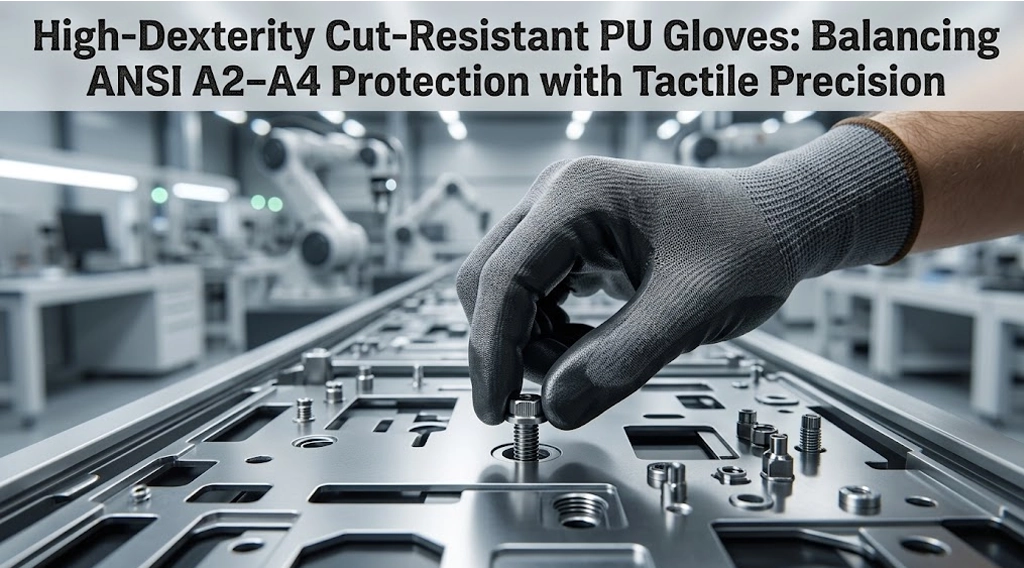
In modern precision manufacturing, selecting high-performance cut resistant pu coated gloves is critical for Tier 1 suppliers and stamping operations seeking to balance ANSI A2–A4 protection with tactile precision. High safety standards on production lines require workers to wear protective gloves with ANSI A2 to A4 cut resistance to guard against the risk of cuts from sharp sheet metal burrs and glass edges. However, these workstations often involve high-precision micro-manipulation tasks, such as the blind insertion of tiny screws, tactile quality inspection of body-in-white surface defects, or the precise positioning of lightweight glass panels. This dual demand for “reliable cut protection” and “bare-hand-level sensitivity” creates a dilemma for traditional PPE selection.
The Safety Pain Point of Traditional Bulky Gloves
For a long time, the industrial sector has primarily relied on increasing the thickness of knitted linings—such as traditional 10-gauge or 13-gauge cotton blends or heavy aramid fibers—to enhance cut resistance. The consequence of this design is that the gloves become extremely bulky and stiff. When handling delicate components, frontline workers often feel that the gloves are “clumsy and unresponsive” due to a lack of tactile feedback. This not only makes operational errors highly likely—leading to dropped workpieces or surface scratches—but also rapidly causes hand muscle fatigue and reduces work efficiency.
The most serious safety hazard lies in the fact that, in order to regain lost fingertip sensitivity, workers often risk injury by removing their gloves on their own to work barehanded. This behavior, known as “glove-stripping” in EHS management, is the primary cause of frequent cut-related workplace injuries on stamping and precision assembly lines.
Introducing High-Gauge HPPE and Microporous PU Synergy
To thoroughly address this safety challenge plaguing the precision manufacturing industry, a new generation of lightweight cut-resistant technology has emerged. The core of this innovative protective solution lies in the combined application of high-gauge weaving technology and advanced polymer coatings: by utilizing a high-sensitivity, high-strength 18-gauge or 15-gauge ultra-high-molecular-weight polyethylene (HPPE) composite fiber woven lining, the cross-sectional thickness of the cut-resistant layer has been minimized; this is further enhanced by a water-based microporous polyurethane (Microporous PU) dipping process. This composite structure creates a “second-skin” fit and exceptional sensitivity at the fingertips. While ensuring compliance with ANSI standards for cut resistance, it allows operators to easily perceive subtle stress changes in small components, thereby eliminating the need to remove gloves due to bulkiness.
To learn more about the engineering applications of high-precision knitting and functional coatings in lightweight industrial protection, please visit our Core Pillars page, Precision PU Palm-Coated Work Gloves Direct from Manufacturer, for comprehensive product specifications and selection guidelines.
Materials Science: Synergy Between Engineered HPPE Yarns and PU Coating
In the engineering design of light- to medium-duty cut-resistant gloves, achieving a balance between high cut resistance and bare-hand-level sensitivity relies primarily on the weaving structure of polymer fiber yarns and the micro-tribological performance of the elastomer coating. Through the synergy between ultra-high-molecular-weight polyethylene (HPPE) composite yarns and a microporous polyurethane (PU) coating, the gloves can not only withstand instantaneous cuts from sharp metal burrs but also maintain excellent flexibility and tactile feedback.
HPPE, Glass Fiber, and Nylon Core-Spun Matrix
The physical cut resistance of modern lightweight cut-resistant gloves stems from the unique arrangement of the microstructure of their inner lining fibers:
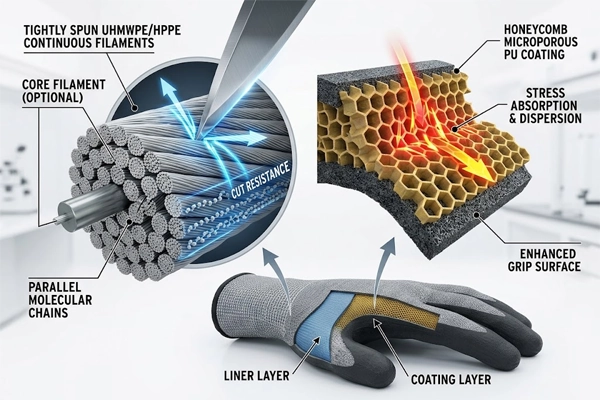
The high cut resistance mechanism of ultra-high molecular weight polyethylene (HPPE): HPPE possesses an extremely high molecular weight in the millions. After undergoing gel spinning and ultra-high-temperature stretching processes, its molecular chains exhibit a highly oriented and highly crystalline parallel arrangement. When transverse shear stress is applied by the sharp edge of a metal sheet or a blade, the tightly packed carbon-carbon covalent bonds rapidly disperse localized microscopic impact forces along the fiber axis throughout the entire fabric network. This significantly inhibits the blade from cutting through or penetrating the fiber cross-section, forming an exceptional inherent cut-resistant barrier.
Differences in Fiber Architecture Between B3-310 and P3-310:
SQG® B3-310 (13-Gauge HPPE / Glass Fiber): Features a core-spun composite structure with a central core layer of high-modulus microfiber glass fiber, tightly helically wrapped by an outer layer of high-purity HPPE continuous filaments. The microscopic hardness of the glass fiber effectively blunts sharp metal burrs that come into contact with it, while the outer layer of HPPE provides extremely high tensile strength and abrasion resistance. The 13-gauge weave density gives the lining greater physical thickness and tear resistance, making it ideal for high-load sheet metal handling applications.
SQG® P3-310 (18-Gauge HPPE / Nylon High-Density Matrix): This product replaces brittle inorganic glass fiber with a high-density blend of ultra-fine-denier HPPE, high-resilience nylon, and spandex. The 18-needle high-density seamless knitting process significantly reduces the individual yarn diameter, resulting in a dense and fine inner lining structure. In microscopic shear testing, the high-toughness HPPE filaments dissipate micro-shear stress through their dense arrangement and elastic interlocking within the yarns. This not only ensures compliance with the ANSI A3 cut-resistant standard but also completely eliminates the sensation of foreign objects in the hand that can occur when inorganic fibers bend.
Microporous Polyurethane for Grip and Micro-Stress Transfer
The microporous polyurethane (PU) coating on the palm surface serves not only as an anti-slip layer but also as a critical interface for micro-stress transfer and surface scratch resistance:
Adaptive grip on dry and lightly oiled surfaces: After curing and molding, the surface of microporous polyurethane exhibits a micrometer-scale open-cell honeycomb network. When gripping a smooth automotive windshield or stamped metal parts with a thin oil film, the microporous structure increases the actual physical contact area through a micro-suction cup effect while simultaneously absorbing and displacing trace amounts of free oil film at the interface via capillary adsorption. This allows the polyurethane polymer to adhere directly to the substrate surface, providing an exceptionally smooth and non-sticky grip in both dry and lightly oiled conditions.
Micro-tear resistance and tactile feedback in an ultra-thin cross-section: The microporous PU elastomer features extremely high elongation at break and abrasion- and tear-resistant toughness. With an ultra-thin overall cross-sectional thickness of 0.8 to 1.0 millimeters, the coating protects the glove lining from repeated scraping and pilling caused by sharp edges without imposing additional bending resistance on the fingertips. Mechanical microstresses at the fingertips penetrate the coating and lining with minimal attenuation, allowing workers to clearly perceive sub-newton-level tactile feedback during assembly tasks and ensuring precision and safety during high-frequency micro-operations.
Standards & Certification: Understanding the Differences Between ANSI/ISEA 105 and EN 388:2016 Cut Ratings
In the global procurement of light- to medium-duty cut-resistant gloves and EHS risk assessments, correctly interpreting cut-resistance certification standards is essential to avoiding “insufficient protection” or “operational failure due to overprotection.” Currently, the global industrial sector primarily relies on two authoritative testing standard systems: ANSI/ISEA 105 in North America and EN 388:2016 in Europe. Clarifying the physical testing mechanisms and rating comparison logic of these two standards provides an accurate basis for selecting the appropriate gloves for specific production line workstations.
ASTM F2992-15 (TDM-100) Load-to-Cut Scale (ANSI A2 to A4)
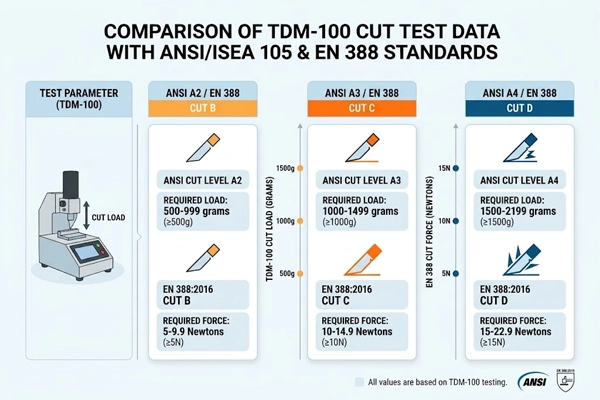
The North American standard ANSI/ISEA 105 adopts the ASTM F2992-15 unified testing method, using a dedicated TDM-100 cut-resistant testing machine for quantitative evaluation. The core logic of this test is to determine the vertical load (in grams) required for a blade to penetrate the glove material during a constant 20-millimeter linear cutting stroke:
ASTM F2992-15 Test Mechanism: During testing, a brand-new, calibrated, sharp tungsten carbide blade is drawn across the surface of the sample at a constant speed over a 20-millimeter stroke. By continuously adjusting the vertical counterweight applied to the blade, the theoretical load value (Cut Load) required to physically cut through the material is precisely calculated.
Light to Moderate Protection Level Categories (ANSI A2 to ANSI A4):
ANSI A2 (500 g – 999 g load): Provides light cut resistance. Suitable for minor contact with cardboard box cuts, small plastic burrs, or low-risk small electronic component assembly stations.
ANSI A3 (1,000 g – 1,499 g load): Provides general-purpose, moderate cut resistance. Effectively withstands continuous contact with slightly burr-edged stamped sheet metal parts, the handling of lightweight automotive glass, and the handling of injection-molded parts with sharp edges. Both the SQG® P3-310 (18-pin ultra-thin model) and the SQG® B3-310 (13-pin heavy-duty model) meet and consistently maintain performance within the ANSI A3 range.
ANSI A4 (1,500 g – 2,199 g load): Provides enhanced, medium-to-high-level cut resistance. Suitable for flipping medium-thickness unpolished metal sheets, bending HVAC ductwork, and working with highly sharp edges on curtain wall glass.
EN 388:2016 ISO 13997 (Cut B to Cut D) Harmonization
Following the 2016 revision of the European standard, it has achieved a high degree of convergence with the North American standard in terms of core testing mechanisms; however, differences remain in naming conventions and certain evaluation criteria:
Alignment with the ISO 13997 (TDM-100) Test Method: In the EN 388:2016 system, the fifth letter (A through F) indicates the TDM cut test results based on the ISO 13997 standard, with units expressed in Newtons (N). This test principle is consistent with the North American ASTM F2992-15 standard:
Level B (5 N or greater, approximately 510 g load) -> Corresponds to ANSI A2
Level C (10 N or greater, approximately 1020 g load) -> Corresponds to ANSI A3 (e.g., SQG B3-310 / P3-310)
Level D (15 N or greater, approximately 1530 g load) -> Corresponds to ANSI A4
Causes of failure in engineering fibers during the traditional Coup Test (rotating circular blade method):
Early versions of EN 388:2003 employed the Coup Test method, which involved a rotating circular blade making repeated cuts through the material under a fixed load (5 Newtons), with the cut resistance index (Levels 1 to 5) calculated based on the ratio of cut cycle counts.
With the widespread adoption of composite high-strength fibers such as those specified in SQG B3-310 (e.g., HPPE-blended microfiberglass and stainless steel wires), high-hardness inorganic mineral particles rapidly wear down and dull the blade during the initial cutting phase, leading to a severe decline in blade sharpness toward the end of the test, resulting in an artificially inflated calculated number of cycles and thus a “Blade Dull Effect” that distorts the test results.
Therefore, EN 388:2016 mandates that for any high-strength composite gloves exhibiting blade dulling (with an index exceeding the determination threshold) during the Coup Test, the ISO 13997 (TDM) linear cut test must be conducted, and the final authoritative determination must be based on letter grades (A through F) to ensure the accuracy of industrial safety product selection.
Tactile Dexterity: 13-Gauge vs. 18-Gauge Cut-Resistant Engineering
On production lines for stamped sheet metal fabrication and precision component assembly, knit density (gauge) is the key parameter that determines the balance between a glove’s physical protective lifespan and operational efficiency. Gauge refers to the number of needles per inch on the loom: the lower the gauge, the thicker the individual yarns, and the more robust and abrasion-resistant the fabric structure; the higher the gauge, the finer the yarns, and the higher the fabric density, resulting in a lighter, thinner, and more form-fitting material. By strategically deploying 13-gauge and 18-gauge cut-resistant gloves, companies can precisely match protective redundancy with operational efficiency across workstations with varying physical demands.
B3-310 (13-Gauge): Structural Durability for Repeated Sheet Metal Handling
At the front end of stamping and blanking lines, during sheet metal flipping, and at heavy-duty grinding stations, workers frequently come into contact with rough metal sheets featuring continuous stamping burrs and sharp flash. These workstations place extremely high demands on gloves in terms of physical abrasion resistance and resistance to localized tearing:
Abrasion-Resistance Advantages of Medium-to-Heavyweight Knit Structures: The SQG® B3-310 features a 13-gauge seamless knit structure with relatively full-bodied individual yarn cross-sections, maintaining an overall fabric thickness between 1.1 and 1.3 millimeters. The coarser HPPE and glass fiber-core composite yarns provide higher physical fill density, forming a more robust fiber barrier layer when faced with micro-serrated stamping cuts, which significantly delays the cutting and abrasion of the yarn’s surface layer caused by sharp burrs.
Extended service life under high-load conditions: The 13-gauge construction, combined with a micro-porous polyurethane (PU) coating on the palm, gives the gloves excellent resistance to repeated mechanical friction (meeting the high abrasion resistance standards of EN 388). Even under harsh conditions involving the continuous handling of unburried steel plates and cut-to-size aluminum profiles, the gloves are resistant to palm wear-through, fraying between the fingers, or tearing, providing a longer service life per pair and excellent structural safety for heavy-duty metal handling.
P3-310 (18-Gauge): Ultra-Dexterity for Precision Fastening and Micro-Deburring
When production moves to workstations involving micro-operations—such as fine trimming of the white body, interior assembly of the cockpit frame, and precision fastening of in-vehicle wiring harnesses—workers’ challenges shift from simple heavy wear and tear to an extreme reliance on microscopic tactile perception:
Eliminating “dead zones” at the fingertips and providing a bare-hand-like fit: Traditional cut-resistant gloves often feature loose fabric buildup (“dead zones”) at the fingertips, causing significant hindrance to workers when handling tiny components. The SQG® P3-310 employs an advanced 18-gauge ultra-high-density knitting process, significantly reducing the overall cross-sectional thickness to 0.7 to 0.9 millimeters—making it more than 30% thinner than traditional 13-gauge cut-resistant gloves. The high-elasticity nylon and spandex composite structure allows the gloves to conform closely to the contours of the hand like a second skin, eliminating excess fabric wrinkles at the fingertips.
A breakthrough in ergonomics for micro-assembly and micro-deburring tasks: When handling M3 to M5 micro-screws, pressing small plastic latches, and performing precision metal micro-deburring, the P3-310’s 18-gauge ultra-thin construction allows the fingertip muscles to directly sense the geometric edges of micro-parts and the resistance when screwing in threads, enabling rapid alignment and secure fastening. This significantly reduces the takt time for micro-assembly operations and effectively prevents operational errors and part slippage caused by bulky gloves.
For a detailed materials engineering comparison of 13-gauge and 18-gauge fabric thickness, knuckle flexural stiffness resistance, and cycle time (CT) on micro-assembly lines, please refer to our specialized technical guide: 13-Gauge vs. 18-Gauge PU-Coated Gloves: Maximizing Tactile Sensitivity in Micro-Assembly Lines.
Surface Integrity & Non-Marking Handling of Glass and High-Gloss Panels
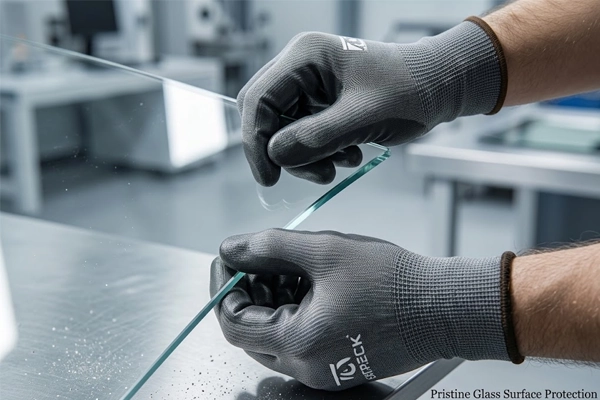
In processes such as adhesive application and assembly of automotive windshields, handling of laminated and coated architectural glass, and integration of large displays in smart cockpits, workpiece edges often pose a very high risk of physical damage (such as the edges of unpolished raw glass sheets or thin metal frames), while the workpiece surfaces are extremely fragile and expensive. This requires cut-resistant gloves to offer dual protection: they must provide reliable protection against cuts while ensuring absolutely no scratches, no residue marks, and zero contamination when in contact with the workpiece surface.
Scratch-Free Handling of Automotive Glazing and Coated Architectural Glass
Coated glass, anti-glare (AG/AR) automotive displays, and high-gloss metal casings have relatively low surface hardness. When they come into contact with glove materials that have high friction or contain hard impurities, they are highly susceptible to microscopic linear scratches (micro-abrasions) visible to the naked eye, which directly result in the finished products being rejected during final quality inspection (FQI):
Micro-polymer cushioning layer eliminates hard stress points: Traditional rough dipping processes or adhesive surfaces containing unplasticized hard particles can create localized stress concentrations during forceful assembly, damaging the fragile glass surface coating. After curing, microporous polyurethane (PU) elastomer forms a uniform, micro-elastic, open-cell cushioning network with excellent surface compliance. When operators handle or lift large sheets of flat glass, the microporous structure gently deforms and evenly distributes the downward load, preventing shear scratches from forming on the contact surface.
Physical Barrier Against Nail Impacts: During edge-clip fastening and slot assembly of glass, if gloves with insufficient cut resistance are used or if operators attempt to work bare-handed, their fingernails can easily scratch the anti-reflective coating or sealing strips. SQG® P3-310 and SQG® B3-310 provide a dense, cut-resistant fiber barrier that not only protects against the risk of cuts from sharp glass edges but also eliminates the hazard of operators’ hard body parts coming into direct contact with the workpiece surface.
Non-Marking Polymer Chemistry (Zero Ghosting & Zero Sebum Transfer)
In addition to physical micro-scratches, chemical migration and sebum residue are also critical defects in clean-surface assembly:
Prevents the migration of sebum and acidic salts from sweat (Sebaceous Oil & Sweat Barrier): The skin on human hands continuously secretes sebum, sweat, and inorganic salts. When working while wearing standard oil-permeable cotton gloves or cut-resistant knitted sleeves, sebum and acidic sweat easily penetrate the fibers and transfer onto glass surfaces or brushed metal panels, forming oil stains and white marks that are difficult to completely remove. A microporous PU coating on the palm creates a dense physical barrier that effectively prevents bodily fluids from seeping through and penetrating the surfaces of high-cleanliness workpieces.
Highly Cross-Linked Water-Based Polyurethane Eliminates Marks and Migration (Zero Ghosting): Conventional rubber products (such as certain types of natural latex that are not deeply cross-linked or nitrile rubber that has not undergone degreasing) are prone to the migration of vulcanizing agents, phthalate plasticizers, or small-molecule antioxidants from their formulations onto workpiece surfaces under high-temperature or high-friction conditions, resulting in hard-to-remove “ghosting” or “stamping marks” on glass surfaces. SQG® utilizes a highly cross-linked, water-based, microporous polyurethane formulation that eliminates low-molecular-weight, volatile plasticizers and free oils, ensuring “zero migration, zero marks, and fingerprint resistance” under high-frequency friction. This guarantees that glass and high-gloss panels maintain factory-level cleanliness and transparency.
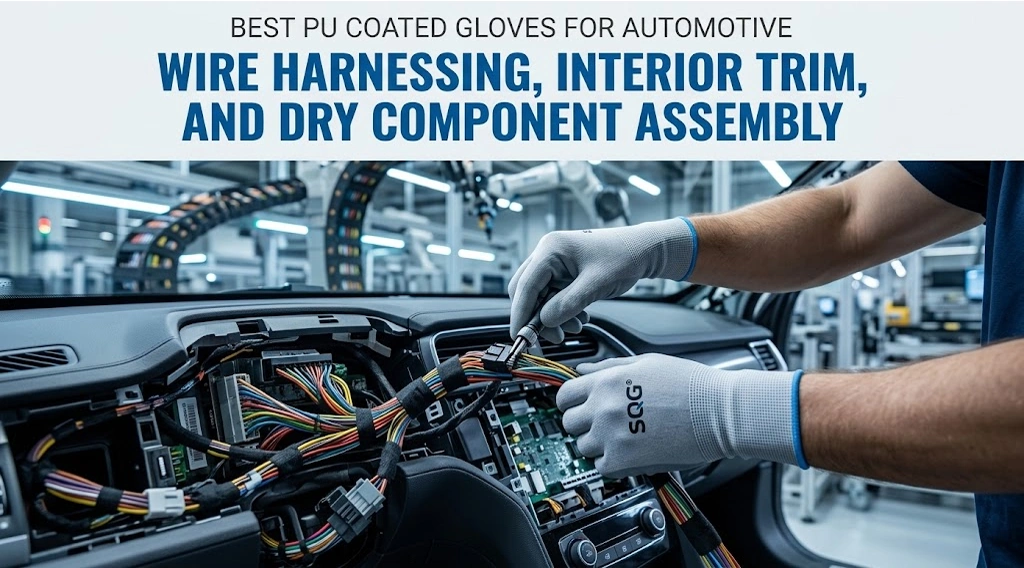
For information on the scratch-resistant protection mechanism of microporous polyurethane for piano-lacquered panels, genuine leather-wrapped components, and large-size touchscreens during micro-operations in automotive final assembly and cockpit assembly, please refer to our industry application guide: Best PU Coated Gloves for Automotive Assembly & Wiring.
Coating Tribology: PU vs. Nitrile vs. Latex in Sharp Dry & Light-Oil Operations
In processes involving stamping, sheet metal forming, and precision cutting, the tribological conditions on the workpiece surface often involve complex operating conditions that alternate between “dry” and “lightly oiled” states. The tribological properties of glove coating materials not only determine the grip stability of workers when handling sharp edges but also directly affect whether the cut-resistant fiber layer can withstand dynamic loads without suffering shear failure due to uneven stress distribution. The proper selection of polymer coatings is a critical factor in preventing workpiece slippage and controlling surface damage to the workpiece.
Frictional Adaptability on Dry Sharp Edges and Light Stamping Oil Films
When continuously handling stamped sheet metal or sharp metal parts containing trace amounts of rust-preventive oil or residual drawing oil, the free oil film on the workpiece surface can easily form a lubricating interface, triggering instantaneous slippage and causing severe cuts:
Microporous honeycomb capillary effects eliminate the risk of slippage: Microporous polyurethane (Microporous PU) coatings contain a continuous array of micron-scale open-cell honeycomb structures. When the glove comes into contact with an oil-coated metal surface and gripping pressure is applied, trace amounts of residual stamping oil at the contact interface are rapidly absorbed through capillary adsorption channels and temporarily dispersed into the microporous structure beneath the coating’s surface. This mechanism effectively prevents the formation of a continuous lubricating oil film, allowing the polyurethane polymer framework to form a mechanical interlock directly with the microscopic roughness of the metal surface. This provides controlled and stable grip in low-oil environments, preventing cutting injuries caused by the sheet slipping out of the hand.
Dry-state smoothness and protection against excessive adhesion: When handling dry, smooth glass sheets or painted metal casings, microporous PU exhibits an extremely smooth and moderate dry-state coefficient of friction. Unlike high-friction natural rubber, which is prone to “sticking and tearing” when in contact with dry surfaces, microporous PU allows operators to make smooth, fine-tuned adjustments and position the workpiece without tearing fragile coatings or edge sealant strips during pushing and pulling.
Chemical and Physical Comparison Table for Precision Cut Applications
For applications involving the handling of sharp workpieces and micro-assembly in precision manufacturing, the table below provides a side-by-side comparison of the key physical and chemical engineering parameters of microporous polyurethane (PU), foamed nitrile (Foam Nitrile), and crinkle natural latex (Crinkle Latex):
| Evaluation Dimensions / Technical Metrics | Microporous PU (B3-310 / P3-310) | Foam Nitrile (Micro-Foam) | Crinkle Latex (Natural Rubber) |
| Static Friction on Dry Surfaces (Dry Static Coefficient of Friction) | 0.85 – 1.15 (Smooth and even, without excessive viscous resistance) | 0.70 – 0.90 (Moderate grip; slight slippage on smooth, dry surfaces) | 1.20 – 1.60 (Extremely high grip; prone to excessive adhesion and tearing of workpieces) |
| Grip Adaptability on Light-Oil Films (Grip Performance on Light Oil Films) | Excellent (Capillary Adsorption) (Microporous structure effectively adsorbs and repels trace amounts of thin oil) | Good (Oil absorption and dispersion) (Suitable for medium to heavy oil contamination; slightly thicker for micro-detailing) | Very poor (surface slippage) (A dense rubber surface forms an oily film, making it extremely prone to instability and slippage) |
| Scratch-Free Index on Glazing & Gloss Trims (Scratch Resistance) | Class 1 (Zero-Scratch) (Excellent elastic cushioning from open-cell sponge) | Class 2 (Moderate) (Relatively high rubber hardness; prone to leaving fine scratches under heavy pressure) | Class 3 (High Risk) (High frictional resistance of the rubber makes surface tearing highly likely) |
| Sub-Newton Tactile Sensitivity (Fingertip Tactile Sensitivity) | 9.6 – 9.9 / 10 (Ultra-thin fit, feels almost like bare hands) | 7.5 – 8.5 / 10 (Thicker foam layer; feels slightly dull during fine detailing) | 4.0 – 5.5 / 10 (Thick rubber layer completely blocks perception of sub-Newton stresses) |
| Cut Retention Under Lateral Shear (Shear Resistance and Cut Retention Rate) | High (Elastic framework protects the inner lining fibers from lateral abrasion) | Medium to High (The rubber surface is wear-resistant but offers slightly less protection for microfiber cloths) | Moderate (Rubber layer is prone to cracking and peeling when scraped against sharp edges) |
| Chemical Additive Migration (Risk of Plasticizer/Vulcanizing Agent Migration) | Extremely low (PWIS-Free) (Highly cross-linked water-based polymer, leaves no marks or residue) | Low to Medium (Some general-purpose formulations may exhibit trace additive leaching) | High (Ghosting Risk) (Free sulfides and natural proteins are prone to leaving faint marks) |
Data from materials tribology and micromechanics show that, under comprehensive operating conditions—including dry and light-oil grip, sub-Newton tactile transmission, zero micro-scratching, and cut-resistant fiber protection—microporous polyurethane (PU) coatings demonstrate well-rounded and balanced engineering protection advantages, making them the optimal coating solution for precision stamping, micro-trimming,g and high-end glass assembly.
For systematic comparative data on the underlying polymer cross-linking mechanisms, oil resistance limits, and abrasion resistance testing of polyurethane, nitrile rubber, and natural latex, please refer to our material selection white paper: PU Coated vs. Nitrile vs. Latex Work Gloves: The Definitive B2B Selection Guide for Precision Manufacturing.
Cleanroom & Lint Control for Optical Assembly and Paint Synergy
In high-end automotive smart cockpit applications—such as the lamination of curved optical displays, the installation of LiDAR and camera modules, and pre-paint assembly stations for vehicle body painting—the environment in which gloves are used often presents both a “risk of cuts from tiny sharp edges” and “stringent cleanliness control requirements.” Any loose microfibers shed from the glove surface or volatile chemical residues can cause irreversible damage to the imaging quality of downstream optical displays and the adhesion of electrophoretic paint. Therefore, next-generation high-performance cut-resistant gloves must, in addition to providing physical cut resistance, deeply integrate semiconductor-grade particulate control with paint compatibility engineering.
100% Continuous Filament Construction to Prevent Fiber Shedding
In high-cleanliness scenarios—such as the projection glass for in-vehicle HUDs, the lamination of extra-large curved center consoles, and the assembly of optical sensor lenses—airborne fiber particles are the primary cause of product scrap. Even a single micrometer-sized shed fiber trapped between the optical adhesive layer (OCA/OCR) and the protective glass can create noticeable dark spots, halos, or bubble shadows under strong backlighting when the display is powered on:
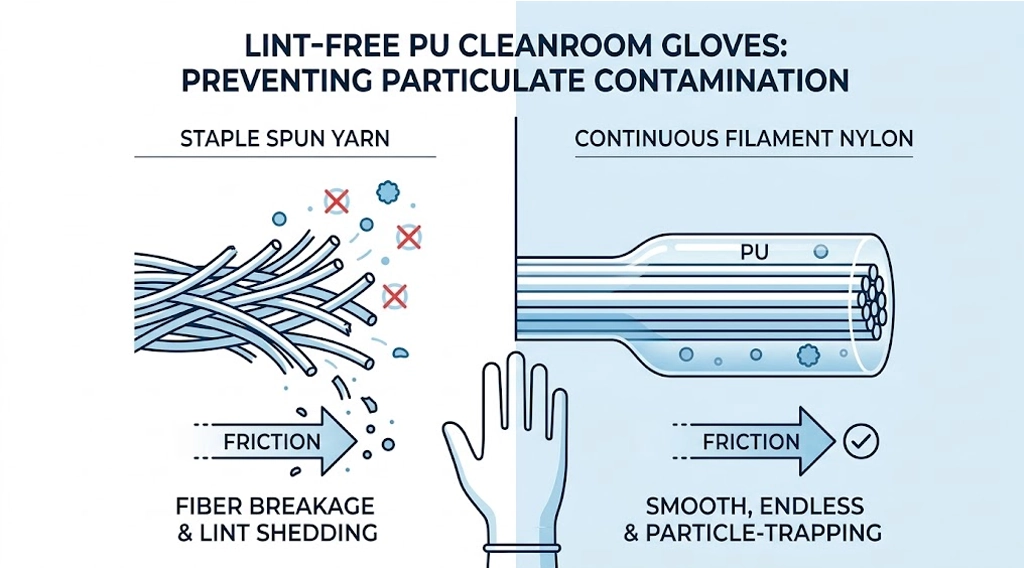
100% industrial-grade continuous filaments eliminate breakage and lint generation: When traditional cotton-blend gloves made with short fibers are subjected to repeated stretching at the knuckles and friction against metal edges, the ends of the short fibers are highly prone to brittleness and breakage, releasing large amounts of lint into the air. The entire SQG® P3-310 (18-gauge ultra-thin cut-resistant model) and SQG® B3-310 (13-gauge model) lines utilize 100% industrial-grade ultra-high molecular weight polyethylene (HPPE) continuous filaments. Each fiber features an intact molecular chain with no breaks, eliminating the possibility of fiber breakage and dust release due to stress at the physical source.
High-density wrapping and heat-sealed cuff technology: The glove lining is precisely wrapped in both directions using high-tensile-strength nylon continuous filaments, and the cuff is sealed using wash-resistant heat-sealed hem-sealing technology. Combined with the impregnation and curing effect of the microporous polyurethane elastomer on the palm, the fabric’s microscopic network is firmly locked within the polymer matrix. As demonstrated by Liquid Particle Count (LPC) testing, the gloves maintain an extremely low dust emission rate even under continuous low-friction conditions, consistently meeting the dust control standards for Class 1000 to Class 10,000 cleanrooms and ensuring high yield rates for the bonding of high-value optical display components.
LABS-Conformity (Silicone-Free) Paint Safety Compliance
At the handoff stages between the white body cut-off and trimming processes at automotive OEMs and the transfer of Tier 1 stamped parts to the paint shop, the most costly potential quality issues are “pinholes” and “fish-eye defects” in the painted surface. The root cause of these defects lies in the introduction of substances that impair paint film wetting (Paint Wetting Impairment Substances, German acronym: LABS) from hand protection supplies:
Mechanism of PWIS Trace Migration and Pitting Formation: Silicone oil, fluorinated release agents, and certain low-molecular-weight ester plasticizers have extremely low surface tension. Once silicone-containing gloves worn by workers come into contact with white body panels or door seams awaiting painting, trace amounts of silicone molecules transfer and firmly adsorb onto the metal substrate. During the subsequent curing and baking of the electrophoretic primer, intermediate coat, or clear coat, the coating cannot uniformly wet this area; consequently, it contracts and retreats around the core of the oil droplet, forming microscopic, crater-like “pinholes.” This results in the entire vehicle having to be taken off the production line for extensive sanding and a complete re-spray.
Strictly adhering to the VDMA 24364 silicone-free coating certification: The SQG® cut-resistant PU series products completely eliminate silicone defoamers, silicone resin release agents, and phthalate plasticizers at the raw material stage, and utilize a pure water-based release system on clean dipping lines in conjunction with a multi-stage ultrasonic desalination cleaning process using deionized water. Authoritative testing confirms that the finished products fully comply with the VDMA 24364 standard set by the German Engineering Federation (meeting the stringent Zone 1 / Zone 2 top-tier LABS-Conformity requirements), ensuring zero PWIS substance leaching during stamping, trimming, door fit adjustments, and operations in paint transition zones, thereby eliminating the risk of paint adhesion failure.
For information on the microscopic physical mechanisms by which continuous filament-knit linings suppress microfiber shedding, as well as particulate control specifications for semiconductor and optical display-grade cleanroom work gloves, please refer to our specialized technical guide: Lint-Free PU Cleanroom Gloves: Preventing Particulate Contamination in Semiconductor Environments.
Engineering Selection Matrix: Matching Hazard Severity to Plant Workstations
In large-scale stamping operations, automotive original equipment manufacturers (OEMs), and HVAC and architectural glass processing facilities, there are significant differences in the risks of mechanical cutting, surface protection requirements, and assembly precision across various production processes. Adopting a “one-size-fits-all” procurement approach often leads to two extreme problems: cut injuries at workstations with heavy stamping burrs due to insufficient protection levels, or, at micro-assembly workstations, workers operating more slowly or frequently removing gloves—in violation of safety protocols—because the gloves are too bulky and thick.
To assist corporate EHS safety management departments and lean manufacturing engineering teams in establishing standardized Personal Protective Equipment (PPE) provisioning guidelines, it is essential to create a workstation-level cut-resistance selection matrix based on the type of sharp edges at each workstation, surface cleanliness requirements for workpieces, and cycle times.
Workstation Cut-Severity and SKU Selection Table
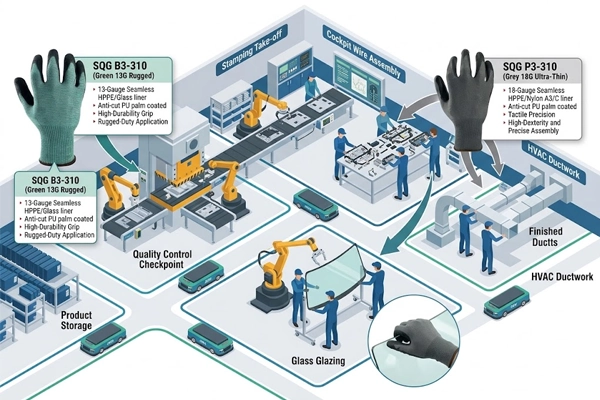
The table below systematically outlines engineering matching solutions for four typical types of discrete manufacturing and precision assembly workstations in terms of sharp-edge risk characteristics, fabric fiber structure, coating configurations, and target certification levels, and provides corresponding recommended models:
| Workstation / Operation Scenario | Hazard Profile & Sharp Edge Type | Gauge & Fiber Matrix | Coating & Thickness | Target Cut Level (ANSI / EN 388) | Recommended Product Models |
| Stamping Line Take-Off & Sheet Metal Handling (Stamping Take-Off and Rapid Sheet Metal Flip-and-Handling) | Sharp burrs from continuous stamping, rough metal edges, and thin oil films on stamped parts | 13-Gauge HPPE / Glass Fiber (13-gauge HPPE-coated glass fiber durable construction) | Microporous PU (1.1 mm) (Microporous Polyurethane Abrasion-Resistant Coating) | ANSI A3 / EN 388 Cut C | SQG® B3-310 |
| Automotive Cockpit Sub-Assembly & Trim Fastening (Cockpit Trim Assembly, Blind Insert Installation, and Micro-Screw Fastening) | Hidden edges on sheet metal brackets, micro plastic latches, and M3–M5 precision screws | 18-Gauge HPPE / Nylon / Spandex (18-gauge ultra-high-density blend with a bare-hand feel) | Ultra-Thin PU (0.8 mm) (Ultra-Thin Microporous Breathable Polyurethane) | ANSI A3 / EN 388 Cut C | SQG® P3-310 |
| Automotive & Architectural Glass Glazing (Automotive Windshield Adhesive Application and Architectural Laminated Glass Handling) | Sharp edges on raw glass sheets, workpieces prone to slipping, and stringent requirements for preventing micro-scratches and fingerprints | 18-Gauge HPPE / Nylon Blend (18-gauge continuous filament lint-free lining) | Non-Marking PU (0.85 mm) (Non-Marking Highly Cross-Linked Polyurethane) | ANSI A2–A3 / Cut B–C | SQG® P3-310 |
| HVAC Sheet Metal Duct Fabrication & Box Assembly (HVAC Galvanized Duct Fabrication, Enclosure Bending, and Sheet Metal Riveting) | Dynamic shear burrs, flash from notched forming, moderate shear sliding loads | 13-Gauge HPPE Engineered Yarn (13-gauge high-abrasion-resistant, cut-resistant engineered yarn) | Abrasion-Resistant PU (1.0 mm) (Abrasion-Resistant Thickened Polyurethane) | ANSI A3–A4 / Cut C–D | SQG® B3-310 |
Implementation Guidelines for Industrial Workstations
Based on the selection matrix above, engineering teams can follow these operational guidelines when implementing solutions on production lines:
Heavy-duty and high-wear workstations (SQG® B3-310 recommended): In processes such as stamping and blanking lines, duct manufacturing, and chassis bending—where intense friction and continuous scraping by burrs frequently occur—the 13-needle SQG® B3-310 should be the preferred choice. Its substantial fabric thickness and HPPE-glass fiber composite layer provide excellent wear resistance and tear protection, effectively reducing frequent glove wear and replacement costs.
High-precision micro-operations and clean surface workstations (Recommended: SQG® P3-310): For workstations involving the integration of large smart cockpit displays, blind insertion of wiring harnesses, precision micro-trimming, and automotive glass handling, the 18-gauge ultra-thin SQG® P3-310 must be mandated. Its ultra-thin 0.8-millimeter cross-section eliminates dead zones at the fingertips, providing operators with sub-Newton-level tactile feedback that feels almost like working bare-handed, while its microporous water-based PU coating prevents glass scratches and grease residue, fundamentally balancing production line takt time and first-pass yield.
Industrial Laundering Economics & Life Cycle Cost Optimization
In lean management and EHS operations at modern manufacturing plants, the evaluation and selection of personal protective equipment (PPE) has long shifted from a focus on the “initial unit price per pair” to the “total cost of ownership (TCO) over the entire life cycle.” Many companies have fallen into a vicious cycle of high turnover rates, massive solid waste generation, and hidden workers’ compensation claims due to purchasing low-cost, low-grade gloves. By introducing high-performance HPPE cut-resistant gloves with excellent wash durability and establishing standardized industrial cleaning and reuse processes, companies can not only significantly reduce long-term comprehensive consumable expenses but also substantially improve ESG waste reduction and sustainable operations metrics.
Wash Durability and Cut Resistance Retention Over Multiple Cycles
Traditional low-end dipped gloves or inferior cut-resistant gloves often suffer from fiber embrittlement, coating cracking and peeling, or severe shrinkage after washing, resulting in premature disposal. The SQG® B3-310 and SQG® P3-310 have undergone specialized wash-durability engineering optimization in material selection and cross-linking processes:
High Molecular Stability and Cut Resistance Retention of HPPE Fibers: Ultra-high molecular weight polyethylene (HPPE) possesses exceptional chemical inertness and hydrophobicity; it does not undergo hydrolysis or molecular chain relaxation when washed in industrial warm water at temperatures ranging from 40°C to 60°C. As verified by a third-party testing laboratory, after undergoing 3 to 5 standard industrial wash cycles (including washing with a mild neutral detergent and low-temperature drying at 50°C), the gloves retain over 95% of their cut resistance load values as measured per ASTM F2992-15 and ISO 13997, consistently maintaining the original ANSI A3 / EN 388 Cut C cut resistance rating and eliminating any safety performance degradation caused by washing.
High Adhesion and Anti-Delamination Performance of Microporous Polyurethane (PU): The gloves utilize a highly cross-linked water-based polyurethane dipping process, forming a deep mechanical interlocking network between the polymer coating and the liner fibers. Under repeated mechanical agitation from water flow and friction in the drum, the coating exhibits excellent resistance to cracking and peeling (Adhesion Strength). The microporous honeycomb array on the palm remains intact, without hardening, becoming brittle, or experiencing extensive delamination that exposes the fingers, ensuring that the fit and grip performance do not degrade during repeated use.
Total Cost of Ownership (TCO) vs. Disposable / Low-Tier Handwear
From a full lifecycle economic perspective, high-performance reusable cut-resistant gloves can deliver comprehensive financial returns across multiple dimensions for industrial enterprises:
A dramatic reduction in direct consumable procurement costs: Taking a 200-person stamping and micro-assembly production line as an example, if low-tier, inexpensive gloves are used (with a low unit price but an average daily wear-through rate of 1 to 2 pairs), monthly consumable usage can reach several thousand pairs. By switching to SQG® P3-310 gloves, which have a wash life of 3 to 5 cycles, the effective service life of a single pair can be extended from 2 days to over 2 weeks. The cost of a single professional industrial wash typically accounts for only 15% to 20% of the unit price of new gloves; when implemented across the board, this can reduce a workshop’s total monthly expenditure on hand protection supplies by 40% to 60%.
Eliminate hidden costs from production line downtime and the risk of workers’ compensation claims: Wearing low-grade cotton gloves or thin disposable gloves that lack cut-resistant certification makes workers highly susceptible to workplace injuries where sharp metal burrs instantly puncture the gloves. The hidden costs resulting from a single cut injury—including emergency medical treatment, compensation for lost work time, temporary production line stoppages, and regulatory compliance fines—often amount to hundreds of times the unit price of high-quality cut-resistant gloves.
Prevent micro-scratches on workpieces and rework losses: Low-grade gloves have rough surfaces and shed lint easily, making them highly likely to scratch high-gloss panels and car windows, resulting in high costs for polishing and part replacement. High-purity, microporous PU cut-resistant gloves ensure a high first-pass yield right from the source, saving factories from significant potential quality-related losses.
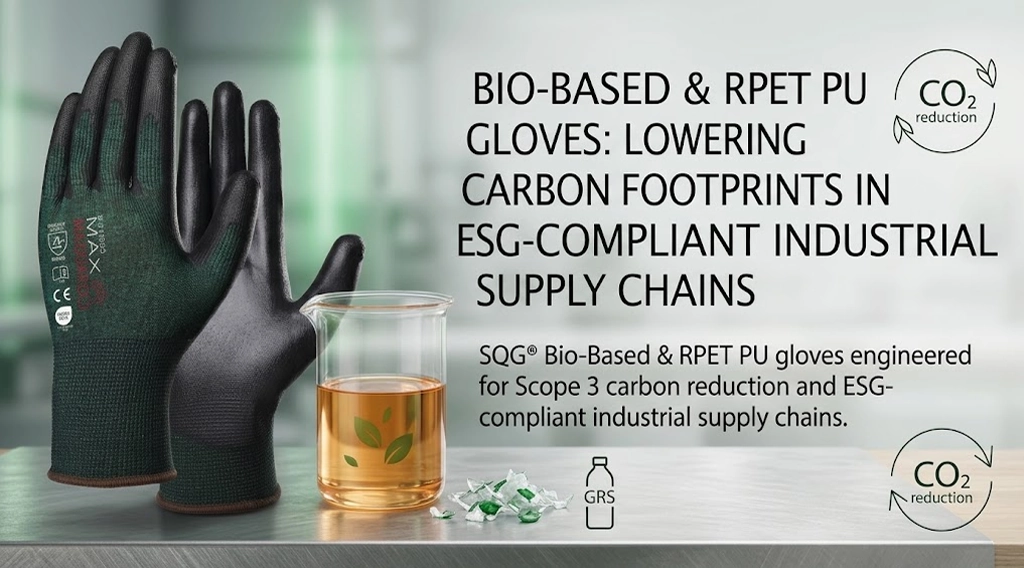
For information on eco-friendly recycled fibers, bio-based polyurethane technology, and corporate full-lifecycle sustainable procurement standards for Scope 3 product carbon footprint accounting, please refer to our specialized technical guide: Bio-Based & RPET PU Gloves: Lowering Carbon Footprints in ESG-Compliant Industrial Supply Chains.
Frequently Asked Questions (FAQs)
The Industrial Applications Engineering Team provides authoritative answers to common technical and ergonomic questions regarding the implementation of high-performance cut-resistant gloves in stamping shops, automotive body-in-white assembly lines, and glass processing facilities.
Can HPPE-based cut-resistant PU gloves withstand high contact heat during laser cutting or welding?
No. The use of HPPE-based cut-resistant gloves is strictly prohibited in high-temperature work environments.
Ultra-high molecular weight polyethylene (HPPE) is a thermoplastic polymer fiber with a softening point of approximately 130°C to 135°C and a melting point between 140°C and 150°C. When workers come into contact with high-temperature metal parts freshly cut by a laser, welding spatter, or hot-formed sheet metal dies, the HPPE fibers will instantly heat-shrink and melt. Not only will they completely lose their resistance to physical cutting, but the molten polymer may also adhere to and burn the skin on the hands.
For hazardous workstations involving exposure to heat above 150°C, open flames, or welding spatter, it is essential to select thermal-protective, cut-resistant gloves featuring a core yarn of para-aramid (such as Kevlar®) combined with a special high-temperature-resistant coating.
What is the main difference between the SQG® B3-310 and the P3-310?
The core differences between the two products lie in “gauge specifications” and “matching the physical load of the workstation”:
SQG® B3-310 (13-Gauge Classic Durable Model): Features 13-gauge HPPE-coated glass fiber composite yarn, with a fabric wall thickness of approximately 1.1 to 1.3 millimeters. Its engineering focus is on physical abrasion resistance and heavy-duty tear-resistance redundancy, specifically designed for high-wear-rate operations such as stamping and blanking lines, rough sheet metal flipping, and bending of large enclosures.
SQG® P3-310 (18-Gauge Ultra-Thin Sensitive Model): Features an 18-gauge ultra-high-density HPPE and high-elasticity nylon/spandex blend construction, with an overall thickness of just 0.7 to 0.9 millimeters. Its engineering advantages include the elimination of fingertip dead zones and the provision of sub-Newton-level tactile sensitivity comparable to that of the bare hand. It is tailor-made for high-dexterity workstations such as precision micro-deburring, blind insertion of large automotive displays and wiring harnesses, and the precise positioning of lightweight glass.
How does PU coating outperform nitrile when handling dry, sharp-edged glass?
Microporous polyurethane (PU) significantly outperforms nitrile rubber in terms of surface conformability and scratch resistance on dry, smooth surfaces.
Open-cell Micro-elastic Cushioning and Zero-Scratch: After curing, microporous PU features an open-cell elastic network similar to that of a sponge, providing a soft, conforming surface. When applying force to press or lift fragile coated glass and high-gloss panels, the PU coating evenly distributes the contact load, preventing microscopic scratches on the workpiece surface; in contrast, dense or micro-cellular nitrile rubber has relatively high structural rigidity, making it prone to causing paint or coating damage due to localized hard contact during sliding under heavy pressure.
Smooth and Stable Dry Friction Control: On dry, smooth flat glass surfaces, microporous PU provides moderate and stable static friction (0.85–1.15), allowing operators to make smooth, fine adjustments along the glass edges; nitrile rubber, on the other hand, often exhibits grip hysteresis on absolutely dry surfaces or leaves difficult-to-remove marks (ghosting) on the glass surface due to the precipitation of formulation additives.
How often should cut-resistant PU gloves be inspected and replaced on stamping lines?
A standardized SOP (Standard Operating Procedure) should be established, consisting of “self-inspections at the end of each shift + immediate scrapping upon detection of critical failure characteristics.”
In stamping and metalworking shops, the replacement cycle for cut-resistant gloves should not be based solely on a fixed number of days, but must be determined based on their actual physical wear and tear. If any of the following characteristics are observed, the gloves must be replaced immediately:
Exposed or damaged cut-resistant fiber lining: The PU coating on the palm or fingertips is worn through, exposing the underlying white/gray HPPE woven yarn, or the yarn shows obvious fraying, loose fibers, or microscopic cuts.
Localized peeling and delamination of the fingertip coating: In the thumb and index finger gripping areas—which are frequently subjected to stress—the polyurethane coating shows cracking, extensive peeling, or delamination, failing slip resistance and micro-stress transfer functions.
Exposure to severe, sudden cutting forces: In incidents such as a sheet of material slipping or being vigorously scraped by burrs, although the glove surface has not completely cut through the skin, the outer fabric has been severely torn and slashed laterally (indicating that local fiber molecular chains have been severed, resulting in a substantial downgrade in the cut resistance rating).
Reaching the industrial washing limit: After undergoing more than 5 industrial washes, if the gloves exhibit irreversible dimensional deformation and the cuffs have lost their elasticity to the point where they can no longer fit snugly around the wrist, they should be uniformly decommissioned and scrapped.
Strategic Sourcing & Call to Action (CTA)
In lean safety management at automotive OEMs, large-scale stamping component manufacturers, and high-precision glass processing enterprises, the scientific selection of personal protective equipment (PPE) for hand protection directly impacts production line assembly cycle times, the rate of zero-defect parts coming off the line, and the hand health and safety of front-line workers. By adopting high-denier microporous polyurethane gloves that combine reliable cut resistance meeting ANSI Levels A2–A4 with bare-hand-level tactile sensitivity (sub-newton), companies can eliminate workplace injury risks while significantly reducing the total cost of ownership (TCO) for consumables.
Request On-Site Sharp-Edge Risk Audits & Trial Sample Kits
To assist engineering and manufacturing departments, Lean managers, and EHS procurement teams in verifying the protective effectiveness and ergonomic performance of new cut-resistant gloves at specific workstations, we provide comprehensive on-site technical support and sample evaluation services for industrial manufacturing clients:
Request a free production line test sample kit: We provide a complete set of test sample kits, including the 13-gauge high-durability model (SQG® B3-310) and the 18-gauge ultra-thin, ultra-sensitive model (SQG® P3-310), to support frontline shop floor teams in conducting multi-shift, real-world comparative tests at workstations such as stamping and blanking, white body trimming, cockpit wiring harness blind insertion, and glass assembly.
https://sqgsafety.com/pu-coated-work-gloves/?swoof=1&pa_standard=ansi-cut-a3&really_curr_tax=26-product_catOn-Site Sharp-Edge Risk Assessment and Technical Documentation Support: To address specific pain points such as slip-and-cut injuries from stamping burrs, micro-scratches on in-vehicle displays, and silicone-free compatibility in paint shops, our technical team can provide detailed Technical Data Sheets (TDS), ASTM F2992-15 / ISO 13997 cut-resistance test reports, and VDMA 24364 silicone-free paint shop certification.
To schedule an on-site technical evaluation or request a sample package for production line testing, please feel free to contact our Technical Application Engineering team: Request Cut-Resistant Line Trial Samples & Technical Data Sheets.
Explore the High-Dexterity Cut-Resistant Product Portfolio
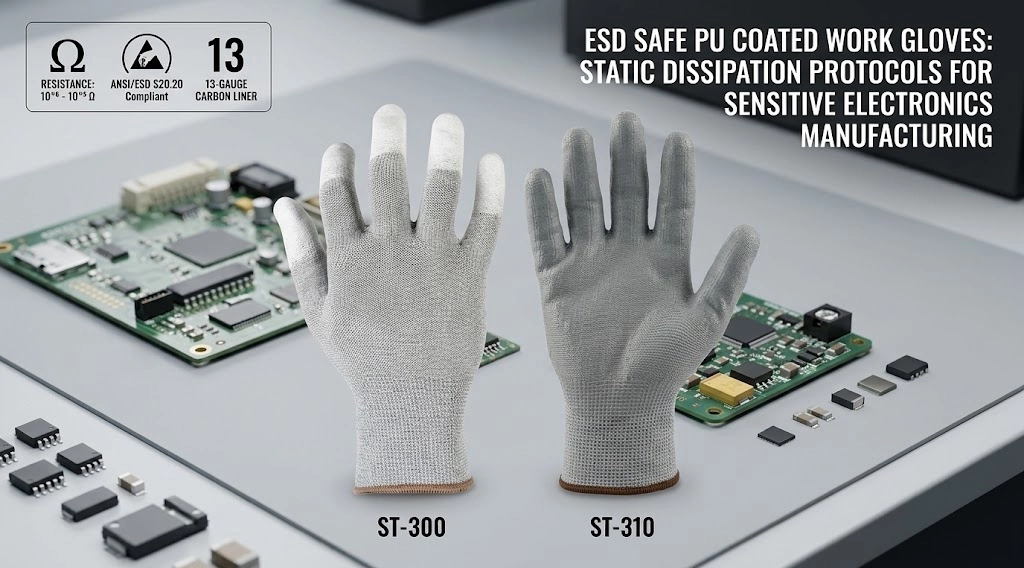
SQG offers a high-performance hand protection portfolio for industrial manufacturing—from 18-gauge ultra-thin micro-manipulation cut-resistant gloves and 13-gauge general-purpose, high-abrasion-resistant cut-resistant gloves to dust-free, anti-static cleanroom gloves and eco-friendly bio-based polyurethane gloves—all strictly compliant with ANSI/ISEA 105 and EN 388 international safety standards.
To learn more about our complete range of micro-perforated polyurethane cut-resistant gloves—specifically designed for stamping and sheet metal fabrication, smart cockpit assembly, and optical glass handling—including product specifications, sizes, and bulk purchasing options, please browse our comprehensive product catalog: Explore Precision Cut-Resistant PU Gloves for Industrial Manufacturing.