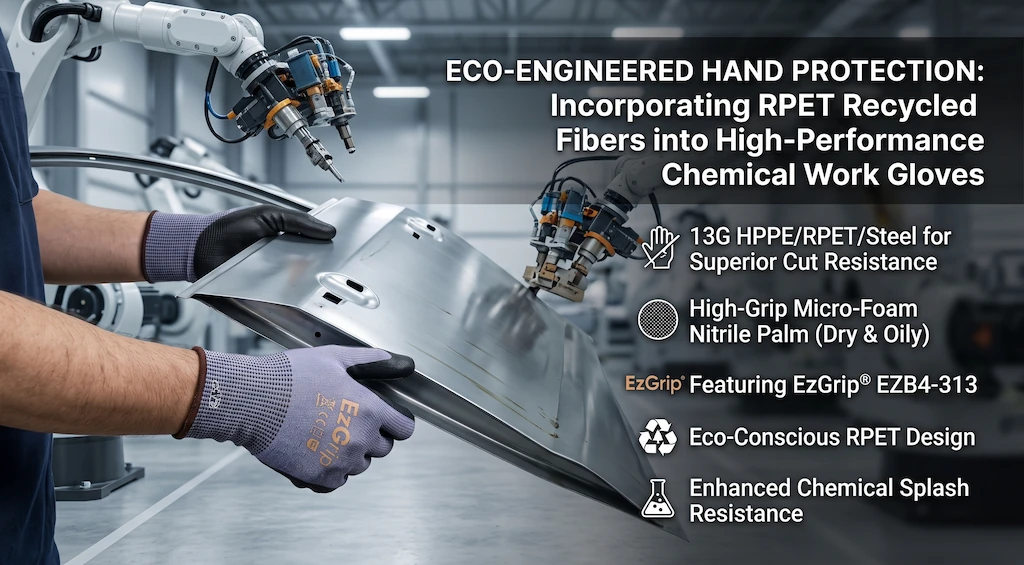
Introduction: The Green Mandate in Industrial Hand Protection
In modern industrial manufacturing systems, the adoption of sustainable, recycled RPET safety gloves that comply with international standards is rapidly evolving from a past “brand promotion initiative” into an insurmountable, mandatory entry requirement within multinational supply chains. In settings such as automotive final assembly, heavy-duty metal stamping, and precision machining, personal protective equipment (PPE) not only serves as the first line of defense against mechanical cutting and exposure to process fluids, but is now also directly under the spotlight of corporate carbon neutrality assessments and green supply chain audits.
As global sustainability requirements intensify, major OEMs and industrial giants in Europe and the United States have fully launched comprehensive accounting of Scope 3 greenhouse gas emissions across their supply chains. Because traditional industrial gloves have long relied on high-carbon production pathways based on virgin petrochemical polymers (such as virgin polyester, pure polyamide, and unmodified polyethylene), combined with their high-frequency consumption, incineration, and landfilling in workshops as low-value consumables, occupational safety and health supplies have become a significant and unignorable source of incremental emissions in companies’ Scope 3 indirect carbon footprints. Procurement and EHS decision-making teams at all levels are facing dual audit pressures from investors and regulators, creating an urgent need to incorporate low-carbon, traceable, and eco-friendly products into the procurement catalog for frontline protective equipment.
However, on the front lines of heavy industry, safety engineering managers continue to harbor deep-seated reservations about introducing “environmentally friendly recycled materials”—a long-standing industry stereotype holds that safety gloves spun from recycled plastic (RPET) often compromise mechanical strength, result in a sharp decline in fiber abrasion resistance, and lead to a precipitous drop in cut resistance when exposed to the edges of cold-rolled steel sheets without chamfers or oil-stained stamping burrs. When it comes to safety and compliance, no manufacturing company is willing to sacrifice workers’ hand safety or incur frequent downtime compensation costs in exchange for so-called “green metrics.”
The key to breaking this traditional impasse between environmental sustainability and heavy-duty protection lies in the deep integration of modern polymer recycling engineering with multi-component hybrid micro-woven architectures. By multi-axis twisting and blending high-purity post-consumer recycled polyester (RPET) with high-strength ultra-high molecular weight polyethylene (HPPE) and micron-level austenitic stainless steel wires, combined with a specialized surface coating process, this new generation of eco-friendly protective gear achieves significant reductions in virgin plastic usage while consistently delivering ANSI A4-level cut resistance and exceptional abrasion resistance, oil repellency, and grip.
For factory safety management teams that need to systematically advance the classification of fluid protection levels in the workshop and establish scientific configuration standards for light machining operations, continuous chemical exposure, and high-risk mechanical composite protection, we recommend a thorough review of our core pillar guide for this protection category: Chemical & Liquid Resistant Work Gloves.
The Misconception of Weakness: Dispelling Myths About Recycled Fibers
For a long time, the industrial safety equipment procurement community has harbored a deep-seated skepticism toward “recycled materials.” When many front-line shop supervisors and equipment safety officers hear that recycled plastic (RPET) has been incorporated into glove liners, their first reaction is often to associate it with agricultural greenhouse tarps, mixed-color non-woven fabrics, or low-end, low-count work gloves with loose weaves. A common concern is: How could fibers made from discarded beverage bottles possibly withstand the tugging of stamping burrs? And how could they possibly withstand the high-intensity wear and tear of machining operations?
This anxiety over performance degradation is not unfounded; it stems from industry pain points left over from early, crude plastic recycling technologies. However, in the field of modern polymer recycling materials science, the manufacturing process for industrial-grade sustainable recycled RPET safety gloves has long moved beyond traditional, low-end melt-spinning methods. Through deep purification, molecular chain reconstruction, and precision filament spinning, modern recycled polyester now possesses physical strength fully on par with virgin engineering plastics.
The Degradation Stigma of Post-Consumer Plastics
To eliminate industrial procurement biases against recycled fibers, we must first objectively address the technical shortcomings faced by post-consumer PET in traditional primary recycling processes:
Residual impurities and microscopic defects: Waste PET beverage bottles in municipal solid waste typically contain polyethylene caps, polypropylene labels, ink residues, and adhesive residues. If the material undergoes only simple sorting, cold-water washing, and crushing into pellets, trace amounts of resin and inorganic impurities remaining in the plastic fragments will carbonize into microscopic particles during high-temperature remelting. These impurity particles become embedded within individual fibers, effectively creating microscopic stress concentration points within the fiber structure;
Thermal-Oxidative Degradation Leading to Significant Reduction in Molecular Weight: During the high-temperature shearing process of primary recycling and pelletization, the presence of water vapor readily triggers high-temperature hydrolysis of the polyester macromolecular chains, causing the main chain of polyethylene terephthalate (PET) to break and resulting in a sharp drop in average molecular weight;
Macroscopic mechanical properties exhibit severe variability: Chain breakage and the presence of impurities are directly reflected in the fiber’s physical properties—insufficient tensile strength, extreme fluctuations in elongation at break, increased brittleness, and a high susceptibility to thermal aging. If these primary recycled staple fibers are used directly to weave work gloves, the inner lining will indeed experience rapid fiber breakage, pilling, or even extensive tearing upon contact with metal burrs or after repeated flexing.
Advanced Depolymerization & Solid-State Polycondensation

To ensure that recycled plastic meets the stringent load-bearing and abrasion-resistance requirements for heavy-duty industrial glove liners, the raw materials used by SQG undergo a rigorous, chemical-grade, closed-loop recycling process:
Deep, multi-stage melt filtration removes submicron-level impurities: Recycled transparent food-grade PET bottle flakes, after undergoing rigorous automated optical sorting and high-temperature, strong-alkali degumming, are fed into a vacuum-devolatilizing twin-screw extruder. Before extrusion, the melt passes through continuous backflush, multi-stage metal sintered mesh filters with micron-level microporous filtration precision, thoroughly removing microscopic carbonized impurities and gel particles, thereby eliminating sources of internal cracks during the recycled polymer spinning process;
Solid-State Polycondensation (SSP) for Macromolecular Chain Network Reconstruction: The primary flakes pass through a solid-state polycondensation reactor, where they undergo a prolonged, deep-level secondary polymerization and dehydration reaction under vacuum and high-temperature nitrogen protection. This chemical process allows the hydroxyl and carboxyl groups at the ends of the polyester molecular chains—which had previously been broken due to hydrolysis—to undergo esterification coupling once again, resulting in the linear extension and regular orientation of the polymer macromolecular segments;
Mechanical modulus returns to virgin polyester benchmarks: After solid-state polycondensation restructuring, the intrinsic viscosity (Intrinsic Viscosity, IV value) is significantly increased and stably restored to an engineering-grade high viscosity level of 0.84 to 0.88 dl/g. Its crystalline orientation, Young’s modulus, and monofilament fracture toughness fully match those of high-quality virgin polyester filaments, establishing a load-bearing framework resistant to mechanical tearing at the molecular chain level.
Tensile Consistency for High-Speed Knitting
During the physical knitting stage of glove production, recycled fibers must not only pass cut and abrasion resistance tests on the finished product, but must first withstand the rigorous demands of industrial-grade computerized glove knitting machines:
A zero yarn breakage rate ensures the high-speed operation of industrial knitting machines: When a 13-needle fully automatic computerized glove knitting machine knits the palm and fingertips at high speed in a back-and-forth motion, the yarn is subjected to extremely high-frequency pulsating tensile forces and friction between the yarn guides, tension clamps, and knitting needles. If the strength of the recycled polyester yarn is inconsistent or if there are variations in thickness, frequent yarn breaks will occur during the knitting process. This not only causes frequent machine downtime but also creates needle-puncture holes in the glove lining;
Replacing Short-Fiber Blends with Fully Continuous Composite Filaments: We use fully continuous, high-strength RPET microfilaments produced via high-speed spinning through a porous spinneret followed by heat-stretching and setting. The entire yarn features a round cross-section and uniform thickness, eliminating the common issues of traditional short-staple yarns—such as excessive surface fuzz and poor abrasion resistance;
High-density bonding with high-performance specialty fibers: This high-strength, high-toughness continuous recycled polyester filament demonstrates excellent flexible wrapping properties and friction interface adhesion when multi-axially twisted with ultra-high molecular weight polyethylene (HPPE) and ultra-fine stainless steel microfibers. It provides a dense, smooth, and tensile-fatigue-resistant fabric base for the entire glove liner, completely shattering the technical myth that “environmentally friendly materials cannot consistently deliver stable quality in high-speed industrial manufacturing.”
Quad-Fiber Hybridization: Engineering ANSI Cut Level A4
In the field of industrial cut protection, no single material can simultaneously balance the four conflicting mechanical properties of “high cut resistance,” “wear resistance,” “high elasticity,” and “low-carbon sustainability.” Traditional gloves made entirely of ultra-high-molecular-weight polyethylene (HPPE) are lightweight but have a low shear resistance threshold, and their raw materials rely heavily on fossil fuel-based substrates; gloves woven entirely from stainless steel wire, while extremely rigid, feel stiff and bulky, easily causing hand fatigue and a scratchy sensation for workers.
To overcome these physical limitations while incorporating a low carbon footprint—and to create sustainable recycled RPET safety gloves that balance environmental friendliness with heavy-duty protection—the engineering and R&D team adopted a four-component heterogeneous micro-blending technology. By tightly twisting high-strength polymers, recycled eco-friendly fibers, metal microfibers, and elastomers at the yarn level, they constructed a clearly layered, synergistic load-bearing network where each component’s strengths complement one another.
The Four-Pillar Fiber Synergy (HPPE/RPET/Steel/Spandex)
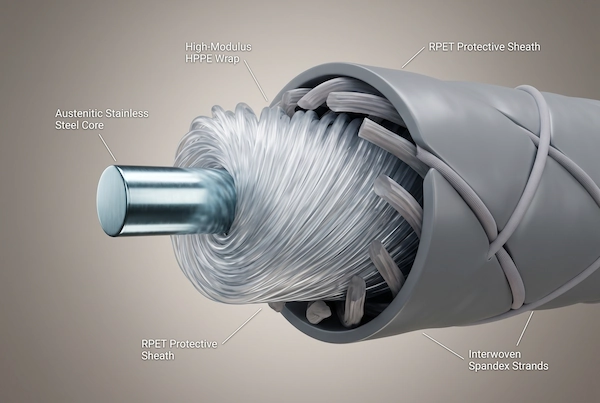
The 13-needle composite liner used in the EZB4-313 is not a simple loop blend; rather, it integrates four key materials into the axial cross-section of each composite yarn through a precise wrapping and twisting process:
Austenitic stainless steel microfibers (Steel Fiber, core shear-resistant skeleton): Specialized micro-metal wires with a diameter of only tens of micrometers are positioned at the yarn’s core. They act as a rigid “shear interceptor,” providing extremely high Mohs hardness and yield strength to withstand downward stamping loads from sharp metal edges;
Ultra-high molecular weight polyethylene (HPPE, energy-absorbing and high-elasticity damping layer): High-purity HPPE filaments are tightly helically wound around the steel microfiber core. Thanks to its ultra-high axial orientation of molecular chains and low surface friction coefficient, HPPE rapidly absorbs the kinetic energy of the blade through elastic micro-stretching when encountering a cutting edge, while simultaneously dispersing localized point loads to the surrounding fiber network;
Post-consumer recycled polyester (RPET, abrasion resistance and structural support): Continuous filament RPET, modified via solid-state viscoelastic modification, is blended into the outer layer. Polyester inherently possesses excellent resistance to friction fatigue, stability against acid and alkali degradation, and dimensional stability, forming a strong, tough, and abrasion-resistant outer mechanical layer for the entire yarn, which significantly mitigates the snagging damage caused by stamping burrs to the expensive HPPE core;
High-elasticity spandex filaments (Spandex, for conformability and curvature control): Spandex fibers with high recovery rates are evenly interwoven into the inner side of the fabric. They provide the 13-gauge knit fabric with excellent radial elastic recovery, ensuring that the entire glove closely conforms to the anatomical contours of the palm as the worker repeatedly clenches and unclenches their fist, eliminating any excess slack.
Micro-Shearing Defense: Steel Core Mechanics
The outer edges of freshly formed cold-rolled steel sheets in stamping shops, aluminum alloy die-cast blanks, and the ends of metal tubes after CNC milling are often covered with sharp, microscopic, sawtooth-like cold-stamping burrs. When ordinary pure polyethylene gloves come into contact with these sharp, pressure-induced burrs, the polymer filaments are easily severed one by one by the microscopic cutting edges, causing the tear to rapidly and uncontrollably propagate along the fabric’s grain.
The incorporation of internal micron-scale austenitic stainless steel wires completely transforms the microscopic stress distribution:
Blunting the cutting edge and altering the sliding trajectory: When a sharp metal edge cuts into the fabric surface at high speed, it first strikes the ultra-fine stainless steel core wire. The high rigidity of the micro-steel wire’s surface instantly halts the cutting depth of the edge, even forcing the extremely tiny cold-formed burrs to undergo plastic curling or micro-slip at the microscopic level, thereby eliminating the burr’s localized shearing sharpness;
Synergistic Load Dispersion Through Rigid-Flexible Integration: The central stainless steel wire blocks direct impact on the cutting edge, while the outer layer of HPPE and RPET polyester filaments, with their high tensile toughness, tightly constrains the metal core wire, preventing it from shifting laterally and dislodging under load. This microscopic composite effect—characterized by a “rigid core resisting compression and a tough shell absorbing energy”—enables the EZB4-313 to demonstrate excellent cut resistance in rigorous ASTM F2992-15 load testing, consistently passing ANSI/ISEA 105 A4 certification (withstanding shear loads of 1,500 to 2,199 grams) and simultaneously achieving the 4X42D mechanical shear resistance rating under the European EN 388:2016 standard;
Long-lasting resistance to metal fatigue and flex-corrosion wear: Micron-grade austenitic stainless steel offers excellent micro-bending toughness. Within the reasonable curvature radius constraints of a 13-pin coil, it can withstand tens of thousands of continuous finger-bending cycles without developing brittle fractures, thereby eliminating the critical flaw of traditional, low-quality steel-wire gloves—where broken wires can pierce the skin.
Cross-Cluster Integration: Advanced Cut-Barrier Engineering
The successful engineering application of a quadruple-fiber blend architecture has established the technical feasibility of incorporating eco-friendly materials into the heavy-duty industrial PPE sector. However, when faced with even more demanding extreme heavy-industry stamping environments—such as high-risk operations involving continuous liquid spray, including laser blanking of large white-body outer panels and the rapid handling of sharp, heavy-load metal sheets at high speeds—relying solely on 13-gauge A4-grade basic protection often requires further enhancement of safety margins.
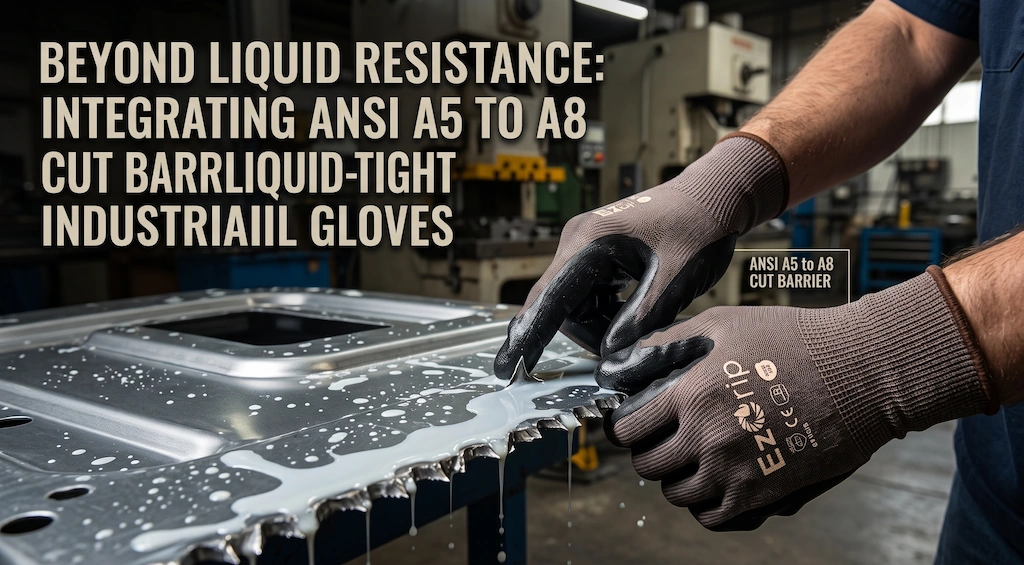
For such processes that impose more stringent requirements on cut-resistance and load capacity (in grams), SQG has further pushed the physical boundaries of specialized textile mechanics by combining ultra-high-density 18-gauge or even 21-gauge micro-woven structures with a high-toughness tungsten wire composite system, resulting in fully enclosed specialty protective gloves with defense capabilities reaching the pinnacle thresholds of ANSI A5 to A8. For in-depth information on the arrangement mechanics of ultra-fine tungsten filaments in higher-density fabrics, 360-degree anti-backflow fluid barrier film formation, and the selection logic for extreme heavy-duty composite protection, we recommend consulting our comprehensive technical white paper: Beyond Liquid Resistance: TekArmor® A5-A8 Cut Protection Guide.
Fluid Barrier & Tribology: EzGrip® Palm Coating Performance
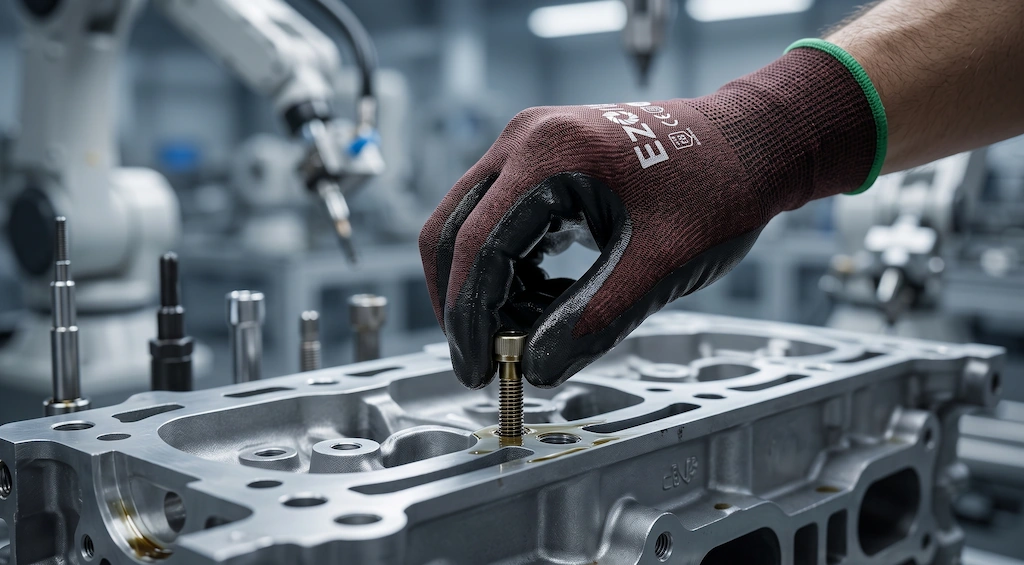
For sustainable recycled RPET safety gloves used on metal stamping and mechanical component assembly lines, a tough, cut-resistant liner serves only as the mechanical foundation for physical protection. Whether the gloves perform effectively in actual operations depends crucially on the fluid barrier and grip performance of the palm coating.
If the coating is not firmly bonded to the recycled fiber liner, it is highly prone to delamination and debonding under heavy shear loads; if the coating surface lacks a microstructure designed to disperse oil, workers will frequently experience slippage when gripping metal sheet parts coated with rust-preventive oil or cutting fluid. EZB4-313, based on the EzGrip® custom-modified nitrile impregnation system, creates a robust physical anchoring layer and highly efficient oil-repellent microchannels on a recycled polyester composite substrate, comprehensively balancing operational stability in low-oil conditions with long-term wear resistance.
Modified Nitrile Adhesion on Recycled Substrates
Compared to pure virgin nylon or smooth HPPE fabrics, the composite liner—which incorporates solid-phase tackifying RPET polyester and micron-sized stainless steel microfibers—exhibits higher surface roughness and more complex surface free energy. Conventional nitrile latex has relatively high viscosity and cures rapidly through cross-linking; during dipping, it often remains on the surface of the yarn, making it highly prone to flaking when subjected to heavy bending loads or abrasion from burrs.
To ensure molecular-level interlocking between the coating and the recycled blended fabric, the EzGrip® coating employs a specially optimized interfacial impregnation process:
Adjusting surface tension and achieving microemulsified low viscosity: By introducing special wetting and dispersing agents along with microemulsified nitrile copolymers, the apparent viscosity and dynamic surface tension of the impregnation solution are precisely reduced. During the fully automated, servo-controlled dipping process, the rubber solution smoothly wets and penetrates the gaps between the outer fibers of the quadruple-blend yarn;
Deep cross-linking creates physical, mechanical micro-needle anchoring: The micro-emulsified rubber latex deeply penetrates the microporous gaps formed by RPET polyester and HPPE filaments, achieving three-dimensional in-situ curing in multi-stage constant-temperature vulcanization ovens. After curing, the highly elastic nitrile elastomer forms dense, dendritic mechanical interlocks within the yarn’s microporous structure, firmly riveting the entire layer of the palm rubber film to the inner liner skeleton;
Excellent resistance to interlayer shear fatigue: This micro-interface bond with high interlocking force effectively eliminates the interfacial shear stress generated by frequent fist clenching, dragging heavy objects, and lateral scraping against metal burrs, fundamentally preventing failures such as coating blistering, delamination, or curling and peeling at the edges.
Micro-Channel Oil Evacuation for High-Traction Grip
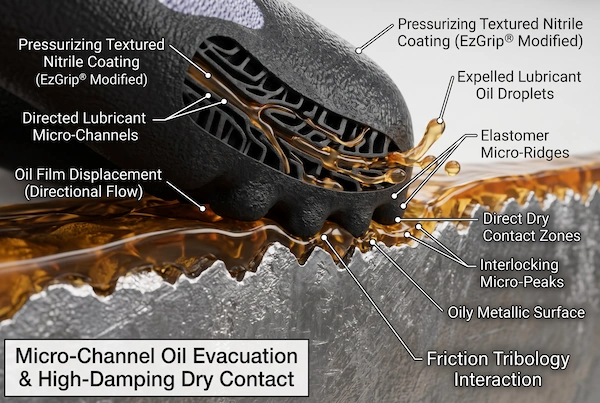
In metal stamping and machining assembly environments, workpiece surfaces are typically coated with rust-preventive grease, drawing oil, or residual water-based cutting fluid. This fluid forms a continuous lubricating film between the metal plate and the palm of the glove, significantly reducing the coefficient of static friction (COF) on the surface of conventional smooth rubber gloves.
The EzGrip® palm-dipping process overcomes this gripping challenge through microfluidic design:
Network of capillary oil-draining microchannels: The EzGrip® coated surface is not completely mirror-smooth and dense, but rather features a pattern of oriented micro-textures and microchannel structures. When an operator’s palm contacts an oil-coated workpiece and applies vertical gripping pressure, trace amounts of oil between the contact surfaces are rapidly forced into these microchannels along the pressure gradient;
Disrupting fluid lubrication and establishing microscopic interlocking: As excess fluid in the local area is rapidly expelled, the oil film at the contact interface undergoes transient rupture. The nitrile elastomer protrusions on the coated surface directly penetrate the oil layer, forming direct mechanical interlocking and micro-elastic adhesion with the microscopic roughness on the metal workpiece surface—equivalent to dry-state conditions;
Robust grip damping coefficient under all operating conditions: Whether handling dry, oil-free cardboard boxes, transporting cold-rolled steel sheets with trace amounts of stamping and stretching oil, or performing initial grinding of components coated with water-based emulsions, the EzGrip® coating provides consistent and stable anti-slip damping, significantly reducing material damage and scrap caused by workpieces slipping out of hand, as well as accidents involving foot injuries from falling objects.
EN 388 Level 4 Abrasion Verification
In the assessment of the total life-cycle cost of industrial personal protective equipment, the abrasion resistance rating directly determines a glove’s service life per shift and its overall procurement cost:
Withstood Rigorous Martindale Abrasion Testing: In accordance with the European EN 388:2016 standard for protection against mechanical hazards, the EZB4-313 underwent a high-intensity circular abrasion test (Martindale Abrasion Test). Under a specified normal load, specialized sandpaper applied continuous rotational friction to the palm coating of the gloves;
Achieved the Highest Level 4 Mechanical Abrasion Rating: Actual test data shows that after enduring over 8,000 cycles of continuous friction, the modified nitrile rubber layer on the palm of the EZB4-313 remained tight and smooth, with no signs of wear-through or exposure of the inner liner. It successfully achieved the highest level—Level 4—for abrasion resistance under the EN 388 system (the first digit of the test code is 4; the full rating code is 4X42D) ;
Challenging the conventional perception that eco-friendly PPE is prone to wear and tear: The ultra-high abrasion resistance of 8,000 revolutions, combined with the internal ANSI A4-grade tough steel wire cut-resistant reinforcement, strongly demonstrates that incorporating RPET recycled fibers does not mean sacrificing physical service life. The EZB4-313 demonstrates greater structural integrity than standard virgin 13-gauge PU or lower-grade latex gloves during long-term, heavy-duty hardware handling and sheet metal work, providing a solid technical and quality endorsement for factories seeking to implement green, low-carbon procurement.
Digital-Ready PPE: Integrated Touchscreen Functionality
Amid the wave of digital transformation in modern manufacturing, paperless operations on the shop floor and the interconnection of equipment data have become standard practice. Operators inevitably need to interact frequently with various types of industrial-grade capacitive touchscreens. However, traditional industrial protective gloves typically use insulated polymer knits and dip-coated materials, which directly block the human body’s bioelectric field, making it completely impossible for workers to activate or operate screens while wearing them. The EZB4-313 seamlessly integrates full-fingertip touchscreen capability into its design while maintaining an eco-friendly, cut-resistant structure, making it a sustainable recycled RPET safety glove highly suited for smart manufacturing scenarios.
Conductive Pathways in Steel-Spun Hybrid Liners
Inexpensive touchscreen gloves commonly found on the market often rely on a process where conductive silver paste or graphene coatings are applied to the outer surface of the fingertips. These surface coatings typically wear away rapidly within a few work shifts after coming into contact with stamped parts and rough metal components, resulting in complete loss of touchscreen functionality.
The EZB4-313 addresses this pain point at the fundamental level of textile engineering. The micron-sized austenitic stainless steel microfibers (Steel fiber) woven throughout its 13-gauge blended liner are excellent metallic conductors in their own right. During the spinning and high-speed computerized knitting processes, these continuously distributed metal microfibers naturally form a dense and stable three-dimensional conductive network throughout the glove’s interior. This physical structure—in which the conductive metal framework is embedded deep within the yarn and protected by an outer layer of HPPE and RPET—means that as long as the glove liner does not suffer a complete tear or damage, its internal capacitive conductive circuit remains permanently effective, eliminating concerns about service life caused by peeling conductive coatings.
Direct HMI Interaction in Greasy Environments

Digital interaction environments in industrial settings are far more complex than everyday smartphone use. In metal machining shops or stamping and assembly workshops, operators’ fingertips are often coated with trace amounts of cutting fluid or rust-preventive stamping oil.
Thanks to the synergistic effect of a highly conductive network formed by internal stainless steel wires and an ultra-thin, microporous, modified nitrile coating on the fingertip, the EZB4-313 can rapidly penetrate even trace oil films to establish micro-charge coupling between the operator’s finger, the conductive metal wires, and the screen’s sensing layer. Even when the outer layer of the glove is contaminated with trace amounts of anti-rust stamping oil, or when interacting with CNC machine tool control panels (HMI), handheld barcode scanners (PDA) used in warehousing and logistics, or industrial control tablets on assembly lines—all of which may be coated with industrial dust—frontline workers can still enjoy precise, zero-latency finger-swipe and tap feedback. Operators can smoothly enter machining parameters, scan barcodes to confirm materials, and control equipment start/stop functions without applying excessive pressure.
Eliminating Glove-Removal Laceration Hazards
The core value of integrating factory-standard touchscreen functionality lies not merely in enhancing the “convenience” of data entry, but in plugging a hidden yet extremely dangerous loophole in on-site safety management.
In workshops without touchscreen-compatible gloves, workers are forced to frequently remove their gloves to enter commands on CNC machine panels, answer work-related calls, or view digital work orders on tablets. The moment the gloves are removed, the operator’s hands are left completely unprotected and exposed to danger. If, at this moment, a worker accidentally comes into contact with sharp metal chips left inside the machine tool or the unchamfered edges of cold-rolled steel plates, it is highly likely that serious, instantaneous mechanical lacerations or tendon injuries will occur; at the same time, exposed skin may also come into direct contact with extreme-pressure additives and alkaline cleaning solutions left on the workstation. The EZB4-313’s integrated touchscreen design allows workers to completely eliminate the unsafe practice of “putting on and taking off gloves,” ensuring 100% continuous hand protection throughout the entire shift and thoroughly eliminating the risk of lacerations and chemical exposure caused by leaving the workstation to perform other tasks.
Quantitative Benchmarking: Virgin vs. Sustainable Safety Gloves
In procurement tenders conducted by multinational manufacturing groups and large industrial enterprises, the initiation of projects involving sustainable recycled RPET safety gloves often involves a multi-stakeholder negotiation among finance, EHS, and on-site process departments. The procurement department focuses on unit price and lead time; the EHS department evaluates workplace injury prevention and certification qualifications; while the sustainability committee closely monitors carbon reduction targets across the supply chain.
The only way to break down interdepartmental barriers is to rely on quantitative, empirically measured data from standardized laboratories. By placing industrial-grade recycled composite gloves within an objective matrix of mechanical and environmental metrics and conducting a horizontal benchmarking comparison with high-end gloves made from pure virgin fossil-based materials as well as commonly available primary-recycled work safety gloves on the market, it is possible to clearly demonstrate the true effectiveness of green engineering technology in both mechanical protection and carbon reduction.
Multi-Parameter Laboratory Data Matrix
To objectively evaluate the actual performance of different manufacturing processes in terms of material strength, physical protection, functional suitability, and ecological footprint, the SQG Industrial Safety Laboratory conducted comprehensive comparative testing on three representative industrial gloves in accordance with the ANSI/ISEA 105-2016 and EN 388:2016 standards:
| Comparison Criteria (Evaluation Metric) | Standard 100% Virgin 13G HPPE Base Model | EzGrip® EZB4-313 (RPET/Steel Composite) JPG | Traditional Recycled Cotton/Polyester Handling Gloves |
| Liner Composition and Environmental Certifications | 100% Virgin High-Modulus Polyethylene Filament (Uncertified) | GRS-certified RPET polyester / HPPE / austenitic stainless steel wire/spandex four-component blend | Unclassified, Assorted-Color Household Textile Recycling Short-Staple Blends (No Traceability System) |
| ANSI/ISEA 105 Cut Resistance Rating | ANSI A2 (Shear Load 500–999 grams) | ANSI A4 (Shear Load 1,500–2,199 grams) | Below ANSI A1 (No shear-resistant reinforcement; extremely prone to cuts) |
| EN 388:2016 Certification Rating Code | 4242B | 4X42D (High-level performance in both abrasion and cut resistance) | 1111X (No valid cut-resistant certification) |
| EN 388 Mechanical Abrasion Cycle Life | Level 2 (1,000 Martindale abrasion cycles) | Level 4 (Withstands 8,000 abrasion cycles without exposing the base material) | Level 1 (pilling and damage occur after fewer than 100 sanding cycles) |
| Coating Process and Grip Performance | Standard polyurethane (PU) flat-dipped palm; prone to slipping when exposed to oil | EzGrip® modified nitrile oil-repellent microporous palm coating, providing high damping in dry, wet, and oily conditions | Partial PVC spot coating or no coating on the palm; no oil-repellent function |
| Native Touch Support for Industrial Capacitive Screens | Not supported (fully insulated; must be removed before handling) | Full-palm native high-sensitivity touchscreen capability (Internal continuous steel wire conductivity) | Not supported (blocking capacitive bioelectric currents) |
| Carbon Footprint Offset Equivalent per Single Glove | Virgin petrochemical plastic baseline emissions (high carbon footprint) | Each dozen gloves consumes and recycles approximately 1.8 discarded PET plastic bottles, with traceable carbon reduction | Lacks a formal carbon accounting model; high levels of microplastics shed during washing |
| Compatibility with Typical Workshop Workstations | Packaged in dry, oil-free cardboard boxes; suitable for low-risk, light industrial use | Moderately oily sheet metal stamping, automotive body-in-white assembly, and metal machining | Extensive processes such as farm work and basic dry powder material handling |
This test matrix clearly shows that, after incorporating GRS-certified recycled polyester filaments, the EZB4-313 not only maintains its cut resistance performance but also achieves the high ANSI A4 protection level thanks to its built-in stainless steel micro-core. Furthermore, its Level 4 abrasion resistance is several times that of standard virgin gloves.
The Operational Red Line: Palm-Dip vs. Full Fluid Immersion
Although the EZB4-313 demonstrates balanced protective performance in metal stamping and component assembly operations, shop safety engineers must strictly define the physical service limits of “palm-dip” gloves when approving process configurations to avoid safety hazards caused by confusion over operating conditions:
Optimal Application Scope for Palm-Coated Gloves (Moderately Oily Environments and Alternating Wet/Dry Processes): The EZB4-313 features a palm-coated design combined with a 13-gauge knitted back. The core advantage of this construction lies in “localized oil-repellent grip + natural breathability on the back of the hand.” In applications such as automotive stamping and sheet metal handling, door trim panel assembly, inspection of moderately oily machined parts, and assembly line logistics, heat and sweat from the worker’s hands can be continuously vented through the micro-pores on the back of the hand, significantly alleviating the stuffy, white-fingered sensation caused by prolonged wear; meanwhile, the modified nitrile rubber layer on the palm is sufficient to block rust-preventive grease and drawing oil adhering to workpiece surfaces;
Restricted Areas for Palm-Dipped Gloves (Continuous Liquid Immersion and High-Pressure Spraying): Since the back of the glove and the spaces between the fingers retain fully breathable knitted voids, whenever the work environment involves “reaching into cleaning tanks or cutting fluid settling tanks to retrieve workpieces,” “exposure to violent splashes of high-pressure water-based coolant,” or “assembling transmission assemblies from which highly concentrated emulsified oil continuously drips,” the liquid will penetrate the fabric gaps on the back of the hand and saturate the inner lining within seconds. Fibers saturated with chemical cutting fluid for extended periods, when in close contact with the skin, can easily cause redness and swelling of the hands or even contact dermatitis;
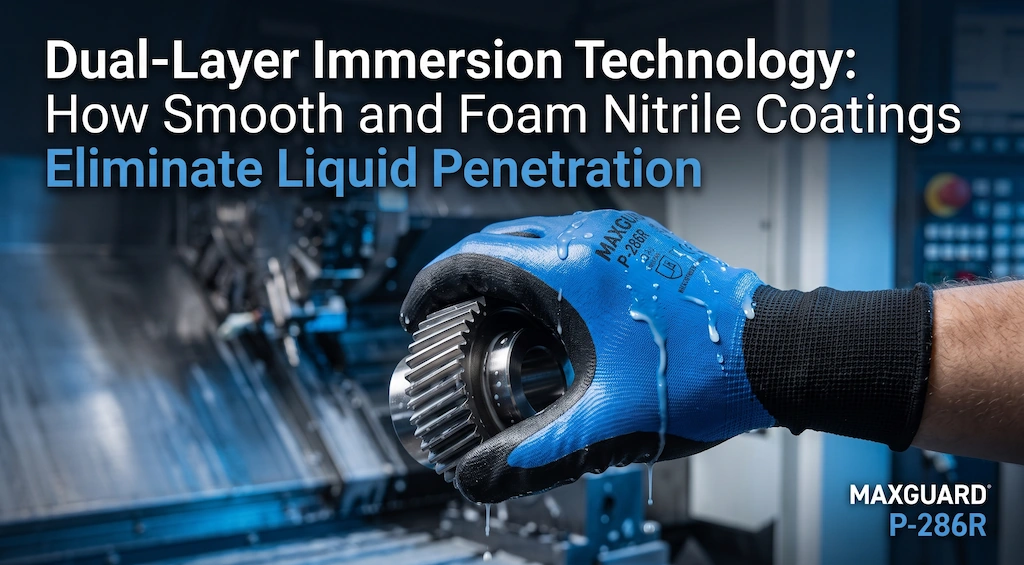
Upgrade Criteria for 360-Degree Full-Immersion, Long-Lasting Barrier Gloves: Whenever a workstation involves deep liquid immersion or continuous fluid exposure, the factory’s safety management team must establish mandatory upgrade criteria and immediately switch to heavy-duty protective models featuring a 360-degree seamless, micro-emulsified, fully enveloping rubber coating (such as the EZK5-324FD or the Double-Dipped series gloves). By relying on a continuous, sealed polymer outer membrane that completely blocks liquid backflow pathways, these gloves achieve true deep-level fluid containment.
Sustainable Workstation Profile: Spotlight on EzGrip® EZB4-313
Addressing the multifaceted demands of modern industrial manufacturing lines—which require a balance of high shear resistance, slip resistance in both dry and wet conditions, oil repellency, and carbon reduction in the supply chain—the EzGrip® EZB4-313, developed by SQG’s R&D team, has established a benchmark for the engineering application of industrial-grade sustainable recycled PET safety gloves. This model breaks away from the traditional approach of relying solely on fossil-based polymers for cut resistance. Instead, it pioneers the deep hybridization of post-consumer recycled polyester with a micron-level cut-resistant framework, providing a balanced solution that combines excellent ergonomics with a low carbon footprint for automotive white body assembly, hardware stamping part handling, and machining stations.
Material Traceability & OEKO-TEX® Standard 100
When introducing recycled plastic products into industrial procurement, in addition to reviewing mechanical protection ratings, corporate EHS departments are often most concerned about the chemical safety of recycled materials—recycled plastics that have not undergone rigorous processing are highly prone to contamination with industrial waste rubber, brominated flame retardants, heavy metal impurities, and residues of harmful additives. When workers wear these materials in direct contact with their skin for extended periods and sweat, it can easily trigger contact dermatitis and skin allergies characterized by redness and swelling.
The EZB4-313 cuts off the chain of harmful chemical contamination at the source, establishing rigorous material traceability and a biosafety barrier:
Stringent chemical screening and eco-textile certification: The inner liner and coating of the EZB4-313 gloves have fully passed the internationally recognized and rigorous OEKO-TEX® STANDARD 100 certification system and have obtained the corresponding standard label. Testing covers hundreds of harmful chemicals, rigorously verifying that the product is absolutely free of carcinogenic aromatic amine azo dyes, extractable heavy metals (such as lead, cadmium, and nickel), free formaldehyde, phthalate plasticizers, and organotin compounds;
Maintenance of a stable, mildly acidic, skin-friendly pH microenvironment: Addressing the reality that workers in heavy industry workshops wear gloves continuously for 8 to 10 hours, causing the palms to sweat and the skin surface to become acidic, the EZB4-313 lining fabric has undergone a neutralization and purification process to precisely control the pH of the fabric extract within the safe, mildly acidic to neutral range (pH 4.0 to 7.5) that matches the skin’s natural sebum film, eliminating damage to the stratum corneum caused by residual strong acids or alkalis;
Verifiable Global Recycled Standard (GRS) traceability chain: The RPET polyester filaments used in these gloves are accompanied by complete supply chain transaction certificates (TC certificates). Every processing step—from the physical crushing and cleaning of recycled bottle flakes to the removal of adhesives, followed by solid-phase viscoelastic melting and filament drawing—is fully traceable. This not only provides authentic and reliable data to support ESG procurement audits for multinational corporations but also ensures that frontline workers can wear the gloves comfortably against their skin around the clock with complete peace of mind.
Ergonomic 13-Gauge Breathable Knit Architecture
On high-intensity hardware stamping and automotive assembly lines, one of the main reasons workers remove their gloves without authorization is that the lining feels “stuffy, stiff, and causes sweat to build up.” To eliminate this discomfort, the EZB4-313 features a high-density 13-gauge knitting process for the inner lining that has been deeply optimized for ergonomics:
Open-cell microcirculation convection on the back of the hand: The glove features a palm-only dip-coated design, while the back of the hand fully retains the original knitted structure of the 13-gauge composite yarn. The loops formed by micron-level filaments create uniformly interconnected micron-level air pores, forming highly efficient natural heat and moisture exchange channels. When workers are engaged in high-intensity handling of metal components, the moist, warm sweat vapor emitted from the palm can rapidly evaporate and circulate through the knit pores on the back of the hand, preventing grip fatigue caused by the skin on the palm turning white due to prolonged exposure to high humidity;
Microscopic elasticity eliminates resistance and damping during finger joint flexion and extension: The high-elasticity spandex filaments in the composite yarn endow the 13-gauge inner liner with exceptional bidirectional stretch compliance. When workers perform frequent, alternating movements such as gripping, pressing, and twisting at their finger joints, the fabric naturally stretches to follow the curvature changes of the hand’s bones and tendons, eliminating the sensation of pressure from lumps caused by excess fabric bunching;
Anatomically Contoured Wrist Hem: The glove cuff features a thickened, highly elastic ribbed knit combined with a colored ring hem. This design ensures moderate pressure support at the wrist and effectively prevents dust and debris from entering, while also eliminating localized blood flow restriction caused by an overly tight cuff, ensuring that workers’ fingers remain fully agile even after hours of continuous work.
Direct Product Link & Technical Specifications
For industrial manufacturing companies facing frequent cuts from stamped edges, severe slippage on oily surfaces with traditional gloves, and actively pursuing low-carbon upgrades in their supply chains, we recommend directly reviewing this model’s detailed engineering and mechanical test data, washing cycle protocols, and third-party environmental certification documents:
To gain a deeper understanding of the product’s core technical specifications and its oil resistance and abrasion resistance performance, please visit the product details page: EzGrip® EZB4-313 Cut-Resistant Glove.
Enterprise ESG Economics: Calculating Carbon Offsets and TCO
In traditional financial accounting for manufacturing companies, personal protective gloves are often classified as “low-value consumables,” and procurement decisions tend to focus solely on the minor price differences per pair recorded in the books. However, as international industrial giants and leading automakers fully implement ESG supply chain audits that penetrate the entire supply chain, the model of relying solely on low-cost procurement of low-end, disposable gloves is imposing high hidden costs on companies.
From a total cost of ownership (TCO) perspective, adopting sustainable recycled RPET safety gloves is not merely a compliance expense to meet environmental policies, but a comprehensive financial solution that directly optimizes corporate carbon emissions reporting, significantly reduces material turnover losses on the shop floor, and mitigates the risk of sanctions in the international supply chain.
Quantifying Scope 3 Decarbonization in Hand Protection
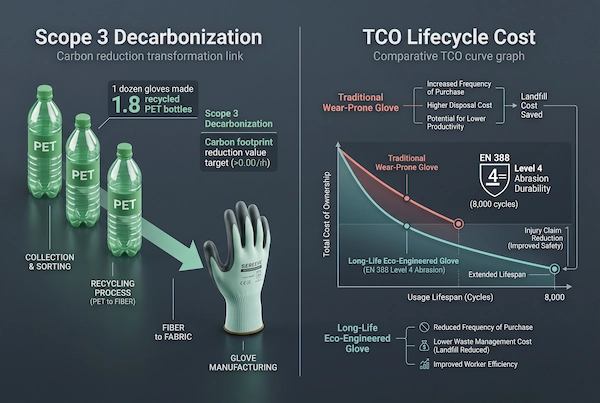
Under the internationally recognized Greenhouse Gas Protocol (GHG Protocol) framework, carbon emissions generated by a company’s procurement of goods and services are strictly classified under “Scope 3” of the supply chain. Traditional industrial gloves produced from purely fossil-based raw materials involve the refining and filament drawing of virgin polyester and polyamide—a typical high-carbon industrial process.
By introducing RPET (recycled polyester) fibers, factories can establish a clear, quantifiable model for reducing carbon emissions in personal protective equipment (PPE):
Reduction in virgin plastic and carbon emissions conversion: Each pair of EZB4-313 gloves incorporates post-consumer recycled polyester blended into the inner liner; on average, each dozen gloves (12 pairs) directly consumes and safely converts approximately 1.8 standard 500-milliliter discarded PET plastic bottles;
Quantification of Annual Carbon Reduction Contribution per Production Line: Taking an automotive stamping and machining workshop with 200 operators as an example, assuming each worker uses one dozen conventional gloves every two weeks on average, the workshop’s annual glove consumption is approximately 5,200 dozen. After fully switching to EZB4-313, the workshop can directly consume approximately 9,360 discarded plastic bottles in a single year. Compared to the energy consumption levels of virgin polyester production—which can reach several kilograms of CO₂ equivalent per kilogram—the comprehensive carbon footprint of chemically recycled RPET filament is significantly reduced by more than 50%;
Audit-ready ESG reporting documentation: These specific, traceable material-reduction data can be directly entered into the “Supply Chain Indirect Emissions Reduction” section of the company’s annual sustainability report and the CDP Carbon Disclosure Questionnaire, providing the company with quantifiable carbon reduction credentials that stand up to verification by third-party professional accounting firms.
Level 4 Durability as Upstream Source Reduction
Many procurement managers worry that eco-friendly materials will accelerate glove wear and tear, leading to more frequent replacements and, consequently, higher total procurement costs. However, from the scientific perspective of industrial source reduction, “the durability of the equipment itself” is precisely the most efficient means of reducing carbon emissions and lowering costs.
The Total Cost of Ownership (TCO) optimization provided by the EZB4-313 stems primarily from the combination of its materials’ long-term mechanical durability and waste-reduction mechanisms:
An ultra-long abrasion resistance cycle of 8,000 cycles breaks the cycle of frequent replacement: In machining environments with oil, the palm coating on standard, low-end 13-gauge PU or latex gloves typically develops localized holes or fraying after about 1,000 continuous friction cycles, forcing workers to request new gloves every 1 to 2 shifts; In contrast, the EZB4-313, featuring an EzGrip®-modified nitrile palm dip and a steel wire composite liner, has been tested to consistently meet EN 388 Level 4 abrasion resistance (8,000 cycles without failure), with a total service life more than 3 to 4 times longer than that of standard low-end gloves;
Expenditures on solid waste landfilling and hazardous waste disposal have plummeted: Due to the significantly extended service life of the gloves, the average annual number of gloves discarded per workstation has decreased by more than 50%. This not only reduces expenses related to the collection, landfilling, and incineration of waste fibers at the source but also lowers the factory’s costs for the collection and weighing of hazardous waste generated by work gloves contaminated with cutting oil;
Real financial benefits in TCO surpass those of low-cost alternatives: Although the initial purchase price per pair of high-performance, eco-friendly composite gloves is slightly higher than that of low-quality virgin-fiber gloves, when combined with a 50% reduction in replacement frequency, streamlined warehousing and storage operations, and the elimination of workers’ compensation claims and downtime risks, a company’s actual annual total expenditure on hand protection can be reduced by an average of 20% to 35%, fully realizing a virtuous economic cycle where “the more durable the gloves, the less waste generated, and the lower the total cost.”
Mitigating Green Supply Chain Audit Risks
With the rapid implementation of green trade barriers and sustainability standards, the green compliance status of occupational safety and protective equipment is directly affecting manufacturers’ eligibility to fulfill overseas orders:
Preventing Carbon Border Adjustment Mechanism (CBAM) and Product Carbon Footprint Penetration Reviews: The EU’s CBAM mechanism has gradually expanded from basic raw materials such as steel and aluminum to highly processed industrial products; major automotive and industrial equipment buyers in Europe and the U.S. now require suppliers to provide Life Cycle Assessment (LCA) data; In procurement bids for complete vehicles and automotive components, if Tier-1 or Tier-2 suppliers continue to use large quantities of high-carbon-emission, uncertified, low-quality consumables in their manufacturing processes, they will face point deductions in their sustainability ratings or even be disqualified from the shortlist;
Avoiding compliance pitfalls related to microplastics and hazardous chemicals: Adopting EZB4-313, which comes with a complete GRS Chain of Custody Certificate (Transaction Certificate) and OEKO-TEX® STANDARD 100 eco-textile certification, effectively helps avoid penalties associated with RoHS, REACH Substances of Very High Concern (SVHC), and specific hazardous plasticizers when exporting to the EU and North American markets;
Building a Competitive Moat for Access to Major Global Clients: Proactively upgrading front-line protective equipment to a traceable RPET eco-friendly system enables manufacturers to confidently navigate the rigorous annual joint on-site EHS and ESG social responsibility audits conducted by internationally renowned original equipment manufacturers (OEMs), transforming what was once a passive environmental compliance burden into a core competitive advantage in bidding for high-value-added, large-volume manufacturing orders from international clients.
Technical FAQ: Sustainable RPET Safety Gloves in Practice
When implementing sustainable recycled RPET safety gloves on the front lines of manufacturing plants and stamping shops, on-site process engineers, team leaders, and EHS specialists responsible for occupational health often raise a series of highly specific engineering concerns. Technical concerns primarily focus on whether recycled polyester shortens the effective service life of cut resistance, whether touchscreen functionality remains reliable in oily environments, whether direct skin contact may cause allergic reactions, and whether the gloves maintain their physical properties after industrial washing.
This section addresses these frequently raised technical concerns in heavy industrial settings by providing clear and rigorous engineering answers from three perspectives: microscopic textile physics, material interface chemistry, and full-lifecycle maintenance protocols.
Does incorporating recycled RPET compromise ANSI A4 cut-resistance durability?
No. Many site supervisors mistakenly believe that adding recycled RPET to the glove liner will significantly reduce its cut-resistance lifespan compared to gloves made from virgin high-strength fibers. This concern confuses the distinct mechanical roles of the “shear-resistant load-bearing skeleton” and the “fabric structural covering layer” within the yarn.
In the EZB4-313’s four-component blend architecture, the core components that directly face downward pressure from a metal blade and bear the rigid shear resistance are micron-sized austenitic stainless steel fibers and high-modulus HPPE continuous filaments:
The core load-bearing framework operates independently: When the unchamfered edge of a cold-rolled steel plate or sharp burrs from a stamping press down and scrape across the glove, the extremely high transient shear stress is primarily absorbed by the central micro-metal core wires and the high-molecular-weight polyethylene chains. The high hardness of the steel wires causes the cutting edge to be blocked and blunted at the microscopic level;
Synergistic abrasion-resistant sheath function of RPET: Solid-phase visco-modified RPET (recycled polyester) fibers primarily serve as the outer structural sheath, leveraging their physical properties of abrasion resistance, dimensional stability, and resistance to chemical corrosion;
Verified zero loss of cut resistance: The outer layer of recycled polyester tightly binds and protects the internal HPPE and steel fibers, preventing lateral displacement or premature microscopic wear. In rigorous cyclic cutting tests conducted in accordance with the ASTM F2992-15 standard, the cut resistance load of EZB4-313 remained consistently within the standard range of 1,500 to 2,199 grams, reliably meeting the ANSI A4 and EN 388 Level D certification standards. Its physical cut resistance lifespan did not exhibit any substantial decline due to the incorporation of recycled materials.
Why is the touchscreen capability permanent rather than a temporary surface coating?
The vast majority of standard touchscreen gloves on the market use a post-processing technique, in which a layer of conductive carbon black paste, graphene polymer, or conductive metal powder is applied to the fingertips of the gloves after they have been molded. Such surface coatings are highly prone to peeling off due to mechanical wear after just a few shifts of contact with rough metal panels and oily workpieces, rendering the screen unresponsive to bioelectric currents.
The touchscreen interaction logic of the EZB4-313 completely reengineers the conductive pathways from the fiber-spinning stage:
Metal core filaments form continuous conductive microchannels: The austenitic stainless steel microfibers in the glove liner—which provide mechanical cut resistance—are themselves excellent metallic conductors. These micrometer-scale steel wires naturally form a seamless, three-dimensional charge-conducting network throughout the entire glove, from the wrist to the tips of all five fingers, thanks to the high-density weave;
Microporous elastomer enables capacitive penetration coupling: The thickness of the EzGrip®-modified nitrile thin layer covering the fingertips is precisely controlled. Combined with its microporous foam structure, this allows the faint bio-capacitive signals from the fingertips to penetrate the coating directly through the densely woven steel wire network, establishing precise charge interaction with industrial CNC screens;
Permanent Conductivity Throughout the Liner’s Lifespan: Since the conductive core is deeply embedded within the center of the wear-resistant polymer yarn, as long as the glove liner does not suffer extensive physical perforations or yarn breaks, its capacitive touch response capability will fully align with the glove’s physical lifespan, eliminating the industry-wide issue of “fingertips losing responsiveness after a few days of use.”
How does the OEKO-TEX® Standard 100 certification guarantee skin safety when using recycled plastics?
Discarded PET plastic bottles recovered from municipal solid waste have a complex composition and typically contain trace amounts of printing ink, adhesive residues, and potential environmental contaminants. The industrial sector is highly sensitive to the risk that the use of recycled materials in direct contact with the skin could cause redness, peeling, or even chemical sensitization in workers’ hands.
EZB4-313 has passed the rigorous OEKO-TEX® STANDARD 100 certification from the International Association for Research and Testing in the Field of Textile Ecology, comprehensively eliminating potential toxic substances from the source of manufacturing:
Multi-stage high-temperature purification and deep vacuum degassing: Recycled food-grade transparent bottle flakes, after undergoing strong alkali hot washing and optical sorting, are subjected to continuous high-temperature gasification and degassing in a twin-screw melt extruder at temperatures exceeding 280°C. A high-vacuum system is then used to forcefully extract residual trace volatile organic compounds (VOCs) and odor molecules;
Stringent screening for trace harmful chemicals: The OEKO-TEX® certification list includes hundreds of restricted substances. Test reports confirm that the glove liner and coating are completely free of carcinogenic aromatic amine azo dyes, soluble harmful heavy metals (lead, cadmium, chromium, nickel, etc.), free formaldehyde, chlorinated phenolic preservatives, and phthalate plasticizers, with all indicators far exceeding general industrial occupational safety standards;
Stabilization of the weakly acidic epidermal microenvironment: The fabric undergoes a specialized deionized rinsing process to strictly maintain the pH of the inner lining’s aqueous extract within the healthy physiological range (pH 4.0 to 7.5) that corresponds to the normal sebum film of human skin. Even when workers experience heavy sweating on their hands due to consecutive shifts, this will not trigger contact allergic reactions or damage the skin’s stratum corneum barrier.
What is the recommended laundering procedure to preserve both the coating and the integrity of the recycled fibers?
The EZB4-313 features robust mechanical abrasion resistance and is fully compatible with centralized factory collection and standardized industrial degreasing and recycling washing processes. However, since its inner lining contains temperature-sensitive high-strength HPPE polyethylene fibers and elastic spandex, and the outer layer is coated with a modified nitrile rubber coating, the washing process must adhere to standard temperature control parameters to prevent thermal aging and relaxation of the thermoplastic polymers:
Strictly control the washing water temperature below 40°C: Since ultra-high-molecular-weight polyethylene has relatively low melting and softening points, excessively high water temperatures can cause thermal relaxation and deformation of the HPPE and high-elastic spandex filaments, resulting in loss of glove elasticity, shrinkage, and unraveling of the wrist hem. Therefore, the washing water temperature should always be maintained at room temperature or in lukewarm water below 40°C;
Use a neutral industrial degreasing detergent: To remove machining coolant and stamping rust-preventive oil adhering to the palm surface of the gloves, use a neutral industrial surfactant detergent with a pH between 6.0 and 8.0. Never use any chlorine-based bleach containing sodium hypochlorite or concentrated cleaning solutions with strong acids or alkalis, as free chlorine ions can attack the vulcanized cross-linking points in the nitrile coating’s molecular chains, causing the palm rubber layer to become brittle, crack, or delaminate;
Low-speed spin cycle and low-temperature air drying: Industrial washing machines should be set to a low-speed, gentle spin cycle to avoid excessive centrifugal mechanical impact that could damage the coil structure at the finger seam junctions. After washing and spinning, it is recommended to hang the gloves on shelves in a cool, well-ventilated workshop to air-dry naturally; if industrial drying equipment is used, the drying air temperature must be strictly limited to below 60°C. It is strictly prohibited to lay the gloves flat directly on high-temperature steam pipes or radiators in the factory for drying. By strictly adhering to these procedures, the gloves will retain a high level of ANSI A4 cut resistance and oil-repellent damping performance on the palm even after 3 to 5 wash cycles.
Upgrade to Sustainable Industrial Protection (CTA)
In automotive final assembly, heavy-duty metal stamping, and modern precision machining workshops, any upgrade to occupational safety equipment—which impacts both worker safety and a company’s ESG emissions reduction metrics—cannot remain merely theoretical, confined to data manuals and presentation reports. The actual sharpness of burrs on cold-rolled steel sheets, the adhesion properties of stamping rust-preventive oil, the frequency of interaction with CNC machine tool touchscreens, and the thermal and moisture comfort of hands during continuous wear for hours on end must all be verified through full-cycle wear testing under real production conditions and rigorous production rhythms.
As a source manufacturer specializing in industrial-grade specialty micro-weaves and eco-friendly protective gear, SQG leverages fully automated, high-gauge computerized weaving clusters and servo-controlled, temperature-regulated dipping lines to provide end-to-end engineering support—ranging from on-site testing and evaluation at frontline workstations, through comprehensive compliance data traceability, to bulk custom deliveries by container—for global multinational industrial manufacturing groups, renowned occupational safety brands, and large-scale industrial systems integrators.
Request an Engineered EzGrip® EZB4-313 Evaluation Kit
If your factory is currently facing issues such as short service life of traditional cut-resistant gloves, frequent slippage of oil-coated workpieces, or workers frequently removing gloves in violation of safety protocols to operate touchscreens—or if you are under audit pressure from overseas customers regarding Scope 3 carbon emissions reduction and the ban on harmful plastics—we recommend immediately initiating small-scale field testing at typical production workstations:
Targeted Distribution of Original Manufacturer Test Kits: SQG provides original manufacturer-engineered test kits for automotive white body stamping lines, machined powertrain assembly lines, large-scale sheet metal laser cutting workshops, and hardware warehousing and logistics centers. Each kit contains a full range of sizes of EzGrip® EZB4-313 eco-friendly cut-resistant gloves;
Comprehensive sustainability and compliance reports included: The sample kits also contain a full set of test documentation issued by authoritative third-party organizations, including complete ANSI/ISEA 105 Grade A4 cut-resistant mechanical test reports, EN 388: 2016 (4X42D) certification report, the OEKO-TEX® STANDARD 100 eco-textile safety certificate, and the GRS (Global Recycled Standard) supply chain traceability transaction certificate (TC), which can be used directly as the basis for carbon audits;
Quantitative on-site trial ergonomic evaluation forms: An industrial-grade “Comprehensive Guide to On-Site Workstation Protection Assessment” is provided with each shipment to assist factory EHS management teams and on-site process engineers in systematically tracking key measured indicators—such as workpiece grip, anti-slip damping, continuous cut resistance and abrasion resistance, fingertip touch sensitivity, and worker comfort regarding hand sweat evaporation—during continuous production shifts lasting 72 to 120 hours, thereby providing factory management with firsthand, real-world data to support decision-making.
Direct Factory Container Sourcing & GRS Traceability
For multinational procurement directors and occupational safety and health channel partners seeking to eliminate intermediary markups and reduce total supply chain procurement costs, establishing direct sourcing and shipping partnerships with source factories that possess in-house capabilities for filament twisting, knitting, and dip-coating is the best way to ensure stable delivery times, product consistency, and profit margins:
End-to-End Digital Production Capacity Guaranteed Through In-House R&D and Manufacturing: SQG operates a large-scale fleet of 13-needle fully automated computerized glove knitting machines and continuous, fully automated rubber coating production lines. From the micro-weaving of solid-phase visco-modified RPET filaments to the servo-controlled vulcanization and curing of microporous nitrile rubber layers, rigorous optical defect monitoring and batch-based tensile strength spot checks are implemented throughout the entire process to ensure that mass-produced batches maintain high consistency in grammage tolerance, shear strength, and rubber layer abrasion resistance;
High-Efficiency Container Loading and Cost-Saving Solutions: Leveraging the physical properties of 13-needle composite yarn—including its dense, lightweight structure and excellent compression recovery—our factory engineering team has optimized the high-density outer carton dimensions and pallet stacking schemes for gloves. These solutions fully comply with the maritime loading requirements for standard 20GP and 40HQ containers, significantly reducing international ocean freight and overland logistics costs for both single- and double-layer protective gloves;
Industrial-Grade In-Depth OEM/ODM Customization Matrix: We fully support overseas brand buyers in deep engineering customization, including color-coded size labels with lockstitching on the reinforced ribbed wrist cuffs, oil-resistant and scratch-resistant screen-printed brand logos on the back of the hand, multilingual barcode compliance tags compliant with regulations in multiple countries, and high-barrier outer packaging bags made from fully biodegradable materials. We are fully committed to helping our partners quickly establish a high-quality, traceable, and eco-friendly safety brand image in their local industrial safety markets.
Please contact our industrial safety engineering team today to assess the composite hazard levels in your manufacturing facility and request a custom-engineered sample kit from the manufacturer: Request a Sustainable Workstation Trial Pack.