Introduction: The Pinhole Dilemma in Industrial Fluid Hand Protection
The “Liquid-Proof” Illusion on Modern Shop Floors
In modern CNC machining shops, automotive powertrain assembly lines, and hydraulic maintenance stations, selecting reliable double dipped waterproof work gloves is often the difference between continuous operation and severe workplace contamination. Front-line operators frequently encounter a frustrating and insidious phenomenon: newly unboxed protective gloves appear completely intact, with no visible tears or wear on the coating. Yet, within just two or three hours of contact with water-based cutting fluids, mineral coolants, or low-viscosity greases, the workers’ hands are completely soaked through.
This illusion of “seemingly intact on the outside but already soaked through on the inside” is extremely deceptive in heavy industrial fluid operations. Procurement departments at many factories habitually assume that as long as the palm of the glove is coated with a layer of black or blue rubberized coating, it will provide basic protection against water and oil. However, the reliability of single-dip coating processes often collapses rapidly when faced with industrial fluids that have low surface tension:
Capillary rise and liner wetting: Industrial cutting fluids typically contain large amounts of surfactants to reduce surface tension. As a result, liquids can penetrate coating defects at extremely high speeds, creating a strong capillary siphoning effect as they travel through the gaps in the liner fibers and rapidly spread across the entire palm;
Long-term immersion leading to contact dermatitis: When workers’ hands are immersed for extended periods inside gloves filled with coolant—which contains biocides, extreme-pressure additives, and fine metal particles—it not only causes the skin’s stratum corneum to soften and turn white but also triggers recurrent occupational contact dermatitis, thereby increasing the frequency of sick leave and work stoppages;
Reduced Work Efficiency and the Risk of Improper Removal: Once the inner lining becomes saturated, the interior of the glove turns sticky and slippery. When gripping workpieces, workers not only experience an uncomfortable, cold sensation but are also unable to apply force because their hands slip inside the liner. To work more efficiently, front-line workers often choose to remove their gloves without authorization and work bare-handed, directly exposing their hands to the risks of mechanical cuts and splashes.
To thoroughly resolve the issue of liquid seepage at the microscopic level, heavy industry manufacturers must abandon low-end, single-layer dipped products in their centralized procurement of personal protective equipment (PPE) and upgrade to “double-dipped waterproof work gloves” featuring a dual-lock engineering design. This will establish the first absolute line of defense against industrial liquid penetration right at the source of the manufacturing process.
The Structural Trade-Off Between Grip and Impermeability
In the industrial glove industry, there has long been an irreconcilable structural conflict between slip-resistant grip on the palm and complete liquid impermeability.
In recent years, “microporous foam nitrile” coatings—which have taken assembly workshops by storm—have gained widespread popularity due to their excellent ergonomics:
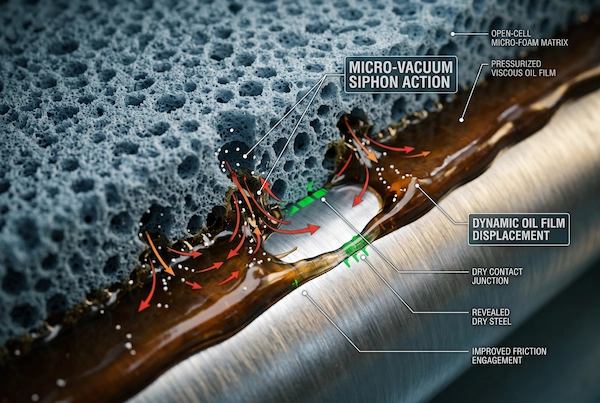
Superior grip achieved through microporous siphoning: By introducing controlled microbubbles into the polymer emulsion, foam nitrile forms countless tiny, sponge-like microporous openings on the coating’s surface after curing. When the glove comes into contact with oil-coated metal pipe fittings or smooth flanges, these micro-pores act like a sponge, instantly absorbing and expelling the fluid film at the interface, allowing the rubber matrix to grip the workpiece directly and providing excellent anti-slip damping;
A natural weakness in liquid sealing caused by the open-cell structure: This physical property, which gives foamed nitrile rubber its excellent grip, is precisely its fatal weakness when it comes to water resistance and leak prevention. Since the coating is filled with an interconnected network of microscopic pores, once the glove comes into contact with a large volume of continuously flowing liquid, is immersed in a coolant tank, or is exposed to high-pressure splashes, the liquid will travel through these interconnected pores within seconds, penetrating all the way through the rubber layer and soaking the knitted liner.
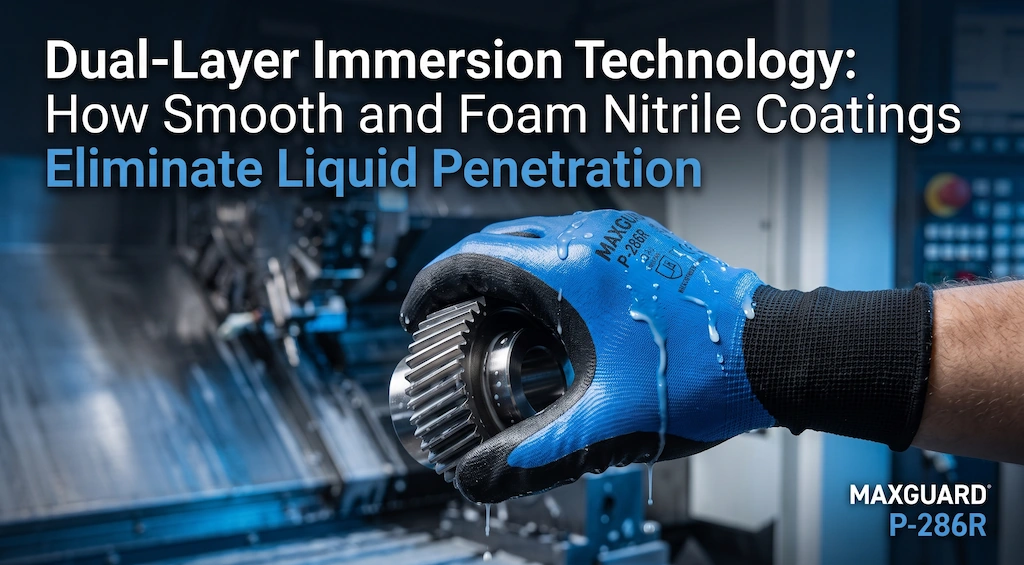
In short, ordinary single-layer foamed nitrile gloves are essentially “breathable, non-slip gloves” rather than truly “liquid-tight, waterproof gloves.” In demanding work environments involving frequent contact with fluids, immersion in circulating cleaning solutions, and hands covered in oil and mud, the only engineering solution to completely block liquid penetration pathways while retaining the superior grip performance of microporous foam is to incorporate dual-layer step-dipping technology—using a dense, flat-rubber fully-dipped base liner to provide a fully enclosed physical seal, and then laminating a microporous foam layer on top to deliver effective oil-repellency and slip resistance.
A clear understanding of different impregnation processes, polymer tolerance limits, and the mechanical support provided by knitted liners is a fundamental prerequisite for industrial procurement and EHS teams to standardize the selection of personal protective equipment and prevent workplace accidents. For comprehensive industrial-grade hand protection solutions addressing heavy oil and gas drilling, acid and alkali immersion, and multiple combined mechanical and fluid hazards, we recommend consulting our core category matrix: Chemical & Liquid Resistant Work Gloves.
Micro-Anatomy of Single-Dip Failures: Why a Single Coating Layer Leaks
On glove dipping production lines, the single-dip process has long dominated the market for low- to mid-range industrial protective gloves. The process flow is straightforward: a knitted liner is slipped over a glove mold, dipped once in a coagulant tank, then immersed in a tank containing a single type of polymer latex and lifted out, before finally being sent directly to the curing oven for vulcanization and shaping.
However, in environments with high fluid pressure, low-surface-tension solvents, or prolonged immersion, this seemingly dense single-layer coating often allows liquid to penetrate through in a very short time. The root cause of “early leakage” in many gloves that passed factory appearance inspections lies in irreversible microstructural defects formed during the single-coat film formation process.
Fiber Protrusion and Capillary Siphoning
The knitted glove liner itself consists of a porous skeletal structure woven from multiple strands of twisted continuous monofilaments. During the single-dip coating process, the physical interaction between the liner fibers and the liquid latex directly creates a potential for leakage:
Physical puncture by rigid fiber ends: Whether conventional polyester or high-strength nylon yarn, the surface inevitably develops a large number of tiny, upright fiber protrusions during high-speed knitting, cutting, and the stretching of the glove mold. During the single-dip dipping and pulling process, the single-layer thin latex film, due to surface tension, cannot completely flatten and submerge all the upright rigid fiber protrusions; as a result, some fiber ends directly pierce the uncured wet latex layer and are exposed to the air;
Microscopic Capillary Wicking Effect: During the subsequent drying and curing process, nano- to micrometer-scale annular voids form at the interfaces surrounding the individual filaments that have pierced the rubber layer. When the glove comes into contact with water-based cutting fluids, cleaning agents, or low-viscosity oils, these exposed fibers act like miniature straws. Utilizing extremely strong capillary suction, they rapidly “draw” the liquid from the outer surface into the interior of the glove in an instant, where it quickly diffuses throughout the entire palm along the interwoven yarns.
Solvent Desorption and Micro-Void Formation During Vulcanization
Another key failure mode in single-layer dip-coating film formation stems from the kinetics of gas-phase escape during the high-temperature gelation and vulcanization of the latex.
When synthetic nitrile rubber latex or water-based polyurethane emulsions are formulated, they contain a significant proportion of water, surfactants, crosslinking agents, and dispersion stabilizers:
Solvent Evaporation and Venting Pathways: When a single-layer wet rubber coating, only 0.2 to 0.4 millimeters thick, enters a curing oven at 100 to 130 degrees Celsius, the surface layer of the latex comes into contact with dry, hot air first and rapidly “skins over” to form a film;
Formation of Through-Pinholes: Deep-seated moisture and low-boiling-point additives trapped in the underlying layers and between fibers undergo violent vaporization and expansion when heated. Since there is only a thin, fragile rubber skin on top, high-pressure water vapor and volatile organic compounds force their way through the cross-linking polymer network and escape outward. After the rubber layer has fully cured, these escape channels cool and solidify into microscopic through-pinholes invisible to the naked eye, destroying the coating’s liquid-tight continuity.
Fluid Penetration vs. Chemical Permeation Mechanics
During on-site safety inspections and accident analyses, many technicians often confuse the fundamental differences between fluid penetration and chemical permeation, leading them to mistakenly attribute physical molding defects in single-layer dipped gloves to insufficient chemical resistance of the glove material:
Fluid penetration is the flow through macroscopic and microscopic physical gaps: it is a non-selective, direct leakage of liquids or gases driven by capillary forces or mechanical pressure differentials, occurring through microscopic pinholes, mechanical scratches, fiber fuzz pores, or cracks in the rubber coating on the glove material. More than 90% of early leaks in single-layer dipped gloves fall into this category of structural penetration;
Chemical permeation is absorption and diffusion at the molecular scale: even if the glove surface is completely dense and free of any microscopic pinholes, chemical molecules will still, under the influence of a concentration gradient, undergo a three-step microscopic migration process—“surface adsorption, internal diffusion, and desorption from the inner layer”—through the gaps between polymer chains.
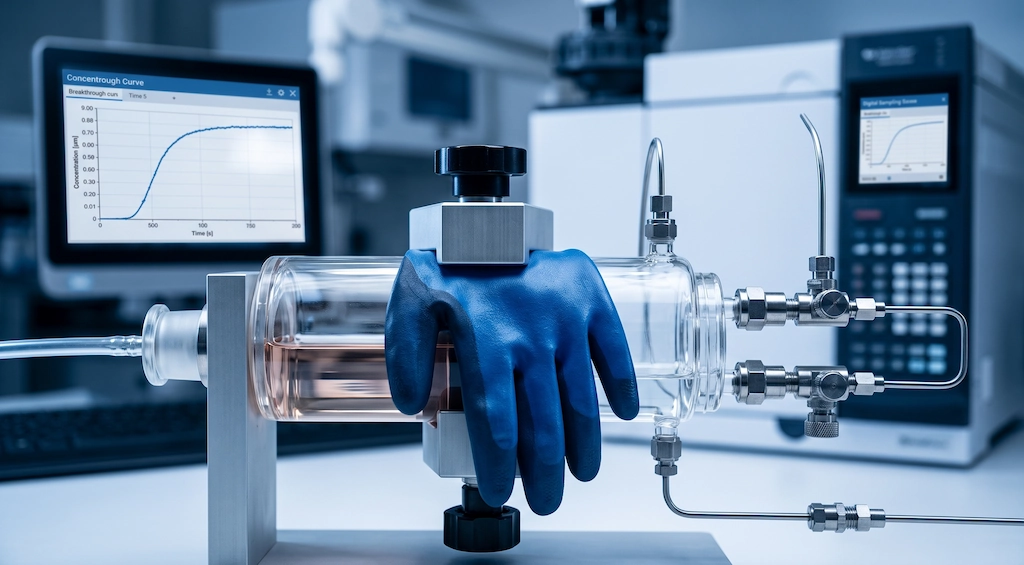
To accurately assess whether a glove has suffered physical penetration or molecular permeation, rigorous standardized testing tools and laboratory-normalized parameters must be employed. For a detailed analysis of the EN 374-2 pinhole leakage test and the ASTM F739 normalized breakthrough time criteria, please refer to our previous technical foundation series: EN ISO 374 vs. ASTM F739 Compliance Guide.
Dual-Layer Immersion Architecture: Synergistic Barrier Engineering
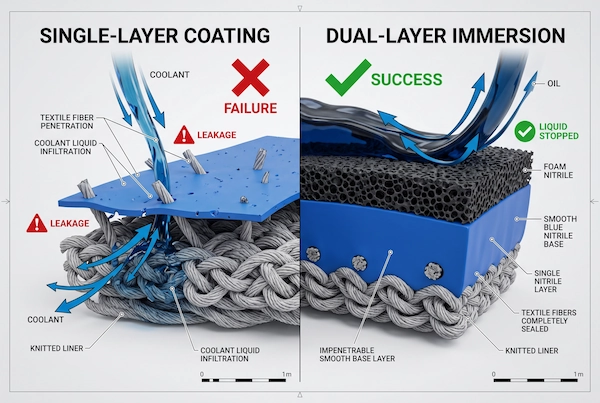
To fundamentally resolve the inherent contradiction between microscopic pinholes in single-dip coating processes and fluid leakage caused by open-cell foaming, glove manufacturing must move away from the compromising approach of “a single layer serving multiple functions” and shift toward a stepped, composite dual-layer immersion architecture (Dual-Layer Immersion Architecture).
This architecture completely deconstructs the functional logic of glove coatings: the first layer is solely responsible for complete micro-sealing and fluid barrier properties, while the second layer is solely responsible for surface tribological control and the drainage and evacuation of oil and water. The two coating layers are not simply physically superimposed; rather, through rigorous control of materials chemistry and immersion kinetics, they form a synergistic barrier system that combines absolute liquid tightness with high frictional damping.
Layer 1 (Smooth Base Coat): Continuous 360° Hermetic Sealing
The first step in the dual-dip process is dedicated to completely sealing all microscopic leakage pathways in the knitted liner.
After precise temperature-controlled preheating, the hand mold is first immersed in a tank of low-viscosity, high-flow, internally mixed flat nitrile (Smooth Nitrile) latex, where it undergoes a 360-degree full-coverage, full-immersion process (Fully Coated) from the back of the hand to the cuff:
100% wetting and coating at the base of the liner fibers: Under capillary pressure and a controlled lifting speed, the low-viscosity smooth nitrile latex thoroughly penetrates deep into the gaps between the yarns of the 15-gauge or 18-gauge high-density knitted liner, completely wetting and enveloping the ends of every upright monofilament fiber. Protruding fiber fuzz is thoroughly flattened by the liquid rubber compound and fused into the base layer, eliminating at the source the formation of capillary flow channels caused by fibers piercing the rubber film;
High-Temperature Film Formation Eliminates Pore Defects: Since the thickness of the base adhesive film is strictly controlled to micron-level uniformity, when entering the primary pre-baking zone, moisture and volatile components in the base layer can dissipate uniformly at an extremely gradual rate. This prevents violent boiling and bubbling within the adhesive, resulting in a high-elasticity fluid-barrier substrate that is dense in texture, uniform in thickness, smooth in surface, and completely free of pinholes.
Layer 2 (Foam Palm Coat): Fluid Displacement and Micro-Vacuum Grip
After establishing a fully enclosed, liquid-tight barrier in the base layer, the second process precisely applies a layer of mechanically aerated, microporous foam nitrile (Foam Nitrile) only to the palm and fingertips—areas subject to frequent contact:
Physical Disruption of Continuous Lubricating Film: When workers grip hard workpieces saturated with heavy-duty engine oil, synthetic emulsified cutting fluid, or high-viscosity grease, a continuous fluid lubricating film often forms on the smooth surface, causing the glove to slip uncontrollably against the metal. The densely perforated, three-dimensional micro-sponge network on the surface of the foamed nitrile, upon instantaneous external force from the hand’s grip, rapidly punctures the lubricating oil film at the interface and diverts it into the micro-pores;
Micro-negative pressure and micro-capillary adsorption effects: The displaced fluid forms a capillary siphon lock within the micro-pores, causing the thickness of the lubricating oil film on the workpiece surface to drop sharply, allowing the micro-protrusions in the foam rubber’s skeleton to achieve rigid, direct engagement with the metal surface. The micro-pores, deformed under pressure, simultaneously generate an instantaneous micro-negative pressure adsorption effect, providing a sensitive and stable critical static friction force under wet and slippery conditions, thereby significantly reducing hand muscle fatigue for workers during prolonged gripping of smooth pipe fittings.
Interfacial Co-Crosslinking: Preventing Inter-Coat Delamination
In the actual working conditions of double-layer dipped gloves, one of the most critical engineering hazards is inter-coat delamination. If the two layers of adhesive are bonded solely by weak physical surface adhesion, the foamed top layer will peel off the flat rubber base layer like shedding skin when subjected to heavy mechanical shearing, repeated bending, or prolonged immersion in mineral oil.
To ensure the dual-layer structure remains free of delamination throughout its service life, SQG has implemented a rigorous semi-gelled interfacial co-crosslinking process on its production line:
Locking in the critical dipping window: After the first layer of flat rubber has been fully dipped, the hand mold does not enter the high-temperature full-curing oven but instead enters a low-temperature pre-gelling oven with precise temperature control. At this stage, the macromolecular chains in the underlying flat rubber undergo only partial, weak physical cross-linking, and the surface remains in a semi-gelled critical state—where it has “already set and taken shape, but the reactive polymer ends still retain high reactivity”;
Interpenetrating Copolymerization and Curing: At this point, the glove is immediately immersed in the second tank of foaming rubber. Fresh latex molecules from the foaming layer rapidly diffuse and penetrate toward the interface with the underlying semi-gelled layer; subsequently, the entire glove is transferred to the high-temperature main vulcanization oven. Under the high-temperature cross-linking reaction, the polymer macromolecular chains of the flat rubber layer and the foamed layer undergo deep intertwining and covalent cross-linking at the interface, thoroughly fusing the two layers of nitrile rubber into a microscopic interpenetrating polymer network (IPN). Even when the gloves are subjected to extreme twisting, stretching, or immersion in grease, the dual-layer structure remains a seamless whole, with absolutely no risk of peeling or delamination.
Mechanical Integrity & Waterproof Testing: Validating EN 374-2 and AQL
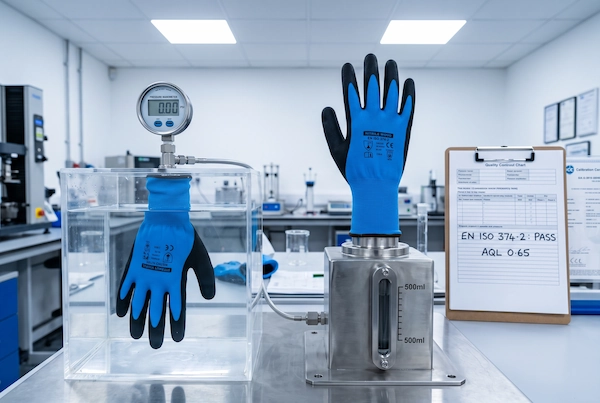
In the bidding and quality inspection phases of centralized procurement for industrial personal protective equipment, “fully waterproof” cannot merely be a marketing slogan; it must be validated through standardized physical stress and fluid seal testing.
Many single-layer dipped gloves appear to meet standards during factory sampling, but after enduring high-frequency gripping and stretching conditions on the shop floor, microscopic pores fail under even slight fluid pressure. To ensure that gloves delivered in large quantities maintain consistent microscopic sealing performance, internationally recognized standards have established a comprehensive set of airtightness and watertightness test procedures based on EN ISO 374-2, along with statistically based batch defect control thresholds.
Hydrostatic Head and Dynamic Water Leak Integrity Protocols
Under European and international compliance certification frameworks, a glove’s ability to prevent direct fluid penetration through pores is determined solely by two benchmark physical tests specified in the EN ISO 374-2 standard:
Dynamic Air Leak Test: The cuff of the test glove is securely fitted onto a specialized air-tight inflation fixture, and dry compressed air is slowly injected into the glove to maintain a slight, constant positive pressure within the cavity (typically a critical pressure differential of several thousand pascals). The inflated glove is then fully submerged in a transparent water tank at room temperature. Within the standard observation period, the testing engineer conducts a comprehensive visual inspection of the fingertips, webbing, and creases on the palm. If the rubber membrane contains through-penetrating microscopic pinholes or fiber-pierced channels, the compressed air will continuously escape outward under pressure through the defects, forming a continuous stream of rising bubbles, which can be directly determined as a failure in airtightness;
Hydrostatic Pressure Water Leak Test: The glove under test is suspended vertically on a test rack, and a sufficient volume of room-temperature clean water (typically 500 milliliters to 1 liter, depending on glove size) is injected into the glove so that the fingertips and palm are subjected to hydrostatic pressure from the weight of the liquid. After a predetermined observation period, the outer surface of the glove is inspected for water droplets. Single-layer dipped gloves often do not leak initially, but as the water pressure causes the knitted liner to stretch slightly, the micropores in the rubber coating are enlarged, allowing water droplets to seep out rapidly through the knitted gaps; in contrast, double-layer dipped gloves, relying on the continuity of their dense, smooth rubber lining, can securely contain the fluid even as the liner stretches under pressure, keeping the outer surface completely dry.
AQL 1.5 vs. AQL 0.65: Industrial Defect Thresholds
In large-scale centralized procurement for multinational heavy industry manufacturing and major petrochemical maintenance projects, the acceptance of a single sample in a laboratory does not guarantee the consistency of tens of thousands of pairs of production goods. The key metric for assessing the stability of a protective glove manufacturer’s quality control lies in its committed Acceptable Quality Limit (AQL).
AQL adheres to strict statistical probability principles for sampling inspection; the smaller the value, the lower the maximum allowable ratio of defective items with pinhole leaks in the entire shipment:
The standard industrial-grade threshold of AQL 1.5: Most ordinary, general-purpose, single-layer nitrile or latex industrial gloves typically only meet the AQL 1.5 or even AQL 2.5 standards. In large-scale distribution involving millions of gloves, this means that a certain proportion of “borderline products” with potential for minor leakage is permitted per 100 gloves shipped. While this tolerance is acceptable when handling harmless, dry materials, in precision workshops filled with water-based cutting fluids and mineral lubricants, complaints regarding “occasional leakage” leading to returns and exchanges frequently arise during production;
The AQL 0.65 Double-Dipping Process: A Leap in Quality Control: The automated double-dipping production line adopted by SQG fundamentally alters the probability distribution of defects at the process level. Micro-pinholes generated by single-layer dipping result from sporadic process disturbances, whereas the probability of micro-pores in the underlying flat rubber layer “completely coinciding and interconnecting” with those in the surface foam rubber layer in three-dimensional space drops exponentially from a statistical standpoint. Combined with automated in-line temperature monitoring during the pulling process and multiple rounds of offline high-pressure water testing, the dual-dip process consistently reduces the air and water leakage rates of the entire batch to within AQL 0.65. This meets or even exceeds the seal consistency standards for specialized medical surgical gloves, establishing a zero-compromise baseline of protection for high-risk work environments involving water or oil.
Bulk Manufacturing Quality Control & Factory-Direct Audit Protocols
For global procurement directors and procurement engineers at large industrial enterprises, ensuring compliance with pinhole sealing standards requires more than just reviewing the AQL ratings on test reports; it also necessitates tracing the supply chain back to its source and auditing the manufacturing facilities’ hardware investments in hand mold cleanliness, automated gel temperature control tanks, and in-line 100% inspection equipment.
Low-cost contract manufacturers often experience uncontrolled temperature variations in drying tunnels and excessively high proportions of recycled rubber in the compound, leading to significant variability in tear strength and liquid barrier stability between batches of gloves shipped from the factory. Establishing direct partnerships with source manufacturing facilities that possess automated double-dipping production lines, in-house capabilities for precision mold development, and comprehensive 100% inspection records is the fundamental guarantee for ensuring that the batch pass rate for million-pair procurement orders remains firmly within the AQL 0.65 threshold.
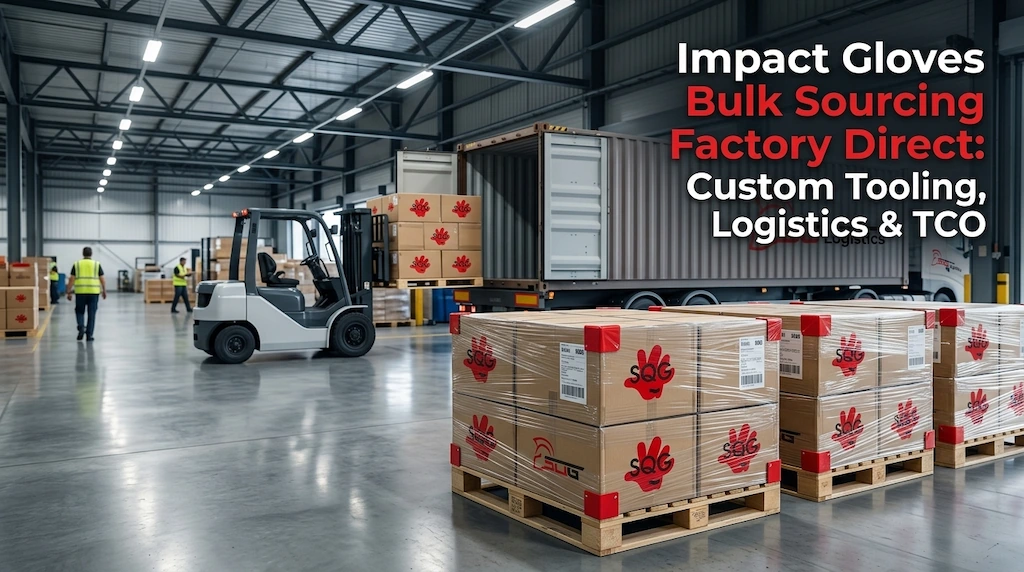
For guidance on how to verify the closed-loop quality control systems of actual factories in large-scale, direct cross-border procurement, optimize logistics and container loading for 20GP/40HQ full containers, and substantially reduce the total cost of ownership (TCO), we recommend consulting the dedicated supply chain management article: Impact Gloves Bulk Sourcing Factory Direct: Custom Tooling, Logistics & TCO.
Liner Substrate Dynamics: 15-Gauge Toughness vs. 18-Gauge Precision
When evaluating the overall protection and ergonomics of double-layered, rubber-coated leak-proof gloves, many procurement professionals tend to focus entirely on the thickness of the outer nitrile rubber membrane, while overlooking the knitted liner (liner substrate) buried deep beneath the rubber layer.
The knitted liner is by no means a simple sweat-wicking fabric; it serves as the “reinforcing framework” that supports the entire polymer rubber membrane. The fiber material, twisting process, and knitting gauge selected for the liner directly determine the depth of rubber penetration during dipping, the physical tear resistance margin, and the muscle fatigue curve experienced by workers during thousands of high-frequency gripping motions. In the diverse operating conditions of modern industrial manufacturing, glove skeleton engineering has evolved into distinctly different underlying designs centered on two major directions: “heavy-duty mechanical resistance” and “ultra-high-sensitivity micro-ergonomics.”
15-Gauge Seamless Polyester: High-Tensile Structural Foundation
The 15-gauge seamless knitted polyester liner serves as the classic mechanical foundation for heavy industrial applications involving moisture, oil contamination, and the handling of rough components:
High-modulus, tear-resistant support from high-strength polyester: The 15-gauge weave utilizes high-tenacity polyester filaments with moderate denier and high tensile strength. When faced with burrs on rough castings, scratches from the outer walls of threaded steel pipes, or the handling of heavy machined pallets, the polyester fibers demonstrate excellent dimensional stability and a high tear resistance modulus. Even if the outer rubber coating of the glove develops minor, localized, shallow scratches from contact with extremely sharp objects, the high-density 15-gauge polyester mesh firmly locks down stress concentration points, preventing the tear from rapidly spreading outward and causing the glove to shred;
Excellent mechanical anchoring performance of the rubber compound: Compared to fabrics with wider stitch spacing, the 15-gauge fabric features a more uniform and fine weave. During the base layer rubber impregnation process, the rubber solution precisely coats the yarn surface, forming a robust mechanical interlocking interface. This deep anchoring not only prevents the rubber layer from delaminating and peeling away from the lining under torsional stress but also provides the palm and finger joints with stable, wear-resistant physical support when continuously subjected to severe loads, such as compression from heavy workpieces and torsion from high-torque wrenches.
18-Gauge Nylon/Spandex Matrix: Tactile Sensitivity and Muscle Ergonomics
When work scenarios shift from large-scale rough machining to precision tasks such as engine micro-oil circuit layout, high-pressure sensor connector tightening, and precision transmission valve body assembly, heavy 15-gauge liners often result in dull tactile feedback at the fingertips of assembly technicians due to their high grammage and limited elasticity:
Ultra-fine Nylon-Spandex Blend Creates a “Second Skin”: The 18-gauge ultra-dense seamless liner is constructed by composite wrapping and twisting ultra-fine, highly elastic nylon filaments with spandex elastic fibers. The 18-gauge high-density knitting machine significantly increases the number of loops per unit area of fabric, not only drastically reducing the liner’s thickness to that of thin, form-fitting undergarments but also endowing the liner with exceptional four-way stretch;
Breaking the vicious cycle of “clumsy fingertips leading to improper glove removal”: During precision tasks that heavily rely on tactile feedback from the fingertips—such as picking up tiny screws or smoothing out oil seal gaskets—traditional thick gloves force frontline technicians to continuously exert excessive force with their flexor muscles to overcome the gloves’ resistance, which can easily lead to chronic muscle strain and fatigue in the hands and forearms. Many operators take the risk of removing their gloves—in violation of safety protocols—to work barehanded in pursuit of fingertip dexterity, thereby exposing their hands to coolant exposure and mechanical abrasions. An 18-gauge ultra-thin, high-density lining combined with a lightweight double-dip process transmits the subtle textures and changes in resistance on the workpiece surface to the frontline technicians’ fingertip nerves with virtually no loss of sensation. This eliminates the limitations gloves impose on operational agility and fundamentally eliminates the tendency for workers to remove their gloves in violation of safety protocols.
Micro-Porosity and Friction Mechanics in Viscous Media
Whether you choose the 15-gauge option for rugged durability or the 18-gauge option for flexibility and agility, the microporous nitrile foam outer layer supported by the inner lining must ultimately withstand the rigorous test of friction mechanics at the interface with viscous industrial fluids.
At complex interfaces filled with emulsified cutting fluids, high-viscosity mechanical gear oils, and hydraulic oils, relying solely on the glove liner’s fit is insufficient to address slippage and loss of control in heavy-oil operating conditions. It is essential to deeply understand how the microscopic, open-cell 3D structure of the glove’s palm foam coating displaces the oil film at the moment of contact to create a micro-vacuum adsorption effect, as well as the fundamental differences in friction between this structure and micro-particle-coated surfaces (such as sanded surfaces or injection-molded particles) under varying fluid Reynolds numbers and shear forces.
For a comprehensive engineering comparison of surface roughness, shear slip limits, and liquid expulsion mechanisms for different microscopic textures in viscous, heavy fluids, we recommend consulting the dedicated article on palm friction mechanics: Sandy Finish vs. PVC Dot Grip Gloves: Palm Friction Mechanics in Viscous Fluids.
Performance Benchmarking: Single vs. Double-Dipped Coating Systems
In the technical selection of industrial gloves and supply chain bidding, the only scientific way to move beyond “selecting based on feel” is to conduct quantitative comparative evaluations of gloves produced using different manufacturing processes under standardized, controlled laboratory conditions and in harsh on-site working environments.
Many procurement managers often hesitate when faced with the initial price difference between single-dipped and double-dipped gloves, mistakenly believing that double-dipping simply involves “adding an extra layer of adhesive, which increases thickness and cost.” However, when we quantitatively compare physical liquid barrier duration, dynamic grip friction in oil-water mixtures, mechanical abrasion resistance, and ergonomic metrics for frontline operators side by side, the true engineering gap between different coating architectures becomes clearly evident.
Quantitative Laboratory Comparison Across 4 Core Industrial Metrics
To provide objective data to support product selection for precision machinery manufacturing, automotive assembly lines, and industrial fluid maintenance operations, the SQG Industrial Protection Application Laboratory conducted standardized comparative field tests on four core engineering metrics for three mainstream coating configurations: Single Smooth Nitrile, Single Foam Nitrile, and Dual-Layer (Smooth Base + Foam Palm).
Static Water Leak Resistance: In accordance with the EN ISO 374-2 procedure, 500 milliliters of room-temperature water was applied to the specimen. Under constant hydrostatic pressure, the critical time until the first water droplets appeared on the outer surface was continuously monitored;
Coefficient of Friction (COF) at the Oil/Water Emulsion Interface: In accordance with the modified ASTM D1894 procedure, the critical coefficient of kinetic friction of the palm material was measured on the surface of a 304 stainless steel plate coated with a mixture of a 5% concentration water-based synthetic cutting fluid and ISO VG 46 lubricating oil;
EN 388 Martindale Abrasion Cycles: In accordance with the abrasion resistance test procedure in Section 6.1 of the EN 388:2016+A1:2018 standard, record the number of cycles required for the coating to wear through and cause the liner to rupture during continuous rotary abrasion using Klingspor PL31B sandpaper under a working load of 9 kPa;
Dexterity and Tactile Sensitivity Rating (EN 420/ISO 21420 Dexterity Level): A grasping and picking test is conducted using standard stainless steel round rods (with diameters of 11 mm, 9.5 mm, 8 mm, 6.5 mm, and 5 mm). The level is rated from Level 1 to Level 5 based on the smallest rod diameter that can be picked up accurately.
| Coating Architecture | Static Watertight Duration (EN 374-2 Hydrostatic Pressure) | Dynamic Coefficient of Friction at the Oil-Water Interface (COF in Coolant) | EN 388 Abrasion Resistance (Number of Cycles to Breakthrough) | Manipulative Flexibility Rating (ISO 21420 Dexterity) | Typical Failure Modes and Operational Weaknesses (Failure Mechanism) |
| Single-Layer Smooth Nitrile | 60–180 minutes (Occasional leakage may occur due to localized punctures in the fiber nap) | 0.25–0.32 (A smooth rubber surface cannot displace a continuous oil film, making slippage highly likely) | Approx. 4,000–6,000 cycles (meets Level 3 requirements) | Level 4 (Relatively stiff gel; repeated flexion and extension may cause fatigue) | Uncontrolled slippage at the interface; capillary siphoning and reverse osmosis of fibers in the inner liner after prolonged water immersion. |
| Single-Layer Smooth Nitrile | Less than 5 minutes (The open-cell sponge network allows fluid to pass through instantly) | 0.58–0.68 (Microporous siphoning for oil removal, providing high-damping grip) | Approx. 2,000–3,500 cycles (microporous structures are prone to rapid wear under shear forces) | Level 5 (Breathable and soft; excellent ergonomics) | Zero liquid-tightness; hands become saturated within minutes of contact with cutting fluid or engine oil. |
| Dual-Layer: Smooth + Foam | Greater than 480 minutes (The 360-degree flat rubber lining provides 100% sealed isolation) | 0.55–0.65 (Micro-foaming on the surface provides exceptional fluid-displacement and micro-vacuum engagement) | Greater than 8,000 cycles (meets the upper limit of Level 4, the highest rating) | Level 4–Level 5 (Maintains agile tactile feedback thanks to a high-density 15G/18G inner lining) | Combines fully enclosed waterproofing with a non-slip grip, making it fully capable of handling wet, heavy-oil mechanical operations. |
Lifecycle Cost Analysis: Reducing Workplace Consumption Rates
When evaluating annual procurement expenses for protective gloves in a factory, simply calculating the “purchase unit price” listed on the purchase order is a classic example of short-sighted budgeting. What truly determines the success or failure of occupational safety and health cost control in manufacturing companies is the total cost of ownership (TCO) across the entire lifecycle, which encompasses consumption rates, workers’ compensation, and production downtime.
In real-world CNC machining shops or stamping and assembly lines, single-layer dipped gloves reveal extremely high hidden costs:
High replacement rate for single-layer gloves: Ordinary single-layer foamed nitrile gloves lack a dense backing. Once they come into contact with coolant, workers typically request a replacement immediately after the inner lining becomes wet and sticky. The average consumption per worker per shift is as high as 2 to 3 pairs. While single-layer flat nitrile gloves offer slightly better water resistance, they are extremely prone to slipping on oily surfaces, and the palm coating wears down rapidly under frequent friction with rough castings, with an average service life typically lasting only 2 to 3 work shifts;
The durability benefits of double-layer dipped gloves: Supported by a base layer of compacted solid rubber, double-layer dipped gloves (such as the MAXGUARD P-286R) achieve an abrasion resistance limit exceeding 8,000 revolutions—the highest rating under EN 388. Even if the surface foam anti-slip layer sustains minor localized mechanical wear under continuous, high-intensity conditions, the fully enveloping barrier of the underlying smooth rubber layer continues to reliably prevent the inward penetration of cutting fluid and machine oil. Field test data show that the average on-line service life of a pair of double-layer gloves typically lasts 7 to 10 standard shifts, directly reducing the glove consumption rate per workstation by more than 60%;
Combined with a significant reduction in TCO and recovered labor hours: By halving glove issuance frequency, reducing warehousing and distribution costs, and eliminating the risk of work-related medical leave due to hand dermatitis or slips caused by slippery gloves, double-layer rubber-coated gloves—despite having an initial purchase price 20% to 30% higher—actually reduce the comprehensive protection cost per production hour by more than 40%. This significant overall cost reduction and efficiency improvement is the fundamental driving force behind the comprehensive shift toward double-layered dipped engineering gloves by global multinational original equipment manufacturers (OEMs) and large machinery industry groups.
The MAXGUARD Industrial Series: Engineering Application Workstations
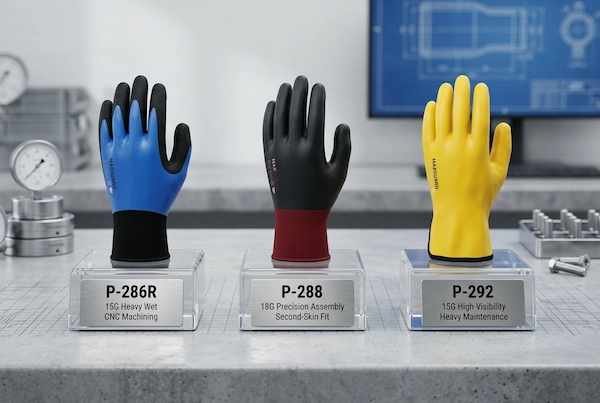
On the industrial shop floor, no single protective solution can be universally applied across all manufacturing processes. CNC machines constantly exposed to high-pressure cutting fluid, precision engine wiring harness assembly involving trace amounts of lubricant, and heavy-duty grease maintenance on outdoor pipelines all present distinctly different engineering requirements for protective gloves in terms of impermeability, knit gauge, and tactile feedback from the coating.
The MAXGUARD industrial glove matrix, developed by SQG, is a tiered protection system designed specifically for these specialized working conditions. By precisely balancing the mechanical framework of 15-gauge and 18-gauge fabric liners, combined with a fully dipped, flat-sealed rubber lining and a microporous foamed nitrile outer layer, this series achieves a targeted balance between liquid barrier performance and dexterity for fine motor tasks.
High-Fluid CNC Machining and Wet Assembly: MAXGUARD P-286R
In CNC machining centers with high-frequency water-based emulsion circulation and coolant spray, as well as at workstations with heavy-duty oil-water wash tanks, workers not only face continuous fluid immersion but also must handle metal blanks with sharp cutting edges:
15-gauge high-strength polyester tear-resistant skeleton: The lining is woven from 15-gauge seamless twisted polyester fibers, combining high structural strength with toughness. It effectively prevents the inner liner fabric from being sheared or torn when subjected to scraping from workpiece burrs and high-intensity mechanical loads;
Flat-Coated Full-Immersion Construction with 100% Liquid-Tight Liner: The entire glove is fully immersed in low-viscosity, internally mixed flat nitrile rubber, providing 360-degree coverage from the back of the hand to the wrist. The rubber coating completely seals the base of the knitted fibers, preventing coolant from being drawn back into the core even under high-pressure fluid scouring;
Micro-foamed Nitrile on the Palm for Highly Effective Liquid Drainage: The palm and fingertips feature a secondary layer of micro-porous foamed nitrile. When workers grip metal components completely covered by oil-water mixtures, this layer rapidly absorbs and diverts the continuous liquid film on the contact surface, eliminating the risk of slippage and drop-off.
For wet machining workstations requiring protection against continuous fluid immersion while also handling heavy-duty mechanical gripping tasks, the MAXGUARD P-286R Double Dipped Glove is the ideal solution.
Precision Automotive Assembly in Trace Oils: MAXGUARD P-288
In precision machining operations—such as automotive transmission valve body assembly, engine sensor plug-in, and threaded assembly of micro-hardware components—thin layers of rust-preventive oil and synthetic lubricating grease are commonly present on the shop floor. These workstations have extremely low tolerance for thick, heavy-duty gloves, and workers are highly prone to removing their gloves in violation of safety protocols due to reduced tactile sensitivity in their fingers:
18-gauge ultra-thin nylon-spandex “second-skin” fit: The inner liner is woven from an ultra-fine nylon and high-elastic spandex blend with an 18-gauge ultra-high stitch density, significantly reducing the liner’s weight and thickness. The glove adapts and stretches with the hand’s flexion and extension, greatly reducing fatigue in the small hand muscles during prolonged precision gripping;
Lightweight, Fully Immersed Foamed Nitrile Seamless Coating: Utilizing high-flow foamed nitrile for a lightweight, full-hand immersion coating, this ensures the glove blocks trace amounts of oil sludge and oil splashes while maintaining an extremely thin overall coating thickness, enabling precise tactile perception of fine bolt thread pitches and latch positions on the fingertips.
For precision assembly operations that rely heavily on the acute tactile sensitivity of frontline technicians and require preventing oil stains from seeping into the hands, we recommend the MAXGUARD P-288 Precision Glove.
Heavy Machinery Maintenance and Lubricant Handling: MAXGUARD P-292
During high-stress maintenance operations—such as the repair of mining and excavation equipment, the application of high-viscosity grease in ship engine rooms, and the maintenance of outdoor oil pipelines—workers are often exposed to harsh environments characterized by limited lighting, sticky oil sludge, and frequent impacts from heavy wrenches:
15-gauge high-tenacity polyester resists mechanical tearing: The inner liner leverages the high tensile strength of 15-gauge polyester to provide reliable physical support during high-torque operations—such as tightening heavy-duty bolts and prying open metal valve discs—ensuring the rubber membrane remains securely attached despite repeated mechanical twisting;
High-Visibility Bright Yellow Full-Coverage Coating: The entire outer surface features a high-saturation, eye-catching bright yellow fully-dipped foamed nitrile design, providing operators with a clear visual reference in dimly lit equipment undercarriages and enclosed machinery compartments, facilitating immediate inspections by on-site safety officers and preventing hands from becoming entangled in rotating components;
Thickened Foam Coating Absorbs Heavy Oil Shear: The thickened microporous foam network on the surface provides greater oil film absorption capacity. Even when gripping pipe fittings coated with thick, yellow calcium-based grease, the microporous structure rapidly breaks through the grease layer to establish a solid, shear-resistant contact friction force.
Recommended model for heavy-duty mechanical maintenance and work with viscous lubricants in low-light conditions: MAXGUARD P-292 Heavy Duty Glove.
Limits of Chemical and Hydrocarbon Resistance: Where Double-Dipping Ends
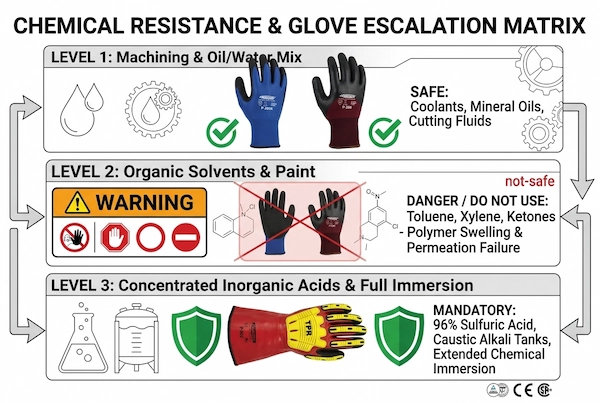
Double-dip nitrile coating technology demonstrates excellent leak-proof properties in water-based and light mineral oil media; however, every elastomer coating has its clear physical and chemical resistance limits. In industrial safety management, equating double-dip gloves with heavy-duty chemical-resistant gloves is a common misconception that leads to first-line chemical burns and cases of latent poisoning.
The thickness of double-dipped nitrile coatings is typically maintained at a few tenths of a millimeter to ensure ergonomic comfort, which means their protective function is primarily geared toward blocking mechanical fluids rather than protecting against high-concentration hazardous chemicals. EHS safety officers and shift supervisors must precisely define the media resistance boundaries of double-dipped nitrile gloves and establish clear guidelines for escalating protection levels and changing gloves.
Water-Based Coolants and Mineral Greases vs. Aromatic Solvents
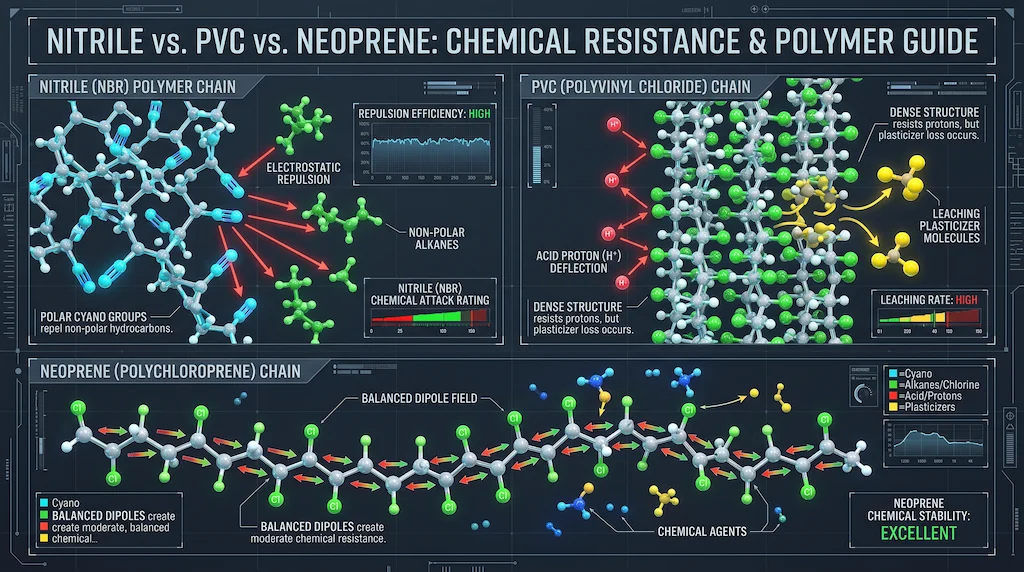
Double-layer nitrile-coated gloves perform exceptionally well in machining workshops, primarily because the polar cyano groups (-CN) on their polymer backbone form a natural repellent barrier against common lubricants:
Long-lasting, stable safe operating zone: When exposed to water-based synthetic cutting fluids, semi-synthetic emulsified coolants, various ISO-grade mineral hydraulic oils, gear oils, and calcium-based greases, the dense, smooth rubber liner exhibits extremely high chemical inertness. Even after multiple work shifts of continuous contact with these media, the glove material does not soften, become sticky, or swell, and it consistently maintains high mechanical strength and liquid-tight integrity;
Swelling Failure Threshold When Exposed to Aromatic Hydrocarbons: When on-site media shift to paint thinners, heavy-duty degreasers, or emulsifiable concentrate carriers for pesticides, the primary solvents are often aromatic compounds such as toluene (CAS 108-88-3) or xylene (CAS 1330-20-7). These nonpolar solvent molecules, which contain conjugated benzene rings, possess extremely strong diffusion and penetration capabilities. They can penetrate thin nitrile coatings within minutes, causing the polymer network structure to swell dramatically, expand in volume, and rapidly soften and become mud-like. At this point, even a slight scratch from a workpiece burr will cause the glove coating to tear into fragments, completely losing its physical barrier function.
When to Escalate to Heavy-Duty Industrial Acid and Solvent Gauntlets
In workshop environments involving tanks of highly corrosive chemicals, industrial waste liquid neutralization tanks, or workstations for cleaning with high-concentration acids or bases, the chemical protection escalation protocol must be initiated immediately. The continued use of lightweight double-dipped nitrile gloves is strictly prohibited:
Mechanism of inorganic strong acids’ destruction of the nitrile polymer network: Concentrated sulfuric acid (such as 96% industrial sulfuric acid) or high-concentration nitric acidpossessess extremely strong oxidizing and hydrolytic corrosive properties. High concentrations of hydrogen ions in the acid rapidly hydrolyze the cyano groups on the nitrile molecular chains, leading to the breakage of polymer segments and the collapse of the cross-linked network. Macroscopically, this manifests as the glove surface hardening, turning black, cracking, and perforating within an extremely short period of time;
Upgrade to a Heavy-Duty Pure PVC System: Under conditions of full immersion in strong acids or strong alkalis, or high-concentration splash exposure, it is mandatory to switch to heavy-duty industrial gloves (such as the SQG® P-902 Heavy PVC Glove) molded from high-purity homopolymer PVC resin and featuring extended protective cuffs. The saturated carbon-chlorine main chain of high-purity PVC naturally possesses passivation properties that resist strong acids and alkalis, effectively warding off attacks by inorganic protons;
Establish a three-tier on-site protection classification system: Workshops must clearly define the correspondence between workplace media and glove configurations—for workstations involving trace oil contamination and machining coolants, provide 15-gauge or 18-gauge double-dipped nitrile gloves; For intermittent solvent contact and light machining operations, assign medium-thickness solvent-resistant gloves; for workstations involving continuous immersion in strong acid or strong alkali tanks, as well as high-risk aromatic pure solvents, mandate the use of extra-long, heavy-duty chemical-resistant gloves.
To systematically understand the microscopic differences in resistance of various polymer elastomers (nitrile, PVC, and neoprene) to hydrocarbons, strong inorganic acids, and various organic solvents, as well as the corresponding CAS index reference tables, we recommend consulting our in-depth materials science article: Nitrile vs. PVC vs. Neoprene: Chemical Resistance & Polymer Guide.
Technical FAQ: Double-Dipped Glove Performance & Field Longevity
In the daily management of personal protective equipment (PPE) distribution, changes, and inspections at industrial sites, questions regarding why gloves allow water and oil to seep through, whether the double-layered construction compromises finger dexterity, and whether gloves can be washed and reused have consistently been key concerns for front-line team leaders and corporate EHS safety managers.
Addressing common questions arising from fluid handling and material transfer operations on the shop floor, this section provides systematic technical answers and operational procedures based on material microstructure, cleaning specifications, and failure troubleshooting methods.
Why does a brand-new single-dip foam nitrile glove leak coolant during machining?
When a brand-new, unopened single-layer foam nitrile glove comes into contact with cutting fluid, it begins to leak. This is not due to an isolated product defect but is a physically inevitable phenomenon determined by the film-forming mechanism of its coating.
Physical Properties of the Open-Cell Sponge Network: Controlled microbubbles are incorporated into microporous foamed nitrile during processing and formulation; after vulcanization, these form an interconnected three-dimensional open-cell sponge structure within the rubber layer. While this structure provides the gloves with excellent breathability, oil-repellency, and grip damping, the open pores are interconnected in all directions;
Unimpeded penetration of low-surface-tension liquids: Industrial water-based cutting fluids contain large amounts of surfactants and extreme-pressure lubricants, resulting in extremely low surface tension. When gloves are immersed in or exposed to these fluids, the liquid molecules rapidly wick through these interconnected microscopic pores without any resistance, penetrating directly through the rubber layer and being absorbed by the underlying knitted fibers;
A permanent solution requires a dense liner: If working conditions involve continuous coolant flow, sludge buildup, or immersion, single-layer foam gloves must be replaced with a stepped, double-dipped design featuring a 360-degree sealed flat rubber base. This fully enclosed base provides complete isolation from fluids.
Does the addition of a smooth nitrile base layer compromise ergonomic dexterity?
Many field workers are reluctant to use double-layer gloves, primarily due to preconceived notions about traditional, bulky, thick rubber gloves. Through precise material control and equipment upgrades, modern double-dip coating processes have overcome the technical bottleneck that once dictated “waterproofing must come at the expense of tactile sensitivity.”
Micrometer-level precision control of primer film thickness: The first layer—a fully immersed flat rubber base liner—uses a specially formulated nitrile latex with high solids content and ultra-low viscosity. Its primary function is to seal the roots of fiber fuzz, and its dried film thickness is controlled at the micrometer level rather than simply being thickened indiscriminately;
Variable-Speed Servo Lifting and Step-Wise Curing: The automated production line uses precision servo motors to control the immersion and lifting rates of the glove molds, ensuring uniform coating thickness at finger joints and webbing areas while preventing stiffness caused by rubber accumulation in finger crevices;
Ergonomic Enhancement with High-Gauge Lining: Paired with a 15-gauge polyester or 18-gauge ultra-fine, high-elasticity nylon/ spandex seamless inner liner, the entire glove fits snugly against the back of the hand like form-fitting athletic fabric, offering minimal resistance during flexion, extension, and when gripping small metal parts. This not only eliminates soreness and swelling in the finger joints but also provides front-line assembly workers with clear tactile feedback.
How should double-dipped nitrile gloves be laundered without compromising their fluid tightness?
Double-dipped nitrile gloves offer excellent mechanical abrasion resistance and are fully suitable for standardized, centralized batch washing and reuse in the workshop; however, the washing process must strictly adhere to specific physicochemical parameters to prevent damage to the polymer cross-linking network and the open-cell foam structure:
Control the washing water temperature: The washing water temperature must be strictly maintained below 40 degrees Celsius. Hot water accelerates the thermal-oxidative aging of nitrile polymer chains, breaks down vulcanized cross-linking points, and causes the rubber film to become sticky, soft, and lose its elasticity;
Use neutral industrial detergents: The use of high-concentration chlorine-based bleach, strongly acidic descaling agents, or peroxide-based solvents is strictly prohibited. Use a neutral, nonionic surfactant formulation with a pH of 6 to 8 to gently emulsify and wash away residual machine oil and cutting fluid adsorbed in the surface micropores, thereby preventing chemical degradation of the rubber layer;
Gentle mechanical washing and low-temperature air drying: Set the washing equipment to a low-speed rotation cycle to avoid vigorous centrifugation and intense mechanical agitation that could tear the seams of the glove liner; After washing, place the gloves in a cool, well-ventilated area to air dry naturally, or tumble dry at a temperature below 60 degrees Celsius. Do not expose them to high temperatures in an oven or place them on steam pipes to dry, in order to ensure the long-term stability of their fully sealed, watertight performance.
How can safety officers visually identify pinhole failures on-site?
On continuous industrial production lines, microscopic pinholes are often impossible to detect with the naked eye under dry conditions. Shop floor safety officers can use two quick and reliable on-site inspection methods to promptly remove gloves that have lost their liquid-tight protection:
Simple On-Site Inflation and Bubble Test: Hold the edges of the glove’s extended cuff with both hands, quickly roll them up in the air, and fold them inward tightly to trap sufficient room-temperature air inside the glove cavity, causing it to inflate. Then, submerge the entire inflated section of the glove into a basin of room-temperature clean water and gently press the air-filled cavity with the palm of your hand. If tiny, continuous bubbles appear at the fingertips or in the creases of the palm, this confirms that the coating has suffered microscopic penetrating damage, and the gloves must be immediately discarded;
Fluorescent Penetrant Wipe Test: For high-risk processing stages, prepare a testing solution containing a trace amount of a harmless, water-soluble fluorescent dye. Spray or apply it evenly to the outer surface of the gloves and gently rub them together. After letting it sit for two minutes, turn the glove inside out and shine an industrial ultraviolet inspection lamp (UV flaw detector) with a wavelength of 365 nanometers on the inner lining fabric. If obvious fluorescent spots or diffuse staining appear on the surface of the inner lining fibers, this indicates that fluid has penetrated through pinholes in the rubber membrane to the inner side; this batch or pair of gloves must be immediately removed from workstations involving contact with water or oil.
Request Factory-Direct Wear Trial Kits & Bulk Sourcing Quotes (CTA)
When making bulk procurement decisions within large-scale machining clusters, automotive OEM supply chains, or multinational industrial product distribution networks, addressing the persistent issues faced by frontline workers—such as “glove leakage, frequent glove changes, and low work efficiency”—cannot be limited to theoretical calculations based on technical specifications on paper, nor should it involve paying for the markups imposed by layers of intermediaries.
Leveraging our fully in-house industrial-grade dipping production lines, micron-level film thickness measurement systems, and a full suite of CE third-party certifications (EN 388 / EN ISO 374), SQG eliminates all intermediary trade channels to provide global industrial procurement decision-makers and EHS teams with direct services—ranging from matching gloves to specific working conditions and media, to factory-direct trial fitting and prototyping, all the way through to full-container-load delivery.
Request Workstation Trial Packs for On-Site Leakage Audits
Paper-based data is the cornerstone of compliance-based product selection, but the real-world feedback from frontline workers after 8 hours of continuous operation—including fingertip sensitivity, grip resistance, and the dryness of the inner lining—is the ultimate benchmark for preventing non-compliant removal of gloves and ensuring a closed-loop safety system.
To help manufacturing companies accurately verify protective performance before placing bulk orders, SQG has opened a channel for requesting original manufacturer engineering comparison sample boxes (Workstation Master Swatch Box) designed for water- and oil-exposed work environments:
Multi-gauge, full-scenario practical matching kits: The sample boxes are precisely configured with the MAXGUARD P-286R for high-fluid CNC machining (15-gauge polyester skeleton, flat rubber fully-immersed sealed base lining paired with a micro-foam oil-draining layer on the palm); the MAXGUARD P-288, specifically designed for micro-component and wire harness assembly (featuring an 18-gauge polyamide-nylon ultra-thin, bare-feel, high-elasticity inner lining paired with a lightweight, fully-enclosed foamed nitrile coating); and the MAXGUARD P-292, intended for dimly lit equipment maintenance and heavy-duty grease applications (featuring a 15-gauge high-tenacity polyester and a bright yellow, fully-enclosed foamed coating);
Supported by on-site leakage and productivity field tests: Corporate safety engineers can distribute samples to typical workstations with the most severe fluid leakage for 1- to 2-week on-the-job testing. On-site comparisons of the actual service life of single- and double-dipped gloves when saturated with cutting fluid, the frequency of glove changes by workers, and slip resistance performance provide objective frontline data to support product iteration.
Direct Factory Container Sourcing & OEM Tooling Specifications
For large-scale manufacturing groups or overseas brand distributors with annual consumption exceeding several hundred thousand pairs, stable delivery cycles, strict batch consistency, and a clear and transparent cost structure are the lifeblood of long-term partnerships:
Transparent tiered pricing that breaks down the underlying BOM: Based on your annual procurement plan and incorporating optimal container loading solutions for ocean freight (20GP/40HQ full-container load ratios), SQG’s business and technical team will provide a Free On Board (FOB) or Cost, Insurance, and Freight (CIF)/Delivered Duty Paid (DDP) quote that breaks down raw material costs within 24 hours;
Custom Mold Design and Flexible OEM Support: We support personalized cuff hem color matching, screen-printed corporate logos on the back of the hand, custom barcode packaging, and ergonomic fine-tuning based on hand models to meet the stringent material receiving standards of large industrial clients;
Batch Pass Rate Strictly Maintained at the AQL 0.65 Threshold: Every full container shipment undergoes automated in-line pull testing and offline pressure water testing via sampling to ensure that every pair of double-dipped gloves delivered to workstations worldwide exhibits completely consistent, pinhole-free, liquid-tight performance.
Completely eliminate microscopic fluid leaks in the workshop to reduce annual glove turnover and consumption costs. Contact an SQG industrial protection engineer immediately to submit details on the types of fluids used at your worksite and receive customized product recommendations and factory-direct engineering test kits: