Introduction: The Polymer Selection Dilemma in Hazardous Media
The Real-World Cost of Polymer Guesswork
In heavy-duty petroleum refining, industrial coating and cleaning, electroplating, passivation, and acid pickling, as well as hazardous materials packaging facilities, “guessing” and “empiricism” in material selection often come with heavy downtime costs and risks of personal injury. Many on-site procurement staff and front-line supervisors habitually refer to all impermeable gloves as “rubber gloves,” blindly assuming that thick gloves can block all liquids. This misconception is extremely dangerous when faced with industrial-grade corrosive media.
When workers wear improperly selected gloves while immersed in high-risk chemical tanks, damage often occurs rapidly within a short period of time:
Severe swelling and structural breakdown: Once the glove material strongly interacts with on-site chemical media, solvent molecules instantly penetrate the polymer matrix, causing the rubber layer to swell excessively, soften, and become sticky. The originally dense protective barrier immediately loses its tear and puncture resistance, tearing instantly upon even slight contact with a hard object;
Plasticizer Leaching and Brittle Cracking: When certain polymers encounter organic hydrocarbon media with which they are poorly compatible, the liquid plasticizers within the rubber compound—which maintain flexibility—are rapidly leached out. As a result, the gloves harden to the consistency of paper within a few hours of wear and shatter upon bending;
Hidden chemical burns: Even more dangerous is that certain harmful solvents can fully penetrate and desorb through the free spaces in the molecular chains, even when the gloves appear intact and undamaged on the outside. This results in workers’ hands being immersed for extended periods in toxic liquids accumulated inside the gloves, causing deep tissue corrosion and severe chemical burns.
To establish a robust line of defense in complex working conditions, it is essential to objectively evaluate nitrile vs pvc chemical resistance, clarify the tolerance limits of different elastomers, and eliminate guesswork from PPE procurement.
The Fundamental Rule: “Like Dissolves Like”
The essence of polymer materials’ resistance to chemical corrosion lies in a microscopic physical and chemical interplay between molecules, which fundamentally follows the classic ironclad rule of chemistry: “Like Dissolves Like.”
The interaction between synthetic polymers and liquid media depends on the degree of molecular polarity (Polarity) between the two:
The natural repulsion of polar groups toward nonpolar solvents: If a polymer chain contains strongly polar groups (such as the cyano group on an acrylonitrile segment), the molecules exhibit strong dipole-dipole interactions and naturally repel nonpolar aliphatic hydrocarbon molecules—such as gasoline, diesel, and crude oil—making it difficult for liquids to penetrate the polymer’s internal network and thereby demonstrating excellent oil resistance and swelling resistance;
Inert barrier provided by nonpolar and low-polarity groups against polar media: A regular, dense polymer backbone lacking active reaction sites can effectively resist attack by strong protonic polar media (such as high-concentration inorganic sulfuric acid or caustic soda solutions), thereby blocking chemical hydrolysis reactions;
Instantaneous breakdown caused by polarity matching: Conversely, if a glove with a highly polar structure is immersed in strongly polar organic ketones or ester solvents such as acetone, the high degree of polarity matching between the two causes the solvent molecules to readily “dissolve” and destroy the polymer network, leading to material failure and disintegration within a very short time.
Understanding the fundamental differences among various polymer materials in terms of microscopic polarity, cross-linked network density, and weather-resistant additives is a prerequisite for multinational procurement and EHS teams to identify the correct protective equipment for complex work processes. From systematic hand protection solutions for heavy hydrocarbon crude oil drilling and extraction, immersion in strongly oxidizing acids and alkalis, to high-precision micro-assembly operations, we recommend thoroughly reviewing the core product category matrix: Chemical & Liquid Resistant Work Gloves.
Molecular Foundations: Polarity Dynamics in Nitrile, PVC, and Neoprene
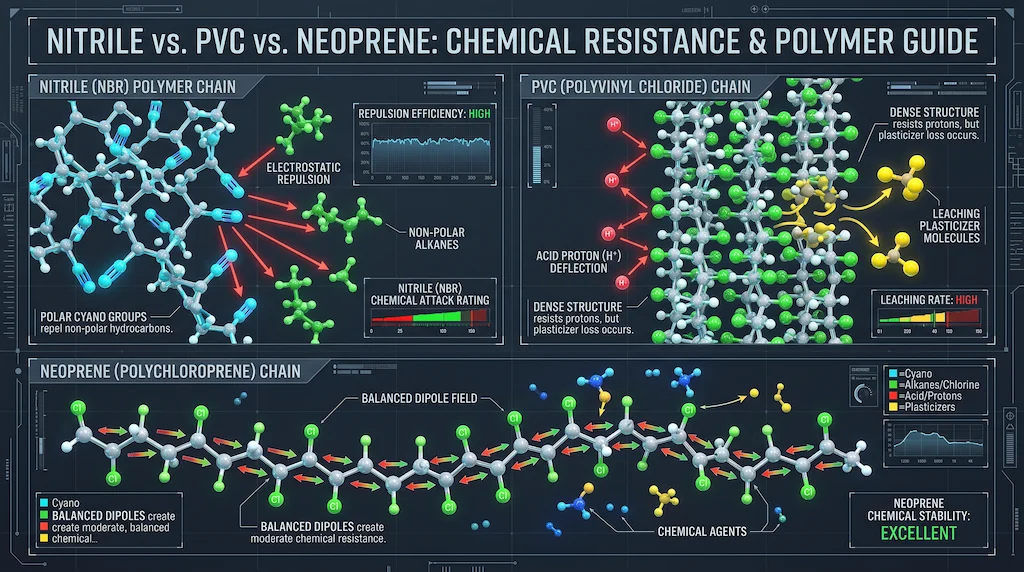
The upper limit of protection provided by industrial-grade chemical-resistant gloves against various harsh media is ultimately determined by the geometric configuration of their polymer main chains, the chemical reactivity of their chain segments, and the distribution of molecular charges. The vast differences in resistance to hydrocarbons, strong acids, and organic solvents exhibited by different elastomer coatings are, in essence, a macroscopic physical reflection of the interaction between the material’s microscopic polarity field and the polarity field of the penetrating fluid molecules.
Nitrile Butadiene Rubber (NBR): Polar Cyano Matrix
Nitrile butadiene rubber (NBR) is a polymeric copolymer elastomer produced by emulsion polymerization of acrylonitrile and butadiene. Its outstanding resistance to hydrocarbons and oils stems primarily from the high-density distribution of highly polar cyano groups (-CN) on its molecular side chains.
An electrostatic repulsion network formed by strong electronegativity: The high electronegativity of the nitrogen atom in the cyano group gives the carbon-nitrogen triple bond an extremely strong permanent molecular dipole moment. This highly polar microscopic environment creates a tight dipole self-locking effect within the polymer network structure, making it difficult for nonpolar long-chain alkanes, heavy crude oil components, diesel, and mineral lubricant molecules to find affinity-based dissolution pathways within it, thereby endowing the material with excellent resistance to swelling and low permeability;
Equilibrium Principle for Acrylonitrile Content: The amount of acrylonitrile incorporated into a butadiene-acrylonitrile (BN) formulation directly determines the limits of the glove’s physicochemical properties. A higher acrylonitrile content can significantly improve oil resistance, resistance to alkane swelling, and mechanical puncture resistance; however, increased molecular polarity also restricts the free rotation of the butadiene soft segments in low-temperature environments, causing the gloves to lose elasticity and feel stiff during operations in deep-well cold water or in cold winter conditions.
Polyvinyl Chloride (PVC): Inert Backbone and Vulnerability to Plasticizers
Polyvinyl chloride (PVC) is a thermoplastic polymer whose structure consists of a main chain of saturated carbon-carbon single bonds with alternately attached chlorine atoms, which fundamentally differs from the vulcanized cross-linked networks found in rubber.
Chemical Inertness in Strongly Oxidizing Acids and Bases: The PVC molecular backbone is highly saturated; the carbon-chlorine covalent bonds formed between chlorine and carbon atoms are strong and highly symmetrical, and steric hindrance blocks external attack sites. This molecular configuration provides extremely strong natural passivation against inorganic, proton-based, highly corrosive media; even when immersed for extended periods in concentrated sulfuric acid, nitric acid, or strong sodium hydroxide solutions, the main chain does not readily undergo oxidative hydrolysis or chain-breaking reactions as rubber elastomers do;
Microscopic Fragility of External Plasticizer Systems: Pure PVC homopolymer is hard and brittle at room temperature; therefore, large amounts of liquid plasticizers (such as phthalate or terephthalate esters) must be added during the compounding and mixing process to increase the spacing between polymer chains and impart flexibility to the coating. However, these plasticizer molecules merely intercalate freely within the PVC molecular network via physical secondary bonds and do not participate in chemical covalent cross-linking. Once the gloves come into contact with hydrocarbon fuels or low-polarity organic solvents capable of dissolving the plasticizers, the small-molecule plasticizers are rapidly “extracted and leached out,” causing the polymer chains to be forced together and leading to rapid phase separation. The gloves then undergo irreversible embrittlement, cracking, and even flaking.
Polychloroprene (Neoprene): Balanced Dual-Resistance Geometry
Polychloroprene (Neoprene, i.e., poly(1,4-butadiene)) exhibits a highly representative “balanced dual-resistance” geometric configuration in molecular engineering.
Bidirectional buffering properties of the slightly polar main chain: Neoprene is polymerized from the 2-chloro-1,3-butadiene monomer. Because a chlorine atom is directly bonded to the carbon atom of the double bond in the molecular chain, its polarity lies between that of highly polar nitrile rubber and nonpolar natural rubber. This unique, weak dipole balance gives it broad versatility: it does not dissolve rapidly when exposed to certain weakly polar solvents, as pure nitrile rubber does, nor does it harden rapidly upon contact with oils due to a lack of covalent cross-linking, as ordinary PVC does;
Advantages in wide-temperature-range operation and aging resistance: Chloroprene rubber features a dense molecular arrangement and controlled crystallization tendencies, exhibiting exceptional resistance to ozone, UV-induced aging from sunlight, and excellent heat and cold resistance across a wide temperature range. In coastal shipbuilding and chemical pipeline maintenance workstations where materials are simultaneously exposed to splashes of dilute acids and alkalis, industrial greases, refrigeration oils, and frequent exposure to harsh outdoor weather conditions, neoprene offers a very balanced overall service life, making it a compromise solution for protecting against complex, mildly aggressive environments.
Hydrocarbons & Fuels: Why Nitrile Dominates Petrochemical Applications
In the on-site operation and maintenance of onshore deep-well drilling, large-scale refining complexes, and long-distance refined product pipeline networks, the media with which operators come into contact most frequently are various grades of gasoline, light and heavy diesel, crude oil fractions, and industrial gear oils. When it comes to withstanding the corrosive effects of these complex petroleum hydrocarbons, nitrile rubber (NBR) demonstrates vastly different service life and mechanical stability compared to traditional PVC.
Non-Polar Solvent Repulsion in Refinery and Extraction Operations
The fundamental reason why nitrile rubber dominates in petrochemical extraction and refining processes lies in the repulsive effect of its molecular polar field on nonpolar alkane molecules.
Crude oil and various refined fuel oils are essentially complex nonpolar hydrocarbon systems composed of a mixture of straight-chain alkanes, naphthenes, and aromatic hydrocarbons. When such media come into contact with a nitrile-coated surface containing a high acrylonitrile content, the oil molecules are completely unable to form an effective thermodynamic solution with the nitrile network structure due to the repulsion exerted by the high-density, strongly polar cyano groups on the nitrile molecular chains:
Zero swelling in molecular free volume: Mineral oil and fuel hydrocarbon molecules cannot penetrate the free volume space within the nitrile cross-linked network, so the glove’s rubber layer does not undergo liquid absorption, softening, or volumetric expansion;
No decline in mechanical strength during prolonged immersion: When continuously immersed in hydraulic oil, diesel, or synthetic lubricants, the tensile strain at break and abrasion resistance of nitrile gloves remain virtually unaffected by chemical media, consistently maintaining their original mechanical load-bearing stiffness and grip damping.
The Failure Mode of Standard PVC: Plasticizer Extraction and Cracking
In contrast, traditional standard polyvinyl chloride (PVC) gloves that have not undergone special modification often reveal their inherent formulation weakness—reverse extraction and plasticizer loss (Plasticizer Extraction)—within a short period of time when exposed to hydrocarbons and fuel media.
When heavy-duty machinery comes into contact with diesel, fuel cleaners, or oil-contaminated components, the liquid plasticizer molecules (such as small phthalate molecules) within the PVC coating—which are intended to maintain flexibility—exhibit an extremely high affinity and solubility with nonpolar hydrocarbons:
Physical plasticizer extraction accelerates phase separation: Low-polarity fuel oil flowing externally acts like an adsorption pump, rapidly extracting and dissolving the plasticizers that were originally free in the voids of the PVC molecular chains;
Polymer hardening and brittleness: Deprived of the barrier and lubricating effects of the plasticizer molecules, the PVC polymer chains are forced to pack tightly together, causing the glove coating to rapidly lose its elasticity after just 2 to 3 shifts of wear on the job site, and the rubber surface to become hard and brittle;
Mechanical Fatigue, Fracture, and Leakage: When frontline workers repeatedly flex their hands, turn valves, or handle metal pipe fittings, the already brittle PVC coating at the finger joints and palm creases instantly develops microcracks under mechanical bending stress. These cracks rapidly propagate into through-tears, causing fuel to leak directly into the glove lining and resulting in chemical irritation.
Precision Dexterity Deployment: EzGrip® Series
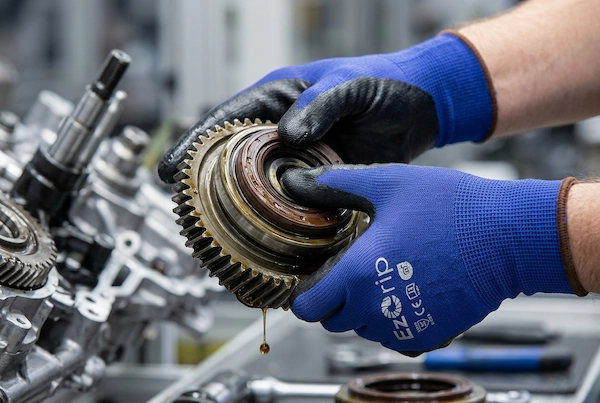
In complex automotive powertrain assembly, precision transmission valve body machining, and high-pressure machine tool lubricant maintenance operations, workers require a barrier that completely prevents oil contamination from seeping inward, while also demanding exceptional ergonomic performance for fine assembly tasks that rely on fingertip sensitivity. If thick, stiff traditional industrial rubber gloves are distributed indiscriminately, front-line technicians may resist using them due to the loss of flexibility.
To address these demanding scenarios that require both resistance to hydrocarbon penetration and ultra-high tactile feedback, SQG has developed the EzGrip® Oil-Resistant Series for lightweight, precision tasks:
18-gauge ultra-high-density seamless ergonomic liner: Breaking away from the coarse weaving process of traditional 13-gauge heavy-duty liners, this series employs precision weaving with 18-gauge ultra-fine, ultra-dense seamless nylon or spandex elastic fibers, significantly reducing the liner’s weight and thickness to deliver a second-skin-like fit;
360-Degree Full-Immersion, Fully Liquid-Tight Engineering Coating (Fully Coated): Designed for environments involving trace oil contamination, high-pressure splashes, and hands covered in oil and mud, the EzGrip® flagship models (such as the EZ-318FD and EZ-324FD) utilize a multi-stage immersion process to achieve full-coverage, fully immersed nitrile sealing from the back of the hand to the cuff, creating a 100% liquid-tight barrier that blocks cutting fluids, hydraulic oil, and synthetic cleaning kerosene;
Microscopic Pore Adsorption and Fatigue-Resistant Dexterity: The palm’s outer layer incorporates innovative microscopic oil-control impregnation technology. When handling precision metal components saturated with grease or lubricating oil, this technology eliminates the interfacial slippage oil film, providing a stable yet responsive grip damping. This significantly reduces hand muscle fatigue for workers during prolonged, repetitive tasks such as bolt tightening and precise wiring harness positioning.
Mineral Acids & Caustics: Why Pure PVC Excels in Heavy Immersion
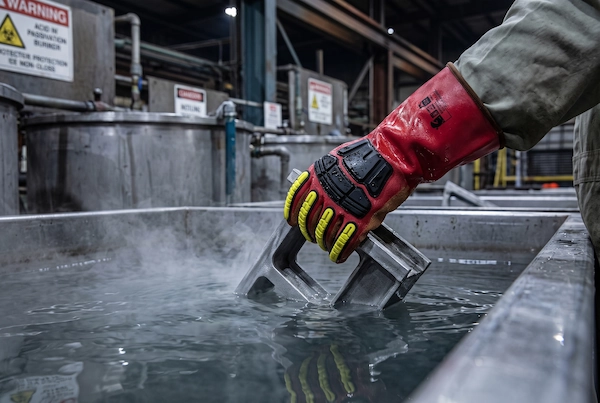
In industrial heavy-duty acid washing, metal surface passivation tanks, paper pulp cooking reactors, and industrial waste acid neutralization and transfer stations, the media to which frontline workers are exposed are often not volatile organic solvents, but highly corrosive, high-concentration inorganic strong acids and strong alkalis. When dealing with such strong proton-releasing inorganic media, the performance of polymer protective materials is reversed: conventional nitrile rubber, which performs well in oils, rapidly fails, while high-purity polyvinyl chloride (Pure PVC) demonstrates superior molecular barrier properties.
Inorganic Chemical Passivation of Homopolymer PVC
High-purity homopolymer PVC (Homopolymer PVC) possesses inherent chemical passivation and hydrolytic stability against strong inorganic acids and bases.
This superior performance is attributable to its regular, saturated molecular backbone configuration:
Protection provided by the saturated carbon backbone and carbon-chlorine covalent bonds: The PVC backbone consists entirely of strong carbon-carbon single bonds, with highly electronegative chlorine atoms alternately distributed along the side chains. Due to their large volume, the chlorine atoms create a powerful steric shielding effect around the backbone, making it extremely difficult for free hydrogen ions (protons) or hydroxide ions—which are highly oxidative and corrosive in solution—to attack the polymer backbone;
Excellent Hydrolysis Resistance and Passivation Performance: When continuously immersed in high-risk inorganic media such as 96% concentrated sulfuric acid, 65% concentrated nitric acid, or 40% sodium hydroxide, pure PVC resin coatings do not undergo main-chain degradation or hydrolysis, nor do they rapidly swell or deteriorate upon contact with polar acid molecules. The surface of high-purity PVC rapidly forms a stable passivation barrier layer, trapping penetration at the outermost nanoscale interface and demonstrating long-lasting resistance to chemical degradation.
Degradation and Pinhole Formation in Nitrile Rubber under Concentrated Acids
In contrast, when conventional nitrile rubber (NBR) comes into contact with highly concentrated, strongly oxidizing inorganic acids, its microscopic cross-linked network breaks down within an extremely short period of time.
The key functional groups in nitrile rubber formulations, which are designed to resist hydrocarbon oils, actually become its most fatal structural weaknesses when exposed to strong acids:
Cyanide Acid Hydrolysis Reaction: Strongly oxidizing acids (such as fuming nitric acid and concentrated sulfuric acid) rapidly attack the cyano groups (-CN) on the nitrile rubber molecular chains, triggering violent hydrolytic oxidation and generating polar carboxyl and amide groups. This reaction disrupts the originally tight dipole-locked network, leading to polymer chain breakage and rapid depolymerization of the molecular backbone;
Microscopic Pinholes and Structural Foaming Collapse: As molecular cross-links break down, the nitrile rubber layer rapidly hardens from a flexible to a rigid state, forming numerous microscopic through-pores and hairline cracks within the material that are difficult to detect with the naked eye. Concentrated acid molecules flow through these microporous channels via capillary action within minutes;
Loss of physical elasticity and instantaneous penetration: After being oxidized and corroded by the acid solution, the surface of the nitrile gloves turns black and charred, and their elasticity is completely lost. When workers grip pipes or valves or handle materials in drums, the rubber layers on their fingertips and palms will instantly shatter and crack under even minimal external force, resulting in direct contact between the strong acid and the worker’s skin.
Extreme Heavy Acid Immersion Deployment: SQG® P-902
For extreme heavy-duty chemical applications—such as electroplating with strong acid immersion rinsing, emergency repairs on pressurized chemical pipelines, and high-risk strong alkali drainage inside storage tanks—SQG has developed and launched its flagship model, the SQG® P-902 Heavy PVC Glove, specifically designed for fully submerged operations. This model has undergone a comprehensive engineering redesign—from resin formulation and physical reinforcement to the microscopic tribological structure of the palm surface:
High-purity PVC resin full-immersion barrier: Utilizing high-purity virgin homopolymer PVC resin that has undergone multi-stage dehydration and impurity removal, the gloves employ a multi-step, fully automated dipping process to form a uniform, continuous, and heavy-duty fully-enclosed coating free of microporous defects. It demonstrates reliable chemical passivation and inertness in environments containing 96% concentrated sulfuric acid, 40% sodium hydroxide, and high-concentration hydrofluoric acid;
Seamless Nylon/Glass Lining: The glove interior features a 13-gauge, high-density, seamless knitted lining made from a blend of tough nylon yarn and ultra-fine glass fiber engineering fibers. This construction provides excellent moisture-wicking and support while imparting additional cut resistance to the heavy-duty rubber shell, effectively preventing acid leaks caused by the glove being cut by metal burrs or broken glass tubes during work in acid tanks;
Sandy-Finished Palm (Sandy Finished): The palm and fingertips are coated with a fine-grit microcrystalline layer cured through a heat-treatment process. When gripping metal flanges coated with viscous, strong acid or alkali films, smooth plastic-coated pipes, or various reactor handles, the fine-grit microporous surface rapidly breaks through the continuous liquid film, creating a slight negative-pressure vacuum grip that effectively eliminates the risk of slippage;
Heavy-Duty Extended Safety Cuff: Featuring a sturdy, wear-resistant, extended cuff design that is structured and easy to put on and take off, this feature not only tightly seals and covers the cuffs of chemical-protective suits to prevent acid backflow but also allows frontline workers to quickly shed the gloves within seconds in the event of a sudden, widespread chemical splash, providing reliable emergency safety protection.
Organic Solvents: Navigating Esters, Ketones, and Aromatic Compounds
If nonpolar alkanes and strong inorganic acids and bases correspond to the areas where nitrile and PVC hold absolute advantages, then when dealing with industrial organic solvents—especially highly polar ketones, highly volatile esters, and highly penetrating aromatic hydrocarbons—the selection of protective materials enters a “high-risk blind spot” where mass casualties are most likely to occur.
In paint spraying and mixing rooms, pharmaceutical purification and extraction processes, paint and adhesive removal, and ink cleaning operations, these organic solvents exhibit extremely strong swelling and penetration capabilities, as well as high volatility and diffusivity. Many inexperienced procurement and on-site safety managers mistakenly believe that gloves designed to resist oil and acids can also withstand solvents; this misjudgment often leads to catastrophic failures in protective barriers.
The Ketone and Ester Trap: Why Both Nitrile and Standard PVC Fail
Ketone and ester solvents, represented by acetone (CAS 67-64-1) and ethyl acetate (CAS 141-78-6), are widely recognized as “polymer killers” in the industrial glove industry. Conventional nitrile gloves and standard PVC gloves offer virtually no defense against these solvents, and their failure is characterized by instantaneous breakdown:
Polar-soluble breakdown of the nitrile polymer cross-linked network: The highly polar cyano groups in nitrile rubber are normally capable of firmly repelling nonpolar oils and fats; however, when encountering highly polar ketones (carbonyl groups) or ester solvents—which also possess high dipole moments—the molecular polarity parameters of the two are highly similar. Solvent molecules instantly penetrate the surface of the nitrile elastomer with extremely high thermodynamic affinity, extensively disrupting the physical entanglement and weak bonds between molecular chains. Macroscopically, this manifests as the nitrile rubber layer rapidly absorbing liquid and swelling within minutes of immersion in acetone or ethyl acetate; the glove’s volume expands by more than 50%, the rubber softens to a mud-like consistency, loses all elasticity, and the fingertips tear and perforate like wet paper under even slight gripping pressure;
The dual effects of depolymerization and swelling in standard PVC: For traditional PVC gloves, ester and ketone solvents not only possess extremely strong solubilizing capabilities but are also highly effective industrial solvents used to dissolve polyvinyl chloride (PVC) resin and various plasticizers. Upon contact, the solvents completely extract and dissolve the free plasticizers within the PVC within tens of seconds, while simultaneously forcing the remaining rigid PVC framework to swell. This causes the glove surface to instantly become viscous and bubbly, with the rubber film dissolving and peeling away, resulting in a complete loss of barrier protection.
At workstations involving full immersion in high-purity acetone, methyl ethyl ketone (MEK), or high-concentration ethyl acetate, conventional nitrile rubber and standard PVC must be placed on the “absolutely prohibited list”; specialized protection can only be provided by special-purpose butyl rubber or high-barrier EVOH composite films.
Aromatic Hydrocarbons: Toluene and Xylene Attack
Aromatic hydrocarbons, represented by toluene (CAS 108-88-3) and xylene (CAS 1330-20-7), are widely used as diluents for heavy-duty anti-corrosion coatings, industrial heavy-duty degreasers, and carriers for emulsifiable concentrate pesticides. The conjugated benzene ring structure in their molecular composition confers strong fat solubility and the ability to penetrate and diffuse through microporous materials.
Rapid penetration of polymer chains by aromatic hydrocarbon molecules: The benzene ring possesses a highly delocalized electron cloud, enabling it to penetrate the gaps between polymer chains with extremely low spatial resistance. When nitrile rubber comes into contact with pure toluene, although it does not dissolve instantly as it does with acetone, its normalized breakthrough time is typically extremely short—it can be completely penetrated in as little as 10 to 15 minutes;
Neoprene’s buffer defense threshold: In scenarios where a balance must be struck between mechanical flexibility and intermittent exposure to aromatic hydrocarbons, neoprene demonstrates superior transitional defense capabilities compared to nitrile rubber and PVC. The slightly polar chlorine atoms on the polychloroprene molecular chains, combined with a dense crystalline network, slow down the desorption and diffusion rates of aromatic hydrocarbon molecules to some extent. This provides a relatively gradual rise in penetration resistance against splashes of diluents at low to medium concentrations, buying valuable time for occasional exposure and emergency relief shifts. However, under conditions of prolonged continuous immersion, even neoprene will gradually undergo irreversible swelling, softening, and mechanical delamination.
Regulatory Compliance and Alignment with Permeation Standards
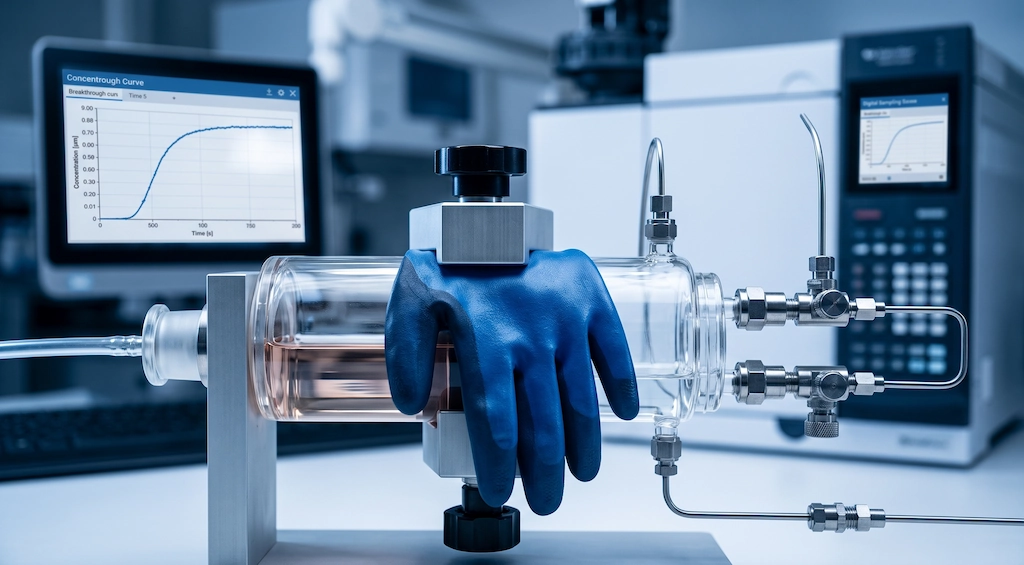
When dealing with complex organic solvents and mixed fluids, relying solely on general knowledge of materials is often insufficient to accurately predict actual service life. This is because permeation, penetration, and degradation of chemical media occur simultaneously as dynamic processes under real-world operating conditions; even slight temperature fluctuations or mechanical stress can cause significant shifts in a material’s critical protection thresholds.
To ensure that equipment selection and compliance audits are evidence-based, companies must not rely solely on generalized claims on glove packaging; instead, they must require suppliers to provide standard chemical permeation test reports specific to the solvents in question. To gain a thorough understanding of the tenfold difference in sensitivity between European and North American laboratories regarding the determination of permeation endpoints, as well as how to accurately interpret the alphabetic codes for the 18 standard test reagents, we recommend systematically reviewing the previously published foundational technical article: EN ISO 374 vs. ASTM F739 Compliance Guide.
The Master Polymer Compatibility Matrix (CAS Registry Indexed)
In the industrial protective equipment selection process, discussing whether a glove is “corrosion-resistant” without reference to the specific chemical’s CAS number (Chemical Abstracts Service Registry Number) has no engineering significance. For the same industrial cleaning solution, if the primary solvent is changed from aliphatic hydrocarbons to aromatic hydrocarbons or polar esters, the rate of penetration into the glove material may undergo a dramatic change of several orders of magnitude.
To provide objective and traceable selection criteria for technical procurement in heavy industry, fine chemicals, and the petrochemical and oil and gas sectors, it is essential to establish a polymer compatibility database based on microscopic molecular properties and standardized laboratory testing.
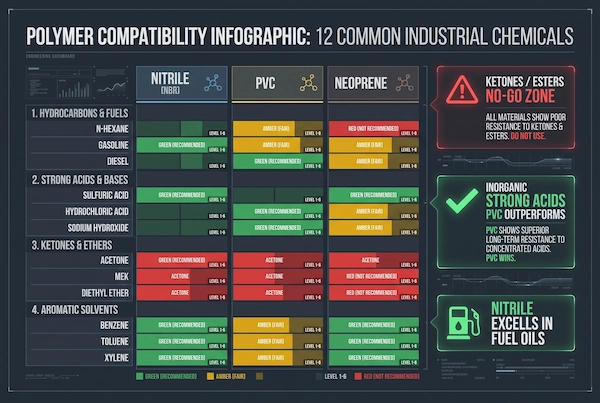
Technical Comparison Table: Breakthrough & Degradation Across 12 Industrial Media
The following comparative data summarizes the 12 most common representative hazardous media found in industrial settings. Tests were conducted in accordance with the EN 16523-1 standard protocol to determine the normalized breakthrough time (BTT) at a constant temperature of 23 degrees Celsius. The physical compatibility of the materials under chemical immersion was evaluated using the degradation rate specified in EN ISO 374-4:
Breakthrough Level Classification (BTT Gradient):
Level 1 (10–30 minutes) | Level 2 (30–60 minutes) | Level 3 (60–120 minutes) | Level 4 (120–240 minutes) | Level 5 (240–480 minutes) | Level 6 (greater than 480 minutes);
Tolerance Rating Criteria:
Recommended: Breakthrough level greater than or equal to Level 3, with a low degradation rate and no significant swelling or embrittlement;
Fair (Limited Use/Emergency Splash Only): Breakthrough level is Level 1–2, with mild swelling; strictly prohibited for full immersion applications;
Not Recommended (Absolutely Prohibited): Breakthrough time is less than 10 minutes, or severe swelling, film dissolution, or brittle cracking occurs.
| Chemical Name | CAS Registry Number | Chemical Class | Nitrile Rubber NBR (Breakthrough Level / Resistance Rating) | Polyvinyl Chloride (PVC) (Breakthrough Level / Resistance Rating) | Neoprene (Breakthrough Level / Resistance Rating) |
| n-Heptane | 142-82-5 | Aliphatic Hydrocarbons | Level 6 / Recommended | Level 1 / Not Recommended (Rapid extraction of plasticizers leading to embrittlement) | Level 3 / Fair |
| Diesel Fuel | 68476-34-6 | Hydrocarbon Mixtures | Level 6 / Recommended | Level 2 / Fair (Prone to hardening upon prolonged contact) | Level 4 / Recommended |
| Toluene | 108-88-3 | Aromatic Hydrocarbons | Level 1 / Not Recommended (Rapid Swelling) | Level 0 / Not Recommended (Softening and peeling of the adhesive layer) | Level 2 / Fair (For splash protection and emergency use only) |
| Acetone | 67-64-1 | Polar Ketones | Level 0 / Not Recommended (Instant Softening Due to Polar Solubility) | Level 0 / Not Recommended (Dissolution and loss of plasticizers) | Level 1 / Not Recommended |
| Ethyl Acetate | 141-78-6 | Esters | Level 1 / Not Recommended (High Swelling Penetration) | Level 0 / Not Recommended (Dissolution of the resin adhesive film) | Level 1 / Not Recommended |
| 96% Sulfuric Acid | 7664-93-9 | Strongly Oxidizing Inorganic Acids | Level 1 / Not Recommended (cyano-oxidative hydrolytic cracking) | Level 6 / Recommended (High-purity resin naturally passivates) | Level 3 / Fair |
| 65% Nitric Acid | 7697-37-2 | Strong Oxidizing Inorganic Acids (Inorganic Mineral Acids) | Level 1 / Not Recommended (cooking and degradation of the rubber film) | Level 5 / Recommended (Extremely strong resistance to acid corrosion) | Level 2 / Fair |
| 40% Sodium Hydroxide | 1310-73-2 | Strong Inorganic Bases (Inorganic Bases) | Level 6 / Recommended | Level 6 / Recommended (Highly stable resistance to alkalis) | Level 6 / Recommended |
| Dichloromethane | 75-09-2 | Chlorinated Hydrocarbons (Chlorinated Hydrocarbons) | Level 0 / Not Recommended (extremely high penetration) | Level 0 / Not Recommended (Rapid swelling and penetration) | Level 0 / Not Recommended |
| Methanol | 67-56-1 | Primary Alcohols (Primary Alcohols) | Level 2 / Fair | Level 4 / Recommended | Level 3 / Recommended |
| Ethylene Glycol | 107-21-1 | Diols/Antifreeze and Preservatives (Glycols) | Level 6 / Recommended | Level 4 / Recommended | Level 6 / Recommended |
| Trichloroethylene | 79-01-6 | Chlorinated Olefins/Industrial Degreasers (Chlorinated Solvents) | Level 1 / Not Recommended (severe polar erosion) | Level 0 / Not Recommended (Adhesive disintegration) | Level 1 / Not Recommended |
Five-Step Protocol for Cross-Referencing MSDS Section 8
Faced with constantly updated cutting fluids, degreasers, rust-preventive oils, or mixed pickling solutions on the shop floor, factory procurement engineers and EHS managers must never rely on subjective assumptions based on the trade names on packaging drums. Instead, they must establish a five-step, closed-loop verification protocol that delves into the chemical composition:
Review Section 3 (Composition / Information on Ingredients) of the Safety Data Sheet
Immediately open Section 3 of the MSDS/SDS document accompanying the product and extract the legal chemical names of all hazardous components in the mixture, along with their corresponding globally unique CAS registry numbers. If the cleaning agent is a composite formulation (e.g., containing 70% kerosene fraction and 30% aromatic solvent), the mass percentage of each component must also be recorded; it is strictly prohibited to focus solely on a single component with a higher percentage;
Verify Section 8: Legal Protection Requirements (Exposure Controls / Personal Protection)
Go to Section 8 of the MSDS and review the specific polymer materials recommended for protective gloves by the preparer based on Occupational Exposure Limits (OELs) (e.g., explicit instructions such as “Wear nitrile gloves” or “Avoid PVC due to plasticizer leaching”) to confirm whether there are any mandatory legal restrictions for specific chemical classes in this process;
Map CAS Numbers to Polymer Compatibility Databases
Use the extracted CAS numbers to search the official chemical resistance databases of the corresponding polymer manufacturers. Verify the measured standard normalized breakthrough times (BTT) and degradation behavior for nitrile rubber (NBR), polyvinyl chloride (PVC), and neoprene (chloroprene) with respect to the CAS-listed medium. If the on-site medium is a multicomponent mixture, the “shortest plank principle” must be followed—using the chemical molecule with the shortest breakthrough time and the most destructive properties among all components as the core defense benchmark;
Assess Variables Overlaying On-Site Physical Conditions
Perform a secondary calibration based on the actual exposure methods and mechanical loads at the frontline workstations. In the case of prolonged full immersion in strong acid pickling tanks at temperatures above 40 degrees Celsius, even if certain materials possess short-term acid resistance, it is mandatory to select heavy-duty models made of high-purity PVC resin with a cut-resistant reinforced lining; if the work involves trace amounts of oil but requires the assembly of tiny gears, prioritize 18-gauge fully nitrile-dipped lightweight models;
Filing of Declarations of Conformity (DoC) and Development of On-Site Shift Rotation Schedules
Prior to placing bulk purchase orders, glove manufacturers must provide the annex to the CE Category III certificate and the third-party notified body’s test report for the corresponding batch to verify the chemical codes used in testing. At the same time, based on the breakthrough times measured in the reports, multiply them by a safety derating factor of 30% to 50% to strictly stipulate in the workshop Standard Operating Procedures (SOPs) the maximum wearing duration per shift (single or double) and the mandatory disposal thresholds, thereby establishing a closed-loop safety management ledger.
Polymer Blending & Hybrid Formulations: The Engineering of SQG® P-901
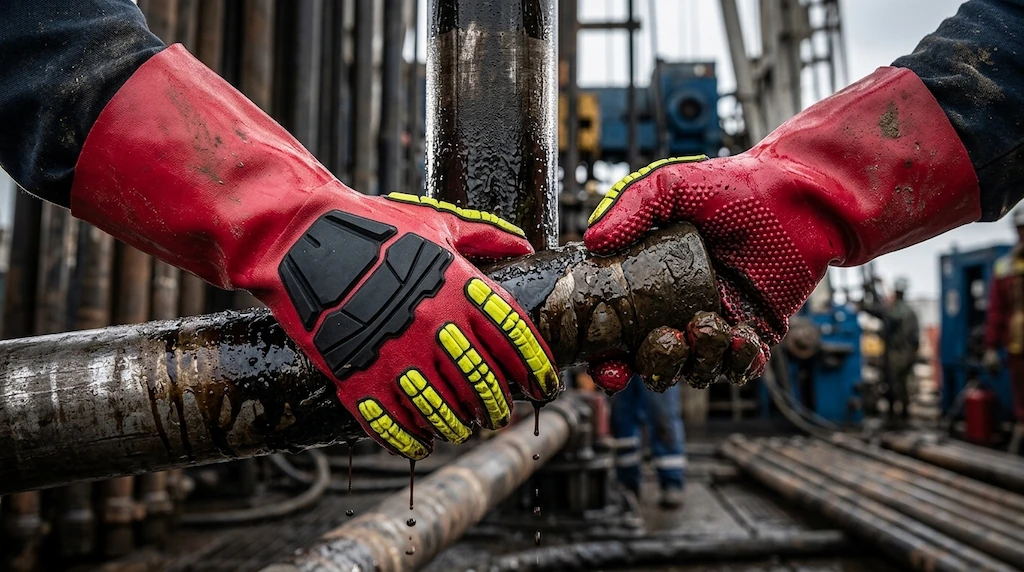
In deep-well drilling mud circulation tanks, on the rotary tables of offshore drilling platforms, and in large-scale petrochemical heavy oil demulsification and desalination units, field operating environments are far from the simple test tubes containing single reagents found in a laboratory. Workers are confronted with highly complex “multi-hazard fluids”—oil-based drilling fluids (OBM) that contain a mixture of heavy hydrocarbon mineral oils, synthetic ester-based lubricants, high-concentration inorganic brines (such as calcium bromide and calcium chloride-weighted solid-phase fluids), and strongly alkaline demulsifiers.
When confronted with such multiphase fluids, a single material is highly prone to falling into a dilemma: pure nitrile rubber tends to harden and lose elasticity when exposed to strong inorganic alkaline brines, while ordinary PVC, when immersed in heavy aromatic crude oil, cracks and peels off due to the rapid extraction of plasticizers. To completely break free from the performance constraints of a single polymer, materials engineering must move toward highly compatible blend modification systems.
Synergistic Interpenetrating Networks (PVC/Nitrile Hybrids)
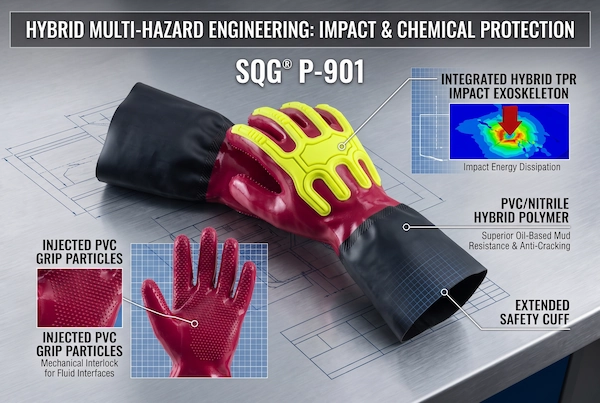
As the flagship model for heavy oil and gas extraction and high-risk composite fluids, the SQG® P-901 Heavy Chemical Glove incorporates a proprietary PVC/nitrile polymer blend copolymer network (PVC/Nitrile Polymer Blends) in its base material. This micro-modified formulation achieves complementary performance advantages through dual chemical and physical interpenetration:
Dual continuous-phase molecular interlocking inhibits swelling: The formulation uniformly disperses and grafts the microscopic chain segments of polar nitrile rubber (NBR) into a dense continuous phase of polyvinyl chloride (PVC) resin. The high density of cyano groups on the nitrile molecular chains forms an intermolecular barrier that strongly repels the intrusion of diesel, kerosene, and alkane solvents, thoroughly suppressing excessive liquid absorption and swelling of the rubber film in oil-based drilling fluids;
Chemical modification eliminates plasticizer leaching and brittle cracking: Traditional physically added plasticizer molecules are effectively “trapped” within the network by macromolecular nitrile segments, greatly reducing the migration and release rates of small-molecule plasticizers when exposed to hydrocarbon washout. Even when the gloves are continuously immersed for several weeks in highly fluid light fuel oils and synthetic-based drilling fluids, they do not exhibit the mechanical failure—such as plasticizer leaching, shriveling, cracking, and hardening—typical of ordinary PVC;
Excellent resistance to inorganic salt corrosion and hydrolytic inertness: The PVC component’s well-ordered, saturated carbon-chlorine backbone structure provides the entire rubber layer with a natural passivation barrier against strongly alkaline workover fluids, inorganic brine, and acidic associated gas, thereby achieving dual, long-lasting barrier protection against both the “hydrocarbon organic phase” and the “acid-base inorganic phase” within a single coating.
Multi-Hazard Integration: Fluid Barrier Meets Heavy Impact Defense
At heavy-duty drilling and pipeline installation sites, chemical fluid leakage is often accompanied by immense mechanical forces. The up-and-down movement of steel drill bits, the swaying of high-pressure manifold assemblies, the tangling of heavy steel wire ropes, and the installation and removal of large-diameter valves all pose a high risk of high-energy blunt force impacts and crush fractures to the hands. Ordinary thin-walled chemical-resistant gloves are virtually useless against this heavy machinery, while standard impact-resistant gloves lack a fully sealed, liquid-tight barrier.
The SQG® P-901 seamlessly integrates fluid containment and heavy-duty impact protection through its integrated structural design:
High-frequency hot-pressed injection-molded TPR exoskeleton system: From the back of the hand to each finger joint, a three-dimensional, segmented thermoplastic rubber (TPR) impact-resistant exoskeleton is hot-pressed into a single piece. This exoskeleton has been topologically optimized in strict accordance with the flexion and extension kinetics of human hand joints. When struck by heavy lifting slings or falling objects, it instantly absorbs high-energy point impacts and disperses the force laterally along the exoskeleton’s ribs, effectively reducing the incidence of comminuted finger fractures;
Heavy-Duty Extended Rigid Safety Cuff: The wrist of the glove is equipped with a stiff, sturdy, extended heavy-duty safety cuff. During deep-well drilling and tripping operations, splashing mud and high-pressure fluid backflow can easily seep up the sleeves of work clothing. This safety cuff tightly covers the opening of the work garment’s sleeve, preventing fluids from penetrating along the inner side of the arm, while also allowing workers to quickly shake off the gloves within seconds to escape danger in the event of an emergency entanglement.
Interfacial Tribology in Viscous Media
In work environments involving crude oil and oil-based drilling mud, the micro-tribological design of the glove’s palm directly determines whether workers can securely grip heavy steel pipe fittings and wrenches.
Simply increasing the thickness of the rubber layer cannot solve the problem of slippage at the heavy oil interface; viscous fluids must be displaced through an engineered three-dimensional texture. The SQG® P-901 palm surface is densely covered with highly protruding PVC anti-slip particles formed through polymer secondary co-extrusion. These three-dimensional particles pierce the viscous fluid film when gripping slippery metal pipes, forming a rigid mechanical interlock with the hard surface of the workpiece. This provides a powerful wet critical static friction force, preventing accidents caused by heavy objects slipping out of the hand.
For an in-depth engineering comparison of the underlying mechanisms—including fluid dynamics-based expulsion mechanisms, micro-vacuum adsorption effects, and interfacial shear wear resistance—between the three-dimensional injection-molded particles on the palm and the microcrystalline fine-sand microporous structure (Sandy Finish) in heavy crude oil, high-viscosity cutting fluids, and highly corrosive acid-base media, please refer to the specialized article on interfacial tribology: Sandy Finish vs. PVC Dot Grip Gloves: Palm Friction Mechanics in Viscous Fluids.
Glove Structural Anatomy: Gauges, Dipping Layers, and Liners
When evaluating the overall protective performance of industrial gloves, it is far from sufficient to focus solely on the composition of the outermost polymer resin layer. The thread count of the glove’s liner, the density of the fiber weave, and the dipping coating process collectively form the framework that determines the glove’s physical barrier properties and ergonomic performance. At the microscopic level, subtle differences in the manufacturing process directly determine whether a glove will serve as a worker’s “second skin” in harsh chemical environments or become a heavy burden that leads to liquid leakage and hand fatigue.
Gauge Selection: 13-Gauge Heavy Substrates vs. 18-Gauge Micro-Liners
Gauge refers to the number of needles used to weave the inner liner per inch; it directly determines the fiber thickness of the liner, the pore density of the fabric, and the overall thickness after the rubber coating is applied. In the industrial chemical protection sector, gauge selection has always involved a careful balancing act between “physical and mechanical load-bearing capacity” and “tactile dexterity for fine motor skills”:
13-Gauge Heavy-Duty Blended Skeleton: A physical foundation for heavy-duty resistance
13-gauge liners are woven from relatively coarse, high-strength synthetic fibers (such as high-strength nylon blended with glass fiber or aramid composite yarns), resulting in a fabric with high grammage and robust tensile strength. The thick liner not only absorbs immense mechanical shear forces when workers are in prolonged contact with rough pipe fittings or handle sharp, jagged workpieces, but also serves as a cushioning layer against heat and mechanical impact. For heavy-duty gloves designed to withstand the pressure of crude oil drilling mud or full immersion in concentrated acids, the 13-gauge inner liner securely anchors thick layers of PVC or compound rubber, preventing the rubber layers from peeling or cracking due to localized severe deformation;
18-Gauge Ultra-Fine-Gauge Inner Liner: A Agile Line of Defense Against Operational Fatigue
In precision machining scenarios—such as the arrangement of micro-wiring harnesses in automotive engines or the installation of hydraulic seals on CNC machine tools—13-gauge gloves, due to their thick liners and lack of fingertip flexibility, can easily cause muscle fatigue in technicians performing fine work. The 18-gauge liner utilizes ultra-fine-denier, high-density knitting technology, significantly reducing liner thickness while markedly improving softness, breathability, and fit. This high-gauge liner maintains excellent tear resistance while accurately transmitting tactile feedback to the technician’s fingertips, completely eliminating the safety hazard of “removing gloves to achieve dexterity.”
Single-Dip vs. Multi-Dip Engineering
In the manufacture of chemical-resistant gloves, many gloves that initially pass macroscopic tests frequently exhibit “micro-leaks” during mass production. The root cause lies in the fundamental gap in microscopic material formation between single-dip and multi-dip processes.
The single-dip coating process suffers from irreversible structural and physical defects:
Fiber fuzz penetration and air bubble escape defects: Tiny fibers protruding from the surface of the inner liner can easily pierce the thin, single-layer rubber coating; furthermore, during the high-temperature drying and curing stage, internal moisture and volatile substances escape outward, often leaving microscopic, through-holes (pinholes) within the single-layer rubber coating that are invisible to the naked eye. These pinholes may not leak water droplets during hydrostatic pressure testing at room temperature, but when exposed to hydraulic oil, hydrocarbon solvents, or highly permeable acids and alkalis—which have extremely low surface tension—they rapidly become conduits for the capillary diffusion of chemical molecules.
A process of repeated, sequential stepped impregnation thoroughly eliminated this structural hazard:
Base Smooth Coat: The first full-immersion process uses a highly fluid, finely ground, internally mixed polymer solution. Under strict, constant-temperature lifting speeds, it thoroughly saturates the base of the liner fibers, rapidly forming a smooth, homogeneous, and pore-free, completely liquid-tight base layer;
Top Functional Finish: Immediately after the base layer enters the critical window period—when it is semi-gelled but not yet fully cured—a second dip coating is applied. The polymer molecular chains of the second layer interpenetrate and cross-link with the base resin at the interface, curing the inner and outer layers into an inseparable, molecular-level interpenetrating network. Microscopic defects and molecular voids in the two coating layers are completely spatially offset and blocked, creating a fully closed-loop barrier that 100% prevents micro-leakage of chemical media.
Industrial Bulk Procurement & Custom Tooling Controls
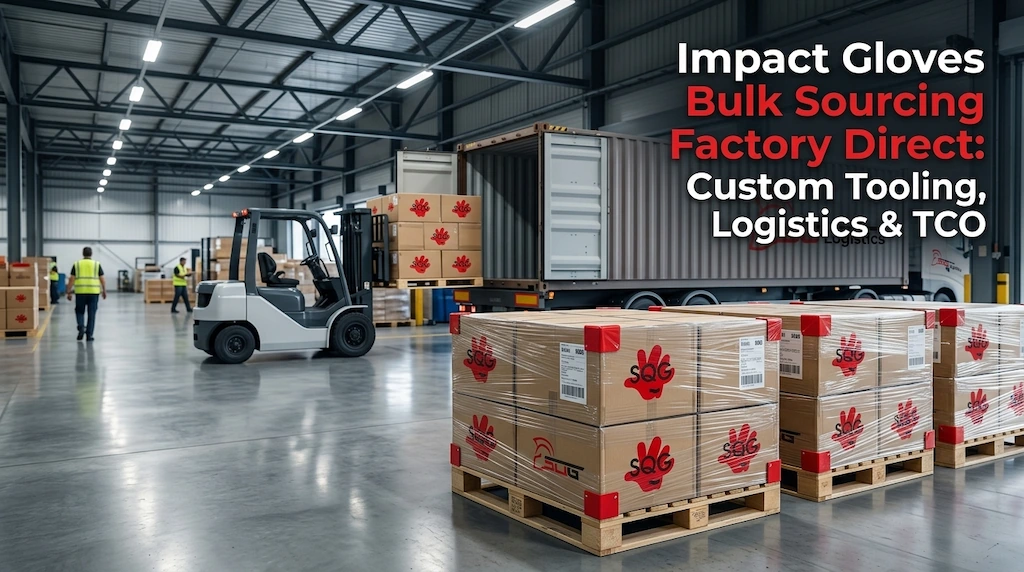
For decision-makers responsible for centralized procurement of materials for global multinational engineering, procurement, and construction (EPC) projects, large-scale heavy industry clusters, and multi-site refining and petrochemical plants, controlling the microstructure of gloves and the dipping process is merely the starting point of the initial technical review. The more critical practical challenge lies in ensuring that suppliers maintain consistent batch quality throughout the continuous delivery of bulk orders numbering in the hundreds of thousands—preventing quality variations caused by mold wear, outdated knitting equipment, or the skimping of rubber material.
By directly partnering with source manufacturing facilities equipped with automated precision dipping production lines and in-house mold development capabilities (Custom Tooling), it is possible to control mold tolerances at the source, ensuring that the extended safety cuff and the TPR impact-resistant back-of-hand armor maintain uniformity in both dimensions and molecular cross-linking during every injection molding and bonding process.
For guidance on how to verify the actual bill of materials (BOM) through direct sourcing from the source, optimize logistics loading for full 20GP/40HQ container shipments, and reduce the total cost of ownership (TCO) over the entire lifecycle, please refer to the dedicated supply chain management article: Impact Gloves Bulk Sourcing Factory Direct: Custom Tooling, Logistics & TCO.
Technical FAQ: Chemical Resistance, Maintenance, and Disposal
In the distribution of personal protective equipment and safety inspections on the factory floor, the actual tolerance limits of glove materials when exposed to specific substances, the impact of environmental temperature fluctuations, and the compliant disposal of worn-out gloves are consistently among the most frequently asked questions by production line supervisors and on-site safety officers. This section provides systematic answers focusing on chemical compatibility, molecular diffusion, and closed-loop management of hazardous waste.
Can PVC gloves be used for continuous handling of diesel and fuel oils?
They must never be used for prolonged, continuous immersion; they are permitted only for short-term emergency use when extremely small amounts of oil splashes occur occasionally and an immediate glove-changing procedure is in place.
Light diesel, various grades of fuel oil, and kerosene cleaning solutions contain large amounts of light alkanes and aromatic hydrocarbons characterized by low viscosity and high fluidity. The reason traditional polyvinyl chloride (PVC) gloves maintain a supple feel is due to the large amount of physically blended, liquid, small-molecule plasticizers (such as phthalate compounds) within the coating:
Reverse physical extraction process: These nonpolar fuel oil molecules exhibit extremely high compatibility and affinity with plasticizer molecules. When PVC gloves are exposed to diesel for an extended period, the flowing oil acts like a solvent extraction column, rapidly physically extracting and carrying away the plasticizers originally embedded in the gaps between the PVC polymer chains;
Irreversible Failure from Hardening to Cracking: Deprived of the plasticizing and lubricating medium, the carbon-chlorine main chain of the PVC loses its freedom of movement, and the intermolecular distances are forcibly compressed. As a result, the glove surface becomes severely hardened and brittle within 4 to 8 hours of continuous wear. At this point, even simple hand flexion or gripping a hard metal fuel line will cause microcracks to form at the stress concentration points where the fingertips meet the palm, which rapidly develop into through-tears, allowing diesel fuel to seep directly into the inner lining;
Alternative Selection for Long-Term Operations: For tasks such as cleaning gas station storage tanks, heavy-duty maintenance of diesel generator sets, or prolonged immersion in fuel oil, the issuance of standard pure PVC gloves must be strictly prohibited, and it is mandatory to switch to nitrile (NBR) gloves (such as the EzGrip® Full-Immersion Series) that offer both high resistance to hydrocarbon swelling and excellent abrasion resistance, or heavy-duty PVC/nitrile composite gloves treated with a modified interpenetrating network (such as the SQG® P-901).
Why do nitrile gloves become brittle or swell in acetone within minutes?
The rapid increase in stickiness, softening, swelling, and subsequent disintegration and cracking of nitrile gloves upon contact with acetone are caused by microscopic “like dissolves like” interactions—resulting from the extremely similar molecular polarity parameters of the two substances—and the relaxation of the polymer’s cross-linking bonds.
Nitrile rubber is a synthetic elastomer formed by the copolymerization of acrylonitrile and butadiene. The cyano groups (-CN) attached to its molecular side chains possess an extremely strong permanent dipole moment. This polar barrier, formed by strong electronegativity, firmly repels nonpolar mineral oils; however, the carbonyl group within the acetone molecule (CH₃-CO-CH₃) also exhibits strong polar characteristics:
Instantaneous breakdown of molecular-level like-dissolves-like: When liquid acetone—which has highly similar polarity parameters—comes into contact with a nitrile rubber film, the solvent molecules are not repelled but instead rapidly penetrate the molecular surface of the nitrile polymer with extremely high chemical affinity;
Violent relaxation and volumetric expansion of polymer chains: A large number of acetone molecules force their way into the cross-linked network of nitrile rubber, instantly widening the gaps between polymer chains, breaking the physical entanglements between chain segments, and inducing severe chain relaxation. The macroscopic physical manifestation is that the glove membrane rapidly absorbs liquid within 2 to 3 minutes, its thickness expands dramatically by more than 40%, and the surface becomes wet and sticky, softening to a dough-like consistency;
Mechanical barrier properties are completely eliminated: in this state of excessive swelling and relaxation, the nitrile polymer elastomer completely loses its tensile and tear resistance. When a worker grips a tool or scrapes burrs off a component, the rubber layer will instantly shatter or tear open, offering no protective margin whatsoever.
How does temperature change affect polymer permeation breakthrough times?
Rising temperatures in the work environment and in the process medium can significantly reduce or multiply the standard breakthrough time (BTT) of glove materials. Breakthrough times determined under standard laboratory conditions cannot be directly applied to high-temperature industrial settings.
Chemical permeation tests in international standards (EN 16523-1 and ASTM F739) are conducted in controlled environmental chambers maintained at 23 degrees Celsius; however, local temperatures in real-world industrial pickling shops, outdoor oil and gas pipelines during summer, or high-temperature cleaning stations often reach 35 to 50 degrees Celsius:
Thermal expansion of polymer free volume: Rising temperatures significantly accelerate the thermal motion (Brownian motion) of polymer molecular chains. Whether in nitrile rubber or PVC, the long polymer chains oscillate more vigorously as temperatures rise, causing the microscopic “free volume” and pore spaces within the polymer matrix to expand exponentially. This creates wider molecular-level pathways for the penetration of liquids and volatile chemical molecules;
Exponential increase in the diffusion coefficient of chemical media: According to the thermodynamic diffusion laws governing fluids in elastomers, for every 10-degree Celsius increase in temperature, the diffusion coefficient of chemical molecules within the rubber matrix typically doubles or even increases several-fold. This means that a glove measured in a 23°C laboratory to have a breakthrough time of 120 minutes (Level 4) may see its actual breakthrough time plummet to less than 30 minutes when exposed to heavy diesel or acidic hot fluids at 43°C;
Temperature-Drift Reduction Factors for Shift Rotations: EHS safety procedures must mandate the application of mandatory downward adjustments to supplier-reported data based on the actual ambient temperature of the work environment. For any workstation where the palm temperature remains consistently elevated due to heated media, steam environments, or prolonged heavy physical labor, the continuous wear and rotation limits for single- and double-layer chemical gloves should be further reduced by 30% to 50% from the previously established safety margin.
How should chemical gloves be properly decontaminated and disposed of?
The removal and disposal of chemical protective gloves must adhere to three key compliance guidelines: “Prevent secondary contact, strictly prohibit unauthorized reuse, and ensure a closed-loop system for hazardous waste disposal.”
Many workplace accidents in companies do not occur during actual operations, but rather during shift changes when gloves are removed or when employees wash and reuse them without authorization:
Completely dispel the illusion that washing and reusing gloves is safe: Chemical penetration is a microscopic process of molecular absorption and migration. After gloves are removed from contact with operational fluids, although the outer surface may appear clean and smooth after being rinsed with water, large amounts of toxic solvents or strong acid molecules remain trapped within the molecular network of the glove’s rubber layer for an extended period and continue to desorb into the fabric layer of the glove’s inner liner. If gloves that have come into contact with high-risk substances are hung on a tool rack to “air dry for reuse the next day,” when a worker slips their hand back into the glove, the toxic molecules accumulated in the liner—triggered by the heat and sweat from the palm—will directly penetrate the skin’s stratum corneum, causing hidden absorption poisoning;
Non-Contact Standard Glove Removal Procedure (Beak Method): When removing gloves, it is strictly prohibited to use bare hands to directly pull on the fingertips or outer surface of the gloves. First, use one gloved hand to grasp the outer edge of the cuff of the other glove, turn it inside out, and slide it off; Next, use the now-exposed clean fingers to reach into the clean inner edge of the glove still on the other hand, and similarly turn it inside out to remove the second glove, ensuring that the outer surface contaminated with chemicals is completely enclosed within the removed glove;
Mandatory Classification as Industrial Hazardous Waste and Sealed Transport: Removed chemical-contaminated gloves are classified as hazardous waste under national law; it is strictly prohibited to mix them with general household trash or discard them in packaged form. They must be placed directly into a dedicated, thickened, leak-proof waste bin marked with a hazardous waste warning sign, which is lined with a double layer of puncture-resistant polyethylene leak-proof bags. Before handover, the bag openings must be securely sealed with tie straps, and the hazardous waste transfer form must be filled out in detail with information on the on-site medium, CAS number, and batch information. The gloves must then be handed over to a professional environmental protection agency with hazardous waste treatment qualifications for centralized high-temperature incineration or harmless melting and sealing.
Request Factory-Direct Chemical Compatibility Audits & Wear Trials (CTA)
During the implementation phase of heavy chemical engineering EPC bidding, bulk direct procurement for large-scale refining and petrochemical complexes, or maintenance and repair of multinational energy equipment, the core challenge facing procurement teams and EHS managers is how to completely avoid personal injury and liability for work stoppages caused by misjudgments regarding glove materials, while simultaneously eliminating the cost markups resulting from multiple layers of intermediaries.
Leveraging fully automated dipping production lines, a polymer compatibility laboratory, and comprehensive CE Category III (Module B / Module D) certification, SQG breaks the traditional trade chain to provide global industrial buyers with end-to-end technical support—from medium analysis and engineering prototyping at the original manufacturer to bulk container shipments (FCL/LCL).
Submit Facility Chemical CAS Numbers for Engineering Analysis
Faced with constantly updated cutting fluids, non-standard mixed waste acids, heavy hydrocarbon slurries, and complex diluent systems in the workshop, product selection need not rely solely on theoretical deductions or empirical guesswork. SQG offers an engineering-level on-site medium MSDS/CAS compatibility verification service led by frontline materials engineers:
Precisely Identify Molecular Hazard Sources: Buyers need only submit a list of media currently in use in the workshop, complete Material Safety Data Sheets (MSDS/SDS Sections 3 and 8), or specific globally registered CAS numbers. The SQG R&D Center will directly access a database of actual penetration and degradation test results covering hundreds of common and rare media;
Modeling of Permeation Curves for Non-Standard Mixed Fluids: For blended fluids such as deep-well oil-based drilling mud (OBM) and degreasing cleaning solvents at specific ratios, the SQG laboratory can generate specialized technical compatibility reports—including standardized breakthrough time (BTT), stable permeation rates, and material swelling and degradation ratings—based on on-site ambient temperatures and continuous immersion durations;
Regulatory Compliance and Third-Party Traceability Endorsement: We assist international engineering clients and multinational contractors in effortlessly navigating stringent OSHA occupational safety spot inspections and local safety audits by providing a complete set of original scanned reports, technical specification drawings, and Declarations of Conformity (DoC) issued by internationally recognized notified bodies such as SATRA and Intertek.
Request Worksite Master Swatch Boxes and Bulk Direct Quotes
Data reports are the cornerstone of compliant product selection, while real-world feedback from frontline workers—including dexterity, slip resistance, damping, and grip fatigue resistance—is key to ensuring that corporate safety protocols are fully implemented. To assist companies in conducting on-site practical wear trials (Worksite Wear Trials) prior to centralized procurement, SQG has established a fast-track process for requesting original manufacturer engineering sample boxes.
Industrial procurement managers and overseas regional distributors can immediately request genuine engineering comparison master swatch boxes tailored for different media:
Full-scenario practical matching kits: The swatch boxes are precisely equipped with the SQG® P-901 Heavy Chemical Glove, designed to resist corrosion from non-polar crude oil hydrocarbons and featuring a thermocompression-molded back armor for impact protection; the SQG® P-902 Heavy PVC Glove, featuring a textured surface and long cuffs made of pure PVC, lined with ultra-fine glass fiber cut-resistant yarn and specifically engineered for full immersion in 96% concentrated sulfuric acid and 40% strong alkali; and the EzGrip® Oil-Resistant Series, featuring an 18-gauge ultra-thin, ultra-dense inner liner that balances 360-degree full-immersion oil resistance with a bare-hand feel and precision assembly dexterity;
Factory-to-port quotes based on the underlying BOM: SQG’s Technical and Commercial Team will consider your annual bulk procurement volume, custom mold requirements (such as custom TPR color schemes for the back of the hand and corporate logo embossing), and container shipping route planning (20GP / 40HQ) to provide a clear, transparent, and cost-competitive tiered direct procurement quotation—including all taxes and delivered to port (CIF / DDP)—within 24 hours.
Build a zero-permeation chemical barrier and streamline your company’s overall occupational safety and health procurement costs: Contact an SQG senior protective equipment application engineer today to submit your on-site CAS media list and receive a customized compatibility analysis and a sample box of products from the original manufacturer: