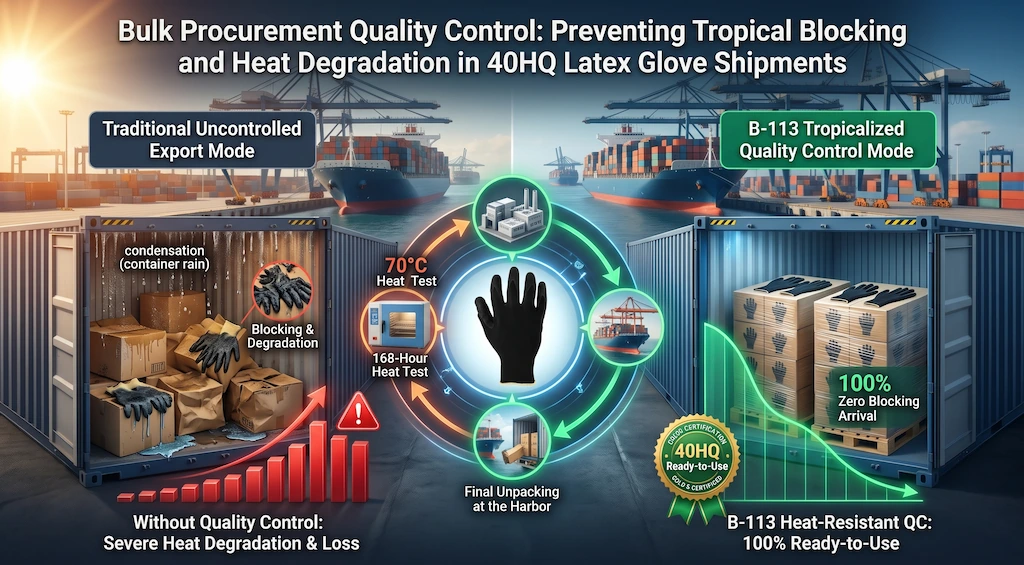
In the large-scale cross-border supply chains for heavy machinery manufacturing, infrastructure, and industrial consumables serving markets in Europe, the United States, and along the Belt and Road Initiative, container shipping logistics serve as the lifeline for high-volume deliveries. However, when ocean-going vessels fully loaded with 40HQ high-cube containers traverse the Strait of Malacca, the Red Sea, the Suez Canal, or the Panama Canal—all of which are equatorial low-latitude routes—the internal temperature at the top of these sealed metal containers can soar to over 60°C under continuous direct exposure to the tropical sun. This is accompanied by “container rain,” caused by the heating of moist air inside the container, resulting in relative humidity that often remains above 85% RH for extended periods. Many importers of industrial goods and general contractors frequently encounter catastrophic issues with traditional latex-coated gloves when unloading containers at the port of destination, including surface sticking and clumping (blocking), sticky and stringy coatings, localized softening and liquefaction, and even entire containers of gloves becoming completely unusable due to severe tangling. This not only directly results in hundreds of thousands of dollars in visible cargo value losses but also triggers material shortages, production line shutdowns, and severe contract delivery claims at downstream large-scale industrial and mining enterprises.
To completely eradicate this persistent problem of cargo damage in long-distance cross-border logistics, the key lies in shifting the focus of supply chain quality control upstream—by comprehensively establishing quantifiable, mandatory “bulk sourcing latex work gloves shipping QC” standards at the factory shipment stage. For a long time, some multinational procurement teams have harbored a fatal misconception regarding the supply chain, mistakenly attributing the adhesion and deterioration of the rubber surface during ocean transport to “force majeure caused by marine weather conditions” and attempting to mitigate risks merely by hanging a few ordinary drying rods inside the shipping containers. In reality, the root causes of rubber layer melting and cold-flow clumping are the severe lack of heat-resistant, oxygen-resistant, and anti-aging cross-linking controls in the rubber formulations used by substandard small workshops. These manufacturers omit high-temperature anti-adhesion modification processes and continue to use low-grammage single-flute packaging that softens upon moisture absorption. True marine-grade industrial protective gloves must undergo rigorous testing under extreme hot and humid conditions to ensure their anti-sticking performance, guaranteeing that bulk shipments remain in perfect, factory-fresh physical condition—ready for immediate use (Ready-to-Use)—even after 30 to 45 days of being sealed in a hot, humid, and turbulent environment.
To eliminate the risk of bulk cargo write-offs at the industrial source, the state-of-the-art hand protection superfactory has fully integrated marine-grade environmental adaptability into its materials engineering and manufacturing quality control systems. By introducing a composite antioxidant blocking system consisting of phenols and amines into the molecular chains of natural rubber, strictly calibrating the three-dimensional vulcanization cross-linking density of cis-polyisoprene, and employing food-grade, talc-free microfine anti-adhesion technology, the system prevents molecular self-adhesion reactions in the rubber layer during extrusion; Combined with the mandatory 168-hour accelerated destructive thermal aging test at a constant temperature of 70°C before shipment, as well as a protective structure featuring a high-barrier co-extruded PE vacuum-sealed inner bag paired with a high-strength, five-layer moisture-proof corrugated outer carton, this ensures that large standard batches can confidently withstand the extreme microclimatic conditions inside tropical shipping containers. For a comprehensive understanding of the coating formulation matrix and the evolution of anti-slip microstructures applicable to all operating conditions in heavy machinery, civil engineering, construction, and complex assembly, please refer to the official Latex Coated Work Gloves Technical Knowledge Center.
The Microclimate Dynamics Inside a 40HQ Ocean Container
The international maritime logistics of bulk industrial consumables is by no means a simple static spatial movement, but rather an ongoing test of the physical and thermal properties of materials under extreme environmental conditions. Once a standard 40-foot high-cube container (40HQ) leaves a temperate port and enters tropical low-latitude shipping lanes, the interior of its metal shell rapidly transforms into a dynamic microenvironment characterized by alternating cycles of high temperature, high humidity, and high pressure. Many procurement teams view containers merely as sealed steel storage units, yet they severely underestimate the destructive physical impact that marine climate thermal cycles have on polymer rubber products.
Equatorial Thermal Cycle: 60°C Peak Temperatures and “Container Rain”
As ocean-going cargo ships traverse key trade routes such as the Strait of Malacca, the equatorial waters of the Indian Ocean, the Red Sea, and the Suez Canal, the outer surfaces of containers are exposed to direct solar radiation year-round:
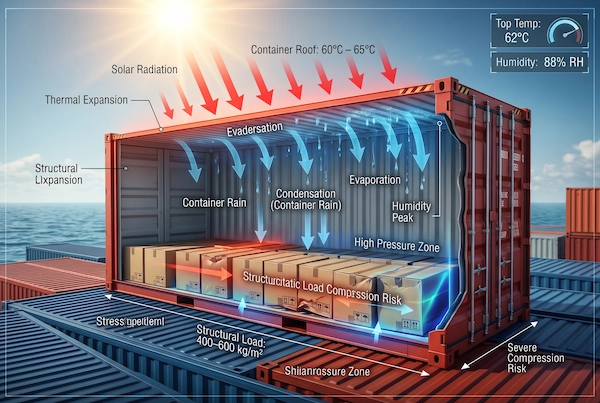
Extreme diurnal thermal fluctuations: The corrugated steel panels of shipping containers are typically only 1.6 to 2.0 millimeters thick, resulting in extremely high thermal conductivity, and their exterior coatings are mostly dark-colored industrial paint. Under unobstructed, intense sunlight, the air temperature on the container roof and in the upper deck space rapidly rises to a peak range of 60 to 65 degrees Celsius at noon; by midnight, however, sea breezes cause the external temperature to plummet to 25 degrees Celsius or even lower. This extreme daily temperature fluctuation—exceeding 35 degrees Celsius—causes the physical interface between the air inside the container and the loaded cargo to undergo repeated cycles of thermal expansion under high temperatures and contraction under low temperatures;
The “Container Rain” condensation mechanism: The moisture in the air inside the container primarily comes from ambient air drawn in during loading, the moisture content of the wooden pallets themselves, and the equilibrium moisture content of standard corrugated cardboard boxes. During the day, when temperatures are high, the absolute saturation humidity of the air rises significantly, causing large amounts of water vapor to evaporate and remain suspended in the upper gas phase; when nighttime temperatures drop sharply, the steel roof and side walls of the container cool rapidly, falling below the dew point of the air inside the container. The suspended, hot, saturated moisture rapidly condenses over a large area on the cold container roof, forming tens of thousands of droplets that fall by gravity. This condensate continuously drips from the top of the container like rain onto the surface of the topmost layer of cargo stacks and seeps downward through the gaps between pallets, causing the bottom layer of standard corrugated cardboard boxes to remain chronically saturated with liquid water and high-humidity vapor exceeding 85% RH.
Compressive Creep Mechanics in Bottom-Tier Master Cartons
In the standardized loading process for 40HQ containers, to maximize space utilization, cargo is typically stacked from the bottom of the container all the way up to near the top, with stacking heights usually reaching 8 to 9 layers of outer cartons:
Ultimate static gravitational load on the bottom-most cartons: With each carton of gloves weighing approximately 10 to 12 kilograms gross, when stacked in full pallets or loose piles reaching a height of 8 to 9 layers, the cartons in the very bottom layers (Layers 1 and 2) must continuously withstand the downward gravitational pressure from 7 to 8 cartons above them. Based on engineering load calculations, the sustained vertical static pressure borne by the unit projected area of the bottom-layer cartons reaches as high as 400 to 600 kilograms per square meter;
The mechanism of “compressive creep” under the combined effects of high temperature and high humidity: Natural rubber is a viscoelastic polymer that possesses both the fluidity of a viscous liquid and the restorative force of an elastic solid. When used individually at room temperature, cross-linked polyisoprene molecular chains exhibit highly elastic deformation; however, in the confined microenvironment of maritime transport, the situation undergoes a qualitative deterioration:
Thermally activated expansion of molecular free volume: High temperatures above 60 degrees Celsius provide rubber molecular chains with ample thermal activation energy, weakening the van der Waals forces between molecular segments and causing the molecular network’s free volume to expand instantaneously;
Oriented flow of uncrosslinked oligomers: If the rubber latex undergoes insufficient cross-linking during the vulcanization process (Cross-Linking Under-Curing), low-molecular-weight rubber segments—which have not formed a dense, covalent three-dimensional cross-linked network—along with plasticizers, will be forced to depart from their original lattice positions under sustained longitudinal pressure of 400 to 600 kilograms per square meter. They will undergo irreversible plastic slippage along the transverse shear plane where pressure is reduced;
Adjacent rubber layers are tightly compressed and bonded together: As the outer packaging box loses stiffness and undergoes slight deformation due to moisture penetration, this directly causes the gloves—originally folded in half and placed individually inside—to be forcefully flattened and compacted by gravity. The minute physical gaps between the palms of the bottom layer of gloves are completely eliminated, and the molecular spacing between adjacent layers of latex coating is forcibly compressed to an extremely short distance on the order of angstroms, laying the groundwork for irreversible physical causes of severe fusion and adhesion at the contact surfaces.
Polymer Science of Tropical Blocking: Why Natural Rubber Degrades
Irreversible clumping and sticking of bulk-purchased latex gloves inside shipping containers is not, in essence, merely a result of physical compression, but rather an uncontrolled series of polymer physics and free-radical chemical reactions triggered by the combined effects of high temperature, high humidity, and mechanical stress at the contact interfaces. Due to a lack of basic understanding of the kinetics of rubber vulcanization and cross-linking, as well as thermal stability systems, small-scale workshops often attribute the sticky condition of rubber to “excessive external heat.” However, when analyzed from the underlying mechanisms of polymer physical chemistry and interfacial rheology, it is the molecular chain rearrangement and microscopic diffusion of natural rubber elastomers under tropical equatorial conditions that are the true culprits behind the sticking and scrapping of entire container loads of gloves.
Thermodynamic Softening and Cis-1,4-Polyisoprene Chain Cleavage
The macromolecular matrix of natural rubber is composed of highly ordered, long-chain, linear cis-1,4-polyisoprene molecules. Under normal room-temperature conditions, the molecular chains are firmly anchored by covalent sulfur bridges, maintaining excellent high-elastic deformation and recovery properties. However, in the extreme hot and humid atmosphere inside a shipping container—where temperatures exceed 60 degrees Celsius and relative humidity exceeds 85% RH—rubber molecular chains that have not undergone deep thermal-oxygen stabilization modification will undergo severe thermal-oxygen degradation:
Mechanism of thermo-oxidative radical chain reactions: The high temperature inside the container provides a continuous energy input for the thermal activation of oxygen molecules, and the carbon-carbon unsaturated double bonds (C=C) on the cis-1,4-polyisoprene main chain exhibit extremely high chemical reactivity. Under the catalysis of high temperatures, oxygen and trace residual moisture rapidly generate highly reactive peroxy radicals and hydroxyl radicals. These reactive species directly attack the allylic carbon-hydrogen bonds adjacent to the double bonds, abstracting hydrogen atoms and triggering uncontrolled radical chain initiation and growth reactions;
Thermal degradation of the main chain and precipitation of viscous oligomers: Accompanied by repeated radical transfer and disproportionation termination, the covalent polyisoprene polymer main chain—with a polymerization degree as high as tens of thousands—undergoes extensive and irreversible chain scission and depolymerization. The originally dense and tough three-dimensional elastic polymer network is cleaved and broken down into liquid or semi-solid oligomeric gels with extremely low polymerization degrees and molecular weights of only a few thousand; These oligomeric molecular chains have an extremely low thermodynamic softening point; under the catalysis of moist heat, they continuously migrate and seep toward the surface of the gel layer, causing the originally dry and smooth solid vulcanized coating on the palm of the glove to rapidly transform into a thin layer of semi-fluid gel that is slippery, stringy, and highly adhesive.
Cold Flow and Autohesion at the Rubber-to-Rubber Interface
When the rubber layers on the palms of two gloves placed side by side both undergo the aforementioned thermal softening and oligomer precipitation, and are simultaneously subjected to continuous static pressure from the outer container weighing tens of kilograms resting on the bottom of the shipping container, the contact interface triggers the typical “cold flow” and “autohesion” evolution pathways observed in polymer physics:
Sustained heavy pressure induces polymer cold flow deformation: Although rubber elastomers appear solid on a macroscopic scale, when subjected to prolonged unidirectional external forces above their glass transition temperature, the incompletely cross-linked molecular chains undergo slow and permanent plastic displacement—known as “cold flow.” Under continuous vertical shear stress of 400 to 600 kilograms per square meter exerted by the underlying cardboard box, the coating texture—which originally possessed specific microscopic geometric roughness—is forcibly flattened and smoothed out; the air at the contact interface is completely squeezed out, and the microscopic effective contact area between the two rubber coating layers rapidly surges from a nominal 20% to nearly 100% within a few days;
Trans-interface free Brownian motion and molecular autohesion: When the distance between the molecular interfaces of the two rubber layers is forcibly compressed by an external force to within the radius of atomic attractive forces (on the order of angstroms), the interface boundary physically begins to dissolve. High temperatures above 60 degrees Celsius dramatically accelerate the thermal Brownian motion of rubber molecular segments. Free segments and depolymerized oligomer chains on the adjacent glove surfaces act like countless microscopic tentacles, spontaneously crossing the original physical phase interface between the two gloves and penetrating deeply into the rubber matrix on the opposite side, where they undergo intense interpenetration, entanglement, and re-bonding;
Cooling-induced phase transition forms a dense, irreversible bond that cannot be separated: When a cargo ship traverses tropical waters or nighttime temperatures drop sharply to 25 degrees Celsius, the cooling causes a sudden decrease in molecular thermal motion. However, by this point, the polyisoprene molecular chains that have deeply intertwined across the interface have already firmly interlocked on both sides of the phase boundary and, as the free volume contracts, have re-densified into a vitreous state. Macroscopically, the two separate gloves have fused into a single, seamless, solid rubber mass; when unloading workers at the destination port attempt to forcibly tear the gloves apart by hand, the peel strength at the interface far exceeds the shear failure limit of the unvulcanized rubber itself, inevitably leading to the complete tearing and shredding of the entire rubber membrane. As a result, the entire bundle of gloves hardens into a solid block and is written off as a total loss.
Factory Pre-Shipment Validation: The 168-Hour Accelerated Thermal Aging Protocol
In the fulfillment of supply chains for bulk international trade, verifying whether a batch of industrial latex gloves is qualified to withstand tropical equatorial sea transport must never rely solely on routine visual inspections at the time of shipment. Many gloves that feel dry to the touch and exhibit excellent stretch when shipped from temperate-climate factories will reveal inherent defects in aging resistance and heat-curing integrity once placed in the high-temperature, high-humidity, and sealed microenvironment of a shipping container. True source-manufacturing super-factories must translate the extreme thermal conditions inside shipping containers into destructive stress tests in the laboratory. By conducting extremely rigorous accelerated aging tests before the goods are packed and shipped, they can build a quality firewall for bulk procurement using reproducible, quantifiable physicochemical data.
70°C Constant-Temperature Oven Testing (ISO 188 & ASTM D573)
To precisely replicate and amplify the high-temperature baking conditions that gloves endure for 30 to 45 days inside 40HQ containers before shipment, the factory’s central quality control laboratory has fully implemented destructive validation protocols based on ISO 188 (Accelerated Aging and Heat Resistance Testing of Vulcanized or Thermoplastic Rubber) and ASTM D573 standards:
Construction of a Precision Constant-Temperature Hot-Air Circulation Aging Environment: For each production batch scheduled for shipment, quality control personnel randomly select representative finished gloves. Using a specialized dumbbell-shaped cutter, they prepare standard rubber tensile test specimens, which are then suspended inside a high-precision hot-air circulation constant-temperature aging oven that has been calibrated by a third-party metrology service; The internal temperature of the oven is maintained at a constant 70 degrees Celsius (with allowable fluctuations strictly controlled within ±1 degree Celsius), and it is equipped with a controlled ventilation system to ensure that the air change rate remains stable between 3 and 10 times per hour, thereby simulating the oxygen-rich yet enclosed airflow conditions inside a shipping container; The specimens are continuously subjected to sustained thermal-oxygen exposure for up to 168 hours (a full 7 calendar days) in an extremely hot environment at 70 degrees Celsius;
Factory-controlled threshold for rigid mechanical degradation: After undergoing 168 hours of continuous high-temperature aging and recovery through standard temperature and humidity conditioning, the test specimens are immediately loaded onto a high-precision, microprocessor-controlled electronic universal testing machine to perform destructive tensile testing;
Tensile Strength Retention Requirement: In unmodified or under-vulcanized low-quality latex, the main chain breaks after high-temperature aging, causing tensile strength to typically plummet by more than 35% or even result in brittle fracture; SQG’s factory standards explicitly stipulate that the rate of tensile strength decay after aging must be strictly controlled within 15%, confirming that the three-dimensional cross-linked network of polyisoprene molecular chains remains intact and resilient;
Elongation at Break Decay Threshold: The rate of decline in the elongation at break of the rubber film after aging must be consistently controlled within 20%, ensuring that the gloves retain their original design’s exceptional flexibility and conforming elasticity upon arrival at the destination port;
Assessment of Apparent Deformation and Stickiness: When observed under a 10x magnifying glass, the specimen’s surface must retain its original matte finish or fine texture. Localized softening of the rubber layer, oil seepage, stringing, the appearance of white or yellowish powdery deposits, or any slight stickiness or tackiness must be strictly prohibited.
Block Resistance Peel Force Metrology
In addition to the material’s intrinsic tensile mechanical properties, to verify whether two closely contacting layers of rubber undergo molecular fusion under high-temperature compression, it is necessary to establish a standardized, quantifiable block resistance testing method:
High-Load Hot-Press Simulation Fixture Configuration: Quality control engineers cut out complete samples from the critical pressure-exposed, vulcanized areas of the glove palm. Two palm rubber layers, each measuring 50 millimeters by 50 millimeters, are stacked horizontally in a “rubber-to-rubber” facing configuration and placed between smooth, flat stainless steel plates; A high-precision standard cast-iron cylindrical weight of 5 kilograms is uniformly applied from above, resulting in an actual contact pressure of 20 kPa per unit area. After mechanical conversion, this load fully covers and exceeds the maximum static gravitational load borne by the bottom carton when 40HQ containers are stacked 8 to 9 layers high;
Procedure for Hot Pressing and Computerized Peel Strength Testing: Push the laminated test specimen, loaded with a 5-kilogram weight, into a constant-temperature and constant-humidity test chamber set at 60 degrees Celsius, and allow it to stand and cure under continuous pressure for 48 hours; After completing the heat pressing, remove the specimen, unload the weight at a standard room temperature of 23 degrees Celsius, and allow it to cool and acclimate for 2 hours; Subsequently, clamp the two laminated rubber specimens into the upper and lower pneumatic grips of a tensile testing machine, respectively, and perform a 180-degree reverse peel test at a constant separation speed of 100 millimeters per minute; a force sensor collects and records the fluctuation curve of the peel force in real time during the peel process;
Safety Thresholds for Bulk Ocean Freight Shipment Release:
Quantified Peel Strength Threshold: The critical limit for shipment release is set such that the unit peel force between the rubber surfaces of two gloves must be less than 0.5 newtons per centimeter (N/cm); within this extremely low peel force range, workers or end users can achieve smooth separation by gently shaking the gloves apart with their hands, experiencing virtually no resistance;
Zero Coating Tear-off: Throughout the entire instrumental peeling and manual inspection process, the contact surface between the two rubber coating layers must demonstrate a purely mechanical interface separation; any interlocking of microscopic rubber molecules is strictly prohibited; After peeling, the rubber surface must not exhibit any coating tears or damage, localized delamination of the rubber layer from the glove lining, or material transfer and adhesion of the coating to the opposite rubber surface. Only production batches that fully meet all specifications will receive a release form from the laboratory and be authorized for transfer to the packaging line.

Anti-Blocking Engineering for Heavy Crinkle Models: B-113 Structural Reliability
When addressing the challenges of high temperatures and humidity during ocean freight container transport, in addition to strengthening the heat- and oxygen-resistant cross-linking network within the polymer chains of the raw rubber, the microscopic surface morphology of the protective glove’s outer layer and the anti-blocking additive system also play a decisive role in providing physical isolation. For high-volume industrial and mining heavy-duty gloves that must balance extremely high abrasion resistance with tear strength, standard dipped gloves with smooth, glossy surfaces are highly prone to catastrophic “mirror-like” self-adhesion under the heavy pressure at the bottom of shipping containers. When developing heavy-duty industrial protective models, Super Factory approached the design from the engineering perspectives of surface tribology and physical topological anti-adhesion, creating a highly reliable coating architecture that combines heavy-duty abrasion resistance with anti-adhesion performance during ocean transport.
Surface Tribology of the B-113 Crinkle Latex Architecture
As a flagship export model designed for heavy-duty civil engineering and construction, rough metal processing, hardware stamping and handling, as well as quarrying and mining operations, the B-113 features a high-density, 13-gauge plain-weave polyester seamless liner, with the palm and fingertips impregnated with a black, highly abrasion-resistant natural crinkle latex coating formed through a precision temperature-controlled acid-coagulation granulation process (EN 388: 2131X, EU CE CAT. II certification standard) :
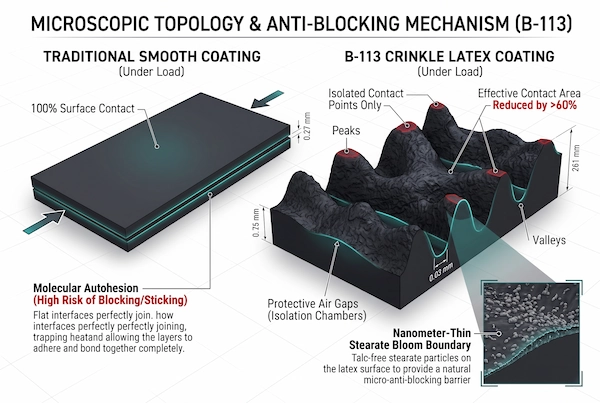
Geometric separation effect of the surface’s microscopic topographical peaks and valleys: The palm surface of traditional smooth-dip gloves presents a continuous, flat, and smooth film-like layer. When two gloves are subjected to a sustained static load of 400 to 600 kilograms per square meter inside a cardboard box at the bottom of a shipping container, the air between the rubber surfaces is rapidly expelled, creating a “mirror-like self-adhesion effect” akin to two pieces of wet glass pressed tightly together, providing a complete contact surface for the interpenetration of polymer chains across the interface; under microscopic scanning, the deeply wrinkled latex coating on the palm of the B-113 glove exhibits a highly irregular, deeply undulating three-dimensional matrix of peaks and valleys (Peak-to-Valley Microstructure)]; When the two gloves are stacked facing each other inside the packaging box, the contact force is confined solely to the vertices of the microscopic ridges, and the actual microscopic contact area drops by more than 60% compared to a smooth rubber surface; the vast recessed valley regions form natural physical air-isolation chambers, which, from a topological perspective, completely eliminate the physical conditions necessary for large-area molecular entanglement across the interface ;
Balancing high-intensity industrial and mining operations with both dry and wet gripping: The deep black, wrinkled coating of the B-113 not only provides the gloves with anti-adhesion and compression resistance during containerized sea transport but also delivers excellent contact mechanical performance during actual workshop operations; When in contact with oily, soiled, or wet workpieces, or rough, burr-covered sheet metal, the recessed troughs in the coarse wrinkles act as rapid drainage channels, while the rubber material on the ridges generates powerful microscopic mechanical interlocking traction through extremely high elastic recovery, maintaining stable and robust dynamic friction (Excellent grip in dry and wet environments) and exceptional water resistance (Water resistance) under both dry and wet working conditions.
Talc-Free Micronized Anti-Blocking Additives
Throughout the history of industrial glove manufacturing, to prevent the rubber surfaces of finished products from sticking together during demolding, packaging, and storage, traditional small workshops often liberally dusted the gloves with ungraded, inexpensive talcum powder before shipment. However, this outdated and primitive practice has become a serious compliance and quality hazard in large-scale industrial procurement: talcum powder can scatter uncontrollably in microelectronics cleanrooms or automotive painting and assembly lines, contaminating painted surfaces; more critically, prolonged inhalation of this particulate matter by front-line workers can easily lead to severe respiratory dust deposition and allergic occupational diseases.
To eliminate talc contamination and maintain clean production throughout the entire process, the Super Factory has introduced an advanced talc-free, micro-powder-based anti-caking additive system on the B-113 production line:
Spontaneous phase separation and migration of composite stearate micro-powder and polymeric micro-wax: During the raw rubber compounding stage, the R&D team blends and emulsifies food-contact-grade modified zinc stearate micropowder—which has undergone ultrafine air-jet milling with an average particle size precisely controlled between 3 and 5 micrometers—with a polymeric polyethylene microwax emulsion having a specific melting point (65 to 75 degrees Celsius) in a scientifically determined ratio; This micropowder system exhibits controllable microscopic compatibility with the polyisoprene rubber matrix at room temperature; As the vulcanized mold passes through the tunnel oven to complete high-temperature vulcanization and gradually enters the cooling section, accompanied by the orderly contraction of the rubber matrix’s molecular segments, the micro-wax molecules—whose compatibility has decreased—and the stearate microparticles spontaneously undergo directed thermodynamic migration (Controlled Surface Blooming) from the interior of the rubber layer toward its surface;
This forms a dense, single-molecule physical barrier: the micropowder system that migrates to the outer surface of the rubber film self-assembles at the outermost edge of the vulcanized rubber film into a homogeneous, semi-crystalline, physically anti-adhesive protective film with a thickness of only a few nanometers; This microscopic interfacial film possesses extremely low surface energy and exceptional hydrophobic and lipophobic properties; it preserves the rubber’s inherent supple, highly elastic, and stretchy feel while establishing a continuous, robust, non-adhesive physical barrier between adjacent layers of latex; Even when exposed to high temperatures of 60 degrees Celsius and damp heat stress inside a 40HQ container, this monolayer remains stable and effectively blocks the outward migration of polyisoprene-softened oligomers, thereby meeting modern eco-friendly industrial standards for “zero talc, zero dust dispersion, and long-lasting anti-blocking” across the entire batch of gloves upon shipment.
Moisture-Barrier Packaging: Vacuum Inner Bags & 5-Ply Corrugated Architecture
In quality inspection projects for bulk export shipments by sea, even if the rubber compound formulation of the gloves themselves has been highly heat-resistant modified, the cargo will still be unable to withstand the extreme microclimate conditions on tropical ocean waters for up to a month without a robust physical outer packaging barrier system. To save on packaging costs, many low-cost contract manufacturers for the export market typically use thin, perforated plastic bags combined with low-grammage recycled cardboard boxes for simple bulk packaging. When this packaging is subjected to continuous dynamic vibrations from dozens of metric tons of cargo inside the container and surrounded by high humidity and moisture, the packaging often fails completely and ruptures midway through the voyage, allowing moisture to penetrate unchecked. The source super factory regards transport packaging as an extension of the overall performance of hand protection products, establishing a multi-layered protective system ranging from an inner layer of high-barrier, micro-negative-pressure sealing to an outer layer of heavy-duty, water-repellent, and pressure-resistant corrugated cardboard.
High-Density PE Vacuum-Sealed Inner Packaging
To completely isolate the products from marine humidity during transit and prevent direct contact and saturation by “container rain” droplets, the packaging workshop has completely abandoned the ordinary single-layer film tie-top bags or perforated breathable bags commonly used in the traditional glove industry. Instead, it has fully implemented high-barrier inner packaging standards based on automated production lines:
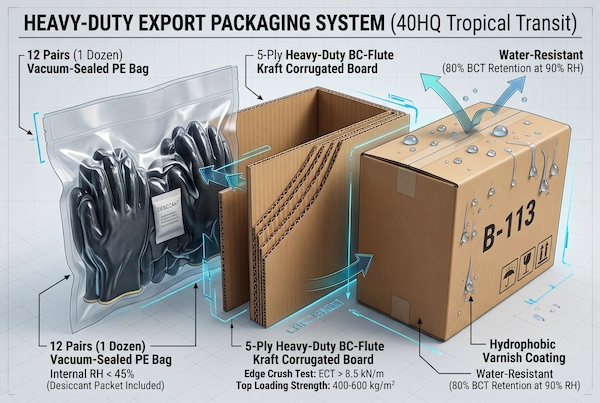
Three-layer co-extruded high-barrier PE composite film: The inner packaging bags are made of a multi-layer co-extruded composite film of high-density polyethylene (HDPE) and linear low-density polyethylene (LLDPE), with a film thickness strictly maintained at 60 micrometers or above. This composite film features an extremely dense polymer molecular arrangement, with water vapor transmission rate (WVTR) strictly controlled at an extremely low level. It naturally possesses excellent puncture resistance and can withstand internal scratches and punctures that may result from rough, wrinkled coatings during mechanical vibrations;
Automatic vacuum sealing process for each dozen (12 pairs) using micro-negative pressure: After the gloves undergo temperature and humidity equilibration at the factory, they are fed into an automated vacuum packaging and sealing machine in independent packaging units of 12 pairs (one dozen) each; At the moment of sealing, a mechanical suction nozzle applies a controlled micro-vacuum to extract air from the bag, rapidly eliminating excess free space in the gas phase, while simultaneously placing a small packet of desiccant—made from food-grade, sintered natural minerals—inside the bag; Subsequently, a dual-heating-wire pulse welding mechanism performs a dense, seamless heat seal with a width of 8 millimeters;
The internal relative humidity is consistently locked below 45% RH: Micro-vacuum packaging not only effectively reduces the physical void volume of each dozen gloves, making the entire carton more compact and uniform, but also firmly locks the initial relative humidity inside the sealed bag within the extremely dry safety threshold of 45% RH or below; Due to the lack of sufficient free water molecules inside the bag, even if droplets from “container rain”—condensation forming on the inner walls of the outer container—trickle down through gaps in the outer carton onto the outer surface of the inner bag, neither liquid water nor high-concentration moist heat vapor can penetrate the co-extruded barrier. This completely blocks the physical pathways through which rubber molecules could undergo hydrolysis, become sticky, or allow oligomers to reverse-permeate during ocean transport.
5-Ply BC-Flute Corrugated Cartons with Hydrophobic Coating
In bulk container palletizing and LCL loading, the structural stability of outer packaging cartons under heavy-load, high-humidity conditions directly determines whether the bottom layer of gloves will suffer localized overload damage. Ordinary paper packaging rapidly absorbs moisture and increases in weight when exposed to high-humidity marine air (85% RH or higher), causing the hydrogen bonds between paper fibers to break and the material to soften, ultimately leading to crushing and collapse. To address this issue, the factory’s outer packaging system has been comprehensively upgraded to engineering-grade corrugated cartons that comply with international heavy-duty packaging standards:
Five-layer high-strength kraft-flute composite structure (BC-Flute): The outer packaging boxes have replaced common single- and three-layer corrugated boxes with a standardized five-layer heavy-duty composite board consisting of an outer layer of high-quality imported virgin wood pulp kraft paper (basis weight of 250 grams per square meter), a middle layer of high-density reinforced double-flute core paper, and an inner layer of kraft paper; The corrugation profile selected is the BC flute combination, which offers both shock absorption and vertical load-bearing capacity (the B flute provides excellent flat compression stiffness and printability, while the C flute offers exceptional vertical compressive strength and cushioning travel); According to standard laboratory physical destruction tests, the measured edge crush strength (ECT) of this corrugated board consistently remains above 8.5 kilonewtons per meter (kN/m), with a burst strength exceeding 1,800 kilopascals;
The outer layer is coated with a nano-scale moisture-proof and water-repellent varnish (Water-Resistant Varnish): After die-cutting and printing, the entire face sheet is comprehensively coated with a layer of cross-linked polymer moisture-proof and water-repellent varnish using a precision roller coating process; This dense, transparent chemical protective layer imparts an extremely high water contact angle to the carton’s surface (a pronounced hydrophobic “lotus effect”), causing external condensation droplets to automatically roll off without wetting the paper fibers;
Compressive stiffness retention rate under extreme humidity conditions of 90% RH: In a full-box compression test (BCT) conducted in a third-party environmental chamber, after up to 72 hours of high-humidity conditioning at a relative humidity of 90% RH, the five-layer BC corrugated outer box coated with water-repellent varnish was still able to maintain more than 80% of its vertical ultimate compressive yield strength under dry conditions; The outer box eliminated issues such as moisture-induced softening, corner indentation, bulging deformation, or buckling of the lower layers caused by pressure from upper cargo. It consistently provided a rigid, protective shield for the sealed gloves inside, eliminating the structural risk of localized, non-uniform extreme compressive forces on the glove coatings resulting from box deformation or collapse.
Comparative Quality Matrix: Standard Export vs. SQG Tropicalized Sea-Freight Grade
In procurement decisions for bulk cross-border supply chains, simply evaluating the initial feel of a sample or comparing the ex-factory prices listed on quotations often obscures significant quality risks associated with the sea freight logistics process. To replace subjective assumptions with objective, quantifiable engineering data, SQG partnered with an international, independent third-party testing organization and utilized a walk-in industrial-grade environmental simulation chamber. The chamber was rigorously configured to simulate an “extreme equatorial sea-freight microclimate cycle” lasting up to 40 days (constant temperature of 60 degrees Celsius, relative humidity of 85%, and simulated stacking pressure of 5 kPa), and destructive comparative testing was conducted on three typical types of latex gloves circulating in the international trade market.
Container Simulation Environmental Chamber Matrix
After 40 days of exposure to tropical marine climate stress, standard mass-market gloves, subsidized low-grammage inexpensive gloves, and the tropicalized engineering-grade crinkled latex glove B-113 exhibited markedly different physical and chemical resistance limits :
| Shipping QC Parameters & Test Metrics | Commodity Grade Latex (Standard Export) | Subsidized Lightweight Latex (Cost-Driven) | SQG Tropicalized Crinkle Grade (B-113) | Test Standards & Metrology |
| Accelerated Aging Tensile Loss (70°C, 168h) | > 35% Loss (Significant embrittlement) | > 45% Loss (Surface stickiness/softening) | < 12% Loss (Polymer crosslink intact) | ISO 188 / ASTM D573 |
| Blocking Resistance Rating (60°C, 48h, 5kg) | Class 4 (Severe fusing / Unusable tear-off) | Class 5 (Complete coating liquefaction) | Class 0 (Free separation / Zero peel force) | ASTM D3354 (Modified) |
| Relative Humidity of Inner Packaging (Day 30) | > 85% RH (Saturated condensation) | > 80% RH (Water droplets formed) | < 45% RH (Desiccant vacuum intact) | In-Situ Probe Hygrometer |
| Master Carton Compression Retention (90% RH) | 42% (Severe buckling / Side collapse) | 35% (Pallet tilting / Crushed bottom) | > 82% (5-Ply BC Flute structural integrity) | ISO 12048 (Box Compression Test) |
| Coating Odor & Volatile Sulfur Release | Strong, pungent sulfur / degraded odor | Strong acid / rancid rubber odor | Neutral, mild latex scent | Organoleptic Headspace Quality Control |
| Usability Rate at Port of Destination | 60%–75% (Substantial reject rate) | < 50% (High risk of insurance claims) | 100% (Ready-for-work / Zero blocking) | Destination Arrival AQL 1.0 Release |
From the above empirical comparison matrix, we can draw highly instructive conclusions regarding supply chain quality inspection:
Structural failure of standard and low-cost coatings: Conventional export-grade gloves on the market, due to a lack of anti-oxidative aging modifications, exhibit a decline in tensile strength of more than 35% to 45% after accelerated thermal-oxidative aging at 70 degrees Celsius; the rubber main chain suffers severe breakage, and molecular cross-linking degradation occurs; Under constant pressure of 5 kilograms at 60 degrees Celsius, their adhesion resistance rapidly deteriorated to Class 4 and Class 5 (resulting in severe fusion, tearing, and even coating liquefaction); Combined with the zero moisture barrier provided by a single layer of standard packaging, the actual usable yield upon arrival at the destination port plummeted to 50% to 75%, making it highly likely to trigger full rejection by overseas buyers and marine insurance claims;
Absolute stability of the tropicalized engineering-grade formulation: B-113, which has undergone deep vulcanization modification and micro-powder anti-sticking treatment, maintains its tensile strength loss during 168-hour high-temperature aging firmly within 12%, with the cis-1,4-polyisoprene covalent network remaining intact; In anti-adhesion testing, it consistently maintains the highest rating, Class 0 (natural, free detachment; separation force approaching zero; zero coating peeling) ;
Rigid packaging barriers ensure safety: A high-barrier PE vacuum-sealed inner bag maintains a dry microenvironment with relative humidity below 45% RH inside the package even on Day 30; The five-layer BC corrugated outer carton, combined with a nano-hydrophobic varnish, retains over 82% of its initial compressive stiffness even under high-humidity conditions of 90% RH, climinating localized high-pressure agglomeration caused by pallet tilting or collapse, and ensuring that goods are delivered to the end workshop with a 100% “ready-to-use” yield rate.
Cross-Category Shipping Rigor: Lessons from ESD Glove Packaging
In the long-distance cross-border logistics of high-precision industrial protective gloves, although the mechanisms by which environmental stresses damage different polymer coatings appear to vary on the surface, they exhibit striking consistency in their underlying physical protection logic. Modern supply chain quality control teams must not view individual latex categories in isolation but should apply rigorous container logistics engineering standards across the entire product matrix.
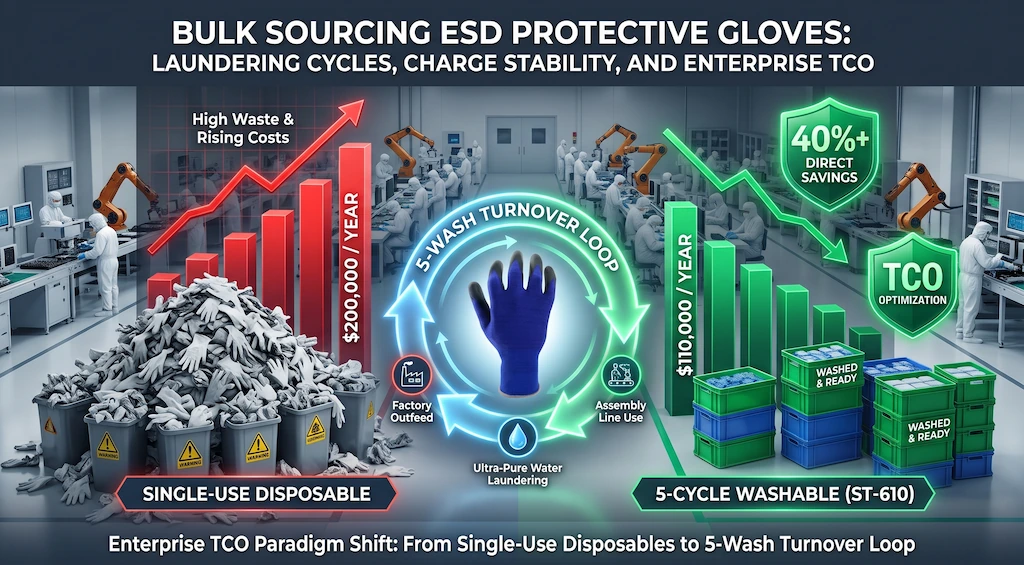
In our earlier technical white paper on high-sensitivity electronic cleanroom manufacturing, Bulk Sourcing ESD Protective Gloves: Laundering Cycles, Charge Stability, and Enterprise TCO, we conducted an in-depth analysis of the degradation mechanisms of anti-static conductive fibers and polyurethane coatings under the humid and hot microclimate of ocean-going containers:
The widespread erosion of precision coating functionality by humid-heat stress: In the absence of a tightly sealed moisture-proof barrier, humidity levels as high as 85% RH inside containers not only cause latex gloves to hydrolyze and stick together but also induce the adsorption of impurity ions on the surfaces of anti-static carbon nanotubes or conductive composite fibers, resulting in abnormal drifts in surface resistivity and a decline in electrostatic dissipation performance;
The Universal Fundamental Principles of Bulk Supply Chain Fulfillment: Whether for anti-static gloves used in precision semiconductor assembly or abrasion-resistant, tear-resistant, and wrinkle-resistant latex gloves used in heavy industry and infrastructure construction, ensuring the quality of transoceanic shipments always relies on three inseparable, rigid engineering pillars: temperature- and humidity-resistant, heat- and oxygen-molecule-modified formulations; fully automated, micro-negative-pressure vacuum-sealed high-barrier inner packaging; and strict adherence to mechanically aligned, heavy-load, pressure-resistant pallet arrangements;
Seamless Reuse of Cross-Category Quality Inspection Standards: By horizontally applying the rigorous SOP system from the microelectronics cleanroom protection sector—which includes airtight and moisture-proof container monitoring, pre-shipment high-temperature destructive simulation testing, and full-batch sample retention for traceability—to the maritime export quality inspection of bulk natural rubber industrial gloves, we have ushered industrial and mining safety products into an era of highly reliable, weather-resistant engineering delivery.
Palletization Topology and Optimization of 40HQ Space Utilization
In bulk cross-border ocean freight shipments, even if individual gloves have been formulated to resist sticking and outer cartons meet high-strength, moisture-proof specifications, cargo will still suffer localized crushing and rupture due to uneven stress distribution during long-distance ocean transit if pallet stacking and container loading lack scientific structural-mechanical topology support. Space utilization within a 40-foot high cube container (40HQ) does not rely solely on “packing it as full as possible,” but is based on precise geometric stress calculations, aligned column load-bearing, and the reservation of microclimate buffer space.
Pallet Stacking Geometry: Interlocking vs. Column Stacking
The pallet stacking method directly determines the actual performance of the outer corrugated carton’s vertical compressive strength. Many traditional loading and unloading teams habitually use an interlocking stacking method—similar to laying bricks—to achieve surface self-locking stability. However, in long-distance, heavy-load container transport, this practice has serious mechanical flaws:
Physical Limits of Corrugated Box Compressive Strength: The vertical compressive strength (BCT) of a five-layer corrugated box is primarily concentrated in the four vertical corner posts of the box; these four corner areas bear 60% to 70% of the box’s total vertical ultimate load;
Compression Strength Reduction Caused by Interlocking Stacking: When using brick-style interlocking stacking, the four rigid corners of the upper carton press directly onto the weakest points of the lower carton—the central lid flaps and the midpoints of the side panels. Amid the up-and-down vibrations and shaking experienced by ocean-going vessels over thousands of nautical miles, this misaligned point load rapidly dents the top flaps of the lower cartons, reducing their effective vertical load-bearing capacity by more than 40% and making them highly susceptible to irreversible bulging and tilting collapse;
The Rigidity Advantages of Column Stacking: SQG’s modern loading operations fully implement strict column-alignment stacking standards. The four load-bearing corners of the upper and lower cartons are rigidly aligned vertically in a straight line, allowing the gravitational force of the upper cargo to be transmitted directly and vertically along the solid columns to the wooden pallet deck. This significantly increases the overall load-bearing stiffness of the cartons by more than 30% compared to staggered stacking, thereby eliminating point-load shear tearing;
Multi-dimensional structural reinforcement and six-sided airtight, moisture-proof sealing:
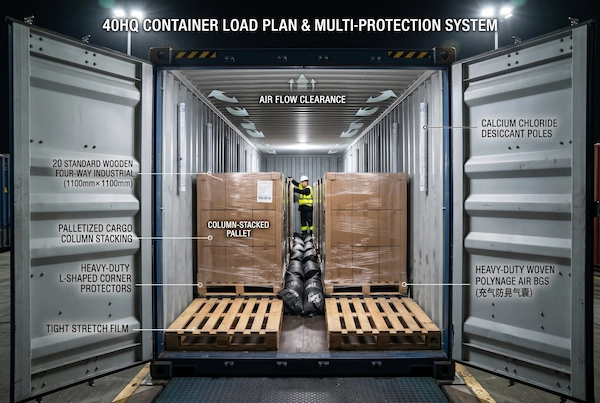
Rigid Locking with Hard Corner Protectors: At each of the four vertical outer corners of every full pallet, L-shaped high-density, multi-layer bonded hard kraft paper corner protectors—4 millimeters thick with a flange width of at least 50 millimeters—are installed across the entire perimeter. These are mechanically tensioned and secured with high-strength plastic-steel strapping, locking the entire stack of cartons into a unified, rigid, shear-resistant structure;
Six-Sided Fully Sealed Stretch Film Wrapping: A high-barrier, moisture-resistant, waterproof polyethylene top sheet is pre-laid on the pallet top. Subsequently, an automated heavy-duty wrapping machine applies at least 6 layers of mechanically pre-stretched, crisscrossed wrapping using 23-micron ultra-tough, three-layer co-extruded stretch film, with the bottom film forcefully folded downward to grip the wooden pallet feet. This fully sealed, six-sided packaging configuration not only provides the pallet with strong resistance to lateral tilting and swaying but also creates a physical, waterproof, and moisture-resistant barrier around the outer perimeter of the cartons.
40HQ High Cube Volumetric Loading Efficiency
To balance the safety and stability of ocean transport with the container loading volume efficiency—a factor of utmost importance to overseas buyers—the Super Factory has established a standardized set of technical parameters for 40HQ palletized shipping for its flagship industrial and mining model, the B-113 :
Geometric Layout and Baseline Parameters for Container Palletizing:
Standard loading capacity per container: A standard 40HQ container fully loaded with 120,000 pairs of B-113 black, wear-resistant, textured latex work gloves (equivalent to 1,000 standard outer cartons, with 120 pairs per carton);
Standard Pallet Specifications: Each full container uses 20 heat-treated and fumigated (IPPC ISPM 15 standard) 1,100 mm × 1,100 mm standard four-way entry industrial pallets;
Stacking and Space Configuration: Each pallet is tightly arranged in a matrix of 5 cartons per layer, stacked 10 layers high in a columnar configuration, with a single pallet carrying 50 cartons (6,000 pairs); The height of the fully palletized load is precisely controlled to within 2.25 meters, with a 15- to 20-centimeter buffer layer reserved between the top of the container and the upper surface of the cargo stack to allow for unobstructed air convection, preventing localized extreme heat generated by solar radiation absorbed by the top of the boxes from directly contacting the topmost cartons;
Perimeter Air Bag System for Anti-Sway, Shock Absorption, and Condensation Control:
Heavy-duty polypropylene woven anti-sway air bags: High-impact-resistant polypropylene woven inflatable bags (Dunnage Air Bags) are embedded in the gaps between pallets and between pallets and the inner walls of the container according to the engineering layout. The inflation pressure is maintained at the rated operating pressure to eliminate lateral slippage and inertial impacts from sudden braking during maritime transport, thereby preventing pallet tilting or misalignment that could compromise the load-bearing axis of the container’s uprights;
Specifications for High-Purity, High-Capacity Calcium Chloride Container Desiccant Sticks: In the recessed corrugated channels on both sides of the container interior, the use of ordinary silica gel desiccants with low moisture absorption efficiency is strictly prohibited. Instead, 10 to 12 industrial-grade, high-capacity container-specific desiccant strips (each with a net weight of at least 1,000 grams, filled with a high-purity, microporous polymer-modified calcium chloride matrix) must be uniformly suspended vertically. These desiccant strips have a moisture absorption capacity of 250% to 300% of their own weight. They continuously adsorb excess moisture from the air within 45 days and convert it into a solid, non-leaking gel, thereby reducing the dew point temperature inside the container at the source and preventing the condensation and accumulation of “container rain”;
Alongside physical moisture barriers, all bulk latex products leaving the factory must strictly comply with the hypoallergenic natural rubber latex work gloves technical standards for multi-stage counter-current leaching and deproteinization validation. Ensuring total extractable protein remains strictly below the 50 µg/g ASTM D5712 threshold eliminates contact dermatitis and delayed hypersensitivity risks for end-use industrial workers upon destination arrival.
Frequently Asked Questions (FAQ)
Addressing the complex issues frequently encountered by multinational supply chain managers, overseas engineering contractors, and bulk personal protective equipment (PPE) importers during quality inspections and customs clearance for ocean freight, this section systematically answers core questions regarding the resistance to sticking and degradation of natural latex work gloves during ocean transport. Drawing on the principles of polymer physical chemistry, packaging engineering mechanics, and on-site warehousing quality inspection standards, it provides objective technical guidance to assist companies in managing procurement risks.
What causes latex work gloves to melt or become sticky during ocean freight container transport?
The root cause of gloves melting, oozing oil, forming strings, and sticking together inside bulk ocean freight containers is not simply a stuffy environment, but rather the combined effect of polymer pyrolysis and chain breakage induced by high-temperature thermal fields, and phase-interface self-adhesion catalyzed by high humidity and water vapor:
A thermal environment exceeding 60 degrees Celsius breaks down the molecular main chains: Many low-cost gloves that lack proper vulcanization process calibration have severely insufficient cross-linking density in their natural latex, resulting in a large number of uncross-linked linear molecular chains. When containers traverse equatorial tropical waters, the metal container roof absorbs solar radiation, causing the temperature at the top of the container to remain consistently above 60 degrees Celsius; This thermal energy activates the thermal-oxidative reaction of unsaturated double bonds within the rubber molecules, causing irreversible thermal degradation and chain breakage in the cis-1,4-polyisoprene long molecular chains. The solid polymer elastomer gradually degrades into viscous liquid or semi-solid oligomers with molecular weights in the thousands, and a slippery, viscous mobile phase precipitates onto the surface of the rubber layer;
High humidity environments above 85% RH accelerate water separation: The hot, humid vapor inside the container—reaching up to 85% RH—disrupts the dynamic equilibrium of water vapor within the microscopic pores of the rubber film. Water-soluble non-rubber impurities remaining in the latex (such as trace amounts of plant proteins, hydrophilic mineral salts, and free surfactants) undergo hydrolysis under the catalysis of temperature and humidity and migrate toward the surface; The precipitated hydrophilic components mix with the softened rubber oligomers, forming a highly polar, self-adhesive liquid film; under the sustained static load of several hundred kilograms exerted by the underlying cardboard box, the air between the contact surfaces of the two gloves is completely squeezed out, and the molecular chains of the adjacent adhesive surfaces undergo intense cross-interface interpenetration and interlocking driven by Brownian motion, ultimately hardening and fusing into a dense, indestructible bond that cannot be torn apart.
Why is traditional talcum powder no longer recommended for preventing sticking in industrial gloves?
In traditional rubber processing, directly dusting the inner and outer surfaces of gloves with coarse talcum powder was the most cost-effective method for preventing sticking. However, in modern manufacturing, precision assembly, and compliance-driven occupational safety procurement, this primitive practice has been completely phased out by mainstream international industrial standards, primarily due to three major systemic compliance risks:
Severe particulate contamination in precision manufacturing workshops: Under demanding conditions—such as 3C electronics assembly, semiconductor cleanrooms, precision optical lens assembly, and medical device casing encapsulation—the frequent flexing and grasping motions of workers’ hands cause talcum powder particles on the glove surface to continuously shed and become airborne; Micron-sized magnesium silicate mineral dust settling on the leads of microelectronic components or sensitive circuits can directly cause poor contact, short circuits, and insulation breakdown, resulting in extremely high production line scrap rates;
Adhesion defects in automotive painting and surface engineering: During auxiliary processes such as automotive parts stamping, body welding, and spray painting, workers’ protective gloves often come into direct contact with exposed cold-rolled metal sheets and workpieces awaiting primer application; Talc possesses natural oil-loving and water-repellent properties. Trace amounts of powder residue transferred from the glove surface to the metal substrate directly prevent the molecular wetting and bonding of electrophoretic paint or topcoats with the metal interface, leading to widespread craters, pinholes, bubbles, and poor paint film adhesion resulting in peeling (fish-eye defects) after curing, which incurs substantial rework and sanding costs;
Risks of occupational respiratory diseases and skin irritation for front-line workers: Industrial-grade talc powder that has not undergone thorough purification and grading often contains heavy metals or fibrous mineral impurities. Prolonged continuous use of heavily powder-shedding safety gloves in enclosed workshops exposes workers to inhalation of airborne dust, which can easily induce irreversible occupational respiratory injuries such as chronic bronchitis, microgranulomas in alveolar tissue, and dust deposition. Additionally, when powder particles mix with hand sweat, they can clog sweat gland ducts, disrupting the skin’s microecological pH balance and leading to secondary folliculitis. The use of an environmentally friendly, modified micro-wax emulsion combined with a micro-powder cohesive anti-adhesion system is the only industrial method to ensure dust-free, harmless, and zero-powder-contamination production.
How do you verify the crush resistance of cartons for tropical ocean transit?
To assess whether outer corrugated cartons can withstand prolonged heavy loads without collapsing during tropical ocean transit, the factory must conduct a full-box compression test (BCT—Box Compression Test) in accordance with the ISO 12048 standard (Packaging—Integrity of fully packed transport packages—Compression and stacking tests using a compression testing machine), and establish a rigorous dynamic safety calculation model incorporating a degradation factor for high-humidity environments:
Laboratory-based baseline compression testing (BCT measurement): An empty carton is placed in a standard temperature and humidity environment (23 degrees Celsius, 50% RH) for 24 hours of pre-conditioning and acclimatization, then placed between the upper and lower pressure plates of a computer-controlled carton compression tester. A vertical load is applied at a constant rate of 10 millimeters per minute, with sensors recording the load-deformation curve in real time until permanent yield and collapse occur at the carton’s side edges, at which point the maximum laboratory baseline compression failure force (unit: Newton, N) is measured;
Dynamic Safety Factor Reduction System for High-Humidity Conditions: In actual containerized maritime logistics, cardboard boxes are subjected to prolonged exposure to high humidity (85% to 90% RH) and continuous static loads for several weeks, causing severe degradation in the stiffness of the paper fibers. Engineering calculations incorporate a comprehensive environmental reduction factor system to establish a stiffness safety threshold:
Theoretical Static Load Calculation for Maximum Stacking: Assuming a gross weight of 11 kilograms per carton and standard calculations for 10-layer vertical stacking in a single column on a 40HQ pallet, the static gravitational load borne by the bottom-most carton (Layer 1) is the total weight of the 9 cartons above it, i.e., 11 kilograms multiplied by 9 equals 99 kilograms (equivalent to a static gravitational load of approximately 970 Newtons);
Setting of the composite coefficient for dynamic environmental attenuation: For maritime transport conditions, three major attenuation factors must be accounted for—the high-humidity attenuation coefficient (paper stiffness is reduced by approximately 0.55 when relative humidity exceeds 85% RH), the creep and fatigue reduction factor for long-term static loads (approximately 0.65), and the safety factor for dynamic loads caused by rolling and pitching during ocean voyages (approximately 0.80). Multiplying these three reduction factors together yields a comprehensive strength retention factor under severe ocean transport conditions of only approximately 0.286;
Factory Compressive Strength Release Threshold (BCT Threshold): According to safety calculation logic, the initial ultimate compressive strength (BCT) of the base-layer corrugated box under standard laboratory conditions must exceed the theoretical static gravitational load (970 Newtons) divided by the comprehensive strength retention factor (0.286). Calculations show that the initial vertical ultimate compressive strength of the corrugated box during factory testing must consistently exceed 3,400 Newtons (approximately 345 kgf); The five-layer BC corrugated outer carton, supplemented with a nano-hydrophobic coating on its surface, has a measured factory compression strength consistently above 4,200 Newtons. This ensures that even after 24 hours of conditioning in high humidity (90% RH), it still possesses sufficient safety margin for compression, eliminating the risk of bottom-layer cartons in shipping containers being crushed or collapsing under the weight of upper-layer cargo.
Can container desiccants alone prevent latex gloves from sticking together?
Absolutely not. The belief that simply hanging desiccants inside a container can prevent latex gloves from becoming damp and sticking together is one of the most common misconceptions in bulk purchasing and freight forwarding.
The physical limitations of container desiccants (such as highly absorbent calcium chloride desiccant sticks) are very clear: their function is merely to absorb supersaturated water vapor suspended in the free gas space above the container floor and in the aisles, thereby lowering the dew point of the air inside the container and slowing down and reducing the frequency of condensation known as “container rain.” However, desiccants are completely powerless against the following three primary physical and chemical causes of sticking:
They offer absolutely no protection against the thermal-oxidative degradation of rubber molecular chains: The extremely high temperatures inside containers (60 to 65 degrees Celsius) are caused by direct thermal radiation from the sun absorbed by the container’s metal panels and conducted directly into the interior; desiccants cannot lower the temperature inside the container; If the rubber compound in the gloves lacks sufficient antioxidant cross-linking, the molecular chains will still depolymerize and break down at high temperatures, releasing sticky oligomers—a process that has no causal relationship with ambient humidity;
They cannot prevent cold flow under the extreme static pressure at the bottom of the pallet: Desiccants cannot alter the vertical shear stress of 400 to 600 kilograms per square meter generated by the downward pressure of the pallet uprights; the smooth, glossy rubber layer of the gloves will still undergo irreversible plastic deformation under sustained heavy pressure, expelling microscopic air pockets;
It cannot immediately block capillary moisture absorption and penetration in standard cardboard boxes: Ocean-going cargo ships sail for 30 to 45 days at sea; the moisture absorption rate of desiccants suspended on the surrounding box walls is limited by natural convection within the container, making it impossible to prevent water vapor from penetrating via capillary action through the seams and pores of unsealed cardboard boxes;
A three-dimensional, four-dimensional integrated protection system is indispensable: To achieve zero sticking and a 100% unpacking pass rate for bulk ocean freight, a four-dimensional integrated system of defenses is essential. The first line of defense involves heat-resistant and anti-aging cross-linking modifications to cis-polyisoprene molecular chains; the second line involves the microscopic topological geometry of the B-113 product—with its coarse, wrinkled, deep corrugations—creating non-continuous contact isolation; The third line of defense involves micro-vacuum automatic vacuum-sealed packaging using high-barrier co-extruded PE film for each dozen (12 pairs), which eliminates moisture in the inner cavity; the fourth line of defense is the large-capacity calcium chloride desiccant strips installed at the top of the container to assist with humidity control. Relying solely on desiccants is akin to building a breakwater on a sandy beach.
Secure Your Bulk 40HQ Direct Procurement & Request Shipping QC Protocol Pack
When making decisions regarding bulk procurement of occupational safety supplies and centralized procurement for construction projects across international borders, procurement directors and supply chain managers are concerned not only with the unit price of products leaving the factory, but also with the delivery yield of full container loads after they’ve traveled thousands of nautical miles across tropical waters. The traditional model of relying on small workshops for low-cost procurement often turns ocean freight into a costly “blind box”—once the rubber surfaces stick together and become scrap, not only do hundreds of thousands of dollars in working capital go down the drain, but it also directly disrupts the scheduled delivery dates for downstream mining infrastructure and industrial assembly projects, triggering massive claims for breach of contract. Leveraging polymer modification, topological anti-adhesion engineering, and end-to-end ocean freight quality inspection protocols, SQG provides global Tier-1 buyers with predictable and quantifiable delivery guarantees for bulk ocean shipments.
Enterprise Direct Sourcing Value & Zero-Blocking Assurance
End-to-end engineering barriers against thermal-oxidative degradation: From composite antioxidant modification of raw rubber molecular chains and microscopic crinkle-patterned non-continuous contact topological design to food-grade, talc-free cohesive micro-powder anti-adhesion processes, our source super-factory completely blocks the physical pathways of polymer pyrolysis and interfacial self-agglomeration at the colloidal molding stage;
Rigorous destructive release verification before container loading: Every batch undergoes rigorous 168-hour thermal-oxidative aging tests at a constant temperature of 70 degrees Celsius (ISO 188 / ASTM D573) and 5-kilogram hot-press peel strength testing at 60 degrees Celsius, ensuring tensile strength degradation is controlled within 15% and surface peel strength remains below 0.5 N/cm, thereby eliminating any risk of coating delamination or melting;
Marine-Grade Vacuum Moisture Barrier and Heavy-Duty Packaging Integration: Each dozen (12 pairs) is automatically vacuum-sealed under slight negative pressure using a three-layer co-extruded PE film, locking the internal humidity below 45% RH; Combined with high-strength, five-layer BC corrugated outer boxes coated with a nano-water-repellent varnish and column-style pallet alignment, this ensures that the goods maintain 100% “Ready-to-Use” quality even after enduring 40 days of “container rain” and extremely high humidity.
Enterprise Shipping QC Protocol Pack & Technical Audits
For major overseas industrial product distributors with annual procurement volumes exceeding 200,000 pairs, regional Tier-1 importers of occupational safety and health supplies, and large multinational engineering, procurement, and construction (EPC) contractors, SQG has officially opened an exclusive application channel for the “Bulk Ocean Freight Quality Inspection Technical Protocol Pack (Shipping QC Protocol Pack)”:
A complete set of marine-grade technical quality inspection white papers and COAs: The application package fully includes the factory’s “40HQ Container Shipping Quality Control Standard Operating Procedure (Shipping QC SOP)” established for ocean freight, the 168-hour oven-accelerated thermal-oxygen aging test report (COA Quality Inspection Certificate) for the corresponding production batch, ISO 12048 test data on high-humidity compression reduction for full cartons (BCT), as well as technical specifications compliant with EU CE CAT. II and EN 388:2131X standards;
Physical sample and in-person trial kit: A complete set of physical sealed samples for the flagship heavy-duty, abrasion-resistant B-113 model (13-gauge flat-knit polyester liner paired with black abrasion-resistant crinkled latex) in all sizes (Size 8/M to 11/XXL) is provided to enable the procurement team and third-party inspection agencies (such as SGS and BV) to conduct sealed sample comparisons and on-site trial evaluations in local laboratories;
Remote Video Factory Inspections and Production Line Technical Audits: We support overseas engineering and procurement teams in scheduling one-on-one, in-depth remote video audits of the dipping production lines, temperature curve control systems for continuous tunnel drying ovens, automated vacuum packaging units, and the in-house mechanical testing laboratory.
Commercial Inquiries & 40HQ High-Cube Loading Solutions
Tiered Factory Pricing and Minimum Order Quantities: Our direct procurement channel from the super factory fully supports tiered factory pricing based on standard industrial minimum order quantities (MOQ: 12,000 pairs). For orders reaching the scale of a full 40HQ high-cube container in a single batch, we coordinate directly with the engineering cost accounting department to secure globally competitive wholesale factory prices at the source;
Customized 40HQ Full-Container Load (FCL) Stowage Topology: For the standard stowage plan of 40HQ ocean-going high-cube containers (120,000 pairs of B-113 gloves per container, totaling 20 standard industrial pallets measuring 1100mm × 1100mm), our engineering logistics team provides customized palletization layout drawings, container anti-sway cushioning airbag configuration plans, and high-capacity calcium chloride container desiccant rod lifting point diagrams to ensure an optimal balance between cargo space utilization and physical seismic resistance;
Multi-Product LCL Consolidation and Tariff/Origin Support: We support flexible full-container load (FCL) consolidation and mixed loading with the lightweight, breathable, microporous foam R-111 or the hypoallergenic bamboo fiber P-113 models; our engineering documentation team issues certificates of origin (Form A, Form E, RCEP, etc.) compliant with the importing country’s preferential tariff agreements alongside each shipment, and provides comprehensive support for high-precision custom packaging under private labeling;
Direct Engineering and Business Coordination: If you need a customized 40HQ shipment calculation plan, access to 168-hour heat aging test reports, or to secure direct factory delivery schedules for your ongoing bulk procurement projects, please feel free to contact our Hand Protection Bulk Supply Chain Engineering Team directly through our corporate business channel at any time.