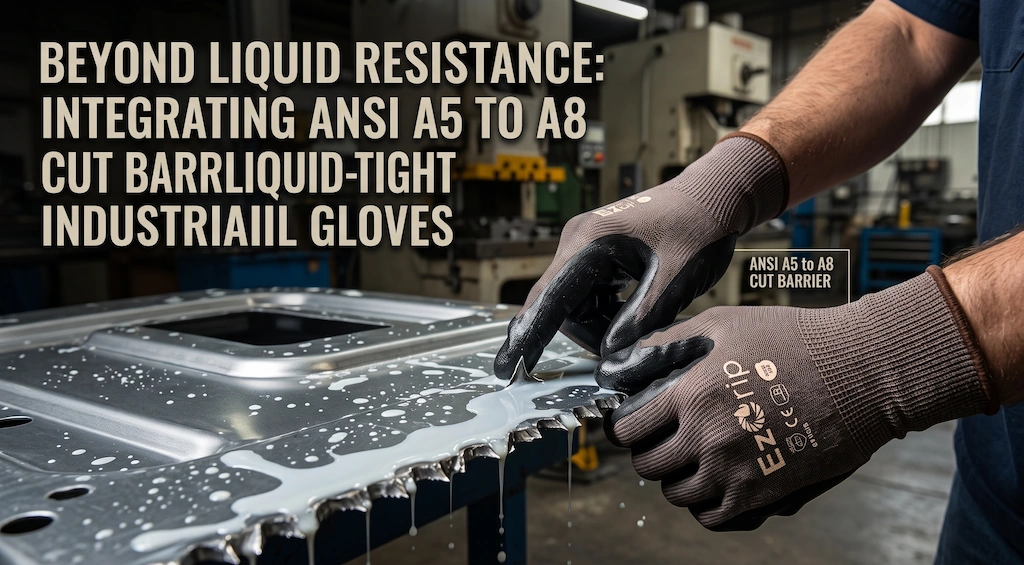
Introduction: The Dual-Threat Hazard in Heavy Industry
In modern heavy manufacturing, deploying certified chemical and cut resistant work gloves has become a vital safety baseline. In complex operational settings—such as metal stamping, automotive body-in-white finishing, CNC powertrain machining, and metal pickling—frontline work environments rarely present safety hazards from a single dimension. Instead, operators’ hands are simultaneously exposed to harsh mechanical shear and corrosive industrial fluids.
High-protection-level chemical- and cut-resistant work gloves have become essential equipment for process engineers and EHS safety directors in modern manufacturing enterprises as they redefine production line safety standards. However, for a long time, the selection of personal protective equipment in heavy industry workshops has been constrained by the physical limitations of single-function protective gloves, forcing companies to make high-risk compromises regarding operators’ hands—choosing between mechanical cuts and chemical corrosion.
The Interlocking Risks of Sharp Edges and Industrial Fluids
In complex metal hot and cold forming and precision machining processes, the combined threat of fluid exposure and sharp burrs is ever-present:
Physical shearing from metal-cutting and cold-forming edges: Cold-rolled steel sheets fresh from stamping, undeburred aluminum alloy die-castings, and metal tubing after CNC milling often have edges covered with microscopic, serrated burrs that are invisible to the naked eye yet exceptionally sharp. During handling, positioning, and loading/unloading, even the slightest slip of the hand can subject workers to extremely high transient shear stresses;
Continuous chemical immersion in high-concentration industrial fluids: At the same time, the manufacturing process relies heavily on large quantities of water-based synthetic cutting fluids, extreme-pressure emulsified oils, metal rust inhibitors, or weakly acidic cleaning bath solutions used to remove scale. These media not only serve to lubricate and cool but also contain surfactants, biocides, and sulfur-phosphorus extreme-pressure additives that exhibit strong penetrating properties;
A chain reaction of physical damage and chemical penetration: When sharp burrs slide across the hand, even without causing deep wounds, the microscopic metal edges can create microscopic scratches on the surface of protective materials. The oil-water mixture, rich in chemical components, rapidly penetrates along these damaged areas, allowing metal debris and corrosive substances to directly invade the human dermis. This not only makes it highly likely to trigger persistent occupational contact dermatitis but, in the event of mechanical injury, can also lead to deep infections, resulting in extremely serious workplace accidents.
The Structural Failure of Single-Function PPE
In the face of such typical intertwined risks, the single-function protection logic of traditional PPE often results in fatal structural failure in the field:
Traditional chemical-resistant gloves “leak at the first cut”: Traditional neoprene, PVC, or thick-layer pure nitrile chemical-resistant gloves lack any support from high-strength, tensile-resistant fabric for their polymer films. Upon contact with sharp metal edges or stamping debris, the polymer film layer—lacking a mechanical cut-resistant framework—is extremely susceptible to direct puncture or slashing. Even a tiny cut less than 1 millimeter long can instantly render the entire glove’s hydrostatic pressure resistance and chemical barrier ineffective, allowing acidic or alkaline liquids or cutting fluids to flood into the glove through the tear;
The “instant penetration” of traditional cut-resistant gloves: While conventional HPPE (ultra-high molecular weight polyethylene) or aramid cut-resistant gloves offer excellent resistance to mechanical cuts, most feature a porous knitted liner combined with micro-porous rubber coating—or even spot-coating—on the palm. The back of the hand and the gaps in the fabric are completely exposed; once in contact with flowing cutting fluid or immersion tank liquid, the liquid will thoroughly saturate the lining within seconds via capillary action. Fibers saturated with chemical lubricants and metal dust that remain in prolonged contact with the skin are tantamount to immersing the worker’s hands in toxic chemicals for extended periods;
Ergonomic disasters caused by improper layering of gloves: To ensure adequate protection, some workshops even force workers to layer gloves—wearing “thin nitrile gloves on the inside for chemical protection and cut-resistant gloves on the outside for cut protection.” This makeshift solution not only doubles the overall thickness of the gloves and drastically increases bending resistance but also obstructs heat dissipation and sweat evaporation from the palms. As a result, workers experience fatigue in the small forearm muscles and loss of grip strength within a very short time, which in turn significantly increases the likelihood of safety incidents caused by workpieces slipping out of their hands.
To thoroughly resolve the technical impasse of “chemical protection without cut resistance, and cut resistance without chemical protection,” we must rely on the cross-disciplinary integration of fundamental woven materials science and polymer impregnation film-forming processes. This approach involves embedding, within a single-layer, lightweight glove structure, both an extremely strong physical shear barrier meeting ANSI A5 to A8 standards and a microscopic, continuous, dense layer that provides 360-degree protection against liquid penetration.
For corporate safety managers who need to systematically organize the hierarchy of industrial fluid protection and establish scientific configuration standards spanning low-oil, lightweight assembly tasks, continuous chemical immersion, and extreme composite heavy-duty protection, we recommend reviewing our comprehensive protection overview: Chemical & Liquid Resistant Work Gloves.
Translated with DeepL.com (free version)
The Dual-Hazard Dynamics: Why Chemical Exposure Accelerates Cut Failure
Accident investigation records from many factory workshops often reveal a perplexing phenomenon: certain high-grade cut-resistant gloves that have passed rigorous physical testing in the laboratory often experience a precipitous drop in cut resistance once deployed on production lines involving coolant spray or acid washing processes—and may even tear instantly when scraped by metal burrs that are not particularly severe.
Many safety managers mistakenly assume this is due to purchasing counterfeit or substandard products. However, from the fundamental principles of materials physics and rheology, this is actually the result of an accelerated degradation effect caused by chemical liquids on mechanical textile fibers. High-protection chemical- and cut-resistant work gloves are indispensable precisely because exposure to industrial chemical fluids simultaneously undermines the defensive capabilities of traditional cut-resistant fibers on two fronts: molecular structure and interfacial friction mechanics.
Chemical Degradation of Cut-Resistant Polymers
Different cut-resistant polymers exhibit significant variations in the resistance of their microscopic molecular chains when exposed to complex industrial chemical media:
Hydrolytic embrittlement of aramid in water-based and acidic/alkaline environments: Although para-aramid fibers possess extremely high thermal stability and rigid molecular chains, the amide bonds in their structure are highly sensitive to chemical environments. In post-stamping operations for metal parts or in machining workshops using cutting fluids, the weakly alkaline rust inhibitors and surfactants in water-based cutting fluids, along with acidic microdroplets in the air, continuously erode the amide groups of aramid, triggering a slow yet irreversible amide hydrolysis reaction. This chemical degradation leads to the breakage of the aramid molecule’s main chain, manifesting macroscopically as the fibers becoming stiff and losing their toughness, making them highly prone to brittle fracture upon contact with sharp metal edges;
Swelling and Softening of Low-End HPPE Fibers in Hydrocarbon-Based Oils: Although conventional ultra-high-molecular-weight polyethylene (HPPE) exhibits better acid and alkali resistance than aramid, many low-count, low-purity, low-end HPPE fibers available on the market have loosely packed molecular structures, featuring microscopic pores and amorphous regions. When such fibers are exposed to mineral oils, fully synthetic cutting fluids, or diesel-based cleaning agents over extended periods, nonpolar hydrocarbon molecules gradually penetrate the spaces between the polyethylene molecular chains, causing slight volumetric swelling. This swelling disrupts the secondary cross-linking forces between molecular chains, resulting in impaired microscopic orientation of the fibers and a significant drop in tensile and shear moduli;
Performance degradation caused by environmental oxidation: During heavy-duty machining, high-speed rotating cutting tools cause localized heating and atomization of the cutting fluid. The thermo-oxidative environment accelerates the oxidative decomposition of chemical impurities trapped within the fabric, further accelerating the aging of the polymer matrix in the cut-resistant fibers.
Fluid Lubrication and Micro-Slit Propagation
In addition to direct chemical corrosion, the microscopic physical and mechanical changes caused by chemical liquids penetrating knitted fabrics are a more direct cause of the instantaneous failure of cut-resistant gloves’ mechanical properties:
Interfacial lubrication weakens fiber cohesion: The ability of cut-resistant gloves to resist blade cuts relies heavily on the tight physical friction and interlocking force between the knitted loops. When a sharp metal edge scrapes across the glove’s surface, the tightly interlocked fiber bundles collectively share and disperse the localized shear stress. However, once a water-based emulsion or high-viscosity lubricant penetrates the fabric lining, liquid molecules form a continuous lubricating film on the surface of the fine fibers, causing the coefficient of static and dynamic friction between the fibers to drop sharply;
The fiber bundles separate due to shear slippage: having lost their frictional interlocking force, the compressed loops can no longer diffuse the point-concentrated load applied by the blade to the surrounding areas. The moment a sharp metal edge or burr cuts into the fabric, adjacent cut-resistant fibers rapidly slip apart in both directions along the microscopic oil film. The cutting force, which was originally shared by the entire fiber bundle, is instantly concentrated on isolated individual fibers, which are then severed one by one by the metal micro-edge;
Rapid, Uncontrolled Micro-Tear Propagation: As high-pressure cutting fluid or flushing fluid penetrates the fabric’s micropores, it exerts a hydrostatic peeling force on the already damaged microscopic fiber cuts. Once the metal edge severs the first layer of surface loops, the stress concentration at the crack tip—in an oil-saturated environment—is extremely difficult for surrounding fibers to absorb. The micro-tear rapidly propagates uncontrollably along the knit grain, causing extensive tearing and cracking of the glove.
The Standard Compliance Gap: EN 388 vs. EN ISO 374
In procurement audits of industrial personal protective equipment, the vast majority of safety incidents stem from the isolated application of standalone testing and certification standards to complex working conditions:
Testing limitations of the mechanical standard EN 388: The EN 388 standard for protection against mechanical hazards (including the Coup test and the EN ISO 13997 / ASTM F2992-15’s TDM-100 cut test) is conducted under strictly controlled, dry laboratory conditions. The testing equipment measures the maximum shear strength of cut-resistant fibers in a fluid-free, dry state at room temperature, completely disregarding variables such as the lubrication-induced weakening and chemical softening of fibers caused by industrial cutting fluids and mineral lubricants;
Mechanical Blind Spots in the Chemical Standard EN ISO 374: At the other end of the spectrum, the EN ISO 374 chemical protection standard focuses primarily on the molecular-level permeation time and degradation resistance of pure polymer films against specific chemical agents. These tests are conducted under ideal conditions—on a smooth surface free from any external tearing forces or blade scratches—completely ignoring the continuous micro-damage to the protective film caused by minute burrs on the edges of workpieces in the workshop;
Compliance Vacuum Under Composite Operating Conditions: This leads to a typical compliance loophole in the workshop—purchasing a pair of gloves that meet EN 388 Cut Level 5 (or ANSI A5) requirements will, without a rigorous, fully immersive fluid-resistant coating, become saturated with cutting fluid within minutes and lose their protective capability; Conversely, a pair of EN ISO 374-compliant chemical-resistant rubber gloves will be instantly slashed upon a single contact with an unchamfered cold-rolled steel plate, causing the fluid protection to collapse entirely.
To truly eliminate workplace injury risks in complex operating conditions, corporate safety managers must thoroughly understand the limitations and overlapping blind spots underlying international testing standards. For a detailed comparison of the differences in testing procedures between European and American standards systems and the logic behind microscopic penetration testing, we recommend consulting our dedicated standards analysis article: EN ISO 374 vs. ASTM F739 Compliance Guide.
TekArmor® Fiber Architecture: Micro-Engineering ANSI A5 to A8 Protection
In the heavy manufacturing and metal stamping industries, traditional cut-resistant gloves have long faced an irreconcilable physical dilemma: to achieve extremely high cut resistance ratings—such as ANSI A5 or even A8—the conventional approach has been to continuously increase yarn count and fill the gloves with large amounts of coarse, stiff metal wires or glass fibers. This directly results in glove liners that become as thick and stiff as barbed wire, hindering workers’ ability to bend their fingers, slowing their movements, and even increasing the risk of injury from stamping dies due to the gloves’ clunky feel.
The core breakthrough in modern high-performance chemical- and cut-resistant work gloves lies in completely reshaping the microscopic composite mechanics within the fibers. The TekArmor® specialty composite fiber architecture developed by SQG, utilizing multi-axis coated spinning and micro-gauge weaving technologies, not only breaks the industry’s long-held rule that “high cut resistance must come at the expense of flexibility,” but also successfully integrates the most stringent industrial cut-resistance standards into an ultra-lightweight fabric framework.
Core-Spun Composite Mechanics: UHMWPE with Tungsten and Steel
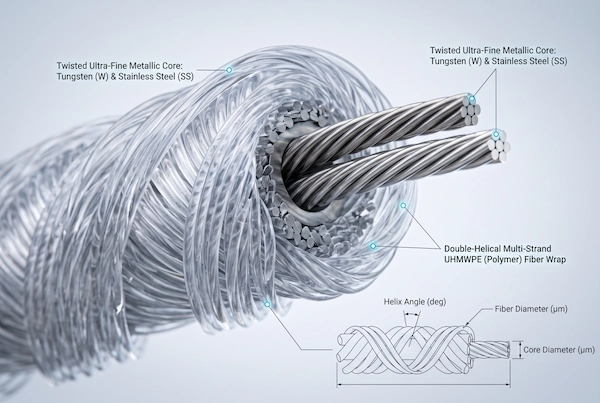
It is impossible to achieve extremely high tear resistance margins for a single yarn when faced with high-speed cutting and sharp metal burrs by relying solely on a single polymer or metal material. TekArmor® composite yarn employs a precision multi-layer core-sheath composite structure (Core-Spun Architecture):
Shear-Resistant Interception by a High-Toughness Dual Metal Core: The yarn’s core consists of a composite system of micron-scale ultra-fine austenitic stainless steel fibers and extremely fine, high-toughness tungsten filaments. Tungsten possesses extremely high Mohs hardness and tensile strength. When a sharp blade or the edge of a thin steel plate presses down and attempts to cut through, the hard micrometallic wires form a microscopic physical barrier capable of directly causing the sharp blade to become microscopically blunted or to slide off course;
Outer layer of ultra-high molecular weight polyethylene (UHMWPE) spiral wrapping: Around the metal core wire, multiple strands of high-strength, high-modulus ultra-high molecular weight polyethylene ultra-fine filaments are wrapped at a tight helical angle through high-speed, multi-ply twisting. UHMWPE possesses a naturally ultra-low coefficient of friction and an extremely high axial tensile modulus. When subjected to downward pressure, the polymer molecular chains in the outer layer uniformly disperse localized point stresses from the blade across the entire fiber bundle through highly elastic stretching, forming a dual-layer microstructural closed-loop system that resists shearing forces: “the outer layer dissipates force and absorbs energy, while the inner core provides rigid, direct resistance.”
Continuous filaments work together to eliminate structural looseness: Unlike traditional short-fiber blends, which are prone to pilling and fiber breakage, TekArmor® employs a fully continuous micro-filament twisting process. The cross-sectional roundness and density of the entire composite yarn are exceptionally high, eliminating voids between fibers and significantly enhancing its ability to instantly grip and block the sharp edges of ultra-thin cold-rolled steel sheets.
Breakthroughs in Micro-Gauge Knitting: From 18G to 21G Precision
Breakthroughs in yarn strength are just the foundation; to ensure technicians are willing to wear the garments all day, it is essential to use high-gauge knitting equipment to minimize the thickness of the inner lining to the absolute limit:
Redesigning ANSI A5-Rated Gloves with 18-Needle Knitting Machines: On traditional 10- or 13-needle machines, the wide spacing between needles results in a fabric surface covered with coarse loops. TekArmor® has taken needle density to new heights by incorporating ultra-fine composite yarns into high-precision 18-needle computerized knitting machines (such as the liner design of the EZK5-324FD). Even when the glove lining thickness is reduced to an ultra-thin state of approximately 0.8 millimeters, it consistently meets the ANSI/ISEA 105 A5 rating (i.e., withstanding a shear load of 2,200 to 2,999 grams without being cut through), achieving a balance between a lightweight, comfortable fit and robust cut resistance;
21-Needle Micro-Knitting Challenges the Peak Protection Threshold of ANSI A8: In the development of the higher-end EZK8-321R model, SQG further pushed the physical limits of micro-knitting by employing industrial-grade 21-needle computerized glove knitting machines for ultra-precise knitting. The loop density of the 21-gauge knit is nearly 60% higher than that of conventional 13-gauge knits, resulting in an exponential increase in the number of interlacing points per square centimeter. Through the ultimate combination of ultra-fine tungsten wire and high-count TekArmor® yarn, the gloves have successfully reached the ANSI A8 maximum cut resistance level (withstanding shear loads of over 5,000 grams), completely overturning the stereotype that “ultra-high cut-resistant gloves are inevitably as clunky as bricks”;
Preservation of bare-hand-level fingertip tactile feedback: The ultra-dense 18-gauge and 21-gauge weaves eliminate excess fabric buildup and coarse stitching at the fingertips and side seams. The fabric lining conforms to the metacarpal bones like a tightly compressed sports jersey, allowing frontline workers to still feel clear force feedback through their fingertips when handling tiny, shiny stamped nuts or micro-blades.
Preventing Flexural Wire Fatigue and Skin Punctures
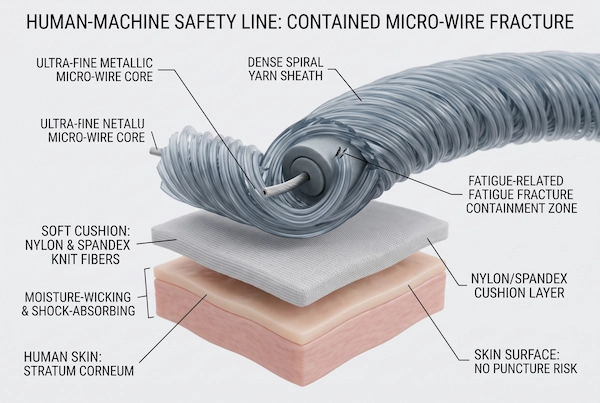
In the daily use of cut-resistant gloves, the issue that causes the most distress to frontline workers and is most likely to lead to hidden workplace injuries is metal wire breakage that pierces the skin. In traditional manufacturing processes, if metal wires are not insulated and deeply encased, the micro-wires are highly susceptible to breaking due to repeated flexural fatigue after prolonged gripping and bending. The broken ends can pierce through the lining and into the worker’s skin, causing redness, swelling, stinging pain, and even secondary infections.
The TekArmor® system eliminates this ergonomic pain point at the microscopic textile engineering level:
Multi-layer barrier soft fiber protective sheath: Between the micro-metal core wire and the first inner layer in contact with the hand, an inner protective layer composed of high-count, supple nylon (Nylon 6,6) and skin-friendly spandex has been specifically added. This design completely encapsulates the ultra-fine tungsten and stainless steel filaments at the very center of the yarn, creating a dual-layer physical buffer that physically isolates the metal components from the operator’s epidermal stratum corneum;
Self-releasing bending stress structure: By optimizing the balance between covering twist and pitch, the micro-metal filaments have an appropriate amount of microscopic free sliding space within the fiber bundle. When workers repeatedly clench their fists or bend their fingers, the internal metal filaments do not experience concentrated bending stress at a single focal point; instead, they undergo elastic creep along with the entire polymer bundle, evenly distributing the localized fatigue loads across tens of thousands of flexion-extension cycles;
Eliminates workpiece scratches caused by exposed microfibers: This locking process not only protects the worker’s hands but also safeguards high-precision external workpieces. When assembling high-gloss aluminum housings or ultra-flat engine sealing surfaces, no protruding or standing-up hard metal burrs appear on the glove surface, eliminating quality incidents where high-value component surfaces are scratched due to defects in the glove material.
Liquid Barrier as a Fiber Shield: The Protective Synergy of 360° Immersion
In heavy industrial metalworking and liquid-based stamping operations, many front-line managers tend to view the fully coated layer on the surface of gloves simply as a “raincoat” that blocks external contaminants. However, in the structural mechanics of high-end chemical- and cut-resistant work gloves, the outer polymer barrier plays a far more critical role as a “systemic protective umbrella.”
While the cut-resistant fiber skeleton—composed of an ultra-high-molecular-weight polyethylene composite with micro-metal wires—undoubtedly possesses excellent mechanical shear strength, the long-term stability of its performance is highly dependent on the external physical environment. If gloves are only subjected to conventional palm dipping or lack a complete fluid barrier, infiltrating cutting fluids and chemical droplets will continuously corrode the internal yarns, leading to premature failure of high-grade cut-resistant gloves. By constructing a seamless, airtight 360-degree impregnation barrier, a deep engineering synergy is established between the outer polymer film layer and the inner layer of specialty fibers.
Protecting High-Performance Filaments from Chemical Attack
High-strength cut-resistant liners are precision-blended from high-value polymer filaments and metal microfibers; however, their physical shear life is highly vulnerable in industrial acids, alkalis, and lubricants:
Preventing interfacial corrosion of ultra-fine metal wires by corrosive fluids: TekArmor® liners incorporate micron-sized austenitic stainless steel wires and highly ductile ultra-fine tungsten wires. Although these micro-metal filaments possess high hardness, their diameter is typically only tens of micrometers. Prolonged exposure to water-based cutting fluids rich in water, chloride ions, and sulfur-phosphorus extreme-pressure additives makes them highly susceptible to electrochemical micro-pitting corrosion and intergranular cracking, causing the metal filaments to become brittle at the microscopic level and lose their cut-resistant skeletal function;
Prevents grease from swelling and penetrating UHMWPE molecular chains: The outer layer, consisting of a 360-degree seamless nitrile elastomer membrane, acts as a robust physical shield against low-polarity mineral oils and hydrocarbon solvents. It completely blocks the path for oil droplets to penetrate inward through the uncoated fabric on the back of the hand, keeping the core load-bearing layer of UHMWPE fibers in a consistently dry and clean microenvironment, thereby eliminating the risk of polymer volume swelling and orientation relaxation caused by oil-soluble media;
It maintains the fabric’s microscopic interlock and mechanical stability: the fully enclosed structure prevents cutting fluid from acting as a “liquid lubricant” between fiber bundles, ensuring that each strand of composite yarn retains its original friction-locked state when the loop is subjected to compression and shear, thereby keeping the cut resistance rating consistently stable at the factory-calibrated ANSI A5 to A8 levels.
Interfacial Bonding: Preventing Fluid Channeling and Wicking
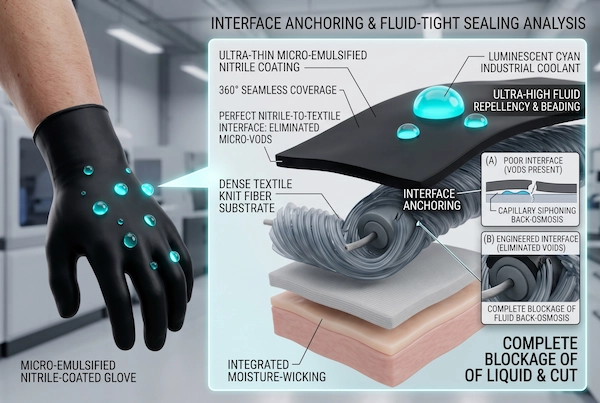
In traditional fully-dipped glove manufacturing, a serious failure mode frequently occurs: while the outer rubber layer appears intact, once cutting fluid splashes in through the wrist edge or seeps in through microscopic scratches between the fingers, it triggers intense capillary wicking along the axial microporosity of the liner fibers, causing the entire glove to become rapidly saturated and develop an odor:
Eliminating Microscopic Voids at the Rubber-Fabric Interface: SQG has optimized the surface tension and cross-linking rate of the primer latex to address the unique surface energy of high-density cut-resistant liners. At the moment of impregnation, the base rubber can penetrate the outermost fiber sheath of the liner to a controlled depth, forming an interlocking mechanical anchorage structure between the polymer and the fibers, thereby completely sealing the microscopic interface gaps between the coating and the base fabric;
Blocking Longitudinal Capillary Flow Pathways: The robust, physically micro-crosslinked interface disrupts the continuous void pathways between fibers. Even if the glove’s outer surface is locally scratched by metal burrs or a small amount of liquid drips from the cuff, chemical liquids cannot spread horizontally over a large area along the yarn bundles or flow vertically back toward the back of the hand, thereby preventing extensive contamination of the back of the hand;
Dynamic resistance to flex-induced delamination: An optimized interface bonding process ensures that the nitrile rubber layer and the TekArmor® composite liner deform in unison during vigorous bending or when gripping heavy objects. No matter how many cycles of extreme flexion and extension the fingers undergo, the rubber layer and the cut-resistant liner will not experience interlayer shear delamination or blistering and delamination, ensuring that the entire glove maintains its structural integrity throughout heavy-duty service cycles.
Micro-Pinhole Prevention and Leak Verification
Many heavy industry process managers have concerns about the leak-proof capabilities of fully-dipped gloves under harsh operating conditions: Since high-hardness tungsten and stainless steel wires are incorporated, could the metal fibers puncture the uncured, wet rubber film during the dipping process, leaving microscopic pinholes invisible to the naked eye?
Multi-layer wrapping eliminates the risk of needle-point punctures: Thanks to TekArmor®’s meticulous double-layer reverse-helix wrapping spinning process, the inner metal microfibers are completely and tightly encapsulated by high-toughness polyethylene and flexible nylon fibers. The yarn surface is smooth and rounded, with no coarse, stiff fuzz or exposed metal ends, eliminating at the fabric source any physical defects that could puncture the ultra-thin rubber film during dip-molding;
Gradual, Steady Film Formation Eliminates Solvent Micro-Pores: A multi-stage, steady-temperature curing process is employed to gently gel the low-viscosity nitrile emulsion on the fiber surface from the outside in. This effectively prevents moisture and volatile components from violently boiling at high temperatures and rupturing the rubber membrane to form interconnected air channels, ensuring the entire glove’s rubber layer achieves a microscopically uniform, dense, and pore-free sealed state;
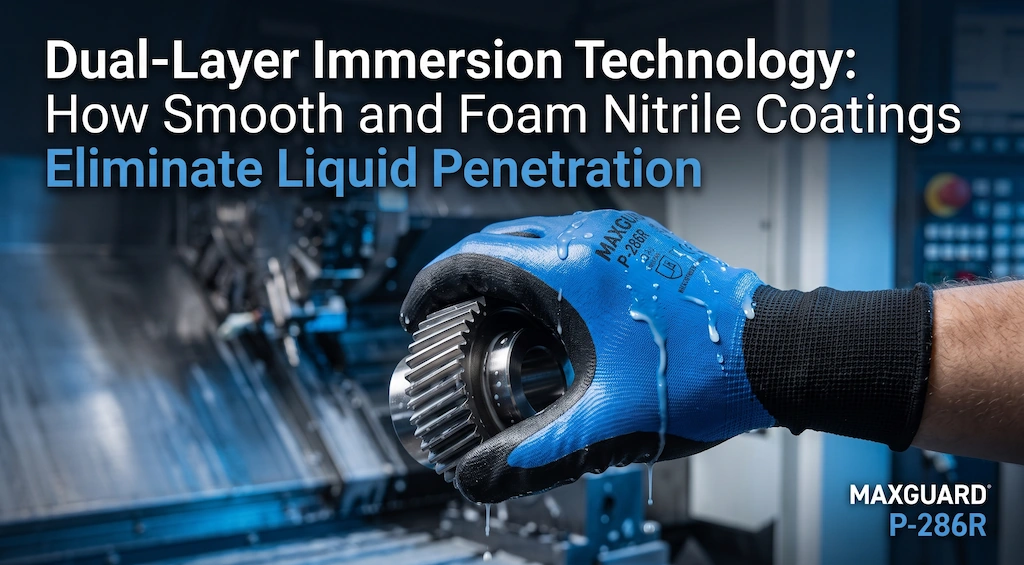
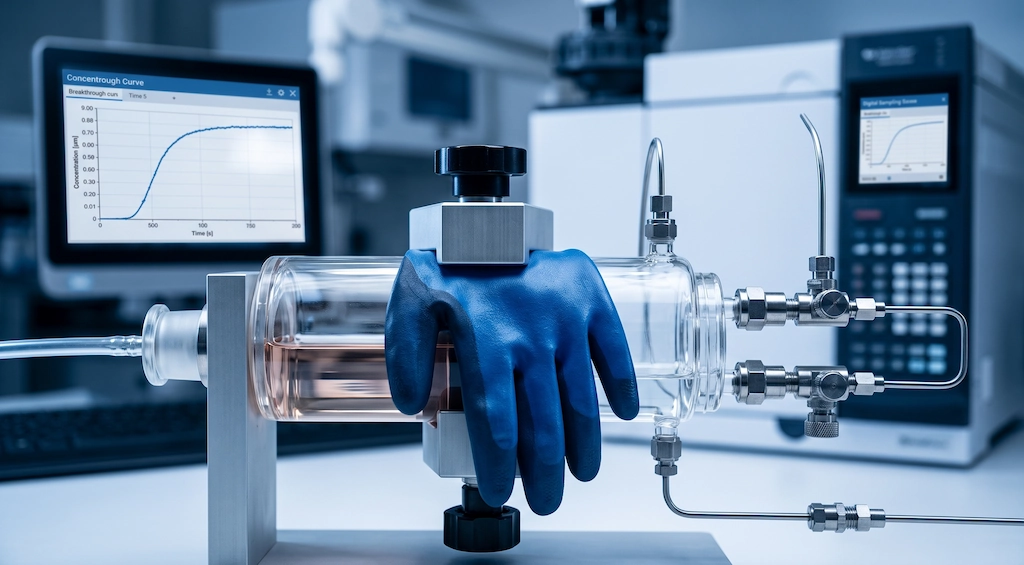
Traceability to airtightness and high-grade watertightness testing standards: During large-scale mass production, every batch of gloves must pass rigorous EN ISO 374-2 airtightness and watertightness tests, as well as AQL quality control, ensuring that the 360-degree full-coverage layer provides long-term, zero-leakage physical barrier protection against trace oil contaminants and industrial water-based fluids. For a systematic overview of continuous liquid-tightness testing methods, the analysis of the causes of microscopic pinholes, and the underlying logic of the dual-layer film-forming fluid barrier process, please refer to our foundational white paper: Dual-Layer Immersion Technology Guide.
Laboratory Performance Matrix: Balancing Cut Resistance and Fluid Tightness
In modern heavy industry and precision machining, safety engineering teams often face a dilemma when selecting chemical- and cut-resistant work gloves: improving the cut resistance rating typically means thicker fabric and stiffer fingers, while pursuing maximum fluid tightness and chemical resistance often results in a loss of breathability and operator fatigue.
Scientific PPE selection does not involve blindly piling on protective parameters, but rather relies on precise, quantified laboratory data to precisely match the glove’s knit density, the mechanical properties of the composite core yarn, and the coating film morphology to the risk level of a specific workstation.
Multi-Variable Laboratory Benchmarking Table
To objectively demonstrate the balance between shear resistance and liquid barrier performance across different engineering approaches, the SQG Industrial Safety Laboratory conducted standardized comparative field tests on a conventional 13-stitch base model and three representative protective gloves incorporating specialized fiber systems, in accordance with ANSI/ISEA 105-2016 and EN 388:2016 standards:
ASTM F2992-15 Cut Load Test (Cut Load in Grams): Using a TDM-100 cut tester, the benchmark load in grams (g) required for a blade to penetrate the test specimen over a 20-millimeter stroke was measured; a higher load indicates stronger resistance to shearing by sharp edges;
ANSI/ISEA 105 Cut Resistance Rating: Classified into levels (A1 to A9) based on the actual load in grams measured according to ASTM F2992-15, providing a clear indication of the glove’s cut resistance tiers;
Fluid Barrier Structure and Coverage: Evaluates whether the glove coating is a palm-coated structure designed for localized oil repellency and slip resistance, or a fully coated, sealed 360-degree structure that prevents liquid splashes and backflow from all directions;
Ergonomic Suitability: Combines overall thickness with joint flexion resistance to determine the glove’s suitability for various mechanical processing and assembly work environments requiring different levels of strength.
| Evaluation Metrics (Metric) | Standard 13G HPPE Basic Model | EzGrip® EZB4-313 | EzGrip® EZK5-324FD | EzGrip® EZK8-321R |
| Liner Composition | 100% Standard Filament HPPE | 13G HPPE / RPET eco-friendly polyester / stainless steel wire/spandex blend | 18G TekArmor® Specialty Composite Fiber / Nylon / Spandex Blend | 21G Ultra-Dense TekArmor® (with high-tensile tungsten filaments) / Nylon / Spandex Blend |
| Gauge Level | 13-Gauge Traditional Knit | 13-gauge eco-friendly reinforced knit | 18-Gauge Ultra-Fine Seamless Knit | 21-Gauge Ultra-Fine Knit |
| ASTM F2992-15 Measured Basis Weight | 1,050–1,450 grams | 1,650–2,150 grams | 2,350 – 2,850 grams | 5,200–5,600 grams |
| ANSI/ISEA 105 Cut Resistance Rating | ANSI A3 (Low to Medium Cut Resistance) | ANSI A4 (medium to high mechanical cut resistance) | ANSI A5 (High-Level Cut-Resistant Barrier) | ANSI A8 (Extreme Shear Resistance Rating) |
| Liquid-Resistant Coating Coverage Pattern | Polyurethane (PU) Palm Coating (Highly Permeable) | EZGRIP® Nitrile Palm Coating (Oil-Repellent Palm) | 360° Sealed EZGrip® Fully Nitrile-Dipped | EZGRIP® Ultra-Thin Micro-Perforated Palm Coating |
| Liquid-Resistant Performance Classification | Resists dry dust only; penetrated by oil within seconds | Isolates light oil on the palm while maintaining breathability and natural heat dissipation on the back of the hand | Fully enclosed 360° design prevents coolant and swarf from seeping back in | Palm surface resists slippage from light oils; back provides extreme heat dissipation and moisture wicking |
| Typical Recommended Composite Hazardous Workstations | Packaged in dry, oil-free cardboard boxes; suitable for low-risk, light industrial handling | Handling oil-coated stamped metal parts; initial rough machining of sheet metal | Assembly of engine blocks with coolant, machining of sharp edges with oil contamination | Quality inspection of ultra-thin, sharp blades; precision stamping of micro-hardware |
The Critical Boundary: Dexterity vs. Heavy-Duty Slag Protection
Although micro-knitting technology—as exemplified by TekArmor®—has elevated the cut resistance of 18-gauge and even 21-gauge gloves to ANSI A5 through A8 levels, on-site safety engineers must clearly define the physical application limits of ultra-thin, precision gloves:
Optimal operating conditions for precision ultra-thin gloves: Models such as the EZK5-324FD and EZK8-321R, which are knitted with an ultra-fine gauge, offer the core advantage of preserving high-fidelity tactile feedback on the fingertips. They are primarily designed to handle stamping burrs on metal stampings, shearing from sharp sheet metal edges, and the precision assembly of fasteners with minimal oil residue. The ultra-thin coating and high-density liner neutralize the sliding and cutting forces generated by thin metal sheets, while allowing workers to freely perform alignment, engagement, and inspection tasks;
Prohibited Areas for Slag and High-Temperature Spatter: The melting point of ultra-high-molecular-weight polyethylene (UHMWPE) typically ranges from 130°C to 136°C. If these gloves are used in work areas involving continuous welding spatter, high-temperature slag splatter, thermal cutting with oxygen blowing, or heavy-duty forging operations, high-temperature metal slag particles can instantly burn through the ultra-thin coating and melt the polyethylene fibers, potentially adhering to the worker’s skin and causing severe burns. In such high-temperature thermal cutting conditions, it is mandatory to use heavy-duty cow split-leather gloves that have undergone flame-retardant tanning treatment or high-temperature heat-insulating gloves made of para-aramid;
Equipment-Level Red Line for High-Concentration Immersion Tanks: For tasks requiring the entire hand or even the forearm to be immersed in high-concentration acid pickling and passivation tanks, industrial degreasing caustic alkali tanks, or cleaning tanks containing highly polar organic solvents, no coated gloves with a knitted lining provide sufficient permeation resistance throughout the entire work cycle. In work areas involving such extreme chemical hazards, it is mandatory to upgrade to heavy-duty, seamless, long-cuff chemical-resistant gloves made from special nitrile, butyl rubber, or fluorocarbon rubber that are integrally molded, and to implement a multi-layered, tiered engineering protection configuration in conjunction with chemical-resistant aprons and cut-resistant arm guards.
The SQG TekArmor® Composite Protective Lineup
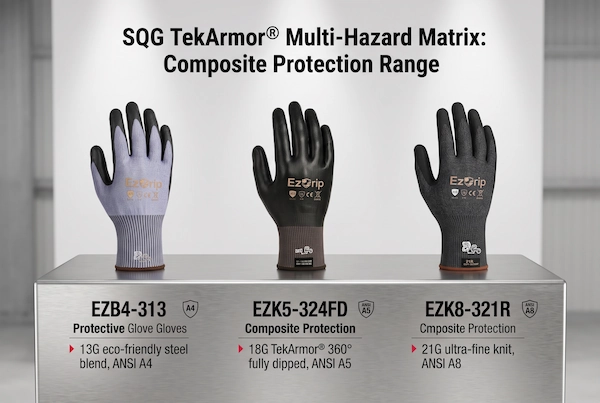
In modern high-end manufacturing, the combined mechanical and chemical risks faced at various workstations along the production line are highly heterogeneous. Some processes focus on heavy-duty material handling and long-term abrasion resistance; at other stations, workers must firmly grip sharp, burr-covered stamped parts while exposed to continuous splashes of high-pressure water-based cutting fluid; and at precision workstations, workers must protect themselves from cuts by extremely thin blades or sharp silicon steel sheets during quality inspections with micron-level tolerances. Given these varied operational demands, a single glove model cannot provide comprehensive safety across the entire spectrum.
Leveraging specialized spinning and multi-axis micro-weaving technologies, SQG has developed the TekArmor® composite protective glove matrix, covering 13G, 18G, and 21G gauges. This series deeply integrates high-performance cut-resistant microstructures with the EzGrip® custom impregnation coating, providing a comprehensive solution for frontline workshop workstations that is clearly targeted, offers rigorous protection, and prioritizes ergonomics.
Sustainable Cut Protection: EzGrip® EZB4-313
For applications such as the initial stamping of large metal components, warehousing and logistics handling, and rough machining of hardware with moderate oil contamination, personal protective equipment (PPE) must not only offer excellent physical abrasion resistance but also align with modern manufacturing enterprises’ sustainability and low-carbon procurement strategies:
13-Gauge Eco-Friendly Recycled Fiber Reinforced Liner: The EZB4-313 employs a 13-gauge composite tight-weave process, blending high-strength ultra-high molecular weight polyethylene (HPPE), micron-level austenitic stainless steel fibers, high-elasticity spandex, and strictly certified RPET (recycled polyester fiber). While maintaining a dense fabric structure, this process effectively utilizes recycled polyester to reduce the carbon footprint, aligning with the green supply chain evaluation metrics of multinational original equipment manufacturers;
ANSI A4 Mechanical Cut Resistance: The stainless steel microfibers embedded in the inner lining work in synergy with high-strength HPPE to achieve ANSI A4-level shear resistance, effectively withstanding the intense cutting forces generated during rapid gripping of unpolished cold-rolled steel edges, micro-serrations on the outer edges of stamped sheet metal parts, and burrs on castings;
Palm Oil-Repellent and Abrasion-Resistant Protective Layer: The glove palm features an EzGrip® modified nitrile palm coating process (Palm Coated), while the back of the hand retains the natural breathable mesh of the 13-gauge knit fabric. The palm coating quickly squeezes out and removes the thin layer of rust-preventive grease adhering to the workpiece surface, providing a high-damping grip on oily metal surfaces, while the back of the hand maintains natural air circulation, making it suitable for long-term, heavy-duty wear during moderate machining operations. For detailed specifications and green compliance reports, please refer to: EZB4-313 Cut-Resistant Glove.
The 360° Fluid-Tight High-Cut Barrier: EzGrip® EZK5-324FD
When workstation environments involve complex machining or post-stamping assembly operations characterized by continuous cutting fluid washdown, high-pressure coolant splashes, and sharp metal shavings, conventional dip-coated cut-resistant gloves quickly fail due to fluid seepage onto the back of the hand. In such situations, fully enclosed, fully-dipped gloves that also offer high dexterity are an indispensable safety requirement:
18-gauge micro-knit TekArmor® seamless skeleton: The EZK5-324FD is produced on industrial-grade 18-gauge computerized knitting machines, which blend ultra-fine TekArmor® specialty composite fibers with nylon and spandex in a high-density blend. Unlike bulky traditional high-cut-resistant gloves, the thickness of its uncoated liner is minimized to an ultra-lightweight range, yet it consistently delivers ANSI A5-level cut resistance, eliminating ergonomic barriers where workers cannot bend their fingers due to heavy gloves;
360-degree, gap-free EzGrip® fully enclosed barrier: From the palm to the back of the hand and even the spaces between the fingernails, the glove is completely enveloped through a multi-axis servo-controlled, fully immersed micro-emulsified nitrile process. The entire glove forms a uniform, dense, and micro-pore-free fluid-insulating layer that completely blocks the penetration and backflow of water-based cutting fluids, extreme-pressure emulsified oils, and rust-preventive cleaning solutions, preventing the internal cut-resistant fibers from becoming brittle and degrading due to contact with chemical media at the source;
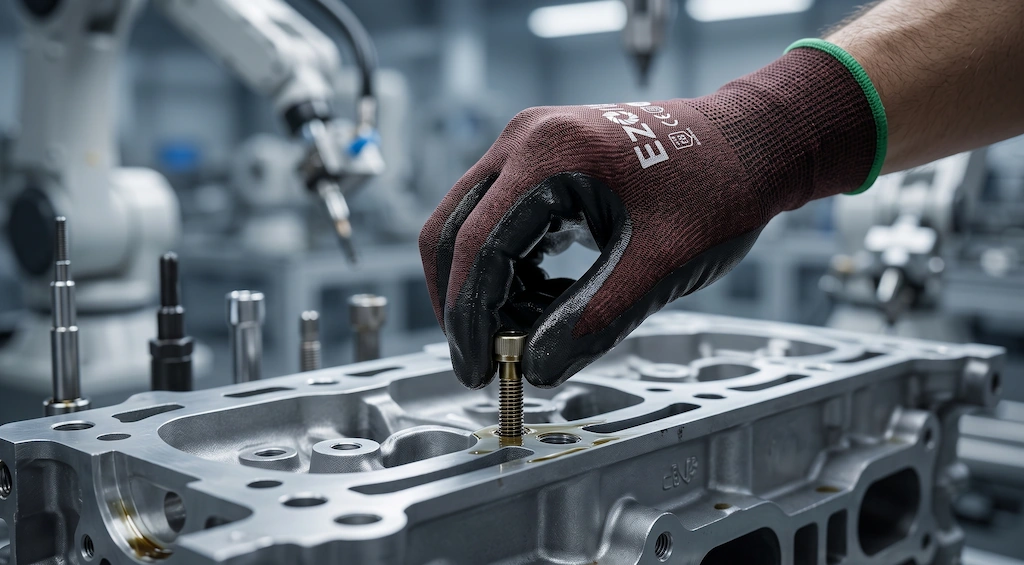
High Safety Redundancy for Fluid-Soaked Workstations: The EZK5-324FD is specifically designed for extreme, multi-task workstations such as automotive engine camshaft cover assembly, transmission and gearbox hydraulic assemblies, and loading/unloading operations at CNC machining centers with fluid exposure. Even when workers frequently reach deep into machine compartments containing cutting fluids and metal debris, their hands remain dry, while their fingertips retain sufficient tactile sensitivity, effectively preventing stripped threads and parts from falling off. To view the liquid-tightness and cut-resistance test certification reports, please visit: EZK5-324FD Fully Coated Cut Glove.
Ultra-High Cut Dexterity Benchmark: EzGrip® EZK8-321R
In certain extremely precise yet highly hazardous workstations—such as the stamping of aerospace-grade ultra-thin titanium alloy sheets, the lamination and assembly of ultra-thin silicon steel sheets, the installation and removal of sharp stamping dies, and the full visual inspection of micro-metal stamped parts—operators face the dual challenges of “handling extremely sharp, thin blades” and “requiring extremely high sensitivity for fingertip manipulation”:
21-Needle Physically Limit-Pushing Micro-Knit: The EZK8-321R represents the cutting edge of micro-pitch cut-resistant knitting technology. Utilizing 21-needle industrial ultra-high-density knitting, the microscopic loop density achieves a dramatic leap compared to conventional gloves. The liner is as smooth and lightweight as high-density, form-fitting fabric, eliminating the wrinkles, gaps, and slack commonly found at the fingertips of traditional gloves;
ANSI A8 Extreme Shear Resistance: By precisely twisting ultra-fine, high-tensile micron-level tungsten filaments with high-molecular-weight polyethylene filaments within ultra-fine loops, the EZK8-321R breakthrough pushes the cut resistance of a 21-gauge ultra-thin glove to the ANSI A8 limit (withstanding high shear loads exceeding 5,000 grams); even when scraped at high speed by an extremely thin metal blade, the internal high-density tungsten wire network instantly dulls and intercepts the cutting edge;
“Bare-hand-like” precise tactile feedback: Combined with the lightweight, micro-perforated EzGrip® palm dip coating, the glove provides sensitive, oil-film-based anti-slip grip on the palm, while the backs of the fingers and hand maintain an open microcirculation system for sweat evaporation. When worn, operators can precisely detect metal edges, burrs, and subtle chamfers as small as 50 micrometers, making this model the industry benchmark for addressing the dual requirements of “extreme cut resistance and bare-hand-level dexterity” in the machining of ultra-sharp precision parts. For detailed micro-shear test data and on-the-job fit guidelines for this model, please visit: EZK8-321R ANSI A8 Glove.
Safe Operating Boundaries: Lubricants vs. Aggressive Chemical Solvents
In modern metalworking and composite manufacturing workshops, the introduction of chemical- and cut-resistant work gloves to the front lines of production has significantly enhanced protection against both mechanical burrs and workshop lubricants. However, in the implementation of workshop safety standardization (EHS), the most critical misconception is the erroneous equating of “resistance to machining cutting oils” with “resistance to all industrial chemicals.”
The physical and mechanical properties of any polymer coating or specialty woven fiber are subject to strict chemical service limits. The technical approach combining a nitrile rubber layer with TekArmor® composite fibers is designed primarily to defend against physical shearing and fluid penetration in environments involving mechanical stamping and machining fluids. Clearly defining the protective boundaries of gloves—distinguishing between lubricating and cooling media and highly corrosive chemical agents—is a prerequisite for preventing mass casualties and serious occupational injuries on production lines.
Machine Coolants and Stamping Oils vs. Acid/Alkali Immersion
To define the safe operating window for gloves, it is first necessary to distinguish the fundamental differences between physical processing aids and highly corrosive chemical bath solutions:
Safe operating temperature range for nitrile-coated gloves (oil-based and water-based lubrication systems): Nitrile elastomers exhibit excellent chemical inertness when exposed to high-viscosity drawing oils containing extreme-pressure and anti-wear additives used in metal stamping; water-diluted semi-synthetic and fully synthetic microemulsion cutting fluids used in CNC machining; mineral oils circulating in hydraulic systems (such as ISO VG 46/68); and heavy anti-rust greases used for the storage of metal components. The tightly packed molecular chains of the polymer film form a long-term, stable physical barrier that prevents the solvent from dissolving or extracting plasticizers, while reliably protecting the internal TekArmor® composite cut-resistant fibers from being softened by oil and grease;
Dual physical and chemical failure risks in acid and alkali immersion operations: In metal surface treatment pickling and passivation lines, pre-plating chemical degreasing tanks, or high-concentration industrial caustic soda neutralization tanks, the operating environment shifts entirely to highly polar, highly corrosive inorganic strong acids and strong alkalis. Although nitrile polymers can withstand low-concentration acids and alkalis at room temperature under conditions of minimal splashing, when exposed to prolonged immersion or high concentrations (such as hydrochloric acid greater than 30% or concentrated sulfuric acid, or 40% sodium hydroxide), highly oxidative inorganic acids will directly oxidize and destroy the unsaturated double bonds and the nitrile-based cross-linked network of the nitrile molecules, causing the coating to rapidly harden, crack, and become brittle;
Mandatory Upgrade Criteria for Chemical Protection Levels: Once workstation operations involve “immersing the entire hand in acid or alkali cleaning tanks to retrieve workpieces,” “contact with fuming concentrated acids or alkalis,” or “the risk of high-pressure spraying of corrosive liquids,” the workshop must immediately cease using any lightweight dipped gloves with fabric linings and unconditionally upgrade to industrial chemical-resistant long gloves that are molded as a single unit from special butyl rubber (Butyl), fluorocarbon rubber (Viton), or thickened pure PVC—all molded as a single piece—and equipped with a dedicated acid- and alkali-resistant, cut-resistant outer layer or a chemical-resistant apron to establish a multi-layered defense system.
Solvent Incompatibility and Polymer Degradation Protocols
During the cleaning, degreasing, and paint-stripping processes at the end of the production line, the misuse of organic solvents is the leading cause of instantaneous breakdown of glove coatings and can even lead to extensive chemical burns on the hands:
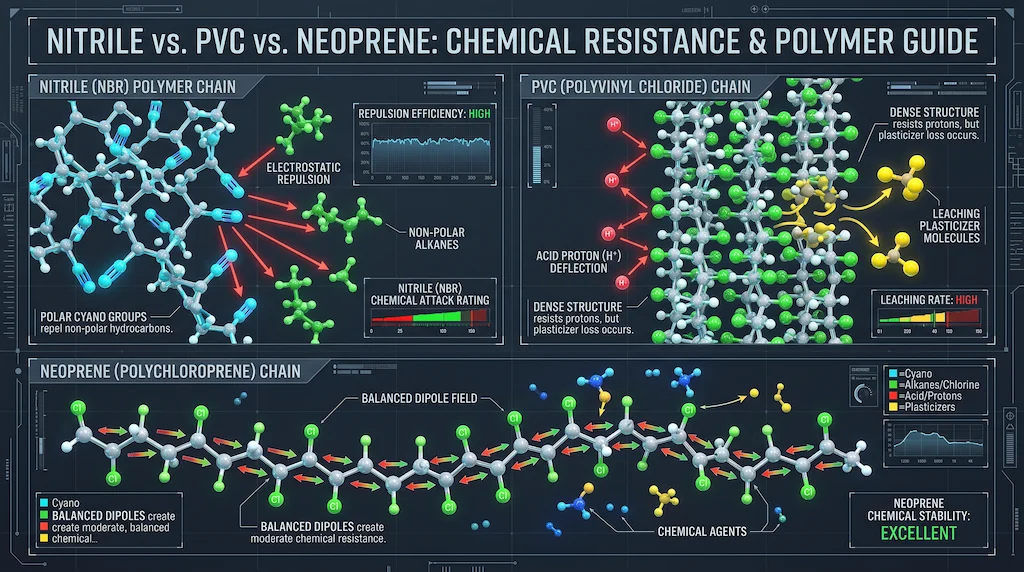
Molecular-level destruction mechanisms of nonpolar and polar solvents: Nitrile rubber molecular segments contain polar cyano groups (-CN), which naturally repel nonpolar mineral lubricants. However, when exposed to organic solvents with similar chemical properties, the polymer’s defense system collapses instantly:
Violent Swelling Caused by Aromatic and Halogenated Hydrocarbons: Upon contact with solvents such as toluene, xylene, styrene, or trichloroethylene, the small solvent molecules penetrate and expand the nitrile polymer network within a very short time, triggering violent volume swelling (Polymer Swelling). The coating swells to several times its original size within minutes, becoming spongy, mushy, and losing its adhesion, with mechanical strength completely reduced to zero;
Rapid Dissolution by Ketone and Ester Solvents: When exposed to highly polar cleaning agents such as acetone, methyl ethyl ketone (MEK), and ethyl acetate, the secondary chemical bonds between acrylonitrile molecules are rapidly broken down. The coating softens, becomes sticky, and may even ooze, losing all barrier protection for the internal TekArmor® fibers and the operator’s skin;
Failure of mechanical protection in a swollen state: Once the rubber layer physically swells due to solvent penetration, its puncture resistance and abrasion resistance drop precipitously to zero. At this point, even if the operator merely grasps a component with a slightly rough surface, the swollen and softened rubber will instantly tear and curl, allowing corrosive solvents to rapidly seep into the glove lining through the damaged areas, causing severe chemical contact injuries;
Guidelines for Compatibility Between Polymer Materials and Chemicals: When selecting gloves for use with industrial chemicals of varying compositions, safety engineers must never rely on subjective experience to estimate protective capabilities. For tables detailing the molecular degradation rates and measured permeation times of nitrile, polyvinyl chloride (PVC), neoprene, and natural latex when exposed to hydrocarbon solvents, alcohols, ketones, and various grades of inorganic acids and bases, we recommend consulting our specialized polymer chemical resistance guide: Nitrile vs. PVC vs. Neoprene: Chemical Resistance & Polymer Guide.
Production Line Economics: The True TCO of Eliminating Composite Hazards
In financial audits of automotive stamping parts manufacturers, large-scale electromechanical assembly plants, and high-end metal fabrication companies, many procurement managers tend to simply classify personal protective gloves (PPE) as “low-value consumables,” often focusing solely on price differences of a few mao between single-pair and double-pair purchases during the bidding process. However, in work environments rife with composite hazards—such as metal burrs, stamping flash, and highly corrosive fluids—cheap, single-function gloves selected solely on the basis of low price often become a hidden drain on manufacturing plants’ profits.
Expenses related to workers’ compensation claims for frontline workers, losses from unplanned production line downtime, and the frequency of replacements due to frequent glove damage all contribute to the total cost of ownership (TCO) of occupational safety supplies over their entire lifecycle. While the introduction of chemical- and cut-resistant work gloves—which combine extreme physical cut resistance with 360-degree protection against oil and fluid penetration—may appear to increase the initial procurement budget, a comprehensive analysis considering line-wide safety benefits, yield rates, and ergonomic wear and tear reveals that the hidden economic returns they generate for modern manufacturing enterprises far exceed their book costs.
Mitigating High-Cost Laceration and Chemical Dermatitis Claims
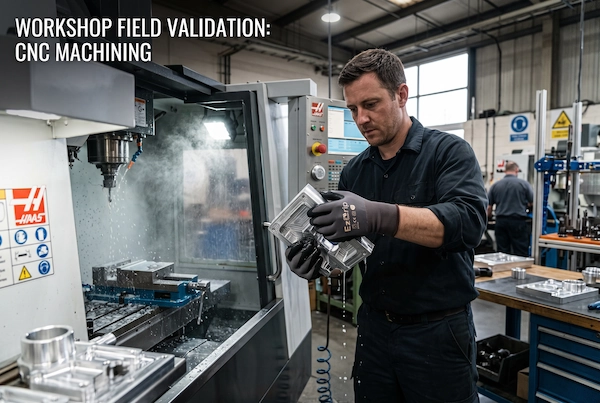
In machining and stamping workshops, workplace injuries are never merely minor scrapes. Deep lacerations and occupational chemical diseases caused by inadequate glove protection often impose a heavy burden on factories in terms of compliance and compensation:
Huge direct compensation costs and associated lost work hours resulting from deep tendon and fascia lacerations: The edges of cold-rolled steel sheets without chamfers and sharp metal burrs act like scalpels; once they pierce the thin chemical-resistant rubber membrane, they can sever the dermis of the operator’s palm, the deep flexor tendons of the fingers, and even the superficial palmar arch vessels in an instant. Such deep mechanical lacerations require emergency surgical debridement and tendon suturing. A single incident can result in direct medical claims, emergency treatment costs, and lost-time compensation ranging from thousands to tens of thousands of dollars. More seriously, the months-long sick leave of skilled workers at critical workstations can disrupt assembly rhythms, leading to delivery delays and the risk of unplanned production line shutdowns;
Hidden downtime and job reassignment friction caused by chemical contact dermatitis: Cutting fluids are rich in biocides, surfactants, and extreme-pressure additives. If the back of cut-resistant gloves is open and unprotected, the liquid can soak through the inner lining within a few hours and remain in prolonged contact with the skin, making it highly likely to induce stubborn occupational contact dermatitis. Redness, swelling, peeling, and cracking of workers’ hands not only result in weakened grip strength and a drastic decline in operational precision but also lead to frequent sick leave claims. If a company fails to pass an occupational health and safety audit, it will also face severe regulatory fines and increased insurance premiums;
A safety margin that simultaneously eliminates both risks: Protective gear featuring TekArmor® composite fibers and a seamless, fully rubberized coating physically blocks the two primary pathways for injury and disease—instant cuts from sharp burrs and prolonged exposure to trace amounts of oil and fluids—at their source. The loss of man-days due to production line downtime caused by infections from minor cuts, suturing of hand injuries, and skin conditions is significantly reduced, directly strengthening the company’s EHS (Environmental, Health, and Safety) compliance defenses and significantly optimizing year-end accidental injury insurance and workers’ compensation payout accounts.
Extended Glove Service Life Through Reinforced Structural Integrity
In addition to directly reducing accident costs, the mechanical service life and wear cycle of the gloves themselves are key factors determining the total procurement costs in the workshop:
The extremely high breakage and replacement rate of traditional, low-grade gloves: When standard 13-gauge pure HPPE or aramid gloves come into contact with unmachined castings and stamped sheet metal, the exposed yarns are highly susceptible to snagging, fraying, or even localized severing by metal burrs due to the fibers’ insufficient abrasion resistance; Furthermore, due to the lack of an outer polymer protective layer, the fibers become saturated and softened by cutting fluid, resulting in an effective service life of often less than 1 to 2 work shifts per pair. Workers frequently visit the warehouse to request new gloves, leading to significant hidden procurement waste and wasted labor hours in warehouse management;
TekArmor®’s integrated wear-resistant toughness combines composite fibers and an abrasion-resistant coating: The TekArmor® architecture tightly wraps and twists micron-scale ultra-fine, high-toughness metal microfibers with ultra-high-molecular-weight polyethylene filaments at the microscopic level, endowing the fabric framework with outstanding resistance to micro-tensile fatigue and tear strength. Combined with a modified, dense nitrile rubber coating that delivers surface abrasion resistance exceeding thousands of revolutions, the gloves maintain an intact outer layer—free from rubber peeling—and a liner free from pilling or fraying, even under severe conditions involving friction from metal debris and sharp edges;
Substantial reduction in comprehensive protection costs per shift: On-site tracking data from industrial workshops indicates that after adopting structurally robust, high-grade composite gloves, the effective service life per pair is typically extended from 1 to 2 days for traditional gloves to 7 to 14 full shifts, with the overall replacement frequency dropping by more than 50%. When calculated based on quarterly or annual material issuance ledgers, even though the unit price of high-performance composite cut-resistant gloves is slightly higher than that of low-end gloves, their actual per-shift cost over the entire lifecycle is significantly reduced, achieving a harmonious balance between enhanced workplace safety and cost-effective procurement.
Technical FAQ: Chemical and Cut-Resistant Gloves in Practice
When implementing protective gloves that provide both physical cut protection and fluid barrier protection in manufacturing workshops and on the front lines of stamping operations, on-site process engineers, team leaders, and front-line operators often raise a series of technical questions directly related to the day-to-day wearing experience. Regarding chemical and cut-resistant work gloves that combine high cut resistance with a liquid-tight barrier, workers’ primary concerns typically center on whether fully-dipped gloves with high cut resistance hinder the grasping of small bolts, whether internal metal filaments cause a prickling sensation in the fingers, how cutting fluids can cause standard gloves to fail, and how to prevent cut resistance from being compromised during centralized factory laundering.
This section compiles the most frequently asked technical questions regarding heavy-duty industrial and wet machining applications, providing clear answers from the perspectives of textile mechanics, polymer chemistry, and the maintenance cycle of personal protective equipment.
Can an ANSI A5 fully coated glove truly maintain fingertip dexterity in oily precision assembly?
In traditional workshop perception, gloves with an ANSI A5 cut resistance rating are often equated with being “bulky, clumsy, and unable to bend the fingers,” and the fully coated treatment further exacerbates the glove’s stiff, rigid feel. This phenomenon was indeed common in older 10-gauge or 13-gauge thick-knit gloves, but with the introduction of the modern 18-gauge micro-knit construction, this ergonomic bottleneck has been completely overcome.
The ergonomic principles behind 18-gauge micro-knit technology—which eliminate the bulky feel of cut-resistant gloves—are primarily reflected in three aspects:
The thickness of the fabric base is physically compressed to the limit: Conventional 13-gauge gloves, due to their thick yarn, typically have an uncoated liner thickness exceeding 1.2 millimeters; in contrast, 18-gauge ultra-dense knitting uses ultra-fine TekArmor® composite filaments, compressing the liner base thickness to approximately 0.7 millimeters. The ultra-thin fabric framework significantly reduces the physical volume of the knit itself, eliminating the gap between the fingertips and the workpiece;
Ultra-low deformation resistance of the micro-emulsified nitrile film: Unlike coarse, bulky, thick rubber layers, the glove’s outer layer is fully immersed in a 360-degree coating of low-viscosity micro-emulsified nitrile rubber. The cured elastomer film has a uniform, controlled thickness, and the molecular chains exhibit extremely low interfacial resistance when subjected to compressive and tensile forces. As a result, the mechanical damping of the entire glove during fist-clenching and finger-extending motions is reduced by more than 30% compared to traditional thick gloves;
Restoration of finger joint mobility and tactile nerve conduction: The 18-gauge high-density knit eliminates stiff, puckered areas on the fingertips and between the fingers. When workers handle M4 and M5 fine-threaded bolts or precision washers at oily workstations, the mechanoreceptors in the dermis of their fingertips can clearly detect the subtle chamfers on the metal and the resistance encountered when screwing in the threads. This not only prevents stripped threads and slippage but also encourages operators to voluntarily wear the gloves in compliance with regulations throughout the workday.
Why don’t the internal steel and tungsten filaments break or scratch workers’ skin after repeated bending?
Early, low-end cut-resistant gloves often used a crude, simple twisting process for metal wires solely to inflate the test weight. After workers gripped and released the gloves repeatedly over long periods, the metal wires would fracture due to repeated metal fatigue. The sharp broken ends would pierce the lining and penetrate the workers’ skin, causing stinging pain, redness, swelling, and even secondary infections.
TekArmor®’s composite fiber architecture eliminates the risk of exposed broken metal microfibers at the microscopic spinning level:
Multi-layer microscopic concentric spiral wrapping technology: The yarn is not simply twisted from metal wires and chemical fibers; instead, micron-level ultra-fine, high-toughness tungsten or austenitic stainless steel wires are placed at the very core, with the outer layers wrapped in high-density, reverse double-helix coils of multi-strand ultra-high-molecular-weight polyethylene (UHMWPE) filaments, and the innermost layer tightly woven from soft, high-count nylon and skin-friendly spandex to form a protective lining. The metal core wires are completely sealed deep within the yarn by multiple polymer sheaths, creating a reliable physical buffer gap between the wires and the worker’s epidermal stratum corneum;
Ultra-fine filament diameter dilutes bending stress: The specialty tungsten and micro-steel wires selected for TekArmor® have diameters measuring only a fraction of a human hair and possess exceptional microscopic flexibility and elasticity. When fingers undergo tens of thousands of continuous flexion and extension cycles, the localized bending stress on the extremely fine micro-metal wires is evenly distributed, making macroscopic metal fatigue and brittle fracture unlikely;
In-situ fracture containment mechanism: Even if metal fracture occurs in individual microcrystalline zones under extreme external impact, the tightly wound outer layer of high-density polyethylene fibers, through its strong radial constraining force, firmly contains and locks the fracture point within the yarn’s axis, making it absolutely impossible for it to escape outward or pierce the inner lining to injure the worker’s skin.
How does exposure to cutting fluid degrade ordinary cut-resistant gloves without a nitrile barrier?
Many workshop managers mistakenly believe that “as long as the cut resistance rating is high, a little exposure to cutting fluid is no big deal.” However, actual test data shows that ordinary cut-resistant gloves without 360-degree full-immersion, sealed protection experience a dramatic drop in their actual cut resistance lifespan when subjected to prolonged washing and soaking in water-based cutting fluid.
The two key factors that cause emulsified cutting fluids to accelerate the failure of standard cut-resistant gloves are as follows:
Fluid intrusion creates a microscopic “liquid lubrication” effect at the interface: The ability of standard cut-resistant gloves to withstand blade cuts relies heavily on the tight physical friction and interlocking force between the knitted loops. When sharp metal burrs scrape across the glove, the dry fibers interlock and work together to distribute the localized shear load. However, once water-based emulsions or stamping oils penetrate unsealed fabric layers, tiny droplets of oil and water rapidly adhere to the surface of the ultra-fine fibers, forming a continuous lubricating film. The static and dynamic friction between fibers drops sharply; when a burr cuts into the glove, adjacent fibers rapidly slide apart along the lubricating film. The impact force, which was originally shared by the entire bundle of fibers, is directly transferred to isolated individual filaments, which are instantly cut through by the sharp metal edge;
Chemical erosion of polymer cross-links by emulsion additives: Industrial water-based cutting fluids typically contain high proportions of alkaline rust inhibitors, surfactants, biocides, and extreme-pressure lubricants to prevent metal corrosion and the growth of bacterial biofilms on machine tools. Ordinary cut-resistant fibers that are not isolated by a polymer film become saturated with these chemical additives over time, causing the polymer molecular chains to gradually swell, soften, or undergo microhydrolysis. This leads to a continuous degradation of the fibers’ tensile elastic modulus and shear toughness, making them highly prone to brittle fracture when exposed to sharp burrs.
What is the proper washing and decontamination protocol to preserve both cut resistance and coating integrity?
High-performance composite cut-resistant fully-dipped gloves offer exceptional mechanical strength and toughness, making them fully compatible with centralized collection, degreasing, and recirculating washing processes in modern industrial settings. However, because the liner contains temperature-sensitive ultra-high-molecular-weight polyethylene (UHMWPE) and highly elastic spandex, and the outer layer contains a modified nitrile coating, the washing process must adhere to standardized physical and chemical limits:
Keep the washing water temperature below 40°C: UHMWPE is a thermoplastic polymer with a relatively low softening and melting point, while spandex is highly susceptible to thermal relaxation and aging in hot water environments. The washing water temperature must be strictly limited to lukewarm or room-temperature water below 40°C to prevent elastic fiber failure, which can cause the gloves to shrink, harden, and lose their snug fit;
Use a neutral industrial detergent; the use of chlorine-based bleach is strictly prohibited. When washing gloves saturated with cutting oil, use a neutral industrial degreasing and cleaning detergent with a pH between 6 and 8 to remove residual oil from the surface through gentle emulsification. Never use bleach containing sodium hypochlorite, concentrated alkaline detergents, or strong acidic cleaners, as free chlorine ions and strong acids directly attack the vulcanized cross-links in the nitrile polymer, causing the outer waterproof and oil-resistant rubber coating to crack and peel off;
Low-stress spin cycle and low-temperature drying: Set the washing machine to a gentle agitation cycle with medium-to-low spin speeds to avoid damage to the seams along the fabric edges caused by violent centrifugal impact. After washing and spinning, gloves should preferably be hung in a well-ventilated, shaded area to air dry naturally; If industrial drying equipment is used, the hot air temperature must be strictly kept below 60°C. Never lay the gloves flat directly on radiators or steam pipes to dry them, to ensure the long-term physical stability of the internal TekArmor® cut-resistant mechanical framework and the external 360-degree leak-proof rubber coating.
Upgrade Your Plant’s Dual-Hazard Defenses (CTA)
In automotive OEM final assembly shops, heavy-duty CNC machining centers, and large-scale continuous metal stamping production lines, any PPE upgrade that affects frontline worker safety and product yield must never rely solely on test figures listed in technical specifications. The sharpness of metal burrs, the fluidity of stamping lubricants, the frequency of process cycles, and the actual feel of the gloves during continuous wear must be subjected to rigorous on-site ergonomic testing within real production rhythms.
As a source manufacturer specializing in industrial-grade, high-precision mechanical and fluid composite protection, SQG leverages a large-scale cluster of 18-needle and 21-needle micro-knitting machines, combined with multi-axis servo-controlled micro-emulsion impregnation production lines, to provide end-to-end manufacturing support—from frontline workstation engineering trials and risk audits to bulk container procurement—for global industrial safety distributors, multinational manufacturing groups, and large-scale system integrators.
Request an Engineered TekArmor® Workstation Evaluation Kit
If your workshop is facing safety challenges—such as conventional cut-resistant gloves softening and tearing after just a few days of exposure to cutting fluid, workers’ palms frequently being lacerated by sharp cold-rolled steel edges, or front-line technicians violating safety protocols by removing gloves due to their bulkiness—we recommend immediately initiating a small-scale, real-world Dual-Hazard Audit at representative workstations:
Tailored Comparison Sample Kits: SQG is offering certified automotive vehicle assembly plants, engine and powertrain machining lines, large-scale sheet metal laser cutting workshops, and precision metal stamping facilities the opportunity to request factory-direct engineered test sample kits. Each kit contains a scientifically balanced selection of three flagship models designed to address different risk levels:
EZB4-313 (13-needle HPPE / eco-friendly recycled fiber/steel wire composite liner + ANSI A4 cut resistance + palm-dipped oil-repellent treatment, specifically designed for initial stages of metal stamping and handling moderately oily workpieces);
EZK5-324FD (18-gauge TekArmor® seamless lightweight framework + ANSI A5 high cut resistance + 360-degree full-coverage leak protection, designed for machining operations involving cutting fluids and precision engine assembly);
EZK8-321R (21-gauge ultra-fine micro-weave + ANSI A8 peak cut resistance + bare-feel palm coating, specifically designed for assembling ultra-thin, sharp metal sheets and performing full inspections of micro-components).
Supported by a quantitative work efficiency evaluation system: Each box includes a standardized “Multi-Dimensional On-Site Workshop Protection Assessment Form,” which assists factory EHS managers and on-site process engineers in collecting field data on core metrics—such as cut-resistance safety redundancy, effective service life against oil penetration and reverse permeation, damping coefficients when handling wet workpieces, and fingertip fatigue during fine motor tasks—during continuous 72- to 120-hour production shifts. This detailed, first-hand measurement feedback supports scientifically informed decisions for centralized procurement.
Direct Factory Container Sourcing & OEM Customization
For procurement directors at large manufacturing enterprises and international industrial safety brands seeking to significantly reduce supply chain costs and eliminate markups by intermediaries, establishing direct partnerships with source-level smart manufacturing entities that possess in-house R&D and knitting capabilities is the optimal path to ensuring the stability of bulk deliveries and cost control:
Integrated High-Density Weaving and Full-Coating Production Capacity: SQG operates a digital knitting workshop equipped with hundreds of high-precision 18-gauge and 21-gauge computerized glove-knitting machines, complemented by multiple automated coating production lines featuring servo-controlled closed-loop temperature regulation for low-viscosity microemulsified nitrile rubber. Real-time fiber tension correction and online closed-loop coating thickness monitoring are implemented throughout the production process, ensuring strict batch consistency for every shipment of gloves in terms of per-glove weight, shear strength, and 360-degree leak resistance;
Optimized container loading solutions and efficient logistics consolidation: The factory fully leverages the physical properties of ultra-fine-gauge knitted gloves—which are lightweight, thin, and tightly woven—to engineer significant reductions in packaging volume. We provide specialized high-density loading solutions tailored for standard 20GP low-cube containers and 40HQ high-cube containers, substantially reducing freight costs per unit for both ocean freight and inland trunk logistics;
Comprehensive OEM/ODM Industrial Brand Customization Solutions: We fully support global customers in achieving exclusive engineering-grade customization, including size-specific overlock color binding at the cuff, custom silk-screened brand logos on the back of the hand with abrasion- and oil-resistant finishes, multilingual compliance barcode hangtags, and eco-friendly high-barrier shrink wrap packaging. We are fully committed to helping our partners build a strong competitive advantage and high brand recognition for their professional industrial PPE brands.
Contact our Industrial Safety Engineering team today to assess the composite hazard level of your workstation and receive a free, factory-direct engineering sample kit: Request a Dual-Hazard Workstation Trial Pack.