Introduction: The Tactile Penalty of Fluid Barriers
In automotive engine final assembly lines, automated transmission precision valve body integration, and high-end hydraulic actuator production facilities, highly sensitive 18-gauge fully coated nitrile gloves have become a core technical solution for process engineers and shop floor safety supervisors in resolving on-the-floor operational conflicts.
For assembly technicians who must perform thousands of tasks daily—such as tightening small components, resetting latches, and conducting surface inspections—with their bare hands, the tactile feedback provided by gloves directly determines the first-pass yield and production cycle time of the entire assembly line. However, in the traditional approach to selecting industrial personal protective equipment (PPE), there has always been an insurmountable gap between hand protection and operational dexterity: as soon as gloves are coated to resist oil and water splashes, workers’ hands immediately become sluggish and stiff.
The “Naked Hand” Compliance Dilemma in Precision Assembly
At modern powertrain and micro-oil hardware assembly stations, front-line operators commonly face a hidden yet frequently occurring compliance issue—the “Naked Hand Phenomenon,” where gloves are removed due to clumsy hands.
Precision assembly lines are not like heavy-duty mining or rough machining operations; operations here rely heavily on the immediate sensory perception of physical contact surfaces by the nerve endings at the fingertips:
Stringent requirements for microscopic interlocking: Assembly workers must rely on minute changes in resistance at their fingertips to anticipate whether M3 to M6 micro-screws are cross-threaded, smooth out fluororubber O-rings just a few millimeters wide, and precisely insert micro-connectors with spring-loaded latches into blind holes;
The Tactile Penalty of Traditional Thick Gloves: Traditional 13- or 15-gauge fully dipped gloves, due to their heavy-weight knitted base fabric and coarse, stiff yarns—combined with a lack of rheological control in the outer nitrile rubber layer—feel like a thick, rigid rubber shell when worn. Workers’ fingertip sensitivity is significantly dulled, making it impossible to perceive the minute gaps between screw threads or the “click” vibration when a latch engages;
A Vicious Cycle of Safety Violations and Hidden Accidents: To keep up with the production pace set by automated conveyor belts and avoid penalties from quality control for incorrectly tightened bolts, front-line technicians often secretly remove their gloves to work barehanded when the shift supervisor turns away during an inspection. This unavoidable violation directly exposes workers’ bare hands to environments containing trace amounts of rust-preventive oil, synthetic motor oil, and sharp metal stamping edges. The result is often a double disaster: at best, prolonged exposure to oils and fluids triggers stubborn occupational contact dermatitis on the hands; at worst, workers suffer cuts and bruises while handling raw parts, or their hands get caught in rotating tools, leading to a sharp rise in workplace injury compensation claims and lost work hours.
The Engineering Paradigm Shift
To completely break the trade-off between protection and agility, we cannot rely on administrative penalties to force workers to wear bulky gloves; instead, we must drive technological innovation from the ground up through textile engineering and polymer impregnation processes.
The breakthrough in 18-gauge micrometer-level seamless knitting technology marks the dawn of a new engineering era for industrial hand fluid protection—the “second skin” era:
Ultra-high gauge eliminates fabric stiffness: The 18-gauge knitting process raises the needle density per unit circumference of the knitting machine’s cylinder to the absolute limit for industrial gloves. Combined with ultra-low-denier, high-strength nylon or spandex composite yarns, the number of loops per unit area of fabric increases significantly. The entire inner liner not only reduces thickness to a level approaching that of ultra-thin athletic wear but also achieves four-way stretch with no directional restrictions;
Breaking the industry’s long-standing notion that full-dip coating inevitably leads to stiffness: Combined with a 360-degree full-coverage dipping process using low-viscosity micro-emulsified nitrile latex, the ultra-fine 18-gauge fabric reduces dynamic bending resistance across the entire glove by more than 30%. While creating a continuous, complete physical barrier against oil on the back of the hand, between the fingers, and on the palm, it eliminates the “stiff creases” and “tight constriction” commonly found in fully dipped gloves, so that the small muscle groups in the hand do not need to exert continuous effort to overcome glove resistance;
This achieves a win-win scenario of both safety compliance and assembly first-pass yield: when assembly workers wear these gloves, they can still precisely perceive minute surface irregularities and metal chamfers at the 50-micrometer level. This ensures both the high precision and fast pace of precision assembly while keeping both hands securely enclosed within a 360-degree oil-resistant barrier at all times, thereby eliminating the safety hazard of working without gloves at the source.
For industrial procurement directors and EHS teams needing to comprehensively evaluate different industrial fluid conditions and establish tiered protection standards—ranging from heavy oil and gas drilling and extraction to immersion in strong acids and alkalis to micro-oil environments requiring high dexterity—we recommend systematically reviewing our core category matrix: Chemical & Liquid Resistant Work Gloves.
The Physics of Micro-Weave: Why 18-Gauge Redefines Glove Dexterity
In the field of industrial glove manufacturing, “gauge” is not merely a parameter representing the density of textile equipment; it fundamentally determines the minimum thickness of the glove liner, the geometric arrangement of the fibers, and the stress response to external physical deformation.
For a long time, 13-gauge and 15-gauge fabric liners have been widely used on industrial assembly lines. Although these gloves offer sufficient tear resistance, the thick, coarse, and stiff fiber loops become a major obstacle to technicians’ fingertip tactile sensitivity during high-precision, low-lubrication assembly operations. The reason high-precision 18-gauge fully coated nitrile gloves have revolutionized the traditional protective experience lies in the technological core of their micro-reconstruction of the liner’s fiber linear density, yarn blend structure, and dynamic flexural mechanics.
Needle Density and Linear Mass Density (Gauge vs. Denier Mechanics)
In knitting machinery, “gauge” (the number of needles) is defined as the number of effective needles arranged within a circular needle cylinder per inch in the crosswise direction. The transition from conventional 13-needle and 15-needle cylinders to 18-needle cylinders is not merely a simple numerical increase, but rather an engineering leap in textile density:
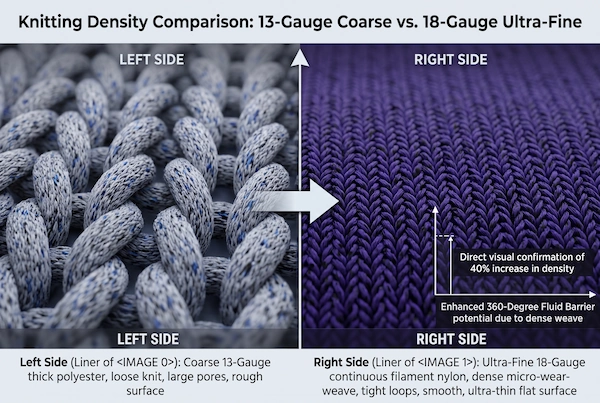
An exponential increase in loop density: An 18-gauge computerized knitting machine for gloves compresses the spacing between needle slots to an extremely narrow physical scale, resulting in a fabric with nearly 40% more loops per square inch than a conventional 13-gauge machine and approximately 25% more than a 15-gauge machine. This extremely high-density loop arrangement gives the fabric surface a fine microstructure similar to that of high-density plain weave fabric even before coating;
Use of Low-Denier Ultra-Fine Continuous Filaments: High-gauge knitting machines cannot accommodate coarse-count yarns; therefore, 18-gauge liners must use ultra-fine, high-tenacity nylon filaments (Nylon 6,6) with a linear density as low as 70D to 100D (denier). Compared to the 150D to 200D coarse-denier polyester or nylon yarns commonly used in 13-gauge gloves, the single-fiber cross-section of 18-gauge ultra-fine filaments is extremely small, almost eliminating the rough “fiber knots” that are prominent in traditional coarse knits during cutting and bending;
Precise control of impregnation thickness via an ultra-thin, microporous lining: The ultra-fine, dense knit structure significantly reduces the base thickness of the liner itself (the thickness of the uncoated liner is typically compressed to within 0.45 millimeters). The tighter, microporous loops prevent the disordered deep penetration of liquid latex into the inner layer, allowing the outer nitrile rubber layer to maintain a uniform, smooth, and ultra-thin state, thereby eliminating at the source any passive thickening of the coating caused by coarse, stiff fibers in the liner.
Four-Way Stretch Dynamics: Nylon vs. Spandex Blends
In the material matrix of an 18-gauge ultra-thin liner, continuous fibers alone cannot fully address the joint resistance workers experience when continuously flexing and extending their fingers. By comparing a pure nylon liner with a nylon-spandex blend incorporating elastic polyurethane, it is clear how different material ratios affect tactile dexterity:
Mechanical Properties of Pure Nylon Liners: Pure nylon fibers possess extremely high tensile strength and excellent surface abrasion resistance. Liners woven from 18-gauge pure nylon exhibit high dimensional stability and remain rigid when resisting scratches from burrs on small stamped parts and metal edges. However, pure nylon is a linearly elastic material; although it has excellent ultimate elongation at break, its recovery modulus is high in the low-stress tensile range (i.e., during slight finger flexion and extension), so workers will still feel slight rebound resistance when continuously clenching their fists;
Four-way stretch effect of the nylon-spandex blend: In the manufacturing of high-end precision gloves (such as styles featuring a spandex blend), ultra-fine nylon filaments are combined with 5% to 8% high-elasticity spandex (Spandex/Elastane) through a composite covering and twisting process during knitting. The molecular structure of elastane contains a polymer network with alternating soft and hard segments, endowing the 18-gauge liner with excellent four-way isotropic stretch capability;
Adaptive fit and elimination of dead zones on the fingertips: When worn, the nylon-spandex blended liner adapts like a second layer of muscle tissue, stretching to conform to the shape of the hand’s bones and creating a gentle inward pressure for a snug fit. Particularly in “dead zones”—areas where traditional gloves are prone to gaps, such as the metacarpophalangeal joints, the inner curves of the finger bones, and the lateral walls of the fingertips—the nylon-spandex lining achieves seamless adhesion, eliminating the loose, wobbly fit at the fingertips caused by excess fabric bunching.
Biomechanics of Hand Fatigue: Reducing Muscular Strain in High-Frequency Grasping
In assembly line work, assembly technicians must repeat the actions of grasping, pinching, and inserting parts an average of 3,000 to 5,000 times per shift. The fundamental reason why traditional fully-coated gloves are resisted by front-line technicians lies in the excessive muscular exertion they impose, which runs counter to ergonomic principles:
Compensation mechanism for high loads on the flexor digitorum superficialis: When the human hand grasps small objects, the primary driving force comes from the flexor digitorum superficialis (FDS) and the flexor digitorum profundus on the palmar side of the forearm. When wearing high-stiffness 13-gauge or 15-gauge thick-coated gloves, for every interdigital pinching motion a worker performs, the muscles must not only overcome the part’s own weight but also exert an additional 20% to 30% of contraction force to overcome the resistance to flexion caused by the thickened rubber layers on the back of the glove and at the joints;
Fatigue threshold revealed by electromyography data: Surface electromyography (sEMG) measurements indicate that when workers wear traditional thick rubber gloves and work continuously for more than two hours, the integrated electromyographic (iEMG) values of the forearm flexor group show an accelerated upward trend. This indicates that muscle fibers are in a state of excessive compensation and accumulated fatigue, ultimately manifesting as trembling fingertips, soreness and swelling in the palms, and a sharp decline in sensitivity to subtle gripping forces on workpieces;
Muscle Load Reduction Achieved Through Low Bending Stiffness: 18-gauge fully coated nitrile gloves, through the synergistic effect of lightweight fabric and an ultra-thin elastic rubber layer, reduce the mechanical resistance required to bend a single finger by approximately 35%. Workers can smoothly guide the gloves to conform to their fingers using minimal pinching force, significantly alleviating the persistent tension in the forearm muscle groups. This ergonomic stress relief not only substantially reduces the risk of work-related injuries such as carpal tunnel syndrome and chronic tendon strain but also enables technicians to maintain sharp hand-eye coordination even during prolonged work shifts.
Advanced 360° Immersion Engineering: Seamless Fluid Barriers Without Rigidity
In traditional industrial glove dipping workshops, “full immersion coating on the back of the hand for oil resistance” often means “the gloves lose their flexibility.” Due to the crude dipping and lifting process used in traditional fully-dipped gloves, the rubber solution—under the influence of gravity and surface tension—easily accumulates in the side seams of the fingers and between the finger webbing, forming hard, thick rubber lumps that create significant resistance when workers clench their fists or bend their fingers.
To completely break free from these physical constraints, high-dexterity 18-gauge fully coated nitrile gloves require not only the mechanical support of an ultra-fine, high-density knitted inner liner but also a comprehensive redesign of the polymer formulation and the kinetics of the fully automated dipping process. By controlling rheological properties and the film-forming interface, the entire glove achieves 360-degree, dead-angle-free protection against trace oil contamination while still maintaining the softness and smoothness of a sports glove.
Low-Viscosity Microemulsion Formulations
The first technical line of defense for achieving ultra-thin, fully encapsulating coatings begins with the precise control of the microscopic physical state of synthetic nitrile rubber latex (NBR latex) in the dipping tank. The EzGrip® fully-dipped nitrile coating developed by SQG eliminates the need for crude formulation systems that rely on high solids content and thickeners to build up thickness:
Microscopic homogenization of microemulsified latex particle size: The EzGrip® formulation employs high-pressure homogenization microemulsification technology to refine the average hydrodynamic particle size of nitrile latex particles and distribute them uniformly at the submicron level. This ultra-fine particle size not only significantly enhances the colloidal stability of the emulsion under both static and dynamic agitation but also endows the emulsion with outstanding surface wetting and penetration capabilities;
Ultra-low dynamic viscosity and rheological shear thinning: By strictly controlling the hydrophilic-lipophilic balance (HLB) of surfactants and the ratio of crosslinking agents, EzGrip® latex maintains an extremely low steady-state dynamic viscosity. Upon immersion, the latex spreads rapidly and uniformly across the outer fibers of the 18-gauge ultra-dense nylon-polyamide liner, preventing disordered penetration into the liner’s deeper layers due to capillary siphoning;
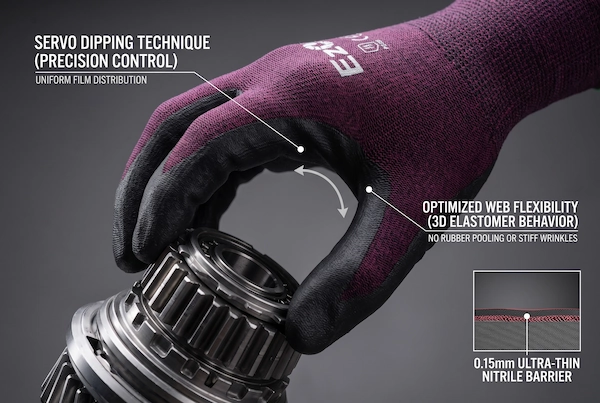
Ultra-thin, uniform film formation of 0.15 to 0.25 millimeters: This low-viscosity microemulsion ensures that the dry rubber coating thickness of the gloves, after dehydration and curing, is consistently maintained within the ultra-thin range of 0.15 to 0.25 millimeters. The ultra-thin nitrile elastomer not only preserves the rubber layer’s high elastic deformation capacity but also eliminates the rough ripples and localized crusting commonly found on the surfaces of traditional thick rubber gloves.
Variable-Speed Servo Dipping and Precision Film Application
Whether an ultra-thin coating can be evenly distributed across different curved surfaces—such as the fingertips, between the fingers, and on the back of the hand—depends on the dynamic control of the dipping and lifting process during forming. Traditional dipping lines rely on mechanical cams or chain drives for constant-speed transmission, resulting in a constant rate at which the hand mold enters and exits the resin tank. This causes the resin to flow under the influence of gravity, leading to severe sagging and accumulation at the fingertips and between the fingers:
Precise Trajectory Control via Multi-Axis Servo Motors: Modern automated 18-finger dipping production lines use multi-axis industrial servo motors to drive the hand mold frame. Throughout the entire motion cycle—from entering the latex tank, rotating to dip, remaining fully submerged, and lifting upward—the hand mold is controlled by millisecond-level variable-speed trajectory curves;
Variable-speed peeling in the web area eliminates rubber accumulation: When the hand mold is lifted out of the latex tank, the servo system executes precise acceleration, deceleration, and specific angular oscillations, using centrifugal force and controlled shear stress to rapidly peel off excess droplets from the side walls of the web. This control effectively prevents “rubber hang” accumulation at the bends between the fingers, eliminating at the source the stiff, tight, and hard-to-reach areas in the web that plague assembly workers;
Gentle, Gradual Setting and Drying with a Light Breeze: The hand mold, immediately after being lifted, enters a low-temperature setting channel. A steady, low-speed, gentle breeze uniformly dehydrates the gel, causing the ultra-thin nitrile rubber film to rapidly lose its fluidity and lock into shape before uncontrolled sagging occurs. This ensures that film thickness tolerances on the palm, back of the hand, and even the edges of the fingernails are maintained within an extremely narrow range.
Micro-Pinhole Prevention and Leak Verification
One of the primary concerns for technical supervisors in many assembly workshops is whether compressing the coating on fully-dipped nitrile gloves to a thickness of 0.15 millimeters will result in microscopic pinholes during production due to the film being too thin, leading to hidden leaks of rust-preventive oil and machine oil.
Density of the Polymer Film and Pore-Free Guarantee: Thanks to the extremely high-density needle loop arrangement of the 18-needle nylon-polyamide liner, the liner’s surface is exceptionally smooth, eliminating the physical risk of coarse fabric fuzz piercing the wet polymer film; At the same time, the EzGrip® system, combined with staged temperature-controlled baking, promotes the slow evaporation of moisture and guides the nitrile molecular chains to fully cross-link and copolymerize at the interface, completely sealing off microporous air channels caused by solvent boiling;
360-degree containment of trace oil and fluids: A continuous, seamless, ultra-thin, fully enveloping rubber membrane forms a dense physical barrier around the hand. Whether it is a residual oil film on the surface of an automotive engine block or trace amounts of industrial grease adhering during the assembly of micro-bearings, these substances are completely isolated from the glove’s outer surface. This not only protects operators from oil contamination but also prevents hand perspiration from seeping through and contaminating the surfaces of precision-machined parts;
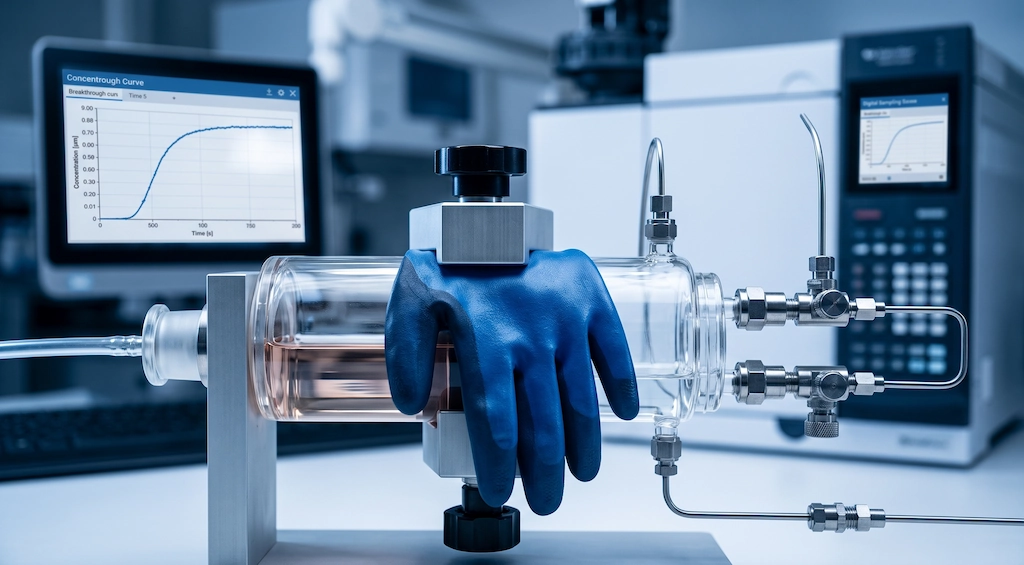
Traceability of Water- and Air-Tightness Testing Standards: To verify the impermeability performance of ultra-thin fully-coated layers in industrial-scale production, it is essential to rely on the rigorous EN ISO 374-2 air-tightness and pressurized water testing protocols, along with the AQL quality control system for batch inspection. For a systematic analysis of the causes of microscopic pinholes, hydrostatic pressure testing procedures, and the logic behind high-level watertightness testing, please refer to our earlier technical foundation document: Dual-Layer Immersion Technology Guide.
Tactile Transmission: The Neuroscience of “Second-Skin” Mechanical Feedback
In automotive powertrain fine assembly and precision hardware inspection operations, gloves are not merely a physical barrier against oil contamination; they are, in essence, a physical medium through which the sensory nerves in a front-line operator’s hands extend into the external mechanical environment.
Traditional thick rubber gloves frequently lead to assembly errors because their coarse, thick knitted fibers and rigid rubber layers form a high-damping filter that completely filters out and absorbs high-frequency microscopic physical signals from the workpiece contact surface. Modern 18-gauge fully coated nitrile gloves achieve high-fidelity, lossless transmission of mechanical stress between the inside and outside of the glove by minimizing the overall thickness of the entire glove to the utmost extent and creating a tightly fitting mechanical interface. This allows technicians to maintain fingertip sensitivity comparable to that of bare hands while being protected by a 360-degree oil-resistant barrier.
Mechanoreceptor Activation (Merkel Discs & Meissner Corpuscles)
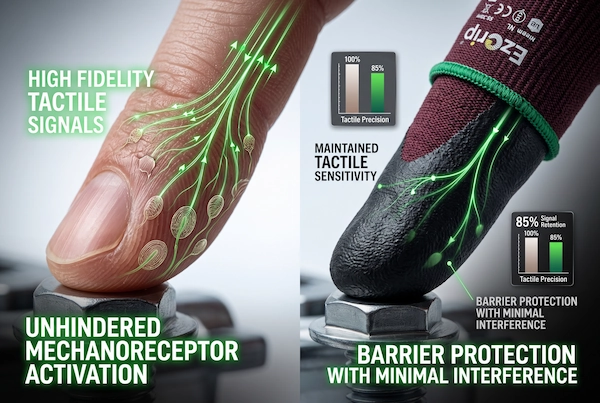
The ability of human fingertips to distinguish micrometer-scale geometric textures and differences in roughness relies on highly dense clusters of micromechanoreceptors in the dermis and subcutaneous tissue. Ultra-thin 18-gauge knitted fabrics and micrometer-scale coatings enable unimpeded physical signal transmission precisely within the physiological thresholds of these receptors:
Meissner’s corpuscles detect transient slippage: Primarily distributed in the papillary dermis, Meissner’s corpuscles are highly sensitive to low-frequency vibrations ranging from 10 to 50 hertz and are specifically responsible for perceiving momentary relative slippage and localized friction changes when a finger comes into contact with an object. 18 ultra-fine nylon-polyester inner linings conform closely to the fingertips. When a workpiece undergoes even the slightest micro-slip on the fingertip, the ultra-thin coating directly maps the shear displacement to the epidermis, triggering instantaneous nerve action potentials. This enables workers to instinctively and adaptively adjust their gripping force within a few milliseconds, preventing the workpiece from slipping out of their grasp;
Static Analysis of Microscopic Contours by Merkel Discs: Merkel discs are distributed in the basal layer and function as slow-adapting mechanoreceptors, responsible for discerning sustained pressure distributions, edge curvature, and spatial surface details. Traditional 13-gauge coarse-loop knits, due to significant deformation under their own weight, create a large mechanical buffer dead zone between the fingertip and the workpiece, resulting in severe attenuation of stimulus signals; in contrast, the high loop density of 18-gauge knits eliminates this hollow collapse, allowing the fingertip to clearly perceive microscopic chamfers as small as 50 micrometers, stamped micro-burrs, and fine polished textures on the surface of metal workpieces;
Second-skin-like strain-mechanical conformability: The elastic modulus of the nylon-spandex blend inner lining and the 0.15-millimeter ultra-thin nitrile coating closely match the mechanical properties of the soft tissue in the outermost layer of human skin. The glove stretches in sync with the deformation of the fingertip under pressure, without generating additional rebound shear forces, ensuring that the tactile feedback signals received by the nervous system are accurate and undistorted.
Preventing Cross-Threading in High-Precision Fastening
At bolt assembly stations for engine camshaft covers, transmission valve bodies, or precision hydraulic lines, the widespread use of pneumatic tools or electric torque wrenches sets extremely stringent standards for the manual perception of “pre-fastening”:
The Hidden Destructive Nature of Cross-Threading: Fine-pitch bolts, such as M3 to M6, typically have a pitch of only 0.5 to 1 millimeter. If, during the initial two to three turns of manual tightening, the bolt axis forms a slight angle with the axis of the internal threaded hole, forcing the bolt into place with a power wrench will directly crush the precision threads of the aluminum alloy cylinder block, resulting in the scrapping of the entire high-value casting and causing production line downtime;
Thick Gloves Block Perception of Thread Resistance: When assembly workers wear traditional 15-gauge or thick, rubber-coated gloves, the gloves’ thickness and elastic deformation absorb the slight resistance felt when the bolt threads align. Operators cannot detect whether the bolt is engaging smoothly and often apply force blindly while the bolt is misaligned;
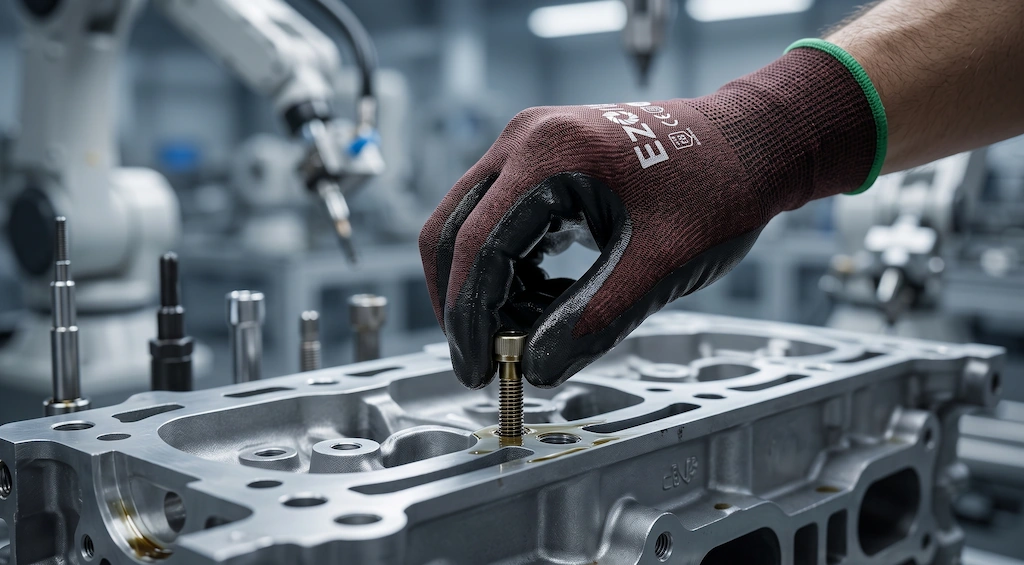
Precise fingertip sensation with 18-gauge ultra-thin coated gloves: When wearing 18-gauge fully coated nitrile gloves, operators can clearly “feel” the engagement point at the tip of the thread with their fingertips and detect subtle changes in rotational torque. Upon encountering abnormal resistance caused by misaligned threads, workers can immediately stop the machine and make fine adjustments by rotating the bolt, completely eliminating the risk of thread misalignment and jamming, and significantly improving the first-pass yield rate at complex final assembly stations.
Palm Friction Mechanics in Viscous Media
Even when gloves offer excellent tactile sensitivity, the fingertips and palms must still withstand the extreme challenges of viscous fluid dynamics on real production lines filled with engine oil, rust inhibitors, and high-viscosity greases.
Relying solely on a soft inner liner, without a corresponding microscopic friction structure on the surface, gloves will still experience uncontrolled slippage at the interface when confronted with a continuous fluid oil film. To gain a deeper understanding of how the micro-sponge architecture with open cells on the palm instantly breaks through the oil film to create a micro-vacuum grip, as well as the quantitative performance of surface roughness and shear mechanics under different fluid conditions, we recommend consulting our tribology special feature: Sandy Finish vs. PVC Dot Grip Gloves: Palm Friction Mechanics in Viscous Fluids.
Performance Matrix: 18-Gauge vs. 15-Gauge vs. 13-Gauge Precision Comparison
When selecting industrial protective gloves, many procurement departments tend to choose work safety supplies based simply on the intuition that “thicker equals more durable.” However, in modern lean manufacturing and low-lubricant assembly environments, this perception often backfires. With each increase in liner gauge, the glove’s microscopic mechanical structure, motion damping, and tactile sensitivity undergo fundamental changes.
For production line process supervisors and EHS engineers, the key to selection lies not in blindly pursuing thickness, but in precisely establishing an engineering balance between “sensitivity requirements and mechanical wear life.” Regarding the factors of greatest concern in assembly operations—thickness, dexterity rating, finger flex damping, abrasion resistance cycles, and oil-resistant coating methods—fully-dipped gloves with different gauges exhibit distinctly different performance classifications.
Multi-Variable Laboratory Benchmarking Table
To use quantitative data to dispel empirical misconceptions in product selection, the SQG Industrial Hand Protection Application Laboratory conducted a systematic, multi-parameter comparative evaluation of mainstream 13-gauge, 15-gauge, and 18-gauge nitrile-coated gloves in accordance with International Organization for Standardization (ISO) and European (EN) standards:
Total Caliper Thickness: Using a digital micrometer, a specific pressure was applied to the center of the palm to measure the overall cross-sectional thickness of the “knitted liner plus surface nitrile coating.”
ISO 21420 Dexterity Level: Using standard stainless steel cylindrical pins (diameter range: 11 mm to 5 mm), the test assesses the smallest pin diameter that an operator can continuously and accurately grasp and move within 30 seconds; Level 5 represents the highest dexterity;
Single-Finger Flexion Resistance Force: Using a multi-axis tensile and compressive force sensor, record the peak mechanical force (in gram-force, gf) required to flex the base of the glove finger inward by 90 degrees; a lower value indicates a lighter workload on the small muscles of the forearm;
EN 388 Martindale Abrasion Resistance: In accordance with Clause 6.1 of EN 388:2016, the maximum number of cycles recorded before the coating is worn through to the inner liner under a constant normal load of 9 kPa and friction with sandpaper;
Degree Oil Barrier Coverage: Assesses the ability of the glove to form a continuous oil barrier on the back of the hand, between the fingers, and around the nail edges when the hand is immersed in or exposed to oil splashes.
| Evaluation Metrics (Metric) | 13-Gauge Standard Fully Coated | 15-Gauge Dual-Layer Fully Coated (MAXGUARD P-286R) PNG | 18-Gauge Ultra-Thin Fully Coated (EzGrip® EZ-324FD) PNG | 18-Gauge Precision Palm-Coated (EzGrip® EZ-325) PNG |
| Total Thickness | 1.10–1.35 mm | 0.95–1.15 mm | 0.65–0.75 mm | 0.60–0.70 mm |
| ISO 21420 Dexterity Rating | Level 3 (minimum grip size: 8.0 mm pin) | Level 4 (minimum grip capacity: 6.5 mm pin) | Level 5 (Stable grip on 5.0 mm minimum pins) | Level 5 (Stable Grip, 5.0 mm Minimum Pin Diameter) |
| Single-Finger Flexion Force | 180–220 kli (feels firm, with noticeable resistance) | 120–150 kli (moderate, balancing structural strength) | 45–65 kli (extremely low resistance, flexible) | 35–50 kli (Approximately the same resistance as bare hands) |
| EN 388 Abrasion Test Cycles | Approx. 3,000–4,500 revolutions (Level 2–3) | Greater than 8,000 revolutions (achieves maximum Level 4) | Approx. 2,000–3,000 revolutions (to reach Level 2) | Approx. 2,000–3,000 revolutions (Reaches Level 2) |
| 360° Light Oil Barrier Performance | Fully coated, but adhesive buildup in the finger gaps can cause stiffness | 100% sealed flat rubber backing, resistant to heavy fluid erosion | 360° lightweight full immersion coating—eliminates micro-oil and prevents caking | Oil-resistant coating on palm and fingertips only; perforated back for breathability |
| Typical Recommended Work Stations | Warehouse handling of rough castings; loading and unloading of heavy-duty stamping presses | CNC machining with high-pressure fluids, heavy-duty wet machining | Automotive transmission assembly, micro-thread fastening, powertrain | Quality inspection of electronic components and light, clean assembly in low-oil environments |
Balancing Mechanical Cut/Abrasion Resistance vs. Pure Sensitivity
A comparison of the data clearly shows that there is no such thing as an all-purpose glove that can maximize both “ultimate tactile sensitivity” and “heavy-duty mechanical durability” at the same time. A scientific occupational safety solution must establish clear engineering boundaries based on the actual risks of the workstation:
Optimal Application Scenarios for 18-Gauge Ultra-Thin Gloves: 18-gauge fully coated nitrile gloves, such as the EzGrip® EZ-324FD, are designed to enhance technicians’ fingertip sensitivity and freedom of fine motor control. In workstations such as automotive engine wiring harness assembly, precision instrument panel connector installation, pre-tightening of micro-hardware threads, and the application of trace amounts of anti-rust oil—where workpiece edges are neat and external impact is minimal, yet assembly precision is extremely high— In these situations, the 18-gauge gloves’ extremely low flex resistance and high dexterity maximize first-pass yield rates and eliminate the critical safety hazard of workers removing their gloves due to clumsiness—a violation of safety protocols;
The Critical Limit for Heavy-Duty and Sharp-Edge Stamping Conditions: Because the nylon-polyamide filaments used in the 18-gauge liner are relatively fine, with an overall thickness controlled at around 0.7 millimeters, they lack the physical resilience required to withstand severe abrasion and sharp mechanical tearing. If 18-gauge gloves are forced into use at workstations handling unpolished castings with numerous sharp burrs, during outdoor repairs of damaged iron ore pipelines, or in cutting operations involving high-load, heavy-duty stamping, the extremely thin coating and fibers will rapidly wear out and tear under microscopic shear forces;
Staged Rotation and Rational Allocation of Supplies: For heavy-duty rough machining operations involving high exposure to cutting fluid and workpieces with numerous burrs, operators should decisively switch to models featuring a higher-grammage polyester skeleton and a thickened double-dip coating (such as MAXGUARD P-286R); Conversely, for precision machining operations involving minimal oil and emphasizing assembly efficiency and tactile feedback for positioning micro-parts, 18-gauge high-elasticity fully-dipped gloves must be universally mandated as standard equipment. This tiered approach based on working conditions ensures workshop safety compliance and enables precise, controllable management of occupational safety and health costs.
The EzGrip® Precision Workstation Matrix
In the complex automotive industry and high-tech manufacturing systems, working conditions in assembly shops are often not uniform or homogeneous. Even when workers are exposed to trace amounts of stamping oil and grease, there are significant differences between workstations in terms of motion frequency, hand flexion and extension angles, ambient temperature and humidity, and the patterns of oil and grease splatter. A “one-size-fits-all” approach to providing personal protective equipment (PPE) designed for coarse particles not only leads to material waste but also increases the likelihood of improper handling at precision workstations.
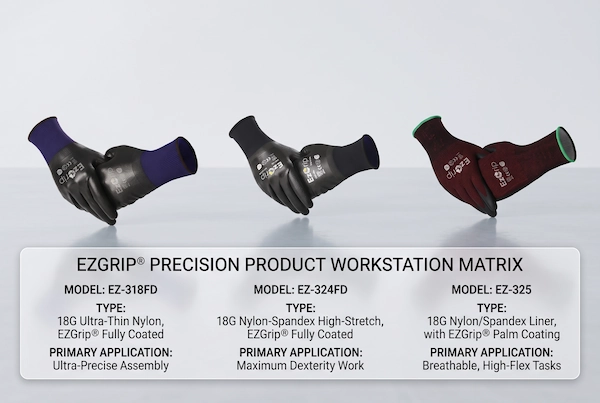
SQG’s EzGrip® Precision Hand Protection Matrix is built on a groundbreaking 18-needle micro-knitted architecture. By fine-tuning the blend ratio of fibers and the area of impregnation and coating, it is specifically tailored to meet the demands of precision manufacturing workstations on the front lines, achieving a precise balance between 360-degree oil barrier protection and tactile nerve conduction.
Ultra-Lightweight 360° Barrier: EzGrip® EZ-318FD
For technicians who frequently handle stamped metal parts, thread wire harnesses through holes, and connect lightweight chassis components in mildly oily environments, gloves must not only be oil-resistant but also withstand constant micro-friction from the edges of workpieces:
18-Gauge High-Tensile Pure Nylon Knitted Liner: The EZ-318FD is precision-knitted from ultra-fine filament pure polyamide (Nylon 6,6). Pure nylon fibers offer extremely high tensile strength and inherent resistance to flex fatigue, providing a glove that feels nearly as thin as paper while delivering excellent resistance to stretch deformation and structural stability;
360-Degree Full-Coverage EzGrip® Sealed Coating: The glove is fully impregnated with controlled micro-emulsified nitrile rubber, extending from the palm to the back of the hand and the edges of the fingernails, forming a uniform, leak-free barrier against fluids. When faced with thin layers of cutting oil, rust-preventive grease, and low-viscosity lubricants that adhere during assembly, the fully enveloping coating completely seals off reverse permeation pathways, keeping the inner liner fibers dry for the long term;
A cost-effective, lean manufacturing solution: A pure nylon skeleton combined with an oil-resistant outer layer gives the EZ-318FD both long-lasting abrasion resistance and a lightweight, nimble feel, making it particularly suitable as a standard-issue glove for large-scale deployment in modern hardware manufacturing, post-stamping assembly, and general automotive parts production. For complete mechanical performance and oil resistance specifications, please refer to the product details page: EZ-318FD Fully Coated Glove.
Second-Skin Stretch & Fluid Tightness: EzGrip® EZ-324FD
When switching to tasks such as the fine assembly of engine cylinder heads, precision meshing tests for planetary gearboxes, or the assembly of micro-hydraulic valve spools, technicians require an almost exacting level of tactile sensitivity. In these situations, any error in fingertip positioning caused by gaps inside the glove is unacceptable:
Nylon-Spandex Four-Way Stretch Bionic Liner: The EZ-324FD ingeniously integrates high-resilience polyurethane elastic fibers (Spandex) into an 18-gauge knitting process. The liner dynamically adapts to the microscopic palm-to-finger contours of the operator’s hand, eliminating the excess material gaps and slippage commonly found at the fingertips and web of the hand in traditional gloves;
Micron-Level Full-Immersion Lightweight Nitrile Coating: Combined with precise impregnation using ultra-low-viscosity adhesive, the EZ-324FD provides a 360-degree micro-oil isolation barrier across the entire hand while keeping overall finger flexion and extension resistance at an extremely low level. The moment the fingertip lightly touches a part, it can unimpeded transmit the thermal sensation of metal and the pre-engagement resistance of threads to the mechanical receptors in the dermis;
Eliminates the pain point of “removing gloves to gain dexterity”: With a “second-skin” fit that feels virtually bare, workers can effortlessly grasp and quickly align even M3-grade fine bolts and extremely small locating pins. This completely breaks the dangerous habit that precision assembly must be done bare-handed, making it an essential tool for high-cleanliness powertrain and automated in-line assembly. For detailed specifications on gloves for micro-oil final assembly, please refer to: EZ-324FD High-Flex Glove.
High-Dexterity Dry-Back Ventilation: EzGrip® EZ-325
Not all precision tasks involving minimal oil require the back of the hand to be fully enclosed. In summer assembly workshops with limited ventilation, on high-cycle, lightweight hardware visual inspection lines, or at precision electronic component assembly stations, the buildup of hand sweat and stuffiness on the back of the hand is often the primary cause of fatigue:
Ergonomic Balance Between Palm Oil Repellency and Natural Heat Dissipation on the Back of the Hand: The EZ-325 features an ergonomic “Palm Dipped” design. The EzGrip® oil-resistant, anti-slip coating is precisely applied only to the palm—where frequent contact with workpieces occurs—and the fingertips, while the entire back of the hand and the dorsal sides of the knuckles retain the natural open-cell structure of the 18-gauge seamless nylon-polyester lining;
Active Moisture-Wicking Mechanism for the Hand’s Microclimate: The high-density sweat glands on the back of the worker’s hand utilize natural convection through the uncoated fabric to rapidly dissipate moisture and heat. This keeps the palm interior cool and free of stickiness even during all-day wear, eliminating at the source the eczema and white blanching commonly experienced by new workers in high-temperature environments;
The benchmark for anti-slip performance on micro-oiled surfaces and micro-component quality inspection: The lightweight coating on the palm quickly penetrates and disperses trace oil films on the surfaces of metal parts, providing high-damping anti-slip support. At the same time, the fully open back of the hand grants the hands nearly unrestricted freedom of flexion, making it particularly suitable for processes that demand extreme breathability and agility—such as dimensional verification of micro-stamped metal parts, bearing appearance inspection, and electronic component assembly. To view specification details and test data, please visit: EZ-325 Palm Coated Glove.
Safe Operating Boundaries: When to Escalate Hand Protection
In the occupational health and safety (EHS) management systems of modern manufacturing plants, no single type of personal protective glove can handle all industrial fluid conditions. The engineering purpose of 18-gauge fully coated nitrile gloves is very clear: they are a lightweight protective solution specifically developed for fine assembly scenarios involving minimal oil, minimal dry conditions, and situations requiring extremely high tactile sensitivity.
However, in actual shop floor operations, confusion over the conceptual boundaries between “oil-resistant and slip-resistant” and “heavy-duty chemical-resistant/high-pressure immersion-resistant” often leads to the forced use of ultra-thin assembly gloves in workstations subject to continuous cutting fluid exposure or even strong solvent cleaning. This frequently results in damage to the rubber coating, rapid glove failure, and skin ulcers among operators. To maintain the minimum safety standards in the workshop, company safety officers and production team leaders must establish a rigorous “PPE Escalation” early warning mechanism.
Trace Oils & Lubricants vs. Continuous Coolant Immersion
To understand the protective limits of 18-gauge ultra-thin fully-immersed gloves, it is essential to first make a clear distinction based on the physical distribution and pressure loads of the working environment media:
Safe operating range for 18-gauge fully-dipped nitrile gloves (Trace Oil Regime): For trace amounts of rust-preventive oil films adhering to the surfaces of machined parts, ISO VG 32/46 mineral hydraulic oil residues from hydraulic component assembly, high-viscosity calcium-based/ lithium-based grease applied to the inner and outer rings of bearings, as well as occasional fine oil droplets from splashes, the single-layer, sealed rubber membrane of 18-gauge fully-dipped nitrile gloves provides stable, reliable 360-degree isolation protection. The rubber layer is not softened by lubricants and prevents oil contamination from penetrating the inner liner and coming into contact with the worker’s skin;
Failure Mechanism Due to Continuous Cutting Fluid Washout and Immersion (Continuous Immersion Trap): When the workstation moves to the internal machining area of a CNC machine tool, a workpiece cleaning tank, or a high-flow water-based emulsified coolant circulation rinse section, the environmental conditions undergo a fundamental change. Industrial cutting fluids are rich in surfactants that significantly reduce surface tension and are subject to flow pressure and frequent friction. Although the ultra-thin, single-layer rubber membrane of 18-gauge gloves is only about 0.2 millimeters thick and has no visible pinholes, its margin of resistance to penetration is relatively limited under the combined effects of prolonged immersion in high-pressure fluid and mechanical micro-scratching from workpiece edges;
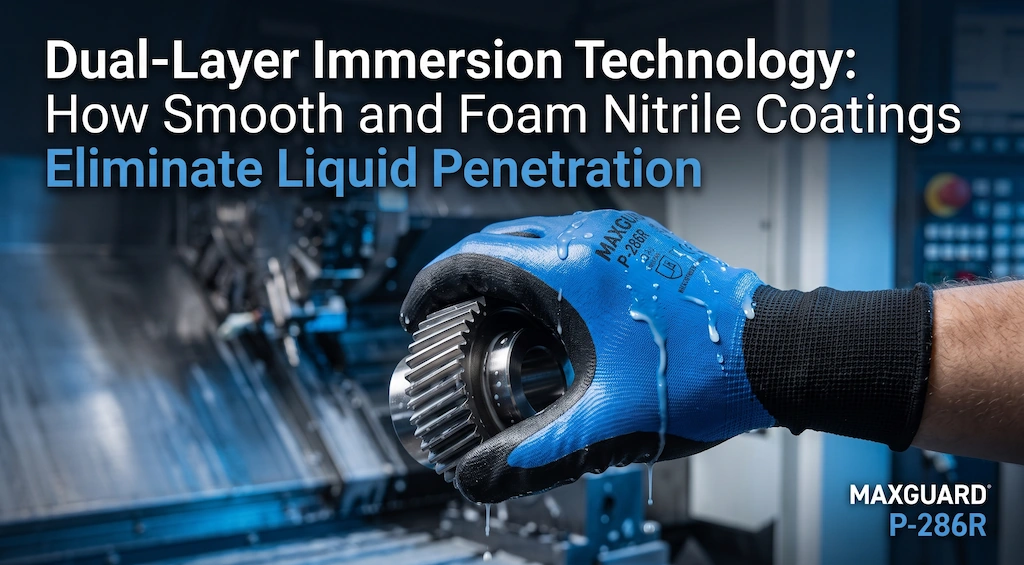
Criteria for upgrading to double-layer, fully-immersed heavy-duty protection: As soon as the workstation environment exhibits any of the following conditions—“both hands must frequently be immersed in the coolant tank to retrieve parts,” “coolant flows continuously in a water curtain over the workpiece surface,” or “there are large amounts of metal debris from unmachined castings”— the workshop must immediately activate the protective upgrade protocol, switching from the 18-gauge lightweight model to professional double-dipped gloves (such as MAXGUARD P-286R) featuring a 15-gauge tough skeleton, a smooth rubber base layer, and a microporous foam outer layer. The thick, dense, smooth rubber base layer provides an absolute physical barrier against water pressure, resisting continuous penetration by heavy fluids.
Chemical Escalation Protocols for Aggressive Solvents
In addition to physical wetting pressure, the chemical properties of the media encountered at workstations are a critical factor that can make or break glove material performance. At the end of many assembly lines, workers often use strong cleaning solvents without authorization to wipe down parts and remove adhesives, grease, or paint from metal surfaces—a practice that can instantly destroy the cross-linked structure of nitrile molecules:
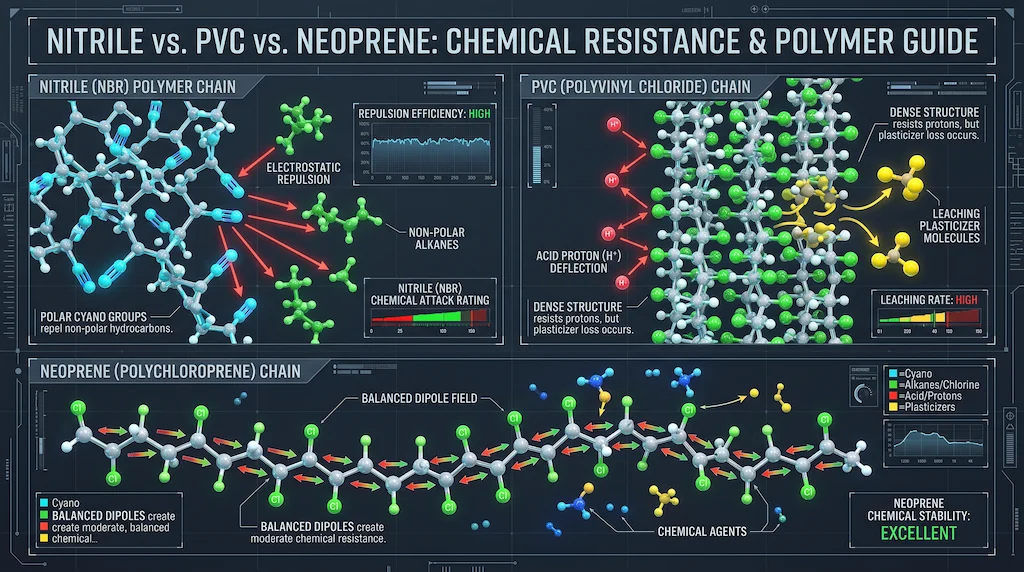
The Natural Advantage of Polar Nitrile Against Nonpolar Aliphatic Hydrocarbons: Nitrile rubber (NBR) molecules contain highly polar cyano groups (-CN) in their main chains, giving them a natural repulsive and resistant capacity against nonpolar aliphatic hydrocarbon mineral oils such as diesel, motor oil, and grease; the molecules do not mix;
Irreversible swelling and disintegration caused by aromatic hydrocarbons and ketone solvents: However, if industrial cleaners or thinners used on-site contain aromatic hydrocarbons such as toluene or xylene, or highly polar solvents such as acetone or methyl ethyl ketone, the chemical properties of these solvent molecules are similar to those of nitrile. The extremely thin 18-gauge nitrile coating rapidly absorbs solvent molecules within minutes of contact, causing severe volume swelling (Polymer Swelling). The rubber layer becomes soft, mushy, and sticky like jelly, completely losing its mechanical strength. It is easily torn or punctured by parts, allowing the solvent to directly irritate the operator’s skin;
Upgraded Standards for Concentrated Inorganic Acids, Strong Alkalis, and Severe Chemical Conditions: When facing high-temperature etching with strong acids, degreasing and cleaning with strong alkalis, or the handling of high-concentration hazardous chemicals, no knitted liner-type coated gloves are permitted for protection. It is mandatory to upgrade to heavy-duty industrial chemical-resistant long-sleeved gloves featuring longer protective cuffs and made from acid- and alkali-resistant polymer materials through one-piece molding.
To systematically understand the molecular degradation mechanisms of different polymer elastomers (nitrile, PVC, neoprene) when exposed to hydrocarbon lubricants, organic solvents, and concentrated inorganic acids and alkalis, and to access a detailed comparison table of CAS registry numbers and resistance ratings, please refer to our specialized guide on polymer chemical protection: Nitrile vs. PVC vs. Neoprene: Chemical Resistance & Polymer Guide.
Production Line Economics: The True Total Cost of Ownership (TCO) of Eliminating Glove Non-Compliance
In supply chain accounting for industrial manufacturing, many procurement managers tend to view personal protective equipment (PPE) as merely an expense for consumables, focusing solely on achieving the lowest possible unit price on purchase orders. However, in automotive OEMs and high-end parts manufacturing facilities operating under lean principles, gloves are never merely an isolated material cost; rather, they are a fundamental variable that directly impacts the assembly yield rate of the entire production line, labor hour losses, and work stoppages due to workplace injuries.
The violation committed by front-line operators—who remove their gloves without authorization because they are too thick and inflexible—is, in essence, a systemic loss caused by a disconnect between the company’s selection of PPE and the ergonomics of the workstation. Switching to 18-gauge fully coated nitrile gloves—which offer superior fit and dexterity—may appear to be only a minor adjustment to the procurement budget. However, when measured from the perspective of the Total Cost of Ownership (TCO) for the factory’s overall operations, the comprehensive economic returns far exceed the book value of the gloves themselves.
Reductions in Scrap Rates from Cross-Threading and Part Drops
Modern high-speed assembly lines impose extremely stringent takt time controls on individual workstations. When assembly workers wear traditional 13-gauge or 15-gauge thick-coated gloves to handle micro-fasteners, the hidden quality losses caused by diminished tactile sensitivity often directly erode the factory’s net profit:
Preventing Scrap of Expensive Castings Caused by Misaligned Micro-Bolts: During the installation of transmission hydraulic valve plates, engine camshaft covers, and sensor bases, if M3 to M6 micro-bolts become seized due to misaligned threads, the rework costs are extremely high. If workers cannot sense the tactile feedback as the threads engage and force the bolt in using power tools, the consequences range from stripped threads in the bolt hole to, in severe cases, cracks in the entire aluminum alloy die-cast housing, rendering it scrap. Ultra-thin 18-gauge gloves allow operators to clearly assess thread alignment through the sensitivity of their fingertips, significantly reducing the scrap rate of precision mechanical components caused by human error;
They also prevent paint damage and dynamic balance issues caused by small parts slipping and colliding: precision-polished gears and bearings, miniature high-pressure solenoid valves, and micro-hardware components with critical sealing surfaces are extremely sensitive to surface scratches. Heavy gloves are prone to slipping and losing grip when handling small, slippery parts coated with a thin film of oil; when workpieces fall onto steel workbenches or concrete floors, they often sustain edge damage from impacts, rendering them unable to pass factory dynamic balance or liquid tightness inspections. An 18-gauge high-density nylon-polyamide liner combined with an ultra-thin, fully enveloping rubber film eliminates fingertip play and wobble, enabling precise and decisive pinching and holding motions during assembly, thereby significantly reducing scrap losses caused by parts falling to the ground;
Accelerated production cycle times and reduced rework hours across the entire line: Assembly workers no longer need to repeatedly test or pause to confirm alignment when threading screws or inserting micro-latches. The restoration of fingertip sensitivity directly shortens the auxiliary time required for each assembly, reduces inefficient labor associated with post-production re-inspection, disassembly, and reassembly, and secures a significant increase in effective production capacity for large assembly lines.

Dermatitis Mitigation and Reduction of Lost-Time Incidents
In addition to direct material scrap, unplanned lost-time incidents caused by non-compliant gloves pose a significant management risk in EHS audits for large manufacturing enterprises:
Eliminate occupational contact dermatitis caused by prolonged exposure to trace amounts of oil: Frontline assembly workers are constantly exposed to mineral lubricants, rust-preventive greases, and trace amounts of cleaning agents. If they use conventional gloves lacking a 360-degree oil-resistant barrier, the grease that seeps into the lining will rapidly emulsify and degrade in the warm, sweaty environment. Prolonged exposure damages the skin’s stratum corneum barrier, triggering recurrent contact dermatitis such as redness, cracking, and eczema. The 18-gauge fully-immersed coating forms a continuous, seamless fluid barrier around the hands, effectively blocking contact between chemical droplets and the skin, and significantly reducing the frequency of dermatology clinic visits and sick leave due to job rotation in assembly workshops;
It completely breaks the chain of mechanical injuries caused by workers removing gloves without authorization: Statistical data shows that more than 70% of minor scratches from stamped edges, puncture wounds from burrs, and pinching or twisting injuries between fingers at precision assembly stations occur the moment workers remove their gloves to perform tasks barehanded. The primary reason workers remove their gloves is that they find them “too bulky to work in,” but the 18-gauge ultra-thin, biomimetic, form-fitting gloves have completely eliminated this excuse. The significant increase in workers’ willingness to wear gloves around the clock has directly eliminated dangerous periods of unprotected, bare-handed exposure;
Systematic optimization of corporate workers’ compensation and accident insurance expenditures: By reducing the rate of first-aid bandaging, preventing infections from minor hand injuries, and eliminating the risk of production line stoppages due to operational errors, companies have significantly reduced their hidden sunk costs related to occupational health. In the year-end occupational safety and health cost calculations of large manufacturing enterprises, the implementation of 18-gauge, high-dexterity, fully-dipped gloves designed for fine motor tasks typically results in savings from improved overall production line safety and quality that exceed the annual budget for occupational safety and health supplies by several times.
Technical FAQ: 18-Gauge Fully Coated Nitrile Gloves in Practice
When introducing new protective equipment on the front lines of a manufacturing floor, both production team leaders and EHS (Environmental, Health, and Safety) specialists often encounter scrutiny and skepticism from operators regarding the “new gloves.” When introducing 18-gauge fully coated nitrile gloves for precision assembly applications, workers’ primary concerns typically center on whether the back of the hand feels stiff after full coating, whether the fingertips can discern fine threads, whether the gloves feel stuffy in summer, and how to clean and maintain them to extend their service life.
This section compiles the most frequently asked technical questions based on frontline feedback regarding industrial precision assembly and low-oil applications. It provides systematic answers from the perspectives of fiber mechanics, coating rheology, and occupational health to help companies successfully iterate and upgrade their protective solutions.
Can an 18-gauge glove truly provide a 360-degree liquid barrier without feeling like a rigid household rubber glove?
This is a classic misconception based on outdated experience. Traditional household latex gloves or heavy-duty industrial chemical-resistant gloves often rely on increasing coating thickness to achieve maximum chemical barrier time, resulting in a thick, stiff rubber layer with no flexibility whatsoever.
The 18-gauge ultra-thin fully-dipped nitrile gloves employ a completely different film-forming engineering approach:
At its core lies the “ultra-thin nitrile microemulsion” film-forming technology: SQG’s EzGrip® fully-dipped process does not rely on building thickness through solid content accumulation, but instead utilizes a low-viscosity, high-flow nitrile microemulsion system. This emulsion adheres uniformly and extremely thinly to the 18-gauge ultra-fine nylon-spandex liner, with the thickness of the cured elastomer coating controlled between 0.15 and 0.25 mm. Because the rubber film is so thin, the interfacial resistance of its molecular chains during deformation is extremely low, eliminating the feeling of stiffness and rigidity;
The dynamic low-damping properties of the 18-gauge knit fabric: The 18-gauge liner features an extremely fine and high-density knit structure, preventing localized stress concentrations in the wet rubber film during vulcanization that would otherwise result from a coarse, rigid fabric framework. The entire glove undergoes linear deformation in response to the hand’s gripping motions, eliminating the “stiff, fixed creases” commonly found in traditional fully-dipped gloves. While providing 360-degree protection against oil splashes, it maintains a lightness and smoothness comparable to that of athletic gloves.
Why do assembly workers frequently cross-thread fine bolts when wearing standard 15-gauge gloves, but not when wearing 18-gauge gloves?
This is a clear example of the physics of tactile perception in industrial assembly; the root cause lies in how gloves of different gauges affect the activation threshold of the “mechanoreceptors” in the fingertips.
When performing pre-fastening operations on precision threads such as M4 and M5, assembly workers must rely on their fingertips to discern subtle resistance differences of approximately 0.5–0.8 mm in thread pitch:
The tactile filtering effect of 15-gauge knit fabric: The yarn in a standard 15-gauge liner is relatively thick, and the loop structure formed at the fingertips provides high physical damping. This thick layer of fabric acts like a mechanical wave filter, absorbing the high-frequency, faint vibration signals generated during thread pre-engagement, preventing the Meissner corpuscles in the dermis from detecting instantaneous changes in rotational resistance. Workers experience numbness in their fingertips and are unable to sense whether the bolt is centered, forcing them to tighten it blindly—a situation that is highly prone to causing cross-threading;
High-fidelity signal transmission of the 18-gauge ultra-thin liner: The 18-gauge high-density liner is extremely light and thin, eliminating the mechanical gap between the fingertip and the workpiece. A thin coating with a thickness of 0.15 mm reliably and non-destructively transmits the extremely subtle resistance feedback generated during thread alignment to the dermis of the assembler’s fingertips. Operators can instantly determine whether the bolt is screwing in smoothly for two to three threads, thereby eliminating at the source the scrapping of high-value cylinder blocks caused by slipping or stripped threads.
How should workshops decide between the fully coated EZ-324FD and the palm-coated EZ-325 in warm climates?
In workshops during hot summers or in environments with limited ventilation, protective compliance often must be balanced against workers’ ergonomic comfort. For precision applications involving minimal oil exposure, the selection decision must be based on the actual fluid risk profile at the workstation:
Selection Criterion 1: Oil Splash Pattern (Fluid Exposure Mode)
If the workstation involves intermittent, all-directional oil splashes (e.g., standing next to an automated machine tool, or needing to insert the entire hand into the interior of machinery containing trace amounts of oily sludge), it is mandatory to select a 360-degree fully-coated style, such as the EZ-324FD fully coated gloves, to ensure that the back of the hand and between the fingers are not contaminated by oil seepage;
If the workstation involves only handling workpieces with a thin film of oil on their surfaces, and the back of the hand has virtually no contact with the oil, prioritize the palm-coated style EZ-325, which establishes an oil-resistant and slip-resistant barrier only on the palm and fingertips.
Selection Criterion 2: Thermal Comfort and Skin Integrity
In hot climates, prolonged use of 360-degree enclosed gloves can lead to sweat accumulation on the back of the hand, potentially causing maceration, eczema, or even occupational contact dermatitis. The EZ-325 palm-dipped gloves retain the open-knit structure of the 18-gauge inner liner on the back of the hand, utilizing natural convection to actively wick away moisture and dissipate heat from the hand’s microclimate. This significantly reduces workers’ feelings of hand soreness, swelling, and stuffiness, thereby comprehensively improving compliance and willingness to wear the gloves during long work shifts.
What is the standardized laundering procedure to maintain spandex elasticity without coating delamination?
18-gauge nylon-spandex blend fully-dipped gloves offer excellent mechanical abrasion resistance and are fully suitable for standardized, centralized industrial batch washing and repeated use. However, the washing process must strictly adhere to the physical properties of the polymer materials; otherwise, it can easily lead to the aging of elastic fibers and loss of resilience, or even cause the coating to peel off:
Key Parameter 1: Strictly Control Water Temperature (Temperature Control)
The washing water temperature must be strictly maintained below 40°C. Excessively hot water accelerates thermal degradation of the high-elasticity spandex molecules in the liner, causing the gloves to become stiff after washing, lose their four-way stretch capability, and fail to achieve the snug “second-skin” fit again;
Key Parameter 2: Use a Neutral Detergent; Do Not Use Bleach (Neutral Detergent)
The use of bleach containing free chlorine, strongly acidic degreasers, or highly alkaline cleaning agents is strictly prohibited. Chloride ions and strong oxidizing agents attack the cross-linking points of the nitrile molecular chains, reducing the toughness of the rubber membrane and increasing the risk of delamination. You must use a neutral industrial detergent with a pH of 6–8 to gently emulsify and wash away accumulated machine oil and grease from the surface;
Key Parameter 3: Gentle Wash Cycle and Low-Heat Air Drying (Gentle Cycle & Low Heat Dry)
Set the washing machine to a low-to-medium spin cycle to avoid vigorous centrifugation and intense mechanical agitation that could damage the delicate stitching of the lightweight inner liner. After washing, gloves should be placed in a cool, well-ventilated area to air-dry naturally, or dried in a dryer set to a temperature below 60°C. Under no circumstances should gloves be placed in a high-temperature oven or on steam pipes to dry, to ensure the long-term stability of the watertight and airtight properties of the fully enclosed adhesive layer.
Upgrade Your Assembly Line Ergonomics (CTA)
In modern automotive powertrain, high-end electromechanical, and precision hardware manufacturing systems, the selection and upgrade of any personal protective equipment (PPE) cannot be based solely on specifications listed on product datasheets. The actual load-reduction effectiveness of gloves, the precision of tactile feedback, and workers’ willingness to wear them continuously must undergo rigorous ergonomic validation under real-world working conditions and on actual assembly lines.
As a source manufacturing base specializing in industrial-grade, high-precision hand protection, SQG leverages fully automated 18-needle computerized knitting clusters and servo-controlled micro-emulsion impregnation production lines to provide global industrial distributors, large-scale manufacturing and assembly plants, and system integrators with end-to-end engineering-level support—ranging from on-site trial fitting at frontline workstations and technical audits to bulk procurement by the container load.
Request an EzGrip® Workstation Trial Pack for Tactile Audits
If your assembly line is facing challenges such as high scrap rates due to misaligned bolts or stripped threads, frequent slippage of lightly oiled parts from workers’ hands, or frontline operators improperly removing gloves due to bulkiness, we recommend immediately conducting a small-scale, hands-on ergonomic comparison audit (Tactile Audit) at representative workstations:
Targeted Sample Matrix Configuration: SQG has opened a dedicated channel for certified automotive OEMs, engine/transmission assembly shops, precision bearing manufacturing facilities, and 3C electronics assembly lines to request exclusive engineering sample kits. The kits contain the following targeted configurations:
EZ-318FD (18-gauge high-tenacity pure nylon + 360-degree micro-oil barrier, suitable for high-frequency hardware assembly with minimal oil);
EZ-324FD (18-gauge nylon-spandex four-way adaptive fit + fully-dipped lightweight nitrile, designed for precision engine final assembly);
EZ-325 (18-gauge polyamide-nylon liner + palm-dipped micro-oil anti-slip coating, designed to address stuffy summer workshop conditions and high-frequency visual quality inspections).
Multi-dimensional guidelines for quantitative production line evaluation: The engineering sample boxes come with a standardized “Workshop On-Site Ergonomic Evaluation Form,” which assists production process engineers and EHS specialists in conducting real-world data comparisons of the three glove models across a continuous 72-hour production shift. Key metrics evaluated include thread insertion sensitivity, single-item grip stability, forearm muscle fatigue, and oil resistance and reverse permeation lifespan. These measured data guide the scientific allocation of designated personal protective equipment.
Factory-Direct OEM Specifications & Container Volume Sourcing
For large industrial buyers and brand procurement directors seeking long-term cost reduction and efficiency improvements, bypassing intermediary trade channels and connecting directly with smart manufacturing factories at the source is the most effective way to balance procurement budgets with consistent quality:
Modern, High-Capacity, Fully Automated 18-Needle Production: SQG operates a large-scale, high-precision 18-needle computerized glove knitting workshop equipped with a multi-axis servo temperature-controlled dipping line using micro-emulsified, low-viscosity nitrile rubber. The production process features automatic tension correction for fiber loops and real-time monitoring of film thickness, ensuring that every batch of gloves leaving the factory meets strict consistency standards for grammage, elastic modulus, and 360-degree leak-proof performance;
Proven Bulk Export and Full Container Load (FCL) Solutions: The factory has thoroughly optimized the packaging structure for ultra-thin knitted gloves, offering high-density container loading calculation services for standard 20GP and 40HQ high-cube containers, significantly reducing per-unit and per-container freight costs for both ocean freight and inland trunk logistics;
Comprehensive OEM/ODM Industrial Brand Customization: We support global brand clients and large manufacturing groups with personalized engineering customization, including wrist color-coded management (Size-Specific Overlock Color Binding), screen-printed brand logos on the back of the hand for abrasion and oil resistance, multilingual barcode hangtags, and integrated eco-friendly heat-shrink film packaging. We are fully committed to helping our partners build localized, professional PPE brand influence.
Contact our industrial safety engineering team today to assess your assembly environment and receive a free, factory-direct engineering sample kit: Request a Precision Workstation Trial Pack.