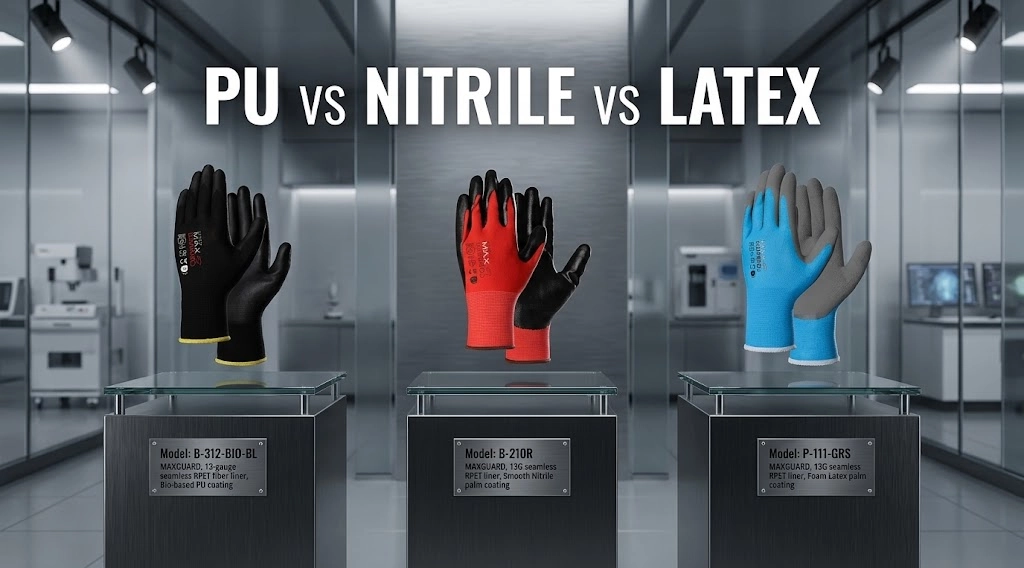
When evaluating pu coated vs nitrile vs latex work gloves for centralized procurement in modern discrete manufacturing and precision assembly workshops, operations teams often fall into two extreme pitfalls. One involves distributing heavy, foam-lined nitrile gloves to all workstations in pursuit of maximum abrasion resistance, which restricts finger mobility and impairs the handling of small components; the other involves purchasing cheap natural latex gloves to minimize initial costs, resulting in sticky degradation, flaking, and allergic contact dermatitis on micro-assembly lines.
When evaluating the comprehensive performance and procurement criteria of PU-coated, nitrile, and latex work gloves, companies must move beyond a simple price-comparison approach and thoroughly weigh the physical properties of the coating polymers. Thanks to its ultra-thin, microporous film structure, extremely high mechanical ductility, and “bare-hand” tactile precision—providing feedback nearly identical to that of bare hands—polyurethane (PU) coating has established an irreplaceable, central role in processes such as 3C consumer electronics assembly, semiconductor packaging, optical lens calibration, and the insertion and removal of precision automotive wiring harnesses. Compared to thick, heavy rubber coatings, PU coatings eliminate the elastic resistance of the material that hinders fine motor control, allowing workers to maintain acute hand sensitivity and a steady production rhythm even during continuous, high-frequency micro-manipulation tasks lasting several hours.
This guide provides a multidimensional engineering comparison of PU, nitrile, and latex gloves across various criteria, including polymer molecular properties, fingertip sensitivity for fine motor control, grip strength in dry, wet, and light-oil conditions, chemical resistance limits, cleanroom particle control (lint-free), and total cost of ownership (TCO). It is designed to help industrial manufacturing companies overcome selection challenges and precisely match protective requirements for specific workstations.
Before conducting a systematic material comparison, we recommend reviewing our core product category page, Precision PU Palm-Coated Work Gloves Direct from Manufacturer, to gain a comprehensive understanding of the standardized processes and customizable specifications for filament seamless knitted linings and eco-friendly bio-based PU coatings in high-end precision manufacturing applications.
Polymer Chemistry: Core Physics of PU, Nitrile, and Latex Formulations
In the field of industrial hand protection, the protective barrier and performance of coated gloves are fundamentally determined by the molecular structure and film-forming mechanics of the polymers. Differences in chemical cross-linking mechanisms, microscopic porosity, and elastic modulus among polyurethane (PU), nitrile rubber (NBR), and natural latex (NRL) directly determine a glove’s tactile feedback, oil resistance, and physical and mechanical lifespan in the workplace.
Polyurethane (PU): Ultra-Thin Microporous Film and “Bare-Hand” Tactile Precision
Polyurethane (PU) is a thermoplastic or thermosetting elastomer produced by the polymerization of isocyanates and polyols. During the precision dip-coating process for gloves, PU exhibits unique microstructural advantages:
Microporous Film Formation Mechanism: During the wet curing process, PU resin spontaneously forms a uniformly distributed micron-scale microporous structure. This allows the coating thickness to be precisely reduced to the 0.2–0.4 mm range, ensuring a tight fit over the fiber lining while maintaining extremely high breathability and low grammage.
Low-modulus compliance and near-bare-hand tactile feedback: PU molecular segments possess excellent flexibility and a low Young’s modulus, resulting in minimal mechanical damping during finger flexion and extension or when pressure is applied to the fingertips. When worn, workers can perceive the contours and surface textures of micro-components as small as 0.5 millimeters without any delay, achieving true “bare-hand” tactile precision.
Nitrile Butadiene Rubber (NBR): High-Density Hydrocarbon, Oil, and Puncture Barrier
Nitrile butadiene rubber (NBR) is a synthetic rubber produced by emulsion polymerization of acrylonitrile and butadiene. Its core physical advantages lie in its resistance to oil-based media and its high mechanical toughness:
Oil-Resistant Barrier Formed by Polar Cyano Groups: The highly polar cyano groups (-CN) on the main chain of the nitrile polymer confer extreme chemical inertness to the coating against nonpolar mineral oils, synthetic cutting fluids, motor oils, and hydrocarbon solvents. The coating is resistant to swelling, softening, dissolutionn, or peeling when immersed in or exposed to oil contamination.
Highly Dense Protective Layer Formed by Vulcanization and Cross-linking: After cross-linking and vulcanization, the nitrile coating possesses extremely high tensile strength and tear resistance, effectively blocking localized puncture points caused by sharp metal burrs, debris, and wire. However, the relatively dense rubber layer structure also makes nitrile glove coatings thicker and stiffer when bent, resulting in lower dexterity compared to ultra-thin PU gloves during extremely precise assembly operations.
Natural Rubber Latex (NRL): High-Elasticity Tensile Grip and Heavy-Duty Tear Resistance
Natural rubber latex is a natural emulsion of cis-1,4-polyisoprene obtained by tapping the sap of the three-lobed rubber tree. It is characterized by extremely high elasticity and excellent physical friction properties:
High tensile resilience due to long molecular chains: Natural rubber possesses an extremely long linear molecular chain structure, which gives it an exceptionally high elongation at break and tear resistance. When subjected to rough pulling by heavy objects, scraping by wood splinters, or heavy-duty handling, the rubber layer is resistant to large-scale tearing and damage.
High Friction Grip and Oil Resistance Limitations: The surface of natural rubber latex has an extremely high coefficient of friction. After undergoing a crinkle foaming process, it forms a strong physical mechanical grip on dry or slightly damp surfaces, preventing large items from slipping out of hand. However, natural latex is highly susceptible to non-polar oils and organic solvents, which cause it to become sticky and soften. Additionally, due to the relatively thick rubber layer, it is completely unsuitable for precision electronics manufacturing scenarios that require frequent, fine-motor movements and resistance to oils.
Tactile Sensitivity & Dexterity: Why Precision Assembly Requires PU
In high-precision workstations such as 3C consumer electronics manufacturing, semiconductor packaging and testing, optical lens calibration, and micro-wiring harness assembly, workers’ fine motor control directly determines the production line’s output per hour (UPH) and the yield rate of finished products. In these processes, which place extremely high demands on tactile perception, gloves must not act as a physical barrier between the fingers and the workpiece; instead, they must provide sensitivity akin to a second skin.
0.2mm Thin-Film Deposition vs. High-Viscosity Thick Coatings
The fingertip sensitivity of protective gloves is strongly inversely proportional to coating thickness and the film-forming viscosity of the dipping process:
Micron-level ultra-thin resin film formation (0.2 mm Thin-Film Deposition): Polyurethane (PU) resin has low surface tension and excellent wettability, allowing it to be precisely deposited on the surface of the glove’s outer fabric to form a dense, microporous film just 0.2 to 0.3 millimeters thick. This ultra-thin coating not only prevents the resin from excessively penetrating the glove’s inner lining—which would cause the lining to stiffen—but also maximizes the retention of the knitted fabric’s inherent tensile flexibility, reducing mechanical resistance during finger flexion and extension to an extremely low level.
The damping effect of high-viscosity, thick coatings: In contrast, traditional foam nitrile or latex gloves typically have a rubber film thickness of 0.6 to 1.0 millimeters or more to ensure coating integrity and abrasion resistance. This relatively thick elastic rubber layer generates a continuous elastic reaction force when the fingers are pinched, causing rapid fatigue in the worker’s fine hand muscles and resulting in stiff fingers and diminished sensitivity after several hours of continuous fine motor tasks.
Micro-Motor Control in Electronics Assembly, Optical Alignment, and Wiring
When handling precision components, workers rely on subtle changes in pressure and texture transmitted by the nerve endings in their fingertips to achieve precise positioning:
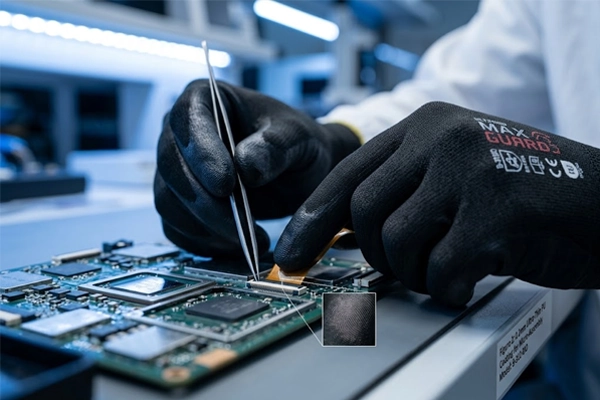
Delay-free mechanical engagement and latch feedback: During the insertion and removal of micro-FPC flexible cables, micro-screw fastening, and precision relay assembly, the PU coating fully transmits the slight “damping change” when a workpiece is in place or the “tactile vibration” of a latch closing to the fingertips. Workers can perform positioning operations blindly without relying on repeated visual confirmation, significantly reducing the takt time per unit.
Eliminating the Risk of Finger Slippage and Crush Injuries: In optical lens assembly and cleanroom coating inspections, the PU coating provides a fine and uniform dry adhesion that prevents slipping on smooth component surfaces—which could cause parts to fall—while also avoiding uneven localized pressure on the fingers due to an overly hard coating layer. This significantly reduces the incidence of housing scratches and core component damage caused by micro-manipulation errors.
In practical selection, the knit density and fiber thickness of the gloves also have a decisive impact on the feel during micro-manipulation. For specific data on the differences in tactile feel and fatigue levels between 13-gauge and 18-gauge ultra-thin seamless knitted linings on micro-assembly production lines, please refer to our technical article 13-Gauge vs. 18-Gauge PU-Coated Gloves: Maximizing Tactile Sensitivity in Micro-Assembly Lines.
Grip Dynamics: Performance in Dry, Oily, and Wet Industrial Environments
In actual industrial assembly and material handling, the state of the medium on the workpiece surface (dry, coated with an oil film, or wet with water) directly determines the mechanism by which grip friction (Grip Dynamics) is generated. There are fundamental differences in the surface energy, microscopic pore morphology, and resistance to fluid shear among different polymer coatings. This requires factories to provide workers with gloves featuring specific microscopic textures and grip mechanics tailored to the lubrication conditions at each workstation.
Dry-Tack Adhesion: Why Polyurethane Excels on Dry Metal and Plastics
Polyurethane’s (PU) grip advantages in dry conditions and environments with trace amounts of light oil stem primarily from the micro-tack adhesion unique to its polymer resin and its excellent surface conformability:
Maximized microporous contact area: The open-cell microporous structure of the PU-coated surface undergoes micro-elastic deformation under slight downward pressure when in contact with dry, smooth stamped sheet metal parts, injection-molded plastic housings, or polished glass surfaces. This increases the effective contact area to several times that of ordinary smooth rubber, thereby generating stable and controllable dry static friction.
Zero residue and no sticking to workpieces: Unlike low-end rubber, which tends to leave adhesive stains or silicone oil marks on smooth surfaces, high-quality PU coatings provide a secure grip while maintaining excellent release properties. Workers do not experience a “sticky dragging sensation” when frequently picking up and setting down small parts, effectively preventing tiny plastic components from falling and breaking due to static electricity or adhesion.
Oil-Channeling Mechanisms: Micro-Foam and Sandy Finishes in Nitrile
When the workstation environment shifts from dry conditions to one saturated with heavy-duty cutting oil, rust-preventive oil, or mechanical grease, a smooth PU coating forms a continuous fluid lubrication film between the workpiece surface and the fingertip, causing friction to drop sharply and creating a risk of slippage. At this point, the microscopic oil-channeling structure of the nitrile coating demonstrates its core advantage:
Micro-Foam Capillary Absorption Channels: The dense, closed-cell/semi-open-cell honeycomb structure within foamed nitrile acts like a miniature sponge. The moment an oil-coated part is gripped, capillary action rapidly disperses the surface oil at the fingertip contact point and channels it into the air pores, breaking the continuous oil film and allowing the nitrile rubber to come into direct contact with the metal substrate.
High-Shear Mechanical Interlock of “Sandy Nitrile” Particles: Designed for heavy oil contamination and oily metal cutting operations, “Sandy Nitrile” incorporates high-hardness micro-particles into the coating surface, creating a rough, micro-crater-like texture. These microscopic ridges forcefully displace thick layers of grease, creating strong physical and mechanical shear resistance on the metal surface, preventing parts from slipping out of the hand during heavy-load handling.
Heavy Dry-Friction Performance: Crinkle Patterns in Natural Rubber Latex
In the field of gripping, natural rubber latex is primarily used for handling large industrial materials that are rough, dry, or wet:
The macro-scale deep grooves created by the crinkle finish: During the curing process, the latex coating undergoes acid precipitation or salt spray treatment, causing it to spontaneously contract and form wavy, crinkled textures on the surface that can reach depths of tens of micrometers. This rough macrostructure interlocks with corrugated cardboard boxes, wooden pallets, concrete components, and rough stone surfaces, providing immense mechanical resistance without requiring workers to grip excessively tightly.
Risk of Friction Failure Due to Extreme Sensitivity to Oils: Although natural rubber latex performs exceptionally well in dry and slightly damp heavy-duty applications, its nonpolar molecules are highly susceptible to swelling when exposed to industrial mineral oils. Upon contact with engine oil or grease, the latex coating rapidly softens, becomes sticky, and loses the mechanical strength provided by its crinkled texture, resulting in a complete loss of grip; therefore, its use is strictly prohibited in oil-containing machining and automotive powertrain assembly lines.
Chemical, Solvent, and Hydrocarbon Permeation Limits
In industrial manufacturing facilities, protective gloves not only provide physical abrasion resistance and enable fine motor control, but also serve as the first line of defense against skin contact with cleaning solvents, machining fluids, and lubricants. Differences in polymer cross-linking density and polarity among polyurethane (PU), nitrile rubber (NBR), and natural latex (NRL) determine their breakthrough time, degradation resistance, and patterns of physical strength decline when exposed to various chemical media. Clarifying the chemical resistance limits of these three materials is the cornerstone for preventing occupational contact dermatitis and work-related errors.
Solvent Resistance Profile: Esters, Ketones, Alcohols, and Glycols
In 3C electronics micro-cleaning, optical wiping, and precision adhesive application processes, workers frequently come into contact with isopropyl alcohol (IPA), ethanol, acetone, and various ester-based degreasers. Polyurethane (PU) coatings exhibit unique balance characteristics when exposed to these mild industrial solvents:
Stable Resistance to Alcohols and Diols (Alcohols & Glycols): PU coatings demonstrate excellent resistance to isopropyl alcohol (IPA) and industrial alcohol. When workers use lint-free cloths saturated with alcohol-based solvents for tasks such as wiping smartphone screens, post-soldering cleaning of PCBs, and optical lens calibration, the PU coating does not quickly become tacky, soften, or degrade; it maintains stable finger coverage and flexibility.
Limitations in Resistance to Highly Polar Ketones and Ester Solvents: However, since the PU coating is a moderately polar polymer, when exposed to high concentrations of highly polar organic solvents (such as acetone, ethyl acetate, and methyl ethyl ketone [MEK]), the solvent molecules penetrate the microporous structure and disrupt the hydrogen bonds between polyurethane molecules, causing the coating to swell, bubble, or even peel off. At workstations involving prolonged immersion in or scrubbing with such strong solvents, it is essential to use high-level protective gloves that have undergone specialized chemical testing.
Machine Coolant and Mineral Oil Exposure Limitations
In CNC machining, stamping shops, and automotive powertrain assembly lines, workpiece surfaces are typically coated with a thick layer of mineral oil, synthetic coolants, or rust-preventive lubricating grease:
Oil Permeability Limits of PU Coatings: Polyurethane offers good resistance to mild mineral oil erosion; when in contact with dry parts or parts coated with a light oil film, the coating does not dissolve or degrade as rapidly as natural latex does when exposed to grease. However, because PU dip-coated gloves feature an ultra-thin, microporous film design, when exposed to large amounts of highly fluid, low-viscosity water-soluble cutting fluids or when immersed in an oil bath for extended periods, the oil-water mixture gradually penetrates through the back of the fabric and the microporous rubber layer into the lining, causing workers’ hands to become damp and slippery.
Natural latex completely loses its oil resistance: Natural latex (NRL) molecules are nonpolar cis-polyisoprene, which readily follows the “like dissolves like” principle with hydrocarbons such as mineral oil, diesel, and hydraulic oil. Upon contact with mechanical grease, the latex coating rapidly swells and softens within minutes, becoming viscous and losing its tear and tensile strength; it is strictly prohibited for use in oily machining operations.
For heavy-duty machinery workstations exposed to high-concentration hydrocarbon oils, heavy-duty cutting fluids, and complex industrial solvents, we recommend consulting our technical report on nitrile chemical protection, The Chemical Resistance of Nitrile Coatings: Protecting Hands Against Oils and Solvents, to gain a comprehensive understanding of the engineering standards for thick coating layers and dual-dip processes in establishing advanced chemical protection barriers.
Cleanroom Compatibility and Particulate Shedding Control
In semiconductor wafer manufacturing, micro-electro-mechanical systems (MEMS), optical coating, and high-precision display panel (OLED/Micro-LED) production lines, airborne particulate matter and fiber shedding are the primary causes of circuit short-circuits, dead pixels, and a precipitous drop in yield rates. In ISO Class 5 to ISO Class 7 controlled cleanrooms or high-cleanliness assembly stations, gloves must not only prevent the generation of any secondary contaminants but also serve as an ultra-clean physical barrier between the hands and sensitive workpieces.
Zero-Lint Continuous Filament Fibers Sealed by a PU Resin Matrix
The reason polyurethane (PU) gloves have become the standard protective consumables in modern cleanrooms and the high-precision electronics industry lies in their dual-layer cleanliness control—achieved through both fabric selection and resin sealing processes:
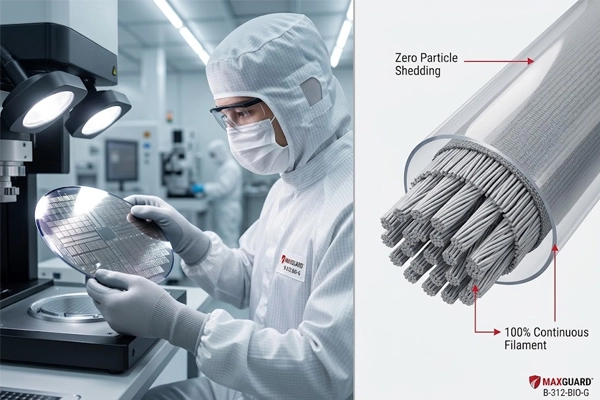
Continuous Filament Liner: High-end cleanroom-grade PU gloves have abandoned traditional spun cotton yarn—made from twisted short fibers—and instead use 100% continuous filament nylon or ultra-high molecular weight polyester filaments (Polyester/RPET). The physically infinite extensibility of these monofilaments fundamentally eliminates fiber breakage and lint shedding (Zero-Linting).
Microscopic encapsulation and locking by the polyurethane resin matrix: During the impregnation process, the low-surface-tension PU resin not only forms a smooth protective film on the palm’s surface but also penetrates deep into the microscopic gaps of the knitted filament fibers, firmly encapsulating the fiber nodes and cross-linking them to cure. This microscopic physical locking mechanism ensures that even after tens of thousands of high-frequency flexion-extension cycles and finger friction, the glove’s fabric surface remains as smooth as new, without pilling, fraying, or fiber shedding.
Particulate Shedding Hazards: Why Standard Latex and Nitrile Fail in Cleanrooms
Many general-purpose nitrile and latex gloves perform exceptionally well in heavy manufacturing, but in cleanrooms and highly sensitive electronic assembly workstations, inherent defects in their physical formulations can easily lead to catastrophic particulate contamination:
Hazards from Vulcanization Accelerators, Plasticizers, and Powder Migration: Standard natural latex gloves typically contain inorganic fillers (such as calcium carbonate and talc) or free-release powders used in demolding and post-processing. When handling precision components, these substances are easily transferred to the surface of workpieces through fingertip contact, causing microscopic contamination. At the same time, residual vulcanization by-products and natural proteins in the latex are prone to powdering and degradation under prolonged friction, releasing micron-sized particles invisible to the naked eye.
Cracking, Brittleness, and Flaking of Standard Nitrile Coatings: Due to their thick rubber layers and numerous internal air pockets, heavy-duty foamed nitrile gloves are highly susceptible to fatigue micro-tears in the thin-walled micropores under high-stress conditions caused by repeated folding and compression at the finger joints, resulting in the production of microscopic rubber flakes (nitrile flakes). If these particles fall into the gaps between the pads on a printed circuit board (PCB) or between chip pins, they will directly compromise subsequent wire bonding and high-vacuum coating processes.
To gain a comprehensive understanding of the particle counting test standards for cleanrooms (Helmke Drum Test) and the cleaning and packaging specifications for low-lint gloves, please refer to our in-depth technical guide, Lint-Free PU Palm Coated Gloves: Preventing Particulate Contamination in Semiconductor Environment,s for a detailed overview of contamination control strategies in high-cleanliness industrial settings.
Technical Benchmark: PU vs. Nitrile vs. Latex Engineering Matrix
When establishing PPE procurement standards across workshops and multiple workstations, engineering managers and supply chain teams must rely on objective, quantifiable physical material parameters and ergonomic data, rather than subjective wearer comfort. Polyurethane (PU), nitrile rubber (Nitrile), and natural latex (Latex) exhibit distinct performance differences in terms of coating thickness, fine motor skill sensitivity, media friction coefficient, and unit procurement cost.
Comprehensive Performance Benchmark Table
The following technical benchmark table summarizes laboratory test data and actual ergonomic parameters from frontline industrial manufacturing scenarios, providing a clear basis for comparative evaluation in B2B procurement:
| Key Engineering Metrics | Polyurethane Coating (PU Coated) | Nitrile Rubber Coating (Micro-Foam / Sandy Nitrile) | Natural Latex Coating (Crinkle Latex) |
| Coating Thickness | 0.20 mm – 0.35 mm (ultra-thin microporous film) | 0.60 mm – 1.10 mm (Medium-Thick, Dense / Micro-Foam) | 0.80 mm – 1.40 mm (thick, crinkled layer) |
| Tactile Sensitivity and Dexterity Score (1–5) | 5.0 / 5.0 (bare-hand-level micro-tactile sensitivity) | 3.5 – 4.0 / 5.0 (Good to Moderate) | 2.5 / 5.0 (relatively stiff, limited fine motor control) |
| Dry Grip Performance | Excellent (slightly adhesive physical bonding, no adhesive residue) | Excellent (Smooth Dry Friction) | Excellent (high elasticity, macro-level grip) |
| Heavy Oil Grip | Weak (oil film causes slippage, microporous structure saturates easily) | Excellent (microporous oil absorption / matte physical interlocking) | Very poor (dissolves in oils, becomes sticky; fails due to friction) |
| Solvent & Chemical Resistance | Resistant to alcohols (IPA/ethanol); weak resistance to strong ketones and esters | Resistant to mineral oils, hydrocarbons, and cutting fluids | Resistant to weak acids and alkalis; extremely susceptible to grease and organic solvents |
| Lint-Free Level | ISO 5–7 compatible (zero fiber shedding/dust-free) | ISO 7 – 8 (micro-foam, thin-walled, prone to fatigue and chipping) | Not compatible with cleanrooms (prone to chalking and colloidal aging/peeling) |
| Unit Cost Benchmark (Single/Dual) | $ Extremely cost-effective (top choice for high-turnover consumables) | $$–$$$ Medium-High (long-life, heavy-duty consumables) | $–$$ Economy-class (general-purpose consumables for heavy-duty applications) |
| Primary Workstations | 3C electronics assembly, optical lenses, semiconductor packaging, wire harness insertion/removal, drying and quality inspection | CNC machining, automotive engine assembly, oil-based stamping, machinery maintenance | Construction sites, brick and tile handling, wood processing, heavy-duty hardware warehousing and logistics |
Workstation-to-Polymer Decision Logic: Precision Micro-Assembly vs. Heavy Machining
Based on the above comparison of data flows, factories should follow a clear, binary decision-making logic for workstations when developing hand protection SOPs:
Precision micro-assembly and cleanroom quality inspection lines (select PU coating):
For any workstation handling micro-fasteners smaller than 5 millimeters, scratch-prone optical lenses, high-density printed circuit boards (PCBs), or located in controlled cleanrooms, ultra-thin PU-coated gloves must be used. The low-impedance tactile feedback and zero-fling properties of PU minimize micro-downtime during assembly and improve first-pass yield.
Heavy-Duty Machining with Oil Contamination and Rough, Heavy-Load Handling (Select Nitrile or Latex Coating):
For any workstation involving continuous contact with machine tool coolant, immersion in metal stamping oil baths, or high mechanical impact, switch to foamed nitrile or textured nitrile gloves to provide an oil- and abrasion-resistant barrier; whereas for oil-free handling of rough construction components, lumber, and heavy-duty cardboard boxes, use abrasion-resistant crinkled latex gloves to provide strong physical grip.
Strategic Deployment: SQG® MAXGUARD® Eco-Friendly PU Product Series
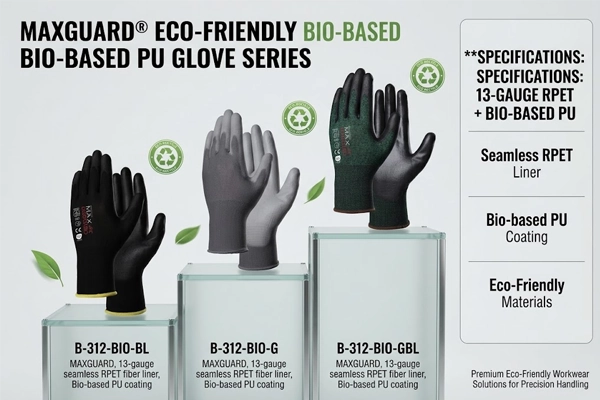
To ensure ultimate micro-manipulation sensitivity while meeting the ESG supply chain carbon reduction requirements of global multinational manufacturers, the SQG® R&D team has launched the next-generation MAXGUARD® bio-based polyurethane protective glove series. This series not only comprehensively optimizes the polyurethane resin’s wetting and film-forming formulation but also innovatively utilizes 100% post-consumer recycled polyester (Recycled PET, RPET) filaments as the seamless liner substrate. This reduces the product’s full life cycle carbon footprint (CFP) while providing a cost-effective, eco-friendly workstation protection solution for modern lean assembly lines.
All-Black General Assembly Model: B-312-BIO-BL
On production lines for precision hardware assembly, dry and lightweight warehouse picking, and general machinery assembly, the gloves’ stain resistance and long-lasting clean appearance directly impact on-site 5S management and worker glove change frequency:
Stain-resistant all-black color design: B-312-BIO-BL, MAXGUARD, 13-gauge seamless RPET fiber liner, Bio-based PU coating features an all-black fiber liner paired with a black bio-based PU palm coating. This design effectively conceals minor dust and trace amounts of dry stains on workpiece surfaces, preventing premature disposal of gloves due to minor soiling and significantly extending the actual service life of each pair.
13-gauge High-Elasticity RPET Seamless Knit: The 13-gauge knitting process strikes a balance between fiber toughness and a comfortable fit. The back of the hand offers excellent breathability and moisture-wicking performance, helping workers comfortably handle high-intensity, all-weather light material sorting and assembly tasks.
Inspection & Light-Industry Cleanline Model: B-312-BIO-G
During final visual inspection (Final QA/QC) before products leave the factory, on light-industry clean assembly lines, and at optical component packaging stations, gloves must not only prevent product contamination but also facilitate on-site visual management:
High-purity light gray color scheme: B-312-BIO-G, MAXGUARD, 13-gauge seamless RPET fiber liner, bio-based PU coating. Features a light gray filament liner and light gray PU coating, making it particularly suitable for quality inspection processes that require high ambient lighting and rapid identification of surface contaminants.
Suitable for low-dust and anti-static microenvironments: The seamless filament weave prevents fiber shedding from the fabric edges and, combined with an ultra-thin PU coating, ensures that inspectors do not leave fingerprint oils or microscopic scratches when touching smooth casings, acrylic lenses, or micro-displays.
High-Contrast Electronic Component Assembly Model: B-312-BIO-GBL
In 3C consumer electronics micro-assembly, PCB component insertion and soldering support, and micro-motor installation workstations, the dark background combined with a texture of interwoven light and dark fibers provides workers with excellent visual contrast:
High-Contrast Green-Black Blended Design: B-312-BIO-GBL, MAXGUARD, 13-gauge seamless RPET fiber liner, Bio-based PU coating features a highly distinguishable dark green and black interwoven liner paired with a black PU coating. When handling silver-white micro screws, gold-plated flat cable terminals, and tiny surface-mount components, it provides workers with a clear visual contrast, effectively reducing eye strain and preventing missed installations or operational errors.
Green Bio-based Environmental Certification: This model also features a bio-based PU coating system that has undergone rigorous carbon emissions verification, helping high-tech manufacturing companies easily pass international green supply chain audits and ISO 14001 Environmental Management System certification.
To learn more about filament fiber specifications, ergonomic hand-shaped cuts, and special conductive/anti-static modified formulations, please visit our main category page, Precision PU Palm-Coated Work Gloves Direct from Manufacturer, to access the full range of in-stock specifications and factory-direct bulk purchasing and customization support.
EHS Risk Control: Allergenicity, VOCs, and DMFa Solvent Compliance
In the operational management of multinational manufacturing enterprises and modern lean factories, the selection of personal protective equipment (PPE) has long gone beyond the scope of mere protection against cuts and abrasions; it is directly linked to plant-wide occupational health and safety (EHS) compliance, the control of workplace injury risks, and eligibility for access to international supply chains. As polyurethane (PU) gloves replace traditional natural latex and low-end solvent-based coatings, they play a critical role in eliminating allergens and reducing volatile organic compounds (VOCs) in the workplace.
Eliminating Type I Natural Rubber Latex Protein Allergies
The core compliance challenge faced by natural rubber latex (NRL) products during prolonged industrial use is the risk posed by their endogenous allergenic proteins:
Type I Immediate Hypersensitivity Reaction (Type I Latex Allergy): Natural rubber latex naturally contains a variety of water-soluble plant proteins. For front-line assembly workers, under conditions of prolonged, intense sweat exposure and skin friction, these free proteins can easily penetrate the skin’s surface through pores, triggering contact urticaria, skin redness, swelling, and itching; in severe cases, they may even cause respiratory allergies or systemic anaphylactic shock.
The low-allergenic and protein-free properties of synthetic PU resin: Polyurethane (PU) is a polymer material synthesized through the precise, directed reaction of petroleum-based polyols or bio-based vegetable oils with isocyanates. Its molecular chain structure contains absolutely no natural animal or plant protein components, thereby eliminating the risk of Type I latex allergy at the source. The factory’s comprehensive adoption of PU gloves can significantly reduce labor hour losses caused by employee absences due to hand dermatitis, as well as the risk of compensation claims arising from labor disputes.
Solvent-Free Chemistry: Complying with EU REACH DMFa Limits
In traditional PU dipping processes, N, N-dimethylformamide (DMFa or DMF) is commonly used as an effective organic solvent for dissolving polyurethane resins. However, due to DMFa’s reproductive toxicity and its potential for dermal absorption and accumulation, the European Chemicals Agency (ECHA) has included it on the list of Substances of Very High Concern (SVHC) and established stringent residue limits in EU REACH Annex XVII DMFa threshold limits (the compliance threshold for DMFa residues in gloves must be kept below 5 milligrams per kilogram).
Water-Based Desalination and Water-Based PU Cleaning Processes: High-quality industrial PU gloves utilize a multi-stage, high-frequency warm-water countercurrent extraction and desalination line to thoroughly wash out and replace trace amounts of free solvents remaining within the coating. More advanced production lines are gradually adopting completely solvent-free waterborne polyurethane (Waterborne PU) latex systems, achieving zero organic solvent volatilization throughout the entire production and usage process and eliminating pungent odors in the workshop.
Ensuring All-Day Wear Safety for Workers and Export Compliance: Low-DMFa/zero-DMF gloves compliant with EU REACH standards effectively prevent contact dermatitis caused by the reverse migration of chemical solvents when workers sweat, while ensuring that finished products from multinational manufacturers exported to high-end markets such as Europe and North America successfully pass stringent supply chain audits regarding green chemicals and restrictions on hazardous substances.
For a detailed breakdown of the manufacturing processes for traditional solvent-based PU and new waterborne solvent-free PU, as well as insights into demolding and cleaning controls and interpretations of authoritative third-party test reports, please refer to our in-depth technical analysis, Waterborne vs. Solvent-Based PU Gloves: Meeting EU REACH DMFa Limits in Industrial PPE Sourcing.
B2B Sourcing Economics: Unit Cost vs. High-Turnover Production Efficiency
In the financial modeling of centralized procurement for industrial consumables (MRO/PPE), procurement directors and lean production managers cannot assess costs based solely on the unit price listed on purchase invoices for gloves (whether sold by the pair or individually). Instead, they must incorporate hourly assembly efficiency, first-pass yield (FPY), consumable turnover frequency, and worker labor loss into a comprehensive Total Cost of Ownership (TCO) accounting system. Polyurethane (PU)-coated gloves demonstrate an excellent overall cost-effectiveness ratio in precision electronics and high-turnover assembly workstations, provided that their operational boundaries are clearly defined and mismatched usage is prevented.
Unit Cost Advantages in High-Turnover Assembly Workstations
In 3C assembly plants, home appliance controller assembly workshops, and automotive wiring harness processing plants—which employ thousands of workers—hand protection gloves are high-frequency consumables. PU-coated gloves offer significant lean advantages in terms of the balance between unit procurement cost and production line efficiency:
Highly competitive direct purchase price per pair: Compared to heavy-duty foamed nitrile gloves with complex manufacturing processes or cut-resistant gloves containing high-end aramid or high-strength polyethylene, standardized 13-gauge and 18-gauge PU palm-dipped gloves offer extremely high material utilization and continuous dipping efficiency, resulting in a direct purchase cost per pair that is significantly lower than that of other functional coatings. For large discrete manufacturing plants that consume hundreds or even thousands of pairs daily, this directly reduces monthly fixed expenses for personal protective equipment.
Production line efficiency gains from high micro-manipulation sensitivity: Because the ultra-thin PU coating provides acute fingertip sensitivity and low fatigue, workers can significantly speed up the picking of small parts, aligning screws with holes, and inserting terminals. The slight reduction in the cycle time per operation at each workstation translates into a massive increase in hourly production output (UPH) over the thousands or tens of thousands of repetitive operations along the entire assembly line, with the resulting indirect benefits far exceeding the purchase cost of the gloves themselves.
Reduced costs from product surface scratches and rework of defective parts: The PU coating has a fine texture and is microporous with no lint; when workers’ hands come into frequent contact with precision anodized casings, high-gloss painted surfaces, or optical screens, they do not cause scratches or leave particles behind, directly reducing the rework rate for surface defects caused by improper handling.
Risk of Misapplication: Operating Scenarios Where PU Should NOT Be Specified
Although PU gloves deliver excellent overall performance in precision dry-working conditions, clear “usage red lines” must be established during procurement and technical briefings. Forcing the use of PU gloves in the following high-load or hazardous operating conditions will result in rapid wear and tear of the gloves, significantly increase overall operating costs, and may even lead to workplace injuries:
Heavy-duty machining and continuous coolant exposure workstations: At CNC machine cutting, gear milling, and metal grinding stations, heavy splashes of synthetic cutting fluid and metal oil residue will rapidly clog the microporous structure of PU, causing severe slippage. At the same time, the relatively thin PU coating cannot withstand the strong pulling and continuous puncturing caused by sharp metal chips; in these workstations, abrasion-resistant and puncture-resistant nitrile-coated gloves should be explicitly selected.
Rough, Heavy-Duty Construction and High-Mechanical-Tear Handling: When handling cement bricks, unpolished logs, heavy steel structures, and large, rough pallets, the high elongation of PU film can actually cause it to wear out and peel rapidly due to the strong pulling force from the microscopic edges of rough surfaces. Under such dry, heavy-duty conditions, thick crinkled latex gloves with high tear resistance and elongation are a more durable and economical choice.
Immersion in high-concentration corrosive chemicals: PU palm-coated gloves are breathable mechanical protection gloves; neither the fabric back nor the microporous coating provides a liquid-tight barrier. When working in cleaning tanks containing strong acids, strong alkalis, concentrated sulfuric acid, or highly polar organic solvents (such as butanone or acetone), the use of ordinary PU-coated gloves is strictly prohibited; professional-grade, fully-dipped chemical-resistant gloves must be selected in strict accordance with chemical safety protection standards (EN ISO 374).
Knowledge Base: Frequently Asked Questions (FAQs) & CTA
To help corporate procurement managers, EHS engineers, and production line supervisors quickly address common technical concerns regarding product selection on the front lines, we have compiled typical technical questions and practical recommendations regarding polyurethane (PU) protective gloves:
Why is PU preferred over micro-foam nitrile for microelectronics assembly?
In precision microelectronics assembly and semiconductor back-end processes, polyurethane (PU) offers two key advantages over micro-foam nitrile:
Thinner coating thickness and lower mechanical resistance: PU coating thickness is typically only 0.2 to 0.35 millimeters, whereas micro-foam nitrile is usually 0.6 to 1.0 millimeters or more. Ultra-thin PU coatings allow the nerve endings in the fingers to keenly sense the edges of micron-scale components and the tactile feedback from latches, eliminating the rebound damping caused by the flexing of thick rubber layers.
Extremely low dust generation and zero lint shedding: PU resin firmly encapsulates and locks in continuous filament nylon or polyester fibers, making them resistant to particle shedding even after tens of thousands of bends; In contrast, the thin-walled honeycomb pores inside foamed nitrile rubber are more prone to microscopic fatigue tearing under prolonged, high-frequency flexing and compression, releasing rubber particles that pose a risk of contaminating circuit board pads and optical components.
Can PU-coated gloves withstand continuous exposure to industrial cutting fluids?
No. Polyurethane (PU) gloves are specifically designed for dry conditions, minimal amounts of light oil, and fine-motor tasks requiring high dexterity:
The microporous structure saturates easily, causing slippage: When exposed to cutting fluids from CNC machine tools, fully synthetic water-based coolants, or large amounts of machine oil, the open pores on the PU surface quickly fill with liquid and form a continuous lubricating film on the workpiece surface, resulting in a significant reduction in grip friction.
The palm-dipping process lacks liquid sealing on the back of the hand: Standard PU gloves feature a breathable knitted design on the back of the hand; continuous liquid splashes can penetrate the fabric directly and soak the worker’s hands. In workstations with persistent cutting fluid splashes or oil immersion, specialized nitrile gloves with oil-draining microporous structures or textured surfaces and a liquid-resistant coating should be explicitly selected.
What is the primary difference between bio-based PU and standard petroleum-based PU?
The primary difference between bio-based polyurethane (Bio-based PU) and traditional petroleum-based PU lies in the source of raw materials and life-cycle carbon emissions, while their core physical properties remain identical:
Green, low-carbon raw material substitution: Traditional PU relies entirely on polyols synthesized from refined fossil crude oil, whereas the polyols in bio-based PU are partially derived from vegetable oils or renewable biomass feedstocks, significantly reducing fossil fuel consumption.
Excellent physical property compatibility and ESG supply chain compliance: Taking the SQG® MAXGUARD® series as an example, bio-based PU coatings combined with a lining of 100% post-consumer recycled fiber (RPET) filaments significantly reduce the carbon footprint (CFP) of both single- and double-layer finished products while retaining the ultra-thin feel, low-friction micro-manipulation, and abrasion resistance characteristic of traditional PU, helping manufacturers easily meet strict ESG supply chain carbon reduction targets.

Call to Action (CTA)
Optimizing hand protection configurations at workstations in factory workshops is not only crucial for the safety and comfort of frontline workers, but also a key factor for companies looking to improve production line yield rates, reduce overall consumables costs, and achieve lean manufacturing. SQG® specializes in the in-house R&D and manufacturing of high-quality industrial protective gloves, providing you with a complete range of protective solutions that meet stringent international standards.
Browse the full range of precision-coated specifications and technical parameters: Explore Full Range of SQG® Precision PU Work Gloves
Request production line test samples and factory-direct wholesale quotes: Request Free B2B Sample Kits & Bulk Pricing