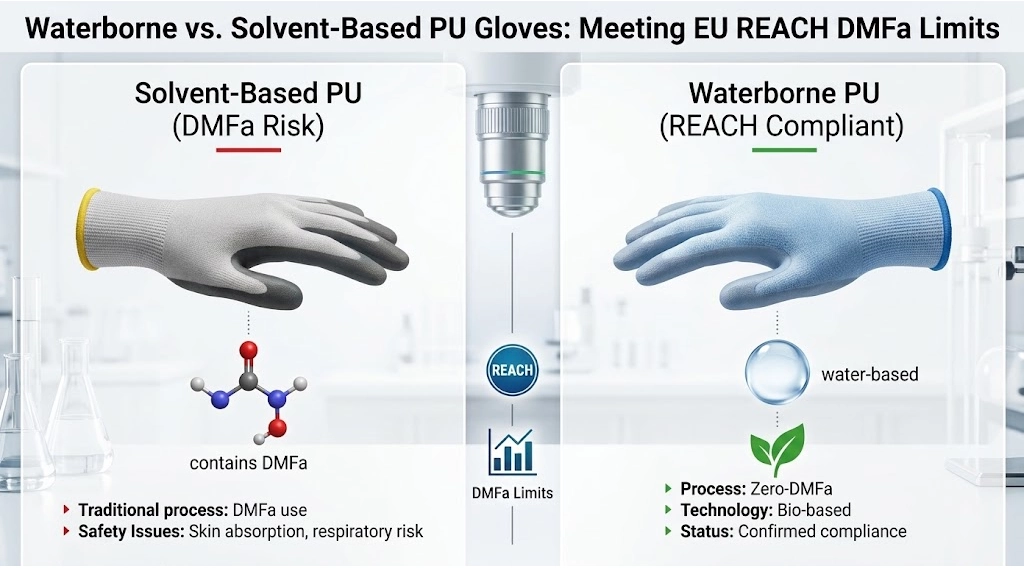
In modern industrial PPE sourcing, selecting waterborne PU gloves reach dmfa compliance standards is the critical step to eliminate occupational dermatitis in assembly lines. For a long time, assembly line workers have consistently reported that when wearing standard polyurethane (PU) gloves, they are highly prone to symptoms of occupational contact dermatitis—such as redness, swelling, blisters, itching, and repeated peeling—on the palms and between the fingers. The root cause of this health hazard is N, N-dimethylformamide (DMFa), a polar organic solvent widely used in traditional solvent-based PU dipping processes. As workers sweat, trace chemical molecules trapped deep within the glove fabric are rapidly leached out by sweat and absorbed through the skin, not only directly damaging the skin barrier on the hands but also causing irreversible, cumulative health damage.
Alongside the health risks faced by frontline workers are the stringent legal liabilities faced by multinational buyers. The European Chemicals Agency (ECHA) is comprehensively tightening its controls on Substances of Very High Concern (SVHCs), and REACH Annex XVII sets extremely strict limit thresholds for textiles and personal protective equipment (PPE) that come into direct contact with the skin. If work gloves imported into the European market are found by customs to exceed DMFa limits during random inspections, the products will immediately trigger the EU Safety Gate (formerly RAPEX) early warning system, resulting in the entire shipment being detained, on-site destruction, mandatory recalls, and hefty compliance fines amounting to hundreds of thousands of euros.
Against this regulatory backdrop, traditional solvent-based processes that rely on shallow washing can no longer consistently meet the compliance audit requirements of the world’s leading contract manufacturers. Thoroughly understanding the fundamental technical differences between waterborne polyurethane (Waterborne PU) and traditional solvent-based PU, and mastering the engineering processes to eliminate harmful residues at the source, are essential prerequisites for industrial procurement teams to mitigate customs clearance risks and safeguard frontline assembly efficiency. Before delving into the chemical displacement mechanism of DMFa and the compliance testing thresholds, we recommend visiting our main product category page, Precision PU Palm-Coated Work Gloves Direct from Manufacturer, to gain a comprehensive understanding of the detailed specifications for our full range of continuous filament seamless-lined and eco-friendly polyurethane protective gloves that meet the EU’s stringent environmental standards.
The Chemistry of Conventional PU Coating: The Role and Risks of DMFa
In the dip-coating process for traditional seamless knitted gloves, the ability of polyurethane (PU) coatings to balance thinness with dry-grip strength has historically relied heavily on the film-forming assistance of polar organic solvents. However, this solvent-dependent wet coagulation dipping process is precisely the root cause of harmful chemical residues in the finished gloves.
Solvent Function of N, N-Dimethylformamide (DMFa) in Wet Dipping
N, N-dimethylformamide (DMFa) is a highly polar, non-protonated organic solvent that plays a central role as a dissolving medium in traditional glove manufacturing:
Complete dissolution of polymeric polyurethane resins: Polyurethane polymers possess extremely strong intermolecular hydrogen bonding forces, which ordinary water-based solvents cannot directly disperse uniformly. DMFa, with its extremely high dielectric constant and solubility, can thoroughly break the intermolecular bonds of PU resin molecules, forming a uniform liquid adhesive slurry with excellent flow properties and stable solids content.
Phase Inversion Process: When the glove mold is immersed in the DMFa-PU slurry and subsequently transferred to a water-based curing bath, water molecules (the non-solvent) rapidly penetrate the rubber layer, while the DMFa solvent diffuses outward into the aqueous phase. As the solvent is rapidly replaced by the non-solvent, the solubility of the PU resin drops sharply, causing micropores to form on the glove surface. However, due to the dense capillary network within the knitted fibers, some DMFa molecules become tightly trapped deep within the yarn and cannot be completely removed by conventional surface rinsing alone.
Occupational Health Hazards: Dermal Absorption and Contact Dermatitis
DMFa is a small-molecule organic compound that is highly volatile and easily penetrates biological barriers, posing a direct occupational health threat to workers who wear gloves during long-term frontline operations:
Transdermal penetration and accelerated dissolution by sweat: DMFa is highly hydrophilic and lipophilic, capable of directly dissolving the lipid barrier of the human epidermal stratum corneum, resulting in highly efficient transdermal absorption. In closed, stuffy workshops, the slightly acidic sweat secreted from production line workers’ hands acts as a natural solvent, continuously dissolving residual DMFa molecules lurking deep within the glove lining fabric and significantly accelerating the rate at which the chemical penetrates the subcutaneous dermis.
Mechanisms of contact dermatitis and long-term systemic toxicity: Upon contact with the skin, residual chemical molecules directly disrupt the epidermal microecology, causing localized erythema, a burning sensation, dense blisters, and chronic cracking and peeling (irritant contact dermatitis). More seriously, once DMFa enters the bloodstream through the skin, the active metabolites produced in the liver cause irreversible damage to hepatocytes. Furthermore, it has been officially recognized by the World Health Organization and the European Union as a highly hazardous substance with reproductive toxicity, posing a potential teratogenic risk to fetal development.
Regulatory Landscape: EU REACH SVHC and Global Chemical Thresholds
As the international community’s understanding of occupational health and the hazards of chemicals has deepened, regulation of solvent residues in protective gloves in major global economies has shifted from past industry self-regulation to legally binding, mandatory technical barriers. For multinational manufacturers and industrial product importers, accurately understanding the limit thresholds across different jurisdictions is the core defense for ensuring supply chain compliance and stability, and for avoiding massive losses from recalls and regulatory notifications.
REACH Annex XVII Entry 72 & Specific Workwear Thresholds (≤5 mg/kg vs. ≤500 mg/kg)
Under the REACH regulatory framework implemented by the European Chemicals Agency (ECHA), dimethylformamide (DMFa) has long been included on the Candidate List of Substances of Very High Concern (SVHC) and, subsequently, explicit industrial restrictions were implemented through amendments to Annex XVII:
Restriction Thresholds for Industrial Workwear and Gloves (Entry 72 and General Restriction Provisions): The EU has established strict concentration gradients for textiles and personal protective equipment (PPE) that come into direct contact with the skin. The initial general SVHC threshold for industrial products was 0.1% by weight (i.e., 1,000 mg/kg); however, for clothing and personal protective equipment (PPE) that come into close contact with the skin, regulatory requirements have been further tightened to 500 mg/kg and, in specific working conditions, as low as 5 mg/kg. For glove products used during prolonged continuous operations accompanied by hand perspiration, many multinational industrial brands and original equipment manufacturers (OEMs) have proactively set their internal control standards below 5 mg/kg to eliminate any potential chemical leaching.
Layered Solvent Extraction Testing Protocols: In testing conducted by accredited laboratories (such as those following the EN 17131 standard), regulatory authorities strictly prohibit the use of fraudulent testing methods that involve crushing the entire glove and diluting the sample evenly; instead, they strictly enforce “layered, independent sampling and extraction.” Testing laboratories separately scrape samples from the knitted fiber lining on the inner side of the glove—which comes into direct contact with the skin—and from the PU coating on the outer side of the glove. These samples are thoroughly extracted using organic solvents at a constant temperature and analyzed via gas chromatography–mass spectrometry (GC-MS). If the test results for any single layer exceed the limit, the entire batch of gloves is immediately deemed non-compliant.
Global Standards Divergence: EU REACH, US Prop 65, and OEKO-TEX® Standard 100
Regulatory requirements and certification standards vary across different export markets, so corporate procurement and international trade teams need to establish a multidimensional compliance matrix:
The EU Safety Gate (formerly RAPEX) mandatory recall mechanism: Customs authorities in EU member states conduct frequent, routine spot checks on personal protective equipment (PPE) arriving at ports. If DMFa levels in gloves are found to exceed the EU’s statutory limits, product information will be immediately uploaded to the EU’s Rapid Alert System for Non-Food Consumer Products (Safety Gate). This will not only result in the immediate seizure and destruction of the shipment at the port of entry but will also trigger a Europe-wide recall and product removal notice, dealing a devastating blow to the importer’s brand reputation and customs clearance credibility.
California Proposition 65 (Prop 65) Informed Consent Warning Requirements: In the U.S. market, while the federal level focuses on OSHA occupational exposure limits, the State of California has specifically listed DMFa as a reproductive toxicant under Proposition 65. If imported gloves contain DMFa residues that could lead to dermal exposure, and the products do not bear a “Clear and Reasonable Warning Label” in compliance with California Proposition 65 regulations, companies will face the risk of class-action lawsuits from local NGOs and consumers, as well as substantial civil settlement fines.
OEKO-TEX® Standard 100: The Gold Standard for Eco-Textiles: As a globally recognized voluntary eco-label, OEKO-TEX Standard 100 classifies products into four strict categories based on their end use. Work gloves used in precision electronics and medical assembly typically must meet Class II (products in direct contact with the skin) or even more stringent testing requirements. The detection limits for volatile organic compounds (VOCs) and DMFa solvent residues are significantly higher than standard regulatory thresholds, making compliance a core prerequisite for high-end manufacturing buyers when screening suppliers.
De-Solventizing Engineering: Multi-Stage Leaching vs. Waterborne Chemistry
To meet stringent global regulatory requirements regarding solvent residues, the protective glove manufacturing industry has evolved two distinctly different engineering approaches: first, retrofitting traditional solvent-based dipping lines with deep de-solventizing and water-washing processes (the physical extraction approach); second, completely abandoning organic solvent systems and developing water-based polyurethane chemical synthesis systems that use water as the dispersing medium (the source-blocking approach).
Limits of Dynamic Multi-Stage Counter-Current Water Washing
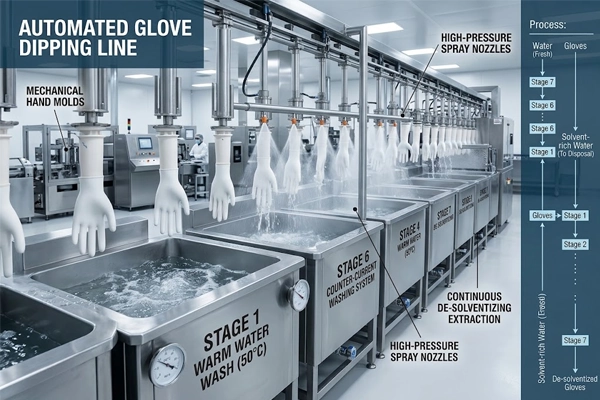
In traditional solvent-based PU production lines, the only engineering method to control DMFa residue in the finished product is to add a physical extraction process after the gloves have been dipped and cured in the mold:
Mechanism of Multi-Stage Dynamic Counter-Current Warm Water Extraction (Counter-Current Leaching Systems): Advanced low-DMF production lines typically consist of 5 to 7 independently temperature-controlled water washing and desalination tanks connected in series. The production line employs the counter-current exchange principle, allowing the glove molds to advance step by step against the direction of water flow, ensuring that the gloves remain in contact with the purest, uncontaminated warm water throughout the final stages. Under constant-temperature warm water immersion (45 to 60 degrees Celsius) and agitation from high-pressure microporous spraying, the diffusion of free DMFa molecules trapped within the rubber layer into the aqueous phase is accelerated.
Limitations of physical extraction and risks of batch-to-batch variation: Although the 7-stage countercurrent extraction process can significantly reduce DMFa residue in gloves from an initial level of several thousand milligrams per kilogram to below 50 milligrams per kilogram, this physical process is constrained by solid-liquid mass transfer resistance and time windows. The microscopic, enclosed blind pores formed within high-density knitted filaments (such as 18-gauge knits) are highly prone to trapping trace amounts of solvent. If the airflow velocity in the drying tunnel is insufficient or the water replacement frequency is even slightly delayed, there remains a quality risk that localized residual levels in the finished product may rebound and exceed the limit.
Zero-Solvent Chemistry: Waterborne Polyurethane (WPU) Polymerization
Unlike passive methods that rely on post-processing water washing to reduce solvent residues, waterborne polyurethane (WPU or PUD) technology eliminates the presence of harmful solvents at the molecular synthesis stage:
Self-Emulsifying Dispersion Synthesis and Green Film-Forming Mechanism: During the synthesis of polymer chains in waterborne polyurethane, hydrophilic ionic groups (such as carboxylate or quaternary ammonium hydrophilic chain extenders) are introduced via chemical grafting. Under high-shear agitation, the polymer chains spontaneously coil and disperse in pure water, forming a highly stable self-emulsifying aqueous dispersion with particle sizes ranging from 10 to 100 nanometers. Throughout this process, deionized water replaces DMFa, eliminating the use of polar organic solvents.
Zero harmful solvent release and intrinsically safe (Zero VOCs & Zero DMFa): During glove impregnation and hot-air curing, the water-based adhesive emits only non-toxic, odorless water vapor, achieving ultra-low emissions of volatile organic compounds (VOCs) and zero DMFa residue (absolutely undetectable). This not only eliminates the need for energy-intensive multi-stage water washing and large-scale waste solvent distillation and recovery systems, but also fundamentally eliminates the risk of workers developing contact dermatitis from the chemical nature of the materials themselves, thereby eliminating compliance risks.By transitioning from solvent-based chemistry to aqueous dispersions, modern waterborne pu gloves reach dmfa compliance effortlessly without relying on hazardous wash cycles.
Mechanical and Ergonomic Performance: Waterborne vs. Solvent-Based Films
Early industrial waterborne polyurethane coatings faced engineering challenges during their adoption, such as excessively hard film surfaces, brittleness at low temperatures, and insufficient abrasion resistance. With breakthroughs in polymer synthesis and modification technologies, modern high-end waterborne PU coatings not only fully match traditional solvent-based materials in terms of mechanical abrasion resistance but also demonstrate unique mechanical advantages in terms of ergonomic fit and tensile elasticity.
Tensile Flexibility, Elastic Recovery, and Micro-Cracking Resistance
Glove coatings must withstand tens of thousands of high-frequency flexing and tensile-shear cycles during routine assembly operations; the material’s microscopic molecular chain structure directly determines the coating’s fatigue life:
Block Polyurethane Molecular Chain Modulation (Soft and Hard Segment Tailoring): Modern water-based polyurethane (WPU) is produced by precisely controlling the molar ratio of polyether/polyester polyols (soft segments) to diisocyanates (hard segments). The soft segments confer an excellent low modulus at room temperature and high elastic recovery on the coating, while the hard segment microphase regions provide mechanical tensile strength through dense hydrogen-bond cross-linking. This nanoscale microphase-separated structure completely resolves the issues of hardening and a stiff, rough feel that plagued early water-based coatings.
Resistance to Microcracking and Low-Temperature Flexibility (Anti-Microcracking Resilience): In traditional solvent-based PU coatings, prolonged exposure to air or contact with sweat causes trace amounts of residual solvents and plasticizers to migrate, leading to hardening and cracking of the coating; in contrast, water-based PU coatings exhibit excellent weather resistance and hydrolytic stability. Even during frequent bending of the knuckles or when working in low-temperature workshops, the coating surface maintains a continuous, smooth, and dense mesh structure, preventing delamination and the propagation of microcracks caused by repeated flexing.
Synergy Between 18-Gauge High-Gauge Substrates and Waterborne Soft Coatings
When ultra-thin waterborne polyurethane resins are combined with high-gauge seamless woven liners, a significant ergonomic synergy is created at the microscopic interface:
Smooth Adhesion of Ultra-Fine Fibers to Low-Viscosity Waterborne Emulsions: An 18-gauge knit fabric woven from 70D to 100D ultra-fine nylon or polyester filaments features an extremely fine and smooth surface texture. The low-viscosity water-based PU dispersion forms a uniform, shallow film on the outer surface of the lining, preventing adhesive from penetrating inward (strike-through) while avoiding heavy adhesive buildup on the glove surface, thereby precisely limiting the composite thickness of the palm to approximately 0.65 millimeters.
Ultra-low flex resistance and a “second-skin” feel: The ultra-thin water-based coating fully unleashes the inherent softness of the ultra-dense 18-gauge fabric, reducing the resistance to a single finger flexion and extension to an extremely low level of 0.2 newtons. On precision assembly lines, operators do not need to expend extra muscle strength to overcome glove stiffness, effectively eliminating forearm muscle soreness and finger numbness caused by prolonged, high-frequency pinching motions.
For a comprehensive engineering comparison of different gauge counts in terms of microscopic thickness, biomechanical tactile feedback at the fingertips, and cycle time optimization, please refer to the technical guide 13-Gauge vs. 18-Gauge PU-Coated Gloves: Maximizing Tactile Sensitivity in Micro-Assembly Lines.
Polymer Comparison Matrix: Solvent-Based PU vs. Low-DMF PU vs. Waterborne PU
To help industrial procurement teams, EHS departments, and product compliance managers cut through vague marketing rhetoric, a clear material evaluation matrix based on material chemistry, third-party testing limits, and actual production-line lifespan is key to making scientifically sound procurement decisions.
Comprehensive Chemical Safety & Physical Performance Benchmark Table
The table below objectively quantifies the differences in physical and mechanical properties as well as chemical compliance between traditional solvent-based PU, multi-stage water-washed low-solvent PU, and 100% waterborne PU:
| Evaluation Dimensions | Traditional Solvent-Based PU (Traditional Solvent-Based) | Low-DMF Multi-Washed PU (Multi-stage Water-Washed, Low-Solvent Type) | 100% Waterborne PU (Water-Based Polyurethane) |
| Solvent Carrier | 100% polar organic solvent (DMFa) | Polar organic solvent (DMFa) is displaced through multi-stage water washing | Deionized Water (100% Solvent-Free) |
| Typical DMFa Residue | 500 mg/kg to 2,000 mg/kg (high risk of exceeding limits) | 10 mg/kg to 50 mg/kg (at the compliance threshold) | 0 mg/kg (Not Detected) |
| VOC Emissions | Extremely high (coating emits a distinct volatile odor) | Low to moderate (trace residual odor) | Extremely Low / Near-Zero Emissions (Odorless) |
| Worker Skin Irritation Risk | Extremely high (hand perspiration accelerates the transdermal release of chemical molecules) | Low to moderate (may still cause mild discomfort in sensitive individuals) | Extremely Low / Intrinsically Safe (Zero Irritation) |
| EN 388 Abrasion Cycles | Level 2 to Level 3 (1,000 to 2,000 rpm) | Level 2 to Level 3 (1,000 to 2,000 rpm) | Level 2 to Level 3 (800 to 2000 rpm) |
| Compliance with EU REACH Annex XVII | Failed (serious violation of ECHA limit requirements) | Meets general industrial limits; requires strict batch monitoring | Fully compliant, eliminating any risk of non-compliance at the source |
| OEKO-TEX® Standard 100 Certification | Failed | Can achieve Class II / Class III levels | Easily meets the stringent Class I/II ecological standards |
| Comprehensive Carbon Footprint and Energy Consumption in Production (Eco Footprint) | Extremely high (high energy consumption for solvent recovery and condensation towers) | High (requires significant amounts of pure water and energy for heating and washing) | Extremely low (no water washing required; direct application; eco-friendly and low-carbon) |
For a more detailed comparison of the overall differences between polyurethane (PU), nitrile rubber, and natural latex in terms of the microscopic polymer network film-forming mechanism, resistance to oil penetration, and grip and abrasion resistance, please refer to the selection guide PU Coated vs. Nitrile vs. Latex Work Gloves: The Definitive B2B Selection Guide for Precision Manufacturing.
Testing Protocols: GC-MS Solvent Extraction Analysis (EN 17131 / ISO 18218-2)
When reviewing test reports provided by suppliers from third-party laboratories (such as SGS, TÜV, Intertek, and Eurofins), buyers should focus on identifying the key test parameters and experimental methods in the reports:
Standard Test Methods (EN 17131 / ISO 18218-2 / ISO 16189): Compliance reports must explicitly state that quantitative analysis was performed using solvent thermal extraction (ultrasonic or Soxhlet extraction) combined with gas chromatography–mass spectrometry (GC-MS). The test method must cover separate extractions of the coating and the lining fabric, rather than merely performing a surface rinse test on the glove.
Limit of Detection (LOD) / Limit of Quantification (LOQ) and the true meaning of “Not Detected (ND)”: Buyers should pay close attention to the method’s Limit of Detection (LOD) or Limit of Quantification (LOQ) in the test report. In accredited laboratories, the LOQ is typically set at 5 mg/kg or 10 mg/kg. If the report indicates a result of “ND (Not Detected)” and the LOQ is less than or equal to 5 mg/kg, this means that no free DMFa molecules were detected in the gloves at the current highest level of precision, thereby complying with the EU’s most stringent green procurement guidelines.
Cleanroom & Medical Assembly Compatibility: Non-Toxic and Odorless Standards
In semiconductor packaging and testing, precision optical instrument manufacturing, and high-risk medical device assembly workstations, occupational safety gloves serve not only as a protective barrier for workers’ hands but also as a critical component of cleanroom environmental control. Any chemical molecule leaching or volatile emission from the glove substrate can directly lead to surface contamination of precision components or compromise the sterility of medical environments.
Zero Outgassing & Ultra-Low VOC Emissions in Semiconductor Cleanrooms
In controlled cleanroom environments ranging from ISO Class 5 to Class 7, airborne molecular contamination (AMC) is a hidden culprit behind chip electrical performance failures and fogging of optical lenses:
Preventing Organic Solvent Condensation and Wafer Micropollution (Outgassing Mitigation): In cleanroom environments with constant temperature and humidity or under localized laser heating conditions, residual DMFa and low-molecular-weight additives in traditional solvent-based gloves continuously release trace amounts of organic volatile gases (outgassing). These gaseous organic molecules readily adsorb and condense on the surface of wafer photoresists or coated optical lenses, forming micron-scale organic oil film spots that directly cause lithographic alignment errors and reduced adhesion of the coating layers. Water-based polyurethane and deep desolventization processes eliminate volatile organic compounds at the source, controlling gaseous emissions below the detection limit of instruments.
Microscopic Interface Protection and Long-Term Outgassing-Free Performance: When high-purity water-based gloves come into contact with highly sensitive components, the tightly bonded surface polymer coating prevents the migration of silicone and amide-based plasticizers to the product surface, ensuring high reliability in semiconductor component wire bonding and flip-chip mounting.
For information on particulate shedding control for gloves in semiconductor cleanrooms, standards for lint-free continuous filament gloves, and specifications for airborne particle detection, please refer to the specialized guide Lint-Free PU Palm Coated Gloves: Preventing Particulate Contamination in Semiconductor Environments.
Odorless & Non-Irritating Formulations for Medical Device Assembly
In assembly lines for disposable infusion sets, implant-grade orthopedic devices, and in vitro diagnostic (IVD) reagent filling facilities, the purity and odor control of work gloves directly impact product biocompatibility and on-site operational comfort:
Eliminating amine decomposition products and pungent fishy odors: After high-temperature vulcanization or prolonged storage, residual polar solvents in low-quality solvent-based PU gloves readily decompose to produce trace byproducts such as dimethylamine, emitting a strong, irritating fishy stench. In enclosed cleanrooms, this odor not only causes dizziness and respiratory discomfort among frontline workers but may also be adsorbed by medical plastic components, leading to the return of entire batches of finished medical products during end-customer acceptance due to excessive odor levels.
Biocompatibility Assurance and Hypoallergenic, Eco-Friendly Formulation: Modern eco-friendly water-based PU coatings use medical-grade deionized water combined with a high-purity, non-toxic cross-linking system. The finished product undergoes multiple cycles of hot-air curing to achieve a completely odorless finish. The coating contains no sensitizing free monomers or heavy metal salts, meeting the stringent internal control requirements for extremely low skin irritation and high biocleanliness in workstations for medical consumables and precision pharmaceutical packaging.
ESG Supply Chain Governance: Carbon Footprint and Solvent Recovery
In the accounting of Scope 3 supply chain carbon emissions and ESG sustainability ratings for multinational corporations, the chemical safety of consumables in manufacturing facilities and energy consumption during production have been incorporated into core audit metrics. The high energy consumption associated with traditional solvent-based PU glove production is gradually increasing companies’ carbon footprints, while a new generation of eco-friendly processes offers a proven and effective path to carbon reduction for the decarbonization of global industrial supply chains.
Closed-Loop DMFa Solvent Recovery vs. Waterborne Direct Carbon Reduction
To meet emission standards, traditional solvent-based glove production lines must be equipped with extremely large-scale solvent recovery and distillation units, which account for a significant portion of energy consumption in the gloves’ life cycle assessment (LCA):
Energy costs of traditional closed-loop solvent recovery systems: To recover DMFa—which can reach concentrations of up to several thousand milligrams per liter in wastewater—traditional wet-process lines must operate high-pressure desolventization columns and multi-stage, multi-effect distillation columns. During high-temperature distillation at atmospheric or reduced pressure, evaporating and condensing the solvent—which has a boiling point as high as 153 degrees Celsius—from water requires tens of thousands of metric tons of industrial steam and high-load electricity. This results in persistently high comprehensive carbon emissions per glove and poses ongoing environmental risks due to leaks, spills, and emissions of volatile waste gases.
Advantages of the water-based direct-coating process in reducing carbon emissions at the source: The 100% water-based polyurethane process fundamentally eliminates organic solvents, eliminating the need for complex solvent separation and recovery systems as well as the energy consumption associated with multi-stage high-temperature water washing. After coating, the gloves require only a conventional low-temperature hot-air drying tunnel to complete moisture evaporation and film cross-linking. This not only reduces overall electricity and steam consumption during production by more than 30% but also achieves truly zero solvent pollution in production wastewater and exhaust gases, directly meeting the stringent audit standards of multinational corporations under the Carbon Disclosure Project (CDP).
Post-Consumer Recycled (RPET) Liners Paired with Bio-Based Polyurethanes
In addition to innovations in the de-solventization of coating chemistry, the deep integration of recycled textile substrates with natural, renewable polyurethane resins has become the industry standard for achieving a green, closed-loop supply chain:
Application of Post-Consumer Recycled Polyester Filament (RPET Filament): Recycled waste beverage bottles (PET plastic bottles) certified under the Global Recycled Standard (GRS) are cleaned, flaked, melted, and processed through precision spinning to produce high-strength, continuous, seamless knitted filaments. This process reduces crude oil consumption by approximately 70% and greenhouse gas emissions by more than 50% for every metric ton of filament produced. Furthermore, because the filaments are continuous and knot-free, they eliminate the pilling and shedding issues common in short-fiber fabrics.
Extensive Replacement of Bio-Based Polyurethane (Bio-Based PU) Resins: A new generation of eco-friendly coatings utilizes bio-based water-based polyurethane resins polymerized from non-food plant oils (such as polyols extracted from castor seed oil), partially or even completely replacing traditional fossil-based petroleum-derived raw materials. These bio-based polymer chains not only retain the excellent abrasion resistance and flexibility of traditional polyurethane but also reduce the product’s full life-cycle carbon footprint by 20% to 40%, providing tangible and quantifiable material support for multinational manufacturing companies to achieve their annual ESG carbon reduction targets.
Strategic Sourcing: SQG® MAXGUARD® Eco-Compliant & Low-DMF Series
In response to the multifaceted procurement requirements of the global high-end manufacturing sector—which demand ultra-low chemical residues, exceptional ergonomic flexibility, and ESG-aligned carbon reduction—SQG’s R&D team has launched a new generation of MAXGUARD® eco-compliant protective gloves. This series fully incorporates a deep, multi-stage counter-current desolventization process and next-generation bio-based, low-solvent/water-based polyurethane coating technology, delivering tiered, traceable high-end protective solutions tailored for precision electronic assembly, cleanroom micro-manipulation, and tasks involving sensitive skin.
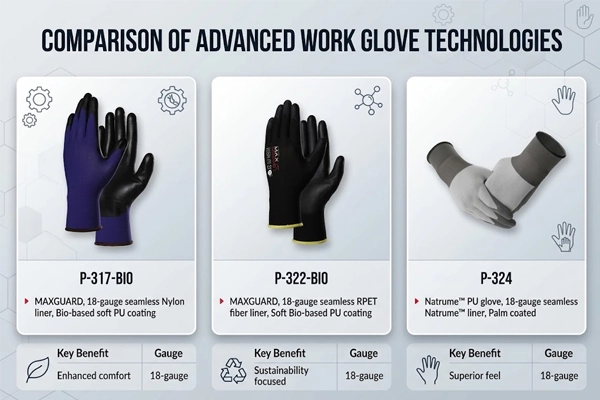
Ultra-Flexible Bio-Based Ergonomic Standard: P-317-BIO (18-Gauge Nylon Liner)
For applications such as precision automotive component assembly, instrument calibration, and workstations requiring frequent pinching motions, gloves must not only strictly comply with EU REACH regulatory limits but also provide an ultra-flexible feel that closely mimics bare hands:
A deep integration of an ultra-dense 18-gauge nylon liner and eco-friendly bio-based soft PU: P-317-BIO, MAXGUARD, 18-gauge seamless nylon liner, bio-based soft PU coating. It features a seamless weave of ultra-fine, high-strength 18-gauge nylon filaments paired with an optimized bio-based flexible PU coating. This combination completely eliminates the bulky, restrictive feel of traditional protective gloves, resulting in a finished product with an extremely thin palm and excellent elasticity.
Low Solvent Residue and All-Weather Fatigue Resistance: The product undergoes multi-stage continuous counter-current desolventization rinsing with warm water, strictly controlling volatile organic compounds and solvent residue, thereby eliminating at the source the sweaty, stuffy feeling and skin stinging caused by prolonged continuous wear. Extremely low finger flexion resistance allows operators to maintain an agile work rhythm throughout an 8-hour high-intensity assembly shift.
Sustainable Precision Clean Assembly: P-322-BIO (18-Gauge RPET Fiber Liner)
Designed for applications—such as the assembly of micro-components for 3C consumer electronics and the debugging of optical modules—that impose stringent dual requirements for environmental cleanliness and supply chain decarbonization:
A closed-loop innovation combining 100% post-consumer recycled fibers with a bio-based coating: P-322-BIO, MAXGUARD, 18-gauge seamless RPET fiber liner, and Soft Bio-based PU coating seamlessly integrate high-grade GRS-certified RPET recycled polyester filaments with eco-friendly bio-based soft PU resin. The continuous monofilament structure completely eliminates the risk of short-fiber friction linting (Zero-Linting) at the source, making it perfectly suited for clean, controlled production lines.
Dual green carbon reduction certifications and exceptional abrasion resistance: This model significantly reduces the product’s full-lifecycle carbon footprint while maintaining outstanding mechanical abrasion resistance and dry-condition slip resistance. The black, stain-resistant coating, combined with a fully breathable back-of-hand design, makes it the benchmark choice for multinational manufacturers committed to sustainable procurement and refined 5S management in the workplace.
Next-Gen Zero-Irritation Benchmark: P-324 (18-Gauge Natrume™ Liner)
For workers with highly sensitive skin, ultra-clean medical device packaging, and cutting-edge workstations with the most stringent requirements for chemical purity:
Revolutionary Natrume™ Natural, Skin-Friendly Fiber Liner: P-324, Natrume™ PU glove, 18-gauge seamless Natrume™ liner, palm-coated. This innovative design incorporates a new generation of eco-friendly, biomass-based Natrume™ fiber substrate, giving the glove a natural, skin-friendly feel and highly effective moisture-wicking and breathability.
Ultimate safety standards with zero odor and zero irritation: Combining state-of-the-art solvent-free post-treatment with deep purification washing, the P-324 thoroughly eliminates small chemical molecules and irritating odors that may trigger allergic reactions. Even when worn close to the skin while the wearer is sweating, it maintains a dry microenvironment, completely eliminating the occurrence of occupational contact dermatitis.
To view detailed physical and mechanical test data sheets for the entire product line, third-party laboratory compliance test reports, or to obtain factory-direct bulk purchasing solutions, please visit our main product catalog, Precision PU Palm-Coated Work Gloves Direct from Manufacturer, at any time for in-depth review and sample selection.
B2B Compliance Auditing: Verifying Test Reports and Avoiding Customs Risks
In large-scale, cross-border procurement of industrial gloves, relying solely on a supplier’s verbal assurance of “REACH compliance” or an expired form report is insufficient to withstand rigorous customs audits and legal liability. Establishing a rigorous third-party report review process and thoroughly identifying the methodological details behind test data are essential skills for industrial procurement and compliance risk management teams to protect corporate interests.
Reading SGS/TÜV Test Reports: Detection Limits (LOD/LOQ) vs. True Non-Detect
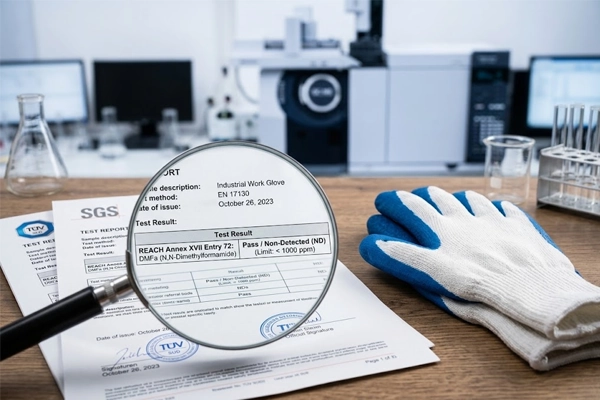
When reviewing chemical analysis reports from internationally recognized testing organizations such as SGS, TÜV, and Intertek, procurement personnel must move beyond the misconception of “only checking whether the conclusion is ‘pass’” and focus on verifying the following three key data points:
Distinguish between the technical pitfalls of the method’s limit of detection (LOD) and limit of quantification (LOQ): Some non-compliant factories provide reports marked “ND (Not Detected),” but a careful review of the method’s limit of quantification (LOQ) at the end of the report reveals that it is set as high as 500 mg/kg or even 1,000 mg/kg. This practice of artificially widening the detection limit masks the true presence of harmful residues. High-standard compliance reports must require laboratories to strictly set the LOQ at extremely low levels—such as 5 mg/kg or 10 mg/kg—and only an “ND” result obtained at this ultra-high precision level constitutes genuine chemical safety assurance.
Confirm whether the testing location involves stratified extraction: Verify the sample collection locations described in the test specifications. Proper testing must explicitly specify the sampling points as “fibers on the inner side of the glove coating (Direct Skin-Contact Fabric)” and “outer polyurethane film (PU Coating),” and must employ full-volume extraction analysis using dichloromethane or methanol at the specified temperature. Take strict measures to prevent suppliers from cheating by submitting uncoated fabric blanks as substitutes for testing.
Preventing EU Customs Seizures (RAPEX / Safety Gate) and Liability Claims
The business consequences of excessive chemical levels go far beyond the cost of returns; they directly threaten the survival of multinational trading companies and their brand reputation:
EU Port Clearance Inspections and the Safety Gate Warning Blacklist: Customs authorities across Europe (such as the Ports of Rotterdam and Hamburg) conduct strict random chemical testing on imported rubber-coated work gloves from Asia. If a batch is found to contain DMFa levels exceeding the legal limit, the entire container shipment will be seized on the spot and forcibly destroyed on-site. More seriously, the importers and manufacturers involved will be added to the EU’s Safety Gate early warning system, resulting in a long-term trade barrier where all subsequent shipments face 100% inspection.
Preventing health disputes among factory workers and joint liability claims against end-user brands: Under the stringent labor protection laws in Europe and the United States, if factory workers develop occupational dermatitis or suffer reproductive health damage due to protective equipment, labor unions have the right to file class-action lawsuits and seek substantial workers’ compensation claims. If a multinational brand is found to have procured and distributed PPE gloves with chemical residue levels exceeding the limits, it will face joint legal liability, including medical compensation, massive settlement payments, and severe damage to its public image. Sourcing gloves from sources that have a complete traceability system and genuine low-solvent or water-based testing certifications is the only way to establish a secure, closed-loop supply chain.
Knowledge Base: Frequently Asked Questions (FAQs) & CTA
The following provides expert answers based on materials engineering and regulatory best practices to address the most common technical questions and compliance concerns encountered by corporate procurement managers, EHS engineers, and overseas distributors when implementing chemical safety upgrades for gloves.
Does washing solvent-based PU gloves eliminate DMFa residues?
Conventional household washing or simple factory soaking cannot completely remove DMFa residues from solvent-based gloves. DMFa is a highly polar organic solvent with a high boiling point (153 degrees Celsius) that becomes tightly bound to the polyurethane resin and the deep capillaries of the fibers during the dip-coating stage of production. Ordinary cold-water soaking can only remove surface dust from the gloves and cannot break the deep molecular adsorption; only industrial-grade high-temperature (45 to 60 degrees Celsius) continuous counter-current extraction washing lines, combined with sufficient dynamic replacement time, or the use of 100% water-based, solvent-free polyurethane resins from the source, can fundamentally eliminate harmful chemical residues.
Why do inexpensive industrial PU gloves have a distinct chemical or fishy odor?
The pungent chemical odor or fishy smell emitted by low-cost industrial PU gloves primarily stems from two sources: First, to cut costs, the production line omits the multi-stage solvent-removal and washing process, resulting in high concentrations of DMFa remaining in the rubber layer; Second, during high-temperature vulcanization and storage, the residual dimethylformamide decomposes when exposed to heat and moisture, producing highly volatile amine byproducts such as dimethylamine (Dimethylamine). This odor not only causes dizziness and nausea among frontline workers but also directly indicates a serious risk of chemical residue levels exceeding safety standards.
How do waterborne PU gloves compare in terms of abrasion resistance and lifespan?
Modern waterborne polyurethane (WPU) gloves are fully comparable to—and in some cases even surpass—conventional solvent-based products in terms of abrasion resistance and lifespan. The issue of early waterborne coatings being prone to wear has been completely resolved through modern block copolymer synthesis technology—by optimizing the ratio of soft and hard segments in the polyurethane and creating a high-density cross-linked network, waterborne coatings now possess extremely high molecular cohesion and tear resistance with excellent resilience. Under actual assembly conditions, waterborne coatings do not harden or crack due to exposure to sweat, thereby providing more stable, long-lasting slip resistance and abrasion protection.
Can waterborne PU gloves achieve EN 388 mechanical ratings?
Absolutely. High-quality, compliant waterborne PU gloves have strictly passed the mechanical and physical performance tests required by the European standard EN 388:2016+A1:2018. In the Martindale Abrasion Test, water-based PU coatings easily achieve abrasion resistance ratings of Level 2 to Level 3 (1,000 to 2,000 cycles or more). In terms of tear resistance and puncture resistance, they are on par with traditional solvent-based gloves, fully meeting the demands of rigorous working conditions in automotive final assembly, 3C electronics, and precision manufacturing.
Call to Action (CTA)
Relying on low-quality personal protective gloves containing harmful solvent residues not only compromises the hand health of frontline workers and production line efficiency, but also exposes companies to high legal risks, including seizures by EU customs and labor claims. The green transformation of industrial supply chains begins with strict quality control over the chemical safety and ergonomic performance of every single glove.
To obtain third-party compliance reports and sample kits: Click Request REACH Compliance Documentation & Sample Kits to contact our industrial chemical compliance and protective engineering experts and receive the latest batch GC-MS test reports issued by SGS/TÜV, OEKO-TEX certificates, and free, customized on-the-job trial sample kits.
Browse the full range of eco-friendly products: Visit Explore Full Range of SQG® Precision PU Work Gloves to learn more about our complete line of low-solvent and bio-based water-based polyurethane protective gloves, featuring specifications ranging from 13-gauge to 18-gauge, virgin nylon, RPET recycled fibers, and Natrume™ skin-friendly linings.