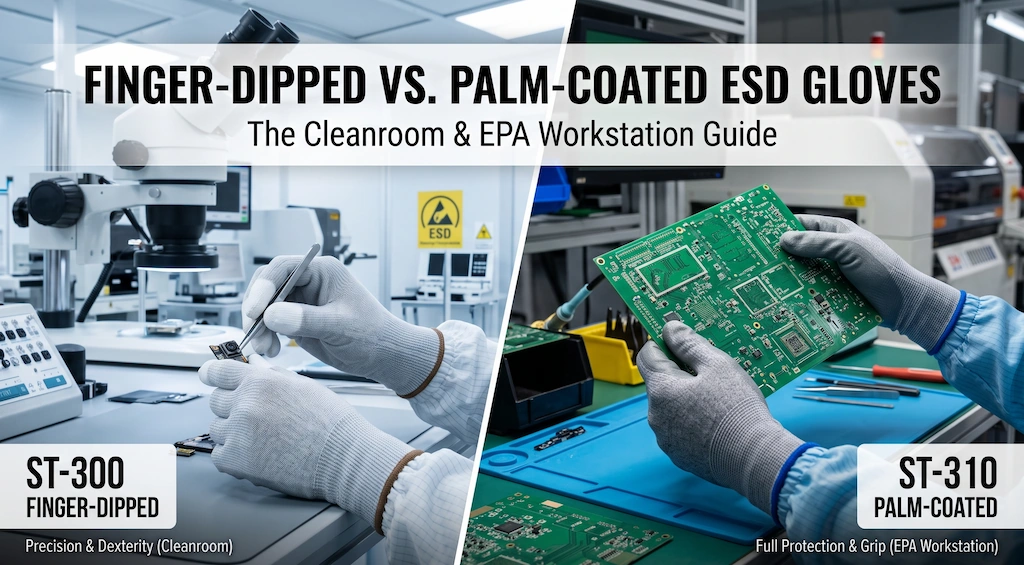
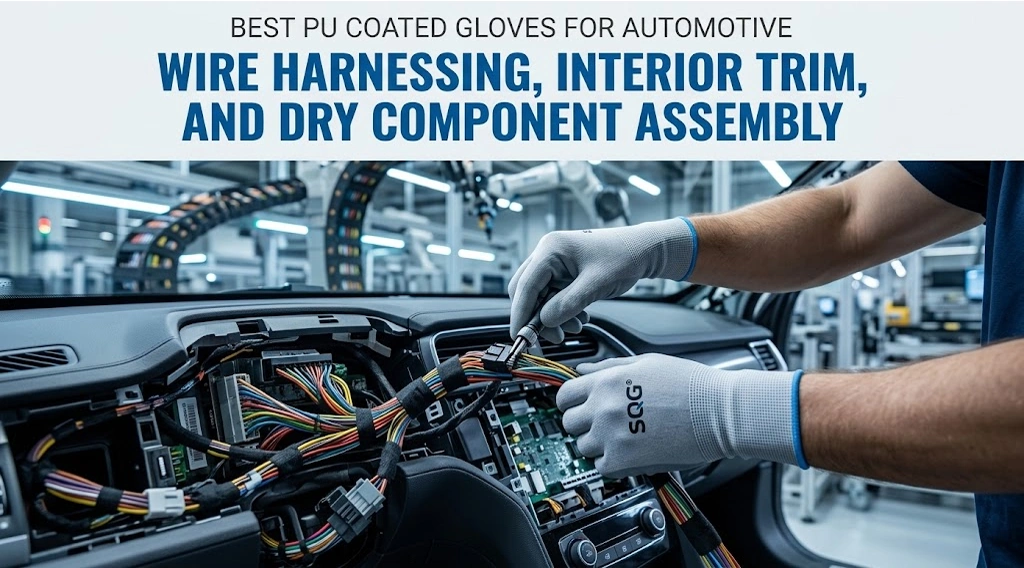
Selecting the optimal pu coated gloves for automotive assembly is critical for Tier 1 suppliers and OEM assembly plants seeking to balance tactile precision with the prevention of surface defects.
Introduction: Decarbonizing and Refining Modern Vehicle Hand Protection
With the explosive growth of new energy vehicles (EVs) and the deepening evolution of smart cockpits in traditional fuel-powered vehicles, the manufacturing and quality inspection processes in automotive final assembly shops have undergone structural changes. Modern vehicle assembly is no longer merely high-intensity, heavy-industry mechanical fastening; rather, it has evolved into an ultra-precise integration process that incorporates high-voltage electric drive systems, dense cabin electronics, and large-area, high-end interior materials.
High-Precision Evolution of New Energy Powertrains and Smart Cockpits (High-Precision Shift in Modern Vehicle Assembly): Modern passenger vehicles integrate thousands of sensors, high-voltage power cables, ADAS (Advanced Driver-Assistance Systems) controllers, and dense multimedia data buses. From laying high-voltage wiring harnesses for the chassis battery pack to assembling multi-screen interactive systems on the center console, workers often perform blind insertion operations in cramped, complex spaces. At the same time, the interior features extensive use of high-gloss piano black finishes, seamless leather upholstery, matte microfiber soft-touch trim, and oversized in-dash touchscreens—all of which place stringent demands on protective gloves for surface protection and operational sensitivity when handling vehicle components.
Pain Points of Traditional Bulky Protective Gloves (Why Traditional Bulky Work Gloves Fail): In traditional final assembly workshops, heavy-duty dipped gloves or thick 10-gauge/13-gauge cotton gloves reveal serious operational drawbacks. Due to a lack of microscopic sensitivity at the fingertips, operators cannot perceive the “click feedback” when inserting tiny terminals, making it extremely easy to cause loose connections in low-voltage wiring harnesses or terminal misplacements, which leave hidden electrical faults that are difficult to troubleshoot. Furthermore, bulky gloves create significant resistance when gripping small bolts or plastic clips, forcing workers to repeatedly exert excessive force and causing rapid muscle fatigue in the hands within a single shift. More seriously, rough fabrics and uncertified industrial coatings are highly likely to leave scratches or silicone oil fingerprints on valuable interior surfaces, resulting in extensive rework and repairs during the vehicle’s final inspection before it rolls off the assembly line.
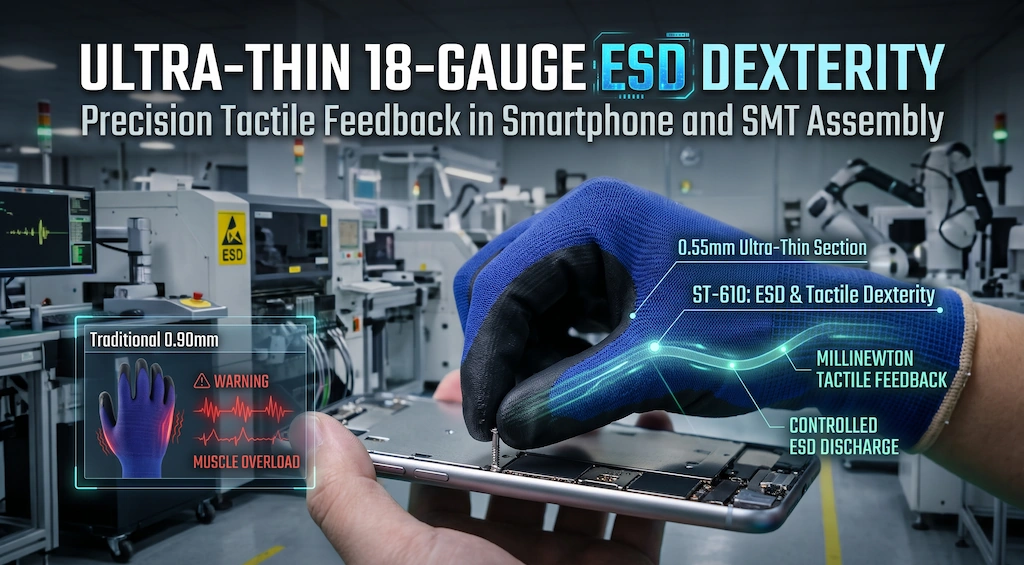
The 18-Gauge PU Engineering Breakthrough: To thoroughly resolve the conflict between precision micro-manipulation, surface scratch resistance, and resistance to high-frequency fatigue, automotive OEMs are accelerating the phase-out of coarse, traditional gloves and fully adopting 18-gauge ultra-thin, ultra-tough polyurethane (PU)-coated work gloves. Microporous PU resin features extremely low surface deformation resistance and a “second-skin” feel akin to bare hands. It not only blocks the penetration and corrosion of interior components caused by fingerprint oils and hand perspiration but also enables sub-Newton-level micro-stress perception, making it an indispensable basic consumable for modern automotive smart manufacturing assembly lines.
For a comprehensive understanding of manufacturing solutions directly from the source—tailored for high-precision automotive final assembly, mark-free interior installation, and cleanroom operations—please review our core product portfolio, Precision PU Palm-Coated Work Gloves Direct from Manufacturer, to access detailed sample testing and bulk purchasing support.
Tactical Ergonomics of PU Coated Gloves for Automotive Assembly in Wire Harness Routing
In the electrical assembly and instrument panel (IP) wire harness routing stations of vehicle manufacturing, the workload of wire harness assembly workers is not only characterized by high-frequency repetitive motions but also by the need for precise control over extremely subtle changes in physical stress. Faced with dense low-voltage control harnesses, high-frequency coaxial cables, and multi-pin sensor connectors inside the vehicle body, operators often need to complete installations in narrow blind spots obscured by structural components. This places stringent demands on the tactile sensitivity and fatigue-resistant ergonomic design of protective gloves.
Sub-Newton Tactile Feedback in Multi-Pin Connector Blind-Mating
The most common assembly defects in automotive connector mating operations are “false mating” and “pin disengagement,” where the terminals do not fully engage within the positioning grooves of the housing. To prevent electrical failures on the finished vehicle caused by poor contact, operators rely heavily on the subtle physical feedback transmitted to their fingertips at the moment of connector locking:
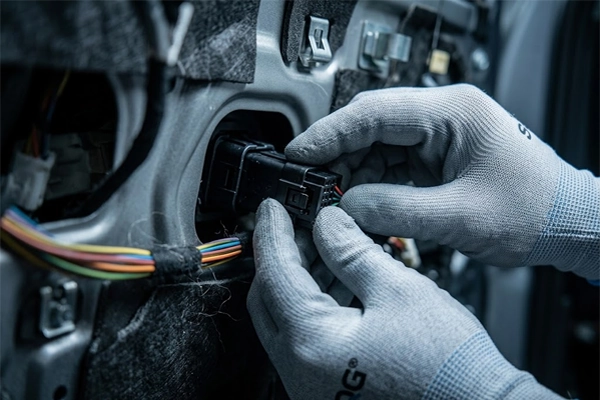
The Physics of Blind-Mating: In deep, concealed areas such as door cavities, roof beams, and center passages, workers cannot visually determine whether the connector is properly seated and must rely entirely on the tactile sensation at their fingertips to confirm the engagement status of the secondary locking mechanism (CPA). When the male and female ends of the connector are mated, the deformation and return of the internal plastic latch springs generate a transient micro-impact of approximately 0.3 to 0.8 newtons (sub-Newton) (tactile “click” confirmation).
Stress-transfer advantages of an ultra-thin polyurethane coating: Conventional, heavy-duty dipped gloves have a stress-absorption effect due to their thick rubber layer, which directly filters out these sub-Newton-level micro-vibrations, preventing assembly workers from being certain whether the connector is properly engaged. SQG® 18-gauge microporous PU gloves utilize an ultra-thin elastic polymer film that seamlessly conforms to the fingertips, minimizing the glove’s attenuation of micromechanical stress to an extremely low level. This allows workers to clearly perceive the connector’s locking rebound without visual assistance, thereby eliminating the risk of loose or faulty pin connections at the source.
Mitigating Repetitive Strain Injury (RSI) in High-Frequency Pinching
Wire harness sub-assembly and vehicle wiring are typical tasks involving high-frequency, highly repetitive movements (High-Frequency Pinching) throughout the workday. According to OEM labor time calculations, a wiring harness assembler must perform hundreds of actions—such as straightening wiring harnesses, securing them through holes, tightening cable clamps, and pressing connectors—during a standard 8-hour shift:
Cumulative resistance to finger flexion and extension caused by traditional gloves: Traditional 10-gauge or thick 13-gauge dipped gloves, due to their stiff fabric and insufficient elasticity of the rubber coating, require workers to overcome the elastic rebound resistance of the glove material itself every time they flex their fingers to grip. After thousands of repetitive motions, this additional micro-resistance causes the palmaris longus muscle and flexor tendons of the fingers to remain under constant high tension, making workers highly susceptible to carpal tunnel syndrome and chronic repetitive strain injury (RSI).
Ergonomic Relief from the 18-Gauge High-Elasticity Composite Structure: Utilizing an ultra-dense 18-gauge weaving process combined with a high-resilience spandex-coated core yarn, the gloves exhibit a conformability akin to a second layer of human skin, reducing resistance to finger joint flexion and extension by more than 40% compared to traditional gloves. The ultra-lightweight fabric, paired with a microporous polyurethane coating on the palm, allows workers to maintain a secure grip without having to consciously increase their grip strength when frequently handling small plugs and latches. This significantly reduces muscle fatigue during continuous single-shift operations and substantially lowers the error rate and lost working hours on the assembly line.
Surface Integrity & Defect Prevention in Interior Trim & Glazing Assembly
In the final assembly of automotive smart cockpits and at window glazing stations, components not only feature complex geometric structures but also have surface materials that are extremely fragile and valuable. With the widespread adoption of large, integrated curved in-vehicle displays, piano-lacquered center console trim panels, high-gloss electroplated trim strips, and Nappa soft leather, even the slightest surface scratches, fingerprints, grease stains, or coating transfer can directly cause the finished vehicle to fail final quality inspection (FQI), resulting in costly disassembly and rework expenses. Therefore, the softness and surface chemical stability of protective gloves have become a core element of quality control in the interior assembly process.
Zero-Scratch Protection on Piano Black, Soft-Touch Leather, and Touchscreens
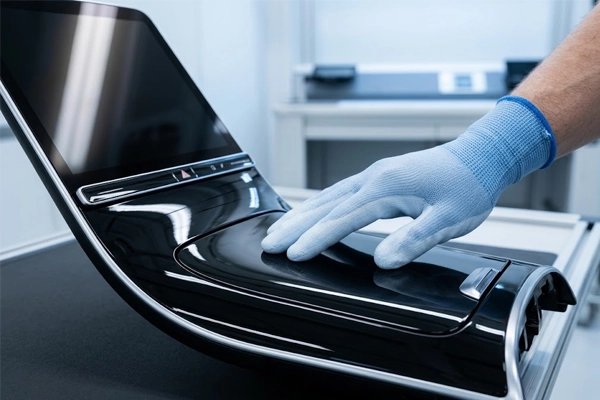
High-gloss piano black panels and in-vehicle center console LCD touchscreens have relatively low surface hardness, making them highly susceptible to revealing fine linear scratches (micro-abrasions) and matte wear marks under direct, intense light:
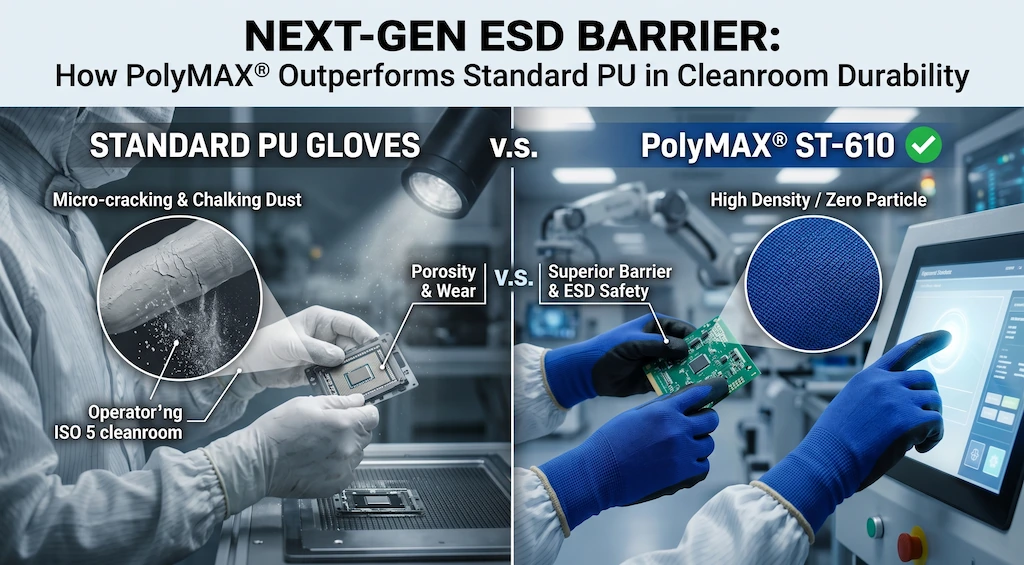
Micro-Polymer Surface Compliance: Conventional work gloves often cause physical scratches on high-gloss plastic components when pressing dashboard clips into place, due to rough surfaces from dip-coating, the presence of unplasticized hard particles, or stiff edges at fabric seams. SQG® utilizes ultra-fine continuous filaments and high-purity microporous polyurethane elastomer; once the coating cures, it forms a uniform, soft, sponge-like microporous cushioning layer. This micro-polymer structure offers exceptional surface compliance, effectively dispersing localized downward pressure and preventing workers from damaging piano-lacquer finishes when applying force to latch assemblies due to contact with localized hard spots on their fingers.
Eliminates the risk of direct penetration and physical contact by fingernails: If workers choose to work bare-handed to achieve greater precision in fine motor tasks, their fingernails can easily scratch the leather-wrapped layer and the anti-reflective (AR/AG) coating on touchscreens during frequent pinching and pressing into narrow gaps. The 18-gauge, high-density, ultra-thin gloves provide a complete and dense fabric barrier at the fingertips, which not only prevents workers’ fingernails from coming into direct contact with interior components but also eliminates the risk of scratches from hard objects that can occur when working in narrow gaps with traditional, bulky gloves.
Non-Marking & Fingerprint-Resistant Polyurethane Chemistry
In addition to physical scratches, chemical residue and oil transfer are also common quality defects in interior assembly shops:
Preventing the Migration of Sebum, Sweat, and Chemical Residues (Sebaceous Oil & Sweat Barrier): The skin on human hands continuously secretes oils, sweat, and inorganic salts. If workers handle genuine leather, suede (Alcantara), or matte soft thermoplastic parts on the steering wheel with bare hands or while wearing oil-permeable cotton gloves, sebum and acidic sweat can easily penetrate the pores of the leather, forming dark oil stains and whitening marks that are difficult to clean. The polyurethane palm coating creates a dense physical barrier that prevents the migration and diffusion of human sebum and sweat onto interior surfaces.
Non-Marking & Fingerprint-Resistant Polyurethane Chemistry: When conventional rubber gloves (such as untreated nitrile or natural latex) come into contact with dry interior components, the vulcanizing agents, plasticizers, or antioxidants added to them may leave dark, hard-to-remove migration marks (ghosting/marking) on the surface of the workpiece. The SQG® bio-based water-based polyurethane coating utilizes a high-purity cross-linked formulation that is free of low-molecular-weight volatile plasticizers and free oils. Even under high-friction contact, it ensures “zero residue, no marks, and fingerprint resistance” on the component surface, guaranteeing that the vehicle maintains a clean, flawless, showroom-quality appearance during final delivery inspection.
Clean Manufacturing: LABS Compliance and Silicone-Free Painting Synergy
In vehicle manufacturing and large Tier 1 component plants, the paint shop and final assembly area are typically located adjacent to one another or in an environment where air circulates between them. Any consumables entering the final assembly area that contain trace amounts of free silicone oil, fluorides, or ester-based plasticizers may cause cross-contamination through airborne particles or contact with operators’ tools, potentially leading to catastrophic adhesion defects in the downstream paint finish. Therefore, automotive protective gloves must not only meet scratch-free requirements but also comply with stringent clean manufacturing standards for paint safety.
VDMA 24364 (LABS-Conformity) Paint Wetting Impairment Standards
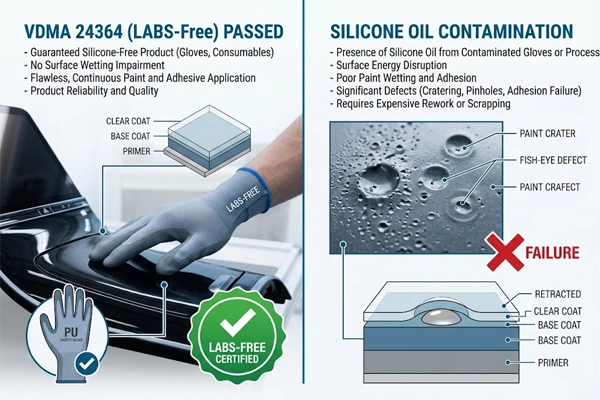
In automotive painting and pre-assembly processes before spraying, one of the most costly potential causes of rework is “cratering” and “fish-eye defects.” The root cause of these defects lies in trace contamination of the vehicle’s metal or plastic substrates by paint wetting impairment substances (PWIS; German abbreviation: LABS):
Mechanism of PWIS contamination: Silicone oils, release agents, and certain low-molecular-weight plasticizers have extremely low surface tension. Even if only nanogram-level residues of silicone molecules are transferred to unpainted body panels, door edges, or adjacent components awaiting installation, the applied electrophoretic paint or clear coat cannot spread and wet the surface uniformly during curing. This results in the formation of concave, circular “crater-like” depressions around microscopic oil droplets. Repairing such defects requires deep sanding of the entire painted surface and repainting the entire vehicle, which significantly slows down the production line cycle time.
In strict compliance with the German Engineering Federation (VDMA) standard 24364, the entire SQG® line of PU gloves designed specifically for automotive assembly has passed VDMA 24364 testing and certification and meets the LABS-Conformity standard (PWIS-Free, free of paint film wetting inhibitors). Starting with the selection of raw materials, these gloves exclude silicone-based defoamers, silicone release agents, and phthalate plasticizers. They are manufactured on a fully enclosed, clean dipping line using pure water-based release agents and a multi-stage deionized water desalination and rinsing process, ensuring that when used in body assembly, paint repair transition zones, and door gap adjustment stations, they will not cause any potential interference with the adhesion of subsequent or adjacent paint layers.
Cleanroom-Grade Lint Control for Optical HUD & Instrument Cluster Glazing
As in-vehicle head-up displays (HUDs), fully laminated, ultra-large curved LCD center consoles, and smart rearview mirrors have become standard features in vehicle cabins, the tolerance for airborne particles and fabric lint in automotive interior assembly has approached the standards of semiconductor cleanrooms:
The Critical Impact of Lint on Optical Bonding Interfaces: At workstations for HUD reflective glass installation, center console optical protective cover bonding, and instrument cluster assembly, even a single micrometer-sized fabric fiber can—once the system is powered on—create noticeable dark spots, bright lines, or localized bubble defects under high-brightness projection and strong backlighting, resulting in the immediate scrapping of high-value optical assemblies.
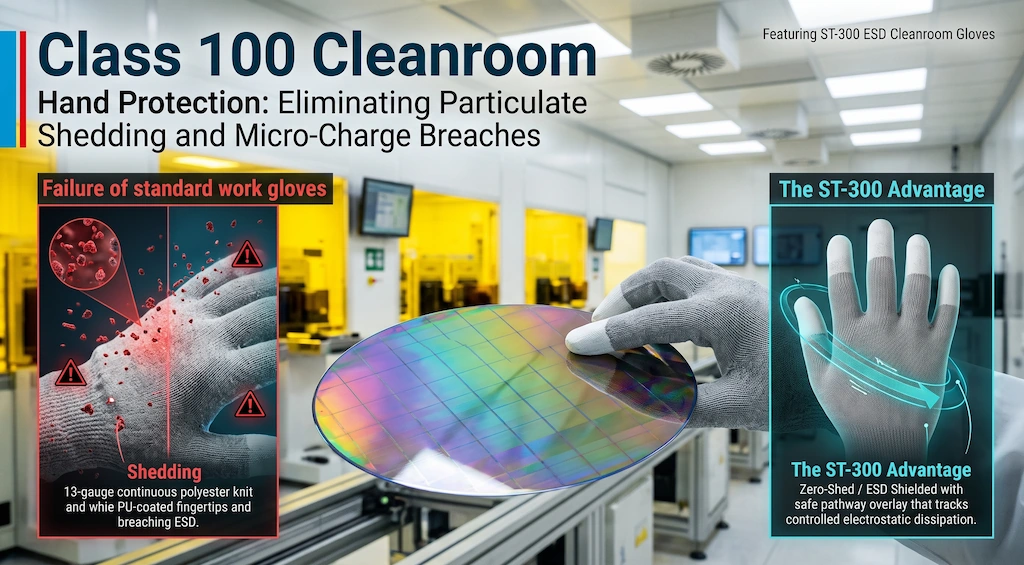
100% Continuous Filament Construction Eliminates Particle Shedding: With traditional blended or short-staple cotton yarn gloves, loose short fibers on the surface are highly prone to brittle fracture and dispersal into the air when subjected to stretching and friction. SQG® utilizes 100% industrial-grade continuous filament polyester combined with microporous polyurethane elastomer coating and hem-sealing technology, resulting in a dense internal yarn structure free of breaks. This eliminates the physical cause of micro-fiber shedding, enabling the gloves to maintain cleanroom-level low particle emission (Liquid Particle Count) even under microscopic friction, thereby ensuring high yield rates for dust-free assembly of smart cockpit optical display systems.
For information on the underlying microscopic mechanisms by which continuous filament knitted linings suppress microfiber shedding, as well as the particulate control standards for work gloves in semiconductor and optical display-grade cleanrooms, please refer to our technical guide, Lint-Free PU Cleanroom Gloves: Preventing Particulate Contamination in Semiconductor Environments.
Liner Engineering: Why 18-Gauge Ultra-Thin Construction Dominates Automotive Assembly Lines
In modern automotive lean manufacturing systems, the cycle time (CT) for individual parts at assembly stations is closely related to the principles of motion economy. The gauge of a glove’s lining not only determines the glove’s physical thickness but also directly affects a worker’s efficiency in handling small parts and the muscular strain experienced on high-paced assembly lines. As final assembly processes demand increasingly precise and delicate manipulations, the 18-gauge ultra-thin knit structure is rapidly replacing the traditional 13-gauge configuration, becoming the mainstream standard for precision workstations at automotive OEMs.
13-Gauge vs. 18-Gauge Mechanical & Tactile Comparison in Micro-Fastening
In workstations involving high-frequency micro-fastening—such as automotive instrument clusters, door panel modules, and center console wiring harness fastening—the tactile sensitivity of gloves has a direct, quantifiable impact on production line cycle times:
Efficiency in Gripping and Positioning Small Fasteners (Tactile Dexterity in Small Clip Installations): When installing M3–M5 micro-screws, plastic snap rivets, and wire harness positioning ties, 13-gauge gloves—due to their thicker fabric cross-section (typically approximately 1.1 to 1.3 millimeters)—offer a less sensitive fingertip feel, workers often need to repeatedly adjust their gripping posture to align the screws with the holes, which can easily lead to slippage, dropped parts, or crooked tightening. In contrast, the 18-gauge gloves have a fabric wall thickness of only 0.7 to 0.9 millimeters; this ultra-thin cross-section provides operators with bare-hand-level pad sensation, enabling them to precisely pick up flat washers and tiny fasteners and quickly align and tighten them.
Significant reduction in single-piece cycle time: Industrial engineering (IE) test data shows that at workstations requiring thousands of screw fastening and latch assembly operations per shift, replacing 13-gauge gloves with 18-gauge ultra-thin PU gloves reduces the time required for a single operation—grasping and aligning small parts—by 0.3 to 0.6 seconds. Based on a production line rhythm of one vehicle rolling off the assembly line per minute, this improvement in tactile sensitivity effectively eliminates workstation bottlenecks and significantly reduces production line downtime and offline rework rates caused by improper part alignment.
For an in-depth engineering comparison of 13-gauge and 18-gauge gloves in terms of microscopic fabric thickness, finger joint bending stiffness resistance, and micro-assembly cycle time (CT), please refer to our technical guide, 13-Gauge vs. 18-Gauge PU-Coated Gloves: Maximizing Tactile Sensitivity in Micro-Assembly Lines.
Spandex-Core Elastic Recovery and Creep Resistance
In addition to high-density, fine-denier fibers, the engineering and mechanical properties of the elastic core yarn within the lining are key to ensuring that the gloves maintain a snug fit and resist sagging or deformation over time:
Eliminating Fingertip “Dead Zones”: After several hours of wear, standard knitted gloves are prone to developing loose “dead zones” at the tips of the fingers due to fiber fatigue and stretching. When working in confined spaces—such as threading through small holes in vehicle bodies or laying cables in narrow channels—this loose, excess fabric at the fingertips can easily snag on sharp sheet metal edges or get caught in plastic slots, leading to operational errors. SQG® 18-gauge gloves use high-elasticity spandex-core yarn, which provides excellent isotropic elastic tension, allowing the gloves to fit snugly around the fingertips like a second skin and eliminating dead zones at the fingertips.
Superior elastic recovery and creep resistance: The fingers of automotive assembly workers undergo thousands of high-frequency flexion and extension cycles during an 8-hour shift. The double-coated spandex structure used in SQG® provides the lining with exceptional creep resistance. Even after a full day of intense mechanical stretching, the fabric’s elastic network quickly rebounds to its original shape, preventing the gloves from becoming loose over time or the palm from shifting or slipping. This ensures that workers maintain a consistent, secure fit and precise control throughout their entire shift.
Grip Dynamics in Dry and Light-Oil Assembly Conditions
Working conditions in automotive final assembly lines are extremely diverse, ranging from the assembly of high-gloss interior trim and instrument clusters in absolutely dry and clean environments to semi-mechanical workstations—such as door lock mechanisms, seat slide adjustment mechanisms, and window regulator micro-motors—that contain trace amounts of anti-rust oil or residual stamping oil. In this environment—where dry and wet conditions alternate and dry surfaces coexist with trace amounts of oil—the polymer structure of the protective glove coating must possess adaptive tribological control capabilities, providing a steady grip on smooth, dry workpieces while preventing slippage and penetration when in contact with a slight oil film.
Microporous Polyurethane Capillary Oil Dispersion
When assembling stamped metal parts, door latches, and hinge mechanisms that carry trace amounts of rust-preventive oil or residual stamping and drawing oil, traditional dense rubber surfaces are highly prone to slippage and instability due to the barrier created by the oil film:
Capillary Dispersion Mechanism of Microporous Honeycomb Arrays: The microporous polyurethane (Microporous PU) coating contains countless interconnected micrometer-scale open-cell honeycomb networks. When the glove comes into contact with a metal workpiece coated with a thin oil film, trace amounts of lubricant at the contact interface are rapidly absorbed and dispersed—via capillary adsorption—into the subsurface micropores of the polyurethane coating under localized contact pressure. This prevents a free oil film from forming a slippery lubricating layer between the workpiece and the glove, allowing the microscopic elastomer on the palm to maintain direct grip on the metal substrate and ensuring stable and reliable gripping.
Inhibiting Rapid Penetration of Oil into the Lining (Controlled Permeation Balance): Unlike cotton-yarn gloves that are completely permeable to oil, microporous PU resin naturally blocks the penetration of mineral oil and synthetic anti-rust grease. During light-oil-contaminated operations, the oil is confined to the microporous surface layer and does not rapidly penetrate the rubber layer to reach the operator’s skin, keeping hands dry and fresh while ensuring hygiene and safety during prolonged wear.
Comparing PU, Nitrile, and Latex in Dry Automotive Interior Assembly
In dry, slightly oily environments and high-end automotive interior assembly applications, there are significant differences in the physical performance of various coated elastomer materials:
| Evaluation Dimensions / Key Performance Parameters | Microporous PU (Microporous Polyurethane) | Foam Nitrile (Foam Nitrile) | Crinkle Latex (Crinkled Natural Latex) |
| Static Coefficient of Friction on Dry Surfaces (Static Friction) | 0.85–1.15 (Smooth and supple, with no sticky or resistant feel) | 0.70–0.90 (Moderate grip, with a slight sense of slippage) | 1.20–1.60 (Extremely high grip; tends to stick to and tear workpieces) |
| Scratch Resistance Index for High-Gloss Paint and Genuine Leather | Excellent (Zero-Scratch) (Good microporous conformability) | Good to moderate (The rubber surface is somewhat hard; high pressure may leave slight marks) | Poor (Excessive rubber friction causes the surface to tear easily) |
| Fingerprint Resistance and Non-Marking Properties (Non-Marking) | Excellent (No plasticizer leaching/no residue left behind) | Moderate (Some formulations may exhibit slight additive migration) | Poor (Free proteins in natural rubber and vulcanized compounds tend to leave marks) |
| Flexibility for Fine Motor Skills and Tactile Feedback | Extremely High (Sub-Newton tactile sensitivity comparable to bare hands) | Moderate (The coating is somewhat thick, making fine maneuvers slightly clumsy) | Extremely low (Thick rubber layers completely block the sensation of fine buckles) |
| Ergonomics for Continuous Wear, Breathability, and Moisture-Wicking | Excellent (Natural convection through microporous openings across the entire palm) | Good (The foam pores allow for breathability, but the rubber feels slightly stuffy) | Very poor (Dense, closed-cell structure; prone to sweat buildup and whitening) |
As shown by the comparative data, polyurethane (PU) coatings demonstrate well-rounded overall advantages in the automotive dry interior assembly process: Unlike natural latex, which can cause the genuine leather stitching to tear due to excessive friction, and unlike traditional nitrile rubber, which can cause microscopic scratches on high-gloss panels due to excessive rigidity, it is the ideal coating solution for automotive interiors and precision assembly operations.
For a systematic comparative analysis of polyurethane (PU), nitrile rubber (Nitrile), and natural latex (Latex) regarding the cross-linking mechanisms of their underlying polymers, oil resistance and slip resistance ratings, and microscopic abrasion resistance testing, please refer to our selection white paper, PU Coated vs. Nitrile vs. Latex Work Gloves: The Definitive B2B Selection Guide for Precision Manufacturing, to access comprehensive materials engineering data.
Engineering Comparison Table: Automotive Workstation Glove Matrix
At large automotive OEMs and core Tier 1 parts manufacturing facilities, there are significant differences in the working environments, the materials of workpiece surfaces, and mechanical protection requirements across different production stages. To avoid excessive protection (clumsy operation, low assembly efficiency) or insufficient protection (scratched and scrapped interior components, loose terminal connections) resulting from a “one-size-fits-all” procurement approach, lean production and EHS management departments must establish a standardized, station-by-station glove selection matrix.
Station-by-Station Glove Specification Matrix
The table below systematically outlines the technical parameters and recommended configurations—including thread count, coating type, scratch resistance rating, LABS silicone-free certification compliance, and tactile sensitivity index—for the four most critical workstations in automotive manufacturing and final assembly processes:
| Core Stations in Automotive Final Assembly | Gauge and Liner Material | Coating Materials and Processes | Surface Scratch Risk Rating | LABS Coating Compatibility Compliance (VDMA 24364) | Tactile Sensitivity Index | Recommended Product Model |
| Station 1: Instrument Panel & Infotainment Integration | 18-Gauge Ultra-Fine Continuous Filament RPET/Spandex Blend | Bio-PU Ultra-Thin Microporous Polyurethane (Palm Dipping) | Extremely Low (Zero-Scratch) | Pass (Zone 1/2) (PWIS-Free) | 9.8 / 10 (Sub-Newton tactile feedback) | SQG® B-318-BIO |
| Station 2: Cockpit & Door Wire Harness Routing | 18-Gauge High-Elasticity Continuous Filament Tensile Liner | Waterborne PU Microporous Polyurethane (Palm Dipping) | Extremely Low (Non-Marking) | Pass (Zone 1/2) (PWIS-Free) | 9.6 / 10 (Tactile “click” confirmation) | SQG® B-318-BIO |
| Station 3: Body-in-White (BIW) Small Hardware Fastening | 18-Gauge High-Abrasion-Resistant Polyester Liner | Microporous PU Capillary Oil-Absorbing Polyurethane | Low (Low Risk) | Pass (Zone 2) (PWIS-Free) | 9.0 / 10 (Quick alignment and fastening) | SQG® B-318-BIO |
| Station 4: Final Quality Inspection (FQI) & Paint Touches | 18-Gauge Ultra-Thin Dust-Free Continuous Filament Liner | Ultra-Thin Cleanroom PU Polyurethane (Palm/Fingertip) | Zero Risk (Zero-Defect) | Pass (Zone 1 Top Tier) (PWIS-Free) | 9.9 / 10 (Defect detection via fingertip feel) | SQG® B-318-BIO |

This selection matrix provides automotive OEM engineering teams with a clear basis for implementation: At the instrument panel and screen assembly station (Station 1), the focus is on using an 18-gauge ultra-thin micro-hole structure to enable highly sensitive fine manipulation and prevent screen scratches; at the dense wiring harness routing station (Station 2), an ultra-high-resilience lining reduces muscle strain caused by frequent pinching and clearly transmits locking vibrations; At the final inspection station (Station 4), high-contrast colors and top-tier VDMA 24364 silicone-free certification ensure zero-defect delivery of the finished vehicle off the production line.
Sustainable Sourcing: SQG® B-318-BIO in Automotive ESG Initiatives
As global automotive giants have successively established carbon neutrality timelines, original equipment manufacturers’ (OEMs) ESG audit requirements for supply chains have expanded from core components—such as power batteries and aluminum alloy die-cast parts—to include high-turnover consumables, such as protective gloves issued daily on the assembly line. Against the backdrop of the automotive industry’s intensifying low-carbon transition, protective equipment must not only ensure assembly yield rates but also provide carbon accounting documentation that withstands third-party audits.
Integrating Scope 3 Decarbonization on High-Volume Automotive Assembly Lines
At large vehicle manufacturing facilities with annual production of hundreds of thousands of units, monthly glove consumption in final assembly shops can easily reach tens of thousands to hundreds of thousands of pairs. The large-scale use of traditional petrochemical-based gloves directly drives up OEMs’ embedded carbon emissions under the “Purchased Goods and Services (Scope 3 Category 1)” category:
Supporting OEM Sustainability Audits: When responding to CDP climate questionnaire disclosures and SBTi Science-Based Targets assessments, major automakers must submit data on emission reduction activities for consumables at all levels of the supply chain to auditing bodies. The SQG® B-318-BIO series gloves feature a lining made from 100% GRS-certified post-consumer recycled plastic bottle filament (RPET), while the palm coating incorporates plant-based bio-polyols. Certified under ISO 14067 Life Cycle Assessment (LCA), the full life cycle carbon emissions of a single pair of finished gloves are reduced by 25% to 38% compared to traditional, purely petroleum-based gloves.
Establishing a traceable green supply chain profile: Every batch of B-318-BIO gloves delivered to automotive plants comes with a dedicated GRS Transaction Certificate (TC) and an ISO 14067 carbon footprint report. Procurement and EHS departments can directly input these standardized emission factors into the company’s carbon accounting system, providing a basis for compliance as automakers prepare for audits under the EU CSRD Directive and global sustainable supply chain ratings.
For a systematic technical analysis of recycled polyester spinning, bio-based polyol synthesis chemistry, and enterprise Scope 3 product carbon footprint accounting, please refer to our specialized technical guide, Bio-Based & RPET PU Gloves: Lowering Carbon Footprints in ESG-Compliant Industrial Supply Chains.
SQG® B-318-BIO Specifications & Automotive Assembly Compliance
As a core flagship product engineered specifically for high-end precision assembly in the automotive industry, the SQG® B-318-BIO delivers critical technical advantages across ergonomic performance and chemical safety:
18-Gauge Ultra-Dexterous Build: Utilizing an 18-gauge high-density seamless knitting process combined with water-based microporous polyurethane dipping technology, the SQG® B-318-BIO offers an exceptional “second-skin” fit, eliminating dead zones at the fingertips and loose excess fabric during tight wire routing.
REACH DMFa Chemical Safety: The water-based polymerization formulation fundamentally eliminates harmful organic solvents such as dimethylformamide (DMFa). The residual DMFa content in the finished product is far below the limits set by the EU REACH regulation, ensuring the skin safety and occupational health of front-line assembly workers during all-day wear.
Multi-Station Automotive Versatility: Engineered with an ultra-thin microporous polymer barrier, the SQG® B-318-BIO is optimized across clean cockpit interior installation, blind connector insertion, and final quality inspection, delivering balanced scratch protection, tactile feedback, and non-marking performance throughout the assembly line.
Implementation Guide: Standard Operating Procedures (SOP) for Plant-Wide PPE Standardization
In large-scale automotive manufacturing plants, simply selecting high-performance protective gloves does not fully address on-site quality and cost issues. Given the large number of production lines and high employee turnover, the absence of standardized operating procedures (SOPs) and material control mechanisms can easily lead to issues such as excessive glove issuance, arbitrary hoarding, and cross-contamination between production lines. By implementing plant-wide PPE standardization management and an intelligent distribution system, automotive manufacturers can significantly reduce the overall procurement costs of consumables while ensuring assembly quality.
Dispensing Vending Machine Integration & Per-Station Allocation Protocols
The traditional centralized manual distribution model in warehouses suffers from cumbersome issuance processes and delayed data reporting. This often leads front-line workers to hoard large quantities of gloves in their workstation drawers for convenience, resulting in material backlogs and hidden waste:
Deployment of Smart Automatic Dispensing Machines on Production Lines (Dispensing Vending Machine Integration): Industrial smart dispensing machines are strategically placed near work teams on main assembly lines, sub-assembly stations, and kitting areas within the final assembly shop. Operators can retrieve gloves in seconds by swiping their employee ID cards, while the system automatically records the retrieval time, employee ID, work team, and specific model in the background, ensuring real-time transparency of material consumption data.
Per-Station Allocation Protocols and Consumption Monitoring: The EHS and Lean Production departments scientifically set reasonable per-person, per-shift, or weekly allocation quotas based on the actual operating conditions of different workstations (e.g., high-wear body-in-white fastening stations vs. interior assembly stations with extremely high cleanliness requirements). The intelligent system automatically issues alerts for high-frequency withdrawals exceeding quotas, prompting team leaders to promptly investigate whether improper operations, mismatched glove selection, or abnormal wear and tear are occurring. This optimizes overall consumption metrics and eliminates stockpiling in the workshop.
Preventing Cross-Contamination Between Oily Sub-Assembly and Clean Trim Stations
One of the most common quality incidents in automotive assembly occurs when grease from upstream mechanical sub-assembly stations is inadvertently carried by workers into downstream clean trim stations, contaminating genuine leather seats and center console trim panels:
Establish strict physical and visual separation boundaries within the workshop: Dedicated handling protocols must be enforced between sub-assembly and final trim lines. Clean workstations—such as interior trim installation, instrument panel assembly, and optical display bonding—are standardized with clean SQG® B-318-BIO gloves, while workers handling oily chassis and hinge pre-assembly must not enter clean trim areas without changing gloves.
Strict procedures for changing gloves when moving between areas have been established: The SOP explicitly stipulates that any operator wearing dark-colored or oil-stained gloves is strictly prohibited from entering the interior cabin to work or from touching unpackaged soft-padded parts. Establish a glove inspection and replacement buffer station at the entrance to the interior final assembly line to prevent gloves contaminated with residual oil from stamping operations from soiling high-value interior components. This management measure effectively cuts off the pathways for cross-contamination from oil stains, ensuring that the vehicle’s interior rolls off the line with zero defects.
Knowledge Base: Frequently Asked Questions (FAQs)
To help automotive OEM process engineers, lean supervisors on the shop floor, and EHS procurement teams more quickly resolve practical technical questions that arise when introducing new assembly gloves, the following is a summary of expert answers regarding mechanical durability, silicone-free certification for painting, interior surface protection, and production line cycle time optimization.
Can 18-gauge PU gloves withstand the friction of continuous automotive wire pulling?
They can fully withstand high-intensity wire harness pulling operations.
Although 18-gauge gloves are extremely thin in physical thickness (only about 0.7 to 0.9 millimeters), their lining utilizes a high-density blended weaving process combining ultra-high-molecular-weight polyester continuous filament (Continuous Filament RPET) with high-strength, tough, and elastic fibers, resulting in excellent single-yarn breaking strength and tensile elongation. The microporous polyurethane coating on the palm offers excellent resistance to repeated mechanical friction. Tested according to the EN 388 standard for mechanical hazards, it withstands over 2,000 abrasion cycles (meeting Level 2 to Level 3 standards). When workers continuously pull and tighten heavy wire harness trunks inside the cavities of vehicle body panels, the gloves do not suffer from fiber brittle fracture, delamination on the palm, or wear-through at the fingertips, effectively balancing ultra-thin precision control with durable service life.
Are SQG® automotive assembly gloves certified as silicone-free (LABS-compliant)?
Yes, the entire line of SQG® automotive assembly gloves strictly complies with the LABS silicone-free certification under the German VDMA 24364 standard.
Throughout the entire production process—from raw material selection and chemical formulation to dipping and curing—the gloves completely eliminate the use of substances that hinder paint film wetting (PWIS), such as silicone-based defoamers, silicone release agents, and low-molecular-weight free plasticizers. The finished gloves undergo multi-stage ultrasonic cleaning with deionized water on a fully enclosed, clean production line, ensuring that no harmful residues—which could cause paint pinholes or fish-eye defects—are transferred to the vehicle body when used at interface stations in the paint shop, in the electrophoretic pretreatment area, or at door seam leveling stations.
How do PU-coated gloves prevent cosmetic marring on high-gloss piano black trim?
They provide dual surface scratch protection through microscopic elastic compliance and a dense physical barrier.
First, after curing, the microporous polyurethane coating forms a uniform, soft, and highly elastic microporous cushioning network that evenly disperses localized point-contact stress when pressing a latch firmly, eliminating scratches caused by hard spots; Second, the 18-gauge high-density knit structure completely envelops and isolates the operator’s fingernails and rough skin, eliminating the risk of fingernails directly scratching the piano-lacquered panels or the anti-glare display on the center console; Furthermore, the highly cross-linked water-based polyurethane coating contains no volatile oils, preventing the penetration of workers’ sebum and acidic sweat onto workpiece surfaces. This ensures that high-gloss finishes and genuine leather interiors retain their pristine, scratch-free, and mark-free appearance after assembly.
How does switching to 18-gauge gloves improve takt time on high-speed assembly lines?
By eliminating blind spots during fingertip operations and reducing resistance when aligning small parts, the cycle time per unit is significantly reduced.
On automotive final assembly lines, takt time is typically measured down to the second. Traditional 13-gauge or heavy cotton gloves lack fine tactile sensitivity at the fingertips, so when workers are picking up M3–M5 micro-screws, inserting barbed clips, or blind-inserting multi-pin wiring harness terminals, they often need to repeatedly adjust their hand positioning, resulting in sluggish movements. After switching to 18-needle ultra-thin gloves, workers can experience sub-newton tactile feedback approaching that of bare hands, clearly sensing the locking click when connectors are properly seated, allowing them to perform gripping and assembly actions in a single, fluid motion. Labor time calculations show that the time required for a single grasp-and-alignment operation can be reduced by 0.3 to 0.6 seconds, effectively eliminating takt time bottlenecks at micro-manipulation workstations and significantly improving the overall assembly yield rate on high-speed assembly lines.
Strategic Sourcing & Call to Action (CTA)
In the lean manufacturing transformation of automotive OEMs and large-scale parts manufacturing facilities, closely aligning the selection of personal protective equipment (PPE) with production line yield rates, ergonomic workload reduction, and ESG emissions reduction is the key to achieving cost savings and efficiency gains. By introducing ultra-thin polyurethane industrial gloves that combine 18-gauge bare-hand-level micro-manipulation sensitivity, VDMA 24364 silicone-free certification for painting applications, and low-carbon, eco-friendly properties, companies can ensure front-line assembly cycle times while completely eliminating the risk of scratches on high-value interior components and paint adhesion defects.
Free Automotive Assembly Trial Kits & On-Site Station Audits
To assist automotive engineering teams, lean production supervisors, and EHS procurement departments in accurately verifying suitability for different workstations, we provide comprehensive technical support and on-site operational assessment services to automotive OEMs and Tier 1 suppliers:
Request free line trial sample kits: We provide complete plant trial sample packages of the SQG® B-318-BIO 18-gauge ultra-thin flexible assembly gloves, enabling automotive assembly teams and EHS managers to conduct multi-shift comparative trial runs across live production workstations.
On-site Workstation Productivity and Scratch Resistance Assessment Support: For core workstations such as central control panel assembly, high-gloss trim panel pressing, high-density wiring harness blind insertion, and door lock assembly, we provide detailed Technical Data Sheets (TDS), VDMA 24364 LABS silicone-free compliance test reports, and ISO 14067 carbon footprint calculation reports.
To schedule an on-site technical performance evaluation or request production line test samples, please feel free to contact our Technical Application Engineering team at any time: Request Automotive Line Trial Samples & Technical Data Sheets.
Automotive PPE Product Catalog
SQG offers a comprehensive range of professional work and protective gloves covering the entire automotive manufacturing process—from 18-gauge ultra-sensitive micro-manipulation gloves and 13-gauge general-purpose, high-abrasion-resistant models to dust-free, anti-static cleanroom gloves and water-based, eco-friendly gloves—meeting operational standards for all scenarios, from stamping and pre-assembly to body assembly and final inspection.
To learn more about the technical specifications, size options, and bulk procurement solutions for polyurethane gloves designed specifically for automotive final assembly, please browse our comprehensive product catalog: Explore Precision Industrial PU Gloves for Automotive Manufacturing.