
The Lifecycle Assessment (LCA) of Protective Handwear: A B2B Guide to Carbon Verification
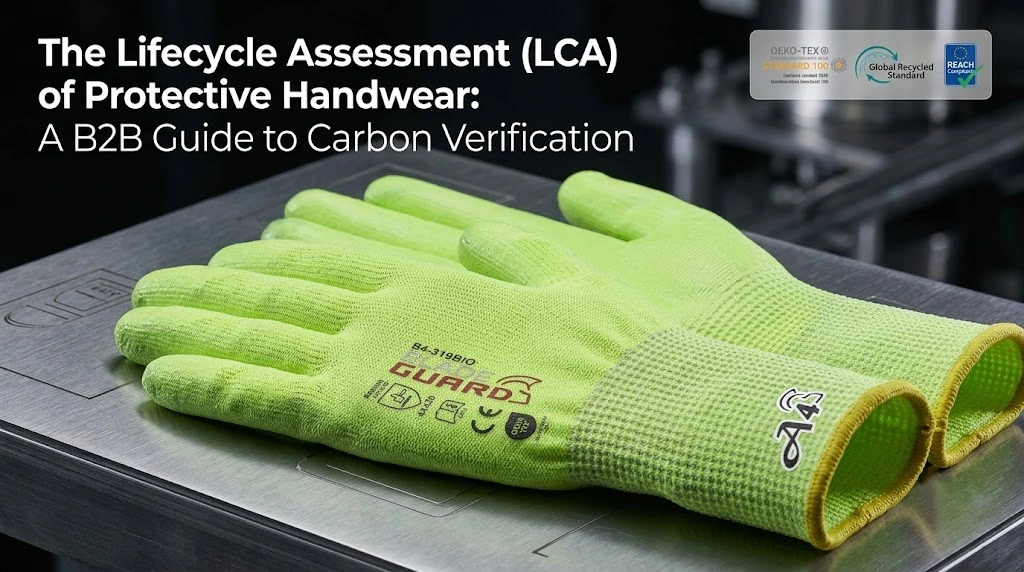
Introduction: Why LCA Is the New Standard for PPE Procurement As a definitive PPE Lifecycle Assessment standard emerges against the backdrop of accelerating decarbonization in global manufacturing supply chains, the entry requirements set by major multinational manufacturers are undergoing a rigorous overhaul. Faced with stringent Scope 3 supply chain greenhouse gas accounting protocols, vague slogans […]
Understanding OEKO-TEX Standard 100 Certification for Safety Gloves: The Ultimate B2B Procurement Guide
Introduction: The Rising Standard of Chemical Safety in Modern Manufacturing PPE When updating your inventory with OEKO-TEX 100 Safety Gloves, modern manufacturing facilities must recognize that the criteria for selecting occupational safety supplies have changed. In the past, centralized procurement teams would issue requests for proposals and focus almost exclusively on mechanical performance. The standard […]
How RPET Liners Help Manufacturers Reduce Scope 3 Carbon Emissions

RPET Liners (Recycled Polyester Liners) refer to seamless knitted skeletons for industrial-grade protective gloves used in protective equipment, which are produced by processing post-consumer PET bottles through physical cleaning, high-temperature pelletization, and melt-spinning technology, thereby completely replacing fossil-derived resources at the textile source. While fully retaining the tear resistance and tensile strength required for heavy […]
What is Bio-Based PU Coating? Performance Analysis in Industrial Gloves
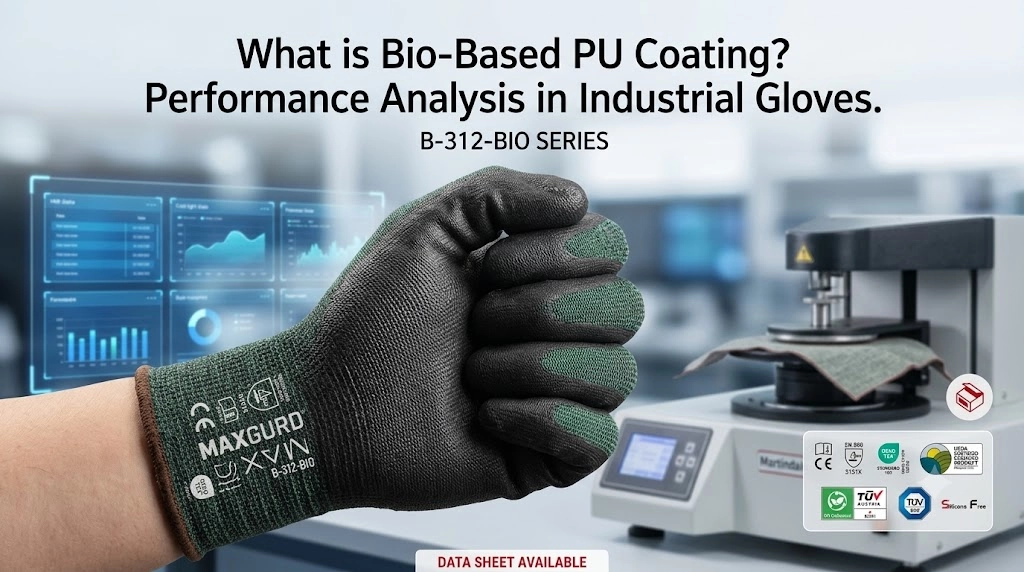
Bio-Based PU Coating is a groundbreaking, eco-friendly technology that utilizes plant-based polyurethane resins. Extracting biomass from non-food crops, it reduces carbon emissions by 25% to 40% at the raw material source. During the thermal curing stage, this technology maintains a highly dense three-dimensional cross-linked network, ensuring that protective gloves retain uncompromising mechanical abrasion resistance and […]
Physics of Cut-Resistant Glove Materials: Core Yarn Science

In modern heavy industry—including steel smelting, automotive body stamping, and high-risk specialty glass manufacturing facilities—frontline workers’ hands are in daily close combat with extremely sharp mechanical burrs and knife edges. Faced with these high-risk, zero-tolerance working conditions, evaluating and selecting high-quality cut resistant glove materials has become a core task for corporate EHS directors and […]
Beyond ANSI A5: Scaling Hand Protection for Extreme Laceration and Impact Hazards
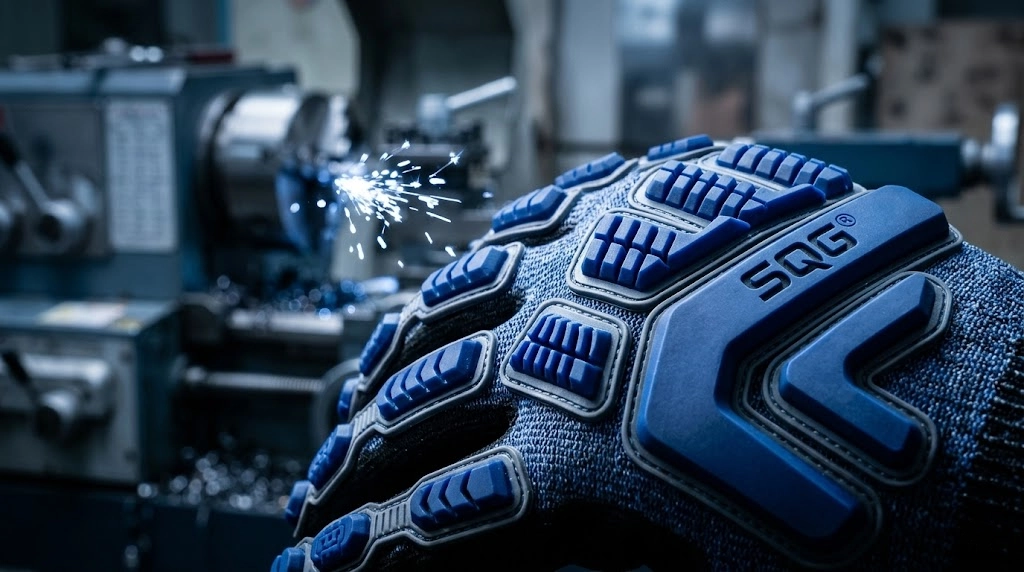
Introduction: The High-Stakes Reality of Hand Injuries in Heavy Industry Heavy-duty cut resistant work gloves are a crucial cornerstone for modern heavy industry to rebuild safety defenses and ensure environmental compliance as it faces the challenges of digitized production lines. In harsh working conditions—such as heavy steel mills, deep-mine operations, automotive stamping and assembly, and […]
Sustainable Cut Resistant Gloves: Reducing Manufacturing Scope 3 Emissions

Introduction: ESG Pressures and Shop Floor Realities Sustainable cut resistant gloves are reshaping modern production lines and setting new benchmarks for environmental compliance. In today’s globalized manufacturing supply chains, multinational manufacturing giants—such as Apple, BMW, and other top-tier supply chain systems—have, after fully achieving direct emissions reductions within their factories (Scope 1 & 2), shifted […]
Thin Cut Resistant Gloves: 18-Gauge & 21-Gauge Safety Guide
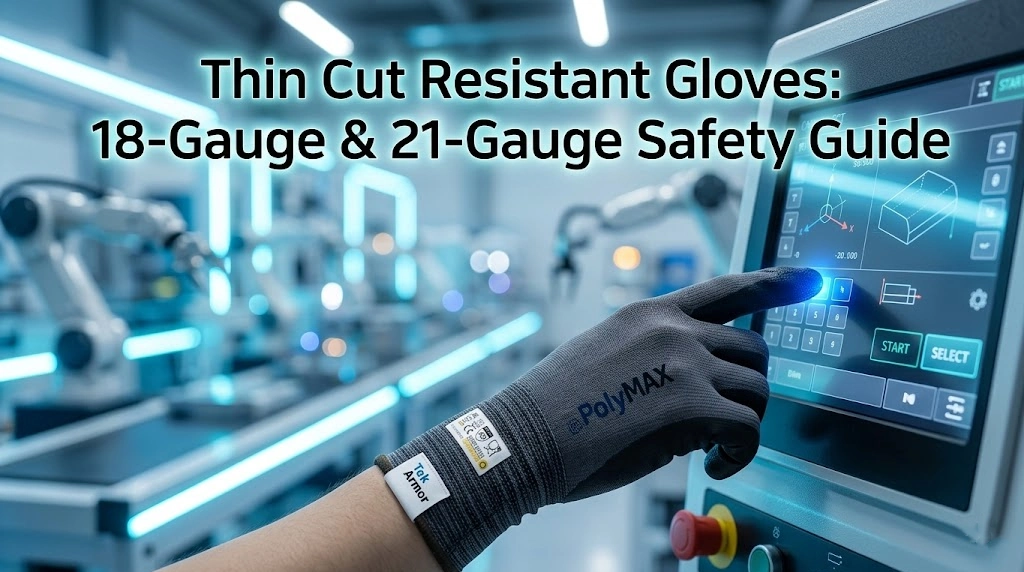
When sourcing thin cut resistant gloves, EHS directors and procurement managers often face a frustrating vicious cycle: even though the company spends a fortune on high-specification protective gear, workers still secretly take them off while on the job. This isn’t because workers are intentionally violating safety protocols; it’s simply because traditional protective gloves are too […]
The Future of Green PPE: Performance Analysis of Bio-Based PU Coatings
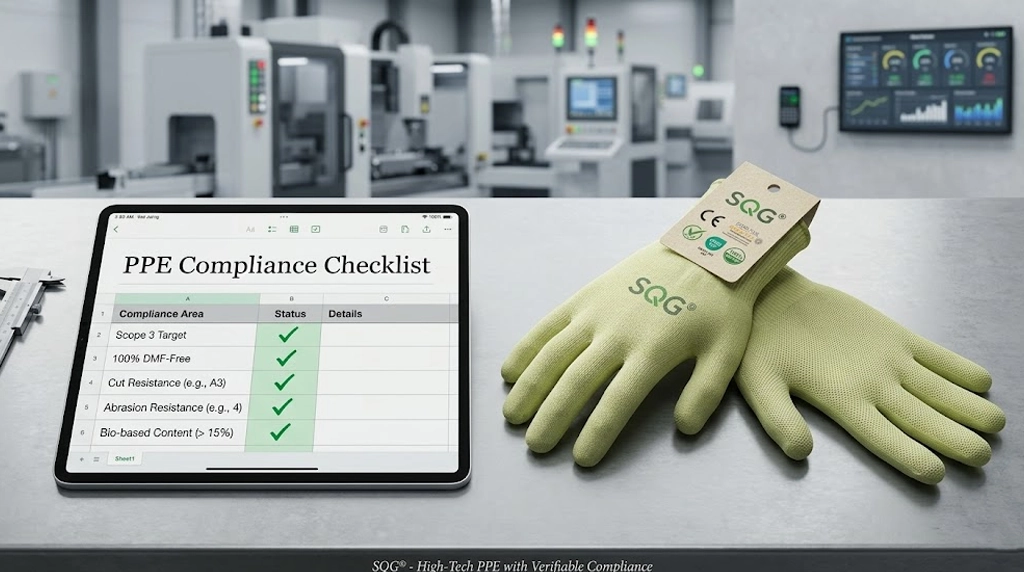
Today, as the global manufacturing industry faces stringent Scope 3 carbon emissions audits and strict ESG green procurement targets, supply chain executives and EHS directors are often plagued by “compliance anxiety”: Do safety consumables marketed as “green and eco-friendly” necessarily compromise protective performance and reduce grip? In work environments with extremely high risks of workplace […]
ANSI vs. EN388 Cut Protection Standards: A Complete Compliance Guide for Multinational Tenders

When drafting PPE bidding specifications for global multinational corporations, discrepancies in mechanical parameters between North American standards (ANSI) and European standards (EN 388) are becoming a high-risk compliance blind spot in international tenders. Many technical bids, due to a lack of in-depth understanding of testing methodologies, result in procured materials failing to provide adequate protection […]
13-Gauge vs. 18-Gauge Safety Gloves: Why Manual Dexterity Lowers On-Site Injury Rates
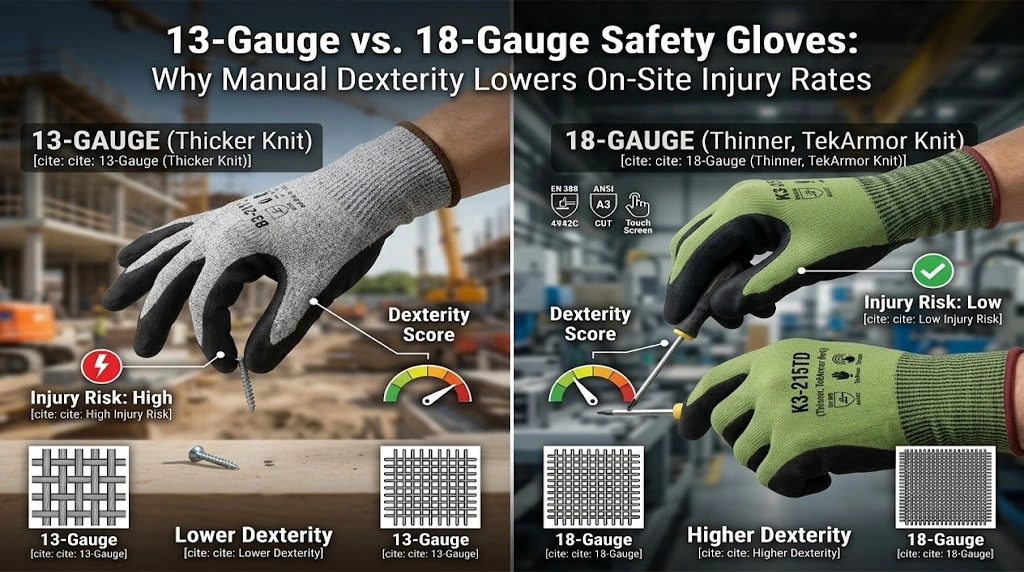
When evaluating 13-Gauge vs 18-Gauge Safety Gloves, global occupational safety and health (OSH) accident statistics reveal that over 70% of recordable hand injuries occur because workers custom-stripped off their PPE due to severe bulkiness and rigid finger stiffness. Traditional heavy yarn safety gloves numb tactical sensitivity, forcing frontline fleets to choose between protocol compliance and […]
Heavy-Duty Construction Work Gloves: Sourcing Guide for Crush, Cut & Puncture Defense
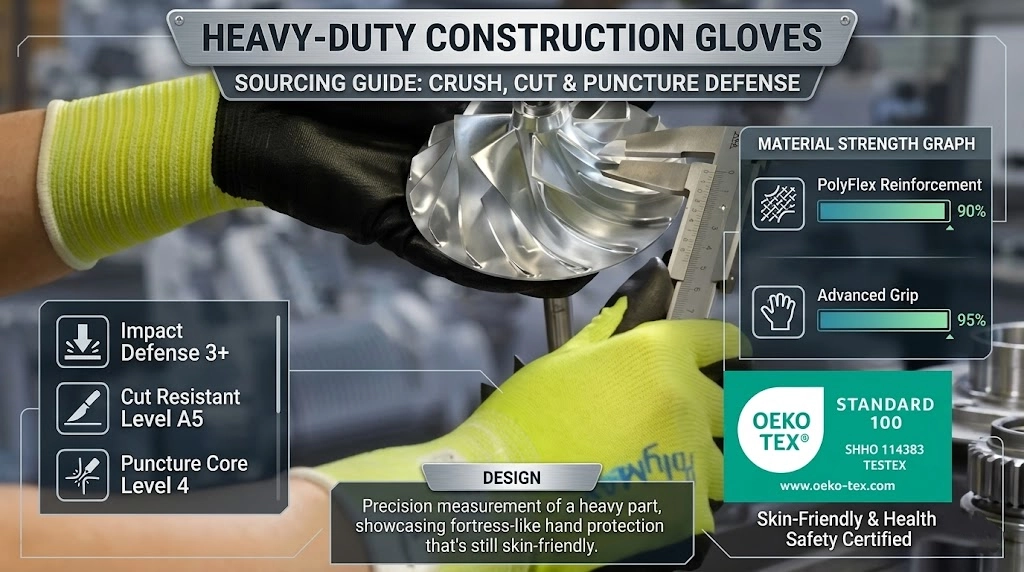
When sourcing Heavy-Duty Construction Work Gloves, safety directors and procurement managers must systematically address the severe hand injury risks prevalent across heavy industrial construction, civil engineering, and high-altitude roofing work. According to official statistics from the U.S. Occupational Safety and Health Administration (OSHA), hand injuries account for nearly 30% of all workplace accidents on construction […]