Introduction: The Contact Interface Crisis in Heavy Tubular Handling
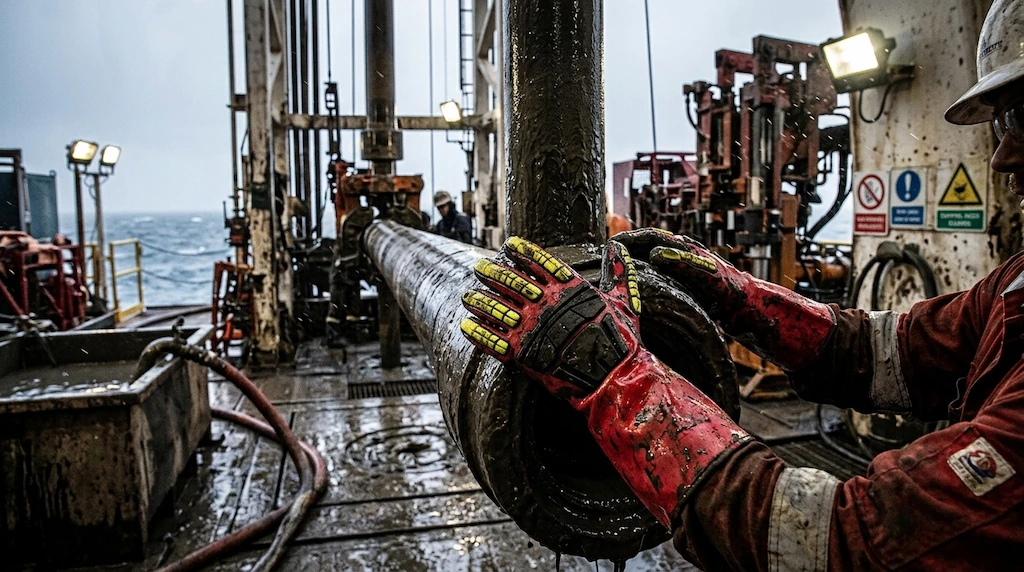
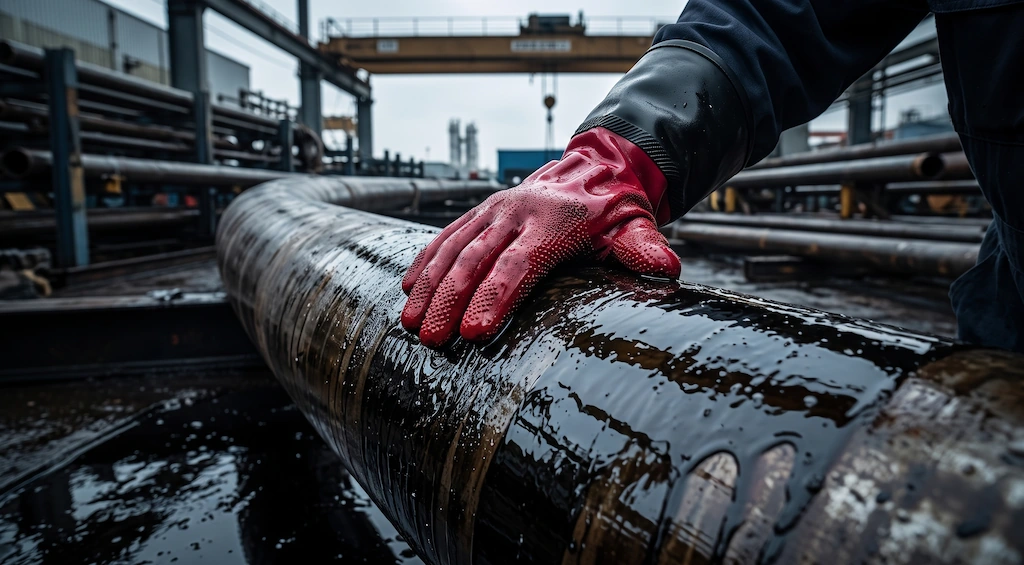
Evaluating sandy finish vs smooth nitrile grip mechanics is the fundamental starting point for addressing hazardous slippage during heavy industrial tubular operations. Whether at deepwater drilling platform pipe yards (Pipe Yard) dozens of nautical miles offshore, at onshore high-pressure long-distance pipeline splicing and laying sites, or in maintenance areas for pressurized valves and pipelines at heavy-duty petrochemical facilities, front-line workers deal with heavy, curved components coated in viscous lubricants almost every day. During hoisting and splicing, the outer walls of seamless casing, drill collars, and high-pressure alloy steel pipes—weighing several metric tons—are rarely in an ideal dry state. Instead, they are chronically coated with a composite fluid layer consisting of a mixture of heavy crude oil, high-viscosity extreme-pressure gear oil, and anti-wear lithium-based grease.
When a worker’s palm presses against these slippery pipe walls, the contact interface instantly falls into an extremely dangerous physical lubrication trap:
Uncontrolled normal shear caused by a hydrodynamic lubrication film: In the microscopic instant of gripping, applying pressure, or laterally pushing and pulling the pipe string, the relative motion between the metal surface and the rubber layer of the glove causes non-polar, viscous fluid to rapidly surge into microscopic gaps. Under the squeezing effect, the fluid spontaneously forms a lubricating film with continuous hydrodynamic lubrication characteristics, completely separating the solid-solid contact surfaces that should otherwise be in tight engagement, causing the static coefficient of friction (COF) at the contact interface to plummet precipitously;
“Water-skimming” slippage failure of conventional smooth rubber liners: Many workplaces still issue traditional smooth-surface gloves to workers, such as standard smooth nitrile protective gloves. While these gloves do perform well under dry conditions due to intermolecular adhesion, when exposed to high-viscosity petroleum hydrocarbons, their surfaces—lacking physical microgrooves to expel oil—are completely unable to tear through the oil film, which possesses high shear strength, upon contact; the palm of the glove floats directly on top of the fluid film, resulting in the highly destructive phenomenon of hydrodynamic planing;
Grip Fatigue and Heavy Object Drops Caused by Mismatched Anti-Slip Textures: When workers notice their palms slipping, the body triggers an uncontrollable compensatory response—the forearm flexor muscles are forced to continuously exert exponentially greater gripping force to maintain stability. If the texture design on the palm of the glove fails to precisely match the physical viscosity of the fluid being handled, the high-intensity, sustained compensatory grip force will deplete the worker’s tendon strength within minutes, immediately triggering the release of heavy pipe columns due to a sudden drop in grip strength. This can lead to irreversible mechanical crushing and serious personal injury accidents.
To eliminate the risk of slippage during string handling at its source, the selection process must be comprehensively upgraded from the traditional “empirical feel-based” approach to a scientific selection based on interfacial tribology—using microporous capillary negative-pressure oil drainage or three-dimensional macro-level interlocking teeth to forcibly disrupt the hydrodynamic pressure layer and reestablish robust solid-solid microscopic boundary friction.
For engineering directors and on-site HSE teams committed to establishing quantifiable friction safety standards in highly contaminated fluid environments, heavy-load pipeline hoisting, and complex fluid pipeline maintenance, we recommend first systematically reviewing our core technical guide on industrial fluid safety protection: Chemical & Liquid Resistant Work Gloves.
The Physics of Industrial Lubrication: How Fluid Films Destroy Grip
In heavy industrial pipeline hoisting and installation projects, the key to evaluating the difference between a “sandy finish” and a “smooth nitrile grip” lies in analyzing how fluids destroy grip friction at the microscopic level. Field workers often attribute glove slippage simply to “oil being too slippery,” but in interfacial physics, slippage is essentially an uncontrolled phase transition in the lubrication state at the contact interface.
When lubricating oil, crude oil, or hydraulic fluid adheres to the curved surface of a steel pipe, the process of a worker pressing their palm against the pipe wall effectively creates a miniature sliding bearing pair. If the microscopic topography of the glove’s surface cannot displace the fluid the moment force is applied, a fluid film will establish hydrostatic support at the interface, completely neutralizing what was originally a firm solid-solid mechanical interlock.
The Stribeck Curve and the Hydrodynamic Lubrication Regime
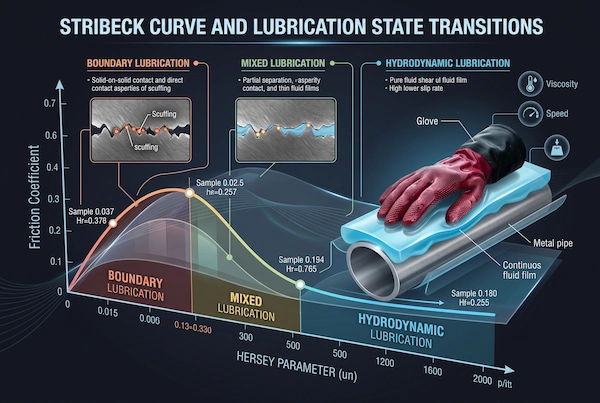
In classical tribology, the Stribeck curve fully reveals the dynamic interplay among fluid viscosity, relative sliding velocity, and the normal force at the contact surface:
Physical Imbalance of Dimensionless Lubrication Parameters: The Stribeck curve classifies the friction state at the contact surface into three stages: boundary lubrication, mixed lubrication, and hydrodynamic lubrication. This state depends on the Hersey parameter—the product of the fluid’s dynamic viscosity and the relative sliding velocity, divided by the normal load per unit contact area;
High-viscosity fluids drive the spontaneous formation of a lubricating film: Heavy gear oils, unwatered crude oil, and anti-rust greases—commonly found in heavy industrial settings—often have dynamic viscosities reaching hundreds or even thousands of centipoise. When a worker’s palm grips the pipe wall and attempts to exert force to lift, pull, or push the steel pipe, even if the relative displacement speed between the hand and the pipe wall is extremely low, the high viscosity of the fluid causes the leading edge of the contact zone to converge and form a fluid wedge within a very short time;
Complete hydrodynamic lubrication isolates solid-solid contact: As the squeezing force and pushing or pulling actions continue, the hydrodynamic effect causes the fluid pressure within the micro-gap to rise sharply until the hydrostatic pressure of the fluid is sufficient to completely balance the normal gripping force applied by the worker’s palm. At this point, the interface is instantly pushed into a fully hydrodynamic lubrication zone, where the glove and the steel pipe surface are completely isolated by a continuous oil film ranging from the nanometer to micrometer scale. Macro-scale solid-solid contact is effectively eliminated, and frictional resistance is entirely determined by the fluid’s low internal shear stress, resulting in a complete collapse of the gripping force.
Boundary vs. Mixed Lubrication on Steel Surfaces
In real-world pipeline engineering, the interaction between the microscopic topography of the steel pipe surface and the fluid determines whether the friction interface remains in a controllable state of boundary lubrication or deteriorates into dangerous mixed and hydrodynamic lubrication:
Microscopic compatibility between precision cold-rolled pipe walls and high-shear oil films: Precision cold-rolled seamless steel pipes have extremely low surface roughness, with the peak heights of their microscopic asperities typically measuring only a few micrometers. When such pipe surfaces are coated with light anti-rust oil or diesel-based fluids, an extremely thin liquid film can easily fill in the microscopic peaks and valleys completely. Without metal micropeaks of sufficient height to pierce the oil film, it is extremely difficult for conventional gloves to establish a boundary lubrication state involving direct contact between rough peaks and the pipe wall; instead, they tend to slip directly into the fluid lubrication regime, where sliding resistance is extremely low;
Fluid retention effect on pipe walls with heavy-duty anti-corrosion coatings: For long-distance oil and gas transmission pipelines coated with heavy-duty anti-corrosion coatings such as epoxy powder (FBE) or three-layer polyethylene (3LPE), although their macroscopic surfaces exhibit corrugated micro-roughness, the microscopic pits on the coating surface can become miniature “oil reservoirs” when saturated with a mixture of rainwater, mud, and hydraulic grease. When the glove is pressed down, the viscous fluid trapped in these pits cannot escape laterally; instead, it generates localized micro-static pressure support, which similarly neutralizes the self-locking jam effect between the microscopic contour peaks;
Mechanical interlocking is nullified when rough peaks are submerged by fluid: True stable grip relies on mechanical interlocking between the microscopic irregularities of solid surfaces.
The Threat of Progressive Grip Fatigue
The static coefficient of friction plummets due to fluid lubrication, which not only poses an immediate risk of slippage but also creates a hidden hazard of progressive grip fatigue from an ergonomic perspective:
Compensatory high-load static gripping by the forearm muscle groups: When a worker perceives even the slightest slippage or gap between the palm and the pipe wall, the brain—acting on the instinct to maintain load balance—issues neural commands to multiply the gripping force. The superficial and deep flexor muscles of the forearm are forced to shift from normal intermittent dynamic contractions to sustained isometric contractions under extreme loads;
Capillary occlusion and rapid lactic acid buildup in muscle fibers: Sustained, high-intensity isometric gripping rapidly blocks microcirculatory blood flow within the forearm muscles, causing severe ischemia and hypoxia in local muscle fibers. Lactic acid and pain-inducing substances produced by high-load metabolism accumulate exponentially within the muscle groups; after 3 to 5 minutes of continuous gripping, a worker’s maximum spontaneous grip strength will plummet by more than 50%;
Sudden Loss of Control and Dropping at the Moment of Grip Exhaustion: Since the hydrodynamic lubrication on the glove’s surface is not relieved simply by the worker increasing their grip strength, the greater downward pressure actually causes the high-viscosity fluid to generate even more intense shear flow within microscopic gaps. The moment the worker’s forearm muscles are completely exhausted and involuntary spasms occur in the flexor digitorum longus, heavy steel pipes weighing hundreds of kilograms or even several metric tons will instantly slip from their grasp, leading directly to severe workplace accidents such as crushing the lower limbs or crushing the palm.
The Baseline: Mechanics and Limits of Smooth Nitrile Coatings
Before delving into complex microscopic textures and macroscopic interlocking structures, it is essential to first establish a baseline understanding of the mechanics of basic industrial coatings. In comparative analyses of “sandy finish” versus “smooth nitrile grip,” smooth nitrile has long served as the standardized physical benchmark for industrial protective gloves.
Thanks to its extremely high molecular density and non-porous surface, smooth nitrile coating is widely used in many light industrial applications and general mechanical maintenance. However, the grip force derived from the smooth adhesion of this polymer material is highly sensitive to whether the interface is in a dry or wet state. Once operating conditions shift from absolutely dry to high-viscosity heavy oil lubrication, the friction transmission mechanism of the smooth coating fails instantly.
Molecular Contact and Dry-State Adhesive Friction
On dry, fluid-free steel pipes and metal components, smooth nitrile rubber can generate considerable frictional resistance, which is fundamentally based on adhesive friction arising from microscopic solid-solid contact:
True contact area between the polymer elastomer and the metal surface: Nitrile rubber is a thermosetting or cross-linked elastic polymer with a relatively low initial elastic modulus. When an operator applies a vertical normal grip force, the soft, smooth rubber layer undergoes microscopic elastic deformation, conforming to the microscopic irregularities of the cold-rolled steel pipe surface, causing the “true contact area” at the microscopic scale to rapidly approach the macroscopic apparent area;
Tight adsorption via molecular-level van der Waals forces: At an ideal interface—dry and free of any intervening medium—the microscopic intermolecular distance between the polar cyano groups (-CN) in the nitrile macromolecular segments and the iron-based alloy surface is compressed to the nanoscale range. High-density intermolecular van der Waals forces spontaneously form at the interface between the two phases, resulting in extremely strong adhesive force at the macroscopic level;
Dry-state resistance caused by rapid shear desorption: When pulling a steel pipe in a dry state, breaking this molecular adsorption requires overcoming the shear resistance of the polymer segments peeling away from the metal surface. Therefore, the static coefficient of friction of smooth nitrile rubber on an oil-free steel pipe typically reaches 0.70 to 0.75, providing sufficient initial grip confidence for light industrial handling.
The Viscous Aquaplaning Effect under High Viscosity
However, this “adhesive friction”—which relies entirely on direct intermolecular contact—is extremely fragile. When heavy crude oil, high-viscosity extreme-pressure gear oil, or synthetic compressor oil is introduced at the contact interface, the grip performance of smooth nitrile rubber undergoes a dramatic reversal:
Lack of physical microchannels leads to fluid entrapment: The surface of smooth nitrile rubber is as smooth as a mirror, completely lacking any uneven microchannels or three-dimensional pores at the microscopic scale to guide fluid flow. When the glove is pressed against a steel pipe coated with a viscous oil film, the oil trapped between the glove and the pipe wall cannot escape through lateral squeeze channels within milliseconds;
Hydrodynamic aquaplaning caused by an incompressible fluid film: The trapped high-viscosity hydrocarbon oil exhibits strong incompressibility. Under the shear forces generated by pushing, pulling, and gripping, the oil at the interface spontaneously forms a continuous hydrodynamic lubrication layer with a certain load-bearing capacity. The outer rubber surface of the glove floats directly on top of the oil film, completely blocking the molecular-level solid-solid direct contact that would otherwise provide high frictional resistance;
The static coefficient of friction plummets to an uncontrollable limit: Since the contact between the glove and the metal is now mediated by two layers of fluid flow resistance caused by molecular sliding and shear within the oil film, the effective static coefficient of friction at the interface drops sharply from over 0.70 in the dry state to 0.15 or even below 0.10. Even the slightest application of force by the operator causes the glove to drift uncontrollably and smoothly along the pipe wall, making it extremely easy for heavy pipe fittings to slip out of control under the force of gravity.
Cross-Cluster Integration: Dual-Layer Immersion Technology
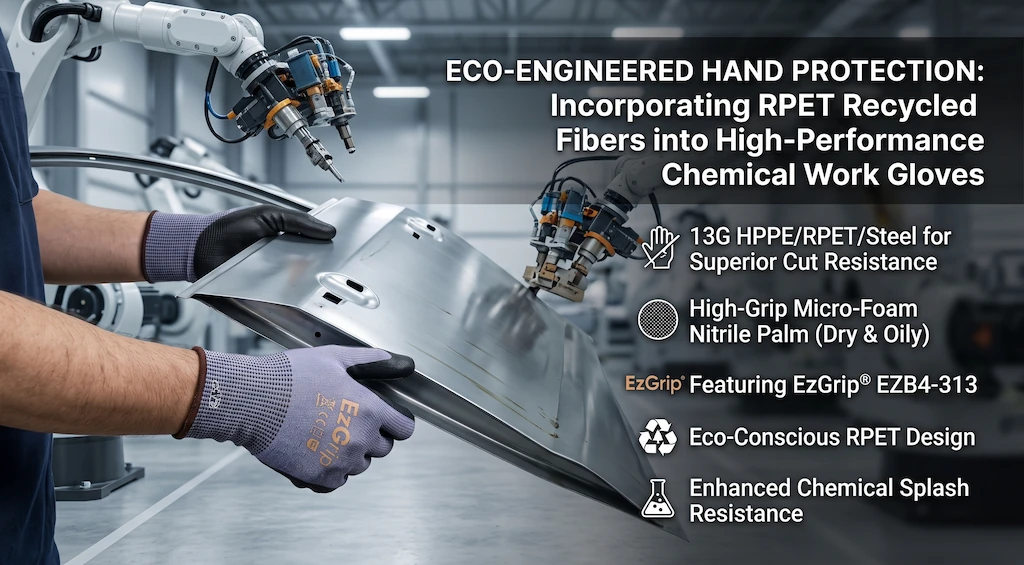
The tribological flaw of smooth nitrile rubber—its tendency to slip easily when exposed to viscous fluids—does not mean it has lost its value in industrial glove manufacturing. On the contrary, in modern fluid protection engineering, dense and smooth nitrile rubber is the core material for building the physical foundation of all-weather “zero fluid penetration.”
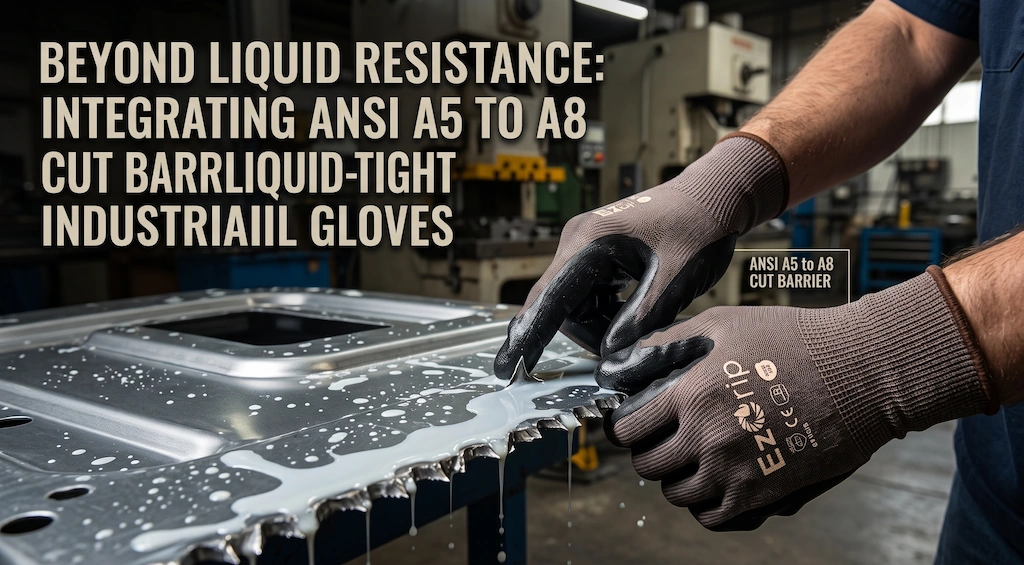
Truly advanced industrial fluid-resistant glove designs never rely solely on a single layer of smooth nitrile rubber. Instead, they employ a composite dual-immersion process where each layer serves a specific function—using a 360-degree continuous, dense layer of smooth nitrile rubber as the base layer to seal all microscopic gaps in the knitted liner, preventing chemical fluid penetration; Subsequently, a second functional coating—featuring microporous adsorption or three-dimensional interlocking teeth—is laminated onto the outer palm layer, thereby achieving both absolute liquid-tight impermeability on the inner layer and high friction resistance against oil-induced slippage on the outer layer within a single glove.
To understand how the dual-layer immersion process resolves the inherent conflict between liquid leakage and grip slippage through molecular-level interlayer cross-linking, we recommend referring to our dedicated technical white paper: Dual-Layer Immersion Technology.
Sandy Finish Architecture: Micro-Capillary Evacuation Dynamics
In the evolution of interfacial tribology aimed at addressing slippage of smooth rubber layers when exposed to oil, the microstructural modification comparing “sandy finish” to “smooth nitrile grip” represents a technological leap from relying solely on intermolecular adhesion to active hydrodynamic drainage. At oilfield pipeline stations and petrochemical valve maintenance sites, when pipeline surfaces are coated with light crude oil, diesel-based flushing fluids, or cold-rolling anti-rust lubricants of medium to low viscosity, simply increasing the downward pressure applied by the palm not only fails to break the continuous oil film but actually exacerbates hydrodynamic lubrication.
The “Sandy Finished” surface treatment used in the P-902 heavy-duty chemical-resistant gloves reconstructs a high-density microporous network on the exterior of the thick-walled polymer. By utilizing microscopic capillary effects, it actively peels away and diverts the oil film from the contact interface, thereby resolving the problem of grip failure caused by oily media at the microscopic geometric level.
Salt-Leaching and Micro-Porous Surface Topography
The P-902 palm features a fine, high-damping textured surface that is not the result of simple post-processing sandblasting or mechanical polishing, but rather relies on a precise chemophysical phase-separation pore-forming technology—the Precision Salt-Leaching Microporous Process (Salt-Leaching Sandy Finish):
Uniform distribution of micron-scale water-soluble pore-forming crystals: Within a millisecond-level window—after the outer layer of P-902’s thick-walled, pure-grade, heavy-duty PVC slurry has been impregnated but before the gel has fully plastified—the production line uses a micro-airflow atomization spray system to uniformly embed high-purity, fine inorganic salt microcrystals (with particle sizes strictly graded and controlled between 30 and 80 micrometers) into the surface layer of the rubber shell;
High-Temperature Curing, Cross-Linking, and Water-Washing to Dissolve Micro-Cavities: The gloves containing the salt crystals are immediately transferred to a gradient-heating curing oven, where the PVC resin, upon heating, tightly encapsulates the crystal edges and completes the cross-linking and curing of the polymer chains. Subsequently, the gloves pass through multiple continuous ultrasonic counter-current hot water washing tanks, where the embedded salt crystals are thoroughly dissolved by heat and completely flushed out, while the microscopic physical spaces originally occupied by the crystals are preserved in situ;
Formation of a Three-Dimensional Porous, Open-Cell Sponge Network: After desalination through washing, the PVC surface forms tens of thousands of three-dimensional, interconnected, suction-cup-like open micropores (micro-cavities). This microscopic topological morphology not only greatly expands the microscopic surface area of the palm but also breaks through the originally dense, incompressible, and rigid boundaries of the smooth rubber layer, endowing the rubber shell surface with micron-level contact compliance and elastic absorption space.
Capillary Siphoning and Fluid Film Disruption
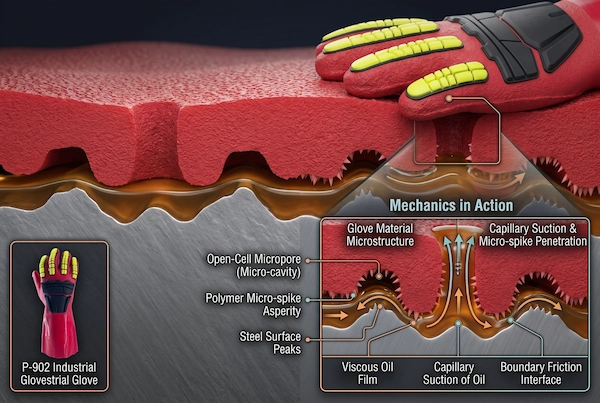
When the palm wearing the P-902 grips the oil-coated curved steel pipe wall, the surface of the salt-precipitated micropores exhibits extremely powerful active film-breaking kinetics:
Negative-pressure suction generated by the compression and release of microchambers: When the worker’s palm contacts the pipe wall and applies a normal, perpendicular clamping force, the polymer microskeleton on the surface of the micropores undergoes transient elastic compression, causing air within some micropores to be instantly expelled; Meanwhile, during the instant of minute deformation as the fingers fine-tune their contact with the curved surface, the microporous framework rapidly rebounds to its original position due to its high elasticity, creating a localized micro-vacuum with nanosecond-level negative pressure inside the micropores;
Powerful siphoning and diversion by capillary forces: According to Laplace’s law of capillary pressure, fluids in narrow micrometer-scale channels generate extremely strong capillary rise and lateral flow forces. When faced with a layer of medium- to low-viscosity lubricating oil ranging in thickness from a few micrometers to several tens of micrometers, the open micropores act like millions of microscopic pipettes, forcibly drawing the free fluid trapped at the contact surface deep into the micropore cavities via the capillary siphoning effect;
Physical Tearing and Lateral Escape of the Shear Oil Film: After the fluid is actively diverted by the micropores, the continuous hydrodynamic lubricating oil film—which originally formed a unified whole between the steel pipe and the glove—is instantly torn into discrete, isolated droplets. The oil can no longer form a continuous oil wedge capable of providing fluid support between the interfaces, thereby completely disrupting the conditions necessary for hydrodynamic lubrication.
Restoring Boundary Friction on Low-to-Medium Viscosity Films
The ultimate goal of microporous oil removal is to create physical space for solid-solid contact, forcibly shifting the system from a fluid lubrication state with minimal sliding resistance back to a boundary lubrication state characterized by high frictional damping:
Microscopic asperities in the elastic polymer pierce the residual oil phase: After the microporous structure absorbs the vast majority of the free surface oil film, the microscopic contour peaks (asperities) of the high-hardness PVC resin remaining on the microporous structure and its edges become prominent. Under the pressure of the worker’s grip, these microscopic asperities directly pierce the residual nanoscale molecular lubrication monolayer, overcoming the fluid barrier;
Establishing high-grip mechanical contact with the micro-rough peaks on the metal tube wall: The outer walls of cold-rolled tubes or steel tubes with micro-roughness naturally exhibit micron-scale machining marks and microscopic pits. The exposed, dense, hard polymer micro-peaks of P-902 directly embed themselves into the pits on the metal surface, causing the hard and micro-elastic contour peaks of the two phases to interlock tightly at the interface;
Restores high-damping, torsion-resistant boundary friction under dry conditions: By eliminating dynamic buoyancy at the interface and restoring mechanical boundary friction, P-902 can firmly maintain the static coefficient of friction within the high range of 0.65 to 0.75 when applied to steel pipes wetted with diesel, No. 32 hydraulic oil, and light anti-rust oil. Frontline operators can not only clearly feel the secure gripping damping provided by the microscopic mechanical interlocking but can also easily control the rolling of the pipe without having to grip it too tightly, thereby eliminating the rapid fatigue of the forearm muscles caused by fluid drift.
PVC Particle Technology: Macro-Mechanical Interlocking Mechanics
In the deeper dimensions of industrial fluid tribology, when operating media range from thin hydraulic oil to heavy crude oil, drilling fluids containing a large number of solid particles, and thick extreme-pressure greases, microporous capillary absorption and discharge technologies (such as a sandy finish) reach their physical limits. When comparing a “sandy finish” to a “smooth nitrile grip” in such high-viscosity environments with heavy solid-phase deposits, it is essential to introduce a fundamentally different dimension of macro-mechanical interlocking.
Faced with clumped mud and paraffin sludge deposits on the tubing string surface—with thicknesses reaching hundreds of micrometers or even millimeters—reliance on microporosity alone is no longer sufficient to accommodate such massive fluid volumes. The P-901 heavy-duty industrial glove breaks free from the framework of microscopic fluid channeling and instead employs macroscopic three-dimensional PVC particle fusion technology. Through “hard-on-hard” mechanical interlocking, it directly pierces through thick, viscous interfaces to establish an extreme physical defense against twisting and slippage.
High-Hardness Raised PVC Particle Morphology
The raised protrusions densely covering the palm of the P-901 are not the thin layers of plastic dots found on ordinary gloves—which are prone to wear and peeling—but rather a specialized three-dimensional polymer structure designed according to rigorous tribological geometry:
Microscopic pyramid cross-section and protrusion height design: The average protrusion height of the modified PVC particles embedded in the P-901 surface is precisely controlled between 800 and 1,200 micrometers, with the tops shaped as micro-arched polyhedral prisms. This macroscopic height provides the particles with sufficient mechanical “ground clearance,” enabling them to float above and penetrate most of the thick fluid films covering steel pipes in industrial settings;
Optimized particle spacing and stress distribution network: The center-to-center spacing between particles is designed to be 2.5 to 3.5 millimeters, forming a regular, interlaced mechanical array across the palm and fingertips. This distribution prevents insufficient debris-trapping space caused by overcrowded particles, while ensuring that when workers grip the curved pipe wall at any angle, there are at least 8 to 12 independent, rigid protrusions per square centimeter making physical load-bearing contact with the pipe column;
Differentiated High Shore Hardness Matching: Unlike the underlying soft PVC/nitrile composite blend shell, which offers low-temperature flexural elasticity, the surface layer of PVC particles utilizes a high-rigidity modified formulation with a Shore hardness of 85A to 90A. The rigid granule material ensures that, when subjected to violent lateral shear and torsional forces from a pipe string weighing hundreds of kilograms, the granules themselves do not bend or tip over excessively, thereby maintaining robust shear support stiffness.
Penetrating Mud Cakes and Heavy Grease Reservoirs
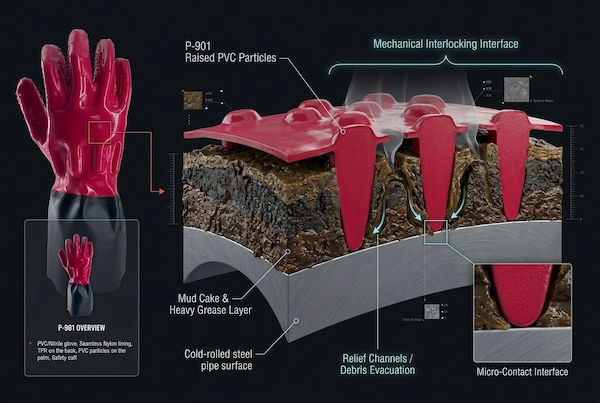
On drilling rig catwalks, casing grinding areas, or valve disassembly sites, steel pipe surfaces are often coated with highly viscous deposits that are extremely difficult to remove. The macro-sized particles in P-901 exhibit powerful penetration capabilities similar to the track teeth on construction machinery:
Tackling Heavy Mud Cakes and Paraffin-Based Resin Layers: The tough mud cakes formed when drilling mud settles and dries, as well as the thick paraffin residues precipitated on pipe walls, possess extremely high yield shear strength. When ordinary smooth gloves—or even finely textured gloves—are pressed against these surfaces, not only are they unable to reach the underlying metal, but they are actually lifted off entirely by the smooth, waxy, and slippery mud film;
Point Contact with High Normal Pressure for Forceful Penetration: According to the principle of pressure distribution, when a worker presses their palm against the pipe wall, the applied grip force is no longer distributed evenly across the entire palm surface but is instead concentrated entirely on the tips of these discrete, high-hardness PVC particles. This localized, extremely high pressure causes them to act like hundreds of rigid punches, easily piercing through the outer layer of viscous heavy oil sludge and high-viscosity lithium-based grease to cut directly into the depths of the deposit layer;
Hard-on-hard contact reaches the steel base metal: After penetrating the soft medium barrier, the tips of the hard PVC particles make direct, rigid, dry contact with the metal substrate of cold-rolled steel or hot-rolled seamless pipes. This operating mode—which bypasses the fluid lubrication barrier to reach the base metal—fundamentally eliminates the buoyancy load of the fluid lubrication film, completely preventing slippage and skidding of heavy-load components under thick layers of sludge and oil.
Deep Relief Channels for Debris Displacement
Piercing through oil-sludge deposits is only the first step; if the large volume of displaced viscous fluid and solid residue has nowhere to drain, it will still accumulate locally and generate back thrust. The three-dimensional deep-groove architecture between P-901 particles provides a decisive physical channel for debris removal:
Three-Dimensional Deep Groove Debris and Mud Drainage System: With particle heights reaching approximately 1 millimeter, the recessed base surfaces between particles naturally form an extensive network of deep, interconnecting drainage channels (Deep Relief Channels). The volumetric depth of this channel system is dozens of times greater than that of a microporous sand surface structure, giving the glove an extremely high capacity for retaining debris and mud;
Lateral Fluid Extrusion at the Moment of Grip Compression: As the worker’s grip deepens and the particles penetrate the mud layer to come into close contact with the metal, the viscous crude oil, solid barite particles, and mud residue—displaced and compressed by the particles—are forcibly squeezed horizontally and flow into the deep grooves of the surrounding particle voids, without causing stagnation, compression, or rebound at the contact load-bearing points;
Establishment of a rigid mechanical interlock free from medium interference: As impurities are rapidly diverted laterally, the side walls and tops of the particles form a high-damping, rigid mechanical interlock with the surface of the metal pipe. Even if the steel pipe experiences severe axial lateral tension or a tendency toward radial rotation due to swaying during lifting, the cluster of PVC particles locked in this mechanical interlock state can steadily counteract the displacement momentum of the pipe wall, providing unshakable static gripping redundancy for heavy-load pipe hoisting and large-jaw operations in extremely contaminated environments.
Foam Nitrile Micropores: The Compressible Sponge Alternative
When exploring solutions to improve the fluid interface between a sandy finish and a smooth nitrile grip, in addition to the microporous structures of the sandy surface—such as those created by salt precipitation—and macroscopic three-dimensional physical particles, micro-foamed nitrile (Foam Nitrile) represents a completely different technical approach in the field of elastic contact mechanics.
Unlike dense, hard modified PVC rubber layers, foaming technology uniformly introduces controlled gas microbubbles into the nitrile elastomer matrix, transforming the palm coating from a traditional rigid rubber film into a porous, foamed elastic layer with high resilience and oil-absorbing properties. In applications involving light to moderate oil contamination and precision mechanical assembly workstations, this absorption and drainage mechanism—based on the compressive deformation of a microporous sponge—provides unparalleled tactile sensitivity and anti-slip performance on micro-oil surfaces for the handling of delicate workpieces. SQG’s P-286R deeply integrates this micro-foam technology into its palm surface, making it a flagship product for transitional processes in both light and heavy industry.
Micro-Foam Elastomer Mechanics in the P-286R
The tribological foundation of the P-286R’s micro-foamed nitrile rubber palm surface is built upon its unique open-cell microscopic sponge framework:
Precision Mechanical Foaming and Stable Micro-Bubble Incorporation: Prior to impregnation, the P-286R palm-side nitrile rubber slurry passes through a precision gas-shear emulsification system, which uniformly incorporates micron-sized inert bubbles into the synthetic nitrile latex matrix. Following a rigorous cross-linking thermal curing reaction, the microbubbles rupture in situ and solidify, forming an extremely high-density, three-dimensional open-cell microporous sponge structure (Open-Cell Foam Network) within the rubber layer, with pore sizes ranging from 10 to 30 micrometers;
Extremely low initial compression modulus and elastic conformability: Because the interior is filled with a microporous framework, the macroscopic hardness of the micro-foamed nitrile coating is significantly lower than that of solid, dense rubber. Under extremely low gripping forces, the foamed layer can produce significant normal micro-elastic compressive deformation, perfectly conforming to the curved metal tube walls or the undulations of threads just like the skin of a fingertip, thereby significantly increasing the microscopic geometric contact area;
Excellent high-frequency reciprocating compression recovery and fatigue resistance: The cross-linked elastic polybutadiene molecular network within the open-cell framework endows the micro-foamed layer with an outstanding elastic memory effect. Even after enduring thousands of high-frequency alternating impacts from gripping and releasing the tool, the micro-pores can still rebound and recover instantaneously within milliseconds, eliminating the permanent plastic collapse and hardening that often occur in foamed materials during long-term use.
Sponge Squeezing and Viscous Oil Dispersion
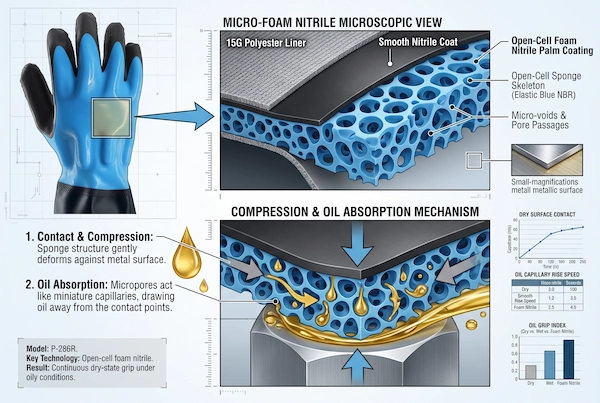
When dealing with metal pipes coated with light mineral oil, low-viscosity lubricating oil, or diesel cleaning agents, micro-foamed nitrile actively removes the lubricating oil film at the contact interface through a physical “squeeze-rebound-oil-absorption” sponge mechanism:
Displacement of the base oil upon contact and compression: When a worker’s finger touches an oil-saturated metal surface, the micro-foamed elastic peaks first come into contact with the fluid and are compressed, causing the outer layer of fluid to be elastically displaced and dispersed in all directions by microscopic protrusions;
Capillary penetration and sponge adsorption through microporous channels: Under sustained compressive force, the internal space within the open-cell microporous framework is compressed and narrowed; subsequently, a strong capillary self-suction effect occurs during the instant of micro-displacement rebound. The excess, thin oil film at the contact interface is rapidly and forcefully “absorbed” and locked within the deep internal voids of the porous micro-foamed sponge framework;
Creating a nearly dry micro-contact interface: After the fluid is deeply absorbed by the micro-sponge, the micro-foamed nitrile elastic mesh on the glove’s surface comes into direct, dry molecular contact with the clean metal surface of the cold-rolled steel pipe, rapidly restoring the high adhesive friction characteristics inherent to nitrile polymers. Under conditions involving trace amounts of oil or oil mist, the static coefficient of friction of the P-286R can rapidly rise to 0.70 or higher, providing workers with extremely clear and crisp braking feedback when gripping smooth, lightweight pipes.
Performance Degradation in Heavy Saturated Hydrocarbons
However, the tribological logic behind micro-foamed nitrile—which trades the absolute physical density of the colloid for porous oil-absorption properties—directly defines its performance ceiling and failure threshold in extreme heavy oil industrial scenarios:
“Fluid blockage” of micropores caused by high-viscosity heavy oil: The pore size of micro-foamed nitrile rubber is typically only 10 to 30 micrometers. When exposed to heavy crude oil, high-gum residual oil, or deep-well drilling mud containing high concentrations of barite powder, the capillary flow resistance of these high-viscosity fluids (kinematic viscosity exceeding 500 cSt) within the microscopic pores increases exponentially. Heavy oil simply cannot penetrate deep into the micropores but instead clogs the surface of the foamed layer, completely paralyzing the micro-sponge’s oil-absorption mechanism;
The “reverse secondary oil seepage” crisis after microporous oil absorption reaches saturation: The oil storage capacity of microporous sponges is extremely limited. During fully submerged operations or highly contaminated pipeline repair procedures involving continuous heavy oil leakage, the foam skeleton reaches its internal physical saturation limit within just a few tens of minutes of contact with the oil. At this point, the compressed sponge not only fails to continue absorbing oil but, much like a water-saturated sponge squeezed by an external force, forces the accumulated chemical oil inside back through the pores toward the contact interface, causing the hydrodynamic pressure film at the interface to reform and the static friction coefficient to collapse instantly;
The critical dividing line between heavy oil/heavy industry and light industrial assembly in terms of work efficiency: Micro-cellular nitrile (such as P-286R) offers an absolute advantage in auxiliary electromechanical workstations that require excellent fingertip sensitivity and the handling of precision lightweight components—such as powertrain disassembly and assembly, cutting fluid protection in metal machining, and the assembly of hydraulic quick-connect fittings; However, once operations enter extreme high-load conditions—such as catwalks on offshore drilling platforms, the handling of drill strings during deep-well tripping operations, and the hoisting of heavy steel pipes coated with thick mud cakes—it is essential to switch decisively to P-902 (Sandy Finished), which features large-bore oil-absorbing microchambers, or P-901 (PVC Particles), with its hard-to-hard mechanical interlocking teeth, to prevent the foam layer from slipping due to oil saturation and causing a catastrophic pipe string fall.
Quantitative Tribology Matrix: Empirical Friction Benchmarks
In heavy-load steel pipe handling, drilling tubing station operations, and pipeline maintenance at heavy-duty petrochemical facilities, evaluating the relative merits of a “sandy finish” versus a “smooth nitrile grip” must not be limited to subjective tactile testing. Changes in interfacial friction damping are directly governed by fluid dynamics and micro-contact mechanics. The size of microscopic pores, the height of macroscopic particles, and the dynamic viscosity of the fluid collectively determine whether the contact interface can maintain a safe static friction threshold.
To establish a technical basis for decision-making in accordance with the industrial E-E-A-T standard, the SQG Industrial Fluid and Friction Engineering Laboratory conducted standardized static coefficient of friction (Static COF) tests on a simulated steel pipe contact test rig for P-902 (Sandy Finished heavy-duty chemical-resistant PVC), P-901 (PVC particle composite), P-286R (double-dipped microcellular nitrile), and conventional industrial smooth-surface nitrile gloves on a simulated steel pipe contact test rig. Through multi-stage fluid wetting with varying viscosities and high normal pressure simulation, the study quantified the friction dynamics decay patterns of different surface topologies under real-world fluid conditions.
Multi-Parameter E-E-A-T Laboratory Data Matrix
The following quantitative benchmark test data were measured on a standard seamless alloy steel pipe substrate, simulating the interfacial static coefficient of friction and dynamic performance when a 150-newton normal clamping force is applied by a worker’s hands:
| Comparison Dimensions (Tribological Benchmark) | SQG P-902 (Sandy Finished PVC) PNG | SQG P-901 (PVC Particles) PNG | SQG P-286R (Foam Nitrile) PNG | Traditional Smooth Nitrile Gloves |
| Microscopic Surface Geometry | Micro-porous cavities | Macroscopically three-dimensional, raised, high-hardness PVC particles | 15-gauge polyester liner with microcellular open-cell sponge elastic layer | Dense, smooth, non-porous, elastic mirror-like surface (Solid, non-porous) |
| Static Coefficient of Friction for Dry Cold-Rolled Steel Pipes (Dry COF) | Between 0.75 and 0.85; smooth to the touch with consistent damping | Between 0.70 and 0.80: Forced interlocking via localized high pressure | Between 0.85 and 0.95: High elasticity maximizes contact area | Between 0.70 and 0.75, due to intermolecular van der Waals forces |
| Light Diesel/Hydraulic Oil Lubrication (Diesel/Oil COF) | 0.65 to 0.75 (excellent capillary negative pressure oil drainage) | Between 0.55 and 0.65: Localized oil drainage at the particle tips | Between 0.60 and 0.70 (Microporous foam for rapid oil absorption) | Between 0.15 and 0.25 (forms a hydrodynamic oil film, causing severe slippage) |
| Heavy Crude Oil/High-Viscosity Mud (Heavy Mud COF) | Between 0.40 and 0.50 (micro-pores are easily clogged by high-viscosity oil) | 0.70 to 0.80 (Direct, rigid penetration through the mud cake with interlocking teeth) | Between 0.25 and 0.35 (Internal foam saturation with reverse oil expulsion) | Between 0.08 and 0.12 (water-on-oil effect, extremely dangerous loss of control) |
| Depth of Interfacial Fluid Channels for Mud and Oil Removal | Interconnected micropores ranging from 50 to 150 micrometers | 800 to 1,500 micrometers of macroscopic, three-dimensional deep mud-discharge grooves | 10 to 30 micrometers elastic open-cell microbubble mesh chain | 0 micrometers (no microchannels; fluid is trapped at the interface) |
| Heavy-Load Steel Pipe Grip Torsional Detachment Threshold | Extremely high (due to micro-polymer peaks deeply embedded in the tube wall) | Top-tier (relying on physical locking by high-Shore-hardness particles) | Moderate (Foam layer prone to lateral distortion under heavy shear loads) | Extremely low (even slight shear forces cause microscopic drift along the oil film) |
| Specialized Mechanical Damage Resistance Properties | Features heavy-duty chemical resistance and an extended, rigid safety cuff to prevent backflow | Features a TPR back-of-hand impact-resistant exoskeleton and highly tear-resistant gel | Features lightweight, flexible, double-dipped leak-proof construction and a snug, breathable fit | Provides only basic protection against oil and scratches; no resistance to blunt impacts or heavy-load torsion |
| Typical Optimal Matching Workstations | Used for hoisting coated pipes at pipe yards and for handling and grinding cold-rolled anti-rust pipes | Used for single-line handling on deepwater drilling rig catwalks and for transporting oil-and-mud-coated casing | Mechanical powertrain assembly; precision disassembly and assembly of hydraulic pumps | General oil-free warehouse sorting, dry hardware packaging, and inspection rounds |
Analysis of Tribological Transition Thresholds
An in-depth analysis of the data matrix reveals that changes in the coefficient of friction are not a linear, gradual process, but rather a phase transition governed by a critical point in the fluid’s kinematic viscosity. It is precisely this physical transition that determines the watershed in operational efficiency among different technical approaches in industrial settings:
Low-viscosity fluid range (below 50 cSt, such as diesel and No. 32 hydraulic oil): With low internal cohesive forces and low flow resistance, these fluids are highly prone to rapid lateral flow under capillary pressure. Within this range, the microporous salt-precipitated sand surface of P-902—with tens of thousands of capillary pores—demonstrates dominant performance, capable of instantly absorbing and discharging extremely thin oil films, thereby maintaining the static coefficient of friction at a dry-state level of around 0.70;
Medium-viscosity fluid transition range (50 to 300 cSt, e.g., heavy-duty gear oil, unheated transformer oil): The fluid’s shear viscosity increases significantly. Micro-foamed nitrile (P-286R) can still absorb the fluid briefly by relying on sponge-like elastic deformation, but under continuous high-load operation, the micropores rapidly approach physical saturation. Due to the smaller pore size of P-902’s sand-surfaced microporous structure, resistance to oil penetration begins to increase, while friction shows a gradual downward trend;
High-viscosity extreme range (300 to 1000+ cSt, e.g., sand-laden crude oil, air-dried drilling mud cakes, lithium-based heavy grease): The fluid possesses a strong yield stress, rendering microscopic capillary action completely ineffective. Not only can the viscous sludge not be absorbed by the micropores, but it also fills the sand-textured pores and foamed microsponge, causing the glove to degrade into a smooth contact surface; under these extreme conditions, the macroscopically protruding PVC particles of P-901 reach a mechanical breaking point —Utilizing extremely high localized normal pressure at a single point, the particles directly breach the yield limit of the viscous mud cake, forcing the viscous oil aside and diverting it into millimeter-deep grooves. By forming a direct, rigid, physical interlock between the hard particle tips and the underlying metal, the coefficient of friction under heavy oil conditions is counterintuitively raised to an absolutely safe range of 0.75 or higher.
Operational Workstation Mapping: Tubular Handling Protocols
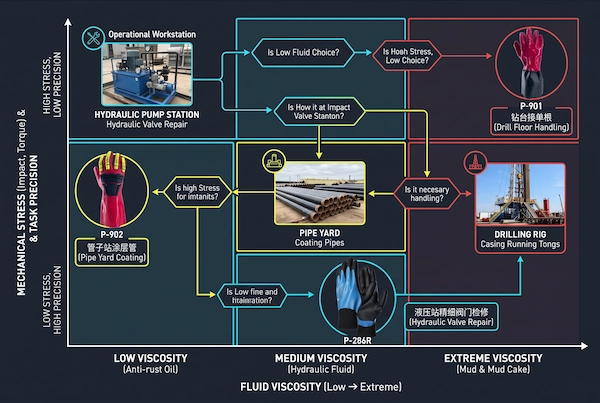
In heavy industrial piping projects and oil and gas field sites, simply measuring static friction coefficients in a laboratory is only the first step; the true deciding factor in product selection lies in accurately mapping tribological characteristics to specific on-site workstations. When evaluating “sandy finish” versus “smooth nitrile grip,” safety directors and process engineers must recognize that no single surface texture can be universally applicable to all operating conditions.
Different workstations present vastly different conditions in terms of fluid viscosity, workpiece surface coating hardness, environmental impact energy, and precision operation requirements. If gloves designed for precision assembly are used on a drilling rig’s large pliers, sudden slippage or tearing could result in a tragic finger amputation; conversely, if instrument maintenance technicians are required to wear heavy, particle-resistant, impact-protective gloves, their stiffness will compromise operational efficiency. Establishing a scientifically sound system for matching workstations to gloves is the core prerequisite for realizing the value of PPE investments and ensuring the hand safety of workers.
Case 1: Drilling Floor & Casing Stabbing Workstations
The drilling floor, catwalk, and casing stabbing workstations are the high-risk areas with the most severe operating conditions and the highest mechanical loads in the entire drilling operation:
Characteristics of Harsh Operating Conditions and Fluid Media: During the raising and lowering of the drill string and the running of casing, the pipe walls are constantly coated with oil-based mud (OBM) of extremely high viscosity, mixed with large amounts of barite powder and cuttings; in some areas, they are also covered with highly viscous pipe dope. Pipe strings weighing tens of metric tons are subject to unpredictable lateral sway during hoisting due to wind, waves, or mechanical oscillations;
P-901’s Macro-Particle Tooth-Gripping Breakthrough: The P-901, equipped with an extended safety cuff, is the preferred choice for this workstation. When confronted with thick, caked mud deposits and viscous pipe dope, the hard, three-dimensional PVC particles on the palm surface of the P-901 can directly pierce through fluid barriers with extremely high localized normal pressure, forcibly penetrating the soft mud film and locking onto the microscopic contour peaks of the steel pipe wall; Deep mud-discharge grooves between the particles—extending up to hundreds of micrometers—rapidly divert thick mud to both sides, completely neutralizing the buoyancy effect of the fluid and providing superior anti-twist and anti-slip grip for workers to manually push, pull, and align slippery pipe strings;
The extended hard safety cuff creates a dual line of defense: During the moment of casing splicing, high-pressure mud backflow and splashing frequently occur. The P-901’s extended, wide-mouth rigid Safety Cuff not only acts as a rigid barrier to effectively prevent mud from flowing back up the forearm and causing contact dermatitis, but also allows workers to smoothly and quickly remove the cuff with one hand in the event of mechanical pinching or sudden snagging in a winch’s blind spot, thereby preventing catastrophic accidents where the entire arm becomes entangled in the machinery’s blind zone.
Case 2: Pipe Yard Logistics & Coated Tubular Sorting
At offshore platform open-air pipe yards, onshore transit yards, and along the routes of long-distance oil and gas pipeline construction, the pipe handling process faces entirely different engineering constraints:
Operating conditions and pipeline coating integrity requirements: The outer walls of a large number of seamless steel pipes used for long-distance oil and gas transportation are pre-coated with heavy-duty anti-corrosion coatings—such as fusion-bonded epoxy (FBE) or three-layer polyethylene (3LPE)—with a thickness of only a few hundred micrometers; meanwhile, the surfaces of cold-rolled alloy precision oil pipes are generally coated with a thin, uniform layer of lightweight anti-rust mineral oil; This workstation not only requires gloves with slip resistance but also has extremely stringent quality compliance standards to prevent hard scratches on the coating;
Risk of coating scratches caused by hard particles: If P-901, which contains high-hardness particles, is used at this workstation, the particles are highly likely to leave micro-scratches on the delicate epoxy coating surface—or even cause localized coating delamination—during heavy-load friction and sliding, thereby compromising the pipe’s factory-standard cathodic protection;
P-902’s flexible, high-damping grip with a fine-sand finish: P-902 (Sandy Finished PVC) is the ideal solution for this workstation. Its palm surface features a microporous, salt-precipitated sand-textured structure composed of a microscopic closed-cell/open-cell micro-sponge framework, with a uniform and soft texture that eliminates physical scratches to the pipe’s anti-corrosion coating. At the same time, when encountering a thin layer of cold-rolled rust-preventive oil, the dense microporous structure rapidly absorbs and expels the ultra-thin oil film through capillary negative pressure. The extremely high-density microscopic polymer peaks adhere tightly to the smooth pipe wall, delivering a stable static friction coefficient of 0.65 to 0.75 without damaging the pipe, ensuring a secure grip during pipe hoisting, alignment, and laying.
Case 3: Hydraulic Skid Maintenance & Refinery Valve Fitting
Deep inside machining shops, hydraulic power units (hydraulic skids) on drilling rigs, pump body maintenance on fracturing trucks, and high-density valve and piping areas in petrochemical refining units, the nature of the work shifts completely from heavy-duty material handling to precision mechanical assembly:
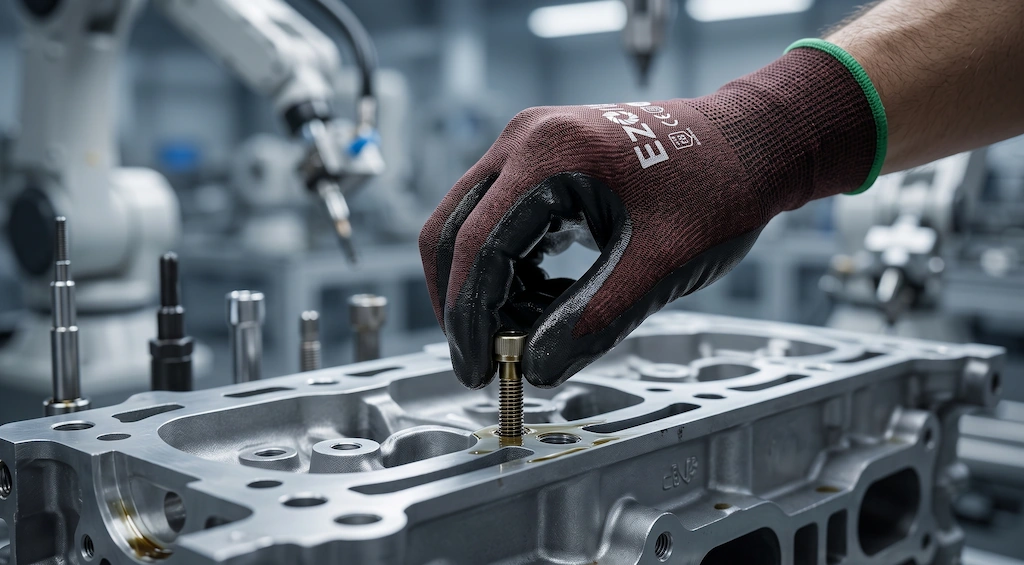
Operating Conditions and Dexterity Requirements: Maintenance technicians and instrumentation engineers must frequently disassemble and reassemble flexible couplings on high-pressure hydraulic lines, tighten bolts on narrow flanges with torque wrenches, and replace piston pump seals. The media they handle primarily consist of highly fluid and highly permeable No. 32/No. 46 anti-wear hydraulic oil, synthetic cutting fluid, and cleaning diesel. This scenario places extremely high demands on fingertip tactile feedback, hand flexibility, and lightweight design;
P-286R’s Double-Layer Coated, Mechanically Balanced Structure: Tailored for this scenario, the SQG P-286R demonstrates outstanding ergonomic balance. It eliminates the bulky outer shell typical of heavy-duty industrial gloves and instead uses a 15-gauge high-density seamless liner as its base; the base layer features a 360-degree fully immersed, dense “Smooth Nitrile” (smooth nitrile) base rubber that completely seals off any microscopic pathways for hydraulic oil to penetrate the skin; the second layer on the palm is a composite of an ultra-thin, open-cell micro-foamed nitrile (Foam Nitrile) coating;
Sponge-like absorption enables precise handling of minute oil films: Upon contact with hydraulic oil, the micro-foamed outer layer behaves like a highly elastic micro-sponge. With even the slightest grip, it instantly draws the thin oil film on the surface of metal nuts and wrenches into its porous structure, creating a near-dry molecular adhesive friction between the glove’s surface and the hardware tools; Workers can feel the engagement of even the finest threads without applying excessive grip force, which significantly alleviates finger joint strain during continuous, long shifts of precision assembly, achieving a harmonious balance between fully sealed chemical protection and precise, low-oil slip resistance.
Technical FAQ: Grip Tribology and Fluid Mechanics
When conducting an in-depth comparison of sandy-finish versus smooth nitrile grips, pipeline construction crews, petrochemical maintenance teams, and offshore drilling rig supervisors often encounter a series of engineering challenges that cut to the heart of fluid tribology. The mechanical performance of different coatings varies dramatically depending on the viscosity of the oil contamination, and vague anecdotal experience cannot replace quantitative physical explanations. This section provides in-depth answers to core, frequently asked questions regarding pipe string grip and fluid interfaces.
Why does a sandy finish outperform smooth nitrile so dramatically on oily steel?
On the surface of cold-rolled steel pipes coated with medium- to low-viscosity oil, the static coefficient of friction (COF) of a microporous sandblasted surface (Sandy Finish) typically reaches 0.65 to 0.75, whereas that of traditional smooth nitrile often drops to between 0.15 and 0.25. The underlying physical mechanisms are primarily determined by wetting thermodynamics and microscopic capillary flow:
Competition between contact angle and oil spreading: The smooth nitrile surface is flat and dense; when a droplet of low-surface-tension hydrocarbon oil lands on it, the contact angle is extremely small, and the oil phase readily forms a continuous, smooth fluid lubrication film on the glove surface. When the palm presses against the steel pipe, this continuous oil film cannot be ruptured and directly evolves into a hydrodynamic lubrication layer;
Microscopic Pits Disrupt Lubrication Continuity: The salt-precipitated microporous sand surface disrupts the originally smooth and flat geometric boundary. Rough micrometer-scale pits cause the three-phase contact line at the interface to be fragmented into discontinuous microzones, preventing oil molecules from forming an oil wedge with consistent load-bearing capacity across the entire macroscopic contact surface;
Active physical oil removal via capillary suction: According to the physics of capillary flow, a liquid within the narrow walls of a microporous tube is subjected to a self-suction force directed toward the interior of the microporous structure. During the microsecond-scale instant when the glove is pressed against the metal tube wall, the free oil trapped at the interface is actively “sucked” into high-density, open microchambers and stored deep within the recesses. This forces the exposed microscopic contour peaks of the solid at the colloid’s edge to form a microscopic mechanical interlock directly with the metal surface of the steel tube, forcibly reversing the fluid lubrication—which has extremely low sliding resistance—into high-damping boundary friction characteristic of a dry state.
When will heavy mud cakes cause sandy-finish gloves to lose traction?
Although sandy-finish processes (such as P-902) perform exceptionally well when dealing with thin oil films, diesel-based cleaning fluids, or light crude oil, their microporous structure reaches its physical capacity limit under extreme heavy mud conditions. In such cases, it is necessary to switch to granular gloves:
Mechanical blockage of microporous structures due to high solid content: Deepwater drilling muds and return fluids are filled with a high proportion of fine barite (barium sulfate) particles and bentonite clay particles. The particle size of these solids is comparable to or larger than the pore size of the salt-precipitated microporous structure. During continuous contact with the pipe wall, the solid particles rapidly compact and become firmly lodged within the microporous structure;
High-Yield-Stress Mud Cake Flattens the Surface: When the drilling fluid air-dries and dehydrates to form a thick mud cake, the fluid exhibits an extremely high yield value for plastic flow. This gel-like paste is completely unable to flow into the microscopic pores under capillary forces; instead, it forms a smooth mud paste layer up to several hundred micrometers thick on the sand surface, causing the microporous surface to degrade into a flat, smooth surface;
Critical Threshold for Forced Switch to P-901: Once conditions such as “mud cake thickness on the pipe wall exceeding 0.5 millimeters” or “the contact medium containing high-viscosity barite drilling solids” occur on-site, the micro-pores in the sand-coated gloves will become completely inactive after just 1 to 2 grips. At this point, it is essential to fully switch to P-901, which features macroscopically hard particles. Relying on its prominent three-dimensional particles ranging from 800 to 1,200 micrometers, P-901 forcibly pierces through the mud cake, using the deep grooves in the particles to expel mud and debris, thereby achieving a hard-on-hard mechanical interlocking grip.
How does the foam nitrile on the P-286R prevent oil from saturating workers’ skin?
Many safety engineers often have a misconception that the palm of the P-286R is made of open-cell, sponge-like micro-foamed nitrile (Foam Nitrile). Since it has oil-absorbing properties similar to a sponge, they believe that oil will inevitably penetrate the entire glove and come into contact with the worker’s skin. This misconception confuses the difference between single-layer foam and modern dual-layer composite dipping:
360-degree continuous, dense chemical-resistant barrier layer: The P-286R employs a dual-layer precision dipping architecture. The first coating, which comes into contact with the 15-gauge high-density liner, is a continuous, smooth nitrile base coating (Smooth Nitrile Base-coating) that has been fully plasticized and cross-linked through a full-dip process. This dense polymer film has no microporous or open-cell structure and provides 100% molecular-level liquid-tight barrier protection; crude oil, hydraulic fluid, and cutting fluid simply cannot penetrate this base layer;
The micro-foamed sponge palm layer on the outer surface serves distinct functions: the second layer of micro-foamed nitrile is selectively laminated only to the palm and fingertip gripping areas, acting as a “transient micro-oil-absorbing reservoir” at the contact interface. The outer layer is responsible for adsorbing and removing floating oil from the contact interface to restore a dry, low-friction state, while the absorbed trace amounts of oil are firmly sealed off from the dense polymer shell beneath, preventing them from reaching the inner knitted mesh lining or the wearer’s skin;
This achieves a physical separation of barrier protection and slip resistance: The synergistic dual-layer design—featuring an “inner liquid-tight barrier” and an “outer foam oil-absorbing layer”—not only preserves the lightweight gloves’ advantages of a snug, nimble fit for precision hardware assembly but also eliminates the risk of contact dermatitis caused by oil penetration.
Does the wear of PVC particles over time drastically lower the coefficient of friction?
During frequent friction and pushing/pulling of heavy-load steel pipes, workers often worry that the PVC particles on the palm of the P-901 gloves will wear down quickly or flake off in patches—just like ordinary adhesive-coated gloves—resulting in an instant loss of grip. To address this concern regarding mechanical wear, materials engineering and manufacturing processes provide dual structural safeguards:
In-situ high-temperature molecular cross-linking: The three-dimensional particles on the P-901 palm are not cold-bonded to the surface with adhesive after molding. Instead, modified high-polymerization-degree PVC particles are pressed into the rubber layer at high temperature the moment the underlying PVC/nitrile rubber film is in a plastified gel state. At the interface, the two-phase matrix undergoes deep thermal interpenetration of molecular chains; upon cooling, the base of the particles fuses with the rubber shell into an inseparable unit, ensuring that no individual particles will detach even when subjected to strong lateral shear forces of several thousand newtons;
Stepwise progressive mechanical wear mechanism: Since the particles range in height from 800 to 1,200 micrometers and possess a high Shore hardness of 85A or higher, wear manifests as long-term, gradual physical abrasion. Even if the micro-prisms at the top of the particles are slightly rounded due to high-intensity drilling operations, the particle cluster can still penetrate oil sludge and maintain mechanical interlocking damping because its macroscopic height remains far greater than the thickness of the oil layer;
Sustained high friction output during the middle to late stages of wear: When particle wear reaches 30% to 50%, although the depth of the mud-discharge grooves between particles decreases, the cross-sectional contact area between particles actually increases. In heavy crude oil and drilling mud, the glove’s overall static coefficient of friction remains stable at 0.60 or higher, and its wear-induced decay process is gradual and predictable, thereby eliminating safety incidents caused by a sudden, catastrophic drop in anti-slip force to zero.
Optimizing Safety for Heavy Tubulars with Engineered Grip (CTA)
In real-world operating conditions—such as the laying of long-distance oil and gas pipeline networks, large-scale lifting operations at offshore pipe stations, and maintenance of heavy petrochemical valves—the decision between a “sandy finish” and a “smooth nitrile grip” must ultimately be based on actual field testing at the worksite. Any theoretical derivation that disregards the specific viscosity of the oil, the surface roughness of the pipe string, and mechanical impact loads cannot guarantee 100% grip stability for workers on storm-tossed decks or in sites flooded with mud.
Slip resistance during the handling of heavy pipe strings is not only a matter of a glove’s coefficient of friction but also directly determines a work crew’s ability to prevent lost-time injuries (LTI) and optimize overall lifting and handling efficiency. As a source manufacturer specializing in protection against extreme industrial fluids and micro-tribological modification, SQG leverages fully automated multi-layer dipping production lines and in-situ polymer cross-linking technology to provide end-to-end industrial safety solutions—ranging from “on-site friction testing at workstations” and “customized formulation development for specific oils” to “full-container shipments via major ports”—to global energy extraction EPC contractors, pipeline installation engineering firms, and industrial safety equipment distribution channels.
Request Heavy Tubular Workstation Trial Kits
In response to long-standing issues at construction sites—such as conventional gloves slipping when exposed to oil, frequent incidents of heavy pipes slipping off, or premature muscle fatigue among workers caused by a mismatch between anti-slip textures and the viscosity of the medium—we have established an exclusive on-site trial kit channel for key pipeline construction bureaus, managers at offshore pipe stations, and petrochemical maintenance teams:
Direct shipment of factory-calibrated field test kits: Tailored to the specific fluid loads of different work processes, each kit is rigorously stocked with three benchmark-level fluid-grip equipment items, graded by worker size—the P-901 (PVC granule version), specifically designed to tackle thick, clumpy mud cakes and heavy oil jamming; the P-902 (salt-precipitated matte finish), specifically designed for capillary absorption and drainage on cold-rolled micro-oiled pipes and anti-corrosion coated pipes; and the P-286R (double-dipped micro-foam version), which balances high-density leak prevention with precision assembly of micro-oiled components;
Each kit includes a comprehensive archive of tribological test data: The test kit comes with authoritative mechanical benchmark documents issued by accredited laboratories, covering ASTM F2913 static coefficient of friction (COF) multi-medium test reports, EN 388:2016 certification for protection against mechanical hazards, EN ISO 374 permeability resistance curves for common petroleum hydrocarbons, and ANSI/ISEA 138 impact resistance test data for the back of the hand;
On-site “Heavy-Load Pipeline Handling Grip Ergonomic Assessment Procedure”: Assists frontline safety engineers and lifting crew foremen in quantitatively recording, over a typical 168-hour work cycle, workers’ actual performance regarding initial grip damping, compensation for grip fatigue, backflow prevention, and colloidal wear resistance cycles when handling different pipe specifications (cold-rolled pipes, coated pipes, threaded joints) and under varying thicknesses of oil contamination, regarding initial grip damping, compensation for grip fatigue, backflow prevention performance, and colloidal wear resistance cycles. This replaces subjective guesswork with quantitative on-site data to drive scientifically precise occupational safety and health equipment allocation for work crews.
Factory Container Sourcing & Tribological Engineering Support
For global multinational oilfield service giants, pipeline construction groups, and specialty personal protective equipment (PPE) distributors seeking supply chain stability and strict control over the total cost of ownership (TCO) of procurement, bypassing intermediate trading layers and connecting directly with source factories that possess a complete, closed-loop production process—including weaving, polymer dipping, and hot-melt bonding—is the fundamental approach to ensuring product batch consistency and delivery reliability:
Stringent quality control for batch-to-batch friction consistency and airtightness: SQG operates a large-scale industrial fluid dipping R&D center and automated production facilities. From shear-induced degassing of modified PVC slurry and sieving of microporous crystalline particles formed by salt precipitation to the constant-temperature in-situ fusion of high-hardness PVC granules, every batch shipped undergoes rigorous airtightness hydrostatic testing and random sampling for sliding resistance at contact surfaces, eliminating industrial defects common in standard contract manufacturers—such as air pockets causing fluid leakage, particle detachment, and uneven surface texture;
Custom surface texture engineering based on fluid viscosity: We offer comprehensive, high-level OEM/ODM custom R&D support. If your operations involve heavy synthetic gear oils with special kinematic viscosity, slurries thickened for extreme cold conditions, or specialty anti-corrosion primers, the SQG Materials Engineering Team can specifically adjust the pore size and porosity of microporous salt-precipitated structures or the vertical spacing of PVC particles. We can even customize extended safety cuffs with high-visibility reflective warning strips and your company’s oil-resistant logo;
Direct Full-Container Shipments to Major Global Energy and Materials Hubs: Our solutions are deeply integrated with high-volume pallet loading schemes for standard containers (20GP / 40HQ), supporting direct shipments to major global offshore pipeline logistics hubs such as Houston, Rotterdam, Dubai, and Singapore. This significantly reduces cross-border trunk transportation costs and intermediate warehousing lead times, enabling the efficient bulk delivery of high-quality heavy-duty safety assets.
Feel free to contact our fluid interface engineering experts at any time to assess the friction risk level of your on-site piping and oil products, and to request a factory-customized test kit: Request a Workstation Grip Evaluation Kit.