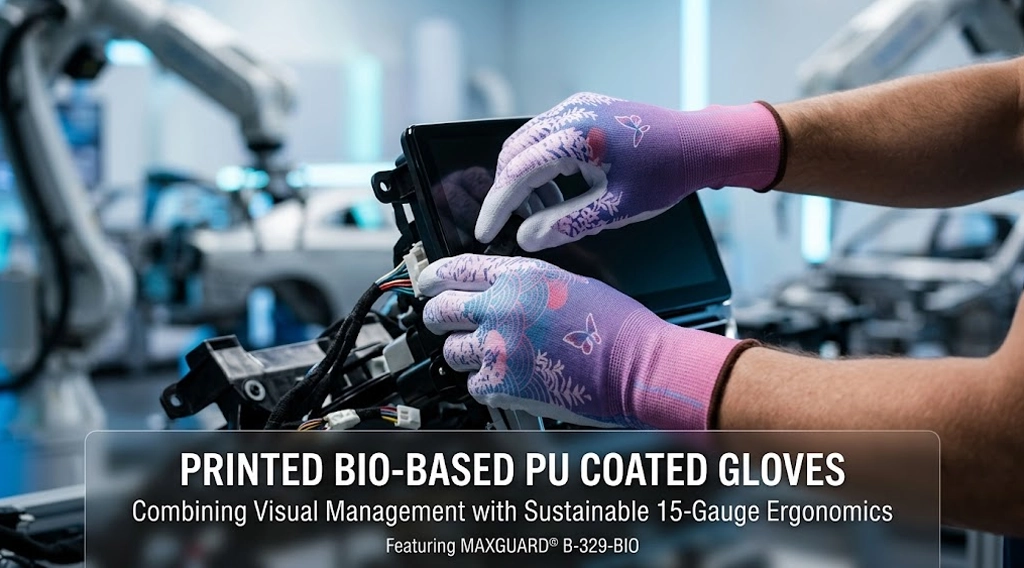
Introduction: The Convergence of Visual Lean Management and Sustainable Ergonomics
In modern precision manufacturing and cleanroom assembly lines, deploying printed bio-based pu coated gloves serves not only as a critical hand safety barrier, but also as an engineering tool for Lean 5S visual management. However, for a long time, industrial glove designs have generally remained confined to monotonous black, white, and gray tones, resulting in highly homogeneous appearances and a lack of distinctiveness. In environments involving multi-process workflows and high-frequency operations, this uniformity easily leads to management loopholes such as the cross-zone use of gloves and mismatched protection levels across processes. Furthermore, the clunky appearance and lack of personalization can cause resistance among front-line workers, leading them to remove their gloves without authorization and engage in non-compliant operations.
The Management Bottlenecks of Generic Industrial Handwear
In workshop environments characterized by multi-team collaboration and the alternation of complex production stages, the pain points of generic industrial gloves are primarily reflected in three areas:
Process Mismatch and Cross-Contamination Risks: Cleanliness and scratch-resistance requirements vary significantly across different workstations, such as pre-assembly before painting, optical inspection, and general sorting. Since traditional gloves look nearly identical, line supervisors and inspectors find it difficult to quickly identify from a distance whether workers are wearing the specialized gloves required for their specific workstations. This makes it highly likely for microscopic contaminants—such as oil and dust—to spread across work areas, resulting in surface damage to large batches of workpieces or the need for rework.
Low Compliance Rates and Work-Related Fatigue: Traditional low-gauge gloves have poor breathability, lack an elastic, snug fit, and feature a visually unappealing design, which can exacerbate both psychological and physical fatigue among workers. When handling delicate clips or tiny components, workers often choose to work bare-handed due to the gloves’ stuffiness and stiffness, creating dual risks of personal cuts and fingerprint contamination on workpieces.
High Carbon Footprint and ESG Emissions Reduction Pressure: Faced with increasingly stringent global supply chain sustainability metrics, traditional gloves made from fossil-fuel-derived petrochemical polyurethane and virgin synthetic fibers can no longer meet international buyers’ compliance requirements for reducing Scope 3 carbon footprints.
The Multi-Value Integration of Art-Guard Bio-PU Gloves
To break through this management and ergonomic dilemma, a new generation of hand protection concepts deeply integrates artistic visual error-proofing with green polymer technology. Represented by the MAXGUARD® B-329-BIO series, this innovative engineering solution pioneers the integration of three core technologies:
Art-Guard Visual Error-Proofing: By precisely distinguishing between Styles A through E through different colors and artistic patterns, this system establishes an intuitive “color-coded error-proofing system” for each production stage and shift on the shop floor. This makes on-site 5S zone oversight immediately clear, eliminating glove mix-ups and cross-zone contamination at the source.
15-gauge high-elasticity recycled polyester (RPET) seamless liner: Combined with high-tensile spandex blending technology, this liner provides superior fit and fingertip tactile sensitivity compared to traditional gloves, while effectively alleviating hand muscle fatigue and significantly increasing frontline workers’ willingness to wear them.
Water-based bio-based polyurethane (Bio-Based PU) palm coating: By replacing traditional petrochemical raw materials with bio-based polyols derived from natural plant extracts, this coating significantly reduces the product’s carbon footprint while ensuring precise grip and protection against micro-scratches. The production process is solvent-free, odorless, and skin-friendly with low allergenic potential.
This innovative glove, which integrates visual lean management, highly responsive ergonomics, and green, sustainable materials, is becoming the preferred choice for modern benchmark factories seeking to improve assembly yield rates and advance their ESG strategies.
To view complete product specifications and selection guides for polyurethane-coated polymer engineering, high-gauge knitting density, and multi-scenario industrial protective gloves, please visit our core pillar page: Precision PU Palm-Coated Work Gloves Direct from Manufacturer.
Material Engineering: 15-Gauge Seamless RPET and Spandex High-Stretch Liner
In light industrial precision assembly, automotive interior trim covering, and 3C electronics packaging workstations, the knit density and fiber blend of glove liners directly determine workers’ hand fatigue and production cycle times. Traditional industrial gloves often struggle to strike a balance between “abrasion and tear resistance” and “fingertip flexibility.” The MAXGUARD B-329-BIO series achieves the ideal balance between protective strength and ergonomic fit at the material mechanics level by introducing a 15-gauge seamless knit structure combined with recycled polyester (RPET) and high-elastic spandex composite yarn.
15-Gauge Density: Balancing 13G Tear Resistance and 18G Micro-Sensitivity
Knit density (gauge) is a core engineering metric for measuring the precision of the lining. In the field of industrial protection, 15-gauge knitting technology has established a balance between durability and micro-tactile sensitivity:
It bridges the performance gap between 13-gauge and 18-gauge: Traditional 13-gauge gloves, due to their thicker individual yarns, offer good tear resistance and abrasion resistance but tend to be too thick and stiff when handling small fasteners or performing delicate surface wiping; conversely, while 18-gauge ultra-thin gloves provide high sensitivity, their tensile wear life under medium-frequency mechanical abrasion conditions is relatively limited. The 15-gauge high-density seamless knitting process optimizes loop density, maintaining the overall fabric cross-sectional thickness within the lightweight range of 0.85 to 0.95 millimeters. This eliminates excess, loose fabric buildup on the glove’s inner surface while preserving the dense, physically interwoven yarn structure.
Resistance to Micro-Scratches and Sub-Millimeter Tactile Sensitivity: The compact 15-gauge stitch spacing effectively prevents tiny metal burrs and sharp plastic edges from piercing or snagging the lining, providing reliable protection against micro-scratches; At the same time, the ultra-thin cross-section allows the hand’s nerve endings to quickly perceive microscopic surface irregularities and assembly resistance on workpieces, significantly improving operational precision when grasping M2 to M4 micro-screws and rapidly aligning and assembling plastic latches.
High-Elasticity RPET and Spandex Core: Ergonomic Fatigue Reduction
Prolonged engagement in repetitive gripping, pressing, and assembly motions can easily lead to cumulative fatigue and repetitive strain injury (RSI) in an operator’s hand extensor muscles and finger tendons, resulting in slowed movements and a decline in production line yield:
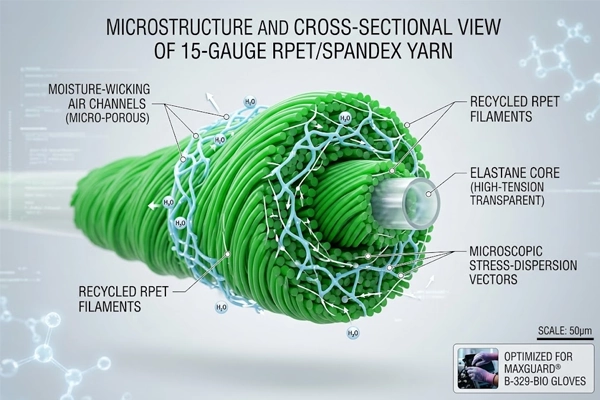
RPET and High-Tensile Spandex Composite Rebound Mechanism: The MAXGUARD B-329-BIO lining utilizes eco-friendly recycled polyester (RPET) filaments and high-elasticity spandex in a coaxial composite spinning process. Spandex fibers feature an elastic elongation of up to 400% to 500% and instantaneous recovery, enabling the gloves to undergo unimpeded elastic deformation in response to complex hand movements—such as opening, gripping, and lateral bending—thereby eliminating the reverse pulling resistance generated by traditional rigid fabrics when fingers are bent.
Dynamic Support and Muscle Fatigue Relief: The highly elastic composite yarn provides all-around micro-pressure support for the palm and fingers, allowing the gloves to closely conform to the muscle contours of different hand shapes. This “second-skin” dynamic fit significantly reduces the compensatory grip force required by workers during prolonged tasks, effectively delaying the onset of fatigue in small muscle groups, and ensuring stable movement and consistent production rhythms throughout the workday.
Sustainable Polymer Chemistry: Plant-Derived Carbon and Waterborne Bio-PU
Against the backdrop of the global manufacturing industry accelerating the implementation of ESG strategies and the transition toward carbon neutrality, the polymer formulations used in industrial hand protection products are undergoing a profound green transformation. Traditional polyurethane (PU) gloves rely heavily on petroleum refining derivatives as raw materials and extensively use organic solvents during the dipping process. This drives up the product’s full-lifecycle carbon emissions at the source and poses risks associated with volatile chemical residues. The MAXGUARD B-329-BIO series achieves a generational upgrade from fossil-based raw materials to sustainable bio-based polymers by incorporating plant-derived carbon sources into the molecular chain design and utilizing a pure water-based, eco-friendly dipping process.
Bio-Based Carbon Content for Scope 3 Carbon Reductions
For industrial enterprises, Scope 3 carbon footprint accounting covers the embedded carbon emissions of purchased goods and consumables in the supply chain. Promoting the transition of protective consumables to low-carbon materials is the core pathway to achieving emissions reductions in the supply chain:
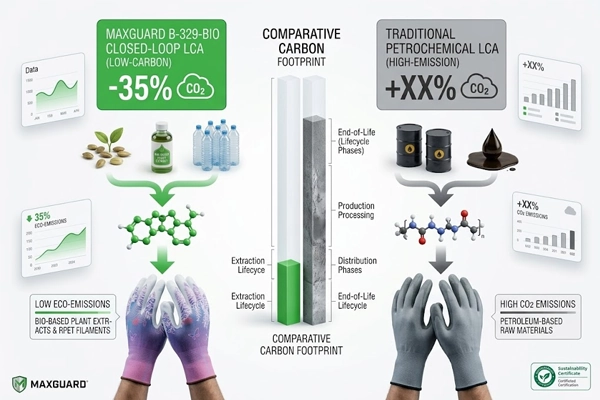
Pathway for replacing petrochemical monomers with plant-based polyols: Traditional polyurethane is produced through the polymerization of petroleum-based isocyanates with petroleum-based polyether/polyester polyols. MAXGUARD B-329-BIO utilizes advanced biomass refining technology to derive renewable bio-polyols from non-food crop seed oils and natural plant extracts, which can replace 30% to 50% of fossil-based polyol components. Plants absorb and sequester carbon dioxide from the atmosphere during photosynthesis; this natural carbon sequestration property endows the polymer molecular backbone with an inherently low-carbon character.
Significantly reduces fossil resource consumption and carbon footprint: As determined by the ASTM D6866 standard for radiocarbon-14 (Carbon-14) isotope analysis, this coating possesses a quantifiable and verifiable bio-based carbon content. Compared to traditional, fully fossil-based polyurethane gloves, the production and processing of bio-based PU coatings can reduce greenhouse gas (GHG) emissions by 25% to 35%, effectively helping multinational manufacturers and Tier 1 suppliers meet stringent annual ESG carbon reduction targets and pass green factory certification audits.
Waterborne Dipping Process: Odor-Free and Skin-Safe Formulations
In addition to carbon emissions reduction at the source, the occupational health and skin safety of workshop personnel are also core performance indicators in modern EHS management:
Eliminating DMF solvent residues and pungent odors: Traditional solvent-based polyurethane gloves require the use of dimethylformamide (DMF/DMFa) as a solvent during the dipping and curing process. If the subsequent water wash does not completely remove the solvent, trace amounts of residual DMF can easily volatilize in enclosed workshops, producing a pungent odor. Furthermore, these residues may dissolve in sweat and be absorbed through the skin, causing redness, itching, and contact dermatitis. MAXGUARD B-329-BIO employs a waterborne polyurethane (Waterborne PU) dispersion dipping process, completely replacing organic solvents with deionized water. This eliminates toxic and harmful volatile organic compounds (VOCs), such as DMF and toluene, at the source, ensuring the gloves are odor-free upon shipment.
Skin-friendly, hypoallergenic, and comfortable for extended wear: The water-based, eco-friendly formulation undergoes multi-stage ultrasonic rinsing with deionized water to remove salts, thoroughly eliminating unreacted small-molecule additives and free initiators, resulting in a mild, neutral pH. Even when operators wear the gloves continuously for extended periods in high-temperature, high-humidity environments—where hand perspiration increases—no chemical substances leach from the glove’s contact surface. This effectively protects workers with sensitive skin, prevents occupational skin allergies caused by chemical irritation, and ensures high frontline attendance rates and operational comfort.
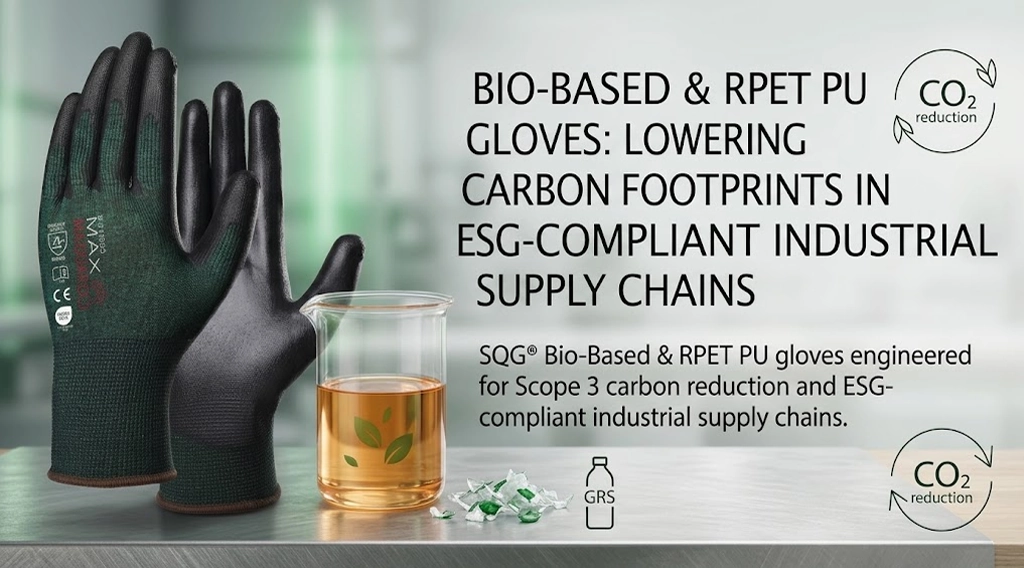
For systematic technical specifications regarding bio-based polyol synthesis pathways, life cycle assessment (LCA) of recycled RPET yarn, and Scope 3 carbon footprint accounting in the manufacturing supply chain, please refer to our specialized technical guide: Bio-Based & RPET PU Gloves: Lowering Carbon Footprints in ESG-Compliant Industrial Supply Chains.
Visual Management & Lean 5S: Industrial Applications of Printed Patterns
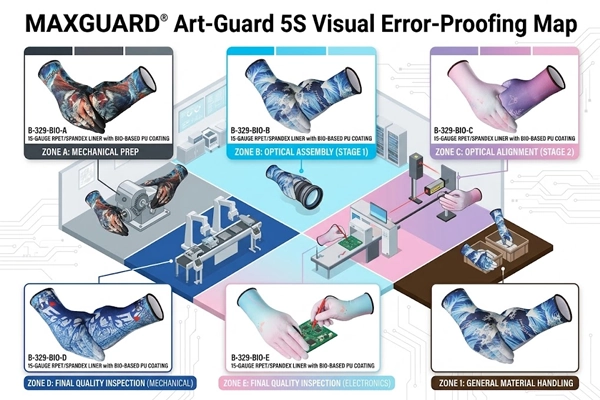
In manufacturing facilities implementing Lean Manufacturing and 5S visual management, “rapid identification, prevention of mismatches, and elimination of cross-use” are the core principles for reducing quality incidents and process confusion. For a long time, industrial gloves have been viewed merely as disposable protective equipment, and their role as tools in visual management within the workshop has been severely overlooked. The MAXGUARD B-329-BIO series, through the introduction of the unique Art-Guard printed design (covering the B-329-BIO standard model and six different pattern and color configurations—A, B, C, D, and E), transforms hand protection equipment directly into an engineering management tool for visual error-proofing (Visual Poka-Yoke) on production lines.
Color-Coded Shift & Workstation Zoning with B-329-BIO-A to E
In automotive final assembly, electronic component manufacturing, and multi-process assembly workshops, different production stages have vastly different requirements for cleanliness, grease isolation, and surface protection. If gloves from different zones are mixed and used across zones, it can easily lead to widespread microscopic contamination or surface scratches:
Workstation Zoning with Visual Poka-Yoke: By leveraging the clearly distinguishable printed patterns and color variations of the B-329-BIO-A through E models, shop floor management teams can establish dedicated visual codes for gloves in different work sections. For example:
B-329-BIO-A (dark abstract pattern): Exclusively for post-machining operations or mechanical pre-assembly stations involving trace amounts of assembly lubricant;
B-329-BIO-B / C (blue-green to pink-purple gradient patterns): Exclusively for optical cockpit screen alignment and high-gloss interior trim snap-fit operations with extremely high cleanliness requirements;
B-329-BIO-D / E (traditional Chinese-style wave and cherry blossom patterns): Exclusively for final product appearance quality inspection (FQI) and end-of-line packaging areas.
Remote Rapid Inspection and Cross-Zone Mix-Up Prevention: In actual production, shop floor supervisors and quality inspectors do not need to approach workers to verify their ID badges or glove labels; they can confirm within seconds whether workers are wearing the gloves designated for their specific workstation simply by conducting a visual scan from a distance. If gloves in colors not designated for that area are detected entering the high-cleanliness inspection zone, inspectors can immediately intervene and correct the issue, thoroughly preventing quality risks such as oil transfer and particulate cross-contamination caused by the mixed use of gloves.
Shift Differentiation and Service Life Rotation Management: Companies can also use different printed patterns to distinguish between morning, afternoon, and night shifts, or as visual markers for mandatory weekly washing rotations, thereby preventing gloves that have exceeded their service life or have not been washed from continuing to circulate on the production line.
Eliminating Glove-Stripping Through High Aesthetic Acceptance
In EHS safety management, one of the primary causes of minor cuts, scratches from fingernails, and fingerprint marks on workpieces is workers’ “unauthorized removal of gloves during work (glove-stripping).” In addition to being influenced by breathability and sensitivity, workers’ psychological acceptance and wearing habits are also key factors:
Overcoming Psychological Resistance to Traditional PPE: Traditional gray or black dipped gloves have a clunky and rough appearance, which can easily evoke negative psychological associations of “heavy labor and mechanical rigidity” among workers. The MAXGUARD B-329-BIO series employs high-definition artistic printing techniques to integrate modern aesthetic elements into industrial-grade protective gear, giving the gloves a personalized and fashionable visual appeal.
Encouraging Voluntary Use and Improving Compliance Rates: Data from actual production line implementations shows that printed gloves with high aesthetic appeal and a smooth, snug fit can significantly enhance workers’ psychological identification with and sense of ownership toward the product. Workers are more willing to keep the gloves on throughout their entire shift, effectively eliminating the non-compliance issue of frequently removing gloves due to their monotonous appearance and stuffiness. This not only significantly improves PPE compliance rates on the shop floor but also eliminates the risks of sweat corrosion on component surfaces and workpiece drop-offs caused by working bare-handed.
Print Chemistry & Surface Safety: Zero Dye-Bleed and Non-Marking Integrity
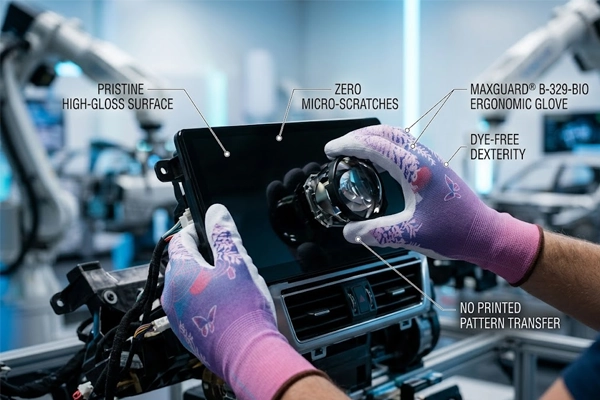
In high-cleanliness production stages—such as the assembly of smart automotive cockpits, high-end consumer electronics casings, and the lamination of precision optical lenses—gloves come into direct and frequent friction with the surfaces of workpieces. For protective gloves incorporating printing processes, the most critical technical challenges lie in the color-fastness stability of dye molecules and the microscopic tribological performance of the coated surface—it is essential to ensure “zero dye bleed” and “zero micro-scratches” under any working conditions to prevent irreversible mark contamination or physical scratches on the surfaces of expensive finished products.
Thermal Sublimation Fixing: Anti-Migration in Dry and Light-Oil Assembly
With conventional screen printing or standard low-temperature inkjet printing processes, dyes are merely mechanically adhered to the surface layer of the fabric fibers. When exposed to sweat from operators’ hands, high temperatures and humidity in the workshop, or trace amounts of rust-preventive oil on metal parts, the dyes are highly susceptible to being dissolved by solvents and migrating (bleeding), leaving difficult-to-remove colored stains on the workpiece surface:
High-Temperature Gas-Phase Thermal Sublimation Fixation Mechanism: The entire MAXGUARD B-329-BIO series employs a high-precision disperse dye thermal sublimation process. Under high temperatures approaching 200 degrees Celsius and uniform pressure control, solid disperse dyes instantly sublimate into gaseous molecules, while the microscopic amorphous regions of recycled polyester (RPET) fibers expand due to heat, opening their micropores. The gaseous dye molecules rapidly diffuse and deeply penetrate the polymer network of the polyester fibers; upon cooling, the fiber micropores close again, firmly locking the color molecules between the fiber’s macromolecular chains.
Resistance to sweat, oils, and dry and wet friction migration: Because the dyes are tightly bound to the fibers at the molecular level, there is no free color or micro-particle carbon buildup on the glove surface. After undergoing rigorous ISO 105 textile colorfastness testing, this series demonstrates colorfastness grades as high as 4 to 5 when exposed to human acidic/ alkaline human sweat, isopropyl alcohol (IPA) cleaning wipes, and light stamping and drawing oils, demonstrating colorfastness grades as high as 4 to 5 (Colorfastness Grade 4–5), completely eliminating the risk of secondary color migration and staining on white interior leather, light-colored dashboards, or brushed metal panels.
Scratch-Free Handling of High-Gloss Plastic Trim and Optical Glass
As the automotive and electronics manufacturing industries move toward high-end applications, sensitive materials such as high-gloss piano black finishes, electroplated trim, polycarbonate (PC) light guides, and AG/AR-coated automotive glass are being widely used. These materials have a low Mohs hardness and are extremely susceptible to microscopic scratches caused by rough glove surfaces or hard additives:
A supple fabric surface eliminates hard stress points: MAXGUARD B-329-BIO features a seamless blend of 15-gauge ultra-fine denier RPET and highly elastic spandex. The printed fabric on the back of the hand is exceptionally smooth and dense, completely eliminating the rough yarn knots found on traditional coarse-gauge gloves. When workers perform blind insertion or pressing operations inside narrow compartments, even if the back and sides of the hand frequently scrape against high-gloss plastic panels, the soft polyester fiber layer provides a supple, micro-elastic cushion that leaves no hairline scratches (micro-scratches) on the delicate painted surface.
Highly Cross-Linked Polyurethane for Non-Marking & Zero Ghosting: The microporous, bio-based PU coating on the palm has undergone deep polymer cross-linking and curing; the formulation completely eliminates unreacted free oils, phthalate plasticizers, and low-melting-point waxes. When applying heavy pressure to support flat glass, HUD projection lenses, or operate in-dash touchscreens, the coating does not transfer any oily ghosting or polymer residue to the contact surface, ensuring that high-value optical and interior components maintain factory-level cleanliness and high-gloss finish even after frequent assembly operations.
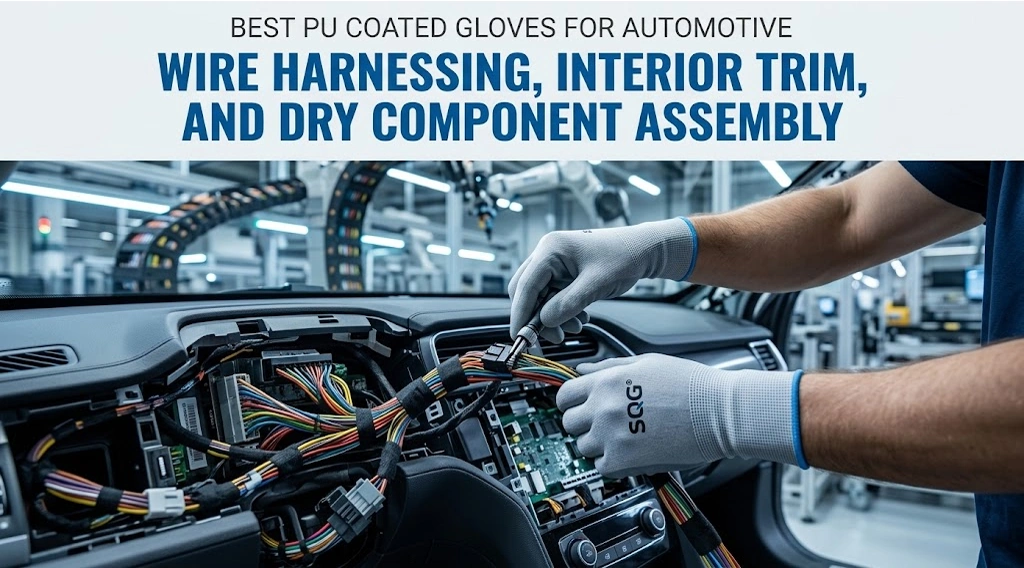
For information on the scratch- and mark-free protection mechanism provided by microporous polyurethane coatings for genuine leather trim, ambient lighting light guides, and large-size LCD touchscreens during micro-assembly in automotive cockpits, please refer to our industry application guide: Best PU Coated Gloves for Automotive Assembly & Wiring.
Coating Tribology: Microporous Bio-PU Grip on Smooth and Light-Oil Components
In the assembly of micro-motors, the snap-fit of automotive interior components, and the part-ejection stations for precision injection-molded parts, trace amounts of rust-preventive oil, stamping and drawing oil, or mold release agents often remain on the surfaces of workpieces. The alternating presence of these substances and dry conditions places stringent demands on the tribological performance of protective glove coatings. If the coating lacks sufficient slip resistance, operators are prone to momentary slippage when gripping small parts; if the coating is excessively sticky, it can cause delays in part release, slowing down the production cycle. MAXGUARD B-329-BIO features a microporous bio-based polyurethane (Bio-PU) coating that, through microscopic open-cell fluid channeling and controlled tribological design, enables a stable grip on both smooth and slightly oiled workpieces.
Micro-Cellular Capillary Action for Controlled Grip Friction
When the palm of the glove comes into contact with a metal or smooth plastic surface coated with a trace amount of lubricant, a liquid film easily forms a continuous lubricating layer on the contact surface, significantly reducing shear resistance:
Micro-cellular capillary flow and oil film disruption mechanism: The bio-based polyurethane coating of MAXGUARD B-329-BIO features a microstructure consisting of a uniform, interconnected array of micron-scale open-cell honeycomb pores. When the worker applies gripping pressure, the trace amount of free oil film at the contact interface is rapidly drawn in via capillary siphoning and temporarily dispersed into the subsurface microporous channels, disrupting the lubricating barrier formed by the continuous oil film. The polyurethane elastomer polymers come into direct contact with the microscopic roughness peaks on the part’s surface, forming a stable mechanical interlock and intermolecular van der Waals forces, thereby preventing instability and slippage when gripping smooth parts.
Smooth and Controllable Dry Release Characteristics: Under absolutely dry and clean working conditions, the microporous Bio-PU exhibits a balanced static coefficient of friction and extremely low dynamic friction fluctuations. Unlike natural latex, which is prone to “stick-slip” behavior, microporous Bio-PU allows operators to perform smooth, fine-tuned adjustments and rapid material release with their fingertips, ensuring reliable gripping while preventing motion stalling caused by excessive stickiness during high-speed assembly.
Performance Comparison Matrix: B-329-BIO vs. Traditional Petrochemical PU Gloves
The table below provides a side-by-side comparison of the engineering parameters for the MAXGUARD B-329-BIO series, traditional 13-gauge petrochemical-based PU gloves, and general-purpose disposable nitrile gloves across key dimensions such as material composition, visual management, tactile sensitivity, carbon emissions, and reusability over the entire life cycle:
| Technical & Operational Metrics | MAXGUARD® B-329-BIO Series | Traditional 13G Nylon PU Gloves | Generic Disposable Nitrile Gloves |
| Liner Gauge & Fiber Blend (Liner Gauge and Fiber Composition) | 15-Gauge RPET / Spandex (15-gauge high-stretch recycled polyester blend) | 13-Gauge Virgin Nylon (13-gauge virgin petrochemical nylon) | N/A (Molded Synthetic Rubber) (Unlined, Molded Synthetic Rubber) |
| Coating Type & Sustainability (Coating Type and Environmental Sustainability) | Plant-Derived Bio-PU (Waterborne) (Water-based bio-based plant-derived polyurethane) | Petroleum-Based PU (Solvent) (Solvent-based petrochemical polyurethane) | Petroleum-Based Nitrile (Petroleum-Based Nitrile Rubber) |
| Visual Management / Pattern (Visual Management and Print Design) | Art-Guard Printed (A to E Options) (6 artistic print designs / work area color codes) | Solid Color / Plain Dye (Solid color, no pattern / low visibility) | Solid Blue / Black (No Pattern) (Solid Blue or Black, No Patterns) |
| Fingertip Tactile Sensitivity (Fingertip Tactile Sensitivity Rating) | 9.2 / 10 (High Dexterity) (Ultra-thin, highly elastic, and form-fitting) | 7.8 / 10 (Moderate) (Thicker knit; moderate tactile sensitivity for fine motor tasks) | 8.5 / 10 (Non-Knitted Fit) (Unlined, snug fit, but may cause sweating) |
| Carbon Footprint Reduction (Product Carbon Footprint Reduction) | Up to 35% Lower vs. Virgin Polymers (Significantly reduces Scope 3 carbon emissions) | Baseline (High Petrochemical Load) (High petrochemical content baseline) | High Solid Waste Burden (Generates a large amount of disposable solid waste) |
| Wash Durability & Reuse Life (Industrial Wash Durability and Reuse Lifecycle) | 3–5 Industrial Wash Cycles (Coating and prints remain intact after washing) | 2–3 Wash Cycles (Prone to delamination and shrinkage after repeated washing) | Single-Use (0 Wash) (Disposable after a single use) |
A comparison of tribological data and comprehensive O&M data shows that the MAXGUARD B-329-BIO series not only excels in tactile feedback and grip in low-lubrication conditions but also provides factories with a solution that balances assembly yield and ESG benefits through visual error-proofing and low-carbon reusability.
For systematic comparative data on the underlying polymer tribology, chemical resistance, and abrasion resistance of polyurethane microcellular structures, nitrile rubber, and natural latex, please refer to our material selection white paper: PU Coated vs. Nitrile vs. Latex Work Gloves: The Definitive B2B Selection Guide for Precision Manufacturing.
Cleanliness, Lint Control, and International Chemical Compliance
In the assembly of LCD modules for smart automotive cockpits, the curved lamination of in-vehicle head-up displays (HUDs), the assembly of precision 3C electro-optical components, and high-end packaging production lines, the production environment is subject to extremely stringent controlled standards regarding microscopic cleanliness and chemical migration. Any microfiber dust (lint and particulates) shed from gloves or the leaching of restricted chemical molecules can directly cause bubbles and black spots in the optical adhesive layer, potentially rendering an entire batch of finished products ineligible for final quality inspection. The MAXGUARD B-329-BIO series was developed by deeply integrating semiconductor-grade cleanliness control with top-tier international environmental and chemical regulations, ensuring compliance with stringent industrial cleanliness standards while delivering artistic prints and highly elastic protection.
Continuous RPET Filament Construction for Low Particulate Generation
In traditional cotton-blend or standard short-staple fiber gloves, when the fingers are bent, stretched, or subjected to frequent friction against component edges, the ends of the short fibers are highly prone to breaking and pilling, releasing large amounts of microscopic fabric dust—invisible to the naked eye—into the clean air:
100% Industrial-Grade RPET Continuous Filament Construction: The 15-gauge lining of the MAXGUARD B-329-BIO is woven entirely from high-purity, high-tensile-strength recycled polyester (RPET) continuous filaments and spandex-coated filaments. The continuous filament structure features a complete, unbroken molecular polymer fiber form, which physically eliminates the mechanism by which short fibers break and generate lint. Combined with the impregnation and curing of bio-based microporous polyurethane on the palm surface, the fiber web is firmly locked within the elastic polymer matrix, maintaining a smooth surface free of pilling or shedding of short fibers even under intense friction.
Precision heat-sealed edges and ISO 14644 Class 7 (Fed Std 209E Class 10,000) cleanroom compliance: The glove cuffs feature high-density bidirectional edging and a wash-resistant heat-sealing process, eliminating yarn fraying and unraveling at the cuff edges. Verified through Liquid Particle Count (LPC) and Helmke Drum Test, this series of gloves exhibits extremely low dynamic particle emission, fully meeting the dust control standards for ISO Class 7 (Class 10,000) clean manufacturing facilities, and effectively preventing particle contamination on the surfaces of optical lenses, camera modules, and high-gloss injection-molded parts.
Compliance with RoHS, REACH, and OEKO-TEX® Standard 100
For many companies evaluating printed or modified polymer gloves, the primary concern is whether the color printing process introduces heavy metals or harmful coloring additives. The MAXGUARD B-329-BIO series has established a comprehensive green chemistry control system covering the entire process, from monomer synthesis to finished product packaging:
Strict control of Substances of Very High Concern (SVHC) and regulatory compliance: The entire product line strictly adheres to the EU REACH Regulation (EC 1907/2006) and the RoHS Directive (2011/65/EU), completely eliminating heavy metal compounds such as lead (Pb), cadmium (Cd), mercury (Hg), hexavalent chromium (Cr VI), and other heavy metal compounds, and completely eliminates harmful flame retardants such as short-chain chlorinated paraffins (SCCPs) and polybrominated biphenyls (PBBs/PBDEs).
OEKO-TEX® Standard 100 Top-Tier Skin-Safe Certification: The eco-friendly high-temperature sublimation dyes and bio-based water-based polyurethane additives used have all passed the internationally recognized OEKO-TEX® Standard 100 ecological safety testing for textiles (Class II: direct skin contact), strictly ensuring they are free of any carcinogenic, cleavable aromatic amine dyes (azo dyes), formaldehyde, and phthalate plasticizers. Even when frontline workers operate continuously in high-temperature environments and their hands sweat, the gloves do not release any free irritants, comprehensively safeguarding workers’ skin health and ensuring green compliance across global supply chains.
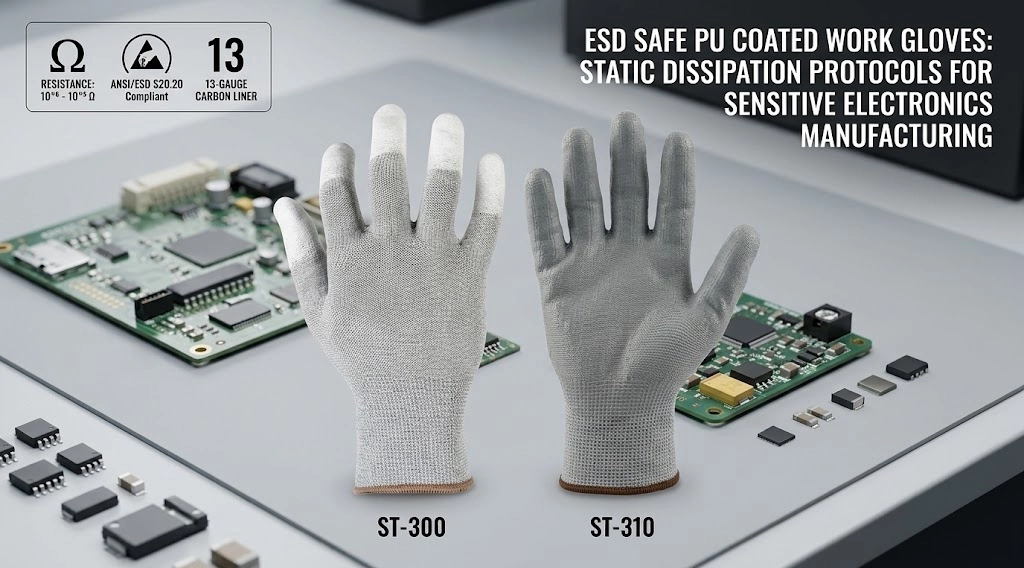
For information on the physical dust-control mechanisms of filament-knit fabrics, particle settling standards in semiconductor and display manufacturing facilities, and selection criteria for anti-static cleanroom gloves, please refer to our specialized technical guide: Lint-Free PU Cleanroom Gloves: Preventing Particulate Contamination in Semiconductor Environments.
Economics of Industrial Laundering, Print Longevity, and ESG Life Cycle Value
In the context of lean operations and EHS cost management at manufacturing enterprises, the economic evaluation of hand protection products has shifted from the traditional “initial unit price per pair” to the “Total Cost of Ownership (TCO).” Many assembly and packaging production lines have long relied heavily on inexpensive disposable gloves or low-grade dipped gloves, resulting in persistently high monthly consumable expenses and generating large volumes of industrial solid waste. The MAXGUARD B-329-BIO series, with its excellent resistance to mechanical washing and molecular-level color-fixing technology, has established a closed-loop model of “reuse after multiple industrial washes.” While reducing overall procurement costs, it provides enterprises with a clear, quantifiable ESG pathway for carbon reduction and waste reduction.
Colorfastness and Coating Flexibility Retention Over Multiple Washes
Conventional printed textiles or low-end dipped gloves are highly prone to failure issues—such as coating hardening and peeling, fabric shrinkage and deformation, and extensive fading and whitening of patterns—after undergoing industrial washing. This causes the gloves to lose their visual error-proofing function and results in premature scrapping. The MAXGUARD B-329-BIO series has undergone specialized physical and chemical stability engineering optimization specifically for industrial washing environments:
Washfastness of high-temperature sublimation printing (Colorfastness Grade 4.5+): Thanks to the deep interlocking of dye molecules with RPET polyester macromolecular chains, the Art-Guard artistic print patterns on the back of the hand and at the wrist remain clear and high-contrast after the gloves undergo 3 to 5 standard industrial warm-water washes (water temperature of 40°C to 60°C, cleaning with a neutral industrial surfactant, and low-temperature drying at 50°C), the Art-Guard patterns on the back of the hand and wrist remain clear and high-contrast, with no color migration, whitening, or blurred outlines, ensuring the continued effectiveness of visual error-proofing in the 5S workstation.
Peel Resistance and Flexibility of the Bio-Based Polyurethane Coating: The microporous Bio-PU coating on the palm forms a robust micro-mechanical cross-linked interlocking network with the 15-gauge high-elasticity lining. Under conditions of repeated water shear, scrubbing, and mechanical drum friction, the coating exhibits excellent resistance to cracking and delamination (Adhesion Durability). The microporous elastic matrix does not undergo hydrolysis or age and harden, maintaining a light, soft tactile sensation and stable grip even after washing.
Total Cost of Ownership (TCO) vs. Single-Shift Disposable Handwear
Based on calculations using a full life-cycle economic model and from the perspective of waste reduction, the adoption of the washable and reusable MAXGUARD B-329-BIO can deliver significant overall financial returns and environmental benefits to factories:
A stepwise reduction in total direct consumables procurement costs: Taking a 150-person precision electronics assembly or automotive interior packaging production line as an example, if single-shift disposable nitrile gloves are used (with each worker consuming 2 to 4 pairs per day), monthly glove consumption reaches tens of thousands of pairs, and procurement costs continue to accumulate. By switching to MAXGUARD B-329-BIO, which supports 3 to 5 cycles of industrial washing and reuse, the service life of a single pair of gloves can be extended from 1 day to more than 2 weeks. The cost of a single professional industrial wash and dry cycle accounts for only 15% to 20% of the unit price of new gloves; calculations show that this can reduce the workshop’s monthly comprehensive procurement cost for hand protection products by 35% to 50%.
Scope 3 Waste Reduction and Landfill Reduction: The heavy use of disposable gloves creates a massive burden for plastic solid waste disposal and generates carbon emissions from incineration. By extending the service life of a single pair of gloves several-fold, a factory can reduce the generation of non-biodegradable industrial waste by several metric tons per year for every 100 workers. This directly lowers the company’s compliance costs associated with solid waste transportation and provides auditable data on waste reduction and lower product carbon footprints for the company’s annual ESG sustainability report.
Frequently Asked Questions (FAQs)
The technical engineering team provides the following expert answers to common questions from manufacturing companies regarding material performance, protection limits, and visual implementation when adopting sublimation-printed high-elasticity gloves and bio-based protective solutions.
Does the sublimation-printed layer reduce breathability or hand flexibility?
Not at all. The vapor-phase sublimation process does not create any physical barriers to the microporous breathability of the lining or the elasticity of the fabric.
Traditional screen printing or thick-film printing involves applying a dense ink film to the fabric surface, which directly seals the breathable microporous channels between the fibers, leading to localized hardening and brittleness on the back of the hand and hindering the release of heat and moisture. MAXGUARD B-329-BIO utilizes molecular-level vapor-phase sublimation dyeing technology: under high temperature and pressure, the dye directly vaporizes, penetrates, and becomes locked within the macromolecules of the RPET polyester fibers, rather than forming a film on the fiber surface.
As a result, the 15-gauge knit mesh on the back of the hand and the gaps between the fibers remain 100% open and unobstructed. The fabric’s natural breathable moisture-wicking channels and the high elasticity of the spandex remain completely unaffected by any physical changes, ensuring that the gloves remain breathable and sweat-free, while providing a snug, unrestricted fit even during prolonged use.
Are B-329-BIO printed gloves suitable for light cut hazards?
MAXGUARD B-329-BIO is primarily designed for protection against minor scratches, fingerprint contamination, and light mechanical abrasion, as well as for precision assembly workstations; it is not intended for use as a medium- to high-risk cut-resistant glove.
Although the dense 15-gauge RPET blended lining offers good resistance to minor snags and surface scratches—effectively protecting against light contact with plastic flash on injection-molded parts and smooth sheet metal edges—it does not incorporate high-performance engineering fibers such as ultra-high-molecular-weight polyethylene (HPPE), glass fiber, or stainless steel wire; therefore, it is not suitable for high-cut-risk workstations such as stamping and blanking lines, handling sharp, unground metal burrs, or deep processing of raw glass sheets.
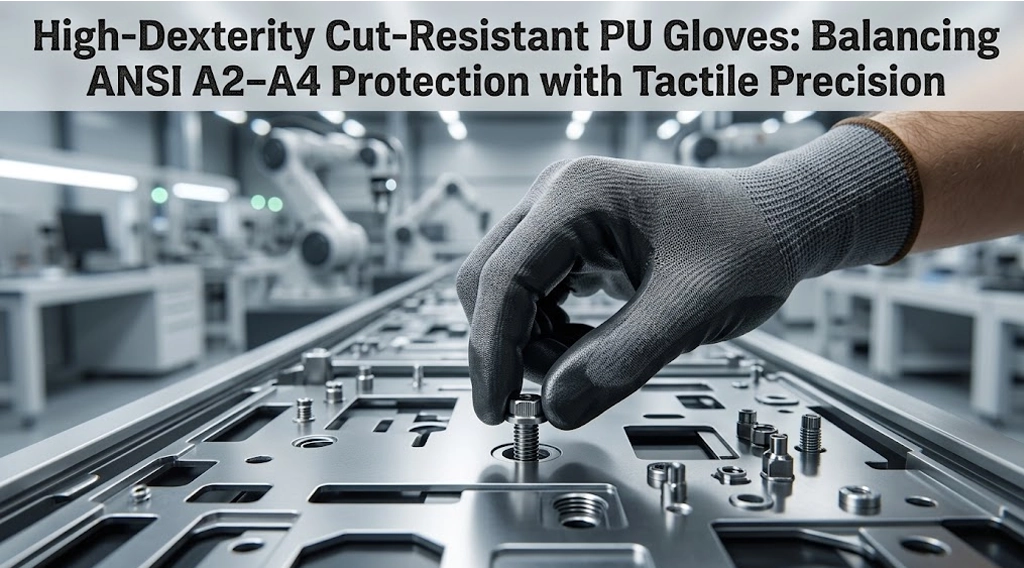
If there are clear cutting or scratching hazards on the production line, specialized cut-resistant glove solutions certified to ANSI A2 through A4 or EN 388 Cut Levels B through D must be selected. For a systematic technical guide on selecting ultra-thin cut-resistant liners with high stitch counts and heavy-duty, abrasion-resistant cut-resistant options, please refer to: High-Dexterity Cut-Resistant PU Gloves: Balancing ANSI A2–A4 Protection with Tactile Precision.
How do the B-329-BIO-A through E patterns help control cross-contamination?
By strictly linking pattern colors to specific production stages, an intuitive physical error-proofing barrier is established to prevent cross-contamination between areas.
In large manufacturing facilities, there are distinct tiers of cleanliness standards for different processes. Companies can implement the following visual segregation mechanisms in their SOPs:
Mechanical Assembly and Low-Oil Zones: Uniformly wear dark-colored abstract-print styles (e.g., B-329-BIO-A) to absorb and mask trace amounts of assembly grease;
Optical Panel Lamination and High-Cleanliness Zones: Mandatory use of blue-to-cyan gradient-print styles (e.g., B-329-BIO-B / C); dark-colored gloves contaminated with grease are strictly prohibited in these areas;
Final Inspection and Acceptance (FQI) and Packaging Zones: Designated use of light-colored gloves featuring traditional Chinese wave or cherry blossom patterns (e.g., B-329-BIO-D / E) to ensure the final process involving finished products is absolutely free of contamination.
Through this visual error-proofing mechanism, on-site quality inspectors and supervisors do not need to inspect gloves up close; they can identify unauthorized use of gloves across zones simply by recognizing the glove patterns from a distance, thereby preventing cross-contamination from particles and oil at the process entry point.
Can the B-329-BIO series be customized with OEM corporate logos or department identifiers?
Yes. For large and medium-sized enterprises with needs for brand display, specific department codes, or anti-counterfeiting identification, we offer comprehensive industrial-grade customization services, including prototyping and mass production.
Scope of Customization Support: We support the high-precision printing of company-exclusive brand logos, workshop department codes, team-specific color schemes, or safety slogans on the back of the gloves and the wrist cuff areas using the dye-sublimation process;
Process Standards: All custom dyes strictly comply with REACH, RoHS, and OEKO-TEX Standard 100 green chemistry and environmental standards, ensuring that custom designs maintain the same Class 4.5 wash fastness and resistance to rubbing and migration;
Minimum Order Quantity and Lead Time: Prototypes for custom designs are typically completed within 7 to 10 business days. Bulk customization is subject to specific minimum order quantity (MOQ) requirements; our customer service and technical support teams can provide a customized assessment plan with detailed specifications.
Strategic Sourcing & Call to Action (CTA)
In EHS and lean procurement decision-making for automotive OEM final assembly shops, 3C electronics precision manufacturing, and high-end light industrial packaging production lines, the deep integration of “visual error-proofing management,” “frontline worker compliance with glove wear,” and “corporate ESG carbon reduction strategies” has become the core benchmark for evaluating modern hand protection solutions. By introducing innovative gloves that integrate 15-gauge high-elasticity recycled polyester, water-based bio-based microcellular polyurethane, and Art-Guard error-proofing prints, companies can eliminate quality risks associated with process mix-ups and surface micro-scratches while significantly reducing Scope 3 waste and overall consumables procurement costs.
Request B-329-BIO Art-Guard Trial Sample Kits & ESG Technical Dossiers
To assist engineering and manufacturing departments, Lean 5S implementation teams, and EHS procurement managers in comprehensively evaluating the ergonomic performance and visual management value of these new bio-based printed gloves across various production stages, we provide global industrial manufacturing customers with comprehensive on-line trial testing and technical compliance documentation support:
Request the full range of visual testing sample kits: We offer test sample kits covering the MAXGUARD® B-329-BIO base model and the full range of six printed styles (B-329-BIO-A, B, C, D, and E), enabling shop floor management teams to conduct shift-based comparative tests on actual equipment across multiple processes, including precision assembly, post-production quality inspection, optical lens bonding, and light industrial sorting and packaging.
Bio-based Low-Carbon Accounting and Compliance Technical Documentation Support: We provide comprehensive Material Safety Data Sheets (MSDS), ASTM D6866 bio-based carbon content test reports, REACH/RoHS green chemistry certification documents, OEKO-TEX® Standard 100 skin-friendly and non-toxic certificates, as well as Product Carbon Footprint (PCF) quantification data for corporate ESG sustainability audits.
To schedule a production line efficiency evaluation or request a full set of printed test sample kits, please feel free to contact our Technical Application Engineering team: Request MAXGUARD® B-329-BIO Trial Samples & Technical Sheets.
Explore the Full Range of Precision & Sustainable PU-Coated Handwear
SQG offers a comprehensive portfolio of high-performance polyurethane hand protection products covering all industrial manufacturing scenarios—from 15-gauge, highly elastic, art-printed bio-based gloves and 18-gauge ultra-thin, bare-hand-feel micro-manipulation gloves to ANSI A2–A4-rated high-strength cut-resistant gloves and semiconductor-grade dust-free anti-static gloves. Our entire product line strictly complies with international safety and eco-friendly manufacturing standards.
To learn more about our complete range of microporous polyurethane hand protection products—specifically designed for lean manufacturing, high-gloss surface assembly, and green supply chains—including specifications, sizes, and bulk purchasing options, please browse our comprehensive product catalog: Explore Sustainable and Precision PU Coated Gloves.