Introduction: The Hidden Cost Traps of High-Volume Hand Protection Sourcing
In high-turnover manufacturing facilities—such as 3C electronics contract manufacturing, home appliance assembly, and automotive parts production—executing strategic PU coated gloves b2b sourcing is critical, as disposable hand protection procurement is highly susceptible to the financial trap of focusing solely on unit price. When conducting supplier tenders or price comparisons, many procurement teams often focus solely on the initial quoted price per pair listed on the invoice, while severely overlooking the staggering hidden losses caused by frequent tears in low-quality gloves, as well as the skyrocketing production line management costs resulting from frequent replacements and material handling. This traditional procurement strategy, which appears to offer “cheap purchases,” is in fact quietly eroding the factory’s actual net profit through daily high-frequency operations.
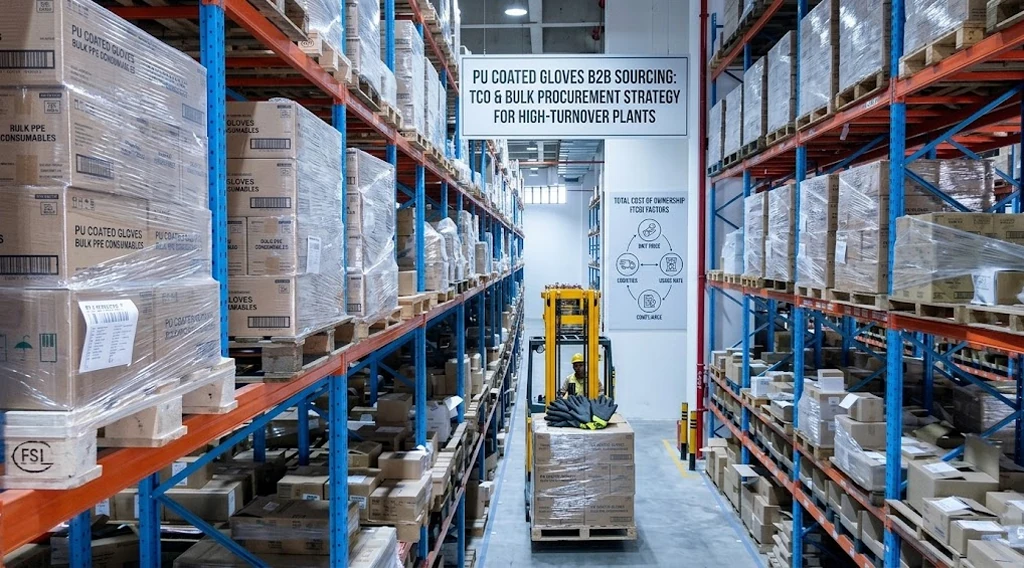
To truly achieve sustainable cost reduction at the supply chain level, modern manufacturing enterprises must establish a comprehensive Total Cost of Ownership (TCO) assessment model. From this advanced financial perspective, the considerations for B2B sourcing of PU-coated gloves are no longer limited to the extremely narrow purchasing price but extend to the entire lifecycle of consumables. The TCO framework quantifies and evaluates the gloves’ actual wear-resistant service life; the scrap and production line downtime resulting from coating peeling or leaching; the volumetric weight efficiency of bulk packaging logistics; and the costs associated with compliant waste disposal (such as Scope 3 emissions reduction).
The most effective way to break free from this cost black hole is to bypass the local distributor network—with its layers of markups—and connect directly with source manufacturers that possess R&D and quality control capabilities (Direct-from-Manufacturer). Through direct supply from the manufacturer, large and medium-sized factories can not only eliminate the markups associated with intermediaries but also leverage the manufacturer’s engineering support to implement a tiered SKU consolidation strategy—streamlining the dozens of redundant glove models with varying protection standards in the workshop into just a few high-quality, long-lasting products. This strategic procurement model significantly reduces the capital tied up in safety stock, fundamentally promoting healthy factory cash flow and facilitating the successful achievement of annual cost reduction targets.
To access engineering specifications for the full range of high-performance polyurethane gloves supplied directly from the source, bulk customization capacity planning, and factory-direct procurement solutions, please visit our core pillar page: Precision PU Palm-Coated Work Gloves Direct from Manufacturer.
The True Anatomy of TCO in High-Volume Hand Protection Sourcing
In large-scale assembly plants, equating the “invoice unit price” with the “actual cost of protection” is the most common financial misconception in industrial consumables procurement. For manufacturing companies that use tens of thousands of pairs of gloves each month, the true cost of consumables goes far beyond the few cents recorded on the books. To systematically optimize procurement spending, procurement and operations teams must look beyond surface-level quotes and comprehensively break down all explicit and implicit financial costs associated with the full lifecycle of hand protection products on the shop floor.
Unmasking Direct Unit Price vs. Full Lifecycle Operational Costs
An in-depth analysis of a factory’s daily operational data reveals that the direct purchase unit price typically accounts for only 30% to 40% of the total cost of ownership (TCO) for gloves, while the remaining 60% or more is dispersed and hidden in indirect consumption resulting from frequent glove changes on production lines and internal material handling:
Labor downtime and frequent material retrieval costs: Low-cost, low-quality gloves typically have extremely poor abrasion resistance; workers often wear through the fingertips or tear the coating within half a shift, resulting in 2 to 3 replacements per worker per day. Each time a worker leaves their station to queue at the supply room to register, pick up gloves, and put them on again, 5 to 10 minutes of work time is wasted. On an assembly line with hundreds of workers, this hidden loss of work time directly reduces the line’s hourly production output (UPH), and when converted into lost labor hours, the figure is staggering.
Warehouse Space Occupancy and Internal Logistics Sorting Burden: The extremely high rate of wear and tear forces factory warehouses to maintain a massive safety stock of gloves, which not only occupies valuable shelf space but also ties up a significant amount of working capital. The frequent unpacking, inventory counting, and redistribution to various work teams by warehouse staff inadvertently and significantly increase the labor costs associated with internal material handling.
Costs of Compliant Transportation and Incineration of Industrial Solid Waste: As environmental regulations continue to tighten, discarded industrial personal protective equipment has been widely classified under the specialized regulatory framework for general industrial solid waste or even hazardous waste. The massive volume of waste and tonnage of waste collected generated by the annual consumption of hundreds of thousands of pairs of short-lived gloves directly drives up a factory’s specialized expenses for EHS (Environmental, Health, and Safety) compliance.
Quantifying the Cost of Premature Glove Failure and Micro-Scratches
In the screen lamination of 3C consumer electronics, the assembly of automotive instrument panels and center consoles, and the production of high-gloss injection-molded parts for high-end home appliances, the losses resulting from indirect quality incidents caused by glove quality defects are often tens or even hundreds of times the actual purchase value of the gloves:
Coating Migration and Microscopic Surface Scratches: To reduce costs, low-quality solvent-based PU gloves often use recycled raw materials with high impurity levels or contain excessive amounts of cheap plasticizers. During operation, this makes them highly prone to grease migration (ghosting) or the shedding of tiny, hardened lumps from the coating. Furthermore, if the rough, low-gauge inner lining forms knots or hard lumps at the fingertips, workers are highly likely to leave hairline-thin micro-scratches on the workpiece surface when pressing precision latches.
Risks of downstream rework, production line stoppages, and customer claims: The manufacturing cost of a single high-gloss automotive trim piece or an LCD screen ranges from tens to hundreds of yuan. If the pre-coating process develops pinholes or bubbles due to gloves becoming sticky from adhesive failure or shedding fine dust and short fibers, the entire batch of workpieces will be deemed scrap during final quality inspection (FQI) or must undergo offline rework and sanding. Once defective products reach the end-user OEM, the resulting mass returns, penalties for production line stoppages, and damage to the brand’s reputation will completely erode the meager profit saved on the unit price of the gloves at the procurement end.
Direct-from-Manufacturer vs. Industrial Distribution Channels
In the supply chain architecture of high-turnover manufacturing facilities, the choice of procurement channels not only determines the baseline for procurement costs but also directly impacts the stability of material supply to production lines and the facility’s resilience to risks. Many manufacturing companies have long been accustomed to sourcing workshop consumables through local hardware and PPE suppliers or multi-tiered MRO (Maintenance, Repair, and Operations) distributors. This traditional procurement chain accumulates significant markups through multiple layers of resellers and exhibits extreme vulnerability in the face of sudden fluctuations in delivery schedules. Driving a strategic shift from “traditional distributor-mediated procurement” to “direct-from-manufacturer procurement” has become the key strategy for large-scale manufacturing enterprises to achieve dual breakthroughs in procurement cost reduction and supply security.
Eliminating Middleman Margins and Layered Markups
In the traditional multi-tiered industrial goods distribution chain, a pair of gloves typically passes through multiple distribution tiers—including national general agents, regional wholesalers, local service providers, and end-point hardware stores—before finally reaching the production line on the factory floor:
Eliminating Redundant Channel Markups: Each level of distributor adds its own warehousing and logistics costs, interest on tied-up capital, and a reasonable operating gross margin to the factory price, resulting in end-user invoice prices that are often 30% to 50% higher than the original factory price. By establishing an end-to-end direct procurement partnership with the source factory, companies can directly eliminate all channel markups and hidden information asymmetries imposed by intermediaries, thereby reducing annual base procurement expenses by 15% to 25% while maintaining the same quality and specification standards.
Direct Technical Communication and Zero Distortion of Requirements: Intermediate traders typically lack in-depth engineering expertise in polymer materials and production process experience, making it difficult for them to accurately understand the production line’s stringent technical requirements regarding micro-scratch resistance, silicone-free formulations, or fingertip slip resistance. This frequently leads to selection errors where the delivered goods do not match the specified requirements. The direct-sourcing model from the source factory establishes a direct connection between the purchasing factory and the original manufacturer’s R&D team, enabling precise formulation matching based on specific operating conditions, customized engineering support, and one-click traceability for quality issues.
Factory-Direct Supply Continuity, Capacity Reservation, and Safety Stock Buffer
For industries characterized by significant seasonal fluctuations—such as 3C consumer electronics contract manufacturing (EMS), smart home appliances, and automotive parts manufacturing—supply chain resilience is critical during periods of surging orders, such as “new product launches” and “year-end sales pushes”:
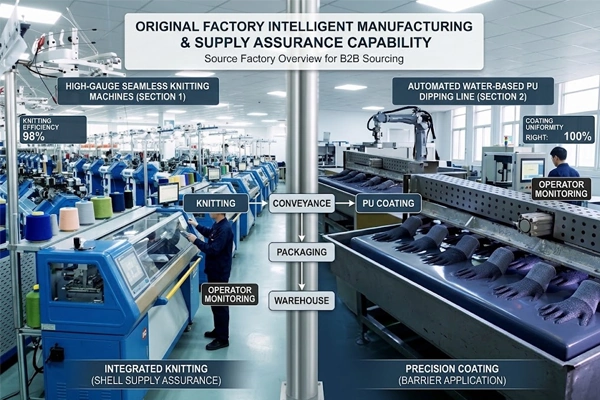
Exclusive Capacity Reservation for Knitting Machines and Coating Lines at Original Manufacturers: Local distributors, constrained by their own working capital and limited warehouse space, find it difficult to bear the financial risk of stockpiling large volumes of inventory. When faced with industry-wide shipping peaks, distributors often experience stockouts, delayed deliveries in batches, or even the unauthorized substitution of low-quality mixed-batch goods—all of which can easily lead to serious operational incidents, such as production lines being forced to shut down due to a shortage of gloves. By establishing direct procurement strategic partnerships with source manufacturers, companies can rely on long-term rolling demand forecasts to secure dedicated production capacity on the manufacturer’s high-density knitting machines and water-based, bio-based dipping lines in advance, thereby fundamentally eliminating delivery delays caused by capacity shortages.
Collaborative Warehousing and Dynamic Safety Stock Buffer: The original manufacturer’s supply chain support, based on precise production scheduling and standardized pallet warehousing management, establishes a 30- to 60-day dynamic safety stock buffer for core strategic key accounts. When the factory faces unexpected additional orders from customers or temporary expansion of production line workstations, the original manufacturer can directly activate an emergency shipment response mechanism to ensure seamless material replenishment and guarantee absolute supply chain security during high-load continuous production cycles.
Quality Consistency and Defect Rate Mitigation
In large-scale assembly line operations, batch-to-batch variance in protective consumables is a key factor that erodes production line efficiency and drives up hidden production costs. When comparing quotes, many procurement departments often assume that the quality of gloves is completely consistent across all batches. However, in actual deliveries, second- and third-tier suppliers and private-label traders frequently exhibit a phenomenon where “samples pass inspection, but the bulk shipment falls short of specifications.” This loss of quality control at the micro level directly impacts production rhythms on the shop floor and the yield rate at the end of the line, triggering a chain reaction of financial losses.
Controlling Batch-to-Batch Variance: DMF Residues, Odor, and Sizing Instability
Small workshops or factories lacking end-to-end quality control often exhibit significant deviations in physical and chemical specifications between production batches, causing unpredictable negative impacts on shop floor operations:
Sizing Instability and Operator Fatigue: Due to uneven tension control on knitting machines or fluctuations in setting oven temperatures, length and palm circumference tolerances for the same size (e.g., size L) in different batches of low-end gloves often exceed 1.5 centimeters. When workers are assigned gloves that are too tight, their fingers remain in a compressed, bent position for extended periods, making finger joints highly susceptible to soreness and fatigue; conversely, when gloves are too loose, excess fabric around the fingertips causes frequent slippage and dropping of small screws or micro-cables during handling, leading to worker resistance due to hand discomfort—and in some cases, even violations such as removing gloves without authorization.
Incomplete Solvent Removal and Volatile Odor-Induced Work Stoppages (DMF Residues & Odor): Inexpensive gloves produced using traditional solvent-based dipping processes often have their rinsing time shortened to reduce the cost of solvent removal through washing, resulting in significant residues of dimethylformamide (DMF/DMFa) remaining in the pores of the coating. When these gloves are delivered to enclosed, high-density assembly workshops and unpacked in bulk, the pungent, volatile chemical odor can easily cause dizziness and nausea among workshop workers, and may even trigger mass work stoppages and occupational health complaints.
Uniform Control of MAXGUARD’s Eco-Friendly Water-Based Dip-Coating: The entire MAXGUARD series (including B-312-BIO-WL, B-318-BIO, B-322-BIO, and B-329-BIO) has fully adopted an automated central feeding system and a deionized water-based polyurethane dip-coating production line. This eliminates the use of DMF organic solvents at the source, ensuring that products leaving the factory are completely odor-free. Combined with constant-tension, high-precision knitting machines and a standard aluminum hand-mold shaping process, dimensional tolerances for each batch are strictly controlled within ±2 millimeters, ensuring that workers experience a completely consistent fit and feel whenever they put on a new batch of gloves.
Financial Modeling of Defect Rates: Impact on Line Speeds and Rework Rates
The defect rate of the gloves themselves has a direct financial multiplier effect on the factory’s hourly production capacity (UPH, Units Per Hour) and the first-pass yield (FPY) of products coming off the assembly line:
Process Cycle Time Delay Model: If the defect rate for a batch of gloves (e.g., missing adhesive on fingertips, hardening and clumping, or burrs) is 5%, this means that 5 out of every 100 pairs of gloves have defects such as uneven coating or slippage. On a precision assembly line with 100 workers, this means that 5 workstations will experience cycle time interruptions each day due to unstable glove handling. Assuming each delay caused by a dropped part or recalibration takes 12 seconds, the entire assembly line will lose thousands of seconds of effective working time during a 10-hour shift, directly resulting in a daily decline in production output of 1.5% to 3%.
Calculation of losses due to high-gloss surface defects and rework: Microscopic resin particles from peeling coatings or grease leaching from substandard gloves leave irreversible micro-scratches and grease marks—invisible to the naked eye—when they come into contact with high-gloss automotive dashboards, touchscreens, or precision electroplated trim. Based on a daily assembly of 2,000 finished products, if the surface defect rate caused by gloves is only 0.5%, 10 items will require rework each day. If the combined cost of labor and depreciation for disassembling, reassembling, and sanding a single high-gloss part is 50 yuan, the direct loss from rework in a single month would amount to as much as 15,000 yuan—a figure that far exceeds the production line’s total monthly budget for glove procurement.
Business Benefits of Increasing the Pass Rate from 95% to 99.8%: By introducing MAXGUARD bio-based PU gloves, which meet stringent factory-release quality inspection standards, the physical defect rate per glove batch can be reduced to below 0.2%. This not only eliminates production rhythm disruptions caused by glove failure but also reduces the surface defect rate of high-gloss components to an extremely low level, saving large-scale enterprises tens of thousands of yuan annually in unnecessary rework and scrap losses.
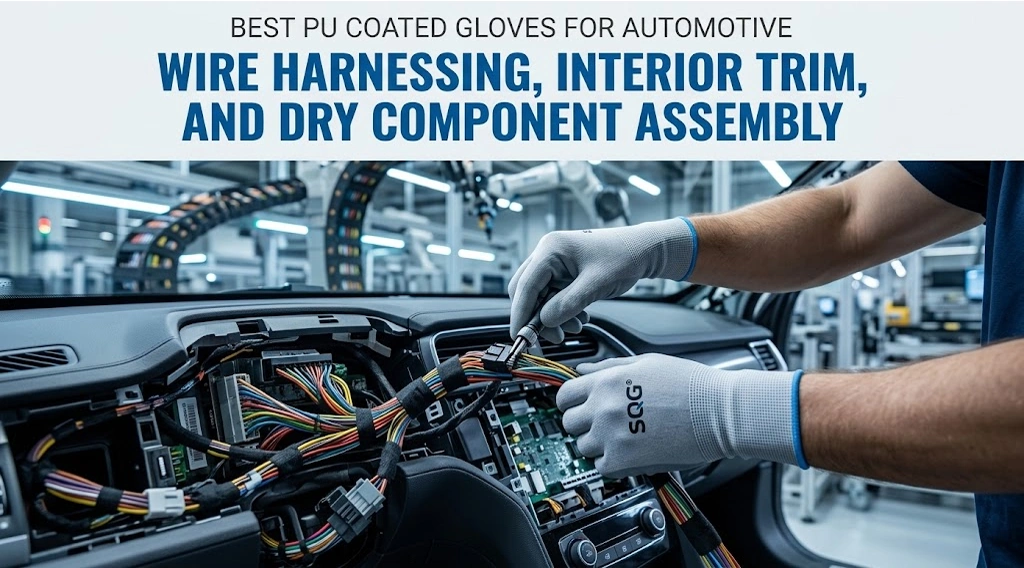
For information on the micro-tribological scratch resistance of microporous polyurethane coatings in high-gloss piano lacquer finishes, precision electroplated buttons, and scratch-free operation of large in-vehicle displays, please refer to our technical white paper on automotive assembly: Best PU Coated Gloves for Automotive Assembly & Wiring.
Tiered SKU Consolidation: Rationalizing Plant-Wide Handwear Inventories
In large manufacturing facilities with multiple production processes, the proliferation of hand protection SKUs across workshops acts as a hidden drain that drives up warehouse management costs and ties up procurement funds. Because different workshops, production lines, and even work teams often act independently, many factories find their procurement warehouses perpetually stocked with dozens of models of work gloves from various sources—models that overlap in performance and are incompatible with one another. This fragmented material management not only deprives the factory of the bargaining power that comes with centralized bulk purchasing but also carries the high risks of costly inventory counts for idle stock and product write-offs. By implementing a “Tiered SKU Consolidation” strategy, manufacturing companies can consolidate the facility’s complex protective equipment needs into a very small number of core product matrices, balancing economies of scale with differentiated management across production stages.
Standard Precision Handling: Deploying MAXGUARD B-318-BIO and B-322-BIO
For the most widespread and high-consumption workstations in the factory—including general machining, post-stamping of small metal parts, grinding of plastic structural components, and general electronic assembly stations—the core requirements for protective solutions are excellent tear resistance, flexible tactile feedback, and a low average cost per use:
Unified Workshop Standard Model: For routine assembly sections, which account for 60% to 70% of the factory’s total consumption, MAXGUARD® B-318-BIO and B-322-BIO are directly adopted as the standardized main SKUs for the facility. Both models feature a 13-gauge, high-resilience, seamless nylon blend lining, offering superior tensile toughness and flex fatigue resistance compared to standard polyester, effectively withstanding abrasion from burrs on small hardware components and injection-molded edges.
General-purpose friction provided by the bio-based microporous coating: The water-based, bio-based PU microporous coating on the palm delivers stable grip in both dry and lightly oiled conditions, performing exceptionally well during high-frequency tasks such as tightening micro self-tapping screws and connecting wire harness terminals. By replacing more than a dozen types of low-end, general-purpose gloves previously procured haphazardly with B-318-BIO and B-322-BIO, the procurement department has been able to highly consolidate orders for the plant-wide general-purpose model, directly triggering the highest-tier volume-based tiered discounts (Volume Tier Pricing) from the source manufacturer, and significantly streamlining warehouse storage space and ERP material code maintenance costs.
High-End Optical & ESG Workstations: Upgrading to B-312-BIO-WL and B-329-BIO
At highly sensitive workstations—such as those involved in optical display lamination, in-vehicle HUD assembly, installation of high-end white high-gloss interior components, and those undergoing green factory audits by original equipment manufacturers (OEMs)—protective equipment requires a comprehensive upgrade to ensure cleanliness, low dust levels, scratch-free surfaces, and low-carbon compliance:
B-312-BIO-WL’s High-Purity Filament Dust Protection: In clean assembly and optical lens pre-installation areas, a uniform upgrade to MAXGUARD® B-312-BIO-WL—featuring a 13-needle continuous recycled polyester (RPET) filament structure—is required. This model utilizes a pure white cleanroom formulation and precision hemmed edges, eliminating the shedding and dust generation associated with ordinary short fibers during stretching. It effectively protects sensitive optical surfaces from particle contamination while leveraging recycled fiber materials to help the factory meet Scope 3 supply chain carbon reduction audit requirements.
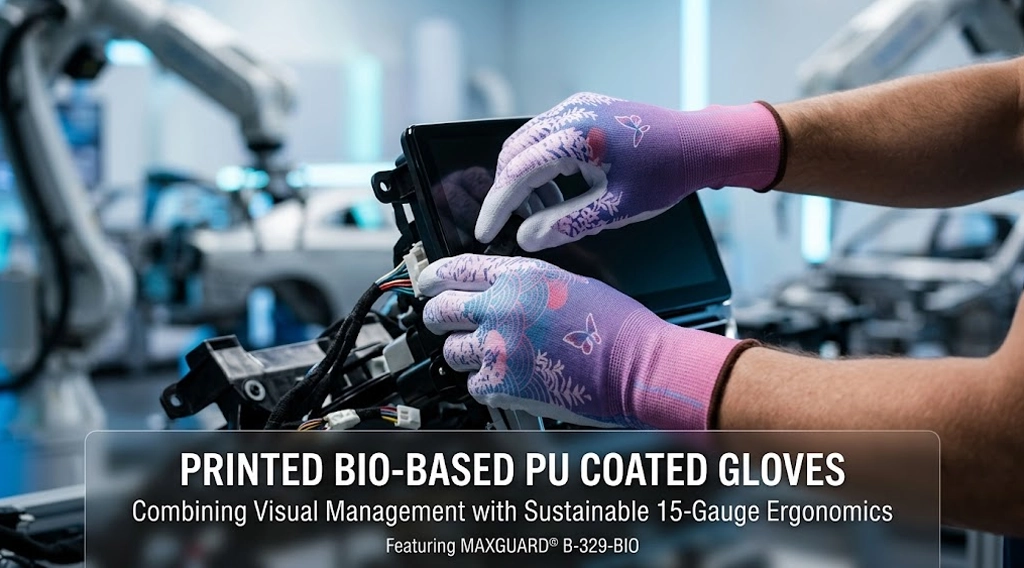
Visual Poka-Yoke and Workstation Segregation with B-329-BIO: On final assembly lines where multiple production stages intersect and mix, the MAXGUARD® B-329-BIO series—a 15-needle, high-elasticity recycled polyester blend—has been introduced. This series features the exclusive Art-Guard printed design (Styles A through E), allowing workshops to directly implement visual error-proofing (Visual Poka-Yoke) using different colors and patterns. This establishes visual identifiers for gloves that must not be mixed across pre-cleaning, clean assembly, and final inspection/packaging stations, thereby completely preventing the cross-area transfer of oil and particles at the physical level.
For practical strategies on implementing Lean 5S color-coded zone management on production lines using 15-gauge high-elasticity printed gloves—to prevent cross-section mixing and eliminate unauthorized glove removal by workers—please refer to our specialized practical guide: Printed Bio-Based PU-Coated Gloves: Combining Visual Management with Sustainable 15-Gauge Ergonomics.
Packaging Optimization, Palletization, and Freight Cost Reduction
In the procurement of high-volume industrial consumables, optimizing packaging formats and logistics density directly determines the total landed cost of the goods. Light industrial knitted rubber-coated gloves are essentially classified as “light cargo.” In international full-container-load (FCL) ocean freight and domestic interprovincial trunk logistics, freight charges are often calculated based on the cargo’s cubic meters (CBM) rather than its actual gross weight. With traditional loose packing methods, nearly half of the freight costs are actually spent on “excess air” inside the cardboard boxes. By implementing industrial-grade engineering improvements to physical packaging and optimizing pallet loading structures, manufacturers can achieve dual cost reductions in international freight and on-site warehouse space occupancy at a very low upfront renovation cost.
High-Density Vacuum Packaging vs. Bulky Traditional Boxing
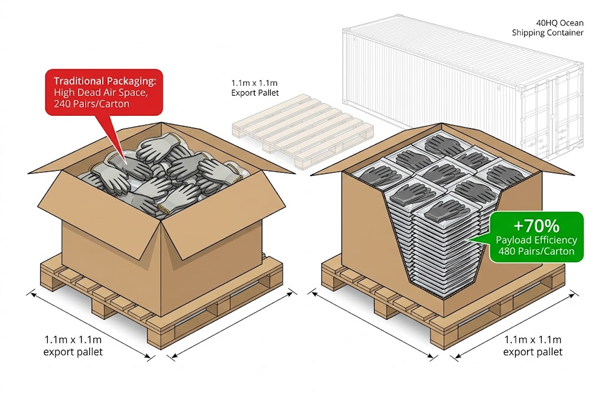
Most standard occupational safety products use traditional loose, flat-lay packaging—typically “10 pairs per plastic bag, 240 pairs per outer carton.” This method results in a loose, airy structure with large air voids inside each carton, leading to extreme waste of cubic volume during long-distance transport:
Industrial-Grade High-Density Vacuum Compression Packaging: To address bulk procurement orders for PU-coated gloves in B2B sourcing, MAXGUARD’s production line has implemented a continuous, automated vacuum compression packaging process. By using high negative pressure to thoroughly extract the air between the glove fabric and the microporous coating—without compromising the elasticity of the polyurethane or the structure of the fibers—the physical thickness of each package is reduced by more than 50%.
Packaging volume reduced by over 40%: A traditional outer carton that originally held 240 pairs of gloves now achieves a significantly higher volume efficiency after adopting high-density vacuum compression packaging; cartons of the same size can now hold 360 to 480 pairs of gloves. The total volume weight (CBM) of the entire shipment is reduced by 40% to 45%. This not only proportionally lowers the per-pair freight cost for international ocean and land LTL (less-than-truckload) transport but also, thanks to the high sealing performance of the outer composite barrier film, eliminates the risk of mold growth and dust contamination caused by “container rain” in the humid environment of ocean shipping containers.
Container Loading Efficiency and Warehouse Space Savings
For large-scale manufacturing facilities that consume hundreds of thousands of pairs of gloves annually, optimizing end-to-end palletizing and loading at the factory has an immediate impact on warehouse space efficiency at the end of the supply chain:
Calculations for modular loading on standard pallets (1.1 m × 1.1 m): Traditional loose or mixed-size cartons cannot be stacked to fully utilize space, resulting in significant wasted space between pallets. MAXGUARD strictly designs the length, width, and height of its outer boxes according to the mechanical and dimensional standards of industrial pallets (1.1 m × 1.1 m × 1.1 m). A single pallet can neatly stack six layers, with six boxes per layer, ensuring no overhang at the pallet edges and no inward collapse.
Improved Loading Efficiency for 40HQ High-Cube Containers: In maritime container loading, a standard 40-foot high-cube container (40HQ) can typically hold only about 120,000 to 140,000 pairs of polyurethane gloves using traditional loose-stow methods; however, after implementing vacuum compression and a high-density standardized palletizing solution, the net loading capacity of the same 40HQ container can be directly increased to 220,000 to 260,000 pairs, with loading efficiency per container soaring by over 70%. This means that for the same procurement volume, the factory can reduce its annual sea freight shipments by 3 to 5 high-cube containers, directly saving tens of thousands of dollars in international freight and port charges.
Storage space occupied on the factory premises has been significantly reduced: the high-density packaging has directly freed up storage capacity in the factory’s raw materials warehouse. Gloves with a monthly turnover rate that previously required 100 rack spaces can now be stored in just 55 to 60 standard storage spaces. The high-turnover workshop not only frees up valuable warehouse space for the turnover of high-value semi-finished products on production lines but also reduces the frequency of forklift transfers and the labor hours spent by warehouse staff on handling, thereby promoting lean operations in the factory’s internal logistics.
Financial Cost Modeling: Analysis of a 1,000-Worker Assembly Plant
To more intuitively verify the financial performance of protective gloves in actual operations, we have transformed the abstract purchase unit price into a quantifiable production line financial model. The finance and procurement departments of many manufacturing companies tend to view the unit price of consumables from a static perspective, believing that inexpensive disposable nitrile gloves or low-end PU gloves from discount suppliers are a safe choice for controlling shop floor costs. However, once the service life of consumables, losses from rework due to process defects, and the costs of compliant disposal of solid waste at the end of the production cycle are all factored into a 12-month operating cycle, the true cost landscape undergoes a fundamental reversal.
Cost Breakdown Matrix: Single-Use Nitrile vs. Conventional PU vs. Bio-PU
The following model uses a medium-to-large precision electronics or home appliance final assembly plant with 1,000 workers as a case study, calculating full-cycle operating costs over 12 months based on a standard 250 working days. The comparison includes single-use nitrile gloves, generic 13-gauge petrochemical-based nylon PU gloves supplied by intermediaries, and MAXGUARD® B-312-BIO / B-318-BIO high-performance bio-based gloves sourced directly from the manufacturer:
| Procurement & Operational Metrics | Single-Use Disposable Nitrile | Generic 13G Nylon PU (Trading) | MAXGUARD® B-312-BIO / B-318-BIO |
| Initial Unit Price (Pair) (Initial unit price per pair) | $0.12 / pair | $0.35 / pair | $0.48 / pair (Direct from Factory) |
| Average Replacement Cycle (Average replacement cycle per person) | 2–3 pairs/day/worker | 1 pair / 2 days/worker | 1 pair / 5–7 days/worker |
| Annual Consumption (1,000 Workers) (Total annual consumption for the entire plant) | 600,000 pairs | 125,000 pairs | 45,000 pairs (Washable & Durable) |
| Annual Direct Consumable Spend (Annual direct procurement expenditure) | $72,000 | $43,750 | $21,600 |
| Scrap / Rework Loss from Micro-Scratches (Losses from Micro-Scratches and Fingerprints) | $18,500 (Risk of tearing/sweating) | $12,000 (Risk of oily residue) | <$2,000 (Zero-ghosting, lint-free) |
| Solid Waste Disposal Costs (Scope 3) (Compliance Expenses for Industrial Solid Waste Disposal) | $4,800 (High landfill volume) | $1,200 | $380 (Low landfill mass) |
| Total Annual Operational Cost (TCO) (Total Annual Life-Cycle Cost) | $95,300 | $56,950 | $23,980 (Save up to 58% compared to generic products) |
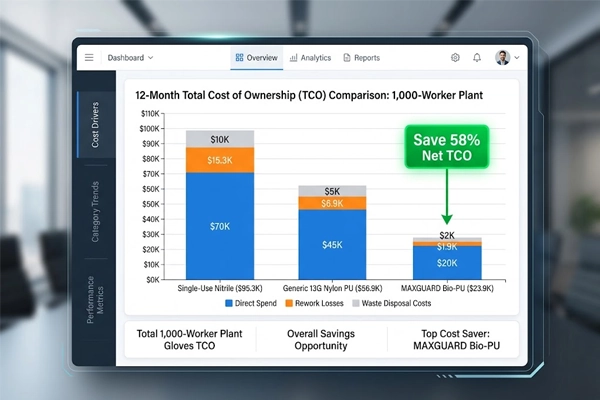
This set of end-to-end quantitative data clearly reveals two financial conclusions that challenge conventional wisdom:
A dramatic drop in direct consumable expenses: Although the initial purchase price per unit of MAXGUARD® B-312-BIO and B-318-BIO ($0.48) is higher than that of disposable nitrile gloves ($0.12) and low-end commercial models ($0.35), their high-resilience knitted structure and abrasion-resistant microporous coating significantly extend the service life of a single pair of gloves from a few hours to 5 to 7 workdays. The plant’s total annual glove consumption plummeted from a massive 600,000 pairs to just 45,000 pairs, reducing total annual direct procurement expenses from $72,000 to $21,600—a direct cost savings rate of 50% to 70%.
Indirect and hidden losses were virtually eliminated: disposable nitrile gloves are highly susceptible to punctures and tears from metal burrs during high-frequency assembly, and the seepage of trapped sweat often causes corrosion on high-gloss surfaces; ordinary, low-end PU gloves carry the risk of discoloration due to the migration of silicone oil or heavy hydrocarbon greases. The average annual quality-related rework losses for both types exceeded $10,000. Thanks to its filament-based, low-dust lining and deeply cross-linked, water-based, bio-derived coating, MAXGUARD virtually eliminates surface quality issues at the source, reducing rework losses to less than $2,000. Combined with a sharp reduction in the volume of solid waste requiring compliant disposal, the plant’s annual total cost of ownership (TCO) plummeted from $95,300 to $23,900, representing a 58% reduction in overall operating costs.
For systematic comparative data on the physical and mechanical properties of the base elastomer polymers—polyurethane, nitrile rubber, and natural latex—as well as their tear resistance, abrasion resistance mechanisms, and microscopic friction resistance, please refer to our material selection white paper: PU Coated vs. Nitrile vs. Latex Work Gloves: The Definitive B2B Selection Guide for Precision Manufacturing.
OEM/ODM Capabilities, Custom Packaging, and Global Compliance
For multinational industrial product distributors, overseas PPE brands, and large electronics contract manufacturing groups, the manufacturing capabilities of source suppliers are not only reflected in basic production capacity and unit price advantages but also depend on flexible OEM/ODM industrial customization support and rigorous global compliance audit certifications. As a core material in standardized factory operations, glove packaging must be deeply integrated with modern workshop digital material management processes; against the backdrop of increasingly stringent global supply chain compliance audits, a fully transparent and traceable quality system is the fundamental baseline for ensuring long-term supply security.
Custom Branding, Barcoding, and Automated Vending Machine Packaging
The traditional, crude bulk-packaging model can no longer meet the requirements of modern lean manufacturing workshops for precise control of consumables. Leveraging automated post-production packaging lines, MAXGUARD provides global B2B customers with engineering-grade custom packaging solutions that are deeply aligned with industrial workplace practices:
Integration of custom printing and exclusive part number barcodes (Barcoding): Supports high-precision printing of the purchaser’s brand logo (Private Labeling), workshop department codes, or specific protection level markings on the back of the glove and at the wrist. Outer cartons and inner packaging can be directly printed with material codes specific to the customer’s ERP system, UPC/EAN product barcodes, and GS1 traceability QR codes compliant with industrial standards. This enables seamless digital integration from the time goods enter the manufacturer’s warehouse until they are scanned and shelved in the purchaser’s warehouse, significantly reducing the labor and time required for warehousing, sorting, and inventory counting.
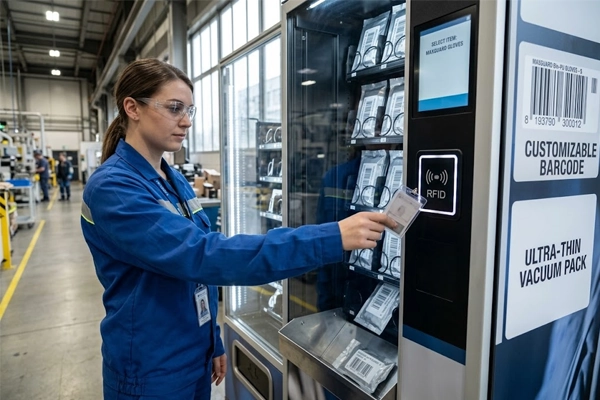
Specialized Single- or Double-Compression Packaging for Smart PPE Vending Machines (PPE Vending Machine Ready): In response to the “Industrial Vending Machines” management model increasingly adopted by leading factories, we offer customized ultra-thin vacuum flat-pack solutions for single or double gloves. The gloves are automatically folded using specialized molds, then vacuum-sealed and de-aerated. Each package maintains stable, flat dimensions, eliminating vending machine jams caused by bulging packaging or curled edges. Production line workers can use their employee ID cards to scan and accurately retrieve gloves 24 hours a day as needed, helping shop floor management teams curb management loopholes such as “excessive stockpiling and irrational waste” at the source.
Batch Traceability, Factory Audit Readiness, and International Certifications
In response to the stringent market access barriers of high-end markets in Europe and the United States, as well as multinational original equipment manufacturers (OEMs), we have established a comprehensive, end-to-end traceable quality management framework that spans the entire process—from raw material intake and weaving/coating to the packaging of finished products—enabling us to confidently meet the demands of various rigorous third-party factory audits and social responsibility assessments:
“One Code per Box” Batch Traceability Management System: Every batch of gloves shipped from the factory is marked with a unique production lot number, which is deeply linked to the raw material supplier code, machine serial number, dipping temperature and humidity records, and quality inspection sample retention reports. Should any quality anomalies be reported on-site, our in-house quality control team can retrieve the complete set of production process parameters and pre-shipment inspection records within two hours, providing large manufacturing enterprises with a closed-loop quality assurance system.
Comprehensive International Certifications and Factory Audit Assurance: Our manufacturing facilities have fully implemented and obtained ISO 9001 Quality Management System and ISO 14001 Environmental Management System certifications, while workplace labor rights and social responsibility standards strictly comply with Sedex and SMETA audit requirements. Our entire product line has been rigorously tested by authoritative third-party organizations and comes with complete EU CE certification documentation (EN 388:2016 standard for protection against mechanical hazards) as well as North American ANSI/ISEA 105 rating test reports, helping overseas brand owners and industrial procurement consortia easily overcome multiple compliance hurdles such as customs clearance, end-user union audits, and supplier qualification for major manufacturers.
For information on achieving internationally recognized low-carbon certifications (such as ASTM D6866 bio-based carbon accounting and OEKO-TEX non-toxic testing) using bio-based water-based polyurethane coatings and recycled polyester fibers, as well as professional compliance solutions to help large-scale contract manufacturers pass multinational brand owners’ Scope 3 supply chain carbon reduction audits, please refer to our specialized technical white paper: Bio-Based & RPET PU Gloves: Lowering Carbon Footprints in ESG-Compliant Industrial Supply Chains.
Frequently Asked Questions (FAQs)
Addressing key concerns commonly faced by medium- to large-sized manufacturing enterprises and industrial product buyers when conducting B2B sourcing of PU-coated gloves—such as commercial barriers, loss control, mixed-lot consolidation, and cross-border delivery—the Supply Chain Operations and Bulk Procurement Technology teams provide the following expert answers.
What are the typical Minimum Order Quantities (MOQs) for factory-direct bulk purchasing?
Factory-direct purchasing employs a tiered minimum order quantity system, with transparent minimum order thresholds set separately for standard industrial models and bio-based eco-friendly models. Special support policies are also available for new customers during production line trial runs.
Standard Model Minimum Order Threshold (Standard Bulk MOQ): For standard 13-gauge nylon micro-perforated PU gloves (such as B-318-BIO and B-322-BIO), and pure white high-cleanliness models (B-312-BIO-WL), the base minimum order quantity for a single specification is typically 12,000 pairs (equivalent to approximately 50 boxes; standard sizes can be mixed proportionally). For bulk orders eligible for the highest tier of factory price discounts, we recommend using a 20GP container (approximately 100,000 to 120,000 pairs) or a 40HQ container (approximately 220,000 to 260,000 pairs) as the unit of calculation to maximize the spreading of per-pair ocean freight and customs clearance fees.
Art-Guard & Custom MOQ: For the MAXGUARD B-329-BIO series featuring sublimation printing technology and custom orders using private molds, the minimum order quantity (MOQ) for a single print design ranges from 6,000 to 12,000 pairs.
Trial Run Policy: To support large manufacturing groups in completing rigorous small-batch line trial runs and EHS comfort evaluations, we offer a first-order trial run quota for clients establishing direct procurement partnerships for the first time—allowing for rapid prototyping and delivery in small batches of 2,400 to 3,600 pairs to assist procurement departments in verifying production efficiency without the risk of tying up large amounts of capital.
How can factories prevent glove inventory hoarding and manage internal consumption?
Establish a closed-loop management system that integrates “institutional constraints, smart IoT hardware monitoring, and visual error-proofing” to eliminate internal hoarding and irrational material issuance in the workshop.
In many workshops, monthly glove consumption remains high—often not because the gloves have reached the end of their useful life, but because of loopholes in internal management. It is recommended that companies implement the following comprehensive strategy:
Implement a “One-for-One Exchange” closed-loop mechanism: Set up collection bins for used gloves in work teams or production sections. Workers must exchange worn-out or damaged gloves for a new pair of the same specification. This eliminates the practice of casually discarding gloves or reissuing them upon loss, making the actual physical wear-and-tear cycle of gloves traceable.
Integrate industrial smart vending machines (PPE Vending Machines): Utilize MAXGUARD’s individually packaged gloves—available in single or double flat-packed formats—and place them directly into smart dispensing cabinets located along the main walkways in the workshop. Workers collect gloves by swiping their employee ID cards or scanning the facility’s QR code. The backend system enforces strict limits on the weekly distribution frequency per individual or work team; any instances of excessive collection automatically trigger an alert to supervisors, effectively preventing unauthorized stockpiling.
Combined with Art-Guard printed patterns, this system enables visual monitoring across multiple shifts: Different back-of-hand patterns (B-329-BIO-A through E) are used to implement color-rotation management for different production shifts or cycles. For example, Style A is distributed to all workers Monday through Wednesday, and Style B is rotated in from Thursday through Saturday. If a supervisor on the production line discovers a worker still wearing the previous cycle’s outdated style, they can quickly identify the issue and take immediate action.
Can we combine cut-resistant gloves and standard PU gloves into a single bulk order?
Absolutely. We offer a consolidated procurement and billing solution for full container load (FCL) mixed shipments, helping factories streamline their entire supply chain.
In machinery manufacturing and final assembly workshops, general assembly stations require large quantities of precision, lightweight PU gloves, while sheet metal stamping, cable stripping, or metal machining stations require high-strength gloves with ANSI A2 to A4 cut resistance. Companies do not need to place separate orders with two different suppliers:
Mixed loading in a single container optimizes transportation costs: Customers can proportionally mix and pack large quantities of general-purpose bio-based PU gloves (such as B-318-BIO and B-322-BIO) with high-gauge cut-resistant gloves for high-risk workstations within the same 20GP or 40HQ container. This approach helps factories consolidate customs declarations and share pallet space, avoiding the high premiums associated with frequent LTL air freight or LCL shipments for small batches of cut-resistant gloves.
Selecting Advanced Cut-Resistant Solutions: For guidance on balancing ANSI A2–A4 mechanical protection with tactile precision in 15-gauge and 18-gauge ultra-thin, highly elastic cut-resistant constructions based on the sharpness level of production line edges, please refer to our technical white paper: High-Dexterity Cut-Resistant PU Gloves: Balancing ANSI A2–A4 Protection with Tactile Precision.
What are the standard production lead times and global shipping arrangements?
Standard production lead times for bulk orders are consistently maintained between 25 and 35 days, and we maintain a large inventory of semi-finished raw liner gloves to support urgent deliveries.
Standard Lead Time: For bulk orders with finalized packaging templates, the standard manufacturing cycle—from receipt of the purchase order (PO) to completion of full factory quality inspection and delivery to the container terminal—is 25 to 35 business days. For major clients under long-term strategic rolling forecast framework agreements, we can further reduce the delivery cycle to 10 to 15 days by leveraging our factory’s standing inventory of hundreds of thousands of pairs of 13-gauge and 15-gauge seamless raw liner semi-finished products.
Flexible, Comprehensive Incoterms Support: To accommodate the logistics and customs clearance capabilities of buyers worldwide, we offer end-to-end international trade delivery models—including standard FOB (Free On Board at a designated port), CIF (Cost, Insurance, and Freight to a designated port, including long-haul ocean freight), and DDP (Delivered Duty Paid, with goods delivered directly to the buyer’s designated overseas factory or warehouse after customs clearance) services for established buyers in Europe and the United States. This eliminates any concerns on the buyer’s side regarding cross-border ocean freight customs clearance and inland transportation coordination.
Strategic Partnership & Bulk Quotation (CTA)
Faced with intense global competition over manufacturing costs and increasingly stringent ESG and carbon reduction requirements for supply chains, the procurement of industrial consumables has evolved from simply “comparing prices and placing orders” to a systematic “reconstruction of supply chain value.” By bypassing the multiple markups and information asymmetry associated with traditional distributors and connecting directly with polyurethane hand protection manufacturers that possess in-house R&D capabilities and large-scale production capacity, large-scale enterprises can eliminate inefficiencies in the supply chain, reduce hidden quality losses on production lines, and significantly lower total cost of ownership (TCO). We are committed to providing end-to-end bulk procurement strategic support—ranging from ergonomic assessments and customized packaging to stable bulk delivery—for global 3C electronics contract manufacturers, home appliance assembly facilities, and automotive supply chain partners.
Request a Customized Plant TCO Audit & Bulk Sample Evaluation Pack
To assist procurement directors, factory operations managers, and EHS management teams at manufacturing enterprises in accurately calculating actual cost-saving potential and verifying physical protection performance, we offer dedicated, customized production line diagnostics and sample testing support:
Dedicated Production Line TCO Financial Analysis and Cost-Saving Solution Evaluation: Manufacturing companies need only provide us with the current number of operators at their facility, the types of primary workstations, total monthly glove consumption, and existing procurement specifications. Our technical application engineers and supply chain finance experts will prepare a customized “Quantitative Audit Report on the Total Cost of Ownership (TCO) for Workshop Consumables” for your facility, clearly illustrating the expected annual cost savings and waste reduction metrics achieved by switching to direct procurement from the original manufacturer, implementing long-lasting wash-and-reuse solutions, and rolling out tiered SKU consolidation.
Request a Free Sample Kit of Our Full Line of Industrial Products: We will ship a free sample kit—containing MAXGUARD® B-312-BIO-WL (13-gauge recycled polyester clean filament), B-318-BIO (13-gauge high-elasticity nylon micro-perforated breathable), B-322-BIO (13-gauge abrasion-resistant reinforced assembly version), and B-329-BIO (15-gauge high-elasticity artistic print visual error-proofing version). This kit enables production lines to conduct full-shift comparative testing and work efficiency certification under real-world, high-intensity assembly rhythms.
To schedule a dedicated workshop TCO cost audit or request a complete industrial bulk-purchase sample test kit, please contact our factory-direct application engineering and sales team: Request Factory-Direct Bulk Quotation & TCO Audit.
Explore the Complete Precision PU Hand Protection Manufacturing Portfolio
As a specialized original equipment manufacturer with deep expertise in high-performance microporous polyurethane dipped protective products, SQG offers a comprehensive portfolio of hand protection products covering all industrial applications— —ranging from standard 13-gauge conventional industrial-grade microporous PU gloves for high-turnover manufacturing workshops, to an eco-friendly water-based series certified under the international ASTM D6866 bio-based low-carbon standard, to 15-gauge high-elasticity anti-misprint gloves designed specifically for automotive cockpits and precision electronics, as well as high-sensitivity cut-resistant gloves meeting ANSI A2 to A4 standards for heavy-duty machining. Leveraging our automated, state-of-the-art knitting and dipping production lines, we provide global industrial customers with consistent delivery commitments, rigorous batch quality inspection records, and ample production capacity for full-container bulk procurement.
For a comprehensive overview of the microscopic polymer engineering details, mechanical abrasion and scratch resistance test parameters, standard palletizing and container loading specifications, and bulk procurement partnership solutions for our entire range of polyurethane gloves, please browse our comprehensive core product catalog: Explore Full Range of PU Coated Work Gloves.