Introduction: The Dual-Threat Crisis in Metal Stamping and Shearing
In modern automotive stamping shops for large body panels, thick-walled cold-formed steel blanking lines, and heavy-duty scrap metal recycling and dismantling operations, the hands of front-line workers are chronically exposed to a “dual mechanical load” with a high rate of disability. During the physical processes of metal punching, laser cutting, and cold-work shearing, microscopic, sawtooth-shaped cold-work-hardened burrs are left on the edges of steel plates. These burrs are extremely hard, with edges as sharp as surgical blades; when combined with overhead crane operations or manual material handling, they can cause devastating microscopic shear forces on contact surfaces at extremely high linear speeds; At the same time, heavy steel plates—each weighing tens of kilograms—are highly prone to lateral instability and violent swinging during overhead crane unloading and flipping. If a worker’s hand is forced against the edge of a die, a fixture locating pin, or a material frame column, hundreds of kilograms of transient kinetic energy can instantly result in irreversible comminuted fractures and deep crush injuries.
For a long time, hand protection solutions in industrial manufacturing settings have been stuck in the dead end of “one-dimensional defense.” Traditional procurement practices either equip stamping stations with gloves designed purely for cut resistance; however, without energy-absorbing exoskeletons on the back of the hand, workers are defenseless against the recoil of sheet metal or the impact of die ejection, leading to frequent fractures of the metacarpal bones and finger joints; or they directly use standard, heavy 10-gauge impact-resistant gloves. The mechanical cut resistance rating of such equipment is generally compromised, ranging between ANSI A2 and A3. When faced with the sliding friction of sharp sheet metal weighing tens of kilograms, the coarse knitted base is instantly cut through, injuring tendons and nerves. More seriously, bulky traditional protective gear severely limits the hand’s grip flexibility. To steady heavy workpieces, workers are forced to continuously apply excessive gripping force, which paradoxically increases the risk of secondary injuries caused by parts slipping out of their hands mid-lift.
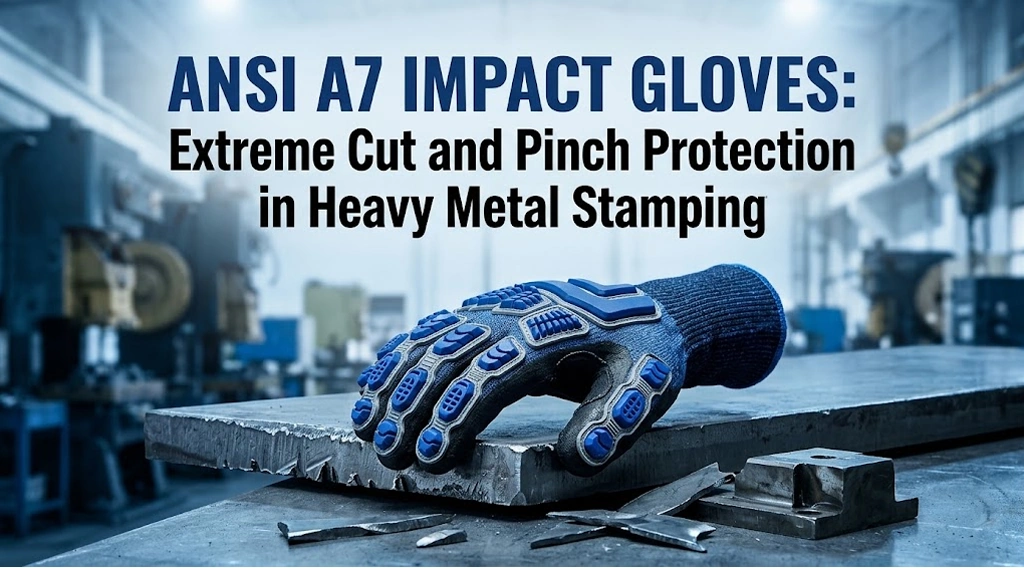
To put an end to this on-site safety crisis—where the outcome is either death or serious injury—a breakthrough is needed simultaneously at both the microscopic level of textile physics and the level of polymer chemistry. The engineering application of the new generation of ANSI A7 impact gloves represents a paradigm shift in heavy-duty industrial hand protection technology. This architecture breaks the traditional trade-off where higher cut resistance necessarily comes at the expense of thickness and flexibility. Leveraging an innovative 18-gauge ultra-fine, ultra-high-density seamless micro-weaving process, it interlaces cryogenically drawn micron-scale tungsten alloy ultra-fine filaments with highly oriented polymer fibers to form a dense cut-resistant mesh. On a base layer less than 1 millimeter thick, it achieves a cut-resistance load exceeding 4,000 grams; At the same time, molecular-level composite technology anchors multi-faceted micro-cavity honeycomb TPR armor to the wear-resistant PolyMAX® polymer coating, forming a three-dimensional, synergistic protective loop that integrates “microscopic cut-resistant locking, macroscopic transient energy absorption, and interfacial viscous anti-slip” properties.
For manufacturing and supply chain management teams seeking to fundamentally enhance safety in metal processing production lines, reduce work-related injury-induced downtime, and meet stringent protective standards for extreme operating conditions, we invite you to explore our core protective architecture and technological foundation: Impact Resistant Work Gloves.
High-Tonnage Stamping Mechanics: The Physics of Combined Pinch and Shear
In heavy-duty stamping and sheet metal forming shops, hand injuries are never the result of a single mechanical stress. High-tonnage presses (typically ranging from 800 to 2,500 metric tons) complete the blanking, deep drawing, and trimming of sheet metal within a few milliseconds, forcing the metal to fracture under extremely high pressure. This manufacturing process directly determines the dual injury characteristics of formed blanks in terms of both microscopic and macroscopic mechanics: high-energy microscopic shearing induced by edge hardening, superimposed on macroscopic kinetic energy compression during the handling of heavy steel plates. When assembly or handling workers’ hands come into contact with such raw parts, the glove fabric must not only withstand static contact pressure but also resist high cutting stresses during dynamic sliding and sudden normal impacts.
Micro-Sawtooth Dynamics of Cold-Hardened Blank Edges
When industrial steel sheets (such as high-strength dual-phase steel for automotive applications, e.g., DP600/DP980, or thick cold-rolled carbon steel sheets) undergo instantaneous shearing and separation between the upper and lower dies, their fracture surfaces exhibit highly destructive metallographic features under a microscope:
Formation of the work-hardened zone and microsawtooth edges:
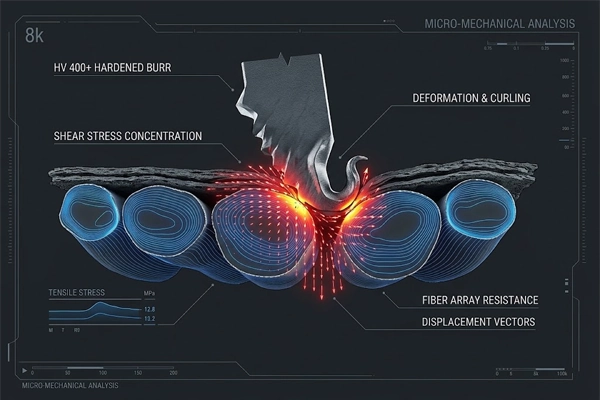
The blanking process primarily involves three stages: elastic deformation, plastic shearing, and final tearing failure. Under the action of the lower die’s shearing edge, the fracture zone undergoes significant cold work hardening due to severe lattice distortion, causing the local material hardness to surge abruptly from the base material’s HV 150 to over HV 400. As tearing occurs, a ring of highly irregular and extremely sharp microscopic hardened serrated burrs, ranging in height from tens to hundreds of micrometers, forms along the lower edge of the sheet.
High-Pressure Localized Shear Penetrates Conventional Low-Order Fibers:
When a worker manually drags or flips a blank sheet from the blanking table, the weight of the sheet—tens of kilograms—is concentrated entirely on a few tiny contact points where the worker’s fingers and palms touch the sheet, causing the localized normal pressure to rise exponentially. These microscopic serrated burrs, with a hardness comparable to tool steel, act like a row of miniature cutting edges. The instant the sheet metal undergoes millimeter-level relative slippage, they exert extremely concentrated shear stress on the glove fabric. Conventional ANSI A2 or A3-rated low-level cut-resistant gloves (typically made of ordinary polyester, low-count aramid, or conventional HPPE blends) experience single-point yield failure within milliseconds when their fiber molecular chains are subjected to such intense, concentrated cutting from these dense microscopic serrations, allowing the shear stress to penetrate directly through the fabric layers and cause open lacerations deep enough to reach nerves and flexor tendons.
Compounding Kinetic Impact in Manual Sheet Metal Handling
During the transfer of metal blanks from stamping dies to stacking, inspection, or secondary bending processes, macro-level kinetic instability and blind spots in confined spaces pose another critical threat:
Transient kinetic energy and off-center loading caused by the swaying of large, thick sheets:
A cold-rolled steel sheet measuring 2000 mm × 1000 mm × 2.0 mm weighs nearly 32 kilograms. When two operators use a hoist and overhead crane to assist with unloading or manually push the sheet along a slide rail, the sheet is highly prone to low-frequency, large-amplitude undulating oscillations during handling due to the inherent elastic deflection of large, thin sheets. If the workpiece momentarily jams or dislocates on the slide frame, the momentum of the entire steel plate is instantly converted into a lateral off-center impact load of several thousand newtons.
Comminuted Metacarpal Fractures in Rigid Compression Blind Spots:
When manually pushing stamped parts into a turnover rack or into stamping positioning pins, the space for hand movement is extremely limited. When a swaying heavy steel plate suddenly tips to one side or a pneumatic stamping discharge robot experiences a reverse rebound, the back of the worker’s hand is often violently pinched between the heavy steel plate and rigid dead zones such as the steel rack columns or die guide posts. Standard cut-resistant gloves provide an abrasion-resistant coating only on the palm, while the back of the hand is often covered by only a thin layer of elastic fabric. Without a protective system on the back of the hand to absorb and disperse kinetic energy, transient concentrated impact forces of up to several thousand newtons are applied directly and without attenuation to the extremely vulnerable second through fifth metacarpal bones and proximal phalanges—the most vulnerable parts of the hand’s anatomy—leading to high-disability-rate transverse comminuted fractures of the metacarpals and severe crush injuries to the finger joints. This is the core reason why modern metalworking companies must upgrade to ANSI A7 impact gloves equipped with a back-side energy-absorbing structure.
Textile Micro-Mechanics: Engineering the 18-Gauge TekArmor® A7/F Liner
To withstand severe shear failure in the punch-through zone on a fabric substrate no thicker than 1.0 millimeters, the traditional textile approach of simply stacking coarse-denier fibers has proven completely ineffective. To achieve high cut-resistance ratings, traditional heavy-duty cut-resistant gloves often use 10-gauge or even 7-gauge thick twisted yarns. Not only does this result in a rough, inflexible inner surface, but when subjected to localized concentrated pressure, the gaps between the thick yarns are easily pried open by sharp, hardened serrations. The core breakthrough in manufacturing the new generation of ANSI A7 impact gloves lies in applying materials science at the micrometer scale of microscopic composites. By utilizing an 18-gauge high-density computerized flat-knitting machine to reconstruct a multi-layered concentric yarn system, we have established the TekArmor® A7/F base architecture within an ultra-thin loop structure—a design that combines microscopic cutting bluntness with macroscopic strain energy dissipation.
Cryogenic-Drawn Tungsten Micro-Filament Core Arrays
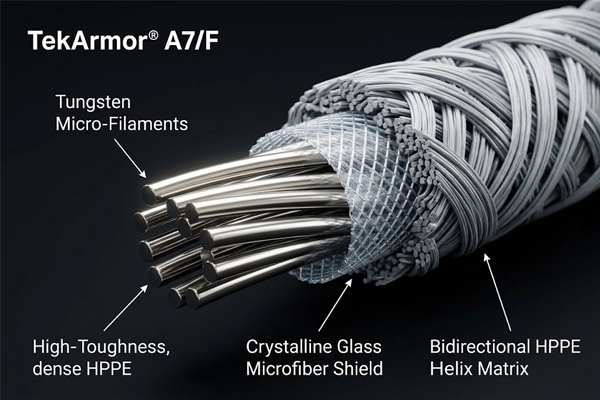
The physics of metal cutting demonstrates that when the hardness difference between two contacting surfaces is sufficiently large, a high-hardness material can cause irreversible plastic blunting of the cutting edge of a lower-hardness material. To address cold-work-hardened surface layers with stamping burrs exceeding HV 400, the TekArmor® A7/F architecture incorporates arrays of micron-scale, cryogenically drawn special tungsten alloy filaments (Cryogenic-Drawn Tungsten Micro-Filaments) into the yarn core:
Cryogenic Drawing and Grain Refinement Strengthening:
The tungsten alloy microfilaments undergo a controlled liquid nitrogen cryogenic deformation drawing process, which drastically refines their internal metal grains and aligns them in a dense, fibrous orientation along the drawing axis. This manufacturing process endows each individual microfilament with a Mohs hardness of 7.5 or higher and extremely high tensile strength, completely resolving the technical flaw of low-cycle fatigue brittle fracture commonly found in traditional coarse-annealed steel wires.
Instantaneous Blunting Effect at the Microscopic Interface:
When sharp burrs from stamped sheet metal slide tangentially across the fabric surface at high speed, the micro-tungsten alloy arrays interwoven into the fabric’s superficial layer act like a row of micrometer-scale defensive armor. The ultra-thin tip of the cold-hardened burr undergoes localized microscopic chipping and plastic curling the instant it impacts the high-hardness tungsten wire lattice. The geometric radius of curvature of the cutting edge is forcibly expanded several times over, and the concentrated cutting stress is immediately dissipated, thereby blocking the edge’s sliding path into the deeper layers of the fabric at the microscopic physical level.
Bi-Directional Helicoidal HPPE and Micro-Glass Shielding
A hard alloy micro-core alone is insufficient to completely dissipate the immense kinetic energy exerted by dozens of kilograms of steel plate as it falls and slides. Without a high-modulus cushioning layer on the outer surface, the blunted metal burrs would still force the alloy wire to fracture due to immense normal pressure. To absorb and dissipate this cutting energy within an extremely compact microscopic space, a bidirectional, counter-helix protective layer (Bi-Directional Helicoidal Shielding) is composite-wrapped around the alloy core wire:
Primary stress dispersion is provided by fine, alkali-free lattice glass fibers:
The first wrapping layer, in close contact with the tungsten alloy core, consists of special high-purity, electronic-grade microfibers with a diameter of only a few micrometers. When subjected to pressure, these microfiber bundles do not fracture at a single point; instead, through lateral displacement and sliding of the microscopic fiber bundles, they evenly distribute the concentrated vertical cutting load across the entire cross-section of the yarn, providing a lateral support base for the innermost layer of tungsten alloy wire.
Energy-Absorbing Network of Highly Oriented HPPE Helical Filaments:
Outside the microfiber layer, multiple strands of continuous, high-toughness ultra-high-molecular-weight polyethylene (HPPE) microfibers are tightly wound at high speed in opposite helical directions. HPPE molecular chains possess near-perfect fibril lattice orientation and extremely high fracture elongation energy. When an external force forcibly scrapes across the yarn, the bidirectionally helical polymer chains stretch and undergo strain hardening, forcibly dispersing the locally concentrated shear load to hundreds of intersecting coils on both sides of the scraping path.
This coaxial synergistic structure—comprising “instantaneous blunting of the ultra-hard tungsten core + dispersion of lateral pressure via the glass fiber base + energy absorption by the high-toughness HPPE helix”—enables the TekArmor® A7/F liner to effortlessly withstand extreme cut loads exceeding 4,000 grams during rigorous ASTM F2992-15 cyclic testing, steadily meeting the dual top-tier cut-resistance benchmarks of ANSI A7 and EN ISO Level F. For an in-depth understanding of load calculation methods, test blade slip distances, and the engineering rationale behind multiple cut- and impact-resistance certifications across different international testing standards, please refer to the technical feature: ANSI/ISEA 138 vs. EN 388 Impact Standards.
Biomechanical Impact Attenuation: Cellular Honeycomb Exoskeletons
On large-scale metal stamping production lines, even if gloves have a tough inner lining that resists cuts from sharp blades, workers’ bones can still suffer severe injuries from heavy mechanical crushing if the back of the hand lacks a high level of energy-absorbing protection. High-frequency pneumatic recoil from punch press dies, stamped parts tumbling from unloading platforms several meters high, and lateral impacts when workers stack parts in narrow bins all transmit transient impact kinetic energy directly to the back of the hand. High-protection-level ANSI A7 impact gloves are far more than a simple combination of high-strength fabrics and rubber; their essence lies in incorporating advanced impact dynamics into the design of the back-of-the-hand protection, achieving controlled absorption and redirected dissipation of high-energy shock waves through a three-dimensional biomimetic topological structure.
Progressive Micro-Buckling Under Die Recoil and Blank Drops
Traditional impact-resistant gloves typically use thick, solid blocks of hard thermoplastic rubber to directly cover the back of the hand. When subjected to transient impacts of several thousand newtons, these solid rubber strips are highly prone to stress concentration and penetration due to the lack of volumetric yielding space within the material, directly transmitting the kinetic energy of the vertical impact to the metacarpal bones beneath the skin.
To address the high-kinetic-energy damage caused by die recoil and heavy blank drops, the back-of-hand exoskeleton incorporates a thickened, multi-faceted micro-cavity cellular honeycomb structure (Cellular Honeycomb Exoskeletons):
Stepped Micro-Buckling Deformation Mechanism:
High-density, polygonal honeycomb-shaped energy-absorbing micro-cavities are precisely arranged within the protective block. When a steel plate weighing tens of kilograms falls and strikes the back of the hand, or when a stamped part undergoes severe pinching within a narrow slit, the thin walls of the micro-cavities do not undergo abrupt, rigid rebound. Instead, within a matter of milliseconds, they initiate a stepwise elastic micro-buckling (Progressive Micro-Buckling) along a predetermined path. This controlled structural buckling significantly extends the duration of the impact impulse, absorbing most of the initial kinetic energy.
Anisotropic Lateral-Diverting Waveguide:
The outer walls of the honeycomb polyhedral microchamber feature microscopically engineered inclined guide angles. At the instant of a vertical impact, the mechanical deformation of the chamber walls forcibly alters the transmission path of the shock wave—which would otherwise travel normally into the bones of the back of the hand—converting the concentrated downward kinetic energy into lateral shear components that radiate outward across the glove’s surface. The residual impact energy is directed to the soft tissue peripheral areas on both sides of the back of the hand—where the metacarpal bones do not bear direct pressure—to be dispersed and dissipated, thereby fundamentally preventing comminuted fractures of the second through fifth metacarpal bones when struck by a high-impact falling object.
Full-Articulation Deep Hinge Grooves for Heavy Sheet Handling
One of the most common causes of workplace injuries in heavy-duty metalwork is premature muscle fatigue in workers’ hands due to overly stiff gloves, which ultimately leads to cold-rolled steel sheets weighing tens of kilograms slipping from their grasp in midair and striking their feet or bodies. In traditional impact-resistant gloves, rubber strips span the joints on the back of the hand, forcing workers to strain to stretch the thick rubber every time they make a fist, resulting in extremely high static bending resistance.
To address this ergonomic pain point plaguing the heavy industry sector, the new generation of low-resistance exoskeletons features millimeter-level deep grooves designed according to hand anatomy:
Precise alignment of the flexion axes of the three major finger joints:
The armor features full-articulation deep hinge grooves designed along the distal interphalangeal (DIP), proximal interphalangeal (PIP), and metacarpophalangeal (MCP) joints. These grooves divide the large exoskeleton into several independent energy-absorbing modules, each of which perfectly conforms to the skeletal geometry of the fingers.
Elimination of Material Rebound Resistance:
When a worker lifts and firmly grips the edge of a heavy steel plate with both hands, the independent rubber modules smoothly conform to the natural curvature of the fingers. The edges of each module slide along the deep grooves to interlock, completely eliminating the phenomenon of rubber materials squeezing against each other and becoming jammed. This anatomically optimized geometric design reduces static gripping resistance on the back of the hand by more than one-third, significantly alleviating chronic strain in the deep flexor muscles of the forearm and fingers that workers experience during 8-hour shifts due to resisting the glove’s rebound.
To systematically explore the strain response patterns of polymer rubber formulations, damping loss factors, and microscopic cavity geometries at different impact velocities, please refer to our specialized mechanical technical analysis: TPR Exoskeleton Engineering.
Surface Polymer Tribology: PolyMAX® Extreme Abrasion and Micro-Grip
During cold-forming, hot-rolled coil uncoiling, and shearing operations, the palm of the glove must not only withstand the continuous normal gravitational force exerted by the sheet metal but also endure constant, intense, high-load relative friction against the hard, rough scale and residual cold-drawn phosphating film on the metal surface. Conventional polyurethane (PU) coatings on the market are often worn down and peeled off within just a few work shifts when used on heavy-duty, rough steel surfaces, while ordinary foamed nitrile rubber is highly prone to surface tearing and delamination when subjected to heavy pressure and friction. As the key abrasion- and tear-resistant outer layer of industrial-grade ANSI A7 impact gloves, the PolyMAX® modified polymer coating—developed specifically for heavy industrial environments—delivers exceptional long-term wear resistance and heavy-load anti-slip grip performance by leveraging principles of microscopic interfacial tribology and polymer chain configuration.
Intermolecular Cross-Linking Against Continuous Sheet Friction
When handling large cold-rolled carbon steel or hot-rolled pickled sheets with rough iron oxide scale on their surfaces, the microscopic, rough, hard protrusions (asperities) on the steel sheet surface act like countless tiny scrapers, creating continuous, high-frequency “microscopic plowing wear” on the glove surface. Conventional thermoplastic elastomers cannot withstand this high shear stress; the coating molecules are easily torn apart and delaminate.
The PolyMAX® polymer system achieves targeted optimization of molecular weight distribution and spatial cross-linking networks during the synthesis and curing processes:
Construction of a three-dimensional, dense molecular cross-linking network:
Unlike traditional linear polymers produced by monomer polymerization, PolyMAX® incorporates special polyfunctional cross-linking agents and elastomer-modified copolymers into its formulation. Following controlled high-temperature cross-linking and curing, an extremely dense three-dimensional, interpenetrating cross-linked network forms between the polymer segments. This highly crosslinked molecular configuration endows the rubber layer with extremely high cohesive energy and excellent elastic recovery, effectively suppressing the micro-tear propagation caused by hard metal micro-protrusions on the rubber layer’s surface.
Top-tier EN 388 Level 4 abrasion resistance exceeding 8,000 revolutions:
In standard Martindale abrasion and sandpaper cycle wear tests, conventional nitrile coatings often exhibit thinning, perforation, or even large-scale peeling and delamination after 2,000 to 3,000 reciprocating friction cycles; In contrast, thanks to its ultra-high molecular bonding strength and tear resistance, the PolyMAX® coating consistently exceeds 8,000 cycles in high-pressure, heavy-load friction cycles using standard coarse sandpaper, firmly meeting the highest abrasion resistance level (Level 4) specified by the European EN 388 standard. In demanding, continuous heavy-duty steel plate handling operations, the service life of the gloves is extended several-fold, completely eliminating the safety hazard posed by premature coating wear that exposes and damages the base fabric.
Fluid Displacement on Lightly Lubricated Cold-Rolled Steel
Before entering the die, the coiled steel and blank parts used in stamping shops are typically coated with a uniform, extremely thin layer of rust-preventive oil, an electrostatic-sprayed rust-preventive oil film, or a trace amount of drawing lubricant. When workers manually handle lightly oiled cold-rolled steel sheets weighing tens of kilograms without mechanical assist arms, the presence of the oil film on the steel surface makes it extremely easy for a fluid-lubricated state to form between the gloves and the steel. This causes the static and dynamic coefficients of friction to collapse instantly, leading to the sheet unexpectedly slipping out of the worker’s grasp during handling, potentially striking the worker’s feet or pinching their torso.
To address the unique working conditions on lightly oiled cold-rolled metal surfaces, the PolyMAX® palm-dipping process has developed a unique combination of interfacial fluid repulsion and viscous gripping effects:
High-shear displacement of the microscopic interfacial oil film:
The surface of the PolyMAX® coating is not a simple smooth plane; rather, it has been treated with precision micro-perforation and texturing etching technologies to form an adsorbed texture with microscopic, highly elastic damping properties. When a worker grips the sheet metal firmly with both hands and applies a normal gripping load, the dense micro-protrusions rapidly penetrate the continuous, low-viscosity anti-rust lubricating film under high pressure, forcibly squeezing and diverting the trace amounts of oil remaining in the contact area into the surrounding micro-grooves. This rapidly disrupts the continuity of the lubricating film, enabling direct solid-to-solid contact between the coating and the metal substrate.
High-viscosity, self-locking friction under dry and micro-oil conditions:
After displacing the free oil layer on the surface, the modified polymer’s inherent high hysteresis loss and viscoelasticity begin to dominate the friction interface. At the microscopic level, molecular groups on the coating surface conform elastically to the fine contours of the steel, causing elastic deformation. As a result, the dynamic coefficient of friction on the surface of cold-rolled sheets in dry and micro-oil conditions surges to a high range of 0.90 to 0.94, exhibiting a strong, self-locking viscous gripping force similar to mechanical interlocking. Workers can securely lock heavy sheet metal parts throughout the entire process of flipping, feeding, and stacking without having to deliberately grip the edges of the sheets tightly, significantly improving the controllability and safety of on-site handling operations.
High-Torque Interface Bonding: Anchoring Armor to Ultra-Dense Substrates
In the manufacturing process for ultra-high cut-resistant gloves, securely anchoring the heavy, energy-absorbing thermoplastic rubber (TPR) exoskeleton to an 18-stitch micro-woven backing fabric is the bottleneck process that determines the mechanical lifespan of the entire glove. In ANSI A7-rated liners, the fabric not only features an extremely fine loop density of up to 18 stitches per square inch but is also densely interwoven with a high proportion of ultra-fine, rigid tungsten alloy filaments and ultra-high-molecular-weight polyethylene (UHMWPE). This material has an extremely smooth surface, very low porosity, and high chemical inertness, making conventional surface lamination processes highly prone to false bonding and delamination. When subjected to intense dynamic pulling on a stamping production line, the back armor is often peeled off in one piece, instantly degrading the safety gloves into ordinary thin fabric with no impact protection. Overcoming the bonding interface challenges of heavy-duty ANSI A7 impact gloves requires the synergistic application of molecular-level micro-diffusion wetting and high-toughness shear-resistant anchoring technology.
Low-Viscosity Micro-Diffusion on Dense A7 Weaves
The physical properties of the high-cut-resistant 18-gauge liner impose stringent temperature and flowability constraints on the hot-press lamination process. UHMWPE fibers have a low temperature tolerance; exceeding the controlled temperature causes their highly oriented molecular lattice to anneal and collapse, resulting in a severe, precipitous drop in the original A7-level physical cut resistance; However, if the temperature is too low, the polymer colloid’s viscosity becomes too high, making it impossible to penetrate the micron-level gaps between the tungsten alloy microfibers and the high-density coils; instead, it merely suspends on the surface and peels off at the slightest pull.
To overcome this physical wetting barrier while protecting the core cut-resistant framework, the composite process employs a specially modified, low-melting-point hot-melt adhesive web system (Low-Viscosity Hot-Melt Adhesive Web):
Mild thermal activation and ultra-low dynamic viscosity melting:
The R&D team selected an elastomer-modified, narrow-molecular-weight copolyamide and polyurethane microporous web. Within a mild activation temperature range far below the thermal deformation threshold of the polymer cut-resistant fibers, this web rapidly liquefies within seconds, transforming into flowing micro-melt droplets with ultra-low dynamic viscosity and extremely low surface tension.
Deep micro-diffusion anchoring driven by low pressure:
Under controlled pneumatic micro-pressure differentials, the low-viscosity molten colloid does not spread over a large area to seal the breathable micropores on the fabric’s reverse side. Instead, it smoothly diffuses through the surface knots of the 18-gauge knit fabric via micron-scale capillary flow, deeply penetrating the minute gaps between individual tungsten alloy microfiber bundles and HPPE filaments. After cooling and curing, the molten adhesive forms a densely enveloping “molecular-level mechanical micro-interlocking anchor network” around tens of thousands of ultra-fine fiber bundles, fusing the base of the external rubber armor with the deep fibers of the underlying cut-resistant fabric into a single, integrated unit, thereby completely eliminating the risk of interface delamination.
Torsional Shear Durability in High-Repetition Sheet Tilting
At the end of large-scale stamping production lines, workers are required to frequently perform manual sheet tilting—turning door panels, hoods, or side panel blanks weighing up to tens of kilograms—as well as align them with gauges and stack them in a crosswise vertical configuration. When workers firmly grip the edges of heavy steel sheets with both hands and apply an opposing lever arm to flip them in the air, the back-of-hand armor not only withstands normal tensile forces but also experiences high-frequency, multi-directional dynamic torsional shear loads continuously applied from the edges of the steel sheets.
This high-torque shear failure mode creates repeated “interfacial shear concentration” at the interface between the fabric surface and the bottom of the armor:
Viscoelastic High-Dynamic Energy-Absorbing Cushioning:
When subjected to high-frequency repetitive torsion, traditional rigid hot-melt adhesives—due to their hard and brittle nature—develop microscopic cracks after thousands of micro-twists, which rapidly propagate, leading to the adhesive layer fracturing and failing. The modified hot-melt mesh film incorporates highly flexible viscoelastic segments into its molecular chains, providing exceptional dynamic strain recovery and shear energy dissipation properties. When a worker forcefully twists a heavy steel plate with both hands, the adhesive layer undergoes microscopic elastic yielding, smoothly absorbing and redistributing transient alternating shear torque to prevent localized stress concentrations from tearing the fabric surface.
Peel strength remains consistently above 45 N/cm:
After undergoing thousands of cycles of 180-degree multidirectional high-torque reciprocating rotation—simulated under standard laboratory conditions—as well as high-intensity normal peel fatigue testing, the measured bond peel strength at the interface remained consistently above 45 newtons per centimeter (N/cm). Even when the outer honeycomb micro-cavity armor suffers severe blunt impacts from hard objects or localized scraping from metal burrs under harsh operating conditions, the underlying bonded interface remains tightly adhered without loosening. This ensures that the impact-resistant armor maintains coaxial alignment with the bones of the back of the hand throughout the entire heavy-duty operational lifecycle, providing constant mechanical protection without displacement or delamination.
Mechanical Matrix: ANSI A7 Heavy Defense vs. Benchmark Protection
In safety management for heavy manufacturing equipment, large-scale cold stamping blanking, and scrap metal recycling and dismantling operations, the challenge facing EHS departments and industrial engineering teams often lies in finding a definitive balance between “extreme physical protection” and “operational agility.” Traditional, bulky personal protective equipment (PPE) typically relies on thick, coarse fabrics to build up safety margins, yet this often leads to severe grip fatigue and accidental slippage during actual on-site operations. Conversely, gloves designed for ultra-thin, agile, and lightweight performance struggle to withstand the destructive tearing caused by work-hardened metal burrs and the impact of mold rebound. Through standardized mechanical test data, a quantitative analysis of the actual engineering performance of ANSI A7 impact gloves—including cutting loads, impact attenuation, base material thickness, and interfacial friction coefficients—is essential for establishing a scientifically sound tiered PPE configuration.
Quantitative Laboratory Testing Data
Using standardized friction and wear testers, ASTM F2992-15 cyclic cut resistance testers, ANSI/ISEA 138 drop-weight impact test rigs, and electronic tensile testers, we collected core test data for three typical industrial hand protection designs: MAXGUARD® K7-682, developed specifically for heavy-duty cold stamping and shearing as well as die blanking; MAXGUARD® K4-278, designed primarily for micro-precision mechanical assembly; and the Traditional Heavy Rigger 10-Gauge, a conventional heavy-duty puncture-resistant glove with coarse 10-gauge stitching that has long been in circulation in the heavy industry sector.
| Engineering Specifications | MAXGUARD® K7-682 | MAXGUARD® K4-278 | Traditional Heavy Rigger (10-Gauge) |
| Knitting Gauge & Liner Specifications | 18-Gauge TekArmor® A7/F | 18-Gauge TekArmor® A4/D | 10-Gauge Aramid / Steel Plies |
| Cut Protection Rating | ANSI A7 (4,000+ g) / ISO F | ANSI A4 (1,500+ g) / ISO D | ANSI A5 (2,200+ g) / ISO E |
| Impact Mitigation Rating | ANSI/ISEA 138 Level 2 | ANSI/ISEA 138 Level 1/2 | ANSI/ISEA 138 Level 2 |
| Palm Coating Formulation | PolyMAX® Polymer Matrix | Smooth NBR + Sandy Palm | Flat Crinkle Heavy Nitrile |
| Substrate Base Thickness | 0.95 – 1.05 mm | 0.75 – 0.85 mm | 1.85 – 2.10 mm |
| Abrasion Resistance (Cycles) | > 8,000 Cycles (Level 4) | > 8,000 Cycles (Level 4) | 3,500 – 5,000 Cycles |
| Dry / Light-Oil Grip Factor | 0.90 – 0.94 (Tack Grip) | 0.88 – 0.92 (Suction) | 0.55 – 0.65 (Slick) |
| Primary Industrial Hazards | Die Blanking, Heavy Scrap | Powertrain, Fine Wire Harness | Rough Rigging, Heavy Scaffolding |
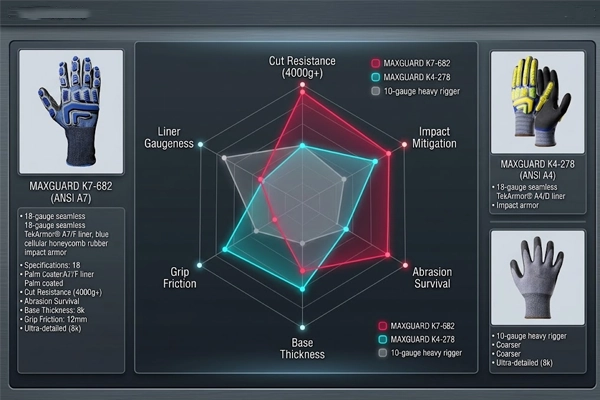
From the comparison of various parameters on the test dashboard, we can identify three key engineering dimensions that must be prioritized when selecting gloves for extreme processes in heavy industry:
A dramatic increase in cut and tear resistance combined with extreme compression of the fabric base thickness:
Traditional 10-gauge heavy-duty gloves rely on a blend of coarse-denier aramid yarn and thick steel wire, with a fabric base thickness ranging from 1.85 to 2.10 millimeters; however, their cut resistance under standard testing typically hovers around 2,200 grams (ANSI Level A5). and are highly susceptible to localized cutting through when subjected to powerful sliding cuts from cold-hardened burrs on stamped edges; in contrast, MAXGUARD® K7-682 leverages an 18-gauge micro-knitted structure and deep-cold-drawn tungsten alloy microfiber technology to strictly limit the total thickness to the ultra-thin range of 0.95 to 1.05 millimeters (a thickness reduction of nearly 50%), yet it forces the cut resistance load to rise to over 4,000 grams, propelling it into the top tier of safety standards—ANSI A7 and EN ISO Level F—and establishing a more robust physical safety margin before shear failure occurs under ultra-high loads.
Impact-Absorption Performance of the Back of the Hand Under High-Frequency Blistering Vibrations:
In terms of impact attenuation, traditional 10-finger gloves typically rely on a flat, solid layer of thick rubber to provide ANSI/ISEA 138 Level 2 protection. Although they offer some cushioning, the hard and heavy rubber severely restricts normal finger flexion; In contrast, the MAXGUARD® K7-682 utilizes the controlled micro-collapse mechanics of a multi-faceted, thin-walled, micro-cavity honeycomb TPR exoskeleton, achieves the same Level 2 impact attenuation (with peak transmitted force strictly controlled) while significantly reducing the weight of the rubber blocks. By incorporating deep hinge grooves, it restores the natural flexibility of the finger joints, preventing workers from experiencing premature grip fatigue caused by the strong rebound of the rubber on the back of the hand when handling heavy stamped parts.
Maximum abrasion resistance cycles and grip adhesion on heavy metal surfaces:
Conventional 10-finger gloves, which typically use thick, wrinkled, flat-sheet nitrile rubber, see their raised palm textures essentially worn smooth and rendered ineffective after 3,500 to 5,000 cycles of repetitive abrasion with coarse sandpaper. Furthermore, their coefficient of friction on the surface of lightly oiled cold-rolled steel sheets is only 0.55 to 0.65, making workpiece slippage accidents likely; The PolyMAX® highly cross-linked polymer coating featured in MAXGUARD® K7-682 not only withstands over 8,000 cycles of continuous high-pressure reciprocating abrasion (consistently meeting the highest Level 4 abrasion resistance rating under EN 388), but also exhibits a high viscous self-locking friction coefficient of 0.90 to 0.94 at the interface between dry and lightly oiled cold-rolled steel sheets, ensuring excellent grip stability for workers when flipping raw steel sheets weighing tens of kilograms.
Production-Line Deployment: Tiered Engineering Across Industrial Hazards
In production practices involving large-scale equipment manufacturing, energy exploration, and automotive assembly lines, a single specification of hand protection cannot cover all workstations. Over-specified protective gear on precision assembly lines can result in significant labor time losses and hinder movement, while downgraded protection at workstations involving extreme impact and shearing or oil-contaminated lifting operations can directly lead to disabling workplace injuries. Addressing the specific characteristics of mechanical hazards, environmental conditions, and dexterity requirements across different industrial settings, a range of advanced engineered protective gear—represented by the ANSI A7 impact gloves—employs customized material formulations and structural designs to form a tiered deployment solution for multiple industrial hazards.
Heavy Stamping & Sharp Sheet Blanking: MAXGUARD® K7-682
On large passenger vehicle side-panel stamping and blanking lines, heavy-duty truck frame plasma cutting operations, and industrial scrap metal shearing and baling stations, the physical threats workers face reach extremely high hazard levels within the mechanical manufacturing sector. These scenarios are not only rife with work-hardened burrs and high-temperature laser-cut edges several meters long but are also constantly accompanied by unstable impacts from heavy steel plates during manual handling and stacking.
As the benchmark model for heavy-duty stamping and shearing as well as extreme blank handling, the MAXGUARD® K7-682 delivers exceptionally robust, synergistic protection:
An extreme physical cut-resistant barrier exceeding 4,000 grams: The high-density, 18-gauge TekArmor® A7/F liner deeply interweaves ultra-fine, deep-cold-drawn tungsten alloy microfibers with highly oriented HPPE fibers, maintaining structural integrity when resisting rapid sliding and shearing forces from sharp sheet metal weighing tens of kilograms, and completely blocking deep penetration of burrs into blood vessels and tendons;
Thickened, multi-faceted micro-cavity honeycomb impact-resistant exoskeleton: The back of the hand features a large-area high-energy cushioning TPR armor that meets the ANSI/ISEA 138 Level 2 rating. Through a controlled micro-buckling deformation mechanism, it significantly dissipates the normal impact kinetic energy caused by punch die recoil and falling large metal parts, preventing comminuted metacarpal fractures;
Highly cross-linked PolyMAX® high-strength, abrasion-resistant palm: Featuring EN 388 Level 4 abrasion resistance with over 8,000 abrasion cycles, it not only withstands long-term scraping and tearing from rough, rusted steel plates but also maintains viscous self-locking friction on the surface of lightly oiled cold-rolled steel sheets, preventing heavy plates from accidentally slipping during aerial handling.
Precision Powertrain & Electrical Harness Routing: MAXGUARD® K4-278
In the powertrain assembly lines, chassis harness routing stations, and precision electronic control module wiring stations of automotive final assembly plants, mechanical hazards have shifted from high-kinetic-energy impacts to component pinching in confined spaces, torque kickback from pneumatic tools, and lacerations from sharp edges on machined parts. At these space-constrained workstations, workers’ assembly efficiency relies heavily on the fine tactile sensitivity at their fingertips.
Addressing the dual demands of precision assembly—which requires ultra-high dexterity alongside basic protection against impacts and pinching—the MAXGUARD® K4-278 offers a solution that combines lightweight design with safety:
Sub-0.8-millimeter “second-skin” tactile sensitivity: An ultra-thin, 18-gauge micro-woven liner conforms closely to the palm’s contours, fully enabling the fingertip’s mechanoreceptors to sensitively detect micrometer-level threads on tiny bolts and latches on connectors. This completely eliminates the safety hazard posed by assembly workers bypassing safety protocols and working bare-handed due to bulky gloves. For a detailed analysis of assembly ergonomics, please refer to our specialized technical guide: 18-gauge Impact Cut-Resistant Gloves;
Low-Drag, Miniaturized Bionic TPR Armor: A lightweight, low-profile energy-absorbing exoskeleton is positioned on the back of the hand, completely eliminating friction resistance when fingers frequently reach into complex, narrow gaps in the engine compartment. It also absorbs lateral compressive shear forces during the jamming and recoil of high-torque pneumatic wrenches, eliminating the risk of interphalangeal joint contusions;
Dual-layer smooth base rubber with sanded nitrile anti-penetration system: The inner layer features fully impregnated, dense base rubber that completely blocks penetration by transmission fluid and hydraulic oil, while the outer layer’s microporous, sanded surface disrupts the continuous oil film on metal surfaces, ensuring workers can quickly and cleanly grasp small, oil-contaminated parts.
Mud-Slick Pipe Handling: SQG® BM-701
On the drill floors of onshore deep-well drilling rigs and offshore drilling platforms, workers are constantly exposed to extreme industrial environments characterized by high vibration, heavy-lift operations, and severe mud contamination. When work crews use powered pipe wrenches to assemble or disassemble drill pipes, attach heavy-duty rigging, or handle high-pressure ball valves, the contact surfaces of their gloves become completely coated with high-viscosity oil-based mud (OBM), synthetic-based lubricants, and formation water. Ordinary polymer-coated gloves instantly lose their grip and fail, causing steel pipes weighing hundreds of kilograms to fall uncontrollably.
Specifically developed for extreme drilling fluid environments, the SQG® BM-701 establishes a unique mechanical anti-slip and impact-protection system under heavy oil mud conditions:
High-density, 3D-woven cotton rope-textured palm: The palm features a three-dimensional, rope-textured weave of coarse-strand cotton fabric. The gaps between the coarse fibers forcefully break through the slippery lubricating layer formed by thick mud and oil films, relying on pure mechanical interlocking to grip the metal pipe wall and achieve exceptional dry-grip locking performance in mud conditions;
Full-Back-of-Hand High-Visibility Heavy-Duty Exoskeleton Protection: The entire back of the hand and all finger bones are fully covered with thickened, high-contrast yellow-and-black TPR armor, providing extensive force-distribution protection against powerful pinching from power pulleys, scraping from swivel blocks, and violent lateral swinging of heavy-duty hooks;
Vibration-Resistant Sealed Cuffs and Genuine Leather Reinforcement in Critical Stress Areas: Elastic neoprene cuffs prevent external mud splashes from seeping in, while the high-wear areas of the palm and thumb web are reinforced with high-tear-resistant, double-stitched leather, effectively cushioning the severe shear damage caused by frequent tugging on thick steel wire rope slings to the base of the palm and the thumb web.
Technical FAQ: High-Cut Polymer Chemistry and Plant Implementation
In the fields of heavy industrial stamping, sheet metal blanking, and high-strength steel processing, EHS managers and equipment procurement departments often face a clash between traditional safety perceptions and modern materials engineering when implementing glove upgrades. Decades of factory management experience have led many to adopt a fixed mindset: to achieve ANSI A7 or even higher cut resistance ratings, gloves must be stiff and thick; conversely, if gloves become softer and thinner, protective performance is bound to decline.
Drawing on fatigue test data from the SQG Materials Physics Laboratory and actual production tracking from the stamping shops of several major original equipment manufacturers (OEMs), we provide in-depth engineering solutions to four common concerns regarding high-performance ANSI A7 impact gloves—covering microstructural textile physics, polymer abrasion resistance, metal filament fatigue resistance, and plant-wide safety economics.
How can an 18-gauge liner achieve ANSI A7 cut resistance without excessive stiffness?
The reason traditional heavy-duty cut-resistant gloves are as stiff as sheet metal lies in the fact that past manufacturing processes could only rely on twisting together coarse-diameter stainless steel wires (typically 80 to 120 micrometers in diameter) with coarse-count short-staple aramid fibers. When bent, thick steel wires require immense external force to overcome the bending moment of inertia of their cross-section, resulting in significant resistance when the fingers grip naturally.
The reason the 18-gauge ultra-high-density liner can meet the stringent ANSI A7 standard (withstanding loads exceeding 4,000 grams) while maintaining a thickness of approximately 1.0 millimeter lies in two major advancements in textile engineering:
The cross-sectional flexibility of micron-scale ultra-fine tungsten alloy filaments:
TekArmor® yarn now utilizes high-purity specialty tungsten alloy filaments with a diameter of just over ten micrometers. In solid mechanics, the bending stiffness of a metal wire is proportional to the fourth power of its diameter. By significantly reducing the diameter of the alloy filament, its cross-sectional resistance to bending decreases exponentially, resulting in ultra-fine filaments that exhibit extreme flexibility similar to that of natural silk;
High-density, tightly packed structure achieved by a computerized micro-knitting system:
The 18-needle computerized flat knitting machine features extremely small needles and precise gap settings between the sinkers, enabling it to lock tens of thousands of microscopic loops within a flat plane at an extremely high knitting density factor (Cover Factor). Unlike the loose voids found inside coarse knitted fabrics, the ultra-fine tungsten filaments and high-tensile polymer fibers form a high-density, multi-layered, tightly packed microstructure within the 18-needle configuration. When burrs from stamped parts scrape across the glove’s surface, the shear force cannot penetrate by forcing its way through gaps between the yarns; instead, it encounters a large-area, micrometer-scale metal mesh that disperses the force. This eliminates the stiff, clumpy feel associated with coarse steel wires while delivering extreme cut resistance.
What gives PolyMAX® coatings greater resistance to cutting and abrasion than standard nitrile?
When handling cold-rolled steel sheets with sharp, hardened burrs, standard nitrile coatings often develop extensive peeling, cracking, or are torn directly by the burrs within just a few work shifts. This is because standard nitrile rubber typically employs a linear or low-density cross-linked polymer structure; when subjected to localized cutting and friction, its molecular chains are highly prone to “stress microcrack propagation,” causing the coating material to be sheared off in patches by the burrs, much like plowing a field (microscopic plow-like delamination).
The technical breakthroughs in shear resistance and wear resistance achieved by the PolyMAX® polymer coating stem from the reorganization of its microscopic cross-linked network:
Three-Dimensional, Highly Cross-Linked Network Scaffold:
During the polymerization and vulcanization stages, PolyMAX® incorporates highly reactive, special multifunctional copolymer monomers, causing the polymer chains to no longer exist in a loose, parallel configuration but instead form a dense, three-dimensional, honeycomb-like, interpenetrating polymer network (IPN).
Superior Local Shear Energy Dissipation and Tear Resistance:
When the edges of stamped parts with microscopic serrations scrape across the rubber layer under heavy pressure, the dense cross-linked network exhibits extremely high shear deformation damping. External forces cannot directly sever individual polymer chains; instead, they are rapidly transmitted laterally through the dense cross-linking nodes and dispersed into the surrounding rubber matrix. The material exhibits exceptional elastic recovery and resistance to microscopic tearing, not only consistently pushing the measured abrasion resistance to the peak of EN 388 Level 4 (>8,000 revolutions) but also effectively blocking the physical pathway through which cold-hardened burrs could penetrate and damage the underlying fibers.
Do cryogenic tungsten microfilaments fatigue or snap after repeated glove flexing?
A major concern for many EHS managers regarding metal-reinforced gloves is that, after prolonged wear and frequent fist-clenching and bending, the embedded metal wires may suffer fatigue-induced brittle fracture. The sharp, tiny metal fragments resulting from such fractures can even pierce the inner lining and puncture the skin on workers’ fingers, causing hidden subcutaneous puncture wounds and infections.
To address this wire breakage issue, which has plagued the industry for many years, the TekArmor® A7/F architecture incorporates targeted defensive designs in both metallurgy and coating geometry:
Microscopic, tough grains created by the cryogenic drawing process:
After cryogenic liquid nitrogen annealing and multiple passes of precision drawing, the originally coarse and disorganized metal grains within the tungsten alloy microfibers are extremely finely fragmented and refined, forming a dense, fibrous subgrained structure oriented parallel to the microfiber’s axis of extension. This microstructure endows the microfilaments with exceptional plastic strain capacity and fatigue yield life, enabling them to withstand hundreds of thousands of high-frequency, small-radius repetitive bends without suffering brittle fatigue fracture;
Bidirectional High-Toughness HPPE Helical Energy-Absorbing Protective Sheath:
The tungsten alloy core wire is not exposed within the fabric; instead, it is encased by multiple strands of highly oriented ultra-high molecular weight polyethylene (HPPE) filaments, which are wound in a high-density, bidirectional, alternating double-helix pattern under extremely high tension. This outer layer not only serves as a second cut-resistant barrier but also acts as an elastic damping sleeve for the metal microfibers. When a finger is bent significantly or subjected to strong external twisting forces, the outer layer of high-toughness polymer fibers first absorbs the vast majority of the surface tensile stress, eliminating the possibility of any single alloy microfiber being subjected to critical stress concentration.
How does upgrading from ANSI A4 to ANSI A7 impact line productivity and LTIR?
When preparing budgets, some companies tend to purchase lower-priced ANSI A4-rated assembly gloves for all stamping and blanking operations, treating gloves merely as a consumable expense. However, in actual production accounting, the forced use of A4 gloves in heavy-duty stamping and blanking operations can lead to a sharp spiral of hidden costs.
Upgrading the protection level for heavy-duty, high-risk workstations from ANSI A4 to the targeted ANSI A7 standard has a decisive, quantifiable positive impact on a company’s operating profits:
It eliminates work stoppages caused by high-disability-rate accidents and significantly reduces the incidence of lost-time injuries (LTIR):
The transient cutting forces generated by the cold-hardened serrations on the edges of cold-rolled stamped sheet metal—when subjected to sliding under pressure weighing tens of kilograms—typically range from 2,500 to 3,500 grams, which far exceeds the 1,500-gram protective limit of ANSI A4 gloves. Once a laceration occurs, it typically results in a severe cut that damages the deep flexor tendons and nerves of the fingers, requiring workers to undergo surgical suturing and take several months off work. Upgrading to ANSI A7-rated gloves, which offer a protective threshold of over 4,000 grams, establishes a robust physical safety margin against such sudden, heavy-load slips. This directly prevents severe finger amputations and tendon ruptures, leading to a dramatic drop in the Lost Time Injury Rate (LTIR) in stamping shops.
Reducing Hidden Losses in Working Hours and Overall Insurance Premiums:
A single severe hand amputation or fracture incident during stamping not only directly causes an emergency shutdown of a single stamping production line for 2 to 4 hours to conduct safety inspections and post-incident reviews, but also results in exorbitant emergency medical expenses, workers’ compensation insurance payouts, and punitive increases in commercial insurance premium rates for the following year. More importantly, equipping front-line workers with exoskeleton gear that offers ample cut resistance and protects the back of the hand against crushing and pinching has eliminated workers’ fear and reluctance when handling large, sharp sheet metal parts. allowing them to perform alignment, flipping, and stacking tasks with greater decisiveness and composure. This not only effectively eliminates the risk of parts accidentally slipping and damaging equipment but also improves the cycle time stability and overall production line efficiency of heavy-duty blank handling processes by 5% to 8%.
Workplace Safety Audits & Plant Sample Evaluation Programs (CTA)
In on-site management of heavy machinery manufacturing, automotive exterior panel stamping, and thick steel plate blanking and forming, relying solely on product manuals or laboratory test reports to select cut- and impact-resistant protective equipment can easily lead to the equipment failing to meet actual workshop conditions. The physical variables in stamping operations are extremely demanding: variations in the micro-burr hardness of steel sheets across different batches, the thickness of anti-rust drawing oil adhering to the surface, low-frequency vibrations from overhead cranes during the transport of large-size sheets, and worker fatigue under high-intensity production cycles—none of these can be fully accounted for by static, theoretical parameters. The most effective way to address the issue of front-line workers removing gloves in violation of safety protocols due to bulky equipment—and to eliminate serious workplace injuries caused by pinching, shearing, and crushing—is to conduct rigorous ergonomic assessments and long-term trial-wear validation at specific workstations on the production line.
Stamping and Fabrication Pinch-Point Audits
For global passenger and commercial vehicle stamping OEMs, heavy-duty metal fabrication shops, and metal deep-drawing production lines, the SQG Engineering Safety Support Team provides in-depth “Specialized Assessments of Pinch-Point and Laceration Risks in Heavy-Duty Stamping and Metal Fabrication” (Pinch-Point & Laceration Audits):
Mapping of High-Risk Motion Paths and Micro-Burr Laceration Trajectories:
Our team of engineers conducts on-site inspections of die-cutting chutes, blanking stations on double-action presses, CNC plasma cutting platforms, and vertical material storage racks to track the contact and force trajectories of workers’ hands throughout the entire process—from receiving materials, pushing sheets, flipping them in mid-air, to manual stacking; They precisely identified high-risk moments where sharp, hardened burrs on steel plates caused high-speed sliding and shearing against the palms, calculated peak cutting stresses, and assigned appropriate cut-resistance safety levels to each workstation.
Investigation of Blind Spots for Rigid Pinch Hazards and Impact Kinetic Energy Imbalances:
Focusing specifically on confined spaces such as the rebound clearance of pneumatic unloading robotic arms, dead corners of material frames, and the angles of mold positioning pins, this process quantitatively assesses the transient dynamic energy generated by tens of kilograms of steel plates during oscillation instability or slide dislocation; it identifies blind spots in existing protective equipment on the backs of fingers and palms, assisting the plant’s safety management department in establishing workstation compliance standards that balance extreme cut resistance (ANSI Level A7) with impact absorption protection for the back of the hand.
Request the Heavy Stamping & Fabrication Trial Kit
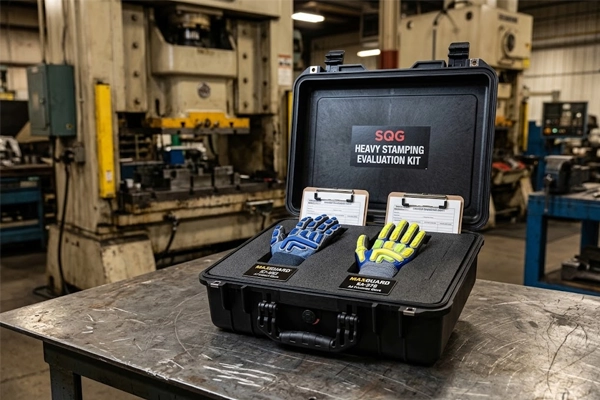
To assist EHS directors, shop floor technical supervisors, and centralized procurement departments at manufacturing companies in conducting real-world validation prior to large-scale bidding, SQG has officially launched a request service for the “Heavy Stamping & Fabrication Trial Kit” for metalworking and machinery manufacturing companies worldwide.
This trial kit features two representative models of tiered engineering protection:
MAXGUARD® K7-682: Featuring an 18-gauge ultra-high-density TekArmor® A7/F extreme cut-resistant liner, combined with thickened multi-faceted micro-cell honeycomb TPR armor and a highly cross-linked PolyMAX® high-strength abrasion-resistant coating, this model is specifically designed for high-kinetic-energy crushing and shearing workstations such as automotive body panel stamping and blanking, plasma cutting of thick steel plates, mold maintenance, and scrap metal briquetting;
MAXGUARD® K4-278: Features an 18-gauge lightweight TekArmor® A4/D cut-resistant liner, paired with a low-drag biomimetic micro-exoskeleton and a double-layer sand-textured oil-resistant coating. Specifically designed for powertrain assembly in engine compartments, high-torque bolt tightening in confined spaces, and precision mating of automotive electrical harnesses.
Companies can conduct 14- to 30-day hands-on trial wear tests with work teams in core stamping and shearing operations and on precision assembly lines to comprehensively evaluate, under real-world conditions, the gloves’ grip stability on slightly oily metal sheets, long-term abrasion resistance against cold, hard burrs, and ergonomic fatigue resistance during prolonged wear.
If you need a customized cut- and pinch-resistant safety assessment plan for your production line, or to directly request a factory-supplied on-site testing kit and technical specifications for bulk purchases, please feel free to contact our technical service team at any time: Request a Worksite Evaluation Kit & Direct Quote.