
Introduction: The Non-Newtonian Lubrication Crisis on Upstream Drill Floors
On the drill floors of modern onshore deep-well drilling rigs and offshore semi-submersible drilling platforms, workers’ hands are constantly subjected to the dual strain of heavy mechanical impact and extremely complex fluids. During operations such as tripping the drill string, connecting single-piece sections, and running casing, high-pressure spray from oil-based mud (OBM), synthetic drilling fluids, high-viscosity heavy crude oil, and highly mineralized formation water mix deeply and uniformly coat the surfaces of cold, hardened steel tubulars weighing hundreds of kilograms or even several metric tons. This mixed fluid is a typical non-Newtonian fluid, characterized by extremely high apparent viscosity and strong thixotropic properties. When drilling rig workers attempt to align, move, or connect pipe strings by hand under heavy loads, a continuous emulsion film of oil and water forms an impenetrable hydraulic barrier between the steel pipe and the gloves, causing the static and dynamic friction coefficients of conventional protective equipment to plummet to zero, causing the tubing to slip severely in mid-air and slip out of control the moment it breaks free from the grip of the lifting tongs or clamps, directly resulting in tragic crush, pinching, and impact injuries with a high disability rate.
For a long time, occupational safety procurement by upstream drilling and production companies has been mired in the misconception that “polymer coatings are a panacea.” Many factory safety managers habitually issue drill floor crews with impact-resistant gloves featuring nitrile, latex, or polyurethane coatings that have undergone microporous foaming, sandblasted micro-texturing, or crinkling treatments. In dry conditions or environments with light machine oil, these dense polymer films do perform reasonably well; however, once exposed to oil-based mud and high-pressure drilling fluid, the non-porous, dense structure of polymer coatings fully exposes their physical shortcomings in terms of slip resistance: the smooth coating surface is simply unable to penetrate the high-viscosity film of heavy mud; instead, much like a car tire traveling at high speed on a waterlogged road, it experiences extremely severe “aquaplaning.” To prevent the pipe from slipping out of their hands, workers are forced to exert several times the normal gripping force to counteract the slippage. This not only leads to chronic fatigue in the forearm muscles but also causes the palms to lose their critical mechanical self-locking grip in the face of violently shaking drilling tools.
To eliminate the high-slip safety risks on drilling rig decks, we must break away from the blind reliance on traditional rubber coatings and redefine the grip mechanism based on fluid dynamics and the microscopic capillary drainage mechanism at interfaces. The engineering application of professional-grade corded cotton palm oil and gas gloves is fundamentally transforming on-site safety standards in the upstream energy exploration sector. This solution abandons impermeable, dense synthetic rubber coatings and innovatively employs a three-dimensional, multi-strand, high-density corded cotton palm (Corded Cotton Palm). The macroscopic physical drainage grooves between the highly raised corded ridges instantly fragment and divert continuous thick layers of mud under high contact pressure; simultaneously, by leveraging the powerful microscopic capillary self-suction effect of naturally porous cotton fibers, it rapidly draws oil and water molecules away from the microscopic contact peaks on metal surfaces, achieving direct solid-solid interface interlocking. Combined with a thickened, impact-resistant TPR exoskeleton system that provides full coverage from the back of the hand to the finger bones, this forms a heavy-duty physical defense system that integrates “film rupture and fluid drainage, capillary adsorption and self-locking, and omnidirectional protection against crushing and pinching.”
Energy companies and drilling contractors committed to eliminating drilling platform slip accidents at their root cause, reducing the injury rate associated with pressure-drop tripping operations, and comprehensively standardizing stringent procurement criteria for protective equipment are invited to explore our full range of industrial impact-resistant products and engineering selection guidelines: Impact Resistant Work Gloves.
Drill Floor Tribology: The Physics of Aquaplaning on Heavy Tubulars
In deep well drilling and workover operations, the drill floor has consistently been the core area with the highest rate of industrial accidents. The handling and stringing of drill pipes, weighted drill pipes, and large-diameter surface casings do not take place in a dry, controlled, clean environment, but rather are constantly immersed in high-temperature, high-pressure drilling fluid circulating in and out of the well. These metal tubulars are extremely heavy, have smooth surfaces, and are coated with a thick emulsion of oil and water. When drill floor crews manually push, align, and hook up pipe strings, the normal clamping force applied by their hands can easily reach several hundred newtons. However, under the lubricating effect of non-Newtonian fluids, ordinary protective gear not only fails to provide a gripping brake but actually acts as a physical accelerator that triggers uncontrolled slippage of the pipe string.
Boundary Lubrication and Hydrodynamic Film Formation in Oil-Based Mud (OBM)
To meet the requirements for collapse prevention and drag reduction in deep formations, oil-based mud (OBM) typically uses diesel, white oil, or synthetic mineral oil as the continuous phase, blended with barite powder, organic bentonite, and highly active emulsifiers. This complex solid-liquid two-phase emulsified fluid exhibits extremely strong thixotropy and interfacial adsorption:
Formation of a continuous lubricating film and hydrodynamic water film slippage:
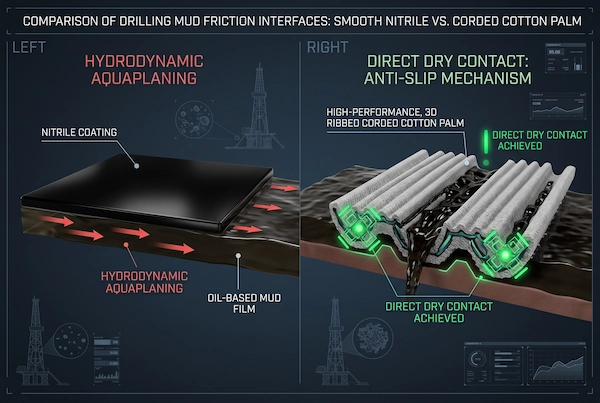
When the drill pipe is hoisted out of the rat hole or pulled from the rat hole toward the center of the rotary table, the thick mud adhering to the pipe wall moves along with it. The moment the operator attempts to grip the pipe wall, the viscous fluid is violently compressed within the microscopic gaps between the rubber palm and the steel pipe. For conventional plain-weave, micro-foamed nitrile or polyurethane (PU) gloves, their dense, solid, and non-porous polymer matrix is unable to instantly expel the high-viscosity liquid. Instead, under the combined effect of pressure and slight slippage, hydrodynamic pressure rapidly builds up, forcibly lifting the glove’s palm surface and forming a continuous hydrodynamic isolation film tens of micrometers thick. This interfacial behavior is analogous to the “aquaplaning” phenomenon that occurs when a heavy-duty truck travels at high speed on a wet, slippery road.
The interfacial coefficient of friction drops precipitously to zero:
The complete isolation created by the fluid film causes the direct micro-roughness interlocking between the glove and the steel to fail entirely, causing the interfacial friction mechanism to degrade into sliding within a fluid boundary layer that relies purely on low shear strength. Actual tribological data show that the static coefficient of friction for ordinary rubber coatings on dry steel plates typically reaches around 0.75, but on cold, hardened pipe walls coated with high-viscosity oil-based slurry, this value plummets to below 0.20; under dynamic conditions where the glove slips by millimeters, the kinetic coefficient of friction drops even further, falling below 0.15. No matter how hard workers grip this near-zero-friction interface, they cannot prevent the relative slippage of heavy steel pipes as they swing through the air. This is the physical root cause of uncontrolled pipe fittings on the drill rig striking workers’ feet or slipping from their hands and causing injuries, and it is the most critical driving force behind the complete phase-out of conventional rubber-coated gloves at drilling sites in favor of professional-grade corded palm oil and gas gloves.
Dynamic Pinch Points During Iron Roughneck and Power Tong Swings
In addition to uncontrolled fluid slippage on the palm, drill floor workers are constantly surrounded by an extremely intense web of mechanical kinetic energy that poses a crushing hazard. During the high-intensity cyclic process of pipe tripping, hundreds or even thousands of high-strength alloy steel pipes, each tens of meters long, must be continuously lifted at high speed, positioned, threaded, and stacked within a short period of time:
Kinetic energy from instability and off-center loading of heavy-duty swinging pipe strings:
When manually aligning a swaying drill string to connect it to the rotary table, factors such as the swing of the hook block, wind loads, or fine adjustments by the pipe-handling robot’s arm can cause individual drill pipes—weighing hundreds of kilograms or even several metric tons—to exhibit erratic, pendulum-like low-frequency swaying. If manual control is lost due to a slippery surface or a glove slipping off the hand, the entire lateral momentum of the pipe string will be converted into a transient, concentrated impulse of several thousand newtons within a few milliseconds.
Crushing Squeeze at the Blind Spot Between the Iron Roughneck and the Power Tongs:
At the moment when an iron roughneck or hydraulic power tongs are used to rotate and thread a pipe, the worker’s hands are often only a few centimeters away from the high-pressure rotating jaws. If the drill string suddenly deflects, the counterweight arm of the suspended tongs will experience a violent lateral rebound. The backs of the worker’s hands and finger joints are highly susceptible to being forced directly into rigid dead zones, such as the jaws of heavy-duty steel power tongs, the turret’s collision-protection guardrails, or the hard drill floor columns. If the gloves worn by workers provide protection only on the palm and lack high-level energy-absorbing armor on the back of the hand, lateral transient loads of up to several thousand newtons will act directly and without cushioning on the metacarpal bones and proximal interphalangeal joints, causing irreversible transverse fractures of the metacarpal bones, comminuted joint fractures, and even deep nerve compression necrosis. Therefore, during high-risk drilling rig manifold operations, the energy-absorbing structure on the back of the glove must provide a level of rigidity and coordination equivalent to that of the mechanical anti-slip system on the palm.
Fluid Displacement Dynamics: Why Corded Cotton Outperforms Dipped Polymers
Under extreme conditions where oil-based mud (OBM) and high-viscosity emulsions thoroughly saturate the workpiece surface, the core physical factor determining a glove’s gripping performance is not the surface viscosity of the material itself, but rather its mechanical ability to displace fluid from the hydrodynamic lubrication interface. Coated gloves—whether made of foamed nitrile, textured latex, or polyurethane—are essentially continuous, solid, dense polymer films that lack open macroscopic spaces for fluid retention; when exposed to non-Newtonian fluids, their smooth coating acts like a barrier layer spanning the surface of an oil-water mixture, directly generating hydrostatic buoyancy. In contrast, the three-dimensional, high-density cotton corded palm (Corded Palm) used in professional-grade oil and gas gloves overcomes the water-shedding effect directly at the fluid dynamics level through the physical synergy of macroscopic geometric drainage grooves and microscopic fiber pores.
Micro-Channel Drainage and High-Pressure Film Puncture
Ordinary anti-slip gloves rely on fine surface grit or micro-pores to increase friction; however, when faced with high-viscosity drilling mud hundreds of micrometers thick, the microscopic grit is instantly filled in by the mud, rapidly rendering the surface smooth and flat.
The three-dimensional, heavy-duty corded cotton palm completely redefines this interfacial reaction in terms of macroscopic contact mechanics:
Microscopic Stress Concentration and High-Pressure Film Puncture Mechanism:
The palm surface is densely woven from special high-density, heavy-ply pure cotton yarn in a predetermined direction, forming tight, raised corded patterns that protrude several millimeters above the base fabric and have a semicircular cross-section. When a drilling rig worker grips a steel pipe with both hands and applies a gripping force of several hundred newtons, the entire normal gripping force is forced to concentrate on the extremely narrow strip-shaped contact zone where each arc-shaped cotton cord is tangent to the pipe wall. The local contact pressure instantly surges several-fold. This highly concentrated pressure acts like a row of blunt knives, forcibly penetrating and severing the originally continuous, highly adhesive oil-based mud lubrication film, thereby completely dismantling the physical conditions required for the formation of a hydrodynamic oil film.
Directional Fluid Containment and Diversion via Three-Dimensional Micro-Channels:
The spaces between adjacent raised cord patterns naturally form a macro-scale micro-channel drainage system with parallel alignment and controlled depth. The instant the cord patterns shatter the mud film, the viscous mud, solid barite particles, and free base oil remaining in the contact zone are forcibly squeezed to both sides under vertical pressure and smoothly channeled into the grooves between the cord patterns. The thick slurry no longer remains stagnant at the load-bearing interface but is rapidly diverted into the non-contact channel space, preventing secondary pooling and flow slippage at the interface and creating a clean space for physical contact between the palm and the metal substrate.
Porous Capillary Absorption and Interfacial Dry Contact
Relying solely on macroscopic mechanical grooves to displace most of the fluid is still insufficient to completely eliminate slippage. A few micrometers-thick, oil-loving boundary lubrication film remains between the microscopic machined textures and rough asperities on the metal tube wall. This residual film is precisely the root cause of low-speed creep slippage in traditional rubber-coated gloves.
The cord-textured cotton palm utilizes the unique physical porosity of natural fibers to “actively draw out” residual oil-water emulsions at the microscopic scale:
The microscopic self-drying capillary pump effect of natural cellulose tubules:
Pure cotton fibers are porous biopolymer materials with a natural hollow tubular structure (lumen), whose surfaces are densely covered with nanoscale and micrometer-scale longitudinal grooves. When pure cotton rope-textured fabric is subjected to strong external compression and pressed tightly against the inner wall of a metal tube, the fiber lumens and their interwoven micropores form an extensive network of fine capillaries (capillary network). Based on capillary physics, the micro-tubular diameters generate an extremely strong spontaneous capillary negative pressure on liquids, capable of actively “extracting” hydrocarbon compounds, base mineral oil, and aqueous molecules trapped within the microscopic rough pits of the steel and deeply absorbing them into the interior of the cotton yarn fibers, thereby achieving instantaneous self-dewatering and self-deoiling at the contact interface within an extremely short time.
Solid-Solid Interlocking Interface Formed by Rough Peaks:
After macroscopic grooves channel large volumes of slurry and microscopic capillaries extract residual micro-oil films, the microscopic contact peaks on the metal tube wall—which were originally completely covered by slurry—are directly exposed. Due to its excellent microscopic plastic conformal deformation capability, the high-density pure cotton ribbed rope can deeply conform to the rough undulations on the steel pipe surface at the micrometer scale, forming a “solid-to-solid interlocking contact” similar to gear meshing. At this point, the friction mechanism at the interface shifts completely from fluid lubrication back to a high-energy dry friction state, and the static coefficient of friction immediately rises to the high anti-slip range of 0.80 or higher, fundamentally locking the pipe string in place and preventing it from swaying or slipping out of alignment in mid-air.
Biomechanical Impact Mitigation: Heavy Exoskeletons Under Tubular Recoil
Pipe tripping is the most physically demanding operation on a drilling rig and the one involving the highest concentration of mechanical kinetic energy. During the raising and lowering of drill strings ranging from hundreds to thousands of meters in length, the assistant driller and rig crew must align the pipe string, engage the sling clamps, and coordinate with the hydraulic tongs at an extremely high frequency. During this process, tubular recoil—caused by the heavy drill string detaching from the wellhead or slipping on the pipe rack—is often accompanied by sudden instability and off-center loading. In environments involving heavy non-Newtonian fluids, corded palm oil and gas gloves must not only rely on the palm to prevent slippage but also establish a heavy-duty impact-resistant armor system on the back of the hand capable of withstanding severe mechanical compression.
Knuckle and Metacarpal Force Attenuation During Pipe Tripping
The backs of traditional lightweight protective gloves are often fitted with only a single layer of extremely thin decorative adhesive dots or small, rigid rubber blocks. When faced with impacts from a drill string weighing hundreds of kilograms and swinging at high speeds, such flimsy structures offer no resistance to transient kinetic energy; the impact force penetrates the soft tissue with virtually no attenuation, resulting in transverse comminuted fractures of the metacarpal bones.
To withstand the devastating impact caused by drill string recoil and hook block rebound, the heavy-duty impact protection system employs a full-coverage Heavy Thermoplastic Rubber (Heavy TPR) exoskeleton:
Stepped-Damping Microcavities and Kinetic Energy Lag Absorption:
The back-of-hand armor is not a solid rubber block but rather features an internal multi-chamber, stepped-damping topological structure with high energy dissipation characteristics. When a suspended, heavy drill collar strikes the back of a worker’s hand due to slight swaying of the derrick, the external high-elasticity TPR protrusions first absorb the initial impact pulse through large elastic deformation; immediately afterward, the internally pre-designed multi-stage micro-porous structure undergoes controlled micro-collapse along a predetermined path. This two-stage deformation mechanism forcibly extends the duration of the impact momentum, reducing the sharp impact peak—which would otherwise be concentrated within a few milliseconds—by more than 50%.
Anisotropic Energy Redirection and Skeletal Stress Relief:
The armor base is designed with guide ribs angled toward the soft tissue areas on both sides of the back of the hand. Upon impact from a vertical blow, the armor utilizes the material’s shear wave guidance effect to forcibly transform the concentrated destructive load—which would otherwise penetrate vertically along the normal direction into the second through fifth metacarpal bones—into horizontal shear stress that extends laterally toward the palm. By dispersing the residual impact energy to the lateral edges of the back of the hand and areas rich in subcutaneous fat—where no major supporting bones bear direct pressure—the system fundamentally prevents metacarpophalangeal joint dislocation and comminuted metacarpal fractures, fully meeting the ANSI/ISEA 138 Level 2 heavy-load impact protection standards. For an in-depth exploration of the deformation behavior of polymer damping formulations and microscopic honeycomb topologies when absorbing high-mass, low-velocity, heavy-load impacts, please refer to our specialized technical mechanical analysis: TPR Exoskeleton Engineering.
High-Visibility Color Contrast in Poorly Lit Substructure Environments
In addition to withstanding sudden mechanical impacts, eliminating blind spots that lead to operational errors at their source through visual ergonomics is an integral part of fall protection. In the substructures of offshore drilling platforms or onshore drilling rigs, as well as in mud tank areas and beneath the rotary table, space is extremely confined and lighting conditions are poor. During night shifts, storms, or under harsh conditions where mud is flying everywhere, the driller’s ability to discern the position of the rig workers’ hands while operating the control handles is drastically reduced.
To address the unique optical environment of drilling operations, the gloves feature a precision-engineered, high-contrast, industrial-grade high-visibility color scheme:
Spectral high-penetration fluorescent yellow base formulation:
The glove’s back lining fabric and the ribbed palm area extensively utilize a special high-purity fluorescent yellow (Hi-Viz Yellow) dye that complies with international high-visibility safety standards. Light waves in this spectrum possess extremely strong diffractive penetration capabilities through heavy fog, water vapor, and suspended mud particles at night, maintaining exceptionally high visual color rendering even in dim, shadowed areas and under sodium-vapor lighting with low color rendering.
Reinforced Edge Contours on the Matte Black TPR Exoskeleton:
The thickened TPR impact-resistant pads covering the fluorescent yellow base fabric are specially formulated in light-absorbing dark carbon black or high-contrast shades. The dark, rigid exoskeleton lines create an extremely sharp edge contrast against the bright fluorescent yellow base, outlining a highly realistic skeletal silhouette of a human hand in motion. When site workers stand in blind spots dozens of meters away from the driller’s cabin and use hand signals to convey commands such as “raise,” “lower,” or “emergency stop,” the clear, high-contrast hand outline allows the driller to instantly recognize the precise gestures. This effectively prevents tragic hand entanglement accidents caused by blurred vision or misjudgments in blind spots that trigger premature activation of mechanical systems.
Substrate and Reinforcement Architecture: BM-701 vs. BM-702 Engineering
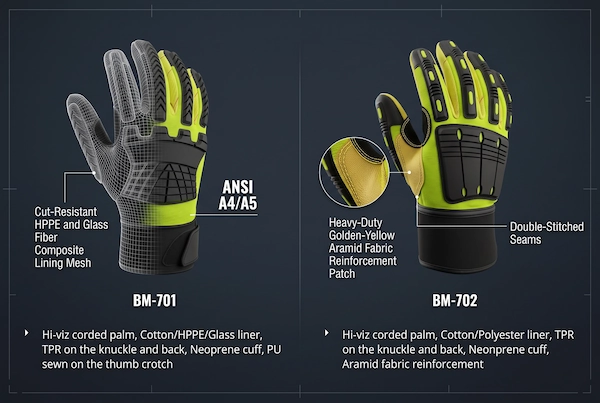
In actual drilling and workover operations, the physical hazards encountered at different workstations often exhibit completely different mechanical characteristics. Solid-phase control operations in the drilling mud circulation tank area are rife with extremely thin, razor-sharp burrs from stainless steel braided mesh and metal shavings, with the primary threats being high-speed cutting and micro-punctures; whereas around the main winch on the drill floor, on the workover rig deck, and in the wireline logging operation area, workers must endlessly drag and untangle thick steel wire rope slings saturated with heavy oil, subjecting their hands to prolonged periods of intense sliding friction and severe shear and tearing forces at the web of the hand. Therefore, corded palm oil and gas gloves developed for harsh upstream environments cannot be treated uniformly based on a single base fabric specification. Instead, through differentiated designs—including the selection of composite fiber linings and reinforcement processes for key stress zones—two highly complementary engineering protection architectures have been developed: the BM-701 and BM-702.
Multi-Ply HPPE/Glass Cut Barrier for Vibrating Screen Solids Control (BM-701)
In drilling fluid solids control systems, shale shakers serve as the first line of defense for processing returned drilling fluid. When high-density drilling fluid carrying large amounts of subsurface cuttings violently impacts the screen mesh, ultra-fine-mesh (typically 100 to 300 mesh) stainless steel composite screens are highly susceptible to fatigue failure under high-frequency vibration and abrasion from sand and gravel. When solids control operators stop the pump to replace or flush damaged screens, or to clear material blockages from the screen box, the broken and protruding stainless steel wires are extremely sharp. Despite having a diameter of only tens of micrometers, they possess extremely high puncture resistance; conventional cotton gloves or ordinary polyester linings are instantly punctured or slashed upon contact.
For high-risk fluid handling workstations involving such microscopic, sharp cutting hazards, the SQG® BM-701 employs a multi-layer composite cut-resistant lining structure (Multi-Ply Cotton/HPPE/Glass Core):
Coaxial blend of natural cotton and highly oriented HPPE:
The inner layer in direct contact with the skin retains soft, moisture-wicking, high-count natural cotton fibers, while the outer structural layer is deeply interwoven with high-molecular-weight, highly lattice-oriented ultra-high-molecular-weight polyethylene (HPPE) filaments. When subjected to lateral tension from the micro-wires of a broken stainless steel mesh, the HPPE molecular chains exhibit excellent energy-absorbing properties, preventing cutting stress from penetrating deep into the palm at the microscopic level.
High-Hardness, Puncture-Resistant Base Made of Electronics-Grade Micro-Glass Fibers:
Precision-coated, micro-sized alkali-free lattice glass fibers are embedded within the yarn core. When subjected to direct normal pressure from extremely fine stainless steel burrs, these high-hardness microfiber bundles act as a robust microscopic passivation barrier, forcibly counteracting point penetration by sharp metal tips and steadily raising the inner liner’s mechanical cut protection threshold to ANSI A4 to A5 and EN ISO Level D, thereby preventing serious accidents in which solid control operators’ palms are pierced by corroded metal wires, leading to severe chemical infections from drilling mud.
High-Tensile Aramid Crotch Shielding Against Wireline Chafing (BM-702)
In stark contrast to the sharp puncture hazards at vibrating screen workstations, the primary mode of injury to the hands during workover, coiled tubing, and wireline logging operations is long-duration, high-tension sliding abrasion caused by rough steel wire ropes. When raising or lowering logging equipment or auxiliary winch hauling rigging, coarse steel wire ropes under tensile forces of several metric tons rapidly slide across the worker’s web and palm, accompanied by intense lateral friction that generates heat and high-load lateral tearing. The web seams of conventional gloves are often worn through and torn within just a few hours.
To eliminate this workstation-specific tear failure, the SQG® BM-702 retains the anti-slip properties of its high-density ribbed cotton palm while restructuring the mechanical framework in key stress areas:
Heavy-duty cotton-polyester abrasion-resistant blended base fabric:
The lining replaces the higher-cost but less heat-resistant pure polyethylene with a thick, heavyweight interwoven base fabric of natural cotton and high-strength polyester fibers (Heavy Cotton/Polyester). This structure provides the glove with excellent overall tear resistance, elongation, and mechanical fatigue life, demonstrating exceptional crush resistance during heavy-duty drilling and wrench handling operations.
High-Tensile Aramid Weave Reinforcement (Aramid Crotch Shielding) in the Thumb Crease and Palm Arch Areas:
To address the first interdigital space (the web) between the thumb and index finger—a high-stress blind spot—the BM-702 features a specially woven, high-tensile-strength para-aramid (Aramid Fabric) patch, reinforced with double-row stitching using high-strength, cut-resistant thread. Para-aramid offers exceptional resistance to high-temperature friction heat and extreme abrasion. When tensioned steel cables—coated with oil sludge and bearing burrs—repeatedly apply high-speed pressure and scrape against the web, the aramid reinforcement layer effectively dissipates intense alternating shear stress, completely preventing seam tearing and fabric abrasion.
Whether addressing the fine, sharp metal cuts targeted by the BM-701 or the heavy rope-induced abrasion targeted by the BM-702, the gloves’ overall protective performance must be evaluated within a rigorous standards framework. To fully understand the certification criteria for calculating cut and puncture resistance loads and the peak force transmission for back impact protection, refer to the technical guide: ANSI/ISEA 138 vs. EN 388 impact standards.
Cuff Engineering and Fluid Exclusion: Neoprene Barrier Mechanics
In the environment of mud splashes and high-pressure fluid erosion at the drill floor, a glove’s protective boundary is by no means limited to the palm and back of the hand. Many conventional industrial gloves often feature loose, ribbed knit cuffs or overly wide, open-mouthed canvas sleeves. While these may suffice for routine dry handling tasks, they become critical weaknesses in protection when exposed to conditions such as the mud pit on a drilling rig or wellhead overflow. Splashing drilling fluids can penetrate unimpeded through the wrist openings, not only causing oil to accumulate inside the gloves and leading to a loss of grip but also causing sustained damage to skin tissue through prolonged immersion. As professional-grade corded palm oil and gas gloves designed to withstand heavy fluid immersion, these gloves feature a sealed, engineering-grade neoprene cuff at the wrist junction, fortifying the wrist defense through both physical sealing and emergency removal capabilities.
Chemical Splash Resistance and Prevention of Internal Mud Pooling
Recirculated oil-based mud (OBM) and synthetic-based drilling fluids are rich in base mineral oil, organic bentonite, and barite solid particles, as well as large amounts of surfactants and demulsifiers used to adjust rheological properties. These chemical media possess extremely strong lipophilic properties and have a degreasing and destructive effect on human epidermal tissue:
Blocking chemical backflow and capillary reverse seepage:
When a single-hook sling is engaged or mud splashes from the wellhead, the fluid often strikes the worker’s wrist with significant force from the side. If conventional cotton-knit wrist cuffs are used, the mud will be absorbed through the fabric’s microporous structure within seconds, leading to capillary penetration; meanwhile, loose, stiff safety short-sleeve shirts are prone to forming large, flared cuffs when workers bend their wrists during operational procedures. Neoprene features a dense, closed-cell microporous foam structure, providing inherent resistance to hydrocarbon and mineral oil penetration as well as chemical inertness. The form-fitting neoprene cuff closely conforms to the anatomical contours of the wrist, forming a physically sealed, ring-shaped barrier that completely blocks splashing corrosive drilling mud and chemical additives.
Prevents internal fluid accumulation and occupational contact dermatitis:
Drilling rig workers often work continuous shifts of 8 to 12 hours. Once high-viscosity oil-based mud flows back into the glove, chemical toxins—catalyzed by hand perspiration and body heat—rapidly dissolve the skin’s lipid barrier, causing the stratum corneum to peel and break down, which leads to extremely stubborn occupational contact dermatitis, chemical burns, and deep follicular infections. The form-fitting neoprene seal eliminates the industry-wide problem of “internal mud pooling” at its source, keeping the interior of the gloves clean and relatively dry at all times, thereby safeguarding workers’ long-term occupational health during high-risk drilling cycles.
Ergonomic Tensioning and Rapid Emergency Doffing
The rig deck is filled with rotating turntables, high-speed power sheaves, winch drums, and taut steel wire rope rigging. In the extremely harsh environment of heavy machinery, the wrist retention system of gloves must not only prevent slippage and block foreign objects but also provide workers with the ability to “break free in seconds” in the event of a sudden entanglement risk.
The Neoprene cuff system establishes a precise mechanical balance between ergonomics and emergency release:
Wide, elastic, adjustable compression and omnidirectional foreign object protection:
The cuff is equipped with wide-profile, high-strength, engineering-grade hook-and-loop adjustment fasteners. Whether drilling rig workers wear the glove cuffs over heavy-duty cold-weather gear in freezing conditions or directly against the skin at normal temperatures, they can quickly adjust the pre-tension with one hand. Highly elastic neoprene conforms to the geometric contours of the wrist bones, tightening evenly and snugly hugging the radial and ulnar styloid processes. This ensures a wide range of wrist flexion, extension, and rotation without leaving pressure marks or causing constriction, while completely sealing off gaps in the palm to prevent rock debris, metal drill cuttings, and coarse, hard barite particles from falling into the palm, thereby preventing foreign objects from abrading the skin on the palm inside the glove.
Rapid Emergency Doffing in Extreme Entanglement Situations:
When working with a swivel block or a rope winch, if the hand or the rope pattern on the outer layer of the glove is accidentally caught by a rotating mechanism or a taut steel wire rope, traditional long-sleeved lock-on sleeves are extremely difficult to remove instantly, making it highly likely that the worker’s entire arm—or even their body—will be forcibly pulled into the machine’s danger zone. The SQG neoprene short cuff, combined with a tear-away hook-and-loop closure design and optimized with a specific outward-angled geometric profile, completely eliminates structural snagging points at the wrist. In extreme life-or-death situations involving entanglement and pulling, the worker needs only to use force to forcefully pull the arm backward; the wrist closure and highly elastic neoprene will instantly deform and release under outward shear loads, allowing the worker to swiftly withdraw their entire hand from the glove (doffing) in less than a second, enabling an “escape like a cicada shedding its shell” emergency evasion and physically eliminating the risk of disabling entanglement injuries.
Tribological Matrix: Corded Palm vs. Smooth & Sandy Coatings in Drilling Fluids
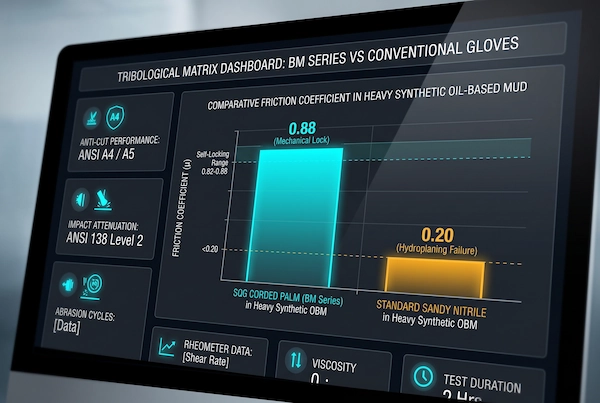
In the extreme fluid environments of deep-well drilling and workover operations, theoretical analysis alone cannot fully clarify the actual performance limits of different protective equipment. To provide oil and gas field EHS departments and equipment procurement directors with absolutely compelling evidence for decision-making, we conducted quantitative comparative tests on multidimensional tribological and mechanical protective performance using a standardized synthetic oil-based mud (Synthetic Drilling Mud) circulating test rig in the laboratory. The tests compared specialized drilling gloves featuring a three-dimensional corded cotton palm with conventional microporous sand-textured nitrile gloves available on the market.
Laboratory Benchmark Testing in Synthetic Drilling Mud
By simulating real-world high-temperature, high-pressure oil-based mud splashes and high-load drill string gripping conditions encountered on offshore and onshore drilling rigs, we collected and analyzed key mechanical and tribological data for the SQG® BM-701, SQG® BM-702, and traditional standard sandy nitrile heavy-duty gloves (Standard Sandy Nitrile Rigger). The specific test results are shown in the table below:
| Engineering Specification | SQG® BM-701 | SQG® BM-702 | Standard Sandy Nitrile Rigger |
| Palm Construction & Texture | 3D Hi-Viz Corded Cotton | 3D Hi-Viz Corded Cotton | Dipped Micro-Foam / Sandy Nitrile |
| Liner Substrate Composite | Cotton / HPPE / Glass Fiber | Heavy Cotton/Polyester | 13-Gauge HPPE / Nylon Blend |
| Cut Protection Performance | ANSI A4 – A5 / EN ISO Level D | ANSI A2 / EN ISO Level B | ANSI A3 – A4 / EN ISO Level C |
| Impact Mitigation Rating | ANSI/ISEA 138 Level 2 | ANSI/ISEA 138 Level 2 | ANSI/ISEA 138 Level 1/2 |
| Static Friction in Heavy OBM | 0.82 – 0.88 (Mechanical Lock) | 0.82 – 0.88 (Mechanical Lock) | 0.28 – 0.35 (Hydroplaning with Slip) |
| Dynamic Friction in Heavy OBM | 0.75 – 0.80 (Stable Grip) | 0.75 – 0.80 (Stable Grip) | 0.18 – 0.24 (Complete Loss of Grip) |
| Critical Stress Zone Defense | PU-Stitched Thumb Crotch | Aramid-Reinforced Crotch | Standard Dip (No Reinforcement) |
| Primary Industrial Task | Casing Runs, Shakers, Rig Floor | Workover, Wireline, Pump Maintenance | Dry Rigging, Warehouse Logistics |
Rig Workstation Deployment: Tiered Protection for Upstream Hazards
In the upstream oil and gas exploration, development, and workover operations chain, the types of mechanical stress and the degree of exposure to hazardous substances vary significantly across different stages. Many oilfield contractors have attempted to use a single glove model for “one-size-fits-all” applications, only to find that workers frequently suffered cuts from fine steel wires at vibrating screens, gloves wore through within days at the wire rope drag points of workover rigs, and workers experienced premature fatigue due to excessive grip force when aligning drill pipes at the rotary table. To address the diverse hazards throughout the entire deep-well drilling process, a scientific protection solution should be based on a tiered protection system tailored to the actual hazards at each workstation. Combining corded palm oil and gas gloves—which can withstand fluid penetration—with targeted composite fiber linings and reinforced structures in high-stress areas can achieve an efficient, closed-loop system for personal safety protection across the entire wellsite.
Drill Floor Casing Runs and Cathead Tongs: SQG® BM-701
During large-diameter casing runs on the drill floor, cathead tong operations, and work on the mud circulation and solids control systems, workers face the dual threats of slipping due to heavy fluid loads and puncture from sharp cutting edges. When running sub-base or technical casing, dozens of heavy-duty casing sections are frequently threaded and hoisted, with their outer walls coated in thick grease and backflowing mud; meanwhile, in the solids control vibrating screen area, the raised metal filaments of damaged high-mesh stainless steel screens are extremely hard—even the slightest scrape can pierce ordinary fabric and lacerate tendons.
As the flagship model designed to address these extreme, compound hazards, the SQG® BM-701 demonstrates an exceptionally high level of comprehensive protective resilience:
Ribbed flow channels synergize with ANSI A4 to A5 cut resistance: The 3D high-density cotton ribbing on the palm rapidly breaks through the heavy oil film when gripping large-diameter casing, channeling mud into micro-grooves; The internally fitted cotton/HPPE/glass composite lining provides mechanical cut protection up to ANSI A4 to A5 levels, creating a robust barrier against punctures and cuts when workers manually clear hard rock debris and protruding steel wires from vibrating screens;
Full-coverage impact-resistant exoskeleton and high-pressure PU reinforcement on the back of the hand: The entire back of the hand, extending to the knuckles of each finger, is covered with thickened TPR armor that has passed impact attenuation tests, providing cushioning against the recoil from cathead clamps and the risk of pinching from uneven loads during casing splicing; the first web between the palm and the base of the thumb (the “thumb web”) features multiple layers of reinforced polyurethane (PU) stitching to resist shearing and peeling during heavy-load handling.
Well Servicing, Workover, and Wireline Pulling: SQG® BM-702
In operations such as workover, coiled tubing operations, maintenance of hydraulic-end valves on mud pumps, and wireline logging, the primary hazards shift to long-term fatigue caused by high-tension contact and severe mechanical friction. When raising or lowering logging equipment or auxiliary winch hauling rigging, thick steel wire ropes under tens of metric tons of tension slide frequently across workers’ palms and the web of the hand, accompanied by intense lateral friction that generates heat and causes severe shear stress; Meanwhile, during the disassembly and assembly of high-pressure valve bodies on mud pumps, the frequent tightening of high-pressure pipeline flange bolts using heavy-duty metal striking tools places stringent demands on the equipment’s wear resistance limits.
For high-intensity work environments characterized by heavy wear and severe tearing, the SQG® BM-702 offers a solution that combines cost-effectiveness with superior wear resistance:
Heavyweight cotton-polyester blend base fabric with 3D ribbed grip: Featuring a thick, heavyweight interweave of natural cotton and high-strength polyester fibers, the lining offers excellent tensile elasticity and structural tear resistance. Even when saturated with heavy lubricants and slurry, it maintains the physical interlocking grip of the 3D rope-textured pattern, eliminating the risk of the glove slipping off while tightening or loosening large wrenches or high-pressure bolts;
High-Strength Para-Aramid Crotch Shielding: In the curved thumb crotch area—where wear is most severe—a high-tensile-strength para-aramid woven patch is specially sewn in and secured with double-row stitching using high-strength, cut-resistant thread. The exceptional resistance to friction heat and abrasion offered by para-aramid completely eliminates the risk of cut-through damage to the crotch seam caused by tensioned steel wire rope rigging during long-term operations, significantly extending the glove’s service life in demanding well maintenance operations.
Cross-Hazard Industrial Transitions: Precision Stamping and Micro-Assembly
The integrated operations of large oil and gas energy companies and heavy industry groups encompass not only field environments heavily saturated with fluids—such as drilling and workover sites—but also vast logistics machining centers, onshore equipment manufacturing plants, and vehicle powertrain maintenance workshops. When the work environment shifts from muddy wellsite decks to dry or slightly oily workshops with no fluid exposure, the criteria for selecting gloves must be precisely adjusted accordingly; it is crucial to avoid mechanically applying thick, cotton-ribbed gloves to dry, precision workstations.
Safety managers must precisely categorize risks based on the specific mechanical hazards present in each workshop:
Heavy-duty stamping and large, sharp sheet metal blanking: At workstations involving cold-rolled steel sheet blanking and forming, plasma CNC cutting, and heavy metal blank stacking, the greatest risks to workers are rapid, slicing cuts from work-hardened metal burrs and entrapment from swinging large sheet metal panels. In these situations, workers should switch entirely to specialized gloves featuring an 18-gauge ultra-dense tungsten alloy liner and a highly cross-linked PolyMAX® coating. For a detailed engineering analysis, refer to the technical guide: ANSI A7 impact gloves; the core model is MAXGUARD® K7-682;
Precision Mating of Engine Powertrains and Electrical Harnesses: When assembling engine compartments in confined spaces, securing micro-sensors, or routing complex chassis cables, work efficiency hinges on fingertip tactile sensitivity and dexterity down to the millimeter. In such cases, the assembly-grade MAXGUARD® K4-278—featuring a base fabric thickness of less than 0.8 mm and equipped with a lightweight, low-friction bionic exoskeleton—should be selected. This model eliminates the risk of unsafe practices involving working without gloves while providing both basic impact protection and sensitive control.
Technical FAQ: Heavy Fluid Saturation, Mud Washability, and Grip Lifecycle
When managing equipment inventory at deep-well drilling rigs and workover sites, many EHS engineers and equipment procurement personnel from operating contractors often approach corded palm equipment with traditional concerns: Will cotton fabric become completely slippery once it absorbs oil and mud? How can gloves be cleaned after they become saturated with drilling fluid? How should different models be distinguished for specific rope-handling operations?
Based on simulation tests of extreme oil and gas operating conditions conducted at the SQG Fluid Physics Laboratory, as well as long-term feedback from drilling crews at major oilfields, we provide in-depth engineering answers to four core concerns regarding corded palm oil and gas gloves: fluid lubrication mechanics, industrial washing and regeneration, model selection for specific operations, and occupational skin health.
Why does a corded cotton palm grip slick drill pipe better than a textured nitrile coating?
Many people believe that rubber is inherently more slip-resistant than fabric, but in high-viscosity oil-based mud (OBM) environments, this rule of thumb completely fails. The fundamental reason lies in the starkly different hydrodynamic responses of polymer coatings and three-dimensional woven structures when encountering non-Newtonian fluids:
“Micro-water slippage” failure of solid polymer coatings:
Foamed nitrile or sand-textured latex coatings are essentially dense, solid polymer continua with no macroscopic voids. Oil-based mud not only has extremely high viscosity but also contains large amounts of fine-grained barite powder and emulsifiers. When a worker grips a steel pipe tightly, the high-viscosity fluid cannot be displaced by the solid rubber surface within milliseconds; instead, it becomes trapped between the rubber’s micropores and the metal wall, forming a continuous hydrodynamic lubrication film several micrometers to tens of micrometers thick. The interface friction mechanism directly transitions from dry mechanical interlocking to hydrodynamic lubrication, with the coefficient of friction dropping below 0.20—making the palm feel as if gripping a soapy, icy surface;
The “Diverting Channels Plus Capillary Self-Priming” Feature of the 3D Rope-Textured Cotton Palm:
Heavy-duty rope-textured cotton gloves feature a 3D, raised, semicircular structure of coarse cotton cords. Under normal grip force, the arched protrusions increase local contact pressure several-fold, acting like a series of physical cutters that forcibly break through the originally continuous slurry oil film. Under heavy pressure, the shredded, thick slurry flows smoothly into the micro-drainage channels between adjacent rope patterns and is discharged to both sides; simultaneously, the microscopic tubular channels within the porous natural cotton fibers exert a spontaneous capillary adsorption effect, powerfully drawing residual micro-oil molecules from the microscopic rough pits on the steel pipe into the fiber’s interior. This allows the raised rope-textured fabric to achieve direct, face-to-face solid-solid mechanical interlocking with the microscopic rough peaks of the steel pipe’s metal surface, forcibly stabilizing the wet static coefficient of friction at a high anti-slip level of 0.80 or higher.
How do you wash and restore corded palm gloves after they have been completely saturated with oil-based mud?
After a shift, the surfaces of a rig worker’s gloves are often completely caked with heavy crude oil, oil-based mud, and rock cuttings. Some procurement departments worry that cotton fibers will permanently lose their grip once thoroughly saturated with oil and mud, and may even be discarded as single-use items, resulting in significant waste of materials and equipment. In fact, through a standardized industrial cleaning process, corded cotton gloves can be reused for extended periods:
Industrial Cleaning and Degreasing Procedures:
Gloves saturated with oil and mud do not need to be discarded. It is recommended to use eco-friendly hydrocarbon-based cleaning agents specifically designed for heavy industrial work or neutral emulsifying degreasers for heavy oil stains. Wash them in a low-speed industrial drum washer with warm water at 40 to 50 degrees Celsius (recommended washing time: 20 to 30 minutes), followed by moderate centrifugal spinning to remove excess water. The gloves should then be placed in a well-ventilated, shaded area to air-dry naturally or dried in a low-temperature dryer set below 60 degrees Celsius. Avoid exposure to high heat, direct flame, or strong acidic/alkaline environments, as this may damage the elastic damping structure of the TPR back armor;
Self-drying regeneration of microscopic capillary channels:
During the cleaning and degreasing process, emulsifiers rapidly strip away long-chain heavy alkanes and mineral oil molecules adhering to the interior cavities and microporous surfaces of the cotton fibers. As moisture evaporates, the microscopic capillary network of the porous natural cellulose regains its patency and natural elasticity; its unique liquid-draining grooves and microscopic self-adsorption properties are fully restored to their original state after washing and drying. Field tracking data from multiple offshore platforms indicates that after 8 to 10 standard cleaning cycles, the BM series gloves exhibit an interface self-locking grip force decay rate of less than 5% in mud environments, demonstrating a comprehensive service life and full lifecycle cost-effectiveness that far exceed those of traditional coated gloves.
Between the BM-701 and BM-702, which glove is specified for wireline winch operations?
In wireline logging, coiled tubing operations, and vehicle-mounted auxiliary winch traction processes, the wear patterns on gloves are completely different from those experienced during the pushing and pulling of the drill string on the drill floor. Operators must frequently use their hands to reel in, reel out, and untangle thick and thin steel wires under tension of several metric tons, and many equipment managers find it difficult to choose between the BM-701 and BM-702. For these specific operations, the key to selection lies in identifying the “wear failure mechanisms” in the areas subjected to stress:
For wireline winch operations, the SQG® BM-702 should be the first choice:
High-speed sliding tensioned steel wire ropes generate extremely severe lateral shear friction heat and tearing stress at the web of the hand (first interdigital space) and the palm arch. The BM-702 features a high-tensile-strength, woven para-aramid reinforcement layer (Aramid Fabric Reinforcement) sewn into the high-wear, curved area of the thumb web, Aramid offers an extremely high resistance to frictional heat and excellent resistance to tangential wear, enabling it to withstand the intense pressure and abrasion from rough steel wire ropes over the long term and prevent the web seam from wearing through or cracking within just a few days;
For high-risk cutting and puncture operations, select SQG® BM-701:
If the work involves not only steel wire rope dragging but also flying sharp fragments from broken wires, replacing fine-mesh screens on high-pressure mud solids control vibrating screens (where fine metal burrs may fly), and the risk of cut injuries from single-pipe casing connections at heights, then the BM-701—equipped with a high-performance cut-resistant liner made of a Cotton/HPPE/Glass composite blend—must be selected, which relies on the ANSI A4 to A5-rated cut-resistant barrier provided by glass fiber and ultra-high-molecular-weight polyethylene to prevent broken metal tips from directly piercing deep finger tendons.
How does the neoprene cuff design prevent skin dermatitis in OBM drilling environments?
During continuous deep-well operation cycles lasting several weeks, drilling rig workers are at high risk of occupational skin conditions—such as redness, peeling, cracking, and even suppurative folliculitis—due to prolonged exposure of their hands to highly chemically irritating oil-based drilling mud. The open-knit ribbed cuffs or overly loose safety canvas cuffs used in ordinary gloves are the primary culprits allowing toxic fluids to penetrate the skin:
A physical seal that prevents fluid backflow:
The BM-701 and BM-702 feature a form-fitting, high-density, closed-cell neoprene cuff design. Neoprene itself possesses excellent chemical inertness and resistance to hydrocarbon base oil penetration. Combined with wide, engineering-grade adjustable hook-and-loop fasteners, it provides a micron-level snug fit tailored to the worker’s wrist circumference, hugging the wrist’s contours to form a tight, circular, sealed barrier. During violent mud splashes at the wellhead or when workers raise their arms to perform tasks, this design completely blocks the path of fluid flowing along the forearm into the glove interior, thoroughly resolving the serious issue common with traditional gloves where “the exterior protects against mud, but the palm is soaked in oil”;
It also prevents lipid-soluble solvents from eroding the skin’s epidermal barrier:
Light diesel, synthetic esters, and various surfactants in oil-based mud possess extremely strong lipid-soluble degreasing properties. Once these substances enter the glove and mix with the worker’s sweat, they can completely destroy the natural lipid barrier of the skin’s stratum corneum in just a few hours under the sealed, body-heat-induced conditions. The Neoprene cuff system completely blocks toxic fluids from entering the glove’s outer shell. Combined with the natural moisture-wicking and breathability of the cotton lining, it keeps workers’ palms relatively dry and clean even during prolonged, heavily contaminated operations, thereby eliminating the problem of occupational contact dermatitis through its physical protective structure.
Upstream Rig Hazard Audits & Field Sample Evaluation (CTA)
In the actual operation of onshore deep-well drilling rigs and offshore drilling platforms, relying solely on static test reports and product technical brochures to select gloves for high-risk workstations often fails to address the complex and variable on-site operating conditions. Variations in the specific gravity and viscosity of oil-based drilling mud retrieved from different well sections, violent low-frequency oscillations during the hoisting of large-diameter casing, hard-to-reach crevices and blind spots around the hands during the installation and removal of high-pressure manifold flanges, and operator fatigue resulting from high-intensity night-shift operations all place extremely demanding physical demands on impact- and slip-resistant protective gear. The scientific approach to preventing tubing slippage accidents on the rig floor and eliminating the risk of disabling mechanical pinching injuries is to conduct systematic mechanical force line surveys and long-term, hands-on verification tests by work crews at specific job sites.
Rig-Floor Pinch Point and Mud Slip Audits
For deepwater semi-submersible platforms, jack-up drilling rigs, onshore quick-move drilling rigs, and workover sites at major oilfields, SQG’s Engineering and Safety Technology Team provides professional “Rig-Floor Pinch Point and Mud Slip Risk Pathway Surveys” to global oilfield service companies:
Inspection of high-slip contact interfaces and blind spots in hydrodynamic pressure zones:
Our team of engineers conducts in-depth inspections of the rig floor’s rotary table, mouse hole single-pipe handling stations, areas surrounding high-pressure mud solids control vibrating screens, and catwalk material-handling zones to track the hand force pathways of work crews as they manually align pipe strings, engage sling clamps, and operate power wrenches; Quantitatively assess the extent to which continuous lubricating oil films formed on steel pipe surfaces by high-viscosity oil-based and synthetic-based drilling fluids compromise grip stability, assisting the on-site safety management team in identifying high-risk moments when fluid slippage occurs with traditional rubber-coated gloves.
Survey of High-Kinetic-Energy Rigid Pinch Hazards and Impact Loads:
Focus on identifying high-risk pinch zones, such as the stroke area of the drill bit’s bite head, the outer edge of the large hook’s swing radius, the dead zones of hydraulic power-operated hoist clamps’ counterweights, and the narrow gaps in the pipe rack of the wellhead box; Precisely calculate the transient off-center kinetic energy exerted on the back of the hand when the drill string sways during crane operation or experiences recoil upon disengagement from the wellhead, assess blind spots in existing personal protective equipment regarding impact protection on the dorsal side of the metacarpal bones, and assist the platform’s HSE department in establishing workstation compliance standards that integrate “three-dimensional ribbed anti-slip film, omnidirectional dorsal impact protection, and neoprene wrist seals.”
Request the Upstream Drilling & Workover Trial Kit
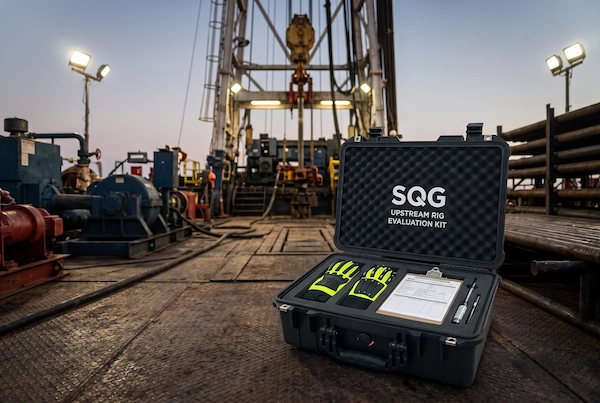
To assist procurement directors of oil and gas field development companies, drilling engineers (Company Men), and the HSE management teams of oilfield service contractors in conducting real-world field testing before large-scale centralized procurement, SQG has officially opened the application channel for the “Upstream Drilling & Workover Trial Kit” directly from the manufacturer.
This trial kit contains two specialized engineering models designed with different protective focuses:
SQG® BM-701: Features a 3D high-density pure cotton ribbed palm and a thickened, impact-resistant TPR exoskeleton, an inner lining featuring a high-performance cut-resistant structure made of a cotton/HPPE/glass composite blend, and is equipped with a polyurethane-reinforced thumb gusset and a form-fitting neoprene sealed cuff; designed specifically for raising and lowering large-diameter casings, operating power wrenches, and cleaning high-risk metal debris from solid control vibrating screens;
SQG® BM-702: Features a heavyweight cotton-polyester blend abrasion-resistant lining and full-back impact protection armor, with high-tensile-strength para-aramid woven patches reinforcing the core stress zones. Specifically designed for workover operations, wireline logging, high-pressure mud pump manifold assembly and disassembly, and frequent towing operations involving high-tensile steel wire rope rigging.
Companies can conduct 14- to 30-day continuous shift practical trial evaluations with their primary drilling crews and on well-servicing rig decks to comprehensively assess the gloves’ self-locking grip strength in heavy oil mud environments, their abrasion resistance against steel wire rope friction and tearing, as well as their fatigue resistance and comfort during prolonged wear.
If you need a customized risk assessment plan for fall protection and slip resistance on your drilling rig, or to directly request a worksite trial kit supplied directly from the manufacturer and technical specifications for bulk purchases, please feel free to contact our industrial technical support team at any time: Request a Worksite Evaluation Kit & Direct Quote.