

Introduction: The Crisis of Premature Failure in Heavy Rigging and Tubular Handling
In heavy-load applications such as heavy lifting at modern ports, mine cableway traction, wireline logging, and the loading and unloading of onshore and offshore oil and gas tubulars, the frequent deployment and retrieval of high-tensile steel wire rope slings and alloy lifting slings have always been the most destructive physical stress points for industrial protective gloves. Frontline riggers and deck operators must, at an extremely high work pace, use their bare hands to untangle thick steel wire ropes, adjust hook knots, and realign heavy-duty metal tubulars suspended in midair. Under prolonged, high-tension sliding friction, on-site PPE commonly falls into a highly paradoxical cycle of abnormal failure: often, the expensive thermoplastic rubber (TPR) impact-resistant armor on the back of the glove remains as good as new, and the base coating on the palms shows only slight wear, yet the first interdigital space between the thumb and index finger—the “thumb crotch” area—is worn through within just two to three work shifts, with stitching splitting and coming apart, and in some cases, the base fabric completely torn through.
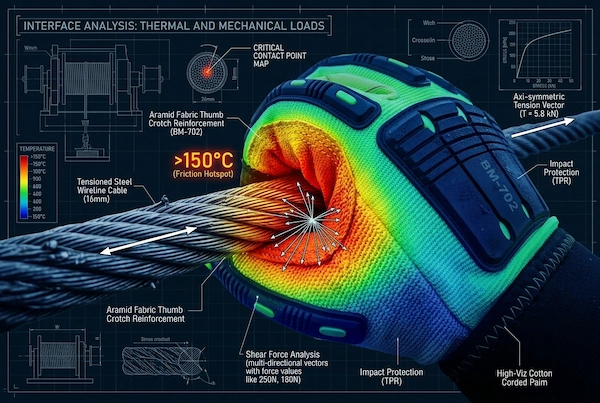
This phenomenon of localized premature wear has completely shattered the balance between cost-effectiveness and safety in traditional work gloves. Since the web of the hand serves as the primary load-bearing pivot point when gripping cylindrical ropes and pipes, when a tensioned steel wire rope under several metric tons of tensile force rapidly slips across the web, the microscopic metal burrs and rust-induced spines on the rope’s rough surface not only generate extremely high multi-axial alternating shear stresses but also instantly accumulate localized contact friction temperatures exceeding 100 degrees Celsius. Standard work gloves typically use only conventional polyester-blend fabrics or ordinary microfiber leather in this narrow area, sewn together with standard nylon thread. Under the dual stress of intense alternating shear forces and transient frictional heat, the nylon stitching rapidly softens and breaks, and the underlying fabric wears through to the skin within a matter of days. Faced with cracked gloves, on-site workers are often forced to take risks by working in violation of safety regulations or to request new gloves at an extremely high frequency. This results in persistently high consumption rates of personal protective equipment (PPE) in industrial and mining enterprises, causing the disposal rate and total cost of ownership (TCO) to spiral out of control.
The key to ending the crisis of localized premature failure in heavy-duty rigging applications lies in reconstructing the physical defense of materials in high-wear areas through microscopic interface engineering. When specifying advanced heavy duty rigging gloves aramid reinforcement serves as the definitive engineering response to this non-uniform, extreme failure mechanics. This design abandons the crude approach of “blindly piling material across the entire palm, resulting in stiff and bulky gloves.” Instead, it innovatively incorporates precision-cut, high-tensile-strength para-aramid woven patches into the curved area of the thumb and web, reinforced with double-stitched seams using high-strength, cut-resistant thread. The unique highly oriented molecular chain structure of para-aramid endows it with an extremely high heat resistance limit and inherent high tear strength, enabling it to effortlessly absorb high-frequency micro-cuts from rough steel cables. Combined with the ANSI Level 2 energy-absorbing impact-resistant exoskeleton covering the back of the hand, this creates a closed-loop heavy industry safety system featuring “localized specialized abrasion resistance + omnidirectional impact cushioning.”
For corporate decision-makers committed to eliminating the risk of wear and tear caused by steel wire rope cuts, reducing the incidence of hand injuries during high-frequency lifting operations, and optimizing the full lifecycle costs of bulk industrial procurement, we invite you to explore our comprehensive industrial heavy-duty protective equipment portfolio and engineering selection guidelines: Impact Resistant Work Gloves.
Rigging Stress Mechanics: Why the Thumb Crotch Fails First Under Cable Tension
In lifting operations such as those at port container terminals, the installation of large steel structures, and the handling of oil and gas piping in the field, mechanical damage to gloves exhibits highly localized failure characteristics. Although the entire glove is under pressure when in contact with the workpiece, the first web (the “thumb crotch,” i.e., the saddle-shaped curved area connecting the thumb and index finger) consistently bears the highest alternating load of the entire palm. Since the thumb must form a closed loop with the other four fingers when gripping, guiding ropes, or holding cylindrical loads, the web between the thumb and index finger naturally becomes the primary geometric fulcrum for transmitting tension and providing sliding resistance.
Multi-Axis Shear Loading and Frictional Heat Concentration in Sling Choking
When performing sling choking or using a winch to pull a rope to haul heavy objects, riggers need to grip the loaded rope tightly with their hands to guide it and make fine adjustments to the tension. Steel wire ropes under tension from loads weighing several metric tons often undergo relative displacement in the rigger’s hands at sudden speeds on the order of milliseconds:
Failure Mechanism of Multi-Axis Alternating Shear Forces:
Rough steel wire ropes are composed of dozens of strands of cold-drawn high-carbon steel wires twisted in an interlaced pattern. As the rope slides over the curved surface of the glove’s web, the uneven spiral twists on its surface subject the fabric to extremely intense bidirectional shear stresses—combining longitudinal tearing and transverse peeling forces. In ordinary gloves, the fabric fibers lack rigid molecular support; as a result, microscopic fiber bundles are rapidly torn and severed by the gaps between the twisted strands, leading to structural loosening from the surface inward.
Transient High-Temperature Concentration and Melting Failure of Synthetic Stitching:
High-speed sliding friction under high loads inevitably involves a dramatic conversion of kinetic energy into thermal energy. Infrared thermal imaging measurements show that when a taut steel wire rope rapidly sweeps across the load-bearing point at the web of the hand, the transient contact temperature on the extremely narrow contact surface can exceed 150°C in a very short time. Conventional protective gloves typically use ordinary polyester or nylon sewing thread, the softening points of these synthetic materials are typically below 180°C. Under sustained frictional heat ranging from 120°C to 150°C combined with tensile stress, they undergo thermoplastic softening and elongation, losing their holding strength and rapidly unraveling, which exposes the underlying fabric and causes it to be instantly abraded through. This is precisely the core material-related reason why professional-grade heavy-duty rigging gloves made of aramid must be specified for high-risk rigging operations.
The Anatomy of Interfacial Seam Delamination Under Tubular Torque
In addition to linear sliding wear on steel wire ropes, when lifting and aligning large-diameter drill collars, drill pipe joints, and heavy-duty industrial pipes, workers’ hands must also counteract the off-center torque generated by the swaying of the tubulars:
The leverage point where the self-weight-induced off-center torque is concentrated:
When heavy metal pipe strings suspended in mid-air are subjected to slight mechanical vibrations or wind loads, they undergo unpredictable rotation and lateral sway around their center of gravity. To align the threaded ends with the coupling, workers must spread their hands apart to apply a counter-rotational torque. At this point, the rest of the palm can only provide frictional resistance due to the curved surface contact, while the entire counter-rotational torque from the pipe’s own weight is forcibly concentrated at the saddle-shaped seam inflection point at the base of the thumb.
Microcrack Propagation at the Interface and Catastrophic Tearing of the Base Fabric:
In traditional glove seam construction, the web of the hand is typically where the palm fabric meets the back-of-hand fabric along the edge stitching. When enormous rotational torque is forcibly concentrated in this chamfered blind spot, the differing elastic moduli of the inner and outer layers of the seam material lead to stress concentration. Under repeated shear, torsion, and pulling forces, microscopic cracks first form at the stitching holes, then rapidly propagate along the fabric’s warp and weft threads toward the palm, resulting in catastrophic interfacial seam delamination. Once the base fabric is directly torn apart by the torque, the worker’s palm skin will be completely unprotected against the high-speed, vibrating, cold metal pipe wall, making it highly susceptible to deep lacerations or acute strains of the collateral ligaments.
Material Science of Para-Aramid: Thermal Stability and Tensile Shear Resistance
Under extreme operating conditions involving high-frequency friction between heavy-duty lifting slings and high-tensile steel wires, a material’s wear resistance depends not only on surface hardness but also on the molecular stability of the polymer under combined high-temperature and high-shear stresses. While ordinary polyamide (nylon) or polyester fibers exhibit acceptable tensile properties at room temperature, their thermoplastic polymer chains rapidly break down when subjected to high-speed sliding friction against rough steel cables. The physical basis for why professional-grade heavy-duty aramid rigging gloves demonstrate a service life far exceeding that of conventional personal protective equipment in high-risk rigging operations lies in the unique molecular topology and thermodynamic defense characteristics of para-aramid.
Carbonization Threshold vs. Polymer Melting Under Cable Friction
The most fundamental distinction between traditional polymers and specialty aromatic polyamides lies in the thermal behavior of their molecular chains when subjected to heat generated by sliding dry friction:
The Melting Point Bottleneck of HPPE and Conventional Polymers: The melting point of ultra-high-molecular-weight polyethylene (HPPE) typically ranges from 130°C to 136°C. Once a loaded steel wire rope undergoes relative slippage within the palm, the transient friction flash temperature rapidly exceeds the critical point, causing the fibers to soften or even melt, resulting in the loss of their original tensile strength. After cooling, the material becomes highly prone to hardening and brittle fracture, rendering the protective layer completely ineffective;
The Mechanism of High-Temperature Carbonization Without a Melting Point in Para-Aramid: Para-aramid is a rigid-chain polymer with a high-density network of hydrogen bonds between molecular chains, and it does not possess the melting point characteristic of traditional thermoplastics. Its thermal decomposition temperature exceeds 450°C. Even under extreme conditions of continuous sliding friction, the material bypasses the liquid phase entirely and enters a gradual carbonization stage, completely avoiding melting, dripping, and plastic hardening. This maintains the integrity of the mesh fabric structure while eliminating the risk of severe secondary injuries caused by the material melting and adhering to the skin.
Highly Oriented Molecular Chains and Transverse Abrasion Cohesion
Physical damage to the surface of steel wire ropes is typically not caused solely by axial tension, but rather by micro-cutting and transverse delamination resulting from fine broken wire burrs (Jagger Wires)—formed by strand loosening and corrosion—under high-frequency motion:
Highly Oriented Crystal Lattices Hinder Micro-cutting Propagation: In para-aramid fibers produced via liquid crystal spinning, the molecular chains are highly uniformly oriented along the fiber axis. Their tightly packed crystal lattices rapidly disperse shear stress when fine steel wire burrs penetrate the fiber bundle, thereby suppressing the transverse propagation and penetration of cracks;
Excellent Lateral Bonding Strength and Resistance to Defibration: The interior of aramid yarn exhibits extremely strong microscopic cohesion, enabling it to effectively withstand repeated abrasion from the rough, oxidized scale on the surface of steel wire ropes and prevent microscopic delamination caused by continuous friction. The fabric at the thumb gusset of the gloves does not become loose or frayed due to high-frequency tugging, nor does it experience localized breaks in warp or weft threads, significantly delaying the fatigue-induced disintegration of its physical structure.
For heavy-duty steel wire rope operations and drilling conditions, focusing solely on fabric abrasion resistance is far from sufficient; protection for the back of the hand is just as critical as the mechanical rating for the palm. For information on testing criteria and classification differences for impact-resistant gloves in various mechanical hazard scenarios, please refer to the technical feature: ANSI/ISEA 138 vs. EN 388 impact standards.
Anatomical Reinforcement Engineering: Designing the Ergonomic Crotch Shield
In the research and development of heavy-duty protective gear, material selection accounts for only half of the physical protection; the other half depends on the integration of structural engineering with human anatomy. Although many low-end impact-resistant gloves claim to use abrasion-resistant reinforcement fabric, they often simply and crudely sew a square, stiff, thick pad onto the web of the hand. This patchwork design, which lacks ergonomic consideration, causes severe bulging and multiple layers of dead folds on the inner side of the web when workers grip cylindrical rigging lines or tool handles. Not only does this drastically increase gripping resistance and lead to premature fatigue of the forearm muscles, but the protruding folds also become a hazard, concentrating wear on steel wires and creating a risk of mechanical entanglement. In terms of structural design, professional-grade heavy-duty aramid rigging gloves must transform the abrasion-resistant shield into a three-dimensional protective layer that closely conforms to the anatomical flexion and extension of the palm.
Contoured Patch Geometry: Eliminating Pinch Creases and Bunching
When the human hand transitions between an open (abducted) position and a clenched (flexed) position, the skin in the first interdigital space undergoes extreme stretching and folding. Conventional flat-weave reinforcement patches cannot independently adapt to this three-dimensional, nonlinear deformation, inevitably causing fabric bunching at the moment of closure:
Bionic 3D Saddle-Shaped Curved Cut:
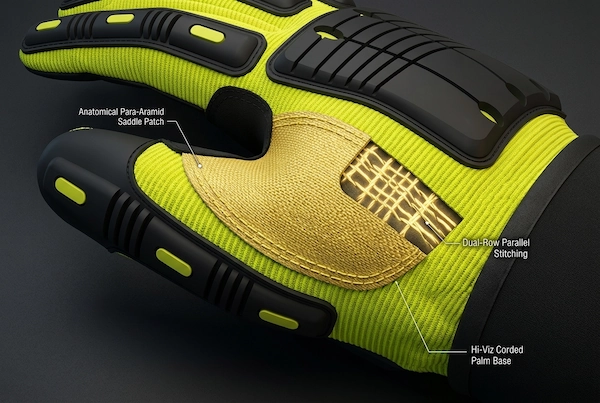
The thumb web reinforcement patch is cut with a directional, three-dimensional design based on the dynamic curvature of the saddle-shaped carpometacarpal joint in the hand’s anatomy. The edges of the patch feature a gradually flaring, curved transition, precisely covering all high-risk, blind spots prone to abrasion—from the lateral edge of the proximal phalanx of the thumb and the first metacarpal bone to the area just below the lateral side of the second metacarpophalangeal joint of the index finger. When the palm is in a natural, semi-flexed gripping position, the reinforcement patch conforms perfectly to the contours of the hand’s skin, achieving gap-free coverage.
Elimination of Pinch Folds and External Protrusions:
By adjusting the cross-section of the reinforcement patch along the slight indentation of the palmar arch, excess fabric buildup and pinching on the inner side of the web of the hand—which occurs when workers grip steel cables or pipe tools tightly—is completely eliminated. The flat, smooth contact surface prevents blisters caused by localized stress-induced creases on the worker’s skin. More importantly, it eliminates the risk of mechanical entanglement—where protruding fabric folds might accidentally get caught by the teeth of rotating equipment, crane pulleys, or burrs on steel wire ropes—ensuring that the rigging slides smoothly and seamlessly through the web of the hand.
Dual-Needle Aramid Thread Stitching: Preventing Delamination
Under conditions of continuous heavy-load dragging and lateral shearing, even if the patch itself has not been worn through, the breakage and delamination of the edge stitching can still cause the entire protective layer to fail and peel away instantly. The sewing process must possess mechanical thresholds for heat resistance and cut resistance equivalent to those of the aramid fabric:
Specialized high-strength para-aramid sewing thread:
Nylon or polyester threads, which have extremely poor heat resistance, are eliminated. The knuckle reinforcement areas are entirely sewn with filament para-aramid sewing thread featuring high tensile strength and high maximum twist. This thread inherits the properties of aramid fibers—including resistance to melting, gradual carbonization at high temperatures, and excellent shear resistance. When exposed to high temperatures caused by friction from high-speed steel wire rope sliding, the thread will not soften, stretch, or become brittle and break due to charring, thereby securing the sewn structure at its source.
Dual Parallel Lockstitching and Fault-Tolerant Stress Redundancy Architecture:
The perimeter of the reinforcement patch is sewn using a precision CNC dual-needle parallel lockstitching process (Dual-Needle Parallel Stitching). The inner and outer rows of stitches maintain a constant, minimal spacing, and the stitch density is strictly maintained within a high-toughness range. When exposed to lateral scraping from sharp protrusions caused by broken strands in corroded steel cables, even if the outermost surface stitching suffers a localized single-point break due to extreme external force, the inner parallel second layer of independent structural stitching remains firmly anchored to the base fabric, preventing the tear from spreading laterally. This dual-track fault-tolerant mechanism ensures that the thumb guard remains tightly bonded to the palm base composite layer throughout the glove’s entire lifecycle, eliminating premature failure caused by seam failure.
Dynamics of Heavy Tubular and Pipe Handling: Integrating Grip with Abrasion Protection
In lifting operations and the field handling of oil and gas tubulars, the challenges faced by gripping tools are often not merely static abrasion resistance, but rather the simultaneous execution of “torsional braking” and “fluid expulsion” under dynamic instability conditions. When large-diameter, thick-walled casing, weighted drill pipes, and heavy-duty drill collars are suspended in mid-air by lifting hooks or pipe-handling manipulators for transport, the metal pipe walls are not only subject to unpredictable swaying and off-center loads but are also often coated with thick layers of grease, rust-preventive oil, or recirculated oil-based drilling mud. Traditional rigging gloves either focus solely on slip resistance—only to have the web of the hand worn through by rough pipe walls within hours—or rely solely on thick, rigid leather, which fails to disperse oil films and results in fatal slippage. Professional-grade heavy-duty aramid rigging gloves achieve a dual coupling of “high torsional shear resistance” and “three-dimensional fluid-draining grip” at the hand’s mechanical interface.
Torsional Resistance When Guiding Suspended Casing and Drill Collars
When large pipe strings undergo low-frequency oscillations in the air due to crane boom movement, wind loads, or slight vibrations from the pipe-handling rails, their inertial kinetic energy is immense. To precisely guide the lower threads into the wellhead or align them with the stacking rack, operators must extend both hands to grip the pipe wall and apply lateral guiding thrust and counter-rotational torque:
Protection of the Guidance Pivot Point Against Self-Weight-Induced Torque:
At the moment the string sways and rotates, the remaining four fingers of the hand can only provide auxiliary friction, while the majority of the counter-rotational inertial torque directly impacts the base of the thumb and the gap between the first metacarpal and phalanx with extremely high concentrated stress. The para-aramid woven patch functions here as high-strength “anti-torsion mechanical armor.” By leveraging aramid’s extremely high tensile modulus and tear resistance, it evenly distributes the concentrated rotational stress—which would otherwise directly tear the glove’s seams—to the base of the thenar muscle group, eliminating the failure mode where ordinary base fabrics are violently torn open during pipe string torsion and slippage.
Biomechanical Alignment and Ulnar Collateral Ligament Protection:
When the palm is subjected to sudden lateral torsional recoil, the ulnar collateral ligament at the thumb metacarpophalangeal joint is highly susceptible to acute sprains or tears due to excessive abduction. The ergonomically tailored three-dimensional aramid shield forms a physiologically angled, limiting and cushioning ramp at the web of the hand. Using high-rigidity fabric, it restricts the thumb’s extreme deformation when subjected to rotational impact from the pipe column, absorbing and dissipating violent lateral impact torque to provide critical biomechanical support for the worker’s finger bones and ligament tissues.
Fluid Drainage and Capillary Interlocking on Greased Steel Cables
In addition to withstanding rigid impacts and torsional tearing, when frequently gripping lifting wire rope slings saturated with heavy-duty anti-rust grease, open-gear lubricant, or thick crude oil, the interface must be capable of instantly breaking through the oil film:
Fluid Film Breakthrough and Capillary Self-Priming on the Rope-Weave Cotton Palm:
The main palm area of the glove features a 3D, high-density, natural cotton rope-weave structure. The moment the palm grips the steel wire rope with force, the semicircular, raised high-density cotton strands concentrate the gripping force along an extremely narrow contact line, instantly cutting through the viscous fluid lubricant film adhering to the wire surface; The fragmented, thick grease is squeezed into microscopic drainage channels between adjacent rope-textured strands and expelled outward. Simultaneously, the microtubules within the natural cotton fibers rapidly absorb the residual microscopic oil film through a strong capillary self-priming effect, enabling direct dry contact and interlocking between the rough metal peaks and the fiber bundles.
Mechanical Topological Integration of a High-Visibility Palm and a High-Tensile Thumb Gusset:
The highly visible fluorescent yellow pure cotton corded palm and the dark para-aramid thumb gusset are seamlessly mechanically joined using double rows of high-strength stitching. This structure not only provides wet static friction in the core palm area that is several times greater than that of traditional rubber-coated gloves but also ensures the thumb gusset maintains long-lasting abrasion resistance when subjected to high-frequency, intense friction from rough steel cables. For an in-depth understanding of the physical mechanisms of fluid drainage in high-viscosity non-Newtonian fluid environments and the heavy-duty impact-resistant structure on the back of the hand, please refer to the technical analysis: Corded Palm Oil and Gas Gloves.
Biomechanical Energy Dissipation: TPR Armor Under Rigging Recoil
During heavy-duty lifting operations, rigging, and the loading and unloading of large-diameter pipes, the hands face life-threatening hazards not only from severe sliding abrasion caused by steel wire ropes but also from high-kinetic-energy mechanical impacts. When heavy-duty open-face pulleys (snatch blocks), forged alloy steel shackles, and hooks become unstable and swing while suspending loads, even the slightest displacement can trigger violent metal recoil. Under millisecond-level transient impacts, gloves lacking rigid cushioning on the back of the hand are virtually useless. Professional-grade heavy-duty rigging gloves feature aramid fabric at the web to withstand severe shear wear, while the back of the hand and full-joint areas of the fingers are reinforced with high-energy-absorbing thermoplastic rubber (TPR) exoskeleton armor, completely neutralizing the recoil kinetic energy of heavy-duty rigging at its biomechanical source.
Impact Attenuation During Snatch Block and Shackle Impact
When threading steel wire ropes through lifting pulleys or manually fastening heavy-duty bow shackles, riggers’ hands are often positioned within extremely narrow mechanical gaps. Should the crane trolley shift slightly, the steel wire rope suddenly tighten, or the suspended load experience an off-center load causing it to jerk, the pulley housing—weighing tens of kilograms—or the heavy shackle may strike the back of the worker’s hand at extremely high terminal velocity:
Multi-stage, stepped damping deformation and impact pulse extension:
The back-of-hand armor is not a solid rubber block, but rather a topologically engineered structure that integrates porous damping micro-chambers and multi-faceted load-bearing protrusions. When a heavy-duty shackle strikes violently, the external high-elasticity TPR protrusions first undergo large elastic deformation to absorb the initial kinetic energy of the pulse, followed immediately by the controlled collapse of the internally designed micro-damping cavities. This forces the transient peak impact wave—which would otherwise be concentrated and released within 2 to 3 milliseconds with forces reaching thousands of newtons—to be extended into a gradual release cycle lasting 10 to 15 milliseconds or more, significantly reducing the peak impact load transmitted to the subcutaneous bones.
Anisotropic Energy Lateral Diversion and Metacarpal Unloading:
The base layer of the armor features transverse rigid force-guiding ribs arranged to follow the anatomical contours of the back of the hand. When subjected to a heavy vertical impact from directly above, the exoskeleton utilizes a shear stress diffusion mechanism to forcibly convert the lethal downward pressure—which would otherwise strike the second through fifth metacarpal bones and metacarpophalangeal joints— into lateral shear components that are dispersed toward the well-padded areas on both sides of the back of the hand and the lateral margins of the palmar arch. This completely prevents transverse comminuted fractures of the metacarpal bones and joint capsule rupture and dislocation, achieving the ANSI/ISEA 138 Level 2 heavy-load impact protection rating.
Shore A Hardness: Balancing Impact Absorption and Hand Dexterity
During outdoor lifting operations in harsh weather, at deep-water docks, or at polar mining sites, ambient temperatures often plummet to several dozen degrees below zero. Many conventional impact-resistant gloves use inexpensive polyvinyl chloride (PVC) or low-quality injection-molded plastic strips, which quickly harden and become brittle in extremely cold conditions. Not only do they lose their impact-absorbing and rebound properties, but they also make the entire glove as stiff as a sheet of metal, forcing workers to violate safety protocols by removing their gloves to operate small rigging tools.
High-performance lifting impact-resistant equipment establishes a precise formulation balance between polymer science and ergonomics:
A low-temperature-resistant modified formulation eliminates cold-induced brittleness:
The TPR exoskeleton utilizes a specially formulated engineering-grade thermoplastic elastomer base material, with its Shore A hardness strictly controlled within a balanced range. By incorporating cold-resistant, toughened polymer segments, the armor maintains an extremely low glass transition temperature across a wide temperature range from -30 degrees Celsius to room temperature. During field operations in extreme cold, the exoskeleton never hardens, cracks, or breaks due to brittleness, ensuring that every metal impact is fully absorbed by the rubber’s high elasticity and toughness.
Hinge-Style Bionic Grooves Eliminate Grip Resistance:
Along the flexion-extension axes of the proximal and distal interphalangeal joints of the fingers and the dorsal and palmar arches of the hand, the exoskeleton features precision-molded, evenly spaced bionic flex grooves (Flex Grooves). When workers clench their fists to grip steel wire rope slings or tighten bolt shackle pins, the individual armor modules slide and fold unimpeded along the grooves, minimizing resistance to hand flexion to an absolute minimum. Even during high-intensity rigging operations lasting several hours, the worker’s forearm flexors and extensors do not experience muscle spasms or fatigue-induced weakness from prolonged resistance against the exoskeleton’s rigidity, allowing for highly sensitive control of heavy-duty tools.
For an in-depth understanding of the dynamic energy conversion model of the micro-damped honeycomb topology when absorbing high-mass, low-speed, heavy-load impacts, please refer to the materials engineering analysis: TPR exoskeleton engineering.
Quantitative Lifecycle & TCO Matrix: Aramid Shield vs. Standard Rigger Gloves
In procurement for port loading and unloading, heavy-duty rigging projects, and oilfield service lifting operations, many companies’ procurement processes are often misled by the initial purchase price. Procurement managers tend to favor standard leather gloves or conventional non-reinforced gloves with seemingly lower unit prices, while overlooking the high premature failure rate of such equipment under frequent friction with steel wire ropes. To avoid the trap of low-price procurement, the SQG Laboratory, in collaboration with on-site lifting crews, conducted long-term abrasion resistance tests and comprehensive total cost of ownership (TCO) calculations for three mainstream protective configurations—both on a controlled high-tension wire rope abrasion test bench and during actual deck lifting operations.
Controlled Cable Abrasion and Total Cost of Ownership (TCO) Data
Using a controlled cyclic wear testing machine in the laboratory, we simulated the reciprocating abrasion of a 19-millimeter high-tensile steel wire rope on the jaw area under conditions of constant downward pressure and continuous slippage. By combining this data with actual wear data from various shifts on offshore crane decks, we compiled a summary of key mechanical and cost metrics:
| Performance Metric | SQG® BM-702 (Aramid Crotch) | SQG® BM-701 (PU Crotch) | Standard Leather / Synthetic Rigger |
| Thumb Crotch Reinforcement | Heavy Para-Aramid Fabric Patch | PU-Coated Synthetic Leather | None (Base Leather / Microfiber) |
| Crotch Stitching Thread | Dual-Row Kevlar/Aramid Thread | Reinforced Poly Thread | Standard Single-Row Nylon Thread |
| Frictional Heat Tolerance | Continuous 400°C / Flash 450°C | Continuous 90°C / Melts at 120°C | Melts / Degrades at 100°C – 130°C |
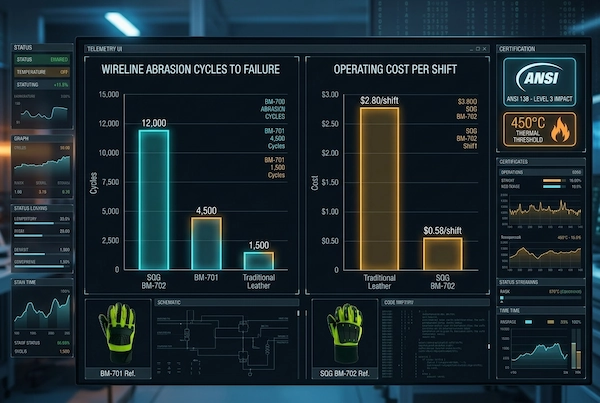
| Abrasion Cycles to Crotch Failure | 12,000+ Cycles (Wireline Chafing) | 4,500 Cycles (Wireline Chafing) | 1,200 – 1,800 Cycles (Seam Blowout) |
| Field Lifespan on Rigging Decks | 24–32 Operating Shifts | 10–14 Operating Shifts | 3–5 Operating Shifts |
| Palm Grip Medium | 3D High-Visibility Corded Cotton Palm | 3D Hi-Viz Corded Cotton Palm | Smooth Leather / Light Dip |
| Impact Protection Class | ANSI/ISEA 138 Level 2 | ANSI/ISEA 138 Level 2 | Unrated or Level 1 Pad |
| Calculated PPE Cost per Shift | $0.58 per Shift (High TCO Yield) | $1.15 per Shift (Balanced) | $2.80 per shift (High Waste / Failure) |
From the quantitative data matrix, several key conclusions regarding industrial procurement and safety management can be clearly drawn:
A significant leap in wear life and resistance to frictional heat:
When conventional leather or microfiber rigging gloves are subjected to steel wire rope friction, the single layer of nylon stitching rapidly melts and softens under frictional heat ranging from 100°C to 130°C, seams rupture after only 1,200 to 1,800 abrasion cycles, rendering them completely unusable after typically 3 to 5 shifts on a crane deck. In contrast, the SQG® BM-702—equipped with heavy-duty para-aramid woven patches and dual rows of aramid cut-resistant threads—leverages its continuous 400°C, transient 450°C, directly extend the abrasion cycle life to over 12,000 cycles. Field-tested service life is extended to 24 to 32 work shifts, with a service cycle 6 to 8 times longer than that of traditional gloves.
A fundamental shift from unit purchase price to total cost of ownership (TCO) per shift:
Although traditional gloves have a low initial purchase price, their extremely high replacement frequency and material waste result in a per-worker, per-shift wearing cost of up to $2.80, accompanied by frequent warehousing and material issuance burdens as well as potential risks of work-related injuries and downtime; In contrast, while the professional-grade heavy-duty aramid rigging gloves (SQG® BM-702) have a slightly higher initial unit price, their extended wear life reduces the total cost per shift to $0.58—a reduction of nearly 80%. With only a minimal increase in manufacturing costs for localized ergonomic reinforcements, these gloves completely resolve the long-standing issues of high glove attrition and uncontrolled costs faced by heavy industry enterprises.
Workstation Deployment: Matching Crotch Configurations to Industrial Hazards
In large-scale infrastructure projects, heavy-lift operations at ports, and deep-well oil and gas development, hand protection cannot be discussed in abstract terms without considering the specific hazards at each workstation. Many industrial safety management teams attempt to use a single glove model to cover the entire workflow, often resulting in rapid abrasion through the web of the hand at winch stations and puncture and laceration injuries from broken metal wires during the cleaning of solid control screens. To address the multidimensional mechanical hazards throughout the entire chain of heavy manufacturing and lifting operations, establishing a scientific “Tiered Workstation Deployment” model—where specialized para-aramid reinforcements and advanced composite cut-resistant liners each fulfill their specific roles—is the necessary path to achieving zero personal injuries at the worksite and controlling costs across the entire lifecycle.
Mobile Crane Rigging, Wireline Winches, and Well Servicing: SQG® BM-702
In mobile truck crane lifting operations, heavy-load rigging for crawler cranes, wireline winch operations, and oilfield well servicing, the primary mechanical threats to workers stem from prolonged, high-frequency friction against rough surfaces and damage caused by alternating tensile forces. When riggers handle taut steel wire ropes under tensions of several metric tons, adjust hook latches, or assemble flange bolts between high-pressure manifold connections on mud pumps, the gap between the first web of the glove (the “thumb-index finger joint”) consistently serves as a high-load sliding guide point:
The high-strength para-aramid “thumb-index finger joint” heavy shield eliminates localized tears:
The flagship model SQG® BM-702, designed specifically for high-abrasion lifting applications, features a custom-sewn, high-tensile-strength para-aramid woven patch (Heavy Para-Aramid Fabric Patch) in the critical saddle-shaped abrasion zone where the thumb and index finger meet. Combined with a high-temperature-resistant double-row para-aramid stitching process, this design pushes the friction-induced flash-point limit in this area beyond 400 degrees Celsius. It effectively prevents thread melting and base fabric delamination caused by repeated scraping against rough steel wire ropes, thereby eliminating the persistent problem of premature cracking and failure in traditional rigging gloves that typically occur within just a few shifts;
Thickened cotton-polyester blend base fabric and 3D rope-textured self-locking grip:
The glove lining features a heavyweight interwoven structure of natural cotton and high-strength polyester, offering both excellent tensile elasticity and mechanical tear resistance against fatigue; The high-visibility 3D rope-textured all-cotton structure on the palm breaks through the slippery film when gripping ropes and tubular equipment coated with heavy grease and crude oil, establishing a secure, non-slip grip. Combined with the ANSI Level 2 damping TPR exoskeleton covering the back of the hand, it comprehensively mitigates the lateral crushing impacts caused by sling sway.
Drill Floor Casing Runs and Solids Control Shaker Screens: SQG® BM-701
When working on the drill floor during large-diameter casing runs, power-head hoist operations, and solids control system operations, the physical hazards faced by hands shift from “pure friction and wear” to extremely dangerous “high-risk sharp cutting and puncture injuries.” During frequent splicing and hoisting of large-diameter casing, the pipe walls are coated with high-viscosity oil-based mud; meanwhile, in front of the mud shaker, the raised metal filaments from damaged high-mesh stainless steel screens are extremely sharp and can easily pierce ordinary fabric, lacerating the deep tendons in workers’ fingers and palms:
A composite cut-resistant liner builds a robust shield against cutting and piercing:
The SQG® BM-701, a counterpart model specifically designed to withstand flying metal shards from broken wires, incorporates an inner layer of electronic-grade ultra-fine glass fibers and a multi-strand, twisted-pair high-molecular-weight polyethylene (HPPE) liner. This elevates the hand cut-resistance rating to ANSI Levels A4 to A5, effectively blocking penetration by high-frequency metal burrs and debris;
Fluid-Draining Ribbing and PU-Reinforced Defense Work in Synergy:
The three-dimensional ribbed cotton outer shell on the palm rapidly achieves physical liquid drainage and self-locking when saturated with heavy oil slurry, while the thumb and web area features multiple layers of scratch- and abrasion-resistant polyurethane (PU) reinforcement stitching. This design not only provides the mechanical strength required to resist slippage and tearing during casing run-in but also offers reliable comprehensive protection against cuts and punctures in high-risk oil-water mixed work environments.
Facility Machine Operations: High-Tonnage Stamping and Precision Maintenance
When work routes shift away from outdoor sites with heavy-duty rigging and heavy fluid exposure—and toward automated machining shops, vehicle chassis maintenance facilities, and large-scale metal stamping plants at the rear of the facility—the environment no longer contains large amounts of free oil and water. Consequently, the focus in glove selection shifts from “coarse-weave rope patterns for liquid drainage” to “ultra-thin, high-cut-resistance” gloves and “millimeter-level tactile feedback.” Safety managers must categorize glove selection based on the geometric layout of workstations and mechanical hazards to prevent the continued use of bulky lifting gloves during dry workshop processes:
High-tonnage cold stamping and heavy-duty sheet metal blanking stations:
In processes such as the blanking and forming of large cold-rolled automotive sheet metal, plasma CNC cutting, and metal blank stacking, the primary risks to workers stem from high-speed cuts by hard metal burrs and crush injuries caused by the springback of large sheet metal panels. In these situations, workers should switch entirely to heavy-duty protective gloves specifically designed for stamping, featuring an 18-pin ultra-dense tungsten alloy liner and a highly cross-linked wear-resistant coating. For detailed engineering evaluations, refer to the technical feature: ANSI A7 impact gloves. The core model for these applications is the MAXGUARD® K7-682;
Maintenance in the engine compartment’s narrow crevices and precision wiring harness connections:
When connecting micro-cable connectors, securing chassis sensors, or assembling small, precision bolts in the confined space of the engine compartment, work efficiency relies entirely on fingertip tactile sensitivity. In such situations, the assembly-grade MAXGUARD® K4-278—featuring an overall base thickness of less than 0.8 millimeters and equipped with lightweight, low-friction biomimetic armor—should be selected. This product prevents workers from violating safety protocols by working without gloves while providing basic back protection against impacts and ensuring flexible handling.
Technical FAQ: Wireline Chafing, Washing Durability, and Glove Replacement
In equipment management for port loading and unloading, mining cableway operations and maintenance, and oilfield workover sites, many safety managers and procurement engineers often face technical concerns from frontline crews and finance departments when implementing aramid-reinforced lifting gloves: Why do the gloves always wear out at the web first? Will aramid stitching really not burn through when exposed to high-speed steel wire ropes? Will industrial cleaning after heavy oil contamination cause the aramid to become brittle and fail? At what exact level of wear must gloves be mandatorily retired?
Combining friction and wear test data from the SQG Materials Mechanics Laboratory with frontline feedback from large-scale lifting sites both domestically and internationally, we provide in-depth technical answers to four core concerns regarding heavy-duty rigging gloves with aramid: mechanical failure mechanics, thermal barrier principles, washing and maintenance, and quantified retirement standards.
Why does the thumb crotch fail so much faster than the palm during rigging tasks?
Many safety officers are often puzzled: Since the palm of the glove clearly has a larger surface area exposed to force, why is it always the thumb crotch that wears through first? This seemingly anomalous wear pattern is determined by a combination of human grip ergonomics and the geometric characteristics of interfacial contact friction:
An extremely small contact curvature radius leads to a sudden increase in pressure:
When pushing or supporting a flat surface or a large object, the contact surface is relatively flat, and the normal pressure is distributed over a large area. However, when gripping or pulling cylindrical steel wire ropes or lifting slings, the cable digs deeply into the first interdigital space (saddle-shaped groove) between the thumb and index finger. The extremely small contact radius of curvature on the inner side of the thumb-index finger gap causes the heavy tensile load to be highly concentrated along a narrow linear contact band, resulting in local transient normal contact pressures that are typically several times higher than those experienced by the palm;
High Concentration of Multidirectional Composite Shear Stresses:
When workers guide steel wire ropes or stabilize swaying metal pipes, the fabric must not only withstand longitudinal tensile shear forces along the axis of the steel wire rope but also lateral torsional shear stresses caused by the rotation of the workpiece. These bidirectional alternating shear stresses create a stress concentration zone at the bending inflection point of the first mesh gap, causing microscopic fatigue relaxation to occur at an extremely rapid rate at the warp and weft knots of conventional fabric substrates;
Heat generated by sliding friction cannot dissipate naturally:
While the palm typically experiences alternating contact and separation gaps when pushing the pipe, allowing heat to dissipate easily, the thumb and index finger area remains in constant, tight contact when pulling and tensioning the steel wire rope. High-frequency sliding friction against the rough steel cable instantly generates a large amount of frictional heat in the contact area. The tightly sealed interface prevents this heat from dissipating into the air, thereby creating localized high-temperature zones within a very small area and accelerating the thermoplastic degradation and mechanical wear of the underlying fibers.
How does para-aramid prevent thread burnout during high-speed cable slippage?
When a hoisting winch rapidly winds or unwinds a steel wire rope, or when a rigging under load suddenly slips, the friction generates extreme heat. The “thread breakage and detachment” commonly observed on-site is essentially a thermal melting failure of the sewing thread under the combined effects of high temperature and high shear stress:
The softening and melting process of traditional polymer sewing threads:
Most polyester or high-elasticity nylon sewing threads used in ordinary industrial gloves are typical thermoplastic materials, with softening points typically around 180 degrees Celsius and melting points ranging from only 220 to 260 degrees Celsius. When a loaded steel wire rope slides across the glove surface at high speed, the flash temperature at the point of contact often exceeds 150 degrees Celsius within milliseconds. At this point, the polyester or nylon molecular chains rapidly undergo thermal relaxation, softening and elongating; subsequently, under the resulting transverse shear stress, they instantly melt and tear away, causing the seam edges to burst open and fray within seconds;
The Rigid Skeletal Structure of Para-Aramid Molecules and Their Non-Melting Flame-Retardant and Thermal Insulation Properties:
Para-aramid (such as the commonly known Kevlar-like structure) is an aromatic main-chain polymer whose molecular chains consist of highly rigid para-phenylene rings linked by amide bonds, with a dense network of conjugated hydrogen bonds between molecules. Para-aramid does not undergo the phase transition of melting when heated, as seen in traditional thermoplastics; its thermal decomposition and carbonization threshold exceeds 450 degrees Celsius, giving it excellent solid-state thermal stability and flame-retardant, self-extinguishing properties. When faced with rough steel cables undergoing high-speed slippage, specialty aramid sewing thread does not become sticky or soften and stretch. Instead, it relies on the strong lateral bonding force of highly oriented molecular chains to tightly lock the stitches in place, thereby eliminating the physical risk of thread breakage due to high-temperature ablation.
Can gloves with aramid-reinforced crotches be laundered without losing abrasion resistance?
Due to frequent contact with lubricating grease, heavy-duty gear oil, and splashing crude oil slurry, lifting gloves are highly susceptible to becoming caked with heavy oil residue. Some on-site managers worry that washing the gloves will compromise the physical abrasion resistance of the aramid patches, so they treat them as short-term consumables and discard them immediately. In fact, para-aramid offers excellent resistance to chemical media and repeated washing. As long as standard industrial cleaning procedures are followed, the gloves can be reused for multiple cycles:
Industrial Cleaning and Degreasing Specifications:
When cleaning gloves saturated with heavy oil stains, it is recommended to use a neutral, heavy-duty industrial degreaser or a specialized eco-friendly hydrocarbon-based surfactant. Wash the gloves in a low-speed industrial drum washer using warm water at 40 to 50 degrees Celsius (recommended wash time: 20 to 30 minutes), followed by moderate spin drying; After washing, the gloves should be placed in a dry, well-ventilated area to air dry naturally, or gently dried in an industrial low-temperature drying oven set below 60 degrees Celsius. The use of high-concentration, strongly alkaline detergents or bleach containing free chlorine is strictly prohibited, as is drying over high-temperature direct flame or with high-pressure steam, to avoid damaging the elastic damping structure of the TPR armor on the back;
Wash Stability of Aramid Fiber Pores:
The abrasion resistance of para-aramid materials stems from their highly crystalline molecular framework and does not rely on externally applied chemical additives. Aqueous environments and conventional organic degreasing solvents do not cause swelling or hydrolytic breakdown of the aramid polymer lattice. After 8 to 12 standard industrial degreasing washes, the microscopic frictional grip and transverse shear resistance of the aramid patches against the ribbed pure cotton palm surface show virtually no degradation, significantly reducing the total annual expenditure on equipment and material wear and tear in industrial and mining enterprises.
When should an aramid-reinforced rigging glove be officially retired and replaced?
To prevent front-line workers from continuing to wear gloves that pose safety hazards due to excessive cost-cutting, or from prematurely discarding equipment that still provides adequate protection due to a lack of evidence, the EHS department must establish clear, actionable, and quantifiable criteria for determining when to retire equipment on-site. When a glove exhibits any of the following critical signs of damage, it must be immediately and mandatorily retired and replaced with new equipment:
Penetration of the load-bearing patch at the web:
If the para-aramid patch itself has been severely abraded by burrs on steel wire ropes, resulting in a hole with a diameter exceeding 5 millimeters, or if the abrasion has penetrated the aramid fabric, completely exposing the inner base layer, the glove must be mandatorily taken out of service;
Cracking or detachment of critical load-bearing stitching:
If a continuous tear exceeding 15 millimeters in length occurs in the double row of aramid reinforcement stitching along the edge of the thumb gusset patch, or if a single-point break occurs simultaneously in both parallel rows of stitching, causing the patch to curl up over a large area (and fail to lie flat against the saddle-shaped area of the thumb), the glove must not be used for rigging and lifting operations;
Structural failure of the TPR cushioning exoskeleton on the back of the hand:
If the impact-resistant armor on the back of the hand and at the finger joints develops a deep, penetrating crack (exceeding 50% of the armor’s thickness) after being struck by a heavy object, or if the independent impact-resistant rubber blocks exhibit delamination affecting two or more consecutive fingers, this indicates that the porous damping microchambers and the force-dispersing framework have suffered physical damage, resulting in a severe decline in impact resistance. The entire glove must be retired and scrapped;
Penetration of the Palm Liner Fabric:
If the 100% cotton ribbed base fabric of the palm is severely damaged to the point of penetrating the worker’s skin, or if the cut-resistant fiber bundles in the lining are completely severed and have lost their puncture-resistant capability, this indicates that the glove’s fundamental physical barrier has failed. Continued use is strictly prohibited.
Rigging Safety Field Audits & Enterprise Evaluation Kit (CTA)
In heavy-load lifting operations, mining material ropeways, and field well maintenance operations, selecting gloves based solely on technical specifications on paper or routine sample comparisons often fails to address the harsh and complex wear variables encountered on the front lines. The alternating shear forces generated when tightening knots on rigging of different tonnages, the minute burrs on wire rope surfaces caused by prolonged lack of lubrication or corrosion, and the rotational torque resulting from the low-frequency swaying of heavy-duty tubular equipment in the air all place severe demands on the localized physical endurance limits of safety gloves. An effective way to eliminate frequent tearing and cracking at the web of the hand and reduce the total annual cost of equipment wear and tear is to conduct systematic surveys of rigging sliding wear on specific production lines and to carry out practical trial evaluations under real-world working conditions among key work crews.
Jobsite Wireline Chafing and Rigging Hazard Audits
Targeting container handling terminals at ports worldwide, mining cableway transport lines, heavy steel structure assembly sites, and work areas for well workover and major repairs at major oilfields, the SQG Industrial Safety Engineering team provides in-depth “Jobsite Wireline Chafing and Rigging Hazard Audits” to global energy and heavy industry contractors:
Surveys of High-Frequency, Multi-Axis Shear and Friction Heat Accumulation Points:
Engineering technicians conduct on-site inspections at rigger hooking stations, winch main rope pay-off and take-up areas, heavy-component choke hitch flipping stations, and pipe tool guidance and alignment stations to track the force angles and sliding displacements experienced by workers’ hands when gripping loaded wire ropes of varying diameters; They measured the transient contact friction heat accumulated at the web of the hand during wire rope slippage, assisting corporate safety teams in quantitatively assessing the critical lifespan of conventional glove stitching before it softens and frays, and identifying high-risk moments when glove damage could lead to hand lacerations.
Investigation of Rotational Off-Center Torque and Mechanical Pinch Hazards:
Systematically assess blind spots for hand pinching during the hoisting of large-diameter drill strings into the wellhead, the swinging of large crane hooks, and the closing of heavy-duty shackles; calculate the lateral tearing stress exerted on the first web gap by the recoil from sling sway; Comprehensively identify physical defense blind spots in frontline operational equipment regarding tear-resistant reinforcement at the thumb web and impact-absorbing cushioning layers on the metacarpal bones of the back of the hand, and assist on-site HSE management departments in establishing a three-pronged workstation standard that integrates “high-strength aramid for shear resistance, pure cotton ribbed fabric for oil resistance and slip prevention, and TPR damping on the back of the hand for impact protection.”
Request the Heavy Rigging & Pipe Handling Enterprise Evaluation Kit
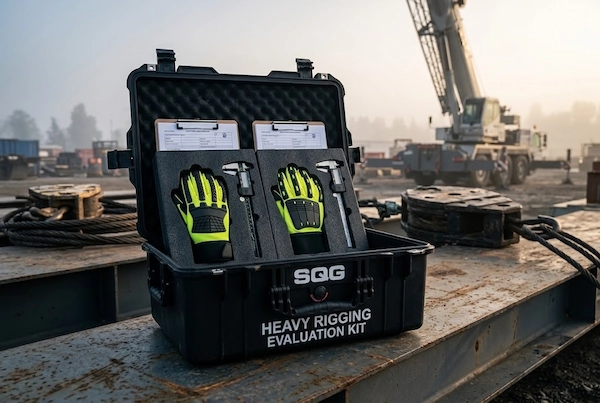
To assist lifting technology managers at multinational engineering contractors, procurement directors for oil and gas extraction equipment, and safety and technical teams at large port logistics companies in conducting on-site field tests before large-scale centralized procurement, SQG has officially opened a direct-from-manufacturer application channel for the “Heavy Rigging & Pipe Handling Enterprise Evaluation Kit.”
This evaluation kit includes two professional heavy-duty models featuring representative protective designs:
SQG® BM-702: The core stress area at the thumb gusset is reinforced with a high-tensile-strength para-aramid woven patch (Heavy Para-Aramid Fabric Patch), combined with heat-resistant double-row aramid specialty thread. The inner lining features a heavy-weight cotton-polyester blend with a thickened, abrasion-resistant construction, specifically designed for frequent deployment and retrieval of tensioned wire rope rigging, hoisting winch guide rope traction, and the loading and unloading of high-pressure pump manifold flanges during well maintenance operations;
SQG® BM-701: The palm features a 3D high-density natural cotton cord-weave outer shell, while the lining incorporates a multi-strand composite blend of cotton, HPPE, and glass fiber for advanced cut resistance. Combined with a polyurethane-reinforced thumb gusset and a contoured neoprene sealed cuff, these gloves are specifically designed for high-risk environments involving flying wire fragments from broken strands, the running of large-diameter casing, and the removal of metal debris from mud vibrating screens.
Companies can conduct continuous, on-site wear tests lasting 14 to 30 days with their primary rigging crews and at lifting sites to comprehensively evaluate the gloves’ abrasion resistance and service life under high-frequency friction from rough steel wire ropes, their puncture resistance against wire rope burrs, and their ergonomic grip performance to prevent fatigue during prolonged, high-intensity operations.
If you need a customized on-site assessment plan for rigging wear and pinch hazards for your lifting project, or to directly request an original manufacturer’s test kit and technical specifications for bulk purchases, please feel free to contact our Industrial Technical Support Team at any time: Request a Worksite Evaluation Kit & Direct Quote.


