
Introduction: The Capital and Compliance Realities of Industrial PPE Sourcing
In global supply chain management for multinational oil extraction, heavy chemical refining, and large-scale advanced manufacturing facilities, a systematic assessment of chemical resistant gloves bulk sourcing tco is a strategic decision that directly determines a company’s annual safety operating expenses and occupational compliance baseline. However, when facing tenders for polymer protective equipment with annual procurement volumes reaching hundreds of thousands of pairs, many corporate procurement departments often fall into the trap of focusing solely on the unit price, overlooking the dynamic depreciation costs associated with polymer films during cross-border logistics, long-term warehousing and turnover, and service in extreme work environments.
This traditional, crude logic of low-price bidding is creating unforeseeable associated risks for modern industrial enterprises:
The hidden cost black hole caused by a one-sided pursuit of the initial unit price: Many buyers calculate only the few cents saved per container, yet lack an understanding of the inherent physical and chemical properties of nitrile rubber (NBR) and modified polyvinyl chloride (PVC) materials. In uncontrolled storage environments, polymer films are highly susceptible to continuous erosion from fluctuations in ambient temperature and humidity, as well as atmospheric ozone, leading to the natural degradation of the polymer cross-linking network and the leaching and aging of plasticizers. When tens of thousands of pairs of gloves—which have undergone microscopic aging before reaching their designed service life—are distributed to front-line workers, the originally claimed chemical resistance has already been significantly compromised, resulting in a sharp spike in on-site glove breakage rates;
The quantitative shift from single-item procurement costs to total cost of ownership (TCO): Truly rigorous industrial procurement accounting must evaluate gloves within the context of both explicit and implicit costs across their entire lifecycle. The true cost-effectiveness of gloves is by no means reflected on the invoice; rather, it depends on the actual number of safe working shifts they can support, the loss of effective working hours caused by workers’ frequent glove replacements, hazardous waste disposal costs, and—most critically—the prevention of Lost Time Injuries (LTI) and exorbitant environmental regulatory fines resulting from microscopic leaks in the rubber membrane. At hazardous chemical work sites, the loss resulting from a single, isolated work stoppage due to a chemical burn is enough to wipe out all the savings accumulated over a full decade from purchasing low-quality, low-cost gloves;
Rebuilding the moat of business risk control in multinational supply chains and direct sourcing from original manufacturers: Faced with global fluctuations in bulk raw material prices and the challenges of temperature and humidity stress during maritime transport, multinational buyers and regional Tier-1 industrial product distributors urgently need to establish a strategic closed-loop system that spans molecular weather resistance of materials, scientific dynamic warehouse management, and intensive procurement of mixed full container loads (Mixed FCL). This approach ensures that the consistent quality of original manufacturer products can withstand downstream operational fluctuations.
For procurement directors and EHS managers who are comprehensively restructuring their procurement models for hazardous chemical protective equipment and seeking a balance between safety compliance and total cost of ownership, we recommend first systematically reviewing our industrial fluid safety protection benchmark guide: Chemical & Liquid Resistant Work Gloves.
High-Polymer Degradation Dynamics: What Governs Shelf Life in NBR and PVC?
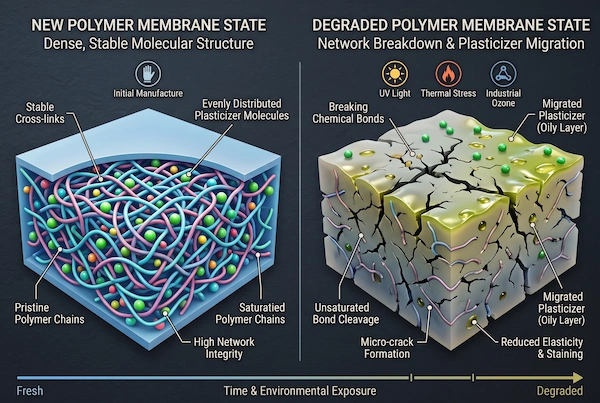
In procurement decision-making for bulk industrial goods, the technical prerequisite for thoroughly advancing the TCO assessment of chemical-resistant gloves through bulk sourcing is to look beyond the surface of polymer chemistry and identify the microscopic degradation mechanisms that govern the “shelf life” of chemical-resistant gloves after they are placed in storage. Nitrile rubber (NBR) and polyvinyl chloride (PVC) are the two most widely used thermosetting and thermoplastic polymers in industrial fluid protection. However, during long-term storage, transoceanic logistics, and high-workload operating environments, they are not constant, inert materials; rather, they undergo microscopic aging triggered by environmental stresses at every moment.
Many purchasers frequently encounter this dilemma: a batch of newly purchased gloves has been neatly stacked in the warehouse for over a year, with the outer packaging intact, yet within just a few hours of frontline workers putting them on for work, the gloves develop cracks between the fingers, become sticky on the surface, or experience rapid oil leakage. The root cause of this seemingly unexplained early failure lies in the irreversible molecular chain degradation that has occurred in the polymer cross-linked network and the additive system during static storage.
Polymer Oxidation and UV/Ozone Attack
Synthetic nitrile rubber is copolymerized from butadiene and acrylonitrile monomers. The butadiene segments, which confer high elasticity and flex resistance on nitrile rubber, naturally contain a certain proportion of unsaturated carbon-carbon double bonds. It is precisely these partially unsaturated double-bond structures that constitute the molecular weaknesses of the nitrile rubber film during storage:
UV-induced photo-oxidative aging reactions: Natural light from windows in storage warehouses that lack UV filters, as well as high-power high-pressure mercury lamps or metal halide lighting, continuously emit UV radiation at specific wavelengths. The high energy of UV photons can directly penetrate rubber layers that lack heavy-shielding fillers such as carbon black, breaking the carbon-hydrogen bonds in the polymer main chain and inducing free-radical chain reactions; in the presence of oxygen, these free radicals rapidly generate peroxide radicals, triggering continuous breaks in the nitrile main chain and causing the originally dense macromolecular network structure to gradually fragment;
Directional Shearing of Double Bonds Induced by Low-Concentration Ozone (Ozone Cracking): In industrial heavy chemical complexes, high-voltage substations, around high-power ventilation motors, and in areas with frequent traffic from electric forklifts, low concentrations of ozone—typically in the range of a few ppm—are commonly present in the air. Ozone molecules exhibit extremely strong affinity and reactivity toward the carbon-carbon double bonds in nitrile rubber chains, rapidly adding to these double bonds to form unstable ozonides;
Microscopic Stress Release and Cracking-Induced Hardening: At stress points inside cardboard boxes subjected to compression and bending (such as the creases at the knuckles of gloves), the ozonides rapidly decompose and rupture under tensile microstress, forming submicroscopic microcracks perpendicular to the direction of stress; As storage time progresses, these micro-cracks continue to propagate and connect at the microscopic level. Macroscopically, this manifests as the glove becoming stiff and brittle overall, losing its original softness and elasticity. When worn by workers, even slight stretching causes the glove to rupture instantly at the creases, resulting in the loss of fluid tightness against acidic and alkaline liquids.
Plasticizer Migration in PVC Barrier Matrices
Modified polyvinyl chloride (PVC) chemical-resistant gloves (such as classic thick-walled heavy-duty models and acid- and alkali-resistant series) are, by their chemical nature, amorphous thermoplastic polymers. Pure PVC resin is inherently a hard, brittle solid and must be fully plasticized by adding 30% to 50% high-boiling-point plasticizers (such as di-octyl terephthalate (DOTP) and high-molecular-weight polyester plasticizers) to achieve sufficient plasticization. Only when these small plasticizer molecules insert themselves between the PVC molecular chains and weaken the intermolecular forces can the gloves be endowed with excellent flexibility and impact resistance.
However, the small plasticizer molecules are not covalently anchored to the PVC chains via chemical bonds, which means they have a strong tendency to spontaneously migrate under certain physical conditions:
Thermodynamically Driven Plasticizer Exudation: When gloves are stored in poorly ventilated, uncontrolled-temperature, high-temperature warehouse environments (such as metal-walled warehouses where temperatures frequently exceed 40 degrees Celsius in midsummer, or deep within shipping containers crossing the equator), the thermal motion of polymer segments intensifies, dynamically widening the intermolecular gaps; The small plasticizer molecules, originally uniformly dispersed throughout the polymer matrix, acquire sufficient kinetic energy and, driven by a thermodynamic concentration gradient, continuously diffuse and migrate toward the surface of the glove’s rubber film;
Sticky, oily surface and breakdown of the effective plasticization system: Plasticizers that migrate to the outer surface form a greasy, sticky layer on the glove’s surface. This not only destroys the physical grip texture created on the palm through sandblasting or texturing but also causes a precipitous drop in the concentration of effective plasticizers within the rubber film;
Matrix hardening, embrittlement, and delamination of multi-layer rubber: Without the lubrication and support of plasticizers, the PVC polymer chains re-clump together, causing the glove matrix material to harden significantly and its low-temperature flexural resistance to drop to zero; Once front-line workers perform gripping tasks in cold or ambient-temperature workstations, the embrittled rubber layer is highly prone to developing radial delamination cracks. The heavy-duty rubber shell, originally molded as a single piece, will delaminate and peel off over large areas under even slight shear stress, completely losing its oil-resistant and mud-proof barrier function.
Hydrolytic Aging and Cross-Linking Embrittlement
In addition to photo-oxidation and thermal migration, the relative humidity and accumulated thermal enthalpy in bulk storage environments can cause chronic hydrolytic and thermal embrittlement damage to gloves in two additional ways:
Hydrolytic erosion in humid and hot environments: In ports with typical tropical maritime climates—such as those in Southeast Asia, the Middle Eastern coast, or Latin America—warehouse humidity is consistently maintained at high levels above 85% year-round; water vapor molecules in the environment possess extremely strong polar penetrating ability, enabling them to penetrate the rubber membrane and enter the interior of the gloves; For PVC systems containing ester-based plasticizers or modified nitrile latex layers with hydrophilic additives, the continuous accumulation of water vapor triggers microscopic hydrolytic reactions that sever critical plasticizing and bonding chains, leading to irreversible “delamination and blistering” between the glove’s outer rubber layer and the inner knitted fiber lining;
Thermally Induced Post-Curing and Over-Crosslinking Embrittlement: During long-term storage at high temperatures, trace amounts of active crosslinking agents and accelerators that have not been fully consumed in the vulcanized formulation continue to undergo slow secondary chemical crosslinking (post-crosslinking) under prolonged catalysis by latent heat. This uncontrolled post-curing excessively increases the polymer’s three-dimensional crosslinking density, severely restricting the natural slippage and orientation capabilities of the polymer chains;
Collapse of Tensile Properties and Instability of Physical Barrier Performance: The most obvious consequence of over-crosslinking is a significant reduction in the glove’s elongation at break—a chemical-resistant rubber membrane that originally withstood elastic stretching of 400% to 500% sees its elongation limit plummet to below 150% after aging; The moment a worker pulls on the glove cuff to put it on or grips a rough workpiece, the glove will tear linearly because it cannot withstand the transient tensile stress, creating a fatal breach that allows high-risk chemicals to penetrate instantly in liquid form.
Standardized Storage Protocols: Preserving Barrier Integrity Across Sea and Land
In the bulk procurement of protective equipment for high-risk industrial fluids, strict control over the total cost of ownership (TCO) for chemical-resistant gloves must not end the moment they roll off the production line. On their journey from manufacturing facilities in Asia to ports such as Rotterdam, Houston, or Dammam in the Middle East, chemical-resistant gloves often endure thousands of nautical miles of rough seas, followed by months or even years of storage in regional distribution centers or transit warehouses at project sites.
Environmental stress is the most insidious “destructor” of polymers. Without systematic maritime protection and standardized warehousing protocols, high-quality gloves that originally met the AQL 0.65 zero-pinhole standard in factory testing may become prematurely unusable due to temperature and humidity erosion before they are even distributed to frontline workers. International buyers must incorporate logistics and warehousing agreements into the core framework of their technical audits.
Maritime Transit Climate Stress: Container Rain and Thermal Swings
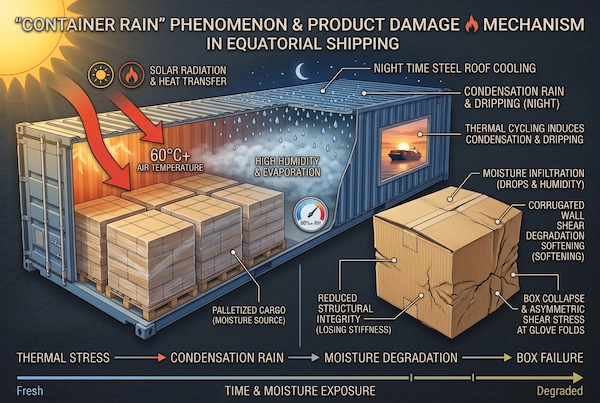
Ocean freight presents the most severe physical and climatic challenges in the entire supply chain. When sealed steel containers cross the equatorial waters, they create an extremely harsh microclimate:
Container Rain and Persistent Condensation Damage: When a fully loaded container is exposed to intense equatorial sunlight, the air temperature at the top of the container can surge to over 60 degrees Celsius. Traces of moisture contained in wooden pallets, corrugated cardboard boxes, and fabric liners rapidly vaporize and evaporate, causing the relative humidity inside the container to approach 100%; As sea surface temperatures plummet at night, the container’s roof and side walls cool rapidly. The water vapor reaches the dew point and condenses into large water droplets on the inner surface of the steel panels, pouring down onto the cargo like a torrential rain;
Corrugated cardboard boxes soften, collapse, and crack under localized mechanical pressure: Continuous condensation and moisture intrusion cause the compressive strength (BCT) of the outer corrugated cardboard packaging to plummet by more than 50%, leading to structural denting and collapse of the lower-layer pallet boxes during the turbulence of ocean transport; Gloves inside the boxes are subjected to prolonged, asymmetric, concentrated shear stress—several times greater than the design specification—causing permanent microscopic stress damage at the tightly folded, compressed edges and disrupting the originally dense, continuous rubber layer;
Mold growth and fiber weakening in the fabric liner caused by high humidity: After moisture penetrates the polyethylene inner bag and seeps into the gloves, the hot, humid environment provides a breeding ground for mold spores; High-density 18-gauge or 15-gauge cotton, polyester, or nylon knitted liner fibers rapidly become moldy and blacken under fungal attack, and their breaking strength plummets, directly destroying the liner’s mechanical load-bearing capacity during wear and stretching. In some cases, acids produced by microbial metabolism even cause the outer rubber layer to delaminate.
Warehouse Humidity, Temperature, and Dark-Storage Specifications
To prevent abnormal losses in bulk inventory, large industrial purchasers and regional distribution centers must strictly adhere to the international rubber product storage standard ISO 2230 and establish professional-grade SOPs for the storage of polymer chemical-resistant equipment:
Temperature and Humidity Control Standards (5 to 25 degrees Celsius, relative humidity below 65%): Industrial chemical-resistant glove warehouses must be located away from boiler rooms, steam pipelines, and areas exposed to direct sunlight on metal roofs. The warehouse temperature must be maintained year-round within a stable range of 5 to 25 degrees Celsius to prevent heat accumulation from exceeding 30 degrees Celsius, which could catalyze secondary post-crosslinking; Indoor relative humidity must be strictly controlled below 65%. Industrial-grade automatic dehumidifiers and temperature/humidity data loggers must be installed to prevent moisture from condensing and lingering on the glove surfaces;
Dark-room storage and dark-colored physical light shielding: Polymer films are extremely sensitive to short-wavelength ultraviolet rays in sunlight; all chemical-protective gloves must be stored sealed in their original light-proof inner bags and within thick cardboard boxes; Storage racks should be located away from building windows and natural lighting/ventilation openings. Workshop lighting must use energy-efficient LED fixtures with low UV emission and diffuse reflection to completely isolate nitrile and PVC rubber shells from the photo-oxidative catalytic reactions caused by sunlight and high-voltage arcs;
Isolate from industrial ozone sources and strong electromagnetic radiation: Ozone is the primary cause of ozone cracking in elastomers; Therefore, storage locations for polymer chemical-resistant equipment must maintain a safety buffer zone of at least 10 meters from high-voltage transformer cabinets, high-power exhaust fans, air compressor rooms, and charging stations for high-voltage contactor-type electric forklifts with frequent traffic, to ensure the surrounding air remains clean with an extremely low concentration of free ozone.
Barrier Film Verification After Storage
For bulk inventory that has been statically stored for more than 12 months in overseas project stockpiles or distribution transit warehouses, companies must establish a physical outbound inspection mechanism before unpacking and distributing the products at the worksite to prevent gloves that have undergone latent aging from entering high-risk hazardous chemical processes:
Visual Inspection of Surface Physical Condition and Plasticizer Migration: Quality control personnel first verify the visual integrity of the sampled gloves, checking the rubber surface for oil-like seepage, stickiness, or localized whitening and clouding. Special attention is given to inspecting blind spots in the finger creases and glove folds; the gloves are gently stretched to observe whether micro-fissures—fine, visible cracks caused by molecular chain hardening—are present;
Qualitative Re-inspection of Mechanical Tensile Recovery and Permanent Deformation: Cut a strip of rubber film from the palm or back of the hand, rapidly stretch it by hand at room temperature to 200% of its original length, hold for 5 seconds, then release to assess its instantaneous elastic recovery rate; If the rubber film exhibits significant rebound hysteresis, hardening and whitening under tension, or immediate stress-induced brittle fracture, this indicates that the internal polymer has undergone severe over-crosslinking and embrittlement or a severe shortage of plasticizers. This batch of gloves must not be used at workstations involving strong acids or highly toxic aromatic hydrocarbons;
AQL Sampling Water Leakage Retest for Outgoing Batches: Based on the outgoing batch, on-site quality control engineers must randomly select a portion of the gloves and perform a rapid water leakage verification test on a simple test bench in the warehouse; Inject 500 to 1,000 milliliters of room-temperature water into the gloves and suspend them vertically for 2 minutes to confirm that no water droplets seep from the fingertips or the webbed areas under pressure. This ensures that, even after prolonged physical storage, the gloves still fully retain the impermeable chemical barrier promised at the time of manufacture.
Deconstructing the TCO Model: Unit Purchase Cost vs. Total Cost of Ownership
In large-scale multinational energy projects, chemical and metallurgical operations, and global supply chain procurement management, there has long been a significant “accounting blind spot” regarding financial calculations of the total cost of ownership (TCO) for bulk sourcing of chemical-resistant gloves. Traditional procurement decisions are often dominated by an isolated “unit price bidding” mechanism, in which procurement departments treat the landed unit cost of gloves as the core performance metric, mistakenly believing that as long as the purchase price per pair is reduced by a few cents in each bidding round, the goal of cost reduction and efficiency improvement has been achieved.
However, in work environments involving hazardous chemicals and high-risk industrial fluids, protective gloves are high-frequency consumable assets. The true value of a pair of gloves is not determined when the invoice is printed, but is proven through their service on the front lines. Ignoring the actual service life of gloves under conditions of high wear and tear and exposure to strong solvents will directly lead to a doubling of on-site glove replacement frequency, a loss of management time, and the creation of alarming hidden cost loopholes in the company’s financial records.
Mathematical Modeling: Worker Shifts vs. Replacement Cycles
To see past the smoke and mirrors of surface-level unit purchase prices, multinational buyers must establish a procurement mathematical model based on “true daily consumption costs”:
Core calculation dimensions for daily consumption costs per work shift: The true cost of using gloves is by no means the unit price itself, but rather equals “the actual landed procurement cost per pair of gloves / the actual number of safe service days.” A work shift is typically calculated as 8 hours of standardized, high-intensity, mobile work. When a pair of gloves—due to poor material density or insufficient molecular cross-linking—lasts only half a shift (4 hours) or even less when exposed to strong acids and alkalis, drilling mud, or polar solvents, workers must request and use 2 to 3 pairs within a single calendar day to complete their assigned tasks;
The cumulative cost multiplier effect of frequent damage and replacement: Taking low-grade, substandard gloves priced at $2.50 each as an example, if a worker must replace two pairs daily due to thinning and leakage of the rubber membrane, the actual daily glove hardware expenditure per person directly reaches $5.00; in contrast, factory-original, high-specification, densely cross-linked heavy-duty or high-gauge fully-dipped chemical-resistant gloves, even if the initial CIF purchase price is $3.00 (a 20% higher unit price), can reliably withstand three full shifts of continuous heavy-duty work thanks to their superior resistance to solvent swelling and physical abrasion, resulting in a true daily hardware cost per worker of only $1.00;
The true shift in procurement leverage: From the perspective of pure hardware consumption alone, by extending the service life of individual items, high-specification products directly offset the initial procurement premium and created savings in hardware costs per workstation that are several times greater.
The Hidden Costs of Premature Chemical Breach and Micro-Leaks
Beyond the visible procurement and consumption costs on the books, the hidden management losses and associated liabilities caused by premature penetration and micro-leaks in substandard gloves during production processes are often far more devastating:
Productivity Downtime Caused by Frequent Glove Changes: In cleanrooms with extremely high chemical safety standards, inside heavy chemical towers, or on the decks of offshore drilling platforms, workers must travel back and forth to the PPE warehouse to claim new gloves, remove contaminated old gloves, clean their hands, and put on new gloves—a process that takes an average of 15 to 20 minutes per cycle; If each worker is forced to change gloves an additional two times per shift, this translates to a daily loss of 30 to 40 minutes of prime working time; based on the average hourly labor cost of skilled workers in the heavy chemical industry, the lost labor value is often several times the value of the gloves themselves;
Costs associated with emergency decontamination and treatment of sporadic dermatitis caused by micro-leaks: When gloves develop hidden leaks due to microscopic pinholes or the expiration of their chemical resistance lifespan, highly corrosive substances or highly sensitizing organic solvents come into contact with the skin, causing workers to experience redness, swelling, a burning sensation, or allergic reactions; Production line operations must be immediately halted on-site to initiate emergency eye, face, and limb flushing procedures, followed by the application of neutralizing agents by the company’s medical clinic; outpatient treatment for a single instance of mild chemical burns or contact dermatitis, along with the cost of anti-allergy medications and compensation for lost wages due to minor injuries, results in an average of $300 to $800 in additional expenses;
Hazardous waste disposal costs have skyrocketed: discarded gloves that have come into contact with highly toxic chemicals and heavy oil slurry are classified as hazardous waste under national law. Companies must commission professional environmental agencies with hazardous waste disposal certification to perform safe incineration and transportation, and the disposal cost per metric ton is extremely high; the doubling of glove consumption means that the weight of hazardous solid waste generated on-site has surged linearly, directly driving up the company’s overall environmental management expenses.
Enterprise TCO Comparative Matrix
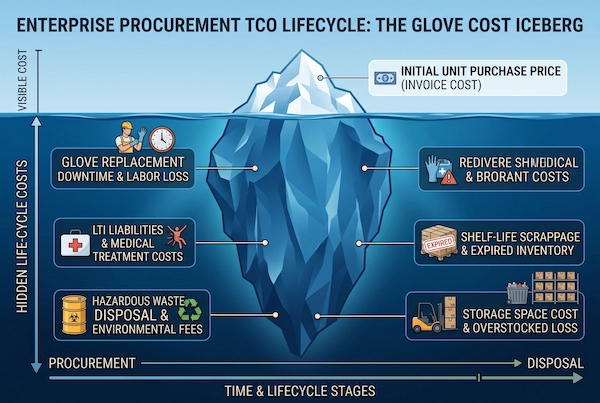
To provide rigorous, quantitative evidence for procurement committees, financial auditors, and EHS decision-makers at multinational corporations, the table below systematically compares the financial differences between the traditional three-tier wholesale low-price procurement model and SQG’s full-lifecycle direct-from-manufacturer procurement solution, based on a medium-sized chemical refining and processing complex with 500 frontline high-risk mobile workers (calculated based on 22 standard working days per month):
| Evaluation Metrics | Traditional Tier-3 Wholesale Low-Cost Procurement Model (Tier-3 Brokerage) | SQG Tier-1 Direct Full Lifecycle Solution (Tier-1 Direct TCO) | Analysis of Financial and Operational Variances (Operational Impact) |
| Initial Unit Landed Price | $2.50 per pair | $2.85 / pair | SQG’s original high-specification products have a unit price that is 14% higher, which is often misjudged as “high cost” by traditional procurement teams. |
| Average Safe Service Life (Working Shifts) | 0.8 work shifts (approximately 6.5 hours before damage or leakage occurs) | 2.5 work shifts (stable service for over 20 hours) | Thanks to high-density polymer cross-linking, SQG products actually offer more than three times the solvent resistance and abrasion resistance. |
| Average Monthly Consumption per Person (Monthly Consumption) | 27.5 pairs per person per month | 8.8 pairs/person/month | This high durability has led to a dramatic 68% drop in the physical quantity of gloves issued. |
| Total Monthly Hardware Procurement Expenditure for 500 Person-Months | $34,375 | $12,540 | Monthly direct cash flow savings for the company on hardware procurement: $21,835 |
| Uncontrolled Warehouse Aging and Scrap Rate (Shelf Loss) | 8.5% (batches exhibiting stickiness, oil seepage, creases, or hardening) | Less than 0.3% (controlled nitrogen-flushed and light-protected storage, zero performance loss) | Eliminated hidden scrap losses caused by rain damage to ocean freight containers and inventory backlogs in warehouses |
| Monthly Cost Equivalent of Lost Labor Hours Due to Uniform Changes | Approx. $16,500 (based on an hourly wage of $15) | Approx. $3,200 (very few unplanned glove changes per work shift) | Reduced unplanned downtime, directly recovering over 800 hours of production time on-site |
| Estimated Reserve Fund for Decontamination of Minor Leaks and Treatment of Minor Injuries | $4,500 / month (average number of minor burns handled per month) | $0 (AQL 0.65 ensures zero pinholes and eliminates micro-leaks) | Eliminated safety-related liabilities associated with workers’ compensation claims and potential Lost Time Injury (LTI) investigations |
| Monthly Expenditure on Environmental Transfer and Disposal of Hazardous Waste | $2,200 (high solid waste weight) | $700 (significant reduction in scrap volume) | Significantly reduced high-risk solid waste emissions, aligning with multinational corporations’ ESG audits for carbon reduction and waste reduction |
| Actual Monthly Comprehensive TCO per Capita | $115.15 / person/month | $32.88 per person per month | Total Cost of Ownership (TCO) was directly reduced by 71.4% |
Through rigorous data modeling, it is clear that simply pursuing the lowest initial purchase price not only fails to save the company money but is, in fact, the root cause of financial losses; Selecting high-specification chemical-resistant gloves from the original manufacturer—which have undergone rigorous physical water and gas leak testing to an AQL of 0.65 and offer excellent resistance to chemicals, storage, transportation, and aging—may result in a slight 10% to 15% increase in the initial unit price. However, by doubling the service life and eliminating hidden risks, these gloves can achieve a reduction in total cost of ownership (TCO) of over 35%—and in some cases, as high as 70%—for large engineering firms.
Mixed FCL Procurement Strategies: Optimizing Capital Flow and Inventory Turn
In the practical implementation of cross-border supply chain procurement, advancing the TCO of bulk sourcing for chemical-resistant gloves often faces a severe conflict between capital and inventory turnover: industrial-grade chemical-resistant work scenarios are highly fragmented—ranging from heavy-duty outdoor drilling and heavy-duty chemical protection in pipelines to precision electronic assembly in workshops and maintenance of pipes, valves, and instruments—and individual companies often need to stock gloves of various thicknesses, materials, and protection levels; However, to facilitate their own production scheduling, traditional contract manufacturers often set extremely high minimum order quantities (MOQs) for individual styles and may even mandate “full container loads of a single style and color.”
This rigid procurement model forces multinational industrial distributors and large general contractors to shoulder a heavy financial burden. To meet protection needs across all operating conditions, buyers are forced to purchase multiple containers at once, resulting in Days of Inventory (DOI) for non-core styles being extended to over 18 months. In environments characterized by alternating humidity, heat, and temperature fluctuations, long-term stagnant inventory not only erodes corporate cash flow but also triggers the risks of polymer film aging and plasticizer leaching, as analyzed earlier. The key to breaking this deadlock lies in implementing an intensive procurement strategy of Mixed Full Container Load (Mixed FCL) shipments directly from the original manufacturer.
Eliminating Excess Inventory Through Mixed Full Container Loads (Mixed FCL)
For industrial projects with massive annual consumption but complex job configurations, consolidating multiple SKUs for various operating conditions into a single container is the optimal solution for controlling cash tied up in inventory and preventing materials from aging beyond their shelf life:
Production flexibility that breaks the traditional factory barrier of single-SKU full container loads: Leveraging the fully automated, flexible dipping production lines at our source super factory, SQG supports the mixed loading of up to 5 to 8 different styles of protective gloves—each with distinct manufacturing processes and linings—within a single standard 40-foot high cube container (40HQ), tailored to the actual operational needs of overseas customers;
Eliminating Dead Stock and Passive Aging Losses: If a specific model of heavy-duty gloves with extended sleeves—designed for heavy-duty acid and alkali cleaning—is consumed at a project site at a rate of only 15,000 pairs per year, traditional single-style full-container purchases (approximately 80,000 to 100,000 pairs) would mean this batch of gloves must sit idle in the warehouse for more than 5 years, causing their rubber molecular chains to oxidize and become brittle—rendering them unusable—long before they are even shipped; Through the Mixed FCL strategy, buyers can consolidate this style in a single container with other high-frequency, fast-moving styles based on actual quarterly consumption (e.g., 3,000 to 5,000 pairs), enabling a “just-in-use, dynamic turnover” of gloves. This eliminates the natural degradation of expired inventory and associated financial write-downs at the source;
Optimizing operational cash flow and improving capital utilization efficiency: The multi-SKU consolidated shipping model distributes the capital tied up in a single purchase across the efficient operations of different production stages, helping buyers drastically compress the safety stock cycle from the original 12 months to a rolling safety range of 90 to 120 days. This significantly alleviates pressure on working capital and enhances the return on capital for cross-border procurement.
Balancing Heavy-Duty and Precision Inventory Ratios
To truly maximize the economic value of full-container and less-than-container load (LCL) shipments, overseas procurement departments must move away from empirical, “gut-feel” ordering and establish a “precision container consolidation mathematical model” based on the ratio of workers per workstation:
Modeling the Relationship Between Workstation Staffing Levels and Consumption Frequency: In typical large petrochemical complexes or heavy equipment manufacturing plants, the distribution of job roles naturally follows a pyramid structure. Workers engaged in heavy-duty tasks such as lifting operations, slurry processing, and cleaning reactors with extreme acids and alkalis typically account for about 15% to 20% of the workforce; however, the heavy-duty gloves they use have a high unit price and a long service life per pair (a single pair can last for several days). In contrast, front-line assembly workers engaged in precision valve maintenance, pipeline inspections, parts cleaning, and automotive assembly account for over 80% of the workforce. The lightweight, 18-gauge or 21-gauge fully-dipped chemical-resistant gloves they use require a high degree of dexterity and experience relatively faster wear and tear;
Implementing a scientifically optimized procurement mix: Taking the consolidated loading of a standard 40HQ container as an example, the procurement team can scientifically optimize the container load based on the following process-specific consumption ratio: “20% heavy-duty armored gloves + 60% high-gauge precision fully-dipped gloves + 20% general-purpose oil-resistant and abrasion-resistant gloves”; For example, thick-walled impact-resistant models and double-dipped wear-resistant models can be maintained as long-term, stable reserves, while large quantities of ultra-thin, fully-dipped chemical-protective models serve as the mainstay for high-frequency consumption;
Simultaneous increase in the plant-wide inventory turnover rate: This loading structure, which precisely mirrors production consumption rates, ensures that upon arrival at the port and entry into the warehouse, the inventory depletion rates for all product types remain largely in sync. It avoids the supply chain imbalance where “lightweight, thin-gauge items are completely depleted, forcing stockouts and production halts, while heavy-duty items remain piled up in the corners of the warehouse,” thereby maximizing the inventory turnover rate for the entire batch of materials.
Pallet Optimization and Automated Cube Utilization
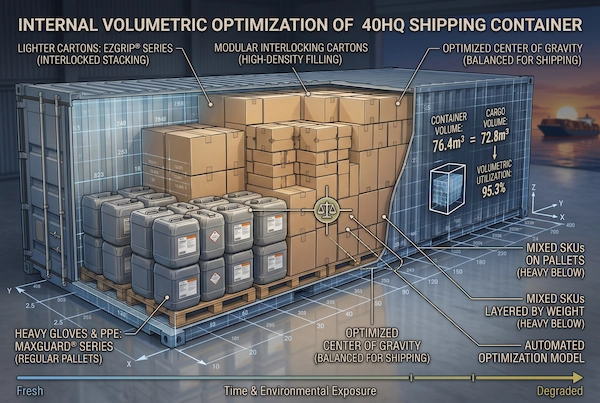
Ocean freight consolidation—whether for full container loads (FCL) or less-than-container loads (LCL)—is by no means simply stuffing cartons of varying sizes haphazardly into a container. Disorganized, manual packing not only leads to cargo damage but also results in significant waste of container space. SQG employs industrial-grade 3D volume optimization algorithms (Cube Optimization) and automated palletizing standards to minimize the average shipping logistics costs per unit for both single and mixed shipments:
3D Cube Optimization: Since heavy, extra-long gloves and lightweight, high-gauge gloves differ significantly in weight, outer box dimensions, and the number of pairs per box, the factory’s logistics control system performs spatial topology calculations using 3D loading simulation software before loading. Using an algorithm that places heavy cartons at the bottom, light cartons on top, and employs modular interlocking arrangements for long and wide items, the system eliminates gaps and dead spaces between cartons, maintaining the effective space utilization rate of 40HQ high-cube containers at a consistently high level of over 95%;
Automated compact stacking and moisture-proof stretch film palletizing: All cartons are robotically palletized at a fully automated palletizing station, using fumigation-free composite pallets that comply with the International Standards for Phytosanitary Measures (ISPM 15); The sides and top of each pallet are securely sealed with multiple layers of high-stretch, pre-stretched moisture-proof stretch film, reinforced with crisscrossed high-strength strapping to ensure that the center of gravity remains stable and the pallet load never shifts or collapses, even when subjected to the jostling and swaying of rough seas;
Logistics costs are drastically reduced through cost-sharing: Systematic full-load optimization increases the effective loading capacity per container by 8% to 12% compared to traditional, haphazard loading methods; The shipping booking fees, terminal handling charges (THC), and customs clearance and trucking costs at the destination port—when spread across each pair of gloves—are further reduced, allowing buyers to enjoy the convenience of frequent and flexible LCL shipments while firmly maintaining the economies of scale inherent in bulk ocean freight.
The Complete 11-SKU Portfolio: Workstation-Specific Allocation Matrix
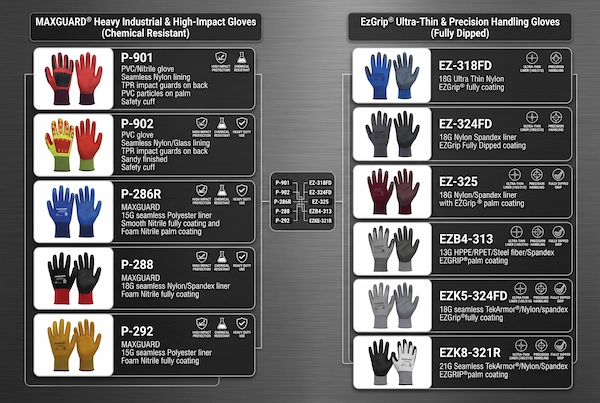
In implementing a systematic plan for the bulk sourcing of chemical-resistant gloves to optimize TCO, any procurement economics model must be based on a protective product matrix that is accurate and validated under rigorous operating conditions. On-site operations at large, integrated industrial and mining enterprises or multinational EPC projects are never limited to a single operating condition. The blind adoption of “one-size-fits-all” gloves is often the root cause of either overprotection (sacrificing dexterity and operational efficiency) or insufficient protection (leading to chemical penetration and mechanical damage).
Through a clear technical division of labor, the SQG Industrial Fluid Protection Matrix has established a library of 11 core SKUs covering everything from heavy-duty, extreme operating conditions to microelectronics-level precision work. Whether it’s dealing with mud splashes on a drilling rig or performing maintenance in the cramped, oil-soaked spaces inside an automotive engine assembly, this matrix offers precisely matched solutions for every workstation, providing robust product support for overseas buyers’ mixed full container load (Mixed FCL) purchases.
Heavy-Duty Industrial Line: MAXGUARD® Engineering Assets
Designed for the harsh conditions of heavy industry—where heavy oil contamination, corrosion from strong acids and alkalis, and physical impacts from heavy machinery converge—the MAXGUARD® series leverages thick-walled polymer molding and structural reinforcement technologies to create an impenetrable safety barrier:
P-286R (Dual-Coated Oil- and Abrasion-Resistant Dual Defender): Features a 15-gauge seamless polyester liner and innovatively combines a “360-degree smooth, fully-dipped nitrile base layer + secondary micro-foamed nitrile palm layer” dual-coating process; The smooth base layer seals off capillary pathways for liquid chemicals and oil contamination, while the porous micro-foamed top layer utilizes capillary adsorption to effectively displace oil films from workpiece surfaces, providing both long-lasting, fully sealed protection and a secure grip in wet conditions during high-pressure pipeline emergency repairs and heavy-oil machinery assembly;
P-288 (Lightweight Expert for Heavy-Oil Environments): Features a carefully selected 18-gauge ultra-high-density nylon-spandex blend liner, fully coated with a fully-immersed foamed nitrile rubber layer; While maintaining 360-degree all-around oil resistance and splash protection, it significantly enhances the fabric’s softness, conformability, and elasticity, freeing workers engaged in continuous inspections and pipe/valve operations in heavy oil environments from the constraints of bulky rubber gloves and allowing them to wear the gloves for an entire shift without hand fatigue;
P-292 (High-Strength Material Handling Barrier): Specifically designed for high-frequency, abrasion-resistant material handling and complex fluid operations, it features a high-strength, tear-resistant 15-gauge polyester lining with an outer layer of high-density, fully immersed foamed nitrile coating. The thick, abrasion-resistant polymer shell provides long-term protection against both rough metal edges and chemical liquids, making it a durable and reliable workhorse for handling hazardous chemicals in warehouses, moving heavy castings, and performing industrial fluid maintenance;
P-901 (Heavy-Duty Mud and Physical Impact Armor): Features a heavy-duty PVC and nitrile composite shell, lined with high-density seamless nylon, and features one-piece injection-molded high-elasticity thermoplastic rubber (TPR) impact-resistant skeletal reinforcements at critical knuckle and metacarpal areas on the back of the hand; The palm is covered with large, non-slip PVC granules and features an extended, rigid Safety Cuff, effectively mitigating the risks of blunt impact, compression, fluid penetration, and slippage during mud splashes on drilling rigs and heavy-duty pipe string lifting and splicing operations;
P-902 (Flagship Model with Full Protection Against Pure-Grade Strong Acids, Cuts, and Impacts): Features a heavy-duty, pure-grade modified PVC shell lined with a composite cut-resistant fabric integrating nylon and high-modulus glass fiber;
High-Dexterity Precision & ESG Line: EzGrip® Engineering Assets
In the fields of automotive final assembly, aerospace hydraulic line assembly, precision chemical instrument maintenance, and ESG green procurement for multinational corporations, the EzGrip® series pushes the limits of high-gauge, ultra-thin liners and precision barrier technology:
EZ-318FD (The Benchmark for Ultimate Tactile Sensitivity with Full Immersion): Features an 18-gauge ultra-thin, ultra-dense seamless nylon liner paired with a 360-degree full-immersion precision ultra-thin nitrile coating; It offers excellent breathability and bare-hand-level tactile feedback, while blocking the penetration of trace amounts of engine oil, coolant, and cleaning agents. It is specifically designed for highly sensitive processes such as precision bearing lubrication and micro-oil maintenance of instrument circuits;
EZ-324FD (All-Purpose Oil-Resistant Assembly Benchmark): Features an 18-gauge high-elasticity nylon and spandex blend as the base fabric, with a 360-degree fully immersed oil-resistant nitrile coating applied to the surface. While completely blocking oil and fluid penetration through the finger gaps and the back of the hand, it provides a snug, stretchy fit that feels like a second skin, making it an all-purpose ergonomic solution for modern automotive engine and transmission assembly lines;
EZ-325 (Light Oil, Dry-Condition, Breathable, and Agile Model): Based on an 18-gauge lightweight nylon/spandex liner, it features a semi-dipped, micro-foamed nitrile coating on the palm; The back of the hand is left completely exposed to provide maximum convective cooling, while the palm coating offers excellent grip on light oil and high abrasion resistance, making it a refreshing choice for workstations ranging from dry to slightly oily conditions, as well as for long periods of continuous, high-frequency work;
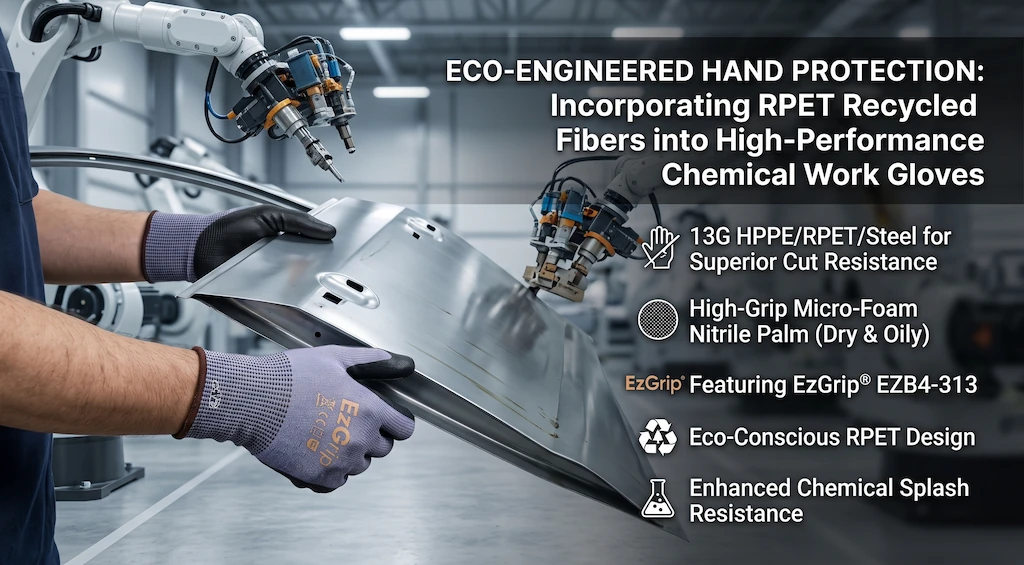
EZB4-313 (ESG Green Procurement and Low-Carbon Pioneer): The lining innovatively combines 13-gauge HPPE, high-strength steel wire, and RPET (recycled polyester eco-friendly fiber) in a blended weave, with the palm dipped in a high-performance nitrile rubber coating; While providing ANSI Level A4 physical cut resistance and oil resistance and abrasion resistance, both single- and double-layer gloves effectively recycle waste plastic bottles, helping multinational industrial groups directly meet stringent Scope 3 supply chain carbon reduction audit targets;
EZK5-324FD (Sharp Oil-Resistant Fully Sealed Terminator): The core lining has been upgraded to an 18-gauge ultra-high-density TekArmor® proprietary cut-resistant fiber blended with nylon and spandex, while the outer layer features a 360-degree, seamless, fully dip-coated nitrile covering that provides oil and chemical resistance;
Cross-Cluster Technical Integration: Impact Protection and Chemical Defense
In heavy industry safety management systems, fluid penetration hazards rarely occur in isolation. Whether working at the main rig operator stations on deepwater drilling platforms, installing high-pressure transmission pipelines in petrochemical plants, or performing chassis maintenance on heavy-duty mining trucks, field workers not only have their hands constantly submerged in highly corrosive heavy oil slurry but also face constant risks of fatal blunt force trauma from swinging heavy pipe strings, falling wrenches at heights, and recoiling high-pressure pipelines.
This is precisely the engineering vision behind our deep integration of the P-901 and P-902 models into the MAXGUARD® product line. These two flagship models for heavy industry achieve a breakthrough by fusing a thick-walled, polymer-based chemical-resistant barrier with an injection-molded TPR shock-absorbing back-of-hand skeleton into a single unit, seamlessly bridging the two major technical domains of “corrosion-resistant fluid sealing” and “heavy-duty crush and impact resistance.”
For procurement decision-makers involved in deep-water drilling, large-scale lifting operations, and extreme heavy-industry scenarios, thoroughly evaluating a glove’s structural integrity when absorbing hundreds of joules of impact energy in an instant is essential for building a comprehensive EHS barrier. For an in-depth analysis of the momentum dispersion dynamics of the back-of-hand impact-resistant reinforcement and international heavy industry impact resistance testing standards, we recommend consulting our dedicated resource on heavy-duty impact-resistant support structures: Impact Resistant Work Gloves.
Supply Chain Risk Mitigation: Overcoming Global Disruptions and Lead-Time Volatility
In the global procurement of bulk industrial commodities and the management of multinational supply chains, the in-depth advancement of chemical-resistant glove bulk sourcing TCO must not be limited to static financial figures and physical metrics; it must also directly address systemic risks such as macro-geopolitical conflicts, international crude oil price volatility, and regional shipping disruptions. For large-scale engineering general contractors and regional-level personal protective equipment (PPE) distributors with annual procurement volumes in the millions of dollars, supply chain “certainty” is, in itself, a highly valuable business asset.
After weathering the storm of drastic fluctuations in global raw material prices and freight rates, the asset-light trading model—which relies on multiple layers of intermediaries for inventory allocation—has exposed fatal vulnerabilities: when bulk raw material prices rise, contract manufacturers renege on contracts and cancel orders; during peak export seasons, production capacity is squeezed, leading to delivery delays of several months; and when facing urgent project acceptance inspections, companies are even forced to accept substandard replacement parts. Only by cutting through the layers of intermediaries and establishing direct partnerships with source manufacturing entities—those possessing deep supply chain hedging capabilities and large-scale production capacity—can multinational procurement teams fundamentally eliminate the systemic risk of downstream supply chain disruptions.
Hedging Raw Material Volatility (PVC Paste Resin & NBR Latex)
In the core cost structure of industrial chemical-resistant gloves, basic polymers such as modified polyvinyl chloride (PVC paste resin), synthetic nitrile rubber latex (NBR latex), and specialty plasticizers account for 55% to 70% of the ex-factory cost. These polymer raw materials are inherently highly dependent on monomers derived from petroleum refining and cracking (such as ethylene, propylene, butadiene, and acrylonitrile), and their spot prices often fluctuate sharply in tandem with international crude oil futures prices:
The ripple effect of price fluctuations in crude oil-derived monomers: Once geopolitical tensions arise upstream or refinery operating rates are constrained, spot prices for butadiene and acrylonitrile monomers can surge by more than 30% within just a few weeks; Traditional small-scale processing plants, constrained by limited cash flow, typically adopt a spot-purchasing model of “procuring bulk materials on demand after receiving orders.” Once raw material prices surge beyond their meager profit margins, these small contract manufacturers either unilaterally demand that overseas buyers make substantial additional payments or secretly increase the blending ratio of inexpensive inorganic fillers, such as heavy calcium carbonate, severely compromising the molecular cross-linking density of the final film;
Strategic centralized stockpiling by source mega-factories: As a source mega-factory with strong capital resources, SQG has established a large-scale industrial resin storage tank area and a temperature-controlled latex warehouse, maintaining a strategic safety reserve of core polymers sufficient for 60 to 90 days year-round; Through massive hedging with substantial capital, the company builds large-scale spot positions when raw material prices are low, thereby mitigating transient price spikes caused by short-term supply-demand imbalances in the upstream market;
Tier-1 Production Scalability and Lead-Time Guarantees
For multinational energy projects or automotive final assembly lines, a disruption in the supply of chemical-resistant gloves means that hazardous workstations must be shut down, resulting in indirect production line downtime losses that far exceed the value of the gloves themselves. Therefore, the production capacity flexibility and on-time delivery rate of the original contract manufacturer are the top priorities in procurement audits:
The cornerstone of large-scale production capacity on fully automated high-speed assembly lines: The SQG production facility features dozens of continuously operating, multi-axis servo-driven, fully automated multi-temperature-zone dipping production lines, with a stable average monthly output of industrial gloves consistently exceeding several million pairs; From automated cleaning and preheating of glove molds, to precise dipping by servo robotic arms, to 80-meter cascading drying tunnels for micro-integral vulcanization, and in-line gas testing and packaging, the entire production line achieves millisecond-level synchronization of process steps;
Flexible Scheduling Eliminates Order Delays During Peak Seasons: Traditional small contract manufacturers, constrained by manual mold mounting and rudimentary drying processes, face extremely high process changeover costs. During overseas peak stocking seasons, orders from small and medium-sized distributors are often unilaterally delayed or even canceled due to urgent orders from major clients. In contrast, Tier-1 automated production facilities adopt an Industry 4.0 flexible manufacturing architecture, enabling multiple production lines to independently and rapidly switch between process formulas and mold specifications. Whether it’s heavy-duty, thick-walled, extended-sleeve models (MAXGUARD® series) or ultra-thin, 21-pin precision fully-dipped models (EzGrip® series), parallel flexible production can be achieved within the same factory;
A stable 30- to 45-day delivery commitment for bulk container shipments: Supported by a mature Manufacturing Execution System (MES), standard 40HQ container bulk orders—from confirmation of packing lists and raw material allocation to the completion of full-container packing and palletizing—are strictly maintained within a standard production and delivery cycle of 30 to 45 days; A transparent production kanban system allows overseas customers to access real-time production progress updates, eliminating the “black box” in the supply chain—where delivery dates are purely speculative and shipment schedules are repeatedly delayed—that is common in traditional foreign trade order tracking.
Direct Factory Compliance: Eliminating Middleman Margin Stacking
An analysis of the current international PPE supply chain reveals that traditional procurement models often involve a lengthy chain of four to five tiers, such as “source contract manufacturer ➔ domestic and international exporters ➔ overseas brand owners ➔ regional two-tier wholesale distributors ➔ end-user industrial customers.” This distorted distribution structure exerts dual pressure on the interests of end-user enterprises:
Margin stacking distorts procurement value: Each link in the chain adds a 15% to 25% markup, along with warehousing, transshipment, logistics fees, and indirect management costs; By the time these gloves finally reach the workstations at multinational chemical plants, their end-user purchase price has already ballooned to several times the factory cost; With end-user procurement budgets severely eroded by these successive markups, buyers—in an effort to control apparent procurement costs—are often forced to settle for second-best options, purchasing low-end, substandard products with lax AQL 2.5 standards or even no quality inspection standards at all from small wholesalers;
Cost optimization benefits from eliminating the markups of three tiers of intermediaries: By adopting a Factory-Direct Procurement model, the overseas group’s procurement department can cut through the distribution fog and eliminate all intermediary markups unrelated to the product’s actual manufacturing and protective performance; Buyers can directly cover the entire high-end manufacturing chain—from raw material spectral analysis to physical compression testing of finished products—at highly competitive factory-direct base prices;
Acquiring top-tier AQL 0.65 industrial protective equipment through cost-effective direct procurement: The most significant business benefit lies in the fact that the direct procurement model helps buyers precisely recoup the sunk costs originally wasted on layers of intermediary commissions and reinvest them in the product’s safety and protective performance metrics; Companies can procure top-tier chemical-resistant gloves—which strictly adhere to the ISO 2859-1 AQL 0.65 zero-pinhole quality control standard and come with complete third-party laboratory physical and chemical certification for each batch—at a total cost of delivery (C/O) price equivalent to or even lower than that of ordinary work gloves on the market, achieving a breakthrough win-win scenario that balances supply chain compliance and safety standards with financial cost control.
Vendor Audit Checklist: Qualifying a Direct Immersion Glove Manufacturer
In large-scale multinational procurement, the most critical step in conducting due diligence to optimize the total cost of ownership (TCO) for bulk sourcing of chemical-resistant gloves is to look beyond the supplier’s promotional materials and conduct a professional-level vendor audit on-site at the factory. For multinational energy giants, large EPC contractors, and top-tier global PPE distributors, a qualified supplier must not only physically produce pinhole-free protective gloves but also possess impeccable, systematic credentials in legal compliance, environmental management, labor rights, and quality control systems.
Opting for direct sourcing from the source does not mean lowering audit standards. On the contrary, multinational procurement teams must use standardized technical checklists to conduct a comprehensive, in-depth review of the hardware and software capabilities of the rubber-coating manufacturing facilities, ensuring that every stage of production and delivery for bulk orders can withstand the rigorous scrutiny of international third-party organizations.
Environmental and Labor Compliance: BSCI, Sedex, and ISO 14001
Modern multinational corporations must strictly adhere to international ESG (Environmental, Social, and Governance) standards in their procurement practices. Any violations by suppliers in the environmental and labor dimensions can directly result in regulatory investigations or even public reputation crises for the buyer’s global supply chain:
Compliant Pollution Discharge Permits and Closed-Loop Industrial Wastewater Treatment: The rubber coating production process involves acid-base cleaning, impregnation and curing, and adhesive slurry preparation. Factories must hold statutory pollution discharge permits issued by local ecological and environmental authorities; Auditors must conduct on-site verification of the factory’s wastewater treatment facilities, focusing on whether chemical oxygen demand (COD), suspended solids (SS), and ammonia nitrogen emission levels meet controlled standards, to eliminate the risk of administrative production suspensions due to illegal or unauthorized discharges;
Volatile Organic Compounds (VOCs) Regenerative Thermal Oxidizer (RTO) System: The PVC plasticization and nitrile vulcanization curing processes generate industrial exhaust gases containing trace amounts of organic solvents; Factories meeting Tier-1 manufacturing standards must fully enclose and collect exhaust gases from curing tunnels and route them into high-efficiency regenerative thermal oxidizers (RTOs) for high-temperature pyrolysis combustion, maintaining a purification efficiency of 98% or higher to ensure that exhaust gases meet ultra-low emission standards;
Authoritative Third-Party International Labor and Human Rights Certifications (BSCI and Sedex/SMETA): Verify whether the factory maintains valid BSCI (Business Social Compliance Initiative) or Sedex/SMETA audit reports year-round; On-site verification of workers’ time records, payment records for the statutory minimum wage and overtime pay, the provision of personal protective equipment (PPE), and the accessibility of fire escape routes in production areas to eliminate forced labor, child labor, and hazardous or abusive working conditions, ensuring that the brand’s procurement fully complies with the human rights requirements of supply chain legislation in European and U.S. markets.
Quality Management Protocols: ISO 9001 and Batch Traceability Verification
A mature quality management system is far more than just an ISO certificate hanging on the wall; it is reflected in the digital execution and controlled documentation of every specific process step on the production floor:
Daily Implementation of the ISO 9001 Quality System and Calibration of Measuring Instruments: The audit team must focus on verifying the “Periodic Calibration Schedule for Measuring Instruments” and the corresponding national legal metrology certificates for critical measuring instruments and gauges in laboratories and on production lines. Whether it is the platinum resistance temperature transmitters in the curing ovens, the rotary viscometers in the compound mixing tanks, or the digital differential pressure gauges at the pressure testing and leak detection stations, all measuring instruments must be within their valid calibration period to ensure the authenticity and reliability of production and testing data;
Tamper-Proof Archiving of Digital Process Parameter Curves: In the Manufacturing Execution System (MES) control room, auditors should randomly select historical production batches and retrieve the integral temperature control timing curves, hot air circulation velocity data, and the movement cycle of the dipping robotic arm for that batch within the tens-of-meters-long vulcanization oven. The system must feature tamper-proof access controls to ensure that the physical process parameters for every production batch remain permanently traceable;
Laser-printed anti-counterfeiting QR code traceability chain for the smallest unit of finished product packaging: Conduct on-site verification of the anti-counterfeiting inkjet coding mechanism in the packaging workshop; Certified factories must laser-print a unique, encrypted production traceability QR code (Batch QR-Code) on the inner packaging bag of every dozen gloves as well as on the side markings of the outer carton. When scanned, this code must instantly link to the raw material batch number, dipping line number, quality inspector ID, and AQL inspection records for that shift, forming a closed-loop quality traceability system that leaves no room for shifting blame.
In-House Laboratory Testing Capabilities
The most convincing litmus test of whether a chemical-resistant glove manufacturer possesses genuine technical expertise is its in-house, independent physical and chemical testing center. Outsourced testing can only serve as periodic validation, while the consistent quality of daily mass production relies entirely on the routine testing capabilities of the in-house laboratory:
Routine EN ISO 374-2 official water leakage test rig: The laboratory must be equipped with a multi-station vertical glove suspension water leakage test rig and a 1,000-milliliter quantitative water injection device; The facility must be able to demonstrate the complete practical process of strictly injecting deionized water at 23 degrees Celsius in accordance with the standard, pressurizing and allowing it to stand for 2 minutes, and inspecting for micron-level water droplet seepage under uniform, all-around lighting and against a filter paper background;
High-Sensitivity Online and In-Laboratory Air Pressure Decay Testing Equipment: In addition to routine water testing, the laboratory and quality inspection line must be equipped with a pneumatic pressure-decay leak detector (Pneumatic Pressure-Decay Station); This equipment must be capable of detecting sub-micron-level gas leaks caused by micro-pores within seconds under a slight positive pressure of 1.5 to 2.5 kPa, using high-precision differential pressure sensors, and cross-calibrating the results with water leak test findings;
Mechanical, Physical, and Impact Resistance Testing Equipment: For composite designs that also provide heavy-duty protection, the laboratory should be equipped with a tensile testing machine (to measure the tensile elongation and tear strength of the polymer film), a Martindale abrasion tester, and a drop-weight impact tester (to test the impact energy absorption and peak force transmission of the TPR skeletal structure on the back of the hand in accordance with ANSI/ISEA 138 or EN 388 standards). This provides authentic, quantifiable physical and mechanical data to demonstrate to multinational buyers the product’s comprehensive protection limits under severe working conditions.
Technical & Procurement FAQ: Economics of Chemical Glove Sourcing
In cross-border industrial procurement, technical Q&A sessions during bidding processes, and cross-border EHS system audits, discussions regarding the total cost of ownership (TCO) for bulk sourcing of chemical-resistant gloves often touch on a range of in-depth physicochemical principles and practical supply chain details. Purchasing directors and on-site safety engineers frequently raise highly technical questions regarding material degradation limits, moisture control during cross-border ocean freight, the receipt of mixed batches of multiple styles, and legal compliance boundaries. Based on bulk manufacturing practices from original equipment manufacturers (OEMs), the following provides thorough answers to four core questions.
What is the real-world difference between shelf life and in-use chemical breakthrough time?
In the technical specifications for chemical-resistant gloves, “shelf life” and “chemical breakthrough time” represent two distinctly different dimensions of physicochemical processes and must never be conflated:
Shelf-Life: Natural physicochemical degradation: Shelf-life refers to the period during which the polymer matrix material (nitrile or modified PVC) maintains its original mechanical and physical barrier properties when the gloves are stored unopened and undisturbed in a controlled environment (no light exposure, appropriate temperature and humidity, and away from ozone sources). This process is primarily governed by thermal-oxidative aging, hydrolysis, and the natural migration rate of plasticizers, and typically lasts 3 to 5 years; during this period, the gloves do not come into contact with any high-concentration corrosive chemicals;
Dynamic molecular permeation in terms of “Breakthrough Time”: Breakthrough time is defined according to the EN ISO 374-1 standard as the duration, under specific laboratory conditions at room temperature (23 degrees Celsius), during which the outer surface of the glove is continuously exposed to a high-concentration target chemical (such as hydrofluoric acid, dichloromethane, or toluene), and chemical molecules pass through the glove via the microscopic molecular diffusion process of “surface dissolution ➔ diffusion of concentration within the rubber layer ➔ desorption and precipitation on the inner surface”; the critical time point at which the cumulative penetration rate of chemical molecules on the inner surface reaches 1 microgram per square centimeter per minute is defined as the breakthrough time (typically classified into Levels 1 through 6, with times ranging from 10 minutes to over 480 minutes);
The dialectical relationship between these two factors and protective guidelines: Shelf life determines whether gloves “can be safely released from storage for delivery,” while the chemical breakthrough time determines how many hours workers “can safely wear them continuously” at a specific chemical workstation. If gloves age beyond their shelf life due to improper storage—resulting in compromised cross-linking density of the polymer film or severe plasticizer leaching—their actual chemical breakthrough time upon contact with chemicals will be significantly reduced, and molecular penetration may occur long before the standard specified time is reached.
How can we prevent PVC plasticizer migration during trans-equatorial ocean shipping?
During trans-equatorial ocean shipping, high temperatures and humidity inside shipping containers are the primary factors causing plasticizers to migrate and leach out of PVC gloves. In large-scale manufacturing at the factory and during export shipping, a dual-protection strategy of “molecular formulation modification + physical packaging to maintain temperature” must be adopted:
Select high-polymerization-degree suspension PVC paste resins and high-molecular-weight polyester weather-resistant plasticizers: At the source of the paste formulation, SQG strictly eliminates volatile, low-molecular-weight monomer plasticizers and instead uses high-weather-resistant polyester plasticizers or epoxidized polymer systems with higher molecular weights and stronger molecular chain entanglement; Combined with a modified resin matrix of high polymerization degree (DP > 1500), this significantly enhances the physical anchoring force of the plasticizer molecules within the polymer network at high temperatures, substantially reducing the thermodynamic driving force for small molecules to diffuse outward;
Vacuum-sealed and moisture-proof packaging in an inner high-barrier polyethylene (PE) bag: For factory packaging, gloves are placed in an inner packaging bag made of thickened polyethylene (PE) composite film with high gas barrier properties. After placement, automated equipment performs micro-vacuum degassing and heat-seals the bag, compressing residual air and free water vapor to extremely low levels and eliminating the free vapor space that would allow plasticizers to volatilize outward;
Container Desiccant Matrix and Reflective Thermal Insulation Measures: When loading full containers, we strictly select undamaged, high-seal 40HQ containers. Multiple calcium chloride desiccant rods—specifically designed for containers and featuring ultra-high water absorption—are suspended along the inner walls and ceiling of the container. For special shipments traveling along extremely hot routes that cross the equator, the outer layer of palletized cargo is fully wrapped in aerospace-grade, double-sided aluminum foil thermal bubble wrap (Thermal Liner Blanket). This effectively suppresses and isolates the extremely high temperatures (above 60 degrees Celsius) generated by solar radiation at the top of the container, keeping them below 30 degrees Celsius, thereby preventing the thermal migration of plasticizers caused by external heat accumulation.
Can we customize container packing with mixed SKUs across the MAXGUARD® and EzGrip® lines?
Absolutely. Supporting mixed full container load (FCL) shipments across the entire product line under various operating conditions is one of the core competitive advantages of our source super factory compared to traditional single-mold contract manufacturers:
A flexible customization process that breaks down the barriers of traditional single-SKU container loading: Overseas buyers do not need to place separate full-container orders for each SKU; procurement teams simply need to provide the actual workstation ratio requirements on-site, and the SQG Industrial Fluid Protection Technology Team will provide a complete mixed-load planning solution. Within a single standard 40HQ high-cube container, the MAXGUARD® Heavy-Duty Series (such as the extended-sleeve, thick-walled impact-resistant models P-901 and P-902, double-dipped, fully sealed, wear-resistant models P-286R, P-288, and P-292) and the EzGrip® High-Precision Efficiency Series (such as the 18-pin/21-pin ultra-thin, 360-degree fully dipped, oil-resistant models EZ-318FD, EZ-324FD, EZK5-324FD, EZK8-321R, and the ESG eco-friendly model EZB4-313);
Automated Pallet Unitization and Loading: To ensure efficient logistics handling of mixed cargo, the factory strictly enforces pallet unitization management; Different styles undergo robotic standard palletizing at their respective dedicated palletizing stations, with each pallet labeled with a unique product specification tag and center-of-gravity markings; whether heavy-duty PVC bucket-style models or lightweight knitted fully-dipped styles, all are neatly packed according to dimensional modules to facilitate rapid distribution using standard forklifts at overseas ports and distribution centers;
Flexible Adaptation to Quarterly Rolling Procurement Cycles: This consolidated shipping mechanism significantly lowers the minimum order threshold for single-type gloves, allowing buyers to shorten individual procurement cycles to quarterly rolling orders. This approach not only meets the precise protective needs of different frontline work teams—each performing their specific duties—but also prevents the obsolescence of single styles caused by prolonged inventory buildup.
How does direct procurement protect multinational buyers against downstream liability?
Directly sourcing from the source—the super-scale rubber-coating factory—is the most effective institutional safeguard against massive downstream legal liability in multinational engineering projects:
Delivery with each container includes a legally credible, authentic AQL 0.65 quality inspection dossier (QA Dossier): Traditional intermediaries or wholesale traders typically can only provide generic third-party copies issued by upstream factories years ago, which fail to verify the actual controlled status of the current container shipment; in contrast, SQG’s direct factory procurement includes a “Certificate of Analysis” (COA) corresponding to the current production batch, which details the sample size, acceptance count (Ac), and rejection count (Re) for that batch as determined under the ISO 2859-1 AQL 0.65 normal inspection plan conducted in a laboratory, along with original records of the 1,000 mL hydrostatic pressure test and online air pressure decay test charts;
End-to-end legal defense evidence with a unique code for each item, from raw materials to finished products: Each dozen of gloves is labeled with a unique digital production batch QR code (Batch QR-Code); in the event of a liability dispute or regulatory investigation at the end-user workstation during extreme operating conditions, this traceability code can directly retrieve—within one minute—the original manufacturer’s test reports for the polymer latex used in the production of that batch of gloves, the temperature control timing curves for the drying oven process, and the re-testing logs upon shipment;
Initiate Enterprise Sourcing: Request Master Sample Kits and Mixed FCL Quotations (CTA)
In the bulk procurement system for industrial chemical protection equipment, the ultimate goal of fully implementing the TCO strategy for chemical-resistant gloves is by no means limited to financial modeling or theoretical comparisons of product technical specifications on paper; rather, it must be transformed into verifiable, actionable direct procurement initiatives that effectively reduce costs and improve efficiency. Faced with complex and extreme operating conditions, the prolonged challenges of temperature and humidity during international ocean freight, and downstream legal compliance reviews, partnering directly with source-end dip-coating superfactories—which possess capabilities in R&D, fully automated smart manufacturing, and flexible LCL consolidation—is a core strategy for global bulk buyers to eliminate supply chain uncertainties.
SQG’s team of industrial fluid protection experts is always ready to provide end-to-end engineering procurement support to global energy EPC contractors, large petrochemical refining bases, and regional Tier-1 PPE distributors. Through real-world testing of factory-direct sample sets and customized full-container load (FCL) solutions, we help companies firmly secure their safety defenses and optimize overall procurement costs right from the source.
Order Your Tailored Enterprise QA Sample Kit
To assist corporate EHS directors and on-site technical procurement teams in verifying a product’s actual barrier performance with objective physical data before formally signing contracts or placing bulk container orders, we have established a direct shipping channel for customized factory-grade (QA) test sample kits:
Tailored to the specific gradients of actual operating media: These sample kits are not generic, haphazardly assembled display items, but are specifically configured based on the client’s on-site corrosive media and mechanical hazards (such as fuming sulfuric acid, hydrofluoric acid, aromatic hydrocarbon mixed solvents, high-pressure drilling mud, or precision hydraulic oil); The sample kits comprehensively cover 11 core, representative models from the MAXGUARD® Heavy-Duty Chemical-Resistant and Impact-Resistant Series and the EzGrip® Ultra-Thin Fully-Dipped Precision Series—including the thick-walled, heavy-duty, impact-resistant models P-901 and P-902, the double-dipped, oil-resistant, fully sealed models P-286R, P-288, and P-292; as well as the high-gauge, 18-gauge/21-gauge, zero-rubber-permeation, fully dipped models EZ-318FD, EZ-324FD, EZ-325, the 18-pin and 21-pin high-pin-count, zero-resin-bleed, fully-dipped models EZ-318FD, EZ-324FD, EZ-325,
EZK5-324FD, EZK8-321R, and the eco-friendly ESG model EZB4-313;
Each shipment includes the original factory batch quality assurance dossier (QA Dossier): Each sample kit includes test reports for an actual production batch, comprising 1,000 mL hydrostatic pressure leak test reports conducted under the ISO 2859-1 AQL 0.65 normal inspection plan, raw curves from in-line air pressure decay leak tests, and certification documents for penetration and chemical permeation breakthrough times issued by an authoritative third-party organization in accordance with EN ISO 374-1/2;
On-site Destructive Pressure Retest Guidance: The sample kit includes a standardized work instruction card to assist company safety engineers in placing our sealed sample gloves alongside existing, older gloves in inventory on a 1,000 mL hydrostatic pressure test stand or low-pressure inflation fixture for a side-by-side destructive pressure comparison. This enables the scientific upgrading of on-site personal protective equipment through repeatable verification of physical airtightness.
Request Direct-from-Factory Mixed Container Quotations
We offer year-round direct overseas procurement channels from original manufacturers to multinational strategic procurement clients. By eliminating markups from multiple layers of intermediaries, we provide consolidated full-container load services that combine competitive pricing with flexible delivery options:
Comprehensive Assessment of Workstation Consumption and Material Turnover: SQG’s senior industrial fluid safety engineering experts will closely coordinate with clients’ project workforce configurations. Based on the ratio of personnel—including heavy-duty drilling workers, high-risk acid/alkali tank cleaning workers, routine inspection workers, and precision assembly workers handling trace oil—they will accurately assess the service life in days and monthly consumption volumes for different safety garment models, eliminating resource waste caused by the coexistence of excessive and inadequate protection;
Customized Mixed FCL Container Space Optimization and Loading: Based on the consumption patterns of each production process, the engineering team uses 3D loading optimization algorithms to tailor multi-SKU consolidated shipping solutions within a single 40HQ container for buyers; Reasonably allocate packing modules and palletization structures for heavy-duty extended-length and ultra-thin precision models to ensure that inventory turnover rates for all styles remain largely consistent upon arrival at the port, thereby completely resolving the financial and quality challenges associated with the prolonged storage and aging of single-style full container loads;
Tiered Direct Procurement Program with Locked Annual Pricing: Leveraging the strategic advantage of large-scale raw material storage tanks and upstream petrochemical long-term price-lock mechanisms, we offer strategic buyers who sign annual framework procurement agreements fixed, tiered ex-factory price lists valid for 6 to 12 months, effectively shielding procurement budgets from the impact of price fluctuations in crude oil-derived monomers.
Please contact our engineering procurement consultants immediately to obtain an exclusive full-container configuration plan and request a customized quality inspection seal test sample kit: Request Enterprise Sourcing Consultation & Master Sample Kit.