

Introduction: Hydrodynamic Boundary Failure in Heavy Industrial Applications
In onshore and offshore oil and gas drilling and production turret operations, the assembly and disassembly of high-pressure fracturing sand-mixing manifolds, the overhaul of heavy-duty industrial gearboxes, and the final assembly workshops for large-scale power equipment, field workers’ hands are constantly in contact with thick, viscous fluids. Heavy crude oil, high-solid synthetic-based drilling fluids (SBM), polymer-thickened slurry, and extreme-pressure gear grease not only exhibit strong adhesion but are also typical non-Newtonian fluids. Under heavy-duty conditions, when workers use their hands to lift, tighten, or turn metal components coated with such high-viscosity media, a critical shift occurs in interfacial forces: the lubricating fluid is violently sheared and redistributed between the palm and the workpiece’s contact surface, readily forming a continuous hydrodynamic lubrication film capable of bearing a certain load.
Once this hydrodynamic lubrication layer is established, the microscopic surface texture of conventional rubber-coated or leather safety gloves is instantly filled in. Direct microscopic contact between the two solid phases is physically blocked, causing the static coefficient of friction (Static COF) on the glove’s palm to plummet precipitously. During on-site operations, this failure of interfacial lubrication directly triggers a chain reaction of accidents: large-diameter high-pressure pipes and fittings weighing tens of kilograms slip unexpectedly from workers’ hands and fall; heavy-duty pipe wrenches and hydraulic wrenches slip and lose grip at the moment of high-torque loading; workers’ fingers are violently drawn into the blind spots of mechanical clamping devices the moment they slip out of control, resulting in severe crush injuries and comminuted fractures. To counteract interface slippage, frontline workers are often forced to adopt a “compensatory over-grip,” which not only causes rapid soreness and fatigue in the forearm flexor muscles but also significantly increases the likelihood of improper movements and slip-related injuries during the latter half of a work shift.
The key to overcoming the slippage dilemma with high-viscosity fluids lies not in simply increasing grip strength, but in reconstructing the microscopic geometric topography of the glove’s palm surface based on fundamental tribology principles. The technical evolution and empirical comparisons within the industrial safety engineering field regarding sandy finish vs pvc dot grip gloves are precisely aimed at solving the challenge of breaking the film and maintaining a secure grip under varying fluid viscosities and solid-phase content.
Professional-grade anti-slip designs have completely moved beyond the traditional concept of planar friction, giving rise to two distinct mechanisms for breaking through oil films: one is a microscopic fluid-draining and adsorption system centered on a microporous sandy finish, which uses a dense, sponge-like network of open pores to shear and break up a continuous oil film the moment pressure is applied, and then firmly locks onto smooth, oily metal surfaces using a micro-negative pressure capillary vacuum suction cup formed by the rebound of the microporous cavities; The other is a macroscopic mechanical interlocking system represented by three-dimensional, highly protruding PVC adhesive particles (PVC Dots/Granules). Relying on a rigid three-dimensional chamfered structure, it forcibly penetrates thick crude oil and drilling mud films under high pressure, directly gripping the rough peaks and valleys of the workpiece and squeezing out mud and sand particles along debris-ejection grooves. The optimal combination of these two tribological topological configurations under different fluid conditions forms the core defense line for anti-slip safety in modern heavy industry.
Industrial safety managers facing the dual hazards of high-viscosity greases, mud splashes, and heavy-load pinching—and who are committed to systematically eliminating slip-and-fall injuries at assembly and drilling workstations—are invited to review our heavy machinery protective equipment matrix and underlying engineering specifications: Impact Resistant Work Gloves.
Tribology of Industrial Slippage: Lubrication Regimes in Viscous Media
In heavy-duty industrial operations, grip failure is by no means simply a matter of “the surface being too slippery,” but rather a tribological evolution process governed by fluid viscosity, normal interface loads, and relative motion velocity. Whether dealing with high-viscosity lubricating oil leaking from gearboxes or heavy crude oil drilling mud being discharged on-site, as long as the relative friction state between the glove and the metal workpiece is disrupted by the presence of a liquid, the mechanical behavior at the interface deviates from the original solid dry friction model. Understanding the phase transition patterns of lubrication states under different operating conditions is the primary prerequisite for analyzing frequent slippage and fatigue-compensated injuries on the front lines.
Fluid Film Dynamics: From Hydrodynamic to Boundary Lubrication
In micro-contact mechanics, the frictional behavior at a solid-solid interface can be precisely defined by the ratio of the fluid lubrication film thickness to the combined roughness of the contact surfaces:
Microscopic suspension and frictional collapse under fully hydrodynamic lubrication:
When non-Newtonian fluids—such as high-viscosity heavy crude oil, fracking slickwater polymers, or heavy-duty grease—adhere to the workpiece surface, the fluid molecules are not immediately squeezed out the instant the glove’s palm is compressed and sealed. Instead, the high-viscosity medium generates significant localized hydrodynamic pressure within the interfacial gap during relative squeezing flow. When the dynamic thickness of this fluid film completely covers and exceeds the total height of the microscopic roughness peaks on both the glove coating and the metal tube wall, the interface fully transitions to a state of full hydrodynamic lubrication. At this point, the glove and the workpiece surface are in a “microscopic micro-suspension” state, completely separated by the liquid; the shear resistance between the contacting surfaces is no longer determined by the shear strength of solid materials but is entirely reduced to intramolecular friction within the fluid under high shear rates. This causes the static coefficient of friction (Static COF), which was originally as high as 0.8 or more, to drop instantaneously to below 0.2, causing the workpiece to slip uncontrollably in the tangential direction the moment it is subjected to a slight force.
Obstacles to Transitioning from Mixed Lubrication to Boundary Lubrication:
The ideal anti-slip condition involves forcibly disrupting the hydrodynamic membrane, causing the interface to enter a state of boundary lubrication (where the rough peaks of the solid surfaces directly mesh) or mixed lubrication. However, traditional plain-weave nitrile, smooth latex, or ordinary leather gloves lack microscopic fluid storage and drainage channels; when under pressure, the oil film can only spread slowly in a laminar flow across the flat surface. When workers grip enclosed curved surfaces—such as large-diameter flanges or oiled cylindrical drill pipes—the residual oil film becomes trapped at the center of the contact surface and cannot dissipate. As a result, the gloves remain suspended on top of the slippery fluid film, losing the physical foundation necessary to establish a stable tangential braking force under transient impacts.
The Hidden Ergonomic Cost of Compensatory Over-Gripping
Failure of fluid boundary lubrication not only poses a transient risk of dropping tools due to loss of grip, but also silently depletes workers’ physiological functions during routine, continuous operations:
The biomechanical cascade of compensatory over-gripping:
When the brain and the hand’s proprioceptors detect that the object being held is approaching the critical point of slippage, the body’s instinctive protective reflex drives the worker to grip with a mechanical clamping force 2 to 3 times greater than the actual weight of the workpiece—a phenomenon known as “compensatory over-grip.” To counteract the shear slippage of the fluid membrane, the flexor digitorum superficialis and flexor digitorum profundus muscles of the forearm must maintain prolonged, high-load isometric contractions. Prolonged excessive loading subjects the tendons inside the carpal tunnel to abnormal sliding friction and high compressive forces, leading to edema and hypertrophy of the tendon sheath tissue, which in turn compresses the median nerve. This ultimately induces irreversible occupational carpal tunnel syndrome (CTS) and tendinitis.
Neuromuscular Fatigue and Loss of Hand Control Toward the End of a Shift:
High-load compensatory gripping dramatically accelerates muscle glycogen depletion and lactic acid accumulation. Typically, after 4 to 6 hours into a shift, a worker’s maximum grip force and motor control precision experience a precipitous decline of 30% to 50%. At this point, the forearm muscle groups exhibit uncontrollable microtremors and motor nerve dullness. This not only makes it extremely likely for workers to completely lose their grip and drop heavy valves or loose flanged joints, but also prevents them from quickly withdrawing their hands when encountering sudden tool recoil. As a result, their hands may be dragged directly into the blind spot of high-speed mechanical clamping, leading to crush injuries resulting in amputated fingers. Therefore, evaluating the relative merits of “sandy finish” versus “PVC dot grip” gloves is not only a matter of slip-prevention safety but also a core ergonomic engineering initiative aimed at reducing muscle compensation loads at the source.
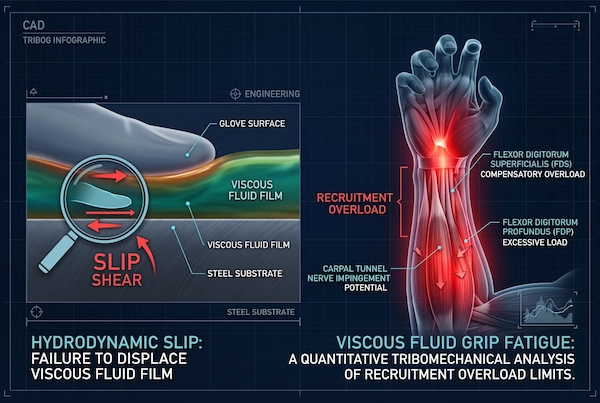
Sandy Finish Architecture: Micro-Porous Capillary Adhesion
In precision machining, aircraft engine piping assembly, and assembly stations for mirror-finished flanges with lubricating oil films, the lubricating fluid at the contact interface often exhibits extremely thin layers with exceptionally strong adhesion. Low-viscosity hydraulic oils, synthetic cutting fluids, or rust-preventive oils readily spread across smooth alloy surfaces to form a smooth, single-molecule or micrometer-scale continuous oil film. For such thin oil film conditions—which are difficult to penetrate by force using macroscopic roughness—the micro-porous sandy finish architecture relies on modified polymer materials and microscopic biomimetic topology to completely overcome the limitations of traditional gloves that depend on surface friction, instead utilizing microscopic physical adsorption and capillary dynamics to establish a stable gripping interface.
Open-Cell Micro-Porous Geometry: Breaking the Fluid Boundary Layer
The physical core of the micro-porous “Sandy Finish” technology lies in the creation of a uniformly dense and interconnected microscopic, sponge-like network of open pores within the polymer outer layer on the glove’s palm:
Chemical salt precipitation for pore formation and controlled micro-foaming molding mechanisms:
During the glove dipping process, the outer layer of nitrile rubber (NBR) or polyvinyl chloride (PVC) coating undergoes a specific, precision pore-forming process during the pre-curing stage. This involves uniformly spraying micron-sized soluble inorganic microcrystalline salt particles onto the surface of the uncured polymer, followed by deep leaching and precipitation through multiple passes in a constant-temperature hot water bath after the coating has set; Alternatively, a thermally activated chemical micro-foaming agent is used to rupture the walls of surface pores, ultimately forming an open-cell porous matrix on the glove surface with pore sizes precisely controlled between 20 and 50 micrometers.
Instantaneous Shear Oil Film and Micron-Scale Capillary Drainage Channels:
When a worker’s palm applies a normal compressive force to a metal surface coated with machine oil, the protruding, micro-elastic pore walls of the sanded surface are the first to come into contact with the fluid film. The dense pore wall structure forms countless sharp microscopic shear edges, which instantly shear and fragment the originally continuous, smooth fluid lubrication layer, breaking down the large, contiguous hydrodynamic oil film into tiny, isolated droplets. Under the combined effect of external pressure and polymer interfacial tension, microscopic capillary siphon channels rapidly draw these fragmented liquid droplets into storage cavities deep within the microporous network. This restores direct, rough-peak-to-peak contact—approaching that of a dry interface—between the workpiece and the glove skeleton, thereby eliminating lateral slippage of the fluid at the center of the interface.
Negative-Pressure Micro-Suction on Smooth Machined Surfaces
The gripping force of a microporous sand-blasted surface stems not only from physical oil displacement but also from the fluid negative-pressure effect induced by the compressive deformation of the microscopic pore network:
Compressive Deformation of Elastic Microporous Walls and Formation of Sealed Cavities:
When the palm of the glove is pressed firmly against the smooth wall of a metal tube that has been precision-ground, turned, or chrome-plated and polished, the elastic polymer walls surrounding the micropores undergo elastic deformation under normal load and conform tightly to the metal surface. This process seals each originally open microporous pore, transforming it into an independent, sealed microcavity. When the liquid deep within the microporous pores is squeezed out, trace amounts of gas and liquid droplets are trapped at the bottom of the cavity.
Micro-rebound Induces Tens of Thousands of Capillary Micro-Cups:
When a worker applies a gripping force accompanied by a tangential torque, the compressed elastic polymer pore walls attempt to rebound and return to their original shape due to the material’s elastic memory. Since the edges of the micropores are tightly sealed against the smooth metal surface, the slight rebound of the pore walls causes localized volume expansion within the sealed micro-cavities, instantly generating an extremely high microscopic negative pressure differential. These tens of thousands of capillary micro-cups, distributed across the entire palm surface, generate powerful normal adhesive forces on the surfaces of smooth alloys and flange nuts. Even when the metal surface is continuously wetted by industrial lubricants with extremely low surface tension, this micro-vacuum adhesion effectively resists lateral shear forces, providing the worker with millimeter-level precision and stability in manipulation.
For high-precision mechanical assembly workstations that require a balance of oil-repellent grip on micro-porous sanded surfaces, ultra-thin 18-gauge bare-hand dexterity, and heavy-load impact protection on the back of the hand, we recommend consulting the engineering analysis: 18-gauge high dexterity cut and impact gloves.
PVC Particle Engineering: High-Relief Mechanical Interlocking
In operational environments such as hydraulic fracturing skid areas, downstream of drilling vibrating screens, and heavy crude oil gathering and transportation pipelines, the medium conditions encountered by the working surfaces differ fundamentally from those of precision machining. The fluids in these environments not only have extremely high viscosity but are also saturated with high-density solid particles—such as weighted bentonite, drill cuttings, and high-hardness quartz proppants. When such high-solids mud completely envelops the workpiece, the microporous sand surface is often instantly clogged by the particles, causing it to lose its micro-vacuum effect. To address these extreme, heavy-duty operating conditions, the engineering community has developed a macroscopic topological structure centered on three-dimensional PVC particles (PVC Particles / Granules), completely abandoning the logic of surface adsorption and instead relying on extreme surface roughness and localized high pressure to establish an unshakable, rigid mechanical interlock.
Chamfered 3D Granules: Piercing Thick Mud and Slurry Layers
When facing thick layers of mud, whether the glove’s palm surface can breach the hydrodynamic boundary depends entirely on whether the local contact stress exceeds the fluid’s yield shear strength:
The microscopic chamfered geometry of polyhedral 3D granules:
The engineering-grade PVC granules distributed across the glove’s palm are not flat, smooth, conventional adhesive dots, but rather high-rigidity thermoplastic polymer granules that have undergone pre-curing and granulation to form a multi-faceted three-dimensional chamfered structure (Chamfered Polyhedral Geometry). The average height of the granules significantly exceeds that of conventional dipped coatings, creating a macro-scale three-dimensional matrix of rugged peaks across the palm.
High Normal Point Contact Pressure Penetrates Fluid Barrier Films:
When frontline workers grip heavy-duty drill collars, flanged couplings, or large-diameter valve handwheels, the applied gripping force is no longer distributed evenly across the entire palm surface but is highly concentrated at the micro-edges of the protruding particles. This contact mechanism induces extremely high localized point pressures at the particle tips, capable of forcibly piercing the viscous barrier formed by high-viscosity heavy oil and bentonite slurry, directly pushing aside the thick oil paste adhering to the metal surface, and rigidly forcing the hard PVC particles into the microscopic peaks and valleys on the outer walls of metal castings or pipes, thereby achieving a robust mechanical interlocking similar to the meshing of miniature gears.
Macroscopic Debris Channels for Sand-Laden Frac Fluids
During the assembly and disassembly of sand-laden fracturing manifold systems and the treatment of return fluids, the high-hardness quartz sand (20/40 mesh or 40/70 mesh) mixed into the fluid is a hidden culprit causing severe slippage:
Failure Mechanism Due to the Solid-Particle Ball-Bearing Effect:
If the palm of the glove is smooth or has overly fine pores, hard spherical quartz sand particles can become directly compressed between the glove’s outer layer and the metal pipe wall. When the pipe fitting is subjected to torsional forces or pulled, the sand particles trapped between the two surfaces act as miniature ball bearings (Ball-Bearing Effect), causing the coefficient of friction at the contact interface to drop sharply to that of rolling friction. This results in high-pressure hoses weighing tens of kilograms violently slipping out of control, leading to severe mechanical impact and crush injuries.
Dynamic Self-Cleaning Mechanism with Three-Dimensional Interlacing Grooves:
The gaps between the highly raised PVC particles form a three-dimensional network of interconnected micro-grooves (Debris Channels) across the palm surface. When a worker grips a manifold coated with fracturing slurry, the raised particles first bite into the metal, while the slurry and quartz sand particles trapped in the compressed core area are driven by centripetal compressive force and rapidly expelled along the crisscrossing groove channels to the surrounding low-pressure, non-contact zones. These macroscopic debris channels physically clear free sand particles from the core area of the friction pair, preventing the formation of a sand-and-mud ball layer. Under operating conditions where heavy non-Newtonian fluids intermingle with high-solid-phase abrasives, they provide workers with a stable, slip-resistant braking grip force.
For a systematic comparison of the engineering differences in fluid drainage mechanisms and wear resistance between traditional coarse-cotton corded palm patterns and synthetic polymer 3D particles in heavy-slurry permeation environments, please refer to the dedicated technical guide: Corded Palm Oil and Gas Gloves.
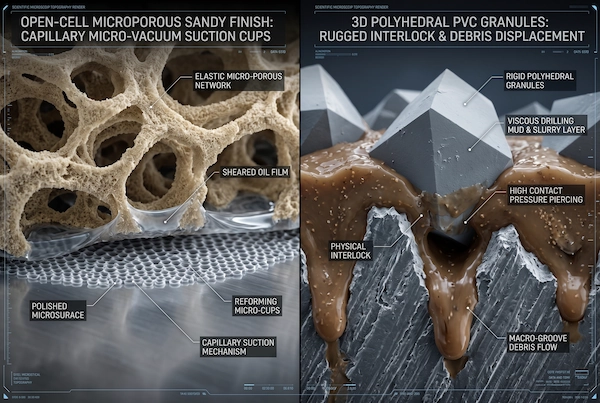
Polymeric Shear Fatigue: Structural Integrity Under Extreme Torque
During heavy-duty assembly operations—such as aligning large-diameter pipe flanges, tightening heavy-duty union fittings, and high-frequency impacts from pneumatic torque wrenches—the palm of the glove not only withstands heavy normal gripping forces perpendicular to the skin’s surface but is also constantly subjected to high-frequency, highly variable shear torque (Torsional Shear Stress). When comparing “sandy finish” gloves to “PVC dot grip” gloves, many frontline procurement managers often focus solely on the initial grip performance when the product is first unboxed, while neglecting the structural fatigue resistance of the polymer palm under long-term cyclic shear loads. Whether it involves microscopic micro-cavities or macroscopic three-dimensional particles, once the polymer matrix undergoes plastic collapse or interfacial delamination, the gloves will lose their oil-repellent and anti-slip effectiveness within just a few work shifts, rapidly degrading into a dangerous, slippery thin layer.
Elastic Restitution vs. Compression Set in Sandy Micro-Cavities
Whether micro-porous sand-textured gloves can maintain stable vacuum adhesion throughout dozens of consecutive high-intensity work shifts hinges primarily on the elastic restitution and compression set properties of the material lining the micro-pores:
Mechanism of fluid-repellency and adhesion decay caused by plastic collapse of micro-pores:
Conventional micro-foamed gloves typically use low-crosslinked, inexpensive nitrile latex or recycled plasticized PVC. When workers repeatedly apply force to tighten high-pressure pipe manifolds or lift oily cast iron parts weighing tens of kilograms, the long polymer chains in the microporous wall of the palm undergo irreversible molecular chain slippage under immense, sustained compression. This macroscopic plastic deformation causes the micropores to become permanently compressed and closed, preventing them from spontaneously rebounding and recovering after the workpiece is removed. Once the open channels are lost, the micropores completely lose their ability to siphon off thin oil films and form a micro-vacuum suction cup; the palm surface of the glove is rapidly filled with fluid, turning into a dead, slippery layer of rubber.
Elastic Recovery Fidelity of Highly Cross-Linked Modified Polymer Networks:
Professional-grade sand-textured protective shells utilize specially formulated, high-cross-linking-density nitrile copolymers or high-toughness virgin PVC polymer formulations. The dense cross-linking points within the molecular framework act like microscopic high-elasticity springs, endowing the microporous walls with extremely high resistance to compressive fatigue. Even after enduring hundreds of consecutive cycles of heavy torque torsional stress exceeding 50 Newton-meters, the permanent compression set of the microchambers remains firmly locked within an extremely low range. Within milliseconds of the worker releasing their grip, the microchambers can rebound elastically at an extremely high initial velocity, re-evacuating residual oil and rebuilding negative-pressure adsorption reserves, thereby ensuring stable gripping and bite performance even toward the end of multi-shift operations.
Interfacial Bonding Strength of Thermally Fused PVC Granules
In gloves featuring coarse-grained, macroscopically interlocked particles, high alternating torque places severe demands on the shear bonding strength at the interface between the particles and the substrate:
Common Issues with Shear Delamination in Traditional Cold Screen-Printed Adhesive Dots:
Conventional industrial anti-slip gloves typically use traditional screen-printing or roller-coating processes to apply room-temperature-curing PVC paste directly onto fabric or pre-formed, smooth rubberized surfaces. This physical adhesion relies solely on extremely weak van der Waals forces and shallow mechanical interlocking. When workers grip rotary casings wrapped in heavy crude oil or forcefully turn high-resistance wrenches clockwise, the rough peaks on the pipe walls exert enormous tangential shear stress on the raised adhesive dots. Ordinary printed rubber particles are severed cleanly at the base and fly off the substrate the moment force is applied, leaving large, smooth, and grippage-deficient blind spots in the high-stress areas of the glove’s palm and thumb crease.
Molecular-level cross-linking interfaces formed by high-frequency hot-melt bonding and secondary vulcanization:
Industrial-grade PVC coarse-particle chemical-resistant gloves completely revolutionize the logic of surface cold lamination by employing a high-frequency hot-melt bonding process with precise, mold-guided positioning, combined with a high-temperature secondary vulcanization cross-linking process. Under micrometer-level controlled temperature and pressure, preformed high-hardness PVC three-dimensional polyhedral particles undergo intense thermal diffusion and copolymerization reactions at the molecular interface with the palm’s PVC/nitrile rubber layer, which has not yet fully cured. The macromolecular segments of the two polymer phases deeply intertwine within the molten phase, forming a dense covalently cross-linked network. The particles fuse with the glove shell to form an inseparable, homogeneous entity. Its shear, tear, and peel strength is several times higher than that of traditional spot-bonding processes. Even under dual abrasion from extreme torque-induced pulling, high-solid-phase slurry scouring, and repeated scraping by metal burrs, the three-dimensional particles remain firmly anchored to the substrate, continuously providing robust mechanical braking force.
For a systematic understanding of the microscopic mechanical simulation models of energy-absorbing polymers and the impact-resistant exoskeleton on the back of the hand under multi-axial shear impacts and extreme torque compression, please refer to the specialized materials engineering analysis: TPR Exoskeleton Engineering.
Quantitative Tribological Benchmark: Friction Coefficients in Controlled Media
In heavy industry safety protection projects, the selection of anti-slip palm protection must not rely solely on frontline workers’ subjective impressions of “how it feels in the hand,” but must be based on quantitative experimental data obtained in standardized tribology laboratories under controlled force and fluid medium conditions. Conventional rubber-coated gloves often exhibit good grip when handling dry cardboard boxes or dry angle iron, but their surface mechanical performance varies dramatically once the viscosity of the fluid at the contact interface increases or solid-phase mud and sand become involved. To provide rigorous technical justification for product selection to EHS and equipment procurement departments in the oil drilling and production, equipment manufacturing, and petrochemical overhaul sectors, the SQG Tribology Laboratory conducted multi-medium comparative tests on mainstream microporous sand-textured, coarse-particle fused-coating, ultra-thin high-needle sand-textured, and conventional plain-weave gloves in accordance with the modified ASTM D1894 static friction test procedure, utilizing an industrial-grade triaxial friction and wear tester (Industrial Tribometer).
ASTM & Industrial Tribometer COF and Torque Resistance Matrix
The matrix below summarizes the static coefficient of friction (Static COF) for each model under the following conditions: dry carbon steel, a metal plate fully saturated with No. 46 anti-wear hydraulic oil, and a high-density crude oil water-based slurry containing 20/40 mesh quartz sand. It also includes test data on the maximum anti-slip torque under controlled grip force:
| Friction Metric / Testing Medium | Sandy Finished PVC (SQG® P-902) | PVC Granule-Coated (SQG® P-901) | Sandy Nitrile 18G (MAXGUARD® K4-278) | Smooth Dipped Nitrile / PVC |
| Primary Friction Mechanism | Micro-Capillary Negative Suction | 3D Chamfered Mechanical Interlocking | Open-Cell Micro-Porous Drainage | Boundary Surface Contact |
| Dry Steel Static COF | 1.15 | 1.08 | 1.25 | 0.85 |
| Hydraulic Oil Metal Plate COF | 0.92 (High Vacuum Retention) | 0.78 (Moderate Drainage) | 0.98 (Precision Thin-Film Grip) | 0.32 (Severe Hydrodynamic Slip) |
| Heavy Crude & Frac Mud COF | 0.65 (Micro-pores Clogged) | 1.05 (Pierces Mud Boundary) | 0.58 (Slurry Surface Saturation) | 0.22 (Zero Interlocking) |
| Torque Resistance (Nm to Slip) | 38 Nm (Smooth Pipe) | 62 Nm (Heavy Rough Pipe) | 32 Nm (Precision-Machined Bar) | 14 Nm (Uncontrolled Rotation) |
| ANSI 105 Abrasion Rating | Level 4 (Uniform Wear) | Level 5 (Sacrificial Particle Layer) | Level 4 (Micro-Pore Wear) | Level 3 (Rapid Puncture) |
| Recommended Part Profile | Wet Acid Flanges, Machined Valves | Heavy Drill Collars, Frac Manifolds | Oily Fasteners, Engine Gearboxes | Clean Packaging Boxes Only |
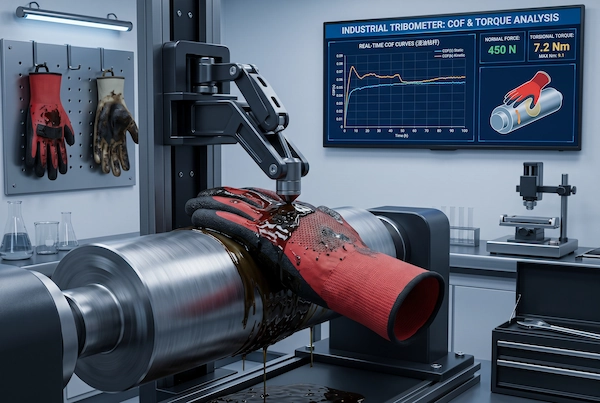
From the multidimensional laboratory test data presented above, three fundamental mechanical conclusions that determine operational safety can be clearly derived:
The dominance of capillary suction in thin-film environments:
When tested with low-viscosity, easily spreadable No. 46 hydraulic oil, the microporous sand-surface structure demonstrated strong gripping and control capabilities. MAXGUARD® K4-278, with its dense, sponge-like open-cell network of 18-pin microporous nitrile, achieved a measured friction coefficient in oil of up to 0.98; the SQG® P-902, featuring a pure PVC sand-textured surface, also maintained a high level of 0.92. In this scenario, the continuous oil film is instantly displaced and absorbed, and the microporous rebound creates a slight negative pressure vacuum adsorption, resulting in grip stability far exceeding that of ordinary plain-weave coatings (where the COF drops sharply to 0.32, making hydrodynamic slippage highly likely).
Reversal of Mechanical Interlock in High-Solid, High-Viscosity Mud:
When the test fluid was switched to crude oil mud mixed with high-hardness quartz sand and bentonite, the microscopic open-cell network of the microporous sand surface was rapidly clogged and saturated by fine particles, causing the coefficient of friction to drop significantly (to between 0.58 and 0.65). In contrast, the SQG® P-901, equipped with three-dimensional polyhedral chamfered particles, achieved a performance reversal, with a measured coefficient of friction reaching 1.05 and delivering a maximum anti-slip resistance of 62 Nm in a rough, high-pressure steel pipe torque test. The rigid, protruding particles force their way through the thick slurry layer, guiding the quartz sand into the micro-grooves between the particles, where it bites directly into the metal outer wall to achieve a firm grip.
Wear Life and Long-Term Protection from the Particle Sacrifice Layer:
In the ANSI 105 cyclic wear test, conventional smooth rubber layers are highly susceptible to rapid penetration by microscopic burrs due to concentrated stress (Level 3); in contrast, the raised outer layer of coarse PVC particles in SQG® P-901 forms a natural “sacrificial wear-resistant buffer layer,” where high-frequency wear acts only on the apexes of the raised particles, effectively protecting the underlying fluid-tight base and achieving the extremely high ANSI Level 5 wear resistance rating; SQG® P-902 and K4-278, on the other hand, rely on a highly cross-linked polymer matrix to resist micro-pore collapse, maintaining a consistent Level 4 abrasion resistance rating.
Workstation Mapping: Matching Palm Topography to Fluid Viscosity
In heavy industrial production processes, the viscosity of fluid media, the content of solid-phase particles, and the surface finish of workpieces vary widely. If safety managers attempt to apply a single palm texture to operations across the entire plant without considering the specific workstation environment, they often encounter frequent setbacks in practice: when a micro-porous sand-textured glove is used to grip a large-diameter steel pipe covered in drilling mud, the micro-pores are instantly clogged with mud and sand, causing the glove to slip; using gloves with coarse particles to assemble precision transmission gears coated in light motor oil will cause the raised particles to compromise tactile sensitivity and even scratch machined surfaces. The scientific approach to achieving zero slip-related injuries lies in implementing “Workstation Fluid Mapping,” which involves precisely deploying specialized gloves based on fluid viscosity and mechanical loads.
Petrochemical Piping and Acid Washing: SQG® P-902 (Sandy Finish Pure PVC)
During acid washing of the inner walls of petrochemical reactors, the insertion and removal of blind flanges in alkylation pipelines, the decontamination of caustic soda storage tanks, and the installation and removal of bolts on various smooth stainless steel flanges, workers are exposed to highly corrosive yet low-viscosity polar chemicals that easily form a thin film on smooth metal surfaces:
Microporous Sandy Finish Dispels Thin Liquid Films to Create Transient Negative Pressure:
The flagship SQG® P-902, specifically designed to address highly corrosive and smooth interfaces, features a heavy-duty pure PVC shell and a microporous Sandy Finish on the grip surface. When workers grip smooth pipes or valves coated with dilute acids, caustic soda solutions, or light lubricants, the dense network of micro-foam pores shatters under pressure and absorbs the thin liquid film on the surface. A cluster of suction cups, formed by the rebound of the micro-cavities’ inner walls, firmly adheres to the metal surface, providing excellent resistance to lateral slippage;
The fiberglass-reinforced inner liner creates a robust cut-resistant barrier:
When dismantling long-term rusted pipe flanges or cleaning stainless steel filter screens, sharp metal burrs often adhere to the edges of the workpieces. The P-902 features a 13-micron alkali-free glass fiber and high-strength nylon blended liner laminated within a pure PVC liquid-tight shell, combining complete liquid-tightness with ANSI Class A4 mechanical cut resistance. Paired with a heat-fused, impact-resistant exoskeleton on the back of the hand, it sets a new standard for advanced protection against inorganic acids and alkalis as well as smooth metal surfaces within the chemical liquid-proof impact gloves category.
Drilling Solids Control, Mud Tanks, and Frac Skids: SQG® P-901 (PVC Granules)
In applications such as maintenance of underflow in oil and gas drilling vibrating screens, manifold alignment in hydraulic fracturing sand-mixing skid areas, impact testing of quick-connect joints in mud discharge pipelines, and crude oil gathering and transportation areas with high sulfur content, the operating medium has completely transformed into a non-Newtonian fluid slurry characterized by high viscosity, high specific gravity, and containing large amounts of bentonite and quartz sand:
Three-dimensional particles force their way through the thick mud barrier:
Faced with severe encasement by heavy mud-sand mixtures, microporous adsorption becomes completely ineffective. At this point, it is essential to deploy SQG® P-901, which features a three-dimensional coating of coarse particles. Its palm surface is covered with high-hardness, polyhedral PVC melt particles that generate extremely high localized contact pressure the moment a worker grips it, directly piercing through the thick layer of crude oil and mud to force the sharp edges of the particles into the microscopic grooves of the rough pipe wall, establishing deep mechanical interlocking;
Vertical and horizontal micro-channels automatically discharge sand and debris to prevent rolling and slippage:
The naturally formed crisscrossing micro-grooves between the particles squeeze and divert fracturing quartz sand and drill cuttings toward non-contact surfaces the moment pressure is applied, eliminating the ball-sliding effect caused by solid particles between friction surfaces; combined with a specially formulated PVC/nitrile-modified rubber layer resistant to hydrocarbon swelling, the glove maintains its rigid gripping force on the palm even when submerged in deep mud pits.
Powertrain Assembly and Oily Sheet Metal Stamping: MAXGUARD® K4-278 (Sandy Nitrile)
In automotive powertrain assembly lines, heavy-duty truck transmission assembly, and large-scale metal sheet deep-drawing and stamping operations—typically found in back-end mechanical manufacturing workshops—the hazards workers face have shifted entirely from being submerged in slurry to “metal slippage on thin oil films, high-speed cutting by sharp flash, and mechanical pinching in confined spaces”:
18-pin ultra-dense, bare-hand-level dexterous tactile control:
These work environments require frequent handling of small bolts saturated with stamping oil and high-precision machined bearings; overly bulky chemical-resistant gloves can cause finger stiffness and even lead to incorrect part installation. The flagship MAXGUARD® K4-278 features an ultra-thin, 18-gauge seamless knitted liner that provides ANSI Level A4 cut resistance while delivering fingertip tactile feedback close to that of bare hands;
Micro-Foamed, Textured Nitrile for Precise Oil Drainage and Absorption:
The palm is impregnated with a specially formulated, ultra-thin, microporous textured nitrile coating. Micron-sized pores rapidly expel the anti-rust oil film the moment the glove contacts oiled sheet metal, creating a micro-vacuum grip along the edges of oily stamped parts to prevent the sheet metal from slipping out of the hand during stamping loading. The back of the hand is seamlessly covered with lightweight, low-damping TPR armor that precisely absorbs the kinetic energy from accidental impacts and rebounds around the press dies.
Transitioning to Dry Rigging and High-Tension Wirelines
When petrochemical maintenance and drilling operations move away from fully saturated liquid environments to open-air heavy-lift hoisting areas, drill floor main rope routing platforms, and rigging work zones in steel pipe yards, fluid lubrication is no longer the primary hazard. Instead, the dominant risks are the intense cutting and abrasion caused by microscopic wire breaks resulting from high-frequency dragging of steel wire ropes, as well as high temperatures generated by sliding friction:
Seamless Transition to Para-Aramid Wear-Resistant Rigging Protection:
During heavy-duty lifting operations in purely dry or slightly damp conditions, continued use of polymer-coated gloves can result in the outer coating being rapidly scraped and cut through by broken wires in the steel wire rope. Safety managers should promptly organize work crews to switch to heavy-duty, abrasion-resistant models specifically designed for rigging and towing. Specific technical specifications and selection criteria can be found in the specialized guide: Heavy Duty Rigging Gloves—Aramid;
Shear Resistance of Aramid Thumb Reinforcement:
For workstations involving frequent steel wire rope tugging and hook shackle fastening, we recommend the flagship model SQG® BM-702, which features high-strength aramid thread stitching and multi-layer heavy-duty reinforcement at the thumb area. This model eliminates the thin, easily worn-out surface rubber layer, relying instead on heavy-duty, abrasion-resistant leather and an aramid fiber framework for support. It provides robust protection against tearing and high-temperature abrasion in dry, heavy-duty friction environments, enabling a closed-loop configuration of safety equipment across all areas of the facility.
Glove Lifecycle Tribology: Decontamination and Texture Longevity
In the daily management of protective equipment at industrial sites, the anti-slip texture on the palm is not a static, unchanging coating, but rather a consumable friction interface that dynamically evolves due to working hours, exposure to media, and shear wear. Many industrial enterprises, after purchasing high-performance gloves with a “sandy finish” or “PVC dot grip,” often overlook the patterns of texture degradation that occur during multi-shift, cyclical use: when the microporous sandy surface becomes completely clogged by stubborn heavy oil and is not decontaminated promptly, it degrades into a completely slippery rubber surface; in gloves with coarse particles, the particles peel off over large areas due to high-frequency friction from heavy-duty tools, yet front-line workers continue to use them beyond their service life. Establishing full-lifecycle tribological maintenance procedures and quantifiable end-of-life thresholds is essential for maintaining on-site grip safety and controlling the total cost of ownership (TCO) for personal protective equipment.
Preventing Micro-Pore Saturation in Heavy Hydrocarbon Immersion
The microporous “Sandy Finish” relies on a microscopic honeycomb network of pores to create capillary drainage and a micro-vacuum suction effect; however, under continuous immersion in heavy crude oil, asphaltene-rich gel, or high-viscosity gear oil, the microporous structure faces severe physical saturation challenges:
Highly adhesive asphaltene deposits induce micropore saturation:
Heavy crude oil and extreme-pressure greases are rich in high-molecular-weight asphaltenes, colloids, and polar polymer additives. These components exhibit extremely strong interfacial adsorption properties; once they enter micron-scale pores, they do not spontaneously flow out in response to external pressure but instead accumulate and harden layer by layer on the inner walls of the micropores. Over time, the interconnected, open-cell sponge-like network becomes filled and sealed by highly adhesive grease deposits. The micropores lose the space needed to rebound under pressure, the micro-vacuum suction effect is completely disabled, and the mechanical properties of the glove surface degrade to those of a smooth coating, causing it to fall back into the trap of hydrodynamic lubrication slippage.
Shift-Based Cleaning and Decontamination Procedures and Online Regeneration of the Microporous Structure:
To prevent permanent damage to the microporous structure, standardized shift-based cleaning and maintenance must be performed at the worksite. Do not use highly corrosive aromatic solvents (such as pure benzene or acetone) to forcefully scrub the gloves, as this may damage the polymer substrate. It is recommended to use warm water in combination with a neutral, water-based industrial degreaser or an environmentally friendly hydrocarbon cleaner with a low flash point. Mechanical rubbing should be used to compress the microporous structure, creating a self-pumping effect that forces deeply embedded oil sludge particles out of the pores. For high-precision mechanical assembly processes, centralized cleaning may be performed using a low-frequency ultrasonic degreasing tank, followed by natural drying in a well-ventilated, shaded area. This allows the polymer microporous walls to fully regain their elastic memory, thereby achieving physical regeneration of the gripping interface and enabling repeated reuse.
Quantifying PVC Particle Loss: Wear Thresholds for High-Torque Tools
For mechanically interlocking gloves featuring three-dimensional coarse particles (such as PVC particles or dots), their macroscopic anti-slip braking force is based on point-to-point rigid engagement between the protruding particles and the workpiece surface, while high-torque friction is the most direct source of physical wear:
Progressive three-body wear under alternating mechanical torque:
When using heavy-duty pipe wrenches to tighten drill pipe joints, turning high-resistance valve handwheels, or handling rough, heavy castings, sharp burrs on the outer walls of metal workpieces, loose quartz sand particles, and protruding PVC particles create a typical three-body wear scenario. Repeated high shear stress cycles acting on the tops and roots of the particles cause the polyhedral edges to gradually blunt and round off, significantly reducing their height due to wear; when the local fatigue shear limit is reached, particles may undergo brittle fracture or even detach entirely from their roots.
30% Wear Area Quantification Threshold (Wear Thresholds):
Corporate EHS teams must establish strict particle wear retirement standards for heavy-duty tool operations and strictly prohibit lax management practices such as “not replacing gloves unless there are holes.” On-site quantitative inspections should focus on the thenar region of the palm, the fingertips, and the web between the thumb and index finger—the primary load-bearing surfaces. Once PVC granules in these high-stress areas are found to be worn flat (with a loss of granule height exceeding 50% of the initial height) or the cumulative area of missing granules reaches more than 30% of the total area of that region, it indicates that the macro-level mechanical interlock defense has been breached. At this point, the gloves can no longer effectively disperse silt or penetrate thick layers of mud, and the maximum anti-slip torque will plummet dramatically. A mandatory scrapping order must be issued, and new gloves must be allocated from the warehouse for replacement to completely prevent secondary accidents—such as hand injuries caused by dropping tools due to grip failure.
Technical FAQ: Tribological Selection, Rheology, and Cold Grip
In the fields of oil and gas drilling and production, heavy-duty construction machinery assembly, and precision aerospace manufacturing, equipment and safety procurement teams often face a disconnect between theoretical specifications and real-world performance when comparing different anti-slip treatments for palm surfaces: Why does a microporous sand-textured surface—which offers exceptional grip in clean engine oil—become slippery when submerged in drilling mud? Since coarse-grained PVC offers strong slip resistance, can it be directly adopted plant-wide for handling highly polished machined parts? In cold, heavy snow conditions, which coating loses grip faster when gloves become stiff? Sand-textured nitrile and sand-textured PVC look similar—what are the fundamental mechanical differences between them?
Drawing on rheological test data from the SQG Materials and Tribology Laboratory, this document provides engineering-level technical answers to four key questions regarding the comparison between sandy-finish and PVC dot-grip gloves, focusing on interfacial mechanics, ambient temperature, and polymer science.
Why do sandy finish gloves lose their grip when fully submerged in drilling mud?
Microporous sandy-finish gloves perform exceptionally well in relatively pure lubricating oil or hydraulic fluid, but their grip strength often declines significantly once fully submerged in deep-well drilling mud. The essence of this phenomenon lies in the physical damage caused by the solid-liquid two-phase flow to the microscopic pore geometry:
Physical clogging of the micro-pore network by high-solid-phase particles (Micro-Pore Clogging):
Drilling mud (especially water-based or synthetic bentonite mud) is not a single liquid but a high-solid-phase suspension containing a large amount of micron-sized weighting agents (such as barite powder), bentonite colloids, and fine cuttings. The particle sizes of these components typically range from a few micrometers to tens of micrometers, overlapping significantly with the pore sizes in the surface layer of microporous sand gloves. When the glove is submerged in the drilling mud and subjected to pressure during a grip, the fine solid particles in the fluid are forcibly squeezed into the microporous structure along with the liquid;
the elastic rebound of the micropores is impeded, and the negative-pressure suction cup effect is completely neutralized:
Ordinary, pure oil molecules are fluid and can flow out smoothly once pressure is released; however, once bentonite and rock cuttings enter the pores, they rapidly dehydrate and harden, becoming trapped deep within the micropores and forming dense blockages. This deprives the polymeric elastic pore walls surrounding the micropores of the space needed for free compression and elastic rebound. The glove is unable to create localized low-pressure micro-vacuum zones at the contact surface, rendering tens of thousands of micro-suction cups completely ineffective; simultaneously, the glove’s surface is smoothed into a hard, slippery layer by a mud cake, causing its grip strength to deteriorate rapidly into a hydrodynamic interface prone to slippage.
Are PVC particle gloves suitable for precision-machined aerospace alloys?
In machining and assembly operations involving aerospace-grade titanium alloy blades, ultra-precision-machined chrome-plated piston rods, or high-surface-finish aluminum alloy engine cylinder blocks, the use of PVC particle gloves featuring three-dimensional coarse particles or adhesive dots is strictly prohibited:
Point contact and high stress concentration pose a risk of micro-indentations and scratches:
Three-dimensional PVC-particle gloves are designed to pierce through thick layers of oil using high-hardness, three-dimensional polyhedral chamfers; they have a small contact area and extremely concentrated contact stress. When workers firmly grip high-precision aluminum alloy or mirror-polished alloy workpieces that have not undergone hardening treatment, the sharp corners of the rigid PVC particles apply extremely high localized normal pressure to the metal surface, which can very easily leave micron-level scratches, dents, or slip marks on precision-machined surfaces. This directly compromises the workpiece’s surface roughness tolerance (Ra value), resulting in expensive aerospace parts being scrapped during non-destructive testing due to surface defects;
Micro-foamed, sand-textured nitrile gloves are essential for precision machining and assembly:
Precision assembly operations require extremely high tactile sensitivity and surface-contact cushioning. Ultra-thin, high-pile sand-textured nitrile gloves feature soft microporous walls with exceptional elasticity. When in contact with the workpiece, they provide continuous, uniform surface contact that not only displaces trace amounts of rust-preventive oil to create a micro-vacuum grip but also effectively distributes the gripping load, eliminating any risk of physical indentation damage to the machined surface.
How does extreme sub-zero weather affect the friction performance of sandy gloves versus PVC dot gloves?
In oil fields located in extremely cold regions or during winter outdoor operations, ambient temperatures often remain in the range of several tens of degrees below zero year-round. The way low temperatures affect these two anti-slip topological configurations is fundamentally different, and the key factor depends on the glass transition temperature (Tg) of the base polymer:
Glassy Brittleness and Grip Failure of Standard PVC Particles at Low Temperatures:
Conventional polyvinyl chloride (PVC) materials have a relatively high glass transition temperature. Without the addition of special cold-resistant copolymer monomers, once the ambient temperature drops below minus 10 degrees Celsius, the plasticizer molecular chains inside the PVC particles freeze, causing the particles to transform from a tough elastomer into a hard, glassy state. When gripping frozen steel pipes or frozen valves with force, the hardened and brittle PVC pellets not only fail to conform to the microscopic deformations caused by the rough peaks on the metal surface to achieve a secure grip, but also tend to slip on the icy surface like hard plastic sliders. Under extreme torque, the pellets may even fracture and detach due to cold brittleness;
Flexible Adhesive Holding Power of Low-Temperature-Modified Sand-Faced Nitrile Rubber:
Nitrile rubber (NBR) naturally possesses a low glass transition temperature. Even under extremely cold conditions below -20 degrees Celsius, a high-quality sand-faced NBR coating can maintain the soft elasticity of its polymer network. At low temperatures, the walls of its microporous structure can still compress freely and rebound elastically, continuously displacing the condensed water film on ice-oil mixed surfaces and establishing a micro-vacuum adsorption effect; however, when facing extremely cold slurry environments, it is essential to select freeze-resistant gloves with coarse particles that have undergone low-temperature copolymer modification (such as PVC/nitrile hybrid blends) to ensure that the mechanical interlocking toughness of the particles does not fail at low temperatures.
What is the core mechanical difference between sandy nitrile (K4-278) and sandy PVC (P-902)?
Although both the K4-278 and P-902 palm surfaces are labeled as “Sandy Finish,” due to differences in the chemical matrix of their underlying coatings, there are distinct technical distinctions between the two in terms of mechanical performance and protective applications:
Differences in Microstructure, Flexibility, and Breathability:
MAXGUARD® K4-278 utilizes a micro-foamed nitrile rubber “sandy finish” process combined with an 18-gauge, ultra-dense, seamless-knit liner. The coating is thin with extremely high microporosity, offering exceptional dexterity, a bare-hand-like feel, and rapid wicking of thin layers of machine oil. It is classified as lightweight mechanical cut- and impact-resistant gear; In contrast, SQG® P-902 features a heavy-duty, pure PVC continuous-dip-coated sanded outer shell. Its coating is thicker, and the pores are primarily created through a chemical salt-precipitation process. The overall feel is substantial and heavy-duty, specifically designed for high-risk, dual-load protection against both physical and chemical hazards;
Key Differences in Resistance to Media Corrosion and Swelling:
Sanded nitrile (K4-278) offers natural resistance to swelling caused by organic non-polar hydrocarbons such as diesel, kerosene, and mineral oil; however, it is prone to molecular chain oxidation, degradation, and hardening when exposed to concentrated nitric acid, concentrated sulfuric acid, or strong oxidizing agents; Sanded-finish pure PVC (P-902), on the other hand, possesses strong chemical inertness against inorganic strong acids and strong alkalis, providing long-term resistance to 96% concentrated sulfuric acid and 37% concentrated hydrochloric acid, as well as complete liquid-tight protection; however, there is a risk of plasticizer leaching when subjected to prolonged immersion in pure aromatic hydrocarbons or diesel. When selecting the appropriate material, application workstations must be strictly defined based on the polarity of the medium.
Hazardous Fluid Tribology Audits & Evaluation Kit (CTA)
In heavy equipment manufacturing, oil and gas exploration and fracturing, and high-risk maintenance of petrochemical facilities, relying solely on static performance metrics advertised in product brochures for hand slip protection often fails to address the complex and ever-changing slip hazards encountered at frontline workstations. Fluids in industrial settings are rarely a single type of standard lubricant; instead, they are non-Newtonian fluid systems mixed with heavy oil sludge, slippery water drag-reduction agents, solid drilling cuttings, or highly corrosive cleaning acids. Mud sprays caused by the release of internal pressure during manifold loading and unloading, the high-speed handling of wide sheet metal parts coated with stamping and drawing oils, and the compensatory muscle fatigue workers experience from prolonged gripping of oily and slippery workpieces—all of these factors can cause protective gloves that have not been specifically validated for these operating conditions to fail within a short period of time. An effective approach to systematically eliminating fatalities caused by slips and falls from heights and crush injuries lies in introducing tribological surveys to the worksite and implementing quantitative wear assessments under real-world fluid conditions within core work crews.
Field Fluid Rheology Surveys and Slippage Hazard Audits
For large-scale energy engineering general contractors, heavy machinery manufacturing bases, onshore and offshore drilling platforms, and specialty chemical storage and transportation stations, the SQG Industrial Tribology and Safety Protection Engineering Team provides targeted “Field Fluid Rheology Surveys and Slippage Hazard Audits”:
On-site measurement of medium rheological properties and interfacial contact parameters:
Engineering technicians are deployed directly to drilling rig decks, fracturing sand-mixing skid units, heavy-duty transmission assembly lines, and flange acid-cleaning pipe racks to collect on-site samples of lubricants, drilling mud, and waste acid and liquid byproducts. Using portable fluid testing equipment, they determine the dynamic viscosity curves, shear-thinning characteristics, and surface tension of the media at various ambient temperatures; Simultaneously, surface roughness profilometers were used to precisely map the peak distribution of surface roughness on operational steel pipes, flange castings, and stamped parts, enabling the establishment of a “fluid thickness-roughness matching model” for each workstation to accurately determine whether the interfacial lubrication mechanism operates in the fully hydrodynamic lubrication or boundary lubrication range;
Assessment of Worker Grip Loads and Compensatory Fatigue on the Production Line:
Using wireless electromyography (sEMG) sensors and a hand pressure distribution measurement system, track the instantaneous peak grip forces and forearm muscle fatigue trends of front-line workers during full-shift operations involving high-torque pipe wrenches, lifting slippery drill pipes, and tightening pipe valves; Precisely identify risk points associated with “compensatory grip overload” caused by insufficient slip resistance on glove surfaces; assist corporate EHS teams in identifying blind spots for accidents—such as falling objects from heights and rotational jamming—triggered by uncontrolled fatigue in the hands; and establish a standardized, tiered configuration plan for the entire plant featuring “gritty surface drainage and absorption, coarse-particle mechanical interlocking, and strong, tough, wear-resistant rigging.”
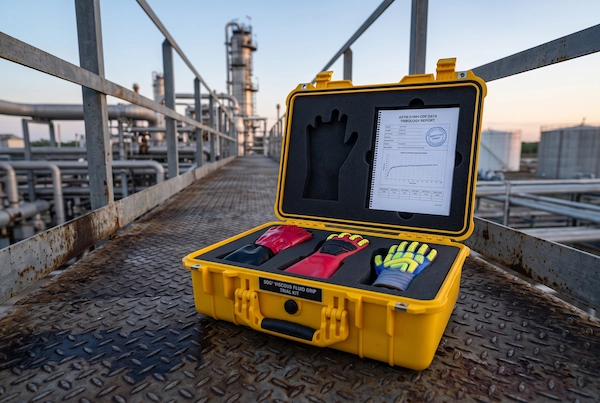
Request the SQG® Industrial Viscous Grip Evaluation Kit
To assist equipment directors at multinational oilfield service companies, vice presidents of safety at construction machinery manufacturers, and maintenance and procurement managers at large refining and petrochemical facilities in conducting scientific, on-site comparative testing before annual centralized bidding, SQG has officially launched a free, direct channel for requesting the “SQG® Industrial Viscous Grip Evaluation Kit” directly from the manufacturer.
This evaluation kit contains three flagship protective models, each representing a different tribological-rheological configuration:
SQG® P-901: Features a high-rigidity PVC three-dimensional polyhedral chamfered particle coating, paired with a PVC/nitrile hydrocarbon-resistant, chemical-resistant shell and an extended rigid safety cuff. It is specifically designed to tackle heavy-duty mechanical interlocking conditions in fracturing slurries containing high-solid-phase quartz sand, high-density drilling mud circulation tanks, and coarse, high-pressure oil pipes;
SQG® P-902: Features a liquid-tight shell made of virgin PVC with a microporous “Sandy Finish” treatment and a built-in 13-gauge glass fiber composite cut-resistant liner. Specifically designed to handle concentrated sulfuric acid, caustic soda pipe and valve cleaning, and machined flange assemblies coated with a thin oil film, providing dual protection through micro-vacuum oil removal and adsorption along with ANSI A4-grade cut resistance;
MAXGUARD® K4-278: Features an ultra-thin, 18-gauge, extremely dense, highly breathable cut-resistant liner, a palm-side composite micro-foamed, microporous, sand-textured nitrile coating, and an integrated, lightweight, energy-absorbing TPR armor on the back of the hand. It is specifically designed for high-precision automotive transmission assembly and the handling of stamped parts coated with rust-preventive oil—advanced assembly stations that require ultimate bare-hand tactile sensitivity and precise oil-repellent grip.
Companies can conduct on-site comparative evaluations lasting 14 to 30 days with their core maintenance teams, at mud solid control workstations, and in precision powertrain workshops to comprehensively assess the gloves’ maximum anti-slip torque when handling fluids of varying viscosities, their resistance to particle abrasion, and workers’ forearm fatigue tolerance during full-day operations.
If you would like to request customized tribological field assessment support for your worksite, or to directly request factory-tested sample kits and complete engineering specifications for your technical team, please feel free to contact our protective engineering experts at any time: Request a Worksite Evaluation Kit & Direct Quote.


