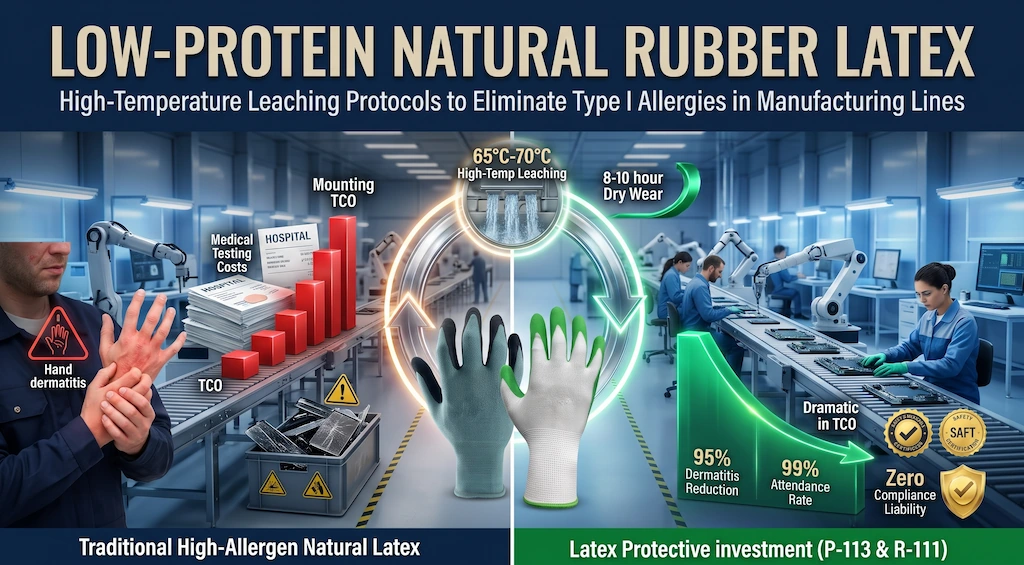
In 3C electronics assembly, automotive wiring harness connection, precision hardware sorting, and continuous light industrial packaging workshops, front-line assembly workers are required to wear protective gloves for extended periods to protect against abrasions from materials and micro-mechanical wear. However, because traditional low-cost industrial latex lacks thorough purification processes during production, soluble antigen proteins and vulcanizing chemical additives remaining on the coating surface undergo prolonged immersion reactions with workers’ palm sweat in the confined microenvironment. A large number of assembly workers frequently experience skin erythema, blisters, contact dermatitis, and persistent, severe itching, leading to declining production line attendance, the loss of skilled workers, and frequent triggers for stringent EHS compliance audits regarding occupational diseases and labor practices by multinational manufacturing companies.
In response to these frequently recurring occupational skin contact issues, corporate EHS teams and procurement departments must establish quantifiable standards and include compliant hypoallergenic natural rubber latex work gloves in their core procurement catalogs. For a long time, a common misconception has prevailed in industrial procurement decision-making: directly equating “hand allergies” with “natural latex material,” and even blindly reducing procurement quotas for natural rubber gloves in favor of ordinary synthetic-coated gloves that lack sufficient abrasion resistance and toughness. In reality, natural rubber itself does not necessarily cause dermatitis. The root cause lies in low-end small workshops that, in an effort to cut electricity and water costs, omit the critical high-temperature water-washing process to remove proteins. This results in highly reactive hydrophilic proteins (such as Hev b 5 and Hev b 6.02) remaining entirely on the surface of the finished product. Truly hypoallergenic gloves must undergo rigorous chromatographic and extraction testing to ensure that total extractable antigen proteins are consistently maintained below international safety thresholds.
To prevent the transfer of allergens at the industrial source, modern state-of-the-art factories have abandoned the traditional, simplified single-stage cold-water washing process and established a closed-loop standard that incorporates multi-stage counter-current hot-water immersion washing and hydrolytic desensitization controls. By inducing countercurrent mass transfer between the molded rubber film and deionized pure water, combined with high-temperature deep extraction at a constant temperature of 65°C to 70°C, soluble plant proteins and free accelerator molecules are fully dissolved and flushed out with the wash water. This ensures the finished rubber layer meets the ultra-low protein limit standard of ASTM D5712, eliminating the risk of acquired sensitization for healthy workers wearing the gloves during long shifts. For a comprehensive understanding of the technical evolution of the dipping matrix under all operating conditions, surface microstructure mechanics, and different substrate specifications, please refer to the official Latex Coated Work Gloves Technical Knowledge Center.
Immunology of Latex Allergies: Type I IgE Response vs. Type IV Chemical Sensitivity
In industrial manufacturing and heavy assembly operations, many procurement managers and on-site safety officers often fall into the trap of making broad, qualitative assumptions regarding adverse skin reactions caused by gloves. They tend to categorize redness, swelling, peeling, or itching on workers’ hands as “latex allergy” across the board. This vague understanding not only tends to cause unnecessary panic but can also lead to technical inaccuracies in selecting alternative protective equipment. From the perspective of molecular immunology and occupational toxicology, there is a clear distinction—in terms of pathological origin, triggering mediators, and health risk levels—between systemic allergic reactions triggered by unpurified plant proteins and localized delayed-type dermatitis induced by rubber vulcanization processing additives.
Hev b Allergenic Proteins vs. Vulcanization Accelerators
Natural latex is harvested from the three-leaf rubber tree; raw latex that has not undergone deep industrial purification contains approximately 1% to 2% natural plant proteins. The World Health Organization and the International Union of Immunological Societies have clearly identified and cataloged 15 major natural rubber allergens, collectively referred to as Hev b proteins (Hev b 1 through Hev b 15):
Macromolecular antigens embedded in the rubber phase (Hev b 1 and Hev b 3): These proteins typically have molecular weights ranging from 14 to 58 kDa and are physically bound to the lipid layer on the surface of cis-1,4-polyisoprene rubber particles. Due to their low water solubility and firm attachment to the elastomer matrix, they do not readily leach out during routine wear;
Highly water-soluble, highly sensitizing cytoplasmic proteins (Hev b 5 and Hev b 6.02): Hev b 5 (an acidic cytoplasmic protein) and Hev b 6.02 (a hevein domain), with molecular weights ranging from only 4.7 to 16 kDa, are extremely hydrophilic, small-molecule free proteins. After tapping, they are released and suspended in the latex phase; not only do they exhibit extremely high solubility in aqueous solutions, but their small molecular conformation also allows them to easily penetrate even minute breaks in the stratum corneum, making them the most potent sensitizing factors for inducing acute immune stress in humans;
Clinical and Engineering Distinctions Between Type I and Type IV Immune Responses:
Type I Immediate Hypersensitivity: Triggered exclusively by free, water-soluble Hev b proteins. In susceptible workers, exposure to these trace amounts of protein causes the immune system to produce large quantities of specific IgE antibodies, which bind to the surfaces of mast cells and basophils. When workers put on gloves with high protein residue again, cellular degranulation is triggered within a few minutes to half an hour, releasing potent inflammatory mediators such as histamine. This leads to localized acute contact urticaria, facial flushing and swelling; in severe cases, patients may even experience airway edema and acute asthma, constituting a life-threatening systemic anaphylactic crisis;
Type IV Delayed-Type Contact Dermatitis (Delayed-Type Hypersensitivity): The causative agent is not the plant protein itself, but rather the synthetic chemical accelerators added during the rubber compounding and vulcanization process. The most common culprits are thiurams (such as TMTD and TETD), dithiocarbamates (such as ZDEC and ZDMC), and benzothiazoles (MBTs). These small-molecule compounds are haptenes; after penetrating the skin, they bind to the epidermal cells’ own carrier proteins to form complete antigens. Mediated by sensitized T lymphocytes, eczema-like erythema, dense clusters of blisters, and keratotic fissures and desquamation do not erupt until 24 to 72 hours after contact.
The core technical objective of the industrial desensitization process is to use directed extraction in fluid engineering to bidirectionally separate the water-soluble free Hev b protein from unreacted residual promoter monomers.
Sweat-Induced Allergen Leaching During Long-Shift Wear
On production lines in precision manufacturing, 3C electronics, and automotive wiring harnesses, front-line workers often need to wear work gloves continuously for 8 to 10 hours. Prolonged, high-intensity manual handling creates a harsh “micro-hot-room effect” microenvironment inside the sealed glove:
Hyper-hydration of the stratum corneum and physical barrier failure: The epidermis of the human palm contains an extremely dense network of sweat glands—up to several hundred per square centimeter. Within the sealed cavity formed by fully-dipped or thickly rubber-coated gloves, excreted bodily fluids cannot evaporate through natural convection, causing the relative humidity on the inner surface of the gloves to rapidly exceed 95%, while the local skin surface temperature remains consistently between 36 and 37 degrees Celsius. Exposed to high temperatures and humidity for hours on end, the cells of the stratum corneum in the epidermis of the hands absorb excessive water and swell, causing the originally dense intercellular lipid bilayer to loosen and disintegrate, thereby completely compromising the epidermis’s natural physical defense against the penetration of external foreign substances;
Dynamic reverse extraction of electrolytes from sweat acting as a hydrophilic solvent: The sweat secreted by workers contains electrolytes such as sodium chloride, lactate ions, and urea, exhibiting the characteristics of a naturally slightly acidic aqueous solution. This warm, slightly acidic electrolyte solution serves as an ideal, highly effective extraction solvent for the water-soluble free proteins Hev b 5 and Hev b 6.02 remaining on the surface of the rubber film on the inner side of the gloves. Under the mechanical pressure caused by workers frequently flexing their fingers to grip objects, sweat continuously moistens the micropores of the rubber layer, rapidly dissolving and carrying away uncross-linked hydrophilic proteins, which then flow back along the sweat permeation pathways deep into the already softened and damaged stratum corneum of the epidermis. Trace amounts of plant proteins, originally trapped in the shallow layers of the solid adhesive film, continuously penetrate the intercellular spaces of the epidermis with the bridging assistance of the sweat medium and come into contact with the capillary network of the dermis, greatly increasing the likelihood of workers developing localized acute dermatitis and systemic sensitization.
Factory Demineralization: The Multi-Stage Counter-Current Leaching Process
The only industrially viable method for completely eliminating allergens from natural rubber gloves is to establish rigorous physical, thermal, and fluid dynamics-based leaching standards on large-scale mass production assembly lines. To reduce energy consumption and minimize the footprint of their production lines, small-scale contract manufacturers often omit the washing step entirely or merely perform a static spray with stagnant water at room temperature for a few seconds. This results in high-risk antigens in the whey of ungelled raw latex being completely trapped within the finished rubber membrane. In contrast, our state-of-the-art super-factory has introduced a multi-stage, temperature-controlled counter-current immersion washing system with full-process closed-loop control, implementing step-by-step, targeted leaching at critical physical phase transition points during material formation.
Pre-Vulcanization Wet Gel Leaching Dynamics
After natural latex undergoes initial coagulation via calcium ion salt spray coagulants and is lifted from the liquid surface, it does not immediately transform into a structurally dense polymeric solid but remains in a unique physical transitional phase—the “wet gel state (Wet Gel)”:
Analysis of the Microscopic Physical Structure of the Porous Sponge-Like Wet Gel: At this stage of the process, latex particles undergo preliminary physical flocculation and agglomeration solely through charge neutralization, which disrupts the original balance of electrostatic repulsion between colloidal particles. The long-chain molecules have not yet undergone high-temperature cross-linking in the curing oven, nor have they formed a dense, irreversible covalent three-dimensional vulcanized network. The entire gel film exhibits a highly hydrated, internally interconnected porous sponge-like network framework, with micropore diameters typically ranging from hundreds of nanometers to several micrometers. Water-soluble low-molecular-weight impurities and free proteins float freely in the voids of the aqueous phase. This complete physical openness provides water-soluble allergenic proteins with migration pathways to the exterior that are extremely short and offer minimal mass transfer resistance;
Fluid Dynamics Mechanism of Continuous Counter-Current Leaching Tanks: If co-current flow or static, stagnant water leaching is used, as the number of immersed mold batches continues to increase, the protein concentration in the tank will rise rapidly and approach saturation, causing the mass transfer driving force at the solid-liquid interface to decay significantly or even drop to zero within a short period of time. The production line features a counter-current recirculating rinse matrix composed of multiple independent deep-water rinse tanks connected in series: fresh, high-purity water—which has undergone multi-stage deionization and softening—is injected at high pressure and a controlled flow rate from the rear section of the line (the glove mold outlet end). It flows forward in a stepped pattern against the direction of the mechanical conveyor chain carrying the glove molds and overflows for discharge;
This maximizes the concentration gradient difference in chemical potential: when the glove mold first enters the tank, it is directly exposed to the overflow rinse solution at the final stage of the cycle, which contains a higher concentration of impurities; however, as the glove mold nears the end of the rinse cycle and exits this section, it comes into contact with fresh, softened water that is completely uncontaminated, has extremely low conductivity, and a protein concentration approaching zero. This counter-current counter-flush topology ensures that, throughout the entire pre-rinse physical process, a constant and extremely high concentration gradient is maintained between the micropores of the glove’s surface rubber film and the external water flow. Leveraging this high-concentration driving force, unbound water-soluble Hev b protein macromolecules within the wet gel are rapidly precipitated outward at the highest possible rate and carried away by the turbulent water flow.

Post-Curing Hot Water Leaching at 65°C to 70°C
After pre-washing and high-temperature curing in the main reaction section—which takes place as the gloves pass through a tunnel-type drying oven—the polyisoprene molecular chains in the gloves have been tightly locked together by covalent sulfur bonds, and the rubber layer has transformed into a fully formed, tough elastomer. However, during the high-temperature vulcanization and cross-linking process, due to thermal catalysis, a portion of the residual non-water-soluble proteins—which were originally embedded deep within the rubber particles or complexed with the cross-linking agent—undergo thermal denaturation and degradation. These proteins break down and reorganize into free, hydrophilic small molecules that rise to the surface of the rubber layer. Therefore, a secondary, in-depth high-temperature leaching process must be performed before demolding:
Precise control of the thermal equilibrium range between 65 and 70 degrees Celsius: The control of the secondary extraction water temperature involves extremely stringent physical critical points; the temperature must not be arbitrarily raised, nor should it be lowered to save energy;
Mass transfer delays caused by low-temperature extraction (below 50 degrees Celsius): The molecular diffusion coefficient in the polymer matrix is directly related to the absolute thermodynamic temperature of the medium. When the extraction water temperature is below 50 degrees Celsius, the molecular chains in the vulcanized rubber form a tight, dense network; the thermal motion of residual macromolecular proteins is severely insufficient, causing the interfacial diffusion rate of hydrophilic water-soluble substances to plummet dramatically. Even if the soaking time is extended several-fold, it is impossible to completely extract the allergens accumulated deep within a 1-millimeter-thick rubber layer;
High-temperature washing (above 80 degrees Celsius) induces premature surface skinning: If the water temperature is blindly raised to above 80 degrees Celsius, the edges of the polymer coating—where the reaction has not yet fully concluded—will instantly undergo uncontrolled localized premature surface skinning. The rapid thermal contraction of the surface rubber seals off all microscopic escape channels, effectively trapping high concentrations of free proteins and unreacted additives deep within the glove coating. These substances will continue to be slowly released during subsequent prolonged periods of heavy sweating;
Optimal thermodynamic extraction window at 65 to 70 degrees Celsius: Within this controlled temperature range, water molecules possess sufficient kinetic energy to slightly soften the surface molecular segments of the vulcanized rubber layer, moderately expanding its free microscopic volume, while simultaneously promoting the rapid water absorption and dissolution of denatured protein macromolecules, allowing them to diffuse smoothly out into the outer water bath; Combined with the low-shear hydraulic agitation generated by the circulation pump, this process not only thoroughly removes total water-extractable protein to levels below the safety threshold but also synergistically elutes chemical accelerators—such as free thiurams and carbamates—remaining on the surface of the vulcanized rubber layer, thereby fundamentally achieving dual cleansing of the pathogens responsible for Type I immediate-type allergic reactions and Type IV delayed-type contact dermatitis.
Analytical Metrology: Quantifying Extractable Protein Under ASTM & EN Standards
In the standardized evaluation of industrial occupational safety and protection, “low protein” or “low allergenicity” are by no means merely marketing claims made unilaterally by manufacturers on product packaging; rather, they are quantitative physical indicators that must be verified through high-precision chromatography, spectrophotometry, and centrifugal chemical precipitation. Without a destructive extraction report issued by an independent third-party metrology testing laboratory, any verbal assurance regarding the hypoallergenic properties of latex products holds no legal weight in the face of EHS compliance audits by large multinational manufacturers or legal investigations into workplace injuries. To establish a truly mutually recognized engineering standard for hand protection, procurement teams must rely on internationally recognized material testing protocols to rigorously verify the mass fraction of antigenic proteins in finished gloves.
ASTM D5712 (Modified Lowry Method) Testing Protocols
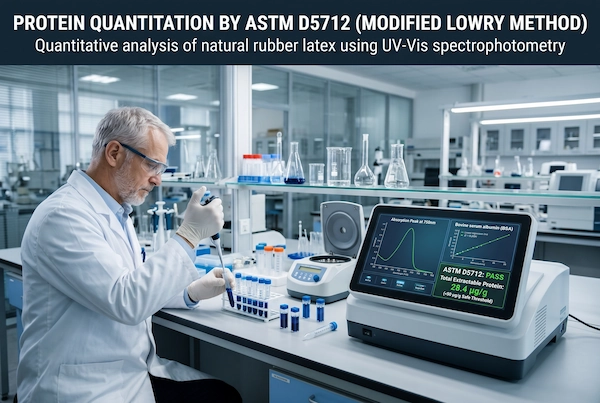
The ASTM D5712 standard method (which uses precipitation and the modified Lowry method to determine the total water-extractable protein content in natural rubber products), established by the American Society for Testing and Materials, is a globally recognized core arbitration testing protocol in the fields of occupational health, high-end manufacturing, and medical-grade protection:
Precision aqueous shaking extraction and chemical precipitation of interferents: Test personnel first cut palm coating samples from the gloves strictly according to geometric dimensions, immerse them in calibrated, deionized, high-purity water maintained at a constant temperature of 25 degrees Celsius, and place them in a water bath shaker for continuous extraction for 2 hours; Since industrial vulcanized rubber films inevitably contain zinc oxide activators, dithiocarbamate accelerators, and phenolic antioxidants in their formulations, these small chemical molecules can produce severe false-positive color reactions if read directly at a 750-nanometer spectral wavelength; The ASTM D5712 procedure strictly requires the addition of specific proportions of trichloroacetic acid (TCA) and sodium deoxycholate (DOC) as a composite precipitating agent to promote the rapid precipitation of extractable water-soluble plant protein macromolecules in an acidic microenvironment; The sample tubes are then transferred to an ultrahigh-speed centrifuge and centrifuged at a centrifugal acceleration of no less than 2,000 g to separate the layers. The supernatant, which contains various chemical additives, is completely decanted and discarded, leaving only the pure protein precipitate settled at the bottom of the centrifuge tube;
Two-stage alkaline copper complexation and UV-visible spectrophotometric colorimetric mechanism: After the precipitate is completely dissolved in an alkaline buffer solution, alkaline copper sulfate reagent and Folin–Ciocalteu reagent are added sequentially; In the first stage, divalent copper ions in an alkaline environment undergo a biuret complexation reaction with the peptide bonds in protein molecular segments; in the second stage, the complexation product rapidly reduces the phosphomolybdate-phosphotungstate complex to form a deep-blue molybdenum blue complex; using a dual-beam UV-Vis spectrophotometer that has been pre-calibrated at a reference wavelength, the absorbance of the sample solution is precisely scanned at a wavelength of 750 nanometers and accurately plotted against a strictly calibrated bovine serum albumin (BSA) concentration gradient standard curve, thereby calculating the absolute number of micrograms of total extractable water-soluble protein per gram of rubber sample (micrograms per gram, i.e., µg/g);
Industrial low-sensitization safety threshold (< 50 µg/g): Long-term cohort studies in occupational medicine and rubber toxicology have established a clear sensitization threshold: when the water-extractable total protein content in gloves exceeds 200 µg/g, the rate of acquired immune sensitization among workers significantly increases during long shifts, even if their hand skin is intact; If protein residues exceed 400 µg/g, widespread outbreaks of contact urticaria are virtually inevitable; leading super-factories have firmly reduced the measured total water-extractable protein content per ASTM D5712 to < 50 µg/g (typically below the limit of quantification for the vast majority of spectrophotometers), thereby establishing an engineering safety threshold of virtually “zero primary sensitizing exposure” for healthcare workers under conditions of continuous, intensive wear.
Regulatory Alignment with European Standard EN 455-3
For bulk material procurement targeting the EU market and major global multinational manufacturing groups, European Standard EN 455-3 (Medical Disposable Gloves—Biological Hazard Assessment—Part 3: Test Procedures for Soluble Proteins) establishes the world’s most stringent compliance limits for antigen residues:
Quantitative Release and Mandatory Warning Labeling Requirements: Under the EU CE certification and the European occupational health and safety management framework, EN 455-3 imposes extremely strict labeling classification requirements on natural latex products; If a bulk production batch fails to provide consecutive, valid protein quantification certificates from an authoritative third-party laboratory during random inspections (i.e., water-extracted protein cannot be consistently maintained below 50 µg/g), the manufacturer must mandatorily print a high-risk warning in bold black letters on the inner packaging and the exterior of shipping cartons: “ This product contains natural rubber latex and may cause allergic reactions”; by implementing desensitization processes on automated production lines and aligning with the testing requirements of EN 455-3, the factory has brought industrial-grade protective work gloves up to the physical and chemical purity standards of high-end cleanroom and even medical-grade products, thereby completely eliminating the mandatory requirement to include such high-risk disclaimer warnings;
Establishment of Batch-Level COA Compliance and Traceability Records: The super factory has fully integrated the EN 455-3 and ASTM D5712 test criteria into its factory-release quality inspection standard operating procedures (SOPs). For every production shift corresponding to the standard minimum order quantity (MOQ of 12,000 pairs), the biochemical laboratory performs destructive extraction testing. Test data, along with the batch number of the latex source solution and the drying tunnel temperature control curve, are used to generate the “Batch Shipment Inspection and Analysis Certificate of Conformity (COA),” which is delivered to overseas buyers with each shipment. This enables them to retrieve objective compliance documentation with a complete chain of custody at any time when facing local labor safety regulatory authorities, ISO 45001 occupational health and safety system audits, or internal investigations into workplace injury liability.
Liner Engineering for Sensitive Skin: P-113 Bamboo-Cotton-Polyester Matrix
When addressing hand sensitization and contact dermatitis caused by workshop operations, focusing solely on the purification and deproteinization of the outer rubber coating only completes half of the protective engineering process. A key fact that has long been overlooked is that the direct physical contact interface between the worker’s palm and the inner surface of the glove is the primary site where heat rash, eczema, and secondary infections originate. Even if residual proteins in the rubber layer have been reduced to extremely low levels, if the inner lining’s fiber structure cannot rapidly balance hand perspiration and heat dissipation, the accumulated localized moisture and heat will still soften the epidermal stratum corneum and compromise the skin’s natural protective barrier. When developing its flagship protective model for sensitive skin, the source factory began with fiber material engineering and microscopic fabric cross-sections to construct a close-fitting protective layer that balances high moisture recovery rates with a dry, comfortable microenvironment.
Bio-Based Bamboo Fiber: Moisture Wicking and Natural Antibiosis
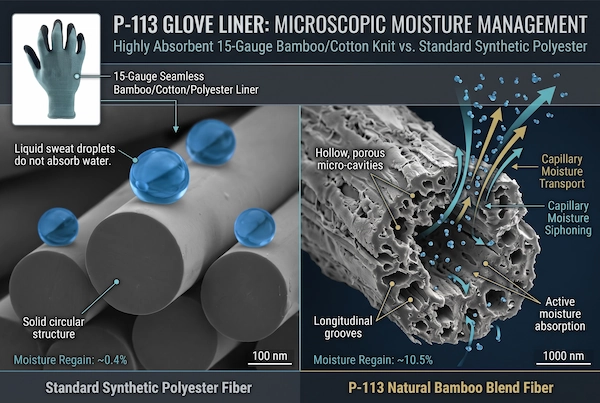
In stark contrast to the 100% polyester filament (polyester) or coarse-spun, low-count cotton yarns commonly used in standard industrial gloves, the P-113 innovatively employs a high-density 15-gauge seamless knitting process, utilizing a scientifically engineered ternary blended yarn composed of natural bamboo fiber, combed long-staple cotton, and high-elasticity polyester :
Microscopic irregular cross-sections and capillary siphon moisture-wicking mechanism: Polyester fibers are inherently completely hydrophobic synthetic polymers, with a physical moisture regain rate typically less than 0.5%. During prolonged, consecutive shifts of wear, the sweat expelled cannot be absorbed by the lining and instead condenses into liquid sweat droplets that accumulate on the workers’ palms and between their fingers. Under a scanning electron microscope, bamboo fibers exhibit a highly irregular, hollow cross-section. The outer wall and inner cavity of the fibers are densely covered with numerous micrometer-scale longitudinal grooves and micropores, resulting in an excellent physical moisture regain rate of 8.5% to 11.0%; When workers’ palms sweat, the bamboo fibers in contact with the skin instantly generate a strong capillary siphoning effect, rapidly absorbing liquid moisture from the microscopic protrusions of the epidermis and diffusing it outward through the outer fabric layer, keeping the workers’ palms in a constant state of dynamic equilibrium that is slightly dry and comfortable; thoroughly interrupting, at the physical source, the vicious cycle of “sweat accumulation and saturation—hydration and softening of the stratum corneum—residual trace proteins in the film being re-dissolved and re-permeating” ;
The long-lasting antibacterial performance of the natural Bamboo Kun factor: During heavy manual labor, skin flakes shed from workers’ hands, and fatty acids in sweat are easily fermented and broken down by resident bacterial flora (such as Staphylococcus epidermidis), producing unpleasant odors and releasing metabolic toxins, which can trigger non-immune contact erythema and folliculitis; Natural bamboo fibers contain the bio-based active antibacterial component “Bamboo Kun,” which possesses broad-spectrum and long-lasting natural antibacterial and anti-mite properties. This completely eliminates the additional chemical irritation to the skin caused by manually applying chemical antibacterial finishes during the post-treatment process, maintaining a healthy and clean microenvironment within the lining even during long, high-temperature shifts lasting 8 to 10 hours.
Sandy Latex Microporous Coating and Thermal Balance
In the design of the physical protective barrier for the glove’s outer layer, the P-113 completely abandons the traditional, bulky, and airtight fully sealed smooth dip coating found in conventional gloves, instead introducing a fine-sand microporous latex (Sandy Latex) coating architecture based on a physical salt precipitation process:
Formation of the Salt-Precipitation Porous Micro-Breathable Matrix: Immediately after the pre-molded rubber solution is applied via dip coating, an automated spraying mechanism uniformly disperses specially selected crystalline salt particles—strictly sorted by particle size—onto the surface of the latex before it has fully vulcanized.After the rubber film is set in the vulcanization tunnel, it enters a multi-stage high-temperature counter-current rinsing tank via the assembly line. The inorganic salt crystals embedded in the surface layer rapidly hydrolyze and dissolve, being flushed out with the overflow water, leaving tens of thousands of interconnected microscopic open pores and micro-cavities within the shallow surface layer and internal network of the vulcanized rubber ;
Active dissipation of localized heat and moisture buildup and a balance between dry and wet grip conditions: Traditional, fully enclosed thick rubber layers are akin to wrapping a worker’s hands in an airtight plastic film, causing localized hand temperatures to surge to over 36 degrees Celsius in a short period, with relative humidity approaching 100%; The fine-grained microporous structure on the palm surface of the P-113 forms a three-dimensional array of breathable microchannels. This not only effectively utilizes the polymeric elasticity of natural latex to maintain protection against liquid splashes but also allows the hot, humid airflow accumulated inside the palm to naturally convect and dissipate into the external environment through the open micro-pores, significantly leveling the temperature and humidity gradients between the glove’s interior and the workshop environment; Combined with the “micro-suction cup drainage effect” generated by the microporous structure on surfaces with trace oil or moisture, the gloves maintain exceptionally stable grip friction during precision assembly, logistics packaging, and mixed dry-wet working conditions (Excellent grip in dry and wet environments), while balancing outstanding lightness and dexterity (High dexterity) with all-weather protection for sensitive skin
Micro-Foamed Alternative: R-111 13-Gauge Lightweight Foam Latex Architecture
In modern warehouse sorting, light industrial logistics handling, automated material handling, and electronics packaging operations, front-line workers typically perform extremely frequent, repetitive picking, placing, gripping, and rapid stacking motions. Under such intense working conditions, if workers are forced to wear heavy-duty, tear-resistant gloves with high grammage and dense rubber coatings, the inherent rigidity of the coating itself will not only drastically accelerate hand muscle fatigue, but the excessively thick coating will also significantly impede heat dissipation. To address hand sensitization and the accumulation of heat and moisture, the engineering team has pioneered an alternative lightweight manufacturing approach centered on micro-foaming technology.
Open-Cell Foam Matrix for Enhanced Air Permeability
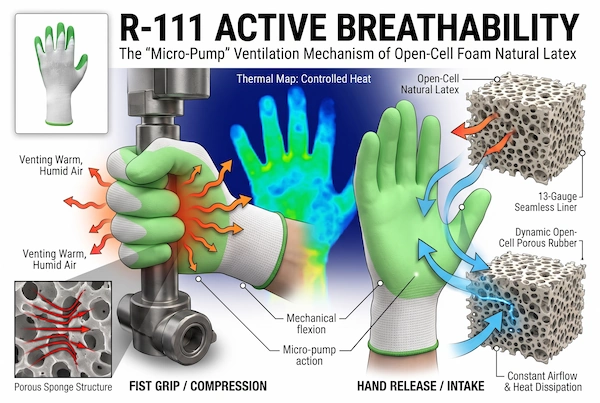
To address the issue of stuffiness and sweating during prolonged, continuous wear, the R-111 features a high-density, 13-gauge ultra-fine continuous polyester seamless knitted liner. The palm and fingertips are impregnated with a microcellular foamed natural latex (Foam Latex) protective layer that has been precisely tuned via rheological control :
Mechanical Aeration Foaming and Rheological Control of Open-Cell Microsponge Structure: During the raw rubber compounding stage, the technical team abandoned the traditional chemical foaming agent decomposition method and instead introduced a high-shear physical centrifugal aeration foaming process into the deproteinized, low-ammonia natural latex. By mechanically dispersing micron-sized dry air bubbles into the latex solution at a highly uniform ratio, they strictly controlled the flow viscosity of the latex and the foam volume expansion ratio as it entered the dipping station; Once the mold is fully impregnated and sent to the continuous tunnel oven for vulcanization, as the thermal cross-linking reaction progresses, the outer walls of the air bubbles locally rupture and fuse under micro-internal pressure expansion, ultimately forming a three-dimensional, interconnected open-cell network (Open-Cell Foam Matrix) within the molded and cured natural rubber elastomer matrix ;
The “micro-pump breathing effect” caused by repeated finger flexion and grasping: The open-cell micro-foamed sponge structure naturally endows the glove with exceptional dynamic ventilation capabilities ; when a worker bends their fingers to firmly grasp materials or a tote box, the foam layers on the palm and finger joints undergo microscopic mechanical compression under pressure, instantly forcing the accumulated warm, humid air inside the glove through interconnected microscopic channels and expelling it into the external environment; When the worker releases the object, the foam layer rapidly returns to its original shape due to the high elastic recovery of cis-polyisoprene, creating a momentary micro-vacuum inside the glove cavity that draws in relatively cool, dry air from the external environment; This mechanical convection micro-pump ventilation cycle, which operates automatically with each grasping and releasing motion by the worker, enables the active expulsion of hot, humid air, significantly reducing the rate of sweating and skin saturation on the palms during long shifts .
Dry and Wet Grip Mechanics Without Excessive Coating Mass
In high-frequency gripping scenarios in light industrial manufacturing and warehousing, the weight of hand protection equipment and joint flexion resistance are key factors determining worker efficiency. Through its lightweight foam design, the R-111 dispels the common misconception that “good grip requires a thick coating” :
Optimization of Coating Weight per Unit Area and Resistance to Muscle Strain: Thanks to the porous, low-density characteristics of microporous open-cell foam, R-111 features a significantly reduced coating weight per unit area on the palm compared to traditional solid natural latex gloves, resulting in an extremely lightweight and comfortable fit for the entire glove; The soft and gentle natural rubber foam layer generates virtually no additional resistance to bending and rebound, allowing workers—whether picking up tiny metal fasteners or frequently handling lightweight cardboard boxes— neither the knuckles nor the metacarpal muscle groups need to exert extra force to overcome the bending stiffness of the glove coating, significantly reducing the likelihood of hand tendon fatigue, metacarpal-phalangeal joint soreness, and chronic carpal tunnel syndrome after a single work shift ;
The microscopic suction cup capillary effect ensures stable grip in both dry and wet conditions: The perforated micro-foam surface layer is not only soft but when in contact with an object’s surface, the numerous open micropores exposed on the contact surface generate a micro-vacuum suction effect under contact pressure; When handling pipes coated with a film of air-condensed water, slightly moisture-dampened pipes, or damp packaging boxes, the open micro-pores rapidly absorb and divert the extremely thin interfacial water film into the interior of the pore walls, preventing the formation of a large-area sliding fluid film. This maintains a stable and highly controllable dynamic friction traction under both dry and wet working conditions (Excellent grip in dry and wet environments); this combination of lightweight design, high dexterity, and superior grip performance in both dry and wet conditions provides a highly comfortable and low-fatigue standardized hand protection solution for high-frequency, light industrial logistics operations
Comparative Laboratory Metrology: Allergen Residues Across Market Glove Grades
In industrial occupational safety and protection systems, subjective user experience must be validated through rigorous, quantitative, destructive laboratory testing. To dispel procurement teams’ vague understanding of the sensitization risks associated with gloves featuring different coatings and manufacturing processes, the SQG R&D and Testing Center conducted multidimensional biochemical extraction, residue testing, and biocompatibility trials on five categories of typical glove samples circulating in the industrial and medical cleanroom markets. This comparative matrix provides EHS teams and procurement decision-makers with a clear basis of technical parameters.
Protein & Accelerator Extraction Matrix
Under standard laboratory conditions—a constant temperature of 23 degrees Celsius and 50% relative humidity—parallel testing was conducted in accordance with ASTM D5712 (modified Laury method with precipitation), solvent gas chromatography–mass spectrometry (GC-MS), and ISO 10993-10 (Biological evaluation of medical devices: Irritation and skin sensitization tests). The measured comparison data are shown in the table below:
| Glove Type & Liner Specifications | Extractable Protein (ASTM D5712, µg/g) | Residual Accelerators (Thiurams/Dithiocarbamates, ppm) | Liner Moisture Regain (%) | Primary Skin Irritation Index (ISO 10993-10) | Primary Workshop Applications |
| Standard Industrial Crinkle Latex (10G Economy) | 350–600+ µg/g (High Risk) | > 1,500 ppm | 0.4% – 1.2% (Polyester) | 1.8–2.5 (Mild to Moderate Irritation) | Outdoor Construction, Scaffolding |
| SQG Hypoallergenic Sandy Latex (P-113 15G) | < 50 µg/g (Passes ASTM D5712) | < 200 ppm | 8.5% – 11.0% (Bamboo/Cotton Blend) | 0.0–0.2 (Non-Irritating) | Electronics Assembly, Light Logistics, Packaging |
| SQG Breathable Foam Latex (R-111 13G) | < 50 µg/g (Passes ASTM D5712) | < 250 ppm | 0.8% – 1.5% (Polyester) | 0.1–0.3 (Non-Irritating) | Warehousing, Dry/Wet Material Sorting |
| Medical Examination Powder-Free Latex | < 50 µg/g | < 100 ppm | N/A (Unsupported) | 0.0 (Non-Irritating) | Healthcare, Pharmaceutical Cleanrooms |
| Standard Industrial Nitrile (15G) | Not Detected (0 µg/g) | 300–800 ppm | 0.8% – 1.5% (Polyester) | 0.2–0.5 (Non-Irritating) | Automotive Assembly, Oily Machining |
Clear engineering conclusions can be drawn from the quantitative data matrix:
Risk of non-compliance in standard, low-end crinkled latex gloves: Common low-cost 10-gauge crinkled gloves on the market, due to the lack of multi-stage counter-current washing tanks, typically exhibit extremely high levels of total water-extractable protein—ranging from 350 to over 600 µg/g—accompanied by thiuram-based accelerator residues exceeding 1,500 ppm. During prolonged, 8-hour wear in a closed environment, combined with the extremely low moisture regain rate (0.4% to 1.2%) of the pure polyester liner, workers’ palms remain immersed in a mixture of high-concentration chemicals and accumulated sweat, resulting in a primary irritation index of 1.8 to 2.5 according to ISO 10993-10, which makes them highly susceptible to contact dermatitis and rashes;
The desensitization process enables industrial-grade gloves to meet medical-grade skin-friendly standards: Desensitized gloves, such as the P-113 and R-111 models, utilize a continuous counter-current extraction process at 65 to 70 degrees Celsius to stabilize total water-soluble protein within the safe threshold of < 50 µg/g and reduce accelerator residues to below 200 to 250 ppm; In particular, the P-113, featuring a 15-gauge bamboo fiber and cotton blend liner with a high moisture absorption and recovery rate of 8.5% to 11.0%, has a skin irritation index that falls directly within the extremely low range of 0.0 to 0.2, making it fully comparable to medical-grade powder-free examination gloves in terms of biocompatibility;
Breaking the absolute monopoly of synthetic nitrile on the low-allergen front: Although industrial nitrile gloves do not contain natural latex proteins (detection limit of 0) because their raw materials are not plant-based, their molding and processing typically require higher concentrations of vulcanizing agents (residues usually range from 300 to 800 ppm), and the rigidity of nitrile molecular chains results in elastic elongation significantly inferior to that of natural rubber; Deeply purified, deproteinized natural latex gloves not only coiminate the sensitization pathway associated with water-soluble proteins but also fully retain the highly elastic and supple texture of cis-polyisoprene.
Synergy Between Demineralization and Mechanical Compliance
During technical discussions and bulk product selection, some industrial procurement professionals often harbor an intuitive concern: Will repeated high-temperature deep hot-water rinses at 65 to 70 degrees Celsius damage the polymer cross-linked structure of the rubber, thereby causing a decline in the gloves’ abrasion resistance and tear resistance under actual workshop conditions? From the perspective of polymer science and rheology, industrial-grade deproteinization washing not only fails to weaken the mechanical protective barrier but actually helps consolidate the material’s microstructural mechanical uniformity:
Active elimination of microscopic stress defects: Soluble non-rubber components in natural latex (such as free proteins, sugars, and inorganic salts) do not participate in the formation of the covalent vulcanization network. On the contrary, because they are incompatible with the nonpolar cis-1,4-polyisoprene polymer chains, they tend to aggregate within the rubber phase in the form of microscopic droplets during film formation, creating natural microscopic stress concentration points and shear-weakening voids. By implementing multi-stage counter-current hot-water washing during the pre-vulcanized wet gel stage and after molding and vulcanization, these water-soluble impurities are thoroughly extracted and removed, which effectively eliminates the impurity voids that hinder the close packing of rubber molecules;
Densification of the covalently cross-linked network and synergistic tensile crystallization: Under the constant-temperature thermal field of a continuous tunnel-type drying oven, the purified polyisoprene molecular chains can undergo smoother molecular segment orientation, resulting in a more uniform and dense distribution of covalent polysulfide and monosulfide bonds formed with sulfur; When gloves encounter sharp burrs or severe tensile loads under heavy-duty conditions, the high-purity elastomer matrix can more rapidly trigger the “tensile-induced crystallization” self-healing effect, effectively preventing the rapid propagation of microscopic tear cracks within the coating.
To comprehensively examine how, under extremely rough and abrasive conditions, natural rubber coatings, leveraging a high-purity cross-linked network, easily exceed a peak tensile strength of 75 Newtons, meet stringent Level 4 tear resistance requirements, and establish a test baseline compliant with European physical and mechanical hazard certification, please refer to the previously published technical analysis report, “EN 388 Latex-Coated Gloves Compliance,” to understand the synergistic engineering mechanisms between microscopic deproteinization and purification and macroscopic mechanical and dynamic performance indicators.
Enterprise Procurement & EHS Compliance: Mitigating Occupational Dermatitis Liabilities
In the supply chain management of multinational manufacturing groups and large light industrial assembly enterprises, if the procurement review of personal protective equipment (PPE) is limited to comparing the unit prices listed on invoices, it often exposes companies to significant hidden operational risks. When frontline workers develop occupational contact dermatitis from wearing low-quality, highly allergenic gloves, the resulting secondary losses—including production and delivery delays, compliance liabilities, and medical compensation claims—often exceed the price difference of the consumables themselves by a hundredfold. Incorporating protective gloves with controlled allergen sources into standardized centralized procurement catalogs is a critical component of modern enterprises’ EHS and supply chain risk management systems.
The True Cost of Occupational Dermatitis in Assembly Plants
Take a typical 3C electronics manufacturing or automotive wiring harness assembly plant with 1,000 full-time workers as an example. If the production lines consistently use inexpensive industrial latex gloves that have not undergone thorough counter-current deproteinization washing, the company will incur extremely heavy hidden financial and operational losses each year:
Absenteeism and net loss of working hours: According to epidemiological statistics on occupational skin diseases, in enclosed assembly workshops where highly allergenic latex gloves are worn during long shifts, the incidence of contact dermatitis on the hands generally fluctuates between 8% and 15%; This means that a factory with 1,000 employees will see 80 to 150 cases annually of hand erythema, peeling, and suppurative eczema of varying severity; since assembly work relies entirely on manual dexterity, workers with moderate to severe dermatitis must take time off for treatment as directed by a doctor, with an average sick leave duration of approximately 3 to 5 workdays per person; This factor alone results in the direct loss of 240 to 750 workdays of productive time in the workshop each year;
Losses from temporary replacements and a rebound in production line defect rates: To maintain the tight rhythm of the assembly line, shift supervisors are forced to urgently reassign untrained support staff or temporary replacements to fill vacancies; Newcomers’ lack of operational proficiency and poor tactile control over tiny fasteners typically result in a 1.5% to 3.0% drop in the shift’s yield rate; labor costs associated with rework, disassembly, and scrap resulting from micro-scratches on precision electronic components or wiring harness terminals can amount to tens of thousands of dollars in annualized operating costs;
Medical compliance expenses and workers’ compensation legal risks: In regions with extremely stringent labor rights and occupational health regulations, companies must bear the statutory costs associated with employees visiting specialized occupational disease hospitals for patch tests, topical anti-allergy medications, and paid sick leave; direct medical compliance expenses for a single confirmed case typically amount to several hundred dollars; If a cluster of allergic reactions occurs in the workshop due to the use of non-compliant PPE, this will directly trigger special investigations by local labor inspection agencies and labor unions, exposing the company to legal risks such as being ordered to suspend production for rectification and facing substantial administrative penalties;
Comprehensive TCO benefit assessment: Switching to low-allergenic natural latex gloves with water-extracted total protein levels consistently maintained below 50 µg/g—despite a slight premium in the unit purchase price due to manufacturing processes—can reduce the incidence of dermatitis in front-line production areas by more than 95%. This not only ensures full attendance among veteran employees but also eliminates systemic legal risks associated with workers’ compensation claims and production line shutdowns for corrective actions at the source.
Bulk Dipping Consistency & Factory AQL 1.0 Release
To ensure that every pair of gloves delivered in high-speed, continuous production runs of tens of thousands of pairs for bulk export and centralized procurement orders maintains a completely consistent level of physical desensitization, the source super factory has established a closed-loop quality control engineering standard that uses standard procurement batches (standard industrial minimum order quantity, MOQ: 12,000 pairs) as the unit for accounting and quality inspection:
Online Monitoring of Rinsing Water Conductivity and Circulation Replacement: The root cause of batch-wide allergic reactions in small workshops lies in their long-term failure to replace soaking tanks to conserve water, causing the tanks to gradually turn into highly concentrated protein solutions. In the super factory’s high-temperature continuous counter-current soaking tanks—which stretch for tens of meters—high-sensitivity online conductivity sensors and total organic carbon (TOC) online monitors are installed along the entire length. When the conductivity of the wash tank rises to a preset threshold due to the continuous extraction of impurities from the rubber film, automated control valves immediately trigger a forced drain and replenish the system with fresh deionized, softened pure water. This ensures the wash water maintains extremely high purity at all times, eliminating “secondary reverse osmosis contamination” during mass production;
Continuous Tunnel Oven Temperature Control Curve Monitoring: Vulcanization is a critical process stage for stabilizing rubber molecular chains and promoting the denaturation and precipitation of residual proteins; the factory’s continuous tunnel oven is divided into a preheating zone, a main reaction and cross-linking zone, and a cooling zone, with each section equipped with an independent PID microcomputer temperature control system to strictly maintain the curing temperature within the process window; Sensors continuously monitor hot air circulation velocity and temperature fluctuations around the clock, preventing surface scorching caused by localized overheating—which would hinder the escape of impurities—or insufficient cross-linking due to under-temperature conditions;
Strict AQL 1.0 Factory Release and COA Documentation: For each standard production batch of 12,000 pairs, the factory’s quality inspection team strictly adheres to the normal inspection sampling plan specified in ISO 2859-1 (GB/T 2828.1) to conduct AQL 1.0 acceptance testing with enhanced criteria for appearance and physical dimensions; Simultaneously, coated samples of a specified weight are randomly extracted from the finished product batch and sent to the biochemical testing laboratory for testing using the modified Lowry method per ASTM D5712; The measured values for total extractable water-soluble protein, oven temperature control records, and conductivity logs from the soaking and washing process are compiled to generate the “Certificate of Analysis (COA)” stamped with the factory’s dedicated inspection seal. This document is delivered alongside the ocean-freight container shipments, providing multinational corporate clients with legally binding safety documentation that ensures full-process traceability.
Frequently Asked Questions (FAQ)
Addressing common technical and health concerns in manufacturing assembly lines, logistics sorting lines, and multinational procurement audits, this section compiles key answers regarding low-allergenic natural latex gloves, drawing on clinical immunology, fiber materials science, and laboratory physical and chemical testing standards. It provides a rigorous and objective technical reference for corporate EHS teams and procurement decision-makers.
Can workers with diagnosed natural latex allergies safely wear low-protein hypoallergenic gloves?
The unequivocal medical and occupational safety conclusion is: No.
Companies must establish an absolute physical separation in their management protocols between “medical isolation of workers with confirmed hypersensitivity” and “prevention of occupational sensitization among the healthy workforce”:
Mandatory isolation protocols for workers with confirmed hypersensitivity: If a worker has been confirmed by a specialized medical institution to have Type I natural rubber allergy through serum-specific IgE antibody testing or skin prick testing (i.e., the body has established a robust immune memory), their sensitization trigger threshold is extremely low. For such highly sensitized individuals, even if the total water-extractable protein in gloves has been suppressed to an ultra-low level in the nanogram range, trace antigen exposure still poses a clinical risk of triggering localized contact urticaria or even systemic anaphylactic reactions. For these employees, EHS protocols must implement a zero-contact policy, mandating their reassignment to latex-free hand protection products (such as ultra-thin polyurethane (PU) gloves or nitrile gloves);
The core engineering objective of industrial-grade hypoallergenic gloves is hypoallergenic natural latex work gloves manufactured using multi-stage counter-current washing and high-temperature desensitization processes, with their technical defense mechanism designed for the vast majority of healthy industrial workers who have not previously been sensitized. By firmly keeping the total water-soluble protein content on the glove surface below the safety threshold (< 50 µg/g), these gloves cut off at the source the pathway by which healthy workers could develop sensitization due to high concentrations of plant proteins under long-term conditions of high-temperature sweating and skin friction, thereby ensuring that the entire manufacturing line maintains an extremely low incidence rate and stable attendance over the long term.
How does the bamboo fiber in P-113 improve skin comfort compared to pure polyester?
The linings of traditional industrial protective gloves are predominantly made of 100% polyester filament yarn. The macromolecular structure of polyester lacks polar hydrophilic groups, and its microscopic moisture absorption rate is typically less than 0.5%; it is, by nature, a completely water-repellent synthetic fiber. When workers wear these gloves continuously for more than 8 hours, the liquid sweat exuded from the palms cannot be absorbed or wicked away by the polyester lining at all; instead, it accumulates and remains on the surface of the worker’s skin’s stratum corneum in the form of a liquid water film. Prolonged exposure to warm, moist conditions causes the stratum corneum of the hands to become overhydrated and brittle, severely compromising its physical barrier function and making the skin highly susceptible to dyshidrotic eczema and nonspecific contact dermatitis.
The 15-gauge natural bamboo fiber composite blend lining used in the P-113 addresses this issue through cross-sectional engineering :
The porous, irregular cross-section generates a powerful capillary moisture-wicking effect: the cross-section of natural bamboo fiber filaments features an uneven microporous network structure, exhibiting an excellent physical moisture regain rate of 8.5% to 11.0%. When the palms sweat, the bamboo fibers in contact with the skin instantly generate a capillary siphoning effect, rapidly drawing liquid sweat from the microscopic irregularities of the epidermis and diffusing it outward to the outer fabric layer. This maintains a dynamic balance of slight dryness on the palm-contacting surface, fundamentally preventing the stratum corneum from softening and becoming brittle due to prolonged exposure to stuffy heat and moisture ;
Natural bamboo quinone components provide antibacterial and deodorizing properties: The raw bamboo fibers naturally contain bamboo quinone factors with antimicrobial activity, offering long-lasting, broad-spectrum natural antibacterial and deodorizing performance. These components effectively inhibit the fermentation of sebum in sweat by Staphylococcus epidermidis, preventing unpleasant body odor and secondary folliculitis, and significantly improving the skin-friendly microenvironment during prolonged wear
What is the specific difference between ASTM D5712 and ASTM D6499 testing?
Both are internationally recognized arbitration methods for protein testing in natural rubber products, but there is a clear technical distinction between them in terms of the chemical reaction principles, quantification objectives, and industrial application scenarios:
ASTM D5712 (Modified Lowry Method): This is a broad-spectrum method for the absolute quantification of total protein by aqueous extraction. The method first precipitates protein macromolecules using trichloroacetic acid and sodium deoxycholate, thereby coiminating chemical false positives in the spectrophotometer caused by rubber additives (such as zinc oxide and accelerators); Subsequently, using a biuret complexation reaction followed by a Folin-phenol colorimetric reaction, the total mass concentration (in µg/g) of all water-soluble plant proteins and polypeptide chains in the sample is determined at a wavelength of 750 nanometers; This testing method is characterized by its versatility, high reproducibility, and strong resistance to chemical interference, and serves as the most critical arbitration standard for the mass release of industrial personal protective equipment and medical devices worldwide;
ASTM D6499 (Inhibition ELISA): This is a quantitative method specific to active immunogenic epitopes. The method utilizes polyclonal antibodies extracted from rabbit anti-natural rubber serum to determine the total amount of Hev b-specific antigens with immunogenic activity in the sample through the biologically specific binding reaction between antigen and antibody. Although this method exhibits extremely high specificity, the high cost of the ELISA reagents and the susceptibility of their activity to fluctuations in ambient temperature and humidity mean it is primarily used in high-level medical and engineering allergy research or for purification verification of specialized surgical instruments. In the large-scale mass production and batch acceptance of labor protection gloves, using the measured total protein value from ASTM D5712 as the release criterion provides entirely sufficient safety margins.
Does high-temperature water leaching weaken the mechanical tear strength of latex?
The scientific fact is: Not only does it not weaken it at all, but it actually helps optimize the density of the microscopic cross-linking network in the polymer coating.
Many procurement professionals tend to have intuitive concerns, worrying that repeated continuous soaking and rinsing in hot water at temperatures ranging from 65 to 70 degrees Celsius will cause the rubber layer to thin or reduce its tear strength. However, from the perspective of polymer physics, this purification process plays a key role in eliminating internal defects in the material:
Physical removal of microscopic stress concentration defects: Only about 93% to 95% of the natural rubber latex consists of long cis-1,4-polyisoprene molecular chains with ultra-high elasticity and tensile strength; the remaining approximately 5% consists of water-soluble plant proteins, free fatty acids, and hydrophilic mineral salts that lack rubber elasticity; These hydrophilic impurities are incompatible with the nonpolar polyisoprene molecular chains; during the drying and film-forming process, they disperse throughout the rubber matrix as minute colloidal impurity particles, which—when subjected to tensile stress—effectively act as microscopic voids that disrupt the continuous phase and trigger localized stress concentration;
Purification Promotes a Dense Crystallization and Self-Healing Effect: By performing thorough high-temperature countercurrent elution during the initial wet gel stage and the post-vulcanization stage, these water-soluble, hydrophilic proteins and impurities—which make no mechanical contribution—are completely extracted and washed away, eliminating internal microporosity caused by impurities; High-purity cis-polyisoprene molecular chains achieve a denser, more uniform orientation during the subsequent tunnel oven vulcanization reaction, significantly increasing the density of covalent sulfur bonds; When finished gloves encounter sharp metal burrs or severe lateral tearing under operating conditions, the high-purity elastomer matrix undergoes “strain-induced crystallization” more smoothly, spontaneously forming microcrystalline barrier zones at the tips of microcracks. As a result, their mechanical tear strength and abrasion resistance are consistently maintained at extremely high industrial standards.
Request Factory Batch Compliance Reports & Enterprise Sample Kits
In bulk procurement of protective equipment for light industrial manufacturing, automotive parts sorting, 3C electronics packaging, and modern warehouse assembly lines, the technical responsibilities of procurement teams extend beyond simply reducing the unit price on the books; they also involve eliminating all potential labor compliance risks and occupational disease-related downtime hazards at the source. Traditional procurement processes often involve a difficult trade-off between the high rebound grip strength of natural rubber and the risk of sensitization, but modern polymer purification and fluid elution processes have completely broken this dichotomy. As a “super factory” dedicated to the R&D and large-scale mass production of industrial hand protection, SQG leverages closed-loop temperature-controlled counter-current washing lines, modified natural fiber weaving, and an ASTM D5712 chromatographic precipitation release mechanism to build a standardized protective barrier for global manufacturing enterprises that offers high protection, high comfort, and zero compliance risk.
Technical Value & Direct Manufacturing Assurance
Dual physical and chemical desensitization control: From continuous, multi-stage counter-current dialysis rinsing of the initial wet gel state to deep hot-water extraction at 65 to 70 degrees Celsius following tunnel oven curing, the factory completely reduces soluble plant antigen proteins (Hev b 5 and Hev b 6.02) at the source to below the 50 µg/g detection threshold—the safety threshold; Combined with the replacement and removal of chemical accelerators such as thiamine, this process achieves dual blocking of pathogens responsible for Type I immediate-type allergic reactions and Type IV delayed-type contact dermatitis;
Skin-friendly microenvironment and lightweight engineering innovations: By incorporating P-113’s unique 15-needle natural bamboo fiber composite blend lining, the capillary siphon effect of bamboo fiber’s porous microstructure is utilized to resolve the issue of sweat accumulation on workers’ palms; Combined with the innovative open-cell microporous foam sponge coating of R-111, this design enables micro-pump convective heat dissipation during dynamic hand gripping, systematically resolving issues of stuffiness, discomfort, and keratinous maceration during prolonged continuous operations;
Quantifiable, comprehensive TCO cost-saving results: The incidence rate of contact dermatitis among assembly line workers has been reduced by more than 95%, eliminating sick leave caused by defective PPE, the rebound in scrap rates due to temporary staff substitutions, and the risk of occupational disease compensation claims, thereby establishing a closed-loop safety protection baseline for the entire production process.
Enterprise Master Sample Kit & Direct Bulk Procurement Channels
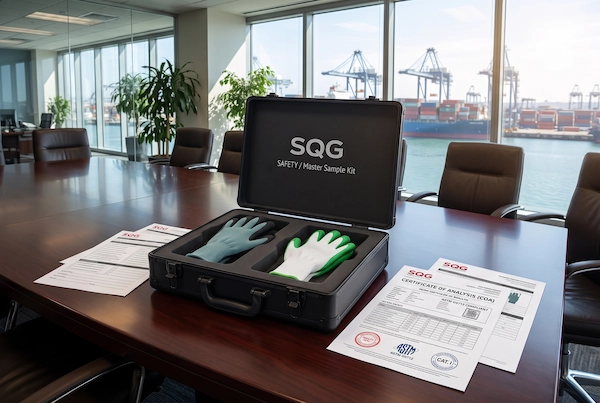
For large-scale manufacturing and assembly enterprises, regional supply chain integrators, and Tier-1 importers of occupational safety and protective equipment with annual procurement volumes exceeding 10,000 pairs, SQG has officially launched a direct application channel for the “Enterprise-Level Low-Allergenic Hand Protection Comprehensive Evaluation Sample Kit (Master Sample Kit)”:
In-depth evaluation of the physical contents of the enterprise sample kit: The kit includes a complete set of documents, including an ASTM D5712 modified Lowry method protein test report (Certificate of Analysis, COA) issued by the factory’s biochemical laboratory with the corresponding production batch number, and a technical white paper compliant with the EU CE CAT. I standards, as well as physical samples of the P-113 (bamboo-cotton liner with fine-grit microporous fabric) and R-111 (lightweight microporous foam) models covering mainstream sizes (Size 7/S to 11/XXL). Company safety officers and on-site technical supervisors can directly organize front-line workers on the actual production line to conduct trial-wear and comparative testing;
Bulk Customized Procurement and Direct Container Shipping: The factory’s direct procurement channel fully supports tiered ex-factory pricing based on a standard minimum order quantity (MOQ) of 12,000 pairs. For bulk direct-shipment orders in 40HQ high-cube containers, our engineering packaging team provides high-density, moisture-proof palletization layouts optimized for loading geometry and topology. We also include, with each shipment, Certificates of Origin that qualify for preferential customs tariffs at the port of entry, along with dedicated private labeling services;
Direct Technical Coordination: If you require comprehensive physical and chemical test reports for low-allergen gloves, wish to schedule production line sample testing, or need a customized MOQ quote for your company’s ongoing large-scale assembly line project, please feel free to contact our hand protection engineering team directly at any time.