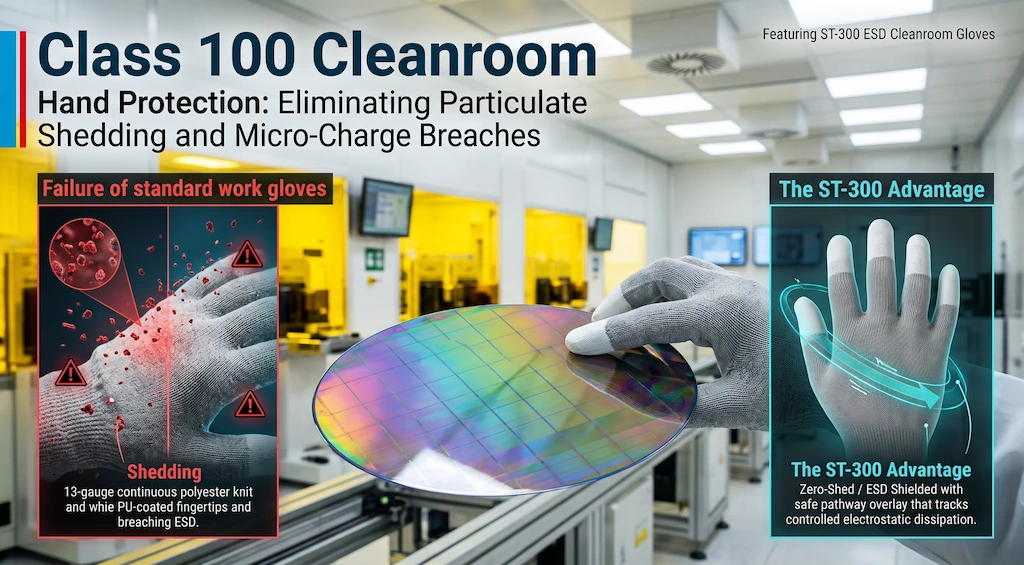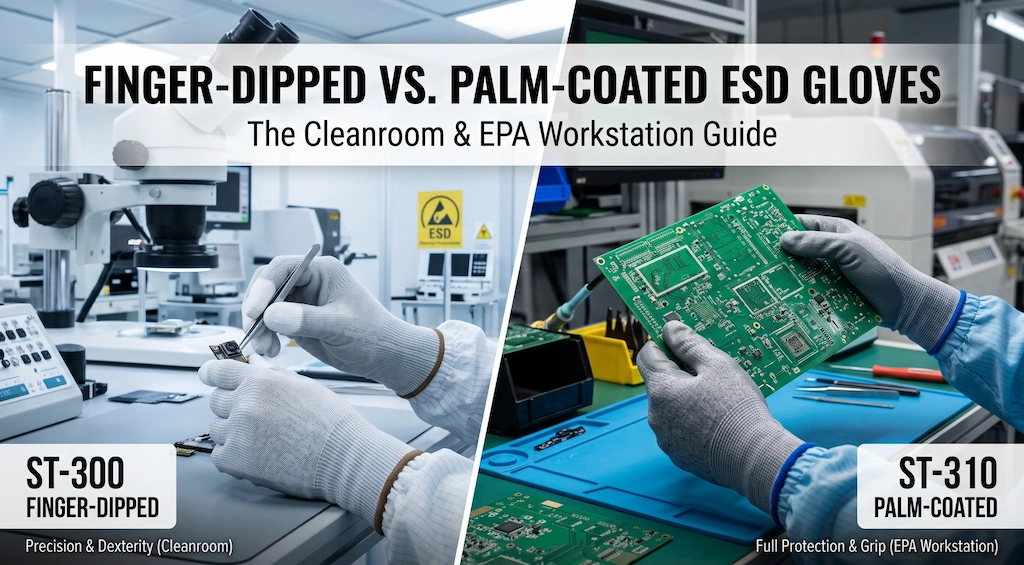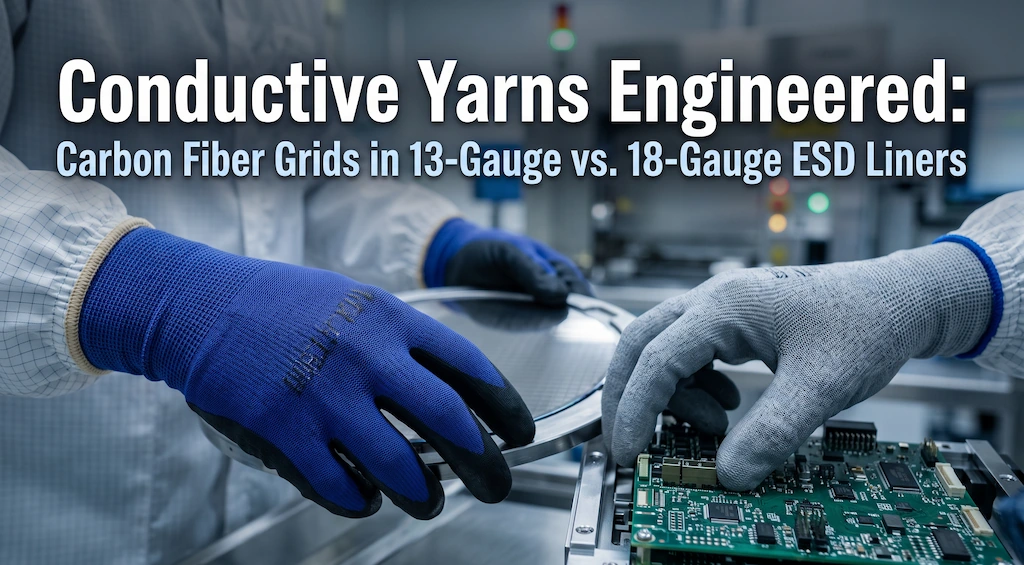
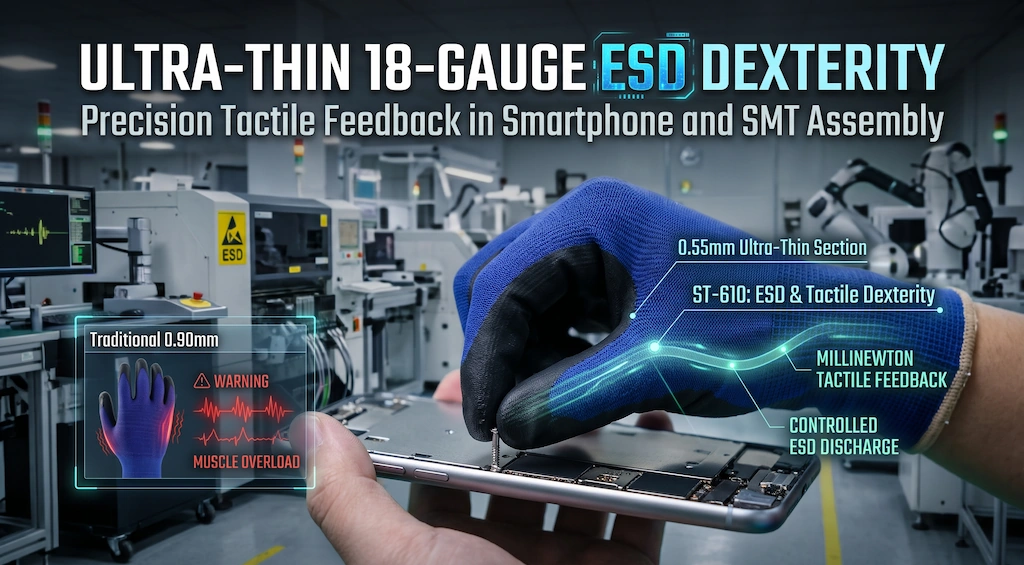
On modern electronics manufacturing lines, deploying 18 gauge precision antistatic assembly gloves is essential for 5G smartphone micro-assembly, foldable screen hinge flex cable routing, and ultra-fine surface-mount technology (SMT). Engineering management and procurement teams consistently focus on first-pass yield (FPY) at precision workstations and assembly loss control when evaluating these high-density electronic manufacturing processes. In these environments, the miniaturization of workpieces has reached its physical limits: countersunk micro-screws with diameters as small as M1.0 or even M0.8, and ultra-thin flexible printed circuit boards (FPCs) with pin pitches (Pitch) below 0.3 mm place nearly exacting demands on operators’ ability to discern minute finger movements and control gripping force.
However, most electronic assembly production lines currently still use traditional 13-gauge anti-static gloves. Due to limitations imposed by coarse-gauge knitting machinery and traditional coating thicknesses, the wall thickness of these finished gloves typically ranges from 0.90 mm to 1.15 mm. The coarse, rigid knitted fiber framework and the thick, heavy coating form a layer of severe mechanical-elastic damping in front of the workers’ fingertip nerve endings, directly filtering out high-frequency, low-force feedback signals. This dulled tactile sensitivity at the fingertips not only causes micro-screws to frequently slip out of alignment and fall into gaps in the device casing, and leads to uncontrolled pressure from pneumatic tweezers that scratch the fragile FPC gold fingers, but also forces operators to subconsciously increase their gripping force. Over the course of an 8-hour continuous shift, this induces a high incidence of hand muscle soreness and fatigue-induced errors.
Breaking through the ergonomic bottlenecks in 3C precision micro-assembly relies on physical restructuring achieved through fiber textile geometry and polymer coating systems. As the technological benchmark for ultra-thin anti-static protective gear, the ST-610 completely abandons the coarse-gauge, short-fiber structure in favor of an 18-gauge, ultra-high-density nylon seamless blended nano-conductive carbon fiber architecture. Combined with an ultra-thin, water-based, microporous PolyMAX® coating, this design reduces the total composite wall thickness at the fingertips to 0.55 mm. This ultra-lightweight and thin design maintains controlled electrostatic discharge within a range of 1.0×10⁶ to 1.0×10⁸ ohms while providing the fingers with micro-damped tactile feedback comparable to that of bare hands, resulting in a 35% reduction in hand fatigue syndrome during high-frequency micro-assembly operations. In modern high-density microelectronics production systems, the selection of protective gear must balance transient charge dissipation safety with fingertip micro-mechanical ergonomics. To systematically understand the complete range of anti-static products covering different knit densities, coating types, and resistance gradients, please refer to the ESD Safe & Antistatic Gloves overview of specialized protective products for electronics manufacturing.
Neuro-Ergonomic Dynamics: Meissner’s Corpuscles and Tactile Suppression
In microelectronics manufacturing and precision assembly operations, the human hand serves not only as an actuator for mechanical gripping but also as a highly complex network of biosensors. When workpiece dimensions are reduced to the millimeter scale, the accuracy of assembly movements relies almost entirely on the real-time decoding of minute mechanical changes by nerve receptors at the fingertips. If the physical properties of glove fabrics and coatings do not match the biomechanical characteristics of the human hand’s peripheral nerves, this will directly block the transmission of critical tactile information at the physiological level.
Tactile Mechanoreceptor Function in Precision Pinching
The skin beneath the human fingertips is densely populated with four major types of mechanoreceptors, among which Meissner’s corpuscles play a central role in fine pinching and the discrimination of minute objects:
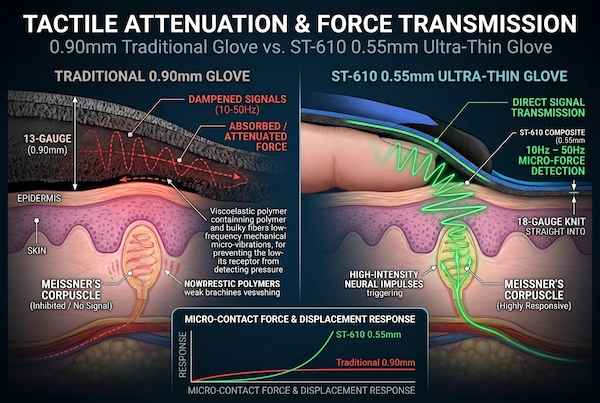
Sensitive Decoding of Low-Frequency Microvibrations and Pressure Gradients: Meissner’s corpuscles are primarily distributed within the papillary dermis of hairless skin, and their response frequency band is highly concentrated in the low-frequency mechanical vibration range of 10 Hz to 50 Hz. These receptors possess extremely small receptive fields and extremely fast adaptation rates, making them highly sensitive to micrometer-scale surface texture gliding, transient slight shear forces, and contact pressure gradients in the millinewton (mN) range;
Closed-Loop Dynamic Force Control (Force Regulation Loop): When using tweezers for alignment, manually screwing in microscrews, or pressing microconnectors, the operator does not rely on vision for full-process calibration. Instead, they establish millisecond-level closed-loop fine-tuning feedback in the brain through micromechanical transients captured by Meissner’s corpuscles. The minute amounts of slippage and contact reaction forces sensed by the fingertips directly determine the critical threshold for the pinching force applied by the finger muscle groups, ensuring that small workpieces do not slip out from between the fingers while preventing physical damage to the workpieces caused by excessive gripping force.
Mechanoreceptor Attenuation Caused by Thick Liner Fabrics
When operators wear traditional industrial gloves, the thickness and mechanical damping properties of the glove material can cause significant physiological suppression of information collection by peripheral nerves:
High-frequency damping and attenuation of microstress signals: Coarse-knit liners thicker than 0.80 mm, combined with a rigid resin adhesive layer, form an elastic damping cushion between the skin at the fingertips and the workpiece. This viscoelastic polymer layer significantly absorbs and filters out faint high-frequency mechanical vibrations in the 10 Hz to 50 Hz range, causing the transient pressure changes received by the Meissner corpuscles to be severely smoothed out. This results in a sharp loss of the fingertip’s ability to discern microscopic textures and minute displacements;
Grip Force Compensation and the Muscle Fatigue Chain Reaction: Once tactile feedback is severely diminished, the operator’s proprioceptive system—unable to clearly determine the static friction limit at the gripping interface—triggers a protective instinct to prevent the workpiece from falling. Consequently, the central nervous system instructs the interosseous muscles and deep finger flexors to exert a gripping force far exceeding actual requirements (typically 200% to 300% of the theoretical gripping force). This prolonged “grip force overcompensation” not only makes it highly likely to crush brittle components or cause the tips of tweezers to deform and slip, but also places the tendons in the hand under high tension, rapidly inducing hand tremors and assembly fatigue syndrome within a matter of hours.
Dimensional Metric: 13-Gauge (0.9 mm) vs. 18-Gauge (0.55 mm) Wall Thickness
In micro-precision assembly for 3C consumer electronics, the overall wall thickness of gloves directly determines the operational tolerance and mechanical flexibility at the fingertips. The needle bed density (gauge) of knitting machines not only indicates the openness of the fabric but also, from a fundamental geometric perspective, determines the volume of the fiber loops, the depth of adhesive penetration, and the physical cross-sectional dimensions of the final product.
The Geometric Gap in Stitch Density and Loop Volume
Traditional industrial anti-static gloves are typically knitted on 13-gauge circular knitting machines. This equipment configuration presents significant geometric bottlenecks when handling the assembly of micro-components:
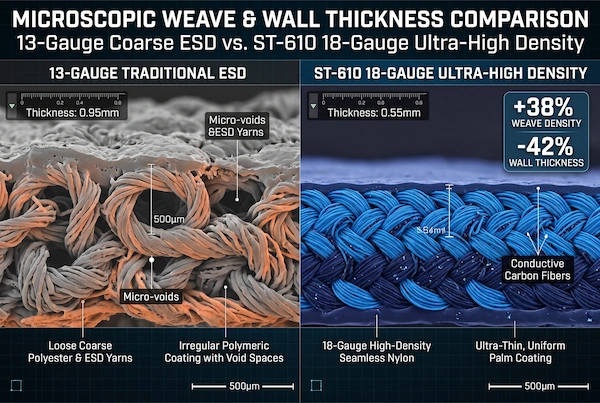
Bulky loops and uncontrolled fiber porosity: Since 13-gauge knitting machines have a low number of stitches per inch, coarser short-staple yarns or coarse-count composite yarns must be used to ensure the fabric possesses basic coverage and tensile strength. When these coarse yarns are bent into loops, they form voluminous three-dimensional loops (Loop Volume), leaving significant microscopic voids between the interlaced points;
Penetration Compensation Leading to Secondary Wall Thickness Increase: During the subsequent dipping process, due to the large pore size of the 13-gauge lining mesh, manufacturers are forced to increase the viscosity of the dipping solution or the coating thickness to prevent liquid polyurethane (PU) from directly penetrating the fabric and adhering to the hand mold on the inner side (i.e., the “glue bleed” defect). The combination of the base fabric and the thick resin layer has forced the total wall thickness in the fingertips and palm areas of the gloves to generally rise to between 0.90 mm and 1.15 mm, creating a heavy physical barrier;
A smooth base fabric with an 18-gauge loop density increased by 38%: In contrast, 18-gauge knitting technology falls within the category of ultra-fine seamless knitting, featuring an extremely high needle bed density. The number of interlaced loops per inch is approximately 38% higher than that of 13-gauge knitting. The densely packed loops interlock tightly, resulting in a fabric surface that is nearly mirror-smooth and compact, with minimal and uniform voids, providing a high-precision structural foundation for the adhesion of ultra-thin coatings.
ST-610 0.55mm Ultra-Thin Profile Engineering
To overcome the physical constraints that thick, heavy gloves impose on fingertip dexterity, the ST-610 implements a comprehensive thickness-reduction engineering approach through careful selection of base materials and precise impregnation control:
Homogeneous blending of ultra-fine nylon filaments and conductive carbon fibers: The ST-610 abandons traditional coarse-count polyester yarns in favor of high-strength, low-denier continuous ultra-fine nylon filaments, which are precision-woven in combination with nano-scale bicomponent conductive carbon fibers. Although the individual filaments of ultra-fine nylon filament yarn are extremely fine, they possess exceptionally high mechanical tensile strength. When knitted on an 18-gauge ultra-high-density knitting machine, they form an ultra-thin inner liner framework that is only half as thick as traditional linings;
0.55 mm maximum composite wall thickness and 50% reduction in bending resistance: Leveraging the excellent elasticity and flow properties of the water-based PolyMAX resin, the coating adheres uniformly to the outer surface of the 18-gauge knit fabric, forming a thin, dense, microporous polymer film that precisely locks the measured total wall thickness of the finished glove at 0.55 mm (with a tolerance of ±0.05 mm). Compared to 13-gauge gloves with a total thickness of 0.90 mm or more, the ST-610’s total thickness is reduced by nearly 40%. Mechanical analysis of the material’s cross-section indicates that the bending stiffness at the knuckles and the resistance to rebound have been directly reduced by more than 50%, eliminating mechanical resistance during repeated fist clenching and finger bending and allowing the fingers to move with virtually the same freedom as bare hands.
Elimination of Component Damage: M1.0 Micro-Screws and Fragile FPC Assemblies
On modern 5G smartphone assembly lines and miniaturized module integration lines, defect rates often stem from the alignment of tiny fasteners and the physical bonding of precision flexible connection interfaces. Traditional thick gloves, due to excessive material buildup at the fingertips, prevent operators from establishing a fine-tuned tactile control loop, directly leading to two common types of mechanical damage defects: structural short circuits and scratches caused by screws slipping out of place, and irreversible creases and copper foil fractures resulting from uneven force distribution on flexible printed circuit boards (FPCs).
Eliminating Micro-Screw Drop and Thread Stripping
The fastening of mid-frames, the positioning of camera modules, and the locking of motherboard shielding covers inside smartphones widely employ micro-countersunk screws with specifications as small as M1.0 or even M0.8. Their head diameters are typically less than 1.8 millimeters, with pitch ranging from 0.2 to 0.25 millimeters:
Micro-contact friction and manual handling precision: When wearing gloves thicker than 0.90 mm, workers’ fingertips cannot form precise, tiny indentations to cradle the screw heads, so they often rely on tweezers for secondary transfer. This makes it extremely easy for screws to fly off or slip and fall into the narrow gaps of densely packed circuit boards when the workstation cycle speed increases. As specialized 18-gauge precision antistatic assembly gloves, the ST-610, with its ultra-thin fingertip thickness of just 0.55 mm and the micro-adhesive friction coefficient provided by the PolyMAX water-based microporous coating, enable operators to directly and steadily grasp individual M1.0/M0.8 micro-screws using the pads of their thumb and index finger;
Tactile Feedback for Thread Alignment and Prevention of Cross-Threading and Breakage: When a micro electric or pneumatic screwdriver guides a screw into the copper studs on a motherboard, the initial thread-matching phase relies heavily on the operator’s tactile perception of how smoothly the thread engages. If the gloves are too thick, the operator cannot detect whether the threads are slightly misaligned (cross-threading); blindly pressing down to engage the bit will directly result in thread slippage, rendering the motherboard’s internal threads unusable, or causing the screw head to break. The ST-610’s thin contact surface allows workers to clearly sense axial alignment and subtle changes in resistance, enabling rapid, vertical insertion in a single attempt and completely eliminating screw slippage and part drop defects during micro-screw assembly.
Protecting Ultra-Thin FPC Connectors from Creasing and Tearing
As internal space is pushed to its limits by mobile phone internal antenna FPCs, touchscreen assemblies, and multi-camera periscope modules, ultra-thin dual-layer or multi-layer FPCs—with thicknesses ranging from just 0.08 mm to 0.12 mm—have been pushed to the limits of their physical toughness:
Perception of the “Click” Feeling and Prevention of Loose Connections: The physical interconnection between the ends of FPC cables and the motherboard primarily relies on board-to-board (BTB) microconnectors or zero-insertion-force (ZIF) sockets, with terminal pitch often as small as 0.35 mm or even less than 0.3 mm. A successful snap-fit connection is accompanied by an extremely subtle mechanical deformation feedback—a “crisp click” (Tactile Click) with a reaction force of only a few millinewtons. Workers wearing thick gloves are completely unable to detect this faint signal and often repeatedly apply excessive vertical downward pressure out of concern for poor contact, leading to cracks in the plastic bases of the male and female connectors or deformation and bending of the internal gold-plated micro-pins;
Eliminating Stress Concentration and Preventing Crease Fractures: When routing flexible cables through the hinge area of foldable smartphones or the narrow corners of the device body, the rough, rigid edges of gloves can easily create localized areas of high stress during pinching and bending, pressing sharp creases into the FPC surface and directly severing the internal cold-rolled and annealed copper foil traces. The bare-hand-level micro-stress sensing provided by the ST-610 enables operators to gently and uniformly control the bending radius. This ensures that BTB connectors snap precisely into their slots while avoiding mechanical shearing of the substrate, fundamentally eliminating hidden open circuits and breakage-related scrap during the press-fit assembly of micro-FPCs.
Coating Science: Water-Based PolyMAX® vs. Conventional Solvent-Based PU
At assembly stations for precision 3C consumer electronics and high-end automotive display modules, the chemical purity and microscopic film-forming quality of the polymer coating on gloves directly determine the chemical cleanliness of the workpiece surface and the physical abrasion resistance of the coating during long-term operations. Traditional industrial-grade anti-static gloves rely heavily on solvent-based polyurethane resins; the film-forming defects and chemical residues inherent in their manufacturing processes are becoming significant sources of contamination and quality shortcomings in microelectronics assembly workshops.
Aqueous PolyMAX® Formulation Eliminating Solvent Micro-Voids
Traditional solvent-based polyurethane (Solvent-based PU) coatings typically use N, N-dimethylformamide (DMF) as the solvent and employ a phase-transition wet gel curing process. This film-forming process has inherent uniformity defects in its microscopic physical structure:
DMF Solvent Displacement and Formation of Fragile Macropores: During the water-bath extraction process to remove DMF, the highly polar solvent undergoes violent phase separation and bidirectional convection with water molecules, resulting in the formation of a large number of irregularly shaped, finger-like macropores and micro-voids with a wide pore size distribution within the polymer matrix after film formation. These microscopic voids disrupt the mechanical continuity of the coating. Under repeated external compression and friction, the thin walls of these pores are highly susceptible to fatigue failure, causing the coating to chalk and flake off while generating large amounts of resin debris;
Volatile Harmful Chemical Residues: Industrial water-washing processes struggle to completely remove deeply embedded, high-boiling-point DMF molecules. Residual volatile organic compounds (VOCs) not only emit an irritating odor but also tend to cause skin allergies in operators during prolonged, enclosed wear; furthermore, they accelerate microscopic oxidation at the interface when in contact with precision metal contacts;
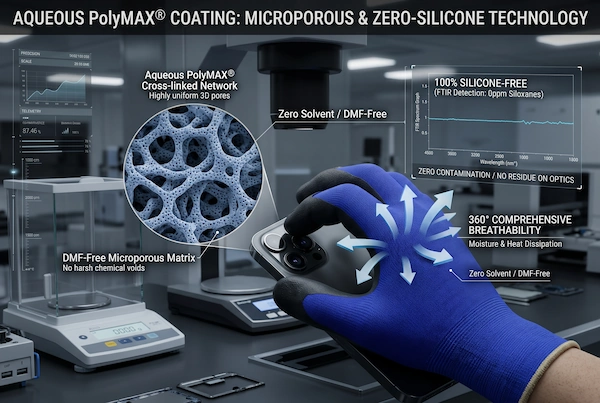
Water-based PolyMAX® Uniformly Cross-linked, Dense Microporous System: ST-610 employs an advanced, fully water-based polymer emulsion synthesis process, ensuring the entire production process is 100% DMF-free and solvent-free. Water-based PolyMAX® resin utilizes controlled secondary cross-linking technology to achieve self-assembled microporous film formation. The molecular segments are tightly entangled, eliminating coarse solvent voids and defects, and forming a dense, sponge-like microporous network with uniform pore size and exceptional toughness. This results in a dramatic improvement in wear resistance and fatigue-induced peeling resistance compared to traditional solvent-based coatings.
Non-Marking, Odorless, and Silicone-Free Purity
When dealing with extremely sensitive surfaces such as periscope camera modules, under-display biometric sensors, and high-transmittance optical protective glass, protective gear must possess rigorous chemical inertness and the ability to prevent cross-contamination:
360° Three-Dimensional Full-Palm Microporous Breathability (360° Air Permeability): Thanks to the uniform, controlled open-cell microporous array of the water-based PolyMAX coating and the breathable weave of 18-gauge high-density nylon, the ST-610 achieves 360° dynamic free convection of gas molecules across the entire palm (360° air permeability). During up to 8 hours of high-intensity continuous work, sweat vapor from the palm is rapidly diffused outward, maintaining a dry and comfortable microclimate on the hand. This eliminates the risk associated with traditional gloves—where heat and sweat buildup cause electrolytes from sweat to seep and spread from the glove edges onto precision workpieces;
100% silicone-free, odorless, and transfer-resistant: Conventional coatings often include silicone-based defoamers or organosilicon surfactants in their formulations to facilitate demolding and enhance smoothness. Free dimethyl silicone molecules exhibit extremely high surface mobility; once they come into contact with the outer lens of a smartphone camera or the display cover glass, they cause a drastic drop in local surface tension, leading to subsequent issues such as delamination of optical coatings, pinholes and cold solder joints in adhesive dispensing, and dewetting of hydrophobic and oleophobic layers. ST-610 strictly adheres to silicone-free formulation standards and odorless processing. FTIR (Fourier-transform infrared spectroscopy) testing confirms the absence of any residual siloxane characteristic peaks, ensuring zero marks and zero chemical migration on workpiece surfaces after contact during processing;
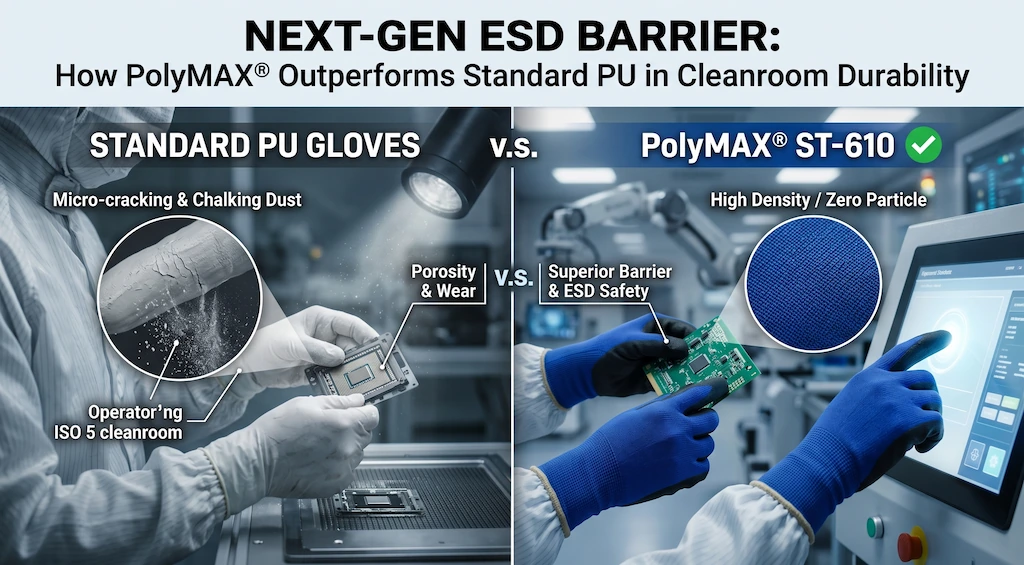
Engineering validation and wear resistance mechanisms mutually corroborate each other: Detailed technical arguments and data comparisons regarding the microscopic cross-linking network density of the water-based PolyMAX coating, its suppression of particle release under thousands of flexural fatigue cycles, and a physical model of wear resistance compared to traditional PU have already been presented in the previous engineering feature article, Next-Gen ESD Barrier: How PolyMAX® Coating Outperforms Standard PU.
Precision Assembly & Ergonomic Specification Matrix
On high-precision assembly production lines—such as those for consumer electronics, micro-drive motors, and in-vehicle head-up display modules—process engineers often face a multi-variable trade-off between tactile sensitivity, electrostatic discharge (ESD) safety, and the ergonomics of long-term wear when evaluating and implementing hand protection consumables. To establish quantifiable, traceable technical acceptance criteria, the table below provides a side-by-side comparison of the core performance differences among three representative types of gloves used in the electronics manufacturing industry, based on laboratory-measurable physical quantities, mechanical sensing parameters, and electrical compliance standards.
Tactical & Mechanical Engineering Comparison Table
| Evaluation Metrics | Standard 13-Gauge Carbon Fiber Anti-Static Gloves | Traditional 15-Gauge Standard PU Precision Gloves | ST-610 18-Gauge PolyMAX® Anti-Static Gloves | Industry Benchmarks and Test Specifications (Standard) |
| Knitting Gauge | 13-Gauge Polyester/Carbon Fiber Blend | 15-Gauge polyester staple fiber | 18-Gauge Ultra-High-Density Seamless Nylon + Conductive Carbon Fiber | Loom Needle Bed Density Parameters (Needles/Inch) |
| Thickness of the Finished Product at the Fingertips | 0.90 mm – 1.15 mm (Heavy-Duty) | 0.75 mm – 0.85 mm (Medium) | 0.55 mm ± 0.05 mm (Ultra-thin, skin-like fit) | Constant-Pressure Micrometer Thickness Gauge |
| Tactile Sensitivity for Small Objects | Dull tactile sensitivity, high micro-stress filtration | Medium; capable of sensing millimeter-sized workpieces | Exceptionally high, fully preserving millinewton-level force feedback and tactile sensation | Tactile Body Micro-Displacement Pressure Sensitivity Test |
| Dexterity of the Gripping Fingers | EN 420 Level 4 (Test probe diameter: 6.5 mm) | EN 420 Level 5 (test rod diameter 5.0 mm) | EN ISO 21420 Level 5 (maximum score) (test probe diameter: 3.5 mm) | EN ISO 21420 Needle-Shaped Rod Pick-Up Test |
| Coating Process and Formulation | Solvent-based PU (contains DMF residues) | Foamed polyurethane coating | Water-based, eco-friendly PolyMAX® hybrid ultra-thin coating | Environmental Protection and Polymer Cross-linking Process Analysis |
| Hand Breathability and Microclimate | Breathable only on the back of the hand; sweat tends to accumulate on the palm | Localized microporous breathability | Full-palm 360° three-dimensional microporous breathability (360° Air) | Dynamic Gas Permeability Test Procedure |
| Surface Resistivity (Rs) | 1.0×10⁶ to 1.0×10⁸ ohms | Insulating (greater than 1.0 × 10^10 ohms) | 1.0×10⁶ to 1.0×10⁸ ohms (controlled dissipation) | ANSI/ESD STM11.11 Surface Resistance |
| Electrical Compliance at Low Humidity (25% RH) | Resistance may occasionally drift under dry conditions | No antistatic certification | Strictly compliant with EN 16350 nominal technical certification | EN 16350:2014 Low-Humidity Pre-conditioning Test |
| Optical Surface Silicone Transfer Protection | Risk of silicone oil migration | Common trace residues of release agent | Strictly 100% silicone-free and odorless (Silicone-free) | FTIR Fourier Transform Infrared Spectroscopy Testing |
| Reduction in Assembly Fatigue Throughout the Day | Fatigue threshold (high muscle load) | Slightly reduced fatigue | 35% reduction in hand muscle electromyography (sEMG) load | Micro-strain Analysis of Surface Electromyographic Signals |
Synthesis of Critical Yield Parameters
The data matrix clearly reveals the systemic synergistic value of the 18-pin ultra-high-density weaving architecture and the water-based PolyMAX coating in 3C micro-precision manufacturing:
Deterministic anti-static charge dissipation pathways: Although traditional 15-gauge standard precision gloves offer a certain degree of thinness and softness, their lack of a conductive substrate network typically results in surface resistances exceeding 1.0×10^10 ohms—an insulating state—which can easily induce friction-induced static voltages of several thousand volts during high-speed sorting and placement operations; In contrast, while standard 13-gauge anti-static gloves feature impedance control, they often experience impedance drift due to the coarse and sparse fabric when relative humidity in the workshop drops sharply to the extreme condition of 25% RH during winter; The ST-610 utilizes a continuous, dense weave of 18-gauge high-density nylon and nano-carbon fibers to stabilize surface resistance within the optimal dissipation range of 1.0×10⁶ to 1.0×10⁸ ohms. Not only does this fully comply with the stringent low-humidity and humidity-control standards of EN 16350, but it also eliminates the risk of instantaneous spark discharge causing breakdown of sensitive MOS gates;
Workpiece yield protection and zero chemical contamination: In high-precision processes such as camera module (CCM) assembly and fingerprint sensor chip lamination, the microporous, rough peeling of traditional solvent-based coatings and trace residues of silicone release agents are the hidden culprits behind lens fogging and poor adhesive bonding. The water-based PolyMAX coating completely eliminates defects caused by microporous cracking and powdering in solvent-based coatings, while offering 100% silicone-free molecular-level chemical stability. Combined with millinewton-level pressure sensitivity provided by its ultra-thin 0.55mm wall thickness, it ensures that when operators handle and align fragile FPC cables and microconnectors, chemical contamination is prevented and scrap caused by mechanical overpressure—such as broken pins and creases—is eliminated;
Ergonomics and Fatigue Prevention: On assembly lines where workers handle tiny components at high frequency for 8 hours a day, muscle tension compensation caused by gloves that are too stiff is the primary cause of fatigue-induced errors and dropped parts. The ST-610’s 18-gauge ultra-dense elastic fabric, combined with a 360° micro-perforated breathable mesh covering the entire palm, eliminates heat and moisture buildup in the palm and resistance caused by glove flexion at the source, directly reducing the electromyographic load on hand muscles by 35%. This enables the production line to maintain the same high first-pass yield rate in the latter half of a shift as at the start.
Electrostatic Charge Dissipation During High-Speed Continuous Manipulation
On assembly lines for 3C consumer electronics, operation cycles are typically measured in seconds. High-frequency, repetitive material handling, workpiece slippage, and tool changes cause continuous mechanical separation and friction between the glove surface and electronic components. In high-paced work environments, the core protective function of anti-static protective gear is no longer limited to meeting static resistance standards; it lies in the ability to dynamically and instantaneously neutralize charges generated by high-speed triboelectric charging.
H3: 6.1 Triboelectric Voltage Accumulation in Fast Assembly Cycles
Working at a fast pace that involves assembling hundreds of end devices per hour, assembly line workers’ hands repeatedly come into contact with blister trays, antistatic tape, metal casings, and various polymer housings:
Non-polar contact and charge surge effects: When ordinary insulated gloves or low-quality anti-static gloves with sparse conductive networks undergo high-speed micro-friction with polycarbonate (PC), ABS plastic, and insulating spacers, the triboelectric charging effect causes charges to rapidly accumulate on the glove coating surface at a rate of nanocoulombs (nC);
Risk of Microsecond-Scale Kilovolt Voltage Accumulation: Due to the lack of low-impedance discharge paths in the insulating coating, the local electrostatic potential at the fingertips can easily surge to 2,000 V or even over 3,000 V within just a few assembly cycles. When a finger carrying an extremely high static voltage approaches and contacts the pins of a mobile phone’s RF power amplifier (RF PA), low-noise amplifier (LNA), or high-resolution CMOS image sensor, the extremely high electric field strength instantly breaks down the micrometer-scale air gaps inside the chip, triggering a severe electrostatic discharge via the Charged Device Model (CDM) or Human Body Model (HBM). These transient discharge pulses directly cause dielectric breakdown in the ultra-thin gate oxide layer or create potential micro-cracks due to thermal overstress within the chip, resulting in communication signal interruptions or image noise after the product leaves the factory.
Carbon Grid Continuity and Cross-Linking with PolyMAX®
To break the chain of charge accumulation in high-frequency assembly cycles, the ST-610 establishes a fully connected discharge pathway through microscopic conductive topology and cross-linking at the polymer interface:
18-needle micro-warp-and-weft 3D high-density conductive grid: Leveraging the advantages of an ultra-fine needle bed, ST-610 homogeneously weaves highly conductive nano-carbon fibers into an 18-needle nylon filament network with a tighter, micro-scale, equidistant spacing. Compared to the loose arrangement of conductive fibers in 13-needle fabrics, the ultra-high-density 18-needle weave significantly increases the number of conductive interlacing nodes per unit area, constructing a dense, three-dimensional, low-impedance network within the glove’s three-dimensional space with no conductive blind spots;
PolyMAX Water-Based Coating with Microporous Charge Bridging: The water-based PolyMAX ultra-thin coating features a uniformly distributed microporous structure that forms a tight cross-link with the underlying carbon fiber network. The coating itself does not create an insulating barrier; upon contact between the glove and the workpiece, charge can immediately permeate through the high-density microporous structure into the underlying carbon fiber matrix;
0.05-Second Transient Charge Dissipation and Stable Impedance Range: According to laboratory dynamic charge decay tests, the ST-610 consistently decays from a peak potential of 1,000 V to below 100 V within 0.05 seconds, eliminating the possibility of charge accumulation at its physical source; At the same time, its overall surface resistivity is strictly maintained within the optimal dissipation range of 1.0×10⁶ to 1.0×10⁸ ohms, fully complying with the EN 16350 low-humidity antistatic certification standard. This ensures smooth charge dissipation at the microsecond level while preventing hard-ground transient spark discharges caused by excessively low impedance, comprehensively safeguarding the assembly safety of highly sensitive components.
Ergonomics & Musculoskeletal Strain Mitigation: The 35% Fatigue Reduction
On 3C device assembly production lines, the operation cycle is typically strictly compressed to a few dozen seconds—or even just over ten seconds—per work step. During a single shift, operators must repeat thousands of finger flexion, fine pinching, rotational fine-tuning, and downward pressing and fastening motions. As the outermost layer covering the human hand’s kinetic chain, the material’s rigidity and elastic damping directly influence the workload on joint biomechanics; the continuous mechanical resistance caused by thick, heavy gloves is becoming a root cause of chronic muscle strain among assembly line workers and a decline in assembly quality toward the end of the shift.
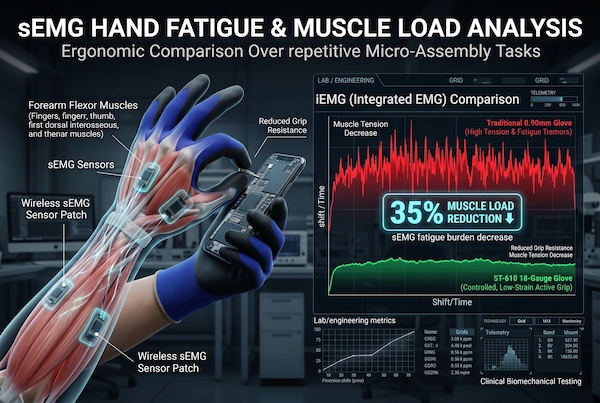
Biomechanics of Repetitive Strain Injury (RSI) in Assembly Operators
Traditional 13- or 15-stitch anti-static gloves, due to their coarse fibers and relatively thick coatings, have high overall cross-sectional flexural stiffness, creating significant passive resistance to movement in terms of human biomechanics:
Abnormal finger-flexion resistance torque and tendon tension: When workers bend their fingers to grasp small screws or micro-components, the fabric on the back of the glove and the adhesive layer on the finger joints generate noticeable resistance to elongation and rebound. This means that operators must not only overcome the contact force of the workpiece itself but also continuously exert additional grip force to overcome the deformation resistance of the glove material, directly causing the intrinsic hand muscles (including the lumbrical and interosseous muscles) and the tendons of the deep flexor digitorum muscles in the forearm to remain in a state of prolonged overload tension;
Cumulative Microtrauma and Repetitive Strain Injury (RSI): In the absence of adequate tactile feedback, operators compensate by increasing the gripping force at the wrist and the base of the thumb to ensure a secure grip. Prolonged static shear forces and alternating tensile stresses can easily induce synovial edema and thickening within the carpal tunnel, compressing the median nerve and subsequently leading to carpal tunnel syndrome (CTS) and tenosynovitis of the flexor pollicis longus tendon. These physiological and pathological changes manifest as numbness, weakness, and tremors in the fingers, as well as joint stiffness, directly leading to a significant increase in the rate of dropped micro-screws and scrapes during alignment after 4 hours of continuous work.
Surface Electromyography (sEMG) Confirms 35% Strain Reduction
Breaking through the mechanical movement resistance of traditional gloves, 18-gauge precision antistatic assembly gloves like the ST-610 achieve a groundbreaking ergonomic innovation in fiber structure and knitting geometry:
Isotropic 4-way stretch with 18-gauge ultra-high-density nylon: The ST-610 utilizes 18-gauge ultra-fine knitting technology to create a high-density, circular weave combining high-modulus, low-denier ultra-fine nylon filaments with nano-carbon fibers. The fabric’s internal micro-loop structure is fine and compact, endowing the gloves with near-skin-level omnidirectional elasticity (4-way stretch). During wide-angle flexion and extension of the finger joints and minor deformations of the fingertips, the fabric enables free, seamless gliding with zero dead zones, eliminating the movement stiffness and reverse pulling sensation caused by thick, heavy fabrics;
Surface electromyography (sEMG) quantitatively confirmed a 35% reduction in muscle load: In a standardized simulated smartphone micro-assembly comparison experiment, researchers attached EMG electrodes to the flexor digitorum group and the first interosseous muscle on the operator’s forearm to collect full-cycle integrated EMG (iEMG) values and median frequency (MDF) drift data. The test results showed that when performing micro-screw picking and cable-laying tasks at the same frequency and intensity, operators wearing the ST-610 exhibited significantly reduced muscle electrical signal activity, with the total workload on the major muscle groups of the hand and forearm decreasing by 35% overall;
Stable first-pass yield at the end of the shift: The substantial reduction in muscle load effectively delayed the accumulation of anaerobic metabolic byproducts and suppressed the physiological tremors in muscle fibers caused by prolonged, high-frequency work. This enabled operators to maintain stable, uniform, and precise fine motor control throughout the latter half of the 8-hour shift, effectively preventing defects such as component scratches and connector damage caused by fatigue-induced errors.
18 Gauge Precision Antistatic Assembly Gloves: High-Mix Smartphone & SMT Workstation Implementation
In a high-mix, low-volume smartphone manufacturing environment characterized by both high-mix production and a fast-paced workflow, operators must switch between multiple tasks during a single shift—including high-precision mechanical micro-assembly, surface-mount technology (SMT) feeder maintenance, and human-machine interface (HMI) industrial control interactions. Gloves must provide a seamless transition between the tactile identification of micro-components, protection against chemical contamination, and responsive digital human-machine touch interactions.
Camera Module (CCM) & Fingerprint Sensor Flex Insertion
The assembly of compact periscope camera modules (CCM), LiDAR sensors, and ultra-thin side-mounted fingerprint recognition modules is a typical workstation characterized by the narrow internal space and extremely sensitive surfaces of mobile phones:
Ensuring zero contamination and anti-fog protection for optical lenses: The outer protective glass and IR cut filter of the camera module are extremely sensitive to organic molecular contamination. Trace amounts of free silicone oil molecules released from ordinary gloves, once migrated to the lens surface, can cause a sudden drop in surface tension under high-temperature and high-humidity conditions, leading to glare, fogging, or failure of the coating’s adhesion in the imaging system. The ST-610 utilizes a 100% silicone-free and solvent-free microporous PolyMAX formulation, ensuring zero chemical residue is released when contacting lens edges or the module’s metal bracket, thereby eliminating surface mottling and scrap of optical components;
Precise alignment with minimal force in extremely tight spaces: The insertion gaps for fingerprint recognition flex cables and high-pixel camera gold fingers are extremely narrow; the thickness of the fingertip directly determines the operator’s line of sight and the feel of the insertion. With its ultra-thin 0.55mm fingertip design, the ST-610 enables operators to reach deep into the tiny cavities of the device housing, accurately sensing the subtle contact resistance between the flex cable’s stiffener and the connector’s guide slot. This ensures a smooth, single-pass insertion and secure latching, preventing creases caused by compression in the flex cable and short circuits due to misaligned gold fingers.
SMT Feeder Loading and Micro-Component Tape Splicing
The operational efficiency of high-speed SMT surface mount processes relies heavily on the precision of feeder loading and tape splicing:
Easy Peeling of Micro-Component Tape Cover Film: In high-speed feeder feeding of ultra-micro passive components such as 0402, 0201, and even 01005, peeling the cover tape and pressing the copper clips together is a process that relies heavily on the strength of the fingernails and fingertips. Traditional thick gloves provide too much tactile feedback at the fingertips, making it extremely difficult for workers to quickly lift the edges of ultra-thin plastic cover tapes less than 0.05 mm thick—often resulting in tape breakage or components bouncing off the conveyor;
0.55 mm ultra-thin fingertip wall thickness improves component pickup yield: The ST-610’s 0.55 mm fingertip wall thickness gives operators micro-gripping capabilities similar to those of bare hands, allowing them to easily peel back cover tape from hard-to-reach corners, smoothly thread the film, and use micro-grippers to precisely align the positioning holes with the metal copper clips, effectively eliminating feeder jams and placement machine rejections caused by tape misalignment or film curling.
Screen Bonding & Touch Screen HMI In-Line Calibration
Modern microelectronics digital production lines require operators to switch seamlessly between manual assembly, optical screen bonding, and the debugging of intelligent production line equipment:
High-Sensitivity Micro-Capacitive Touch Interaction: Traditional anti-static gloves have sparse conductive networks and insulating surface coatings. When operators touch industrial capacitive touchscreens (Touch Screen HMI) on production equipment, electrical charges cannot couple quickly, resulting in unresponsive taps. This forces workers to repeatedly remove and put on gloves, which not only slows down the production cycle but also makes it highly likely that skin flakes and static electricity from the outside environment will be introduced into the cleanroom;
Seamless, in-place machine setup without removing gloves: The ST-610 features a homogeneous distribution of continuous nano-conductive carbon fibers within its 18-pin nylon liner. Combined with an ultra-thin polymer coating, this creates high-density surface electrostatic coupling channels, delivering outstanding touchscreen recognition performance. After completing the alignment and bonding of the screen assembly, operators can directly perform parameter fine-tuning, coordinate origin calibration, or yield data entry on the machine’s touchscreen panel without removing their gloves, thereby fully integrating the operational workflow between physical assembly and digital system control.
Quality Verification: Micro-Dexterity and Peel Force Testing SOP
In precision assembly workshops for consumer electronics, gloves should not be managed merely as routine personal protective equipment (PPE) consumables; rather, they must be incorporated into the production line’s quality control (QC) and incoming/outgoing inspection standard operating procedures (SOPs). Establishing scientific, quantifiable physical and electrical sampling inspection protocols can effectively prevent workstation errors caused by uneven coating thickness across batches, impedance drift, or abnormal friction.
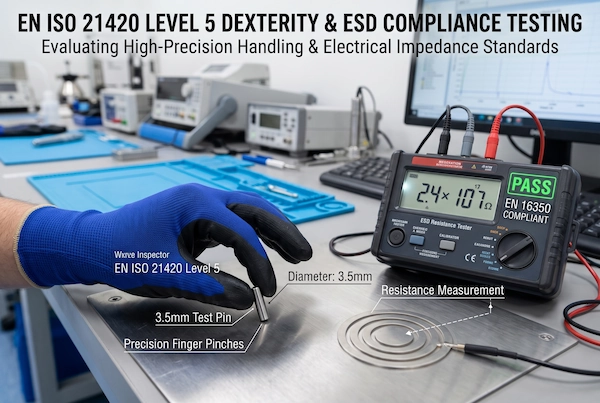
EN ISO 21420 Pin Test Protocol for Level 5 Dexterity
A glove’s mechanical dexterity is the core physical indicator determining whether a worker can precisely grasp tiny, irregularly shaped parts. The industry generally follows the pin-pick test protocol specified in the EN ISO 21420 standard (which replaced the original EN 420):
Standard test pin specifications and grading thresholds: The test apparatus consists of a set of highly flat, polished stainless steel cylindrical pins, all 40 mm in length, with diameters graded as follows: 11.0 mm (Level 1), 9.5 mm (Level 2), 8.0 mm (Level 3), 6.5 mm (Level 4), and the limit sizes of 5.0 mm and 3.5 mm. According to the standard, a sample that can continuously and smoothly pick up an ultra-fine stainless steel cylinder with a diameter of only 3.5 mm within 30 seconds is rated at the highest level of dexterity (Level 5 Dexterity);
Test SOP (Standard Operating Procedure) and Action Criteria: The tester wears standard-sized gloves and places the test pin horizontally on a flat, smooth metal workbench; the operator must rely solely on the contact surfaces of the thumb and index finger pads to continuously pick up and lift the 3.5mm cylinder within the specified test time limit, placing it vertically into the designated tray. During the process, the operator must not use the palm, fingernails, or the edge of the workbench for assistance. With an ultra-thin fingertip thickness of 0.55 mm and moderate polymer micro-damping, the ST-610 completed three consecutive high-speed picks of a 3.5 mm pin-shaped test pin in actual testing. It was awarded a perfect score under EN ISO 21420 Level 5, ensuring physical gripping precision during the handling of M1.0 micro-fasteners.
Micro-Pinch Force Consistency and Surface Friction Audit
In addition to standard static laboratory certification, production line QA must perform dual verification of micro-dynamic and electrical parameters under actual operating conditions for each batch upon arrival and before it enters production:
Dynamic Micro-Pinch Force Test: Production line inspectors use a digital push-pull force gauge equipped with a high-precision sensor (range 0 to 50 N, resolution 0.01 N). The fixture clamps an ultrasonically cleaned and dried aluminum alloy smartphone mid-frame test specimen or a standard stainless steel plate. The inspector, wearing the gloves under test, applies a constant vertical pressure of 5 N with the pad of the finger to grip the edge of the test specimen, then applies an axial tangential pull force. The peak friction force at the moment of relative slippage is recorded to ensure that the static and dynamic coefficients of friction remain within a controlled and stable range, thereby preventing operators from applying abnormal compensatory force due to excessively slippery coatings;
Portable Rapid Batch Impedance Inspection: In accordance with ANSI/ESD STM11.11 and EN 16350 standards, QA personnel must use a portable digital high-impedance meter with concentric ring electrodes or a 5-pound weight in a constant temperature and humidity environment within the workshop to perform multi-point resistance spot checks on the conductive networks of the fingertips, palms, and backs of the hands for each batch of gloves, ensuring that impedance readings across the entire surface strictly fall within the range of 1.0 × 10⁶ to 1.0 × 10⁸ ohms, thereby strictly preventing insulation dead zones caused by localized breaks in the conductive grid from entering the assembly station.
Frequently Asked Questions (FAQ)
Why is an 18-gauge liner superior to a 13-gauge liner in 3C assembly?
In micro-precision assembly for 3C consumer electronics, the advantages of 18-gauge knit fabric over 13-gauge knit fabric are rooted in microstructural geometry and neuroperceptual mechanics. The 18-gauge knitting technique increases the number of interlaced loops per inch by approximately 38%, resulting in a denser and smoother substrate surface. This significantly reduces the total finished wall thickness at the fingertips after composite dipping to just 0.55 mm. In contrast, 13-gauge gloves—which typically exceed 0.90 mm in thickness—form a noticeable viscoelastic damping layer between the fingertip and the workpiece, significantly attenuating low-frequency, highly sensitive mechanical vibrations in the 10 Hz to 50 Hz range. This prevents the Meissner’s corpuscles—the structures in the operator’s fingertips responsible for sensing micro-pressures—from detecting subtle contact damping. The ultra-thin 0.55 mm cross-section eliminates the fabric’s filtering effect on microstress signals, fully preserving mechanical feedback at the millinewton (mN) level. This enables operators to clearly perceive the smoothness of thread engagement and the sensation of the connector being crimped into place, fundamentally preventing screw slippage and cable breakage.
Does the ultra-thin 0.55 mm profile compromise ESD protection?
Not at all. The glove’s electrostatic discharge capability depends on the continuous three-dimensional network topology of the conductive fibers, not on the physical thickness of the polymer coating. The ST-610 utilizes homogeneously co-woven, high-purity, nanoscale bicomponent conductive carbon fibers. Through an 18-needle micro-warp and weft high-density weave, it constructs a microscopic, low-impedance conductive network with no dead zones within the ultra-thin nylon substrate. The microporous structure of the water-based PolyMAX resin forms a tight charge bridge with the underlying dense carbon mesh, resulting in a charge decay time of less than 0.05 seconds. The point-to-point surface resistivity remains consistently stable within the optimal dissipation range of 1.0×10⁶ to 1.0×10⁸ ohms. Even under extremely dry conditions in winter workshops, where relative humidity plummets to 25% RH, the ST-610 strictly complies with the EN 16350 low-humidity antistatic certification, offering the dual safety features of rapid dissipation of triboelectric charges and prevention of transient spark discharges.
What makes PolyMAX® coating silicone-free and non-marking?
The silicone-free and non-marking properties of the PolyMAX® coating stem from its fully water-based, polymer-crosslinked emulsion synthesis system. Traditional solvent-based coatings often incorporate dimethyl silicone oil during production as a release agent and defoamer. These free silicone molecules are highly mobile and tend to migrate outward upon contact with workpieces, contaminating optical lenses and causing defects such as delamination, mottling, and fogging. ST-610 eliminates silicone additives and solvent volatiles from both the raw material formulation and the curing process. FTIR (Fourier-transform infrared) spectroscopy testing confirms the absence of any residual siloxane characteristic peaks, meeting the standards for being 100% silicone-free and odorless. After coming into contact with camera module lenses, fingerprint sensors, or display glass covers, the workpiece surface remains completely clean, eliminating the risk of chemical marks and subsequent micro-pores or shrinkage defects during dispensing.
How does the ST-610 reduce operator hand fatigue by 35%?
The reduction in hand fatigue stems directly from the physical reduction in joint bending stiffness and improvements in the hand’s microclimate. Traditional, coarse, and stiff gloves generate continuous elastic resistance during finger flexion and extension, forcing the forearm flexor muscles and intrinsic hand muscles to exert additional gripping force to prevent the workpiece from slipping. The ST-610 utilizes a highly elastic, isotropic knit made from 18-gauge ultra-fine nylon filaments, reducing the material’s bending stiffness by more than 50% and eliminating rebound resistance during joint movements. At the same time, its full-palm 360° three-dimensional micro-perforated breathability (360° air permeability) prevents the accumulation of heat and sweat in the palm. Surface electromyography (sEMG) data collected under standardized micro-assembly conditions confirm that the full-cycle workload on the operator’s finger muscle groups is reduced by 35% overall, significantly delaying the onset of muscle tremors and strain, and ensuring the stability of precision assembly even toward the end of an 8-hour shift.
Closing & Engineering Specification Advisory
When switching from traditional 13-gauge gloves to 18-gauge precision antistatic assembly gloves in 3C consumer electronics assembly workshops, the engineering team should adopt a phased implementation strategy to ensure a smooth transition for the production line and quantify the improvement in yield rates. First, it is recommended to select three key demonstration workstations with a high incidence of micro-mechanical damage—such as the bonding of periscope camera modules for mobile phones, the crimping of ultra-micro FPC connectors on the side of the device, and high-speed SMT feeder pick-up—for the initial trial; Second, establish a two-week comparative tracking mechanism, focusing on statistics for M1.0 fastener slippage rates, the number of scrap units due to creases in FPC gold fingers, and workstation first-pass yield (FPY) during the second half of each shift, while also documenting electrical stability through daily ANSI/ESD impedance inspection records; finally, complete the workshop-wide changeover implementation by comprehensively analyzing operator-reported subjective fatigue levels alongside yield improvement data.
To obtain the complete EN ISO 21420 Level 5 dexterity test certification report, FTIR silicone-free detection spectra, and EN 16350 low-humidity impedance test data, or to request production line testing samples, please visit the ST-610 Antistatic PolyMAX® glove product page to submit an engineering sample request and technical inquiry.