Introduction: The Physics of Crush Injuries and Exoskeleton Mechanics
On the decks of deep-well onshore drilling rigs, in the loading and hauling sections of open-pit heavy-duty mines, and during high-altitude assembly of super-heavy steel structures—in these front-line heavy industrial settings—workers’ hands are constantly exposed to the narrow gaps created by high-kinetic-energy mechanical movements. According to accident dynamics analyses by global occupational health and safety (EHS) organizations, the vast majority of disabling hand injuries on the front lines do not result from minor superficial abrasions, but rather from instantaneous pinch points and blunt impacts that occur within milliseconds: violently rebounding hydraulic clamps, heavy drill pipe clamps swinging out of control after derailing, or the sudden misalignment of steel components weighing hundreds of kilograms during installation. The instantaneous kinetic energy generated by such mechanical impacts typically reaches or even far exceeds the standard 5 joules (J) threshold, and its destructive force creates intense, localized stress concentrated on an extremely small contact area. Once an external force directly penetrates the protective layer of the glove and reaches the bones, the fragile metacarpal and phalangeal bones on the back of the hand will suffer comminuted fractures, accompanied by torn tendons and permanent nerve damage.
Faced with the extremely destructive hazards of mechanical impacts, the design of industrial gloves has long been mired in a crude “thickness fallacy.” When addressing impact protection, many companies habitually assume that the protection level depends solely on the thickness and weight of the rubber layer. However, in actual working conditions, relying solely on stacking layers of solid rubber not only fails to achieve a linear increase in energy absorption but also leads to catastrophic ergonomic consequences: excessively thick and rigid protective pads on the back of the hand significantly increase bending torque, causing resistance to finger joint movement to surge by more than 30%. When front-line workers grip heavy wrenches, operate valves, or connect pipe strings, they must continuously expend extra grip strength to counteract the gloves’ elastic rebound. This not only rapidly leads to fatigue in the forearm flexor muscles and carpal tunnel syndrome but also increases the risk of accidents caused by the hands slipping. Even more dangerous is that during complex assembly or high-frequency operations, many workers take risks by secretly removing their gloves or even cutting off the finger guards to “work more smoothly,” reducing protective gear purchased for tens of thousands of yuan to mere compliance on paper.
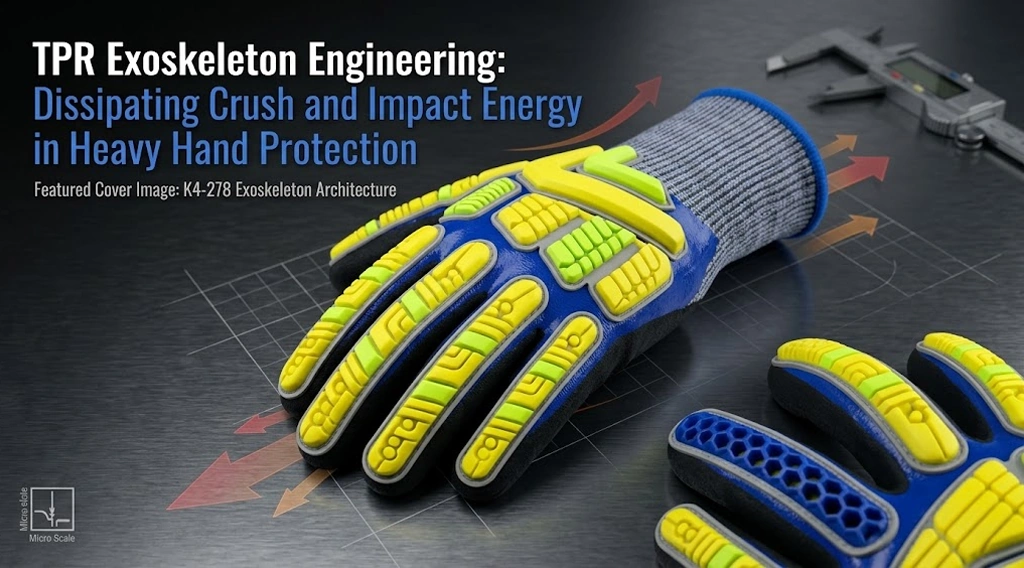
The key to eliminating this safety hazard lies in shifting from crude physical barriers to precision TPR impact glove engineering. A true industrial-grade impact-resistant exoskeleton is by no means a simple rubber patch, but rather an energy dissipation system that integrates polymer rheology, dynamic damping, and microscopic bionic structures. It not only requires the thermoplastic rubber (TPR) substrate to possess the precise Shore A hardness—enabling it to convert lethal mechanical kinetic energy into minimal thermal energy through the internal friction of molecular chains at the moment of impact—but also relies on the microscopic geometric design of biomimetic hinged grooves and controlled collapse chambers, which, while preserving maximum dexterity, reduces the peak transmitted force to the skeleton to below the human tolerance threshold.
For corporate procurement and safety management teams needing a comprehensive assessment of international impact resistance standards, material durability, and customized solutions for various industrial scenarios, we invite you to explore our Impact Resistant Work Gloves section, which details our core products and technological pillars.
Impact Kinetics: The Physics of Peak Force Attenuation
In heavy industrial production processes, mechanical impact protection is not merely a matter of static force protection, but rather a process of momentum transfer that occurs on an extremely short time scale. When a crane lifting device weighing several metric tons experiences a slight sway, or when a high-torque pneumatic wrench generates mechanical recoil, the external force acting on the hand exhibits extremely high peak acceleration. If protective equipment fails to disrupt the concentrated energy path at the instant of initial impact, even the slightest loss of mechanical control can result in catastrophic skeletal injuries.
Contact Mechanics in Heavy Industrial Pinch Points
Almost all of the most fatal hand injuries in industrial settings occur at narrow equipment pinch points. From the perspective of contact mechanics, when heavy drilling tool joints, the edges of stamping dies, or casting flash violently strike the hand, the magnitude of the impact kinetic energy depends entirely on the product of the moving component’s mass and the square of its instantaneous velocity (i.e., kinetic energy E = 0.5 * m * v^2). When a steel component weighing several hundred kilograms strikes a hand at a seemingly slow speed of 0.5 meters per second, the instantaneous impact kinetic energy it carries has already exceeded several dozen joules—far surpassing the physical tolerance limits of human tissue.
The anatomical structure of the back of the human hand is extremely fragile; the skin and subcutaneous fat layer are very thin, and directly beneath them lie the tightly packed metacarpal bones, phalanges, and the extensor tendons that control finger flexion and extension. Medical load tests indicate that unprotected human finger bones will sustain irreversible linear fractures when subjected to concentrated loads exceeding 2.5 to 3.0 kilonewtons (kN); when an instantaneous impact force exceeds 4.0 to 5.0 kilonewtons (kN), the bone structure will suffer a comminuted fracture, accompanied by tendon rupture and nerve damage.
Even more destructive is the contact geometry. When poorly designed, non-engineered gloves or bare hands are struck by a heavy object, the external force is often applied as a “point load”—in the form of a blade-like or sharp-angled impact—to bony prominences. According to the basic principle that pressure equals force divided by the area of contact (P = F / A), an extremely small contact area can cause localized instantaneous pressure to surge to hundreds of megapascals. The primary objective of TPR Impact Gloves Engineering is to use exoskeletal armor with a three-dimensional spatial structure to create a mechanical bridge at the moment of impact, forcibly altering the contact boundary conditions—redistributing the highly destructive “localized point load” across a large area covering the entire phalanges and the back of the hand as a “distributed load.” By expanding the force-bearing surface area by 5 to 10 times, the peak pressure is instantly dissipated, preventing mechanical sharp edges from penetrating the medullary cavity through shear forces.
The Delta t Principle: Extending Collision Duration to Suppress Peak Force
In addition to stress spatial diffusion, the most fundamental energy dissipation mechanism in impact protection engineering lies in controlling the duration of the collision—that is, the “law of momentum” in physics (F * Delta t = m * Delta v).
When a steel drop weight carrying a standardized 5 joules (5 J) of impact energy strikes a hard surface—such as a steel-on-steel interface or a rigid substrate lacking an elastic energy-absorbing layer—the collision duration (Δt) is extremely brief, typically lasting only 0.5 to 1.0 milliseconds (ms), as the object’s velocity approaches zero. Under the physical premise that the total change in momentum remains constant, the shorter the collision duration, the more the instantaneous peak impact force (Peak Force) generated by recoil increases exponentially, easily exceeding 10 to 15 kilonewtons (kN)—enough to shatter any hard human bone.
The energy dissipation mechanism of engineering-grade thermoplastic elastomers (TPR) precisely utilizes the controllable buckling process of the material under load, significantly extending the collision duration (Delta t) by a factor of 3 to 6 (to 3.0 to 6.0 milliseconds or even longer). When a heavy hammer strikes the outer surface of the TPR armor, the polymer molecular chains rapidly initiate microscopic yielding and dislocation slip under vertical loading:
Macroscopic cushioning stroke extension: The TPR exoskeleton creates a millisecond-level deceleration buffer zone through its own elastic compression and controlled lateral expansion. The external force is no longer transmitted instantaneously through rigid “hard-on-hard” contact, but rather acts like a race car colliding with an energy-absorbing guardrail, making the deceleration curve of the moving object extremely gentle. This forcibly suppresses the residual peak transmitted force (Peak Transmitted Force) that would otherwise penetrate inward, keeping it well below the safety threshold at its source.
Molecular-level viscoelastic energy dissipation: During dynamic tensile and compression cycles, the SBS or SEBS block copolymer chains within the polymer undergo intense friction, directly converting a large amount of mechanical impact kinetic energy into minute amounts of thermal energy within the material, which is rapidly dissipated into the surrounding air. This physical damping characteristic prevents mechanical shock waves from resonating and penetrating deep into bone tissue.
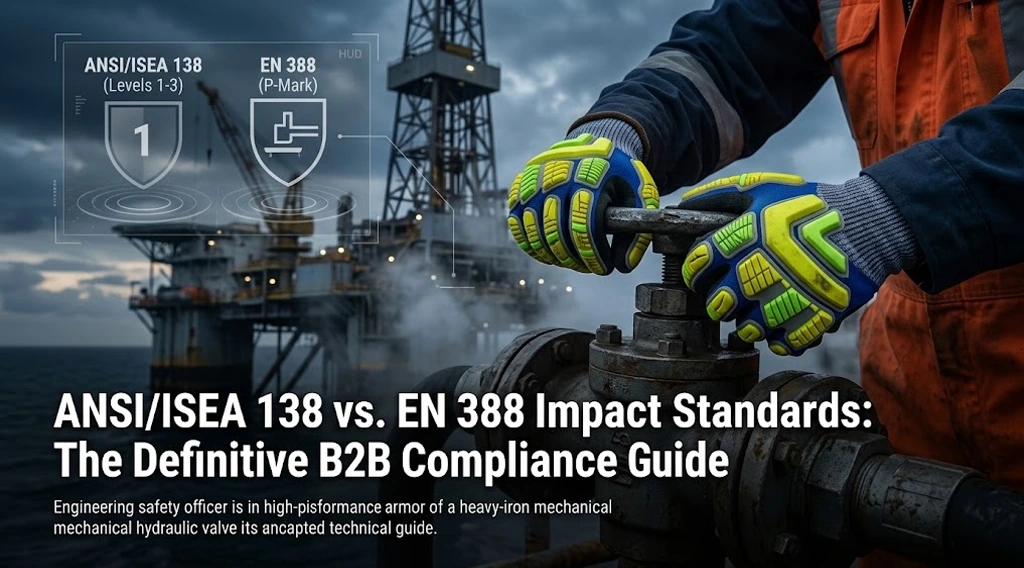
For detailed information on the measurement of specific transmission forces for drop-weight impact energy under laboratory conditions, dynamic piezoelectric sensor readings, and the stringent classification differences among major testing standards, we invite you to read our comprehensive technical analysis comparing the two major international standards: ANSI/ISEA 138 vs. EN 388 impact standards.
Polymer Chemistry: Shore A Hardness and Viscoelastic Damping
In the polymer engineering design of heavy-duty impact-resistant gloves, the exoskeleton must never be regarded as a homogeneous, rigid mass of rubber. The reason thermoplastic rubber (TPR) has become the standard material for industrial heavy-duty protection essentially lies in the unique rheological characteristics exhibited by its microscopic molecular chains when subjected to dynamic shear and vertical impact. The hardness window and viscoelastic damping response of the material during millisecond-scale loading directly determine whether the shock wave is absorbed and attenuated layer by layer or penetrates rigidly through to the worker’s hand bones.
The Shore A 40–60 Engineering Window
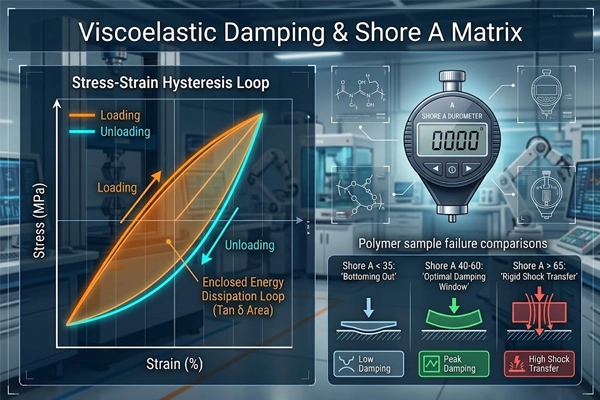
The core engineering benchmark for evaluating the deformation stiffness and energy-absorption characteristics of thermoplastic elastomers is the material’s Shore A hardness. In the formulation development of TPR impact gloves, the Shore A hardness of the protective material does not follow the principle that “the harder, the stronger” or “the softer, the better cushioning”; rather, there is an extremely stringent optimal balance range—Shore A 40 to Shore A 60. Deviating from this physical window causes a systemic breakdown in the material’s mechanical protection logic:
The Trap of Excessive Hardness (Shore A greater than 65):
When TPR hardness exceeds 65A, the material’s molecular rigidity becomes excessive, causing the surface layer to exhibit hard and brittle characteristics similar to those of engineering plastics. Although such materials perform excellently in static indentation tests, they lack sufficient instantaneous shear deformation capacity when faced with sudden blunt impacts from high-kinetic-energy falling hammers or heavy castings. Excessively hard armor not only tends to generate stress concentrations under pressure from sharp edges—triggering rapid brittle cracking along microscopic defects—but also transmits the impact kinetic energy directly and without any attenuation to the underlying soft tissues and metacarpal bones via a rigid path, similar to “a sledgehammer striking a steel plate,” resulting in severe hidden crush injuries and bone fractures.
The Low-Hardness Trap (Shore A less than 35):
Conversely, when the hardness drops below 35A, the rubber compound becomes too soft, resulting in a severely insufficient yield modulus. Under the impact of a heavy object with standard kinetic energy of 5 joules (5 J) or higher, an extremely soft rubber layer will be completely flattened the instant the force is applied, resulting in the material mechanics phenomenon known as “bottoming out.” Once the material loses its compressive cushioning travel, its physical thickness for absorbing kinetic energy instantly drops to zero, allowing the residual shock wave to penetrate unimpeded and exert devastating, crushing pressure on the tips of the finger bones.
The Shore A 40–60 “Golden Engineering Range”:
Engineering-modified TPRs in the 40A to 60A range can provide ideal, controlled elastic yielding within the microsecond timeframe of a heavy-hammer impact. It possesses sufficient structural rigidity to support an effective energy-absorption stroke, preventing heavy objects from directly compressing the bones, while simultaneously rapidly distributing the force across the contact surface through the material’s own flexible compression, thereby forcibly suppressing the residual peak transmission force within stringent standard thresholds.
Viscoelastic Damping and Rebound Hysteresis
Simply possessing appropriate static stiffness is not sufficient to constitute a high-grade impact-resistant exoskeleton. The energy dissipation efficiency of TPR materials when subjected to external mechanical work depends entirely on the “viscoelasticity” of their microscopic molecular structure and their damping mechanisms.
High-performance impact-resistant armor typically uses styrene-butadiene-styrene (SBS) or hydrogenated styrene-ethylene-butene-styrene (SEBS) block copolymers as the matrix resin. In this type of microscopic phase-separated system, the rigid polystyrene segments aggregate to form a physically cross-linked network, providing macroscopic dimensional stability and mechanical resilience; meanwhile, the soft polybutadiene or ethylene-butene polymer segments are highly coiled, exhibiting excellent elastic behavior and microscopic fluidity:
Molecular segment slippage and heat generation from internal friction:
When an external impact load is applied to the TPR armor, the energy forces the entangled and coiled soft-block polymer chains to rapidly depolymerize and undergo relative dislocation slippage. During this microscopic shearing process, intense intramolecular friction between polymer chains rapidly dissipates the massive kinetic energy of the external mechanical impact, converting it into molecular thermal motion energy (minimal thermal energy), which is then dissipated into the surrounding air through the material’s surface.
Hysteresis Loop and the Termination of Impact Waves:
On dynamic load-displacement test curves, engineering-grade TPR exhibits significant “mechanical hysteresis loss.” Specifically, there is a large closed-loop area difference between the strain curve during compression loading and the recovery curve during unloading and rebound. The area enclosed by this closed loop represents the total kinetic energy completely dissipated by the material’s internal damping mechanisms.
Ordinary rubber or low-quality elastomers, after being compressed and deformed, immediately release their stored potential energy like a spring, generating a destructive “reverse secondary rebound wave” that subjects the worker’s hand tissues to a secondary recoil shock in an extremely short period of time; In contrast, a SEBS-modified system with precise damping calibration can significantly extend the deformation recovery cycle and effectively eliminate shock rebound, thereby achieving unidirectional closed-loop energy dissipation in a single impact.
Cryogenic Resilience: Glass Transition Temperature (Tg) Modification in Sub-Zero Mining
Heavy industrial operations conducted in extremely cold environments pose extremely rigorous challenges to the mechanical properties of impact-resistant safety equipment. In Canadian oil sands mining areas, deep-sea drilling platforms in Alaska, high-latitude open-pit iron ore mines in Northern Europe, and winter field crane sites in northern China, ambient temperatures often remain below -20 degrees Celsius—or even lower—for extended periods. Under such frigid conditions, impact resistance data measured for materials in standard-temperature laboratories often become completely invalid; the low-temperature environment completely reshapes the physical structure of polymer materials, causing unmodified impact-resistant exoskeletons to degenerate from flexible protective barriers into lethal hazards.
The Mechanics of Cold-Brittle Failure
In polymer physics, the core threshold for evaluating the temperature adaptability of elastomers and plastics is the material’s “glass transition temperature” (Tg). When the ambient temperature is above a material’s Tg, the polymer molecular chains are in a highly elastic state characterized by free coiling and active movement, exhibiting excellent cushioning, tensile, and energy-absorbing properties; However, once the ambient temperature falls below its Tg, the thermal motion of the molecular segments is completely “frozen” and locked in place, the free volume between molecules plummets, and the material undergoes an irreversible phase transition, plunging from a highly elastic state into a hard and brittle “glass state.”
The generic, low-end TPR blends commonly used in low-cost impact-resistant gloves on the market—or the ordinary phthalate-based polyvinyl chloride (PVC) materials added in large quantities to reduce costs—have extremely high glass transition temperatures, typically ranging from -5°C to 0°C. This means that as soon as the temperature drops to the freezing point:
instantaneous physical hardening and a complete loss of flexibility: within minutes at temperatures a few degrees below zero, the material loses its elasticity, and the protective armor on the back of the hand—which is meant to cushion external forces—becomes as stiff as a sheet of iron. At this point, the resistance to bending in the gloves increases exponentially. When workers grip drill pipes or handle the cables of aerial work platforms, they must exert their full grip strength to counteract the rigid exoskeleton, leading to impaired microcirculation in the hands and a dramatically increased risk of frostbite.
Brittle Fracture and Secondary Penetration by Splinters: Even more dangerous is the fracture behavior under mechanical impact. Low-end rubber compounds in a glassy state completely lose the viscoelastic mechanism that dissipates kinetic energy through polymer chain slippage. When a frozen steel cable whips across the back of the hand or a heavy pry bar strikes it violently, the rigid armor—lacking the ability to undergo microscopic yield deformation—cannot extend to cushion the impact; instead, it undergoes a brittle rupture directly at the point of contact. Not only does this shattering fail to absorb any external impact force, but the sharp, hard fragments produced by the disintegration are driven by the impact force to directly shred the glove’s base material, penetrate the subcutaneous fat, and pierce the tendons and periosteum of the finger bones, causing severe secondary penetrating lacerations to the operator.
SBS/SEBS Matrix Tuning for -40°C Flexibility
To eliminate the risk of cold-induced brittleness in extreme polar conditions, professional-grade TPR impact glove engineering must involve in-depth low-temperature polarization modification of the material matrix during the polymerization stage.
By selecting high-purity, highly hydrogenated styrene-ethylene-butylene-styrene (SEBS) as the main block copolymer, the R&D team was able to significantly reshape its phase transition boundaries at the molecular structural design level. The hydrogenated ethylene-butylene (EB) block polymer chains exhibit extremely high chemical stability and very low intrinsic rotational steric hindrance, enabling the molecular chains to retain a certain degree of conformational rearrangement and micro-slip freedom even at extremely low temperatures.
Building upon this matrix, the engineering team utilized polymer physical modification techniques to develop a specialized formulation tailored for extreme cold environments:
Microphase penetration of long-chain branched cold-resistant plasticizing additives:
The formulation eliminates conventional paraffin oils and ordinary esters—which are low-molecular-weight and prone to migration—and instead incorporates highly branched polyalphaolefins (PAOs) or special polyester-based cold-resistant plasticizing additives with ultra-low pour points. These functional molecules can precisely insert into the microdomains of the amorphous rubber phase within the SEBS block copolymer, significantly expanding the free volume between polymer chains and markedly weakening the secondary bond interactions between macromolecular chains at low temperatures. Through this microscopic spatial isolation effect, the material’s macroscopic glass transition temperature (Tg) is forcibly lowered to the range of –40°C to –45°C.
Combined Use of Highly Active Anti-Aging and Antioxidant Systems:
Given that operations in extreme cold are often accompanied by intense UV radiation and extreme diurnal temperature fluctuations, the formulation system synergistically incorporates hindered amine light stabilizers (HALS) and highly effective phenolic antioxidants. This composite protective network effectively interrupts the vicious free-radical chain reactions caused by low-temperature cold brittleness and photo-oxidative degradation, preventing low-temperature photo-oxidative breakage of the polymer main chain. This ensures that the exoskeleton retains its initial Shore hardness and dynamic tear resistance even after undergoing hundreds of cycles of extreme cold exposure in the open air and severe freeze-thaw cycles.
After undergoing this engineering-grade modification, the TPR exoskeleton continues to provide the same flexible hinge adhesion in extreme cold field conditions at –40°C as it does at room temperature. Furthermore, when subjected to high-impact hammer strikes, it seamlessly activates multi-stage elastic energy dissipation, establishing a robust and reliable on-site safety barrier for heavy-duty polar engineering and operations in frigid mining areas.
Geometric Shock Absorption: Micro-Chambers vs. Solid Armor
Once the Shore hardness and cold-resistant formulation at the material chemistry level have been finalized, the ultimate mechanical protection ceiling for impact-resistant gloves is determined by the three-dimensional microgeometric structure of the exoskeleton. For a long time, traditional personal protective equipment (PPE) was limited by outdated molding processes and generally relied on simple, homogeneous solid rubber strips (Solid Blocks) covering the back of the hand. However, calculations based on modern impact dynamics and finite element analysis (FEA) clearly demonstrate that, within the constraints of the same mass and thickness, the energy transfer pathways in solid structures are extremely rigid. Only by introducing a biomimetic cavity damping system can high-kinetic-energy shock waves be completely dissipated at the physical scale.
Progressive Buckling in Honeycomb and Prismatic Cavities
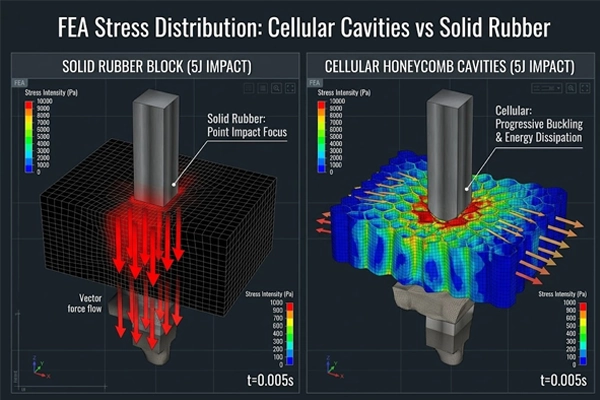
In comparative tests using a drop-weight tester combined with high-speed photography and computer-aided finite element analysis (FEA), the stress distribution contour plots of solid rubber blocks and micro-cavity structures revealed distinctly different failure mechanisms:
The “dead volume” bottleneck in compressed solid rubber armor:
When a solid rubber block is struck by a vertically descending hammer, because rubber is a nearly incompressible material with a high Poisson’s ratio (close to 0.5), the rubber must expand freely in all directions as it undergoes compression in the thickness direction. However, the lateral expansion of the solid block near the back of the hand is severely constrained by the stitching and adjacent rubber blocks, resulting in an extremely high “triaxial stress state.” At the moment of impact, the material cannot generate sufficient free volumetric displacement internally, resulting in extremely high instantaneous equivalent stiffness. Finite element stress contour plots show that high-stress concentration zones (indicated in red) penetrate the rubber layer vertically downward like a drill bit within 1 millisecond, effectively “slamming” nearly 80% of the impact force directly onto the worker’s hand bones.
Progressive Buckling Energy Absorption in Honeycomb and Prismatic Micro-Cavities:
Advanced TPR impact glove engineering has completely broken away from the rigid structure of solid rubber layers, instead incorporating biomimetic hexagonal honeycomb cavities or prismatic hollow micro-cavities into the core protection zones on the back of the fingers and the metacarpal bones. When an external falling hammer strikes with great force, the prismatic micro-cavities do not undergo disordered, rigid compression but instead initiate a controlled, multi-stage buckling process:
Initial elastic yield: Under the impact of the initial velocity, the thin-walled micro-cavities are the first to undergo controlled bending deformation, actively providing a millimeter-level primary physical cushioning stroke to gently channel the vertical kinetic energy into the energy-absorption path;
Progressive folding of the cavity walls and gas-damped compression: As the impact load continues to rise, the microcavity’s side walls undergo ordered, symmetrical folding and large-deformation buckling along predetermined geometric angles. During this process, the trace amounts of air within the sealed or semi-open microcavities are compressed under pressure, forming transient air-cushion damping that, together with the folding and bending polymer cavity walls, generates a powerful compressive reaction force;
Lateral deflection and dissipation of the shock wave: The geometric sloped surface design of the multi-faceted cavity fundamentally alters the kinetic energy transfer vector. The high-energy shock wave, which originally struck the hand bones vertically from above, is forcibly interrupted and broken up by the cavity’s slanted walls, forcing it to diverge and redirect toward the microcavities on both sides of the horizontal surface of the back of the hand. The vertical, lethal downward impact force is ingeniously converted into a horizontal load resulting from the lateral compression of the exoskeleton, thereby significantly smoothing out the destructive peak readings transmitted to the bones.
Resistance to High-Stress Tear Propagation and Notch Sensitivity
In the maintenance of complex heavy industrial equipment and mining and drilling operations, the hazards gloves face are rarely ideal, absolutely vertical impacts; more often, they involve complex, high-stress conditions that include scraping against sharp metal burrs, tearing along edges, and twisting and pinching. In such harsh environments, exoskeletons must possess an extremely high resistance to tear propagation to prevent the entire armor panel from disintegrating and detaching after a single instance of mechanical shearing.
Polymer materials inherently suffer from “notch sensitivity” at geometric discontinuities. If the edges of TPR armor, the bases of micro-cavity arrays, or the corners of energy-absorbing prisms are designed as vertical right angles or acute angles, the shear stress承受ed locally will increase exponentially when subjected to violent oblique scraping against equipment edges. Microscopic scratches rapidly evolve into primary cracks within an extremely short time; severe stress concentration occurs at the crack tip, causing the crack to tear and propagate rapidly along the armor substrate, ultimately leading to the exoskeleton completely losing its structural integrity in subsequent impacts.
To thoroughly eliminate this engineering hazard, systematic tear-resistant energy-dissipation optimization was implemented during the mold development and geometric design phases of the impact-resistant armor:
Full 3D Chamfering and Curvature Reconstruction:
All exposed energy-absorbing micro-cavities—including the top edges, the base intersections, and the bottom surfaces of the hinge grooves—have had all 90-degree right-angle features strictly removed. Without exception, continuous, smooth, streamlined 3D large fillets (fillet radii) and gradually varying arc curvatures have been applied. Through the smooth transition of geometric curvature, shear forces cannot accumulate at any single abrupt point but are instead evenly distributed across the entire geometric surface, thereby eliminating at the source the mechanical conditions that foster microcracks caused by the notch effect.
Tear-Arrest Island Design for Tear Energy Dissipation:
At the junction between the critical interdigital micro-chambers and the outer edges of the large metacarpal protection panels, the engineering team incorporated stepped reinforcing rib damping strips (Tear-Arrest Ribs). When an extremely sharp metal blade forcibly cuts into the armor surface and attempts to initiate tear propagation, the propagating crack—after advancing a few millimeters—encounters a thickened, dense polymer tear-arrest ring with a gradient in hardness. This tear-arrest structure forces the stress release path at the crack tip to twist, fork, and ultimately blunt and terminate, completely dissipating the highly destructive tearing energy within a localized micro-area. This ensures that even after the gloves endure multiple brutal, oblique, heavy-load scrapes, the exoskeleton remains securely anchored to the glove liner without damage.
Ergonomic Kinematics: Segmented Flex Grooves & Grip Fatigue
The ultimate goal of any protective equipment design must be rooted in ergonomics. In heavy industrial settings, gloves that offer maximum impact protection but are clunky and stiff to wear often lead to counterproductive safety disasters. When workers need to grip a vibrating air hammer, rotate drill pipe joints, or handle oil-stained castings for hours on end, an exoskeleton’s interference with the natural flexion and extension of finger joints directly translates into chronic musculoskeletal injuries. Achieving a balance between high-level physical impact protection and agility during high-frequency tasks is the most challenging aspect of force calibration in TPR impact glove engineering.
Articulation Along DIP, PIP, and MCP Joints
From the perspective of human biomechanics and anatomy, the human hand’s ability to perform precise pinching and high-torque, heavy-duty gripping relies entirely on the highly coordinated flexion of three core pulley joints between the metacarpal and phalangeal bones:
Metacarpophalangeal (MCP) Joints: Responsible for the large-angle flexion at the main axis where the palm transitions to the fingers, with a maximum flexion of up to 90 degrees;
Proximal Interphalangeal Joints (PIP Joints): These joints bear the vast majority of the rotational torque during gripping motions and serve as the load-bearing centers where fingers achieve their greatest range of flexion;
Distal Interphalangeal Joints (DIP Joints): These joints control the fine-tuning of fingertip closure and tactile alignment, determining the precision required when handling small tools.
In traditional, crude anti-crush glove designs, manufacturers often rigidly cover the dorsal side of the fingers with a single, continuous, straight strip of solid rubber to simplify injection molds and ensure test coverage. While this anti-ergonomic structure appears adequate when the glove is laid flat, a deadly “elastic rebound torque” is instantly generated the moment a worker bends their fingers to grasp an object:
According to the theory of bending beams in solid mechanics, the rubber armor on the outer side of the finger experiences severe axial tensile stress on its outer surface, while the inner contact surface is subjected to intense compressive stress. The deformation resistance generated when the solid rubber strip bends transforms into a powerful reverse rebound force, attempting to forcibly snap the finger back to a straightened position. To maintain a firm grip on the wrench handle or pipe fitting, the worker’s intrinsic hand muscles, lumbrical muscles, and deep flexor muscles of the forearm must continuously exert additional physiological static muscle force to counteract and suppress the stubborn elastic rebound torque from the rubber on the back of the hand.
This high-load, extra work—which can last for hours—rapidly impedes microcirculation in the hand’s soft tissues, triggering ischemic muscle spasms and numbness and tingling in the forearm, while significantly accelerating the onset of occupational injuries such as carpal tunnel syndrome. When a worker’s grip strength declines by more than 20%, precision in controlling heavy equipment drops sharply, and the probability of heavy objects accidentally slipping and falling increases exponentially.
Mitigating Unauthorized Glove Tampering on Site
For on-site EHS departments, one of the most persistent and troubling major safety hazards identified during safety inspections is “unauthorized glove tampering” by front-line operators.
When workers are required to wear old-style, solid-palm impact-resistant gloves—which are overly stiff and heavy—to perform tasks such as threading ropes at heights, fine-tuning flange bolts, or inspecting hydraulic pipe valves, the rigid back-of-finger armor restricts finger movement and eliminates even the most basic sense of touch. To “make the work easier and less tiring,” many workers—taking advantage of blind spots where foremen aren’t looking—secretly use utility knives to completely cut away the rubber impact-resistant pads on the thumb and index finger areas of their gloves, or even cut off the entire fingertips to turn them into “open-finger gloves.” This unauthorized tampering with gloves—done to sacrifice protection for dexterity—leaves frontline workers’ finger joints completely exposed to rotating pinch points and sudden falling rocks. The high-grade protection purchased for tens of thousands of yuan becomes virtually useless due to these violations.
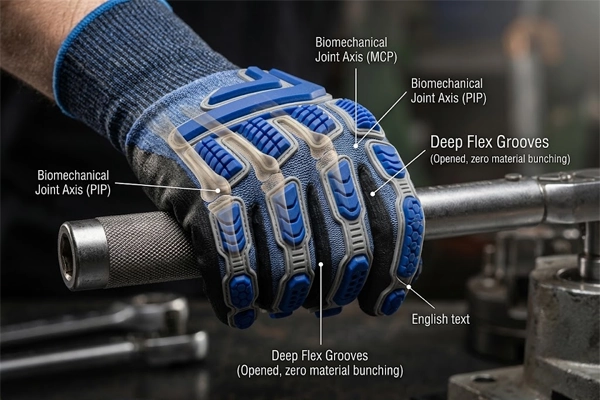
The engineering solution to alleviate workers’ resistance and eradicate the practice of unauthorized glove modification lies in completely breaking the force continuity of solid armor and introducing bionic segmented flex groove technology:
Bionic grooves precisely aligned with anatomical axes:
Through 3D dynamic hand scanning, the R&D team precisely positioned deep grooves with micrometer-level accuracy above the physiological flexion axes of the metacarpophalangeal (MCP), proximal interphalangeal (PIP), and distal interphalangeal (DIP) joints during exoskeleton mold development. Each protective block is finely segmented into multiple independent protective units based on the anatomical contours of the fingers, with these units connected in series by ultra-thin, elastic, flexible hinge strips featuring a low flexural modulus.
Zero-Gap Interlocking Geometry and Impedance Drop-Off:
When the fingers are naturally extended, the outer edges of each protective unit interlock tightly at the microscopic geometric level, forming a solid defensive shield across the back of the hand with no blind spots; when the worker bends their fingers to grasp an object, the deep grooves rapidly open, and the independent armor blocks on both sides naturally slide apart along biomimetic angles of inclination, eliminating any blind spots caused by material compression or stacking. This structure converts the material’s tensile deformation during glove flexion into geometric opening and closing displacement, directly reducing static bending resistance on the back of the hand by more than 40%.
Operational Adaptability and Full-Time Compliance:
By reducing bending resistance to a nearly negligible level, workers no longer need to waste muscle strength resisting rubber rebound when gripping tools, allowing their fingers to retain natural grip feedback and tactile sensitivity. Even after completing an entire shift of high-intensity mechanical assembly and pipe string handling while wearing the gloves, workers’ hands retain ample grip strength and muscle comfort. This completely eliminates the psychological incentive to cut away the glove’s protective lining due to hand fatigue or stiffness, steadily raising the actual protective gear compliance rate on construction sites to 100%.
Substrate Bond Integrity: Thermal Welding vs. Structural Adhesives
Throughout the entire service life of impact-resistant gloves, the bond strength between the outer TPR armor and the underlying fabric glove liner is the “Achilles’ heel” that determines the success or failure of overall protection. No matter how ingenious the energy-absorbing geometric design of the exoskeleton may be, or how precisely the Shore hardness is calibrated, the glove will instantly lose its impact resistance if localized delamination, curling, or complete peeling occurs under heavy shear loads or when exposed to oil or water. Therefore, establishing a molecular-level bond between the polymer elastomer and the high-strength knitted base fabric is a fundamental process principle that cannot be overlooked in TPR impact glove engineering.
Interlocking Direct Injection vs. High-Tensile Hot-Melt Adhesive Webs
In industrial manufacturing, the mainstream processes for attaching TPR exoskeletons to glove fabric linings are primarily divided into two camps: Interlocking Direct Injection and High-Tensile Hot-Melt Adhesive Webs. There is a significant engineering divide between the two in terms of microscopic mechanical bonding mechanisms at the interface and dynamic shear peel resistance:
Limitations and Breakthroughs of High-Tensile Hot-Melt Webs:
Traditional mid- to low-end gloves often use conventional cold adhesives or simple spot-gluing processes, resulting in extremely weak peel strength; they are highly prone to peeling and detachment when subjected to oblique friction. Advanced engineered hot-melt solutions, however, utilize highly elastic hot-melt bonding webs woven from thermoplastic polyurethane (TPU) or modified polyester copolymers. Within a controlled high-temperature, high-pressure flat-press chamber, the adhesive web instantly melts and, driven by pressure, penetrates the gaps between the knitted fiber bundles. In standard testing, the normal peel strength of this hot-melt web can reach 35 to 45 newtons per centimeter (N/cm).
However, the mechanical weakness of the hot-melt mesh lies in its ability to withstand extremely high shear stress. When a steel pipe weighing several metric tons collides with the hand through lateral friction, the external force directly pulls at the edges of the TPR with an enormous shear stress that is nearly parallel to the interface with the back of the hand. Under such intense transient dynamic loads, the hot-melt adhesive layer often undergoes brittle micro-fractures due to high strain rates, leading to a “weld-break” type of chain-reaction tearing at the interface between the adhesive layer and the fabric. As a result, the entire back-of-hand armor is forcibly scraped off before it can withstand a second heavy impact.
The Essence of Interlocking Injection Technology:
To ensure zero detachment during extreme mechanical impacts, heavy-duty protective gloves incorporate advanced in-mold direct injection and mechanical interlocking technology. Using custom injection molds, the engineering team subjected molten modified TPR compound to extremely high injection pressure and mold temperatures. This process not only thermoplastically fused the material with the glove’s outer-layer fibers but also forced it to penetrate the mesh openings of the seamless knitted fabric, forming microscopic, rivet-like mechanical self-locking anchors (Mechanical Anchor Rivets) on the reverse side of the glove’s liner.
This dual-anchor network—combining “mechanical interlocking” and “thermal cross-linking wetting”—eliminates the weak slip planes found at traditional adhesive interfaces. In fact, the measured normal and tangential shear peel strengths have surged to over 50 newtons per centimeter (N/cm). Even if the external microchambers of the TPR are torn into deep grooves during a violent impact, their bases remain firmly welded to the inner liner’s fabric substrate like steel nails, providing the underlying skeletal structure with a consistent, in-situ impact barrier.
Fluid Barrier Protection on Continuous Polymer Liners
In deep oil and gas drilling, offshore platform maintenance, and chemical plant inspections, gloves are subjected to far more than just mechanical impacts in dry environments; they also face prolonged exposure to synthetic oil-based drilling mud (OBM), heavy hydrocarbons in crude oil, diesel-based cleaning agents, and high-pressure water-based emulsions. Chemical erosion of the bonded interface by fluid media is the root cause of widespread detachment of impact-resistant exoskeletons in the field.
When ordinary rubber adhesives or low-grade hot-melt adhesives are exposed to nonpolar aromatic hydrocarbons and mineral oil solvents over extended periods, liquid molecules rapidly penetrate and saturate the microscopic capillary cracks at the interface between the armor and the fabric:
Nonpolar solvent swelling and interfacial shear failure:
Small-molecule hydrocarbons force their way between the molecular chains of the inadequately cross-linked polymer adhesive layer, significantly lowering the glass transition temperature of the adhesive and triggering a violent “interfacial swelling reaction” (Interface Swelling). The swollen adhesive layer undergoes anisotropic expansion; the originally dense bonded surface softens into a jelly-like gel that has lost its cohesive strength, resulting in a precipitous drop in peel adhesion. Often, it takes only a few manual gripping motions by a worker for the exoskeleton to completely delaminate and arch due to adhesive failure.
Engineering a Polymer Adhesive System with High Hydrolytic Resistance:
When laminating a TPR exoskeleton onto continuous high-density polymer coatings (such as double-layer nitrile rubber or continuous PVC layers), it is essential to select a specialized polymer coupling system with excellent oleophobic, hydrophobic, and hydrolytic resistance properties. The engineered system incorporates a chemically resistant, modified silane-alkoxy polymer as an interfacial modifier, establishing irreversible covalent chemical bonds between the TPR primer and the substrate coating.
This barrier layer features an ultra-low solvent diffusion coefficient, effectively blocking the penetration of heavy hydrocarbon solvent molecules and polar water molecules into the microscopic interface, thereby completely preventing hydrolytic degradation of the coating layer caused by contact with alkaline bentonite or strongly acidic fracturing additives in drilling fluid. Even after continuous immersion in heavy oil-sludge mixtures for hundreds of hours, the rate of decline in peel strength between the TPR exoskeleton and the glove liner is strictly controlled within 10%, eliminating safety and quality risks associated with premature delamination of the protective armor due to chemical erosion.
Comparative Engineering Matrix: Exoskeleton Formulations & Structures
During supply chain evaluations and technical bidding processes for heavy industrial hand protection, corporate technical teams and EHS departments are often faced with a vast amount of supplier claims. However, many products that claim to offer “impact and shock resistance” exhibit fundamental differences in material properties and structural design. Abstract claims divorced from material rheology and structural dynamics can easily mask the performance failure of low-grade polymers under heavy-load conditions. To translate the R&D standards for TPR impact gloves into directly quantifiable engineering metrics, it is essential to establish a closed-loop mapping—from laboratory material formulations to real-world impact resistance—using standardized mechanical test data.
Quantitative Mechanical Metrics: Laboratory Formulations vs. Field Performance
Through systematic sampling and testing conducted on a standardized drop-weight impact tester, a dynamic mechanical analyzer (DMA), and a universal testing machine, we performed a multidimensional mechanical comparison of the four mainstream exoskeleton solutions currently available on the industrial market: virgin SEBS-modified engineering TPR (Virgin SEBS/TPR), recycled PVC/TPR blend, traditional solid rubber blocks, and advanced micro-cellular/honeycomb TPR.
The table below presents a comparison of measured values for the six core engineering parameters that determine the actual service life and energy dissipation performance of impact-resistant gloves:
| Engineering Parameters | Virgin SEBS/TPR (Engineered) | Recycled PVC/TPR Blend | Solid Block Rubber (Conventional) | Cellular/Honeycomb TPR (Advanced) |
| Shore A Hardness Range | 45A – 55A | 65A – 75A | 60A – 70A | 40A – 50A Matrix |
| Glass Transition Temperature (Tg) | -45°C to -40°C | -5°C to 5°C | -20°C to -15°C | -40°C to -35°C |
| 5J Transmitted Force (kN) | 3.2 – 4.0 kN (ANSI Level 3) | 6.8 – 8.5 kN (Level 1/Fail) | 5.5 – 6.2 kN (ANSI Level 2) | 2.8 – 3.6 kN (ANSI Level 3) |
| Static Flexing Resistance | Low (Bionic Grooved) | High (Rigid/Stiff) | High (Solid Resistance) | Minimal (Air-Cavity Yield) |
| Bond Peel Strength (N/cm) | > 45 N/cm (Hot-Melt Web) | < 20 N/cm (Cold Glue) | 25 – 30 N/cm | > 50 N/cm (Interlocked) |
| Primary Industrial Hazards | Heavy Impact / Severe Pinch | Light Scrapes / Dry Hand | General Impact / Crushing | Extreme Drop / Multi-Angle |
From the hard physical metrics recorded in the table above, we can identify differences in engineering performance across four core dimensions in heavy-load operating scenarios:
The Critical Threshold for Peak Transmitted Force:
Under an instantaneous impact energy of 5 joules (5 J) applied by a standard 2.5-kilogram drop weight, the measured residual force of traditional solid rubber blocks generally ranges from 5.5 to 6.2 kilonewtons (kN), barely meeting the ANSI Level 2 standard; In contrast, low-end PVC/TPR systems containing recycled materials—due to the material’s lack of controlled yield energy absorption capacity—exhibit measured transmitted forces that surge to 6.8 to 8.5 kilonewtons (kN), approaching the 9-kilonewton failure threshold; In contrast, advanced TPR (Cellular/Honeycomb TPR) utilizing a micro-cavity honeycomb structure relies on the controlled buckling deformation of its multi-faceted sidewalls and lateral stress diversion to forcibly compress the peak force transmitted to the skeleton to an extremely low range of 2.8 to 3.6 kilonewtons (kN), consistently exceeding the stringent ANSI Level 3 maximum protection threshold.
The Make-or-Break Test of Glass Transition Temperature (Tg) Under Extreme Temperature Conditions:
The glass transition temperature (Tg) of systems made from recycled mixed materials falls within a narrow range of -5 degrees Celsius to 5 degrees Celsius at room temperature. When exposed to northern mines or winter outdoor operations, the exoskeleton immediately undergoes physical hardening and transforms into highly brittle, non-functional plastic; In contrast, virgin modified SEBS systems and advanced honeycomb TPR stabilize the Tg below -40 degrees Celsius. Even during continuous operation in polar permafrost or frigid deep-well environments, the molecular chains remain capable of effortlessly performing high-frequency dislocation slip and damping energy absorption.
The decisive adverse effect of flexing resistance on maintaining work efficiency:
Static flexing resistance directly reflects the fatigue load workers face when performing high-frequency gripping motions. Traditional solid rubber and high-hardness recycled materials lack biomimetic grooves at the finger joints to provide give, forcing workers to continuously overcome the elastic resistance torque of the armor itself every time they close their fingers; In contrast, micro-cavity damping armor, combined with a biomimetic grooved structure, provides a margin for compressible deformation in the thickness direction, suppressing static gripping resistance to an extremely low level and eliminating the underlying cause of hand slippage accidents induced by muscle ischemic fatigue.
Bond Peel Strength:
Recycled material armor bonded with cold-set adhesives typically has a peel strength of less than 20 newtons per centimeter (N/cm) and is highly prone to extensive delamination and peeling when subjected to lateral scraping by drilling tools and mud saturation; In contrast, an advanced engineering solution combining mechanical interlocked injection molding with a high-elasticity hot-melt mesh composite consistently achieves a bond peel strength of 45 to 50 Newtons per centimeter (N/cm), ensuring that the armor remains firmly anchored to the underlying cut-resistant liner even after severe abrasion and repeated impacts.
Industrial Case Deployments: Purpose-Built Models
Translating material rheology and controlled geometric energy-absorption theory into tangible, frontline safety defenses requires targeted engineering redesign tailored to specific industrial hazard scenarios. A one-size-fits-all protective glove can never adequately address all heavy-industry scenarios. In large-scale automotive cold-stamping shops, deep-well oil and gas drilling rigs, and petrochemical refining facilities, the vectors of physical damage to the hands vary drastically—some involve high-speed shearing from sharp metal burrs, others involve loss of grip caused by thick lubricant sludge, and still others are subjected to the dual threats of highly corrosive chemical agents and high-impact blows.
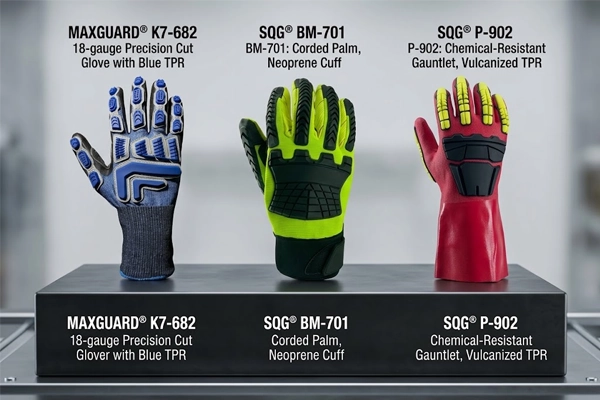
Combining precise material formulation adjustments with the development of proprietary molds, TPR Impact Gloves Engineering has produced three models of heavy-duty protective gear featuring representative engineering architectures, providing tailored, system-level protection for high-risk work environments worldwide:
Heavy Stamping & Shearing Protection: MAXGUARD® K7-682
In large automotive body stamping shops, heavy-duty construction machinery, laser-cutting lines for thick steel plates, and scrap metal dismantling centers, workers’ hands are constantly exposed to the blind spots of stamping dies weighing several metric tons, while also frequently handling unground, rough-edged sheets with extremely sharp edges. These working conditions require gloves that not only offer top-tier mechanical cut resistance but also feature energy-absorbing armor capable of withstanding blunt, heavy impacts.
Developed specifically to address these extreme, multifaceted working conditions, the MAXGUARD® K7-682 achieves a deep integration of ultra-fine, high-gauge knitting and heavy-duty protection:
18-gauge ultra-fine, high-density TekArmor® A7/F ultra-high cut-resistant base: Breaking through the industry’s technical bottleneck—which held that “high cut resistance must rely on bulky, heavy 10-gauge or 13-gauge knits”—the K7-682 pioneered the use of an 18-gauge ultra-high-density precision seamless knitting process. The inner liner is composed of the exclusive, patented TekArmor® composite fiber, a high-density blend of specialized tungsten alloy yarn, industrial-grade ultra-fine glass fiber, and ultra-high molecular weight polyethylene (UHMWPE). While reducing thickness by nearly 30%, it achieves the most stringent mechanical cut resistance ratings of ANSI A7 and EN ISO Class F. Workers experience fingertip tactile feedback similar to that of bare hands when handling thin steel plates, while simultaneously resisting instantaneous cuts from high-speed shearing burrs;
Bionic blue multi-faceted micro-cavity TPR armor: The entire back of the hand is covered with a bright blue, engineering-grade thermoplastic elastomer (TPR) exoskeleton optimized using fluid topology. The armor features multi-faceted energy-absorbing microchambers positioned directly above the metacarpophalangeal joints and phalanges, with deep guide grooves precisely machined along each flexion and extension axis. When struck by falling steel components, a progressive collapse mechanism activates to dissipate vertical loads while ensuring finger joints remain flexible during high-frequency handling;
PolyMAX® Wear-Resistant Heavy-Duty Polymer Coating on the Palm: The palm area is impregnated with a proprietary PolyMAX® coating featuring a molecular self-healing microstructure, providing mechanical wear resistance capable of withstanding thousands of cycles of contact with rough, scale-covered steel plates and castings. This completely eliminates the quality shortcomings of ordinary coatings, which tend to wear through and fail within just a few days of handling heavy components.
Mud-Slick Drill Floors & Pipe Handling: SQG® BM-701
On the drill floors of onshore deep wells and offshore floating drilling rigs, the operating conditions faced by drillers are known for being “highly slippery, heavy-load, and highly vibrating.” When workers run and pull drill pipes, operate slings, connect swivels, or attach heavy-duty wire rope rigging, the surfaces of their gloves inevitably become thoroughly saturated with high-viscosity oil-based drilling mud (OBM), heavy crude oil mixtures, and formation water. On extremely slippery contact surfaces, conventional rubber-coated gloves completely lose their grip due to “hydroplaning,” causing drilling tools weighing hundreds of kilograms to slip out of the worker’s hands and resulting in devastating comminuted fractures of the hand bones.
As the benchmark protective equipment for heavy oil and sludge drilling rigs, the SQG® BM-701 completely redefines the logic of mechanical contact at fluid interfaces:
Fluorescent High-Density Cotton 3D Corded Palm (Hi-viz Corded Palm): The BM-701 completely eliminates traditional continuous, non-breathable, enclosed rubber coatings, instead covering the palm’s gripping area with a large expanse of high-density, fluorescent 3D cotton corded fabric. Thousands of twisted high-grade cotton fibers in both the warp and weft create coarse, three-dimensional microscopic grooves that instantly pierce the thick oil film on the steel pipe’s surface and form a direct physical lock with the metal surface; simultaneously, the abundant micron-scale capillaries within the fibers rapidly draw in the liquid phase of the slurry under pressure differential and temporarily store it in the fabric’s base layer, achieving transient self-drying at the grip interface and restoring the grip friction on wet, slippery steel pipes to dry-condition levels;
Full-Back-of-Hand High-Visibility Heavy-Duty TPR Exoskeleton: The entire back of the hand and all finger segments are tightly covered with eye-catching yellow-and-black heavy-duty TPR impact-resistant armor, strictly conforming to the ANSI/ISEA 138 Level 2 impact absorption standard. During conditions involving violent casing collisions and hydraulic tong recoil, the exoskeleton rapidly disperses point-contact impact forces across the entire back of the hand;
Neoprene Shock-Absorbing Wrist Cuff and Thumb-Thumb-Crotch Area Reinforced with Double-Stitch PU Seams: The wrist area features a sealed cuff made of high-resilience neoprene foam (chloroprene rubber), which not only fits snugly around the wrist to prevent mud splashes from entering through the cuff but also provides cushioning and damping when the wrist bones are subjected to lateral impacts. To address the common issue of webbing tears caused by frequent gripping of large-diameter steel cables, the BM-701 incorporates a reinforced layer of high-tear-resistant polyurethane (PU) leather sewn into the high-shear triangular area between the thumb and index finger. This layer is secured with double-row flat stitching using high-tensile, flame-retardant nylon thread, completely eliminating the risk of seam failure.
Petrochemical Refining & Liquid-Tight Operations: SQG® P-902
During maintenance of petrochemical refining units, loading and unloading of hazardous chemical tank trucks, cleaning of high-pressure slurry pump assemblies, and preparation of deep-ground fracturing fluids, workers’ hands face the dual threats of “severe chemical penetration” and “crushing by heavy machinery.” Such harsh environments not only require protective gear to be 100% leak-proof and resistant to hydrocarbon solvent corrosion, but also demand that the exoskeleton remain securely in place during immersion operations, and that the back-of-hand armor be capable of withstanding the lethal shear forces generated when heavy valve wrenches slip or flanges close.
To address the integrated operational requirements for liquid sealing and mechanical impact resistance, the SQG® P-902 has established an industrial-grade technical standard for fully dipped, impact-resistant protection:
Red Extended Safety Cuff with Fully Immersed Heavy-Duty PVC Barrier: The entire exterior of the P-902 features a one-piece, high-density specialty polyvinyl chloride (PVC) coating, forming a continuous, seamless liquid barrier that effectively resists molecular penetration by aromatic hydrocarbons, concentrated acid and alkali cleaning solutions, and synthetic water-based liquids. The extended, flared Safety Cuff design not only facilitates quick donning and doffing but also creates a long-lasting chemical splash deflection slope extending from the wrist to the forearm;
Fine-grit anti-slip texture on the palm (Sandy Finished Palm): The outer palm area undergoes a controlled micro-grinding process, resulting in a uniform, dense distribution of micron-level raised anti-slip grit particles. When gripping smooth stainless steel flanges or metal pipe fittings that have been splashed with diesel, hydraulic oil, or chemical solvents, the gritty texture breaks through the surface lubricant to provide a secure, oil-resistant, and slip-resistant grip;
Black, Full-Back, Integrated, Chemical-Resistant TPR Impact-Resistant Exoskeleton: This black, modified TPR armor is molecularly cross-linked through thermal vulcanization with the glove’s fully immersed PVC outer layer, providing full coverage from fingertips to the wrist. Reinforced with a specialized oil-resistant and hydrolysis-resistant formulation, the exoskeleton remains free from swelling, curling, or delamination even after prolonged exposure to aromatic hydrocarbons and strong alkali media. In the event of accidental pinching during rapid tightening of flange bolts or installation of heavy-duty pipe fittings, the robust, highly elastic, and damping armor redirects and dissipates external forces in milliseconds, providing simultaneous protection against “chemical exposure with a fully sealed barrier” and “mechanical impact resistance.”
Technical FAQ: Materials Science & On-Site Deployment
In the process of advancing B2B industrial safety procurement and on-site EHS (Environment, Health, and Safety) management, there are often numerous technical misconceptions regarding the physical properties and actual in-service performance of TPR impact-resistant gloves. If these misconceptions are not scientifically clarified, they can easily lead to the improper selection of PPE (Personal Protective Equipment), resulting in the use of products that fail to provide effective protection when it matters most.
Based on long-term material mechanical testing data from an SQG CNAS (China National Accreditation Service for Conformity Assessment)-accredited laboratory, as well as our field research at the front lines of oil and gas drilling and heavy-duty mining operations, we provide expert-level answers grounded in materials science and engineering practice to address the four core technical and compliance issues of greatest concern to frontline safety managers and the procurement decision-making chain.
Why does increasing TPR thickness fail to linearly improve impact protection?
This is a very common misconception in PPE procurement: the belief that the thicker the impact-resistant pad, the better the protective performance. From the perspectives of materials mechanics and dynamic impact dynamics, this notion that “thickness equals safety” does not hold true once a certain critical threshold is exceeded.
The Law of Diminishing Returns in Energy Absorption Efficiency:
When a standard drop-weight impact energy (such as 5 joules per the ANSI 138 standard) strikes TPR (thermoplastic rubber), energy dissipation primarily relies on viscoelastic deformation caused by molecular chain slippage within the material. During the initial stage of thickness increase, energy absorption does indeed improve significantly. However, when the thickness increases beyond a certain point (for example, exceeding the optimal coverage thickness for the natural physiological curvature of a finger bone), the additional material volume does not contribute to the core energy dissipation process; instead, it causes a sharp increase in the material’s static stiffness. FEA (Finite Element Analysis) shows that when an excessively thick rubber block is subjected to a heavy impact, the internal stress transmission paths become more rigid, which actually facilitates the penetration of the shock wave inward toward the bone, resulting in a marked diminishing return in energy absorption efficiency.
A sharp increase in elastic rebound torque during gripping:
Simply increasing thickness without optimizing the geometric segmentation results in an extremely stiff glove. When rubber bends, the outer side is under tension while the inner side is under compression. According to the principles of solid mechanics, a material’s bending stiffness is proportional to the cube of its thickness. This means that even a 20% increase in thickness can cause the elastic rebound torque during gripping to increase by nearly 70%. To maintain a grip on tools, workers must continuously expend enormous muscular effort to counteract the glove’s inherent stiffness. This not only leads to rapid hand fatigue and a decline in grip strength but also exponentially increases the risk of the tool slipping from the worker’s hand while handling heavy loads.
Therefore, a true engineering-grade impact-resistant design involves achieving a systematic balance among Shore A hardness calibration, biomimetic micro-cavity geometry, and thickness—rather than simply piling on rubber.
How do petroleum distillates and drilling mud affect TPR molecular stability?
In oil and gas drilling and petrochemical applications, gloves are exposed to prolonged contact with crude oil, diesel, solvents, and oil-based drilling mud (OBM). The erosion of polymer materials by these fluids is a key factor leading to delamination and reinforcement failure in low-end gloves. At the microscopic level, this process occurs in two stages:
The “swelling mechanism” triggered by hydrocarbons:
Most low-end or non-oil-resistant thermoplastic elastomer (TPR) substrates are low-polarity hydrocarbons. According to the chemical principle of “like dissolves like,” when they come into contact with non-polar petroleum distillates, solvent molecules rapidly penetrate the spaces between the TPR’s polymer chains. The infiltrating oil molecules act like a lubricant, significantly weakening the secondary bond interactions between the molecular chains, leading to severe macroscopic physical volume expansion of the material—known as “swelling.” After swelling, the TPR not only experiences a precipitous drop in Shore hardness (becoming softer and stickier), but also loses nearly all of its tear strength and cohesion, causing the armor to disintegrate even under minor scraping or tugging.
Migration of Substandard Plasticizers and Hydrolytic Failure of the Rubber Layer:
To reduce hardness, low-end rubber compounds often contain inexpensive phthalate plasticizers. These small-molecule plasticizers are highly prone to migrating to the surface and leaching out (migration) when exposed to solvent immersion or high-pressure drilling mud environments, causing the rubber compound to harden and become brittle. At the same time, conventional cold adhesives used to bond the exoskeleton to the inner liner often lack hydrolytic stability. In the strongly alkaline environment of drilling mud, the molecular chains of the adhesive film undergo irreversible hydrolytic breakdown, causing large areas of the exoskeleton to peel off even before it is subjected to heavy impact.
SQG’s engineering-grade TPR (such as the formulation used in SQG® BM-701) employs a hydrogenated, highly saturated matrix resin. Through the addition of non-migrating polymeric plasticizers and a hydrocarbon-resistant blocking system, it creates a molecular barrier that prevents hydrocarbon penetration, ensuring that the protective armor maintains its initial Shore hardness and bond strength even in harsh, oil-contaminated environments.
Can high-dexterity 18-gauge gloves accommodate ANSI Level 2 or 3 TPR shields?
This is an extremely challenging engineering problem. The 18-gauge ultra-fine knitted glove liner base, which uses an extremely fine fiber blend (such as MAXGUARD® K7-682), provides ultimate fingertip sensitivity and cut resistance. However, its dense and ultra-thin fabric structure naturally lacks the structural rigidity required to support heavy impact-resistant armor.
Many suppliers have attempted to directly laminate heavy-duty Level 2 or Level 3 TPR onto the 18-gauge liner, but this often results in two types of systemic failures:
Bond Failure at the Interface: The ultra-thin liner lacks sufficient fiber depth for the adhesive to penetrate and anchor; violent dynamic impacts can easily cause shear tearing between the adhesive layer and the dense fabric surface.
Complete Ergonomic Failure: The ultra-thin substrate cannot effectively dissipate the rebound stress generated when the armor bends, causing the glove to feel like a rigid shell.
SQG’s engineering approach to resolving this physical contradiction is: high-density woven structural support + miniaturized/biomimetic segmented geometric layout. Taking the K7-682 as an example, its TekArmor® composite fiber substrate undergoes a special densification treatment during weaving to ensure the substrate possesses robust structural cohesion. The integrated biomimetic blue TPR armor features an ultra-miniaturized design with independent chambers, and each protective block is precisely segmented into multiple independent units based on the anatomical contours of the fingers; these units are interconnected by ultra-thin, flexible hinges. This design not only dissipates kinetic energy at the moment of impact through the combination of a dense liner and TPR micro-chambers but also replaces rigid material stretching with geometric displacement, allowing the 18-gauge ultra-thin liner to smoothly and securely support the high-level impact-resistant armor.
How should safety managers test the adhesion integrity of exoskeletons during field audits?
For corporate EHS departments, conducting cumbersome laboratory tests on the noisy and high-frequency production floor is impractical. Safety management teams need a method to quickly and non-destructively determine whether impact-resistant armor remains securely anchored to the base. SQG experts recommend the following on-site assessment method, which combines “visual inspection” with “manual testing”:
90° Continuous Peel Test (to identify peeling or delamination):
During workers’ pre-shift preparations, safety supervisors can conduct spot checks, focusing on the outer edges of the protective armor, the tips of the fingers, and the core metacarpal protection zones (i.e., areas prone to diagonal scraping and tearing). Use the thumb and index finger to firmly grip the outermost edge of the armor and apply a continuous, gentle pulling force directed toward the back of the hand, perpendicular to the bonding interface (at an angle of approximately 90 degrees). With a qualified engineering-grade bond interface (such as the direct injection with mechanical locking holes of SQG® BM-701 or the hot vulcanized composite of SQG® P-902), the edge of the protective glove should not exhibit any peeling, curling, or separation gaps when subjected to manual pulling; it should feel very sturdy and seamless to the touch.
Stress Whitening: Visual Inspection Method (for determining cold-brittle hardening or excessive swelling):
The worker is instructed to slowly close their fingers to perform a deep gripping motion. The safety supervisor closely observes the bottom surface of the bionic hinge groove at the knuckle of the protective glove. If, during the natural bending process, the rubber at the bottom of the groove exhibits obvious, irreversible, grayish-white, hazy “stress whitening,” this often indicates that the rubber compound has undergone cold-brittle hardening (failure due to Tg temperature) or that prolonged swelling has caused the destruction of molecular chain cohesion. Such protective gear is highly prone to brittle fracture and disintegration at the crease during the next impact and must be scrapped immediately.
Custom Engineering & Rapid Mold Prototyping (CTA)
In supply chain management for heavy equipment manufacturing, multinational energy extraction, and large-scale mining projects, off-the-shelf work gloves often fail to precisely accommodate a company’s specific machinery configurations and operational workflows. Whether it involves developing specialized micro-zones for shock absorption at the thumb web designed for high-torque power tools or adjusting the Shore hardness and cold-resistant formulations of exoskeleton materials for cryogenic polar oil and gas operations, high-end industrial clients no longer require merely a supplier of standard products, but rather a foundational manufacturing partner with end-to-end engineering and mold development capabilities.
Precision Injection Mold Development for OEM/Tier-1 Deployments
To address the targeted development needs of global brand manufacturers (OEMs), multinational distributors, and large engineering, procurement, and construction (EPC/Tier-1) contractors, SQG has leveraged its in-house mold engineering R&D center and polymer laboratory to establish a full-chain manufacturing support system covering “reverse engineering of requirements—3D structural topology—rapid prototyping and validation—precision mass production with steel molds”:
Industrial-Grade 3D Rapid Prototyping and Ergonomic Testing:
Before proceeding with formal injection molding, the SQG engineering team can, based on on-site pinch hazard conditions or hand anatomical requirements provided by the client, complete the optimization of micro-cavity energy-absorbing topology drawings within 48 hours and produce functional soft rubber prototypes using high-precision industrial-grade 3D printing technology. Corporate safety management teams can have frontline workers wear the prototype gloves within days to conduct practical grip and flexion ergonomic evaluations, compressing the R&D trial-and-error cycle—which previously took months—to just a few days.
Micro-Segment Hardness Customization and Polymer Group Modification:
Leveraging its in-house modified pellet production line, SQG supports customized injection molding with micro-segment differentiation for various protection zones. For example, in the primary protection zone of the metacarpal bones—which is prone to heavy impacts—a medium-hardness (55A) anti-collapse microcavity is used, while at the finger joints—where high-frequency flexion occurs—the material seamlessly transitions to a highly flexible (40A) hinge damping rubber; simultaneously, based on the customer’s specific polar or tropical operating environments, the SEBS matrix can be modified to lower the glass transition temperature (Tg) and enhance resistance to hydrocarbon erosion.
High-Precision Mold Manufacturing and Large-Scale Injection Molding Assurance:
From multi-axis CNC precision machining to direct-injection molding, SQG strictly controls mold cavity tolerances and chamfer/radius transitions to ensure that every pair of anti-impact exoskeletons delivered in large batches possesses consistent tear fatigue life and molecular-level liner anchorage strength, thereby building a robust technological moat for clients’ global brand expansion and corporate bulk procurement.
Order Field Evaluation Kits for Worksite Trials
Say goodbye to blind procurement based on paper specifications and low-price bidding, and eliminate the risk of on-site safety violations caused by ill-fitting, stiff, or uncomfortable gloves—the most direct and effective way to do this is through on-site, multi-workstation comparative evaluations.
SQG is now accepting applications for its exclusive “Worksite Field Evaluation Kits” from heavy industry and mining, oil and gas exploration, large-scale infrastructure, and heavy-duty automotive stamping manufacturers worldwide. These customized kits contain a comprehensive selection of flagship products developed to withstand extreme mechanical impacts:
MAXGUARD® K7-682: Features an 18-gauge ultra-high-density TekArmor® A7/F ultra-high cut-resistant liner paired with biomimetic multi-faceted micro-chamber TPR armor, delivering featherweight impact protection and ergonomic performance for large-scale steel plate stamping, shearing, and precision assembly workstations;
SQG® BM-701: Features a high-visibility, cotton-blend, three-dimensional ribbed palm and a high-visibility yellow-and-black heavy-duty exoskeleton covering the entire back of the hand, specifically designed to withstand slurry slippage in oilfields and collisions with heavy-duty tubing on drilling rigs;
SQG® P-902: Red, extended-cuff safety sleeves with a fully-immersed, heavy-duty PVC chemical-resistant barrier and integrated oil- and hydrocarbon-resistant TPR armor, providing dual mechanical and chemical protection for petrochemical refining maintenance and hazardous chemical fracturing and cleaning operations.
Corporate technical management teams can distribute sample sets to core high-risk work crews for 14 consecutive days of dynamic grip fatigue testing, mud-resistance grip impedance testing, and drop-weight impact testing.
To obtain a compliance assessment report for impact protection at your specific workstation, or to request a factory-customized evaluation kit and direct bulk sales solutions, please feel free to contact our engineering support team at any time: Request Factory-Direct Bulk Quotation & Impact Audit.