

Introduction: The Sourcing Trade-Off Between Nitrile and PU
On the front lines of industrial manufacturing and automated production lines, factory procurement managers and EHS (Environment, Health, and Safety) supervisors face the same frustrating trade-off almost every day:
“PU (polyurethane) gloves cost only a few cents each, so buying several hundred dozen and stocking them in the workshop warehouse seems like an excellent value on paper; but why do workers on assembly lines and in machining operations go through them at such an alarming rate? Why do workers constantly complain that the gloves become sticky and slippery when exposed to cutting fluid, tear easily, and—due to frequent glove changes or workers simply removing their gloves in violation of safety protocols—lead to persistently high rates of hand abrasions and component drop-off incidents?”
The root cause of this phenomenon lies in a very common misconception in B2B procurement—focusing solely on the “unit price” while neglecting the “compatibility between the material’s physical properties and the working conditions.”
Polyurethane (PU) resin is known for its extremely thin coating and excellent bare-hand feel, and it is indeed the best value for money in dust-free electronic assembly and dry, precision operations; however, in workstations involving cutting fluids, heavy oil contamination, high-intensity friction, or metal burrs, the molecular chains of PU resin are highly susceptible to erosion and degradation by organic solvents, and its tear resistance also drops sharply. Forcing the use of PU gloves in these high-stress work areas not only fails to save the factory money but actually causes the factory’s annual Total Cost of Ownership (TCO) for PPE to rise rather than fall, due to the hidden costs associated with replacing 2–3 pairs of gloves per day.
In contrast, nitrile-coated gloves made of synthetic rubber and plastic materials have become the go-to choice for robust protection in industrial environments with heavy oil contamination and high friction, thanks to their exceptional puncture resistance, hydrocarbon (oil) barrier properties, and higher abrasion resistance ratings (EN 388 Level 3–4).
Drawing on SQG®’s field test data accumulated over more than 20 years of OEM/ODM research, development, and manufacturing of industrial protective gloves, this white paper will set aside empty marketing rhetoric and provide an in-depth analysis of the fundamental differences between nitrile-coated and polyurethane (PU)-coated gloves from the perspectives of polymer chemistry, Martindale abrasion testing, workshop heat dissipation ergonomics, and financial ROI to provide an in-depth analysis of the fundamental differences between nitrile-coated and polyurethane (PU)-coated gloves. This will help your company achieve precise cost savings and efficiency gains in your workshop PPE budget while ensuring 100% compliance with production safety standards.
Sourcing Tip: Looking for durable, chemical-resistant, and high-grip protective gear tailored for heavy-oil or high-abrasion machinery environments? Explore our full range of certified Nitrile-Coated Industrial Safety Gloves designed for maximum cost-per-shift efficiency.
Deconstructing Polymer Chemistry: Nitrile Synthetic Rubber vs. Polyurethane Resins
To understand why these two types of gloves perform so differently in the workshop, we cannot simply look at their surface textures; we must delve into their polymer microstructures. The chemical bonding and film-forming mechanisms of the coating materials directly determine the upper limit of a glove’s physical defense against oil contamination, friction, and physical punctures.
Nitrile Polymer Matrix
Nitrile (nitrile rubber) is a synthetic rubber (NBR) formed by the copolymerization of acrylonitrile and butadiene.
Within its molecular chain structure, the acrylonitrile monomer endows the material with extremely strong polar chemical barrier properties. Since hydrocarbons (such as industrial cutting oils, mineral oils, greases, and hydraulic oils) are nonpolar or weakly polar solvents, based on the polymer principle of “like dissolves like,” nonpolar oil molecules cannot penetrate the highly polar nitrile copolymer molecular chains.
Furthermore, during the dip-curing process, a high-density three-dimensional cross-linking network forms between the nitrile molecules. This highly cross-linked structure endows the nitrile coating with exceptional toughness and puncture resistance. When the glove comes into contact with metal machining burrs, sharp edges of stamped parts, or fine steel wires, the rubber molecular chains can absorb and disperse point-impact forces through elastic deformation, making it extremely difficult for the glove to be punctured directly.
Polyurethane Resin Matrix
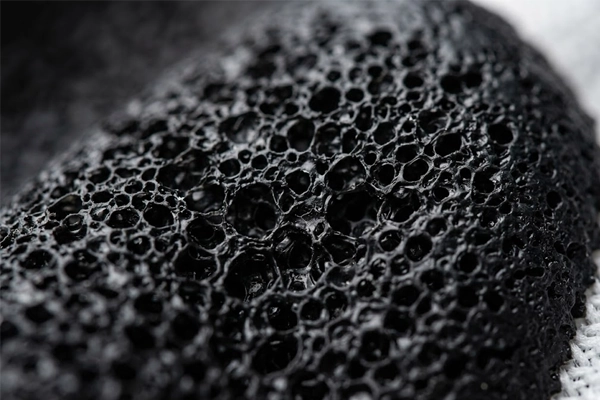
Polyurethane (PU) is essentially a thermoplastic resin elastomer. The way it forms a film on glove blanks is entirely different from rubber and plastic dipping—PU uses a solvent-based curing bath process to form an extremely thin, continuous, microporous resin film (Micro-Porous Resin Matrix) on the surface of the glove fibers.
The primary physical advantages of this resin film are its low linting and extremely low particulate shedding rate. PU resin completely cures and encapsulates the glove lining (such as nylon or polyester fibers) and does not shed microscopic resin dust even under high temperatures or frequent friction.
However, the chemical molecular chains of polyurethane resin contain a large number of carbamate groups, and their intermolecular forces rely primarily on weak hydrogen bonds, resulting in a cross-linking density far lower than that of vulcanized rubber. As a result, when exposed to industrial cutting fluids (containing organic amines and surfactants), oil molecules rapidly penetrate and swell the resin network, causing the coating to become sticky, lose adhesion, and peel off in sheets from the glove lining within a short period of time.
Coating Thickness and Mechanical Barrier
In addition to chemical properties, the physical thickness of the coating is the key variable that influences the balance between a factory worker’s “tactile sensitivity” and “mechanical protection strength”:
Standard PU coating: The average dry film thickness is only 0.20 mm – 0.35 mm. This ultra-thin, micron-level coating adds virtually no physical resistance, fully restoring the elasticity and stretch of the liner fibers, thereby providing sensitivity close to that of a “bare-hand feel.” However, an excessively thin resin barrier also means that its EN 388 Martindale abrasion resistance limit typically remains at Level 1 (<500 revolutions) or Level 2 (<2,000 revolutions).
Standard Nitrile Coating: Even the thinnest modern 18-gauge micro-foamed nitrile gloves maintain a coating thickness of around 0.55 mm – 0.85 mm (smooth nitrile or heavy-duty dipped versions can reach over 1.0 mm). This thickness provides sufficient rubber mass to withstand continuous physical friction, easily meeting the abrasion resistance standards of EN 388 Level 3 (<2,000 revolutions) to Level 4 (<8,000 revolutions).
Selection Principle: For every 0.1 mm increase in coating thickness, mechanical abrasion resistance increases exponentially, but flex resistance also increases accordingly. When selecting gloves, manufacturers are essentially trading “a slight compromise in sensitivity” for “doubled mechanical life and oil resistance.”
Mechanical Abrasion & Durability: EN 388 Test Benchmarking
When making B2B procurement decisions, assessing whether a protective glove is truly “durable” cannot rely on verbal claims from suppliers; instead, one must refer to test data from the internationally recognized EN 388 standard for mechanical protection. When exposed to high-frequency friction, metal scraping, and punctures from burrs, the physical resistance of polyurethane (PU) resin and nitrile rubber differs by an order of magnitude.
Martindale Abrasion Test
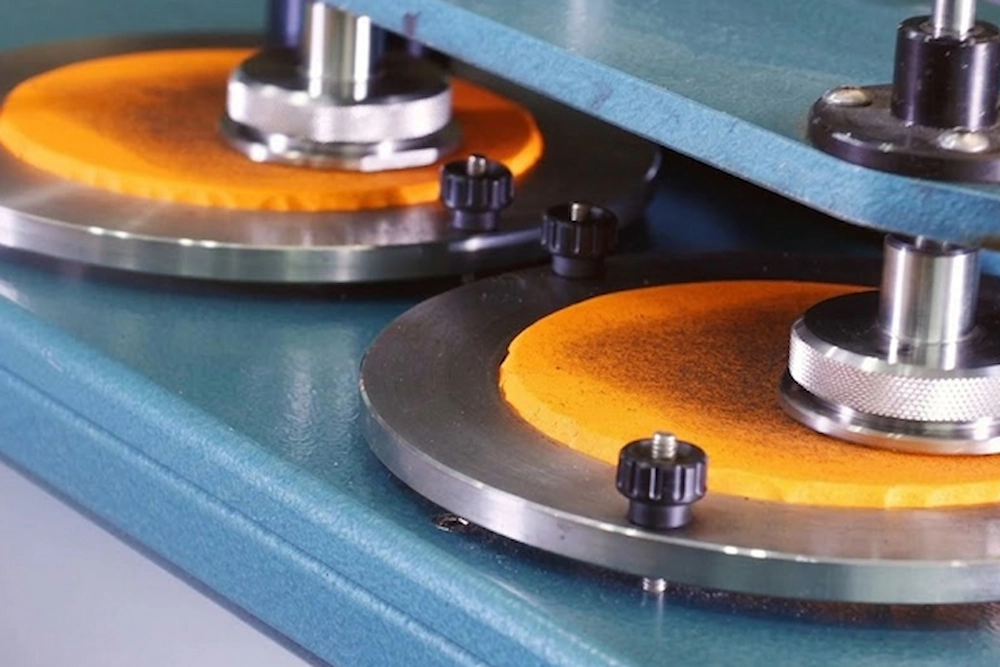
Within the EN 388 certification system, abrasion resistance testing is conducted using a Martindale abrasion tester. The test method involves subjecting the glove coating to high-frequency rotational friction with standard sandpaper at a set pressure (9 kPa) until the coating is abraded through and the first hole appears; the number of friction cycles at this point is recorded:
Standard PU-coated gloves: Due to their thin resin film and the lack of a three-dimensional cross-linked network between molecules, they typically withstand only 100 to 2,000 friction cycles in the Martindale test, with results mostly falling within EN 388 Level 1 (100 cycles) or Level 2 (500 cycles). This means that during high-intensity work phases involving continuous friction, the PU coating is highly susceptible to wear and tear, resulting in holes.
Nitrile-coated gloves: Thanks to the extremely high tensile strength and elastic recovery of synthetic rubber, nitrile coatings can easily withstand 2,000 to 8,000 or more friction cycles, consistently meeting EN 388 Level 3 (2,000 cycles) or even the highest Level 4 (8,000 cycles).
Sourcing Spotlight (High-Abrasion Durability): For precision processing operations that demand both ultimate dexterity and ultra-high abrasion resistance, modern 18-gauge micro-foam technology has overcome the bulkiness limitations of traditional nitrile gloves. For example, the P-214 MAXGUARD, featuring an 18-gauge seamless nylon/spandex liner and a nitrile foam palm coating, combines an ultra-fine 18-gauge nylon/ spandex liner with a high-density micro-foamed nitrile palm coating; this product achieves the stringent EN 388 high-level abrasion resistance certification while retaining flexibility comparable to bare hands, making it a benchmark product for extending shift life.
Puncture & Tear Resistance
In addition to surface abrasion, the most common forms of coating damage in workshop operations are puncture and localized tearing (Puncture & Tear).
When workers handle metal sheets with tiny burrs, machining swarf, or small screws, these sharp objects exert extremely high localized stress on the glove coating:
Physical Defects in PU Resin: Polyurethane resin is a relatively rigid thermoplastic film that lacks the high elastic deformation and ductility characteristic of rubber. Once a sharp burr penetrates the PU coating, stress concentration occurs in the resin surrounding the puncture hole, causing the coating to tear and rapidly peel away along the fiber direction.
Nitrile’s Highly Elastic Barrier: Vulcanized nitrile rubber possesses excellent strain energy absorption. When a burr comes into contact with the nitrile coating, the highly cross-linked rubber molecular chains undergo elastic stretching, evenly dispersing the concentrated point stress to the surrounding coating. Even if the coating is punctured locally, the rubber tightly envelops the burr, preventing the extensive crack propagation that occurs with PU.
Real-World Shift Durability
Laboratory static test data must ultimately be translated into the actual number of days of use during a work shift (Real-World Shift Lifespan):
Based on actual field tracking in medium- to high-intensity work areas such as automotive parts assembly, stamping shops, and high-frequency material handling in logistics:
Standard PU gloves: Due to frequent friction with metal parts and exposure to oil contamination, the average service life is typically only 0.5 to 1 day (workers in many high-intensity operations even need to replace two pairs per shift).
High-quality nitrile gloves: Under the same conditions of heavy friction and light oil contamination, a pair of high-quality nitrile-coated gloves can be worn safely for an average of 3–5 days, without the coating showing premature tearing or extensive peeling.
This twofold difference in shift lifespan is precisely the most critical foundation for helping companies reduce their TCO (Total Cost of Ownership) in the future.
Grip Performance in Action: Dry, Oily, and Chemical Environments
In actual workshop conditions, a glove’s “grip performance” directly impacts work efficiency and production safety. Fluid media in industrial settings—ranging from dry, oil-free conditions to metal cutting fluids, heavy oils, and cleaning solvents—vary widely, and PU and nitrile exhibit starkly different grip performance and material stability in these diverse fluid environments.
Dry & Clean Assembly Performance
In absolutely dry, oil-free, and clean environments, PU (polyurethane) coatings demonstrate exceptional physical grip performance.
The surface of polyurethane resin has an extremely high dry friction coefficient, and the coating is very soft, allowing it to adhere closely to metal, plastic, and glass surfaces. In dry applications such as 3C electronics assembly, SMT placement, micro-electronic screw tightening, and quality control inspections of clean components, PU gloves provide a level of control that closely mimics the “bare-hand feel,” enabling workers to easily pick up micro-components measuring just a few millimeters without slipping.
Oil & Fluid Interactions
However, once industrial cutting oils, quenching oils, hydraulic oils, or coolants are introduced into the working environment, the grip performance of both materials undergoes a dramatic reversal:
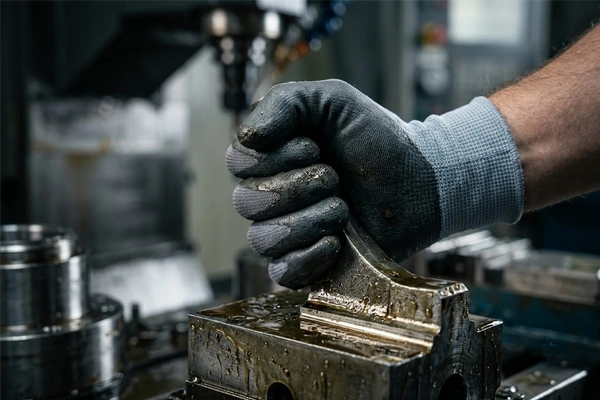
The “oil-induced failure” mechanism of PU resin: When PU resin comes into contact with mineral oil or cutting fluid, oil molecules not only form a slippery fluid film on the thin resin surface, causing severe mechanical slippage; more critically, additives in industrial cutting oils rapidly penetrate the microporous structure of the PU, causing the polyurethane resin to swell, become sticky, and lose mechanical strength. To grip oil-contaminated workpieces, workers are forced to increase the grip force on their hands, which accelerates muscle fatigue and significantly increases the risk of the workpiece slipping out of their grasp.
Nitrile’s “Hardcore Oil-Repellent” Physical Advantage: As a polar copolymer, nitrile rubber does not absorb or swell when exposed to non-polar oils. Smooth nitrile or micro-foamed nitrile coatings effectively disrupt the continuity of the surface oil film. In scenarios requiring light slip resistance and versatility for dry or slightly oily conditions, lightweight palm-coated gloves—such as the B-210 Smooth Nitrile glove, 13-gauge seamless polyester liner, palm-coated—can provide a very secure, oil-resistant grip.
Full-dip protection against heavy oil contamination: In environments where cutting fluids spill, such as deep-hole drilling, machined part cleaning, or heavy-duty equipment maintenance, palm-dip coating alone is insufficient to prevent liquid from seeping onto the back of the hand. In such cases, it is necessary to use 360-degree fully coated nitrile gloves, such as the B-288 Smooth Nitrile Glove, 13-gauge seamless polyester liner, fully coated, which use a continuous, impermeable rubber barrier to completely block oil penetration, ensuring the entire hand stays dry and providing maximum grip.
Chemical Fluid Boundaries
When discussing fluid protection, many factory procurement professionals tend to fall into a critical misconception: “Since gloves can protect against oil and liquids, can they be used as chemical-resistant gloves?”
It is essential to clearly distinguish the physical barrier properties of the two:
Limitations of coated gloves: Whether PU or nitrile-coated gloves (even fully coated versions), their core design standards adhere to EN 388 (mechanical protection). The glove lining consists of a woven textile structure, and the coating functions, at the microscopic level, solely as a barrier against mechanical abrasion and basic splash protection.
Strictly prohibited as a substitute for EN ISO 374: When working with high-concentration strong acids, strong alkalis, ketone solvents (such as acetone), or strong organic solvents (such as xylene or thinner), chemical solvents will rapidly penetrate through micro-pores in the coating or gaps at the glove cuffs, causing skin damage. For immersion in strong chemicals or environments with concentrated acids and alkalis, it is mandatory to use professional, thick-walled chemical-resistant gloves certified to EN ISO 374. Ordinary mechanical impregnated gloves must never be used as a substitute to avoid causing severe chemical burns.
Breathability, Flexibility, and Ergonomics: The Hand Fatigue Factor
In modern manufacturing facilities, the success of PPE selection is measured not only by the physical protective performance of the gloves but also by whether workers are willing to “wear them throughout the entire shift.” Hand fatigue, stuffiness and sweating, and diminished tactile sensitivity are key hazards that lead to safety violations and workplace injuries.
Bare-Hand Tactile Feedback
For precision manufacturing and micro-assembly operations, bare-hand-level tactile feedback is an irreplaceable core requirement.
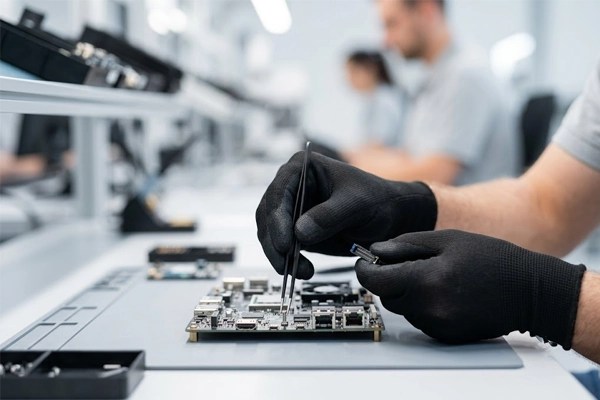
With an ultra-thin polyurethane resin layer of approximately 0.20 mm, PU gloves maximize the preservation of tactile sensitivity in the fingertips. In processes such as assembling M1–M3 micro-screws, SMT component placement, electronic circuit board insertion, and the precise bundling of wiring harnesses for automotive dashboards, PU gloves allow workers to clearly perceive the edge contours of components and receive grip force feedback, ensuring high-precision operations remain uninterrupted.
Breathability & Heat Dissipation
In hot summer months or in grinding and stamping workshops without air conditioning, wearing gloves for long shifts (10–12 hours) poses a severe challenge to the gloves’ heat dissipation and breathability:
The “sweat-soaked dilemma” of smooth coatings: Traditional smooth rubber and plastic coatings are completely sealed and non-breathable, preventing sweat vapor generated by the palms from escaping and leading to a hot, humid “greenhouse effect” inside the gloves. Prolonged exposure of the palms to sweat can easily cause itching, contact dermatitis, and unpleasant odors inside the gloves.
Heat Dissipation Mechanisms of Micro-Foamed Nitrile and Ultra-Thin PU: Ultra-thin PU films offer basic moisture permeability thanks to their microporous resin structure; meanwhile, modern foam nitrile (Foam Nitrile) technology incorporates interconnected open cells into the rubber-plastic material, forming a heat-dissipating network resembling “sweat-evacuating micropores” that rapidly disperses the hand’s moist, warm air.
For dry or slightly oily assembly work environments where ultimate lightness, breathability, and comfort are prioritized, gloves such as the B-213 Foam Nitrile Glove, 13-gauge seamless polyester liner, palm-coated—which feature a 13-gauge seamless knit combined with a foam nitrile palm coating—offer exceptional breathability and moisture-wicking performance, effectively keeping hands dry all day long.
Worker Compliance Rates
From an EHS safety management perspective, the worker compliance rate directly determines a factory’s actual workplace injury rate.
When gloves are too bulky, stiff, or cause excessive sweating, workers experience persistent soreness and fatigue in the small muscle groups of their hands (such as the thenar muscles). For the sake of convenience or to increase assembly speed, workers are highly prone to “removing gloves in violation of safety protocols.” The vast majority of lacerations, puncture wounds, and crush injuries occur precisely during the brief minutes when workers remove their gloves without authorization.
Sourcing Tip (Ergonomic Upgrade): For workstations requiring frequent handling of slippery workpieces while also needing to reduce hand fatigue, a solution combining a “high-gauge liner + micro-foam dot coating” can balance flexibility with slip resistance. For example, the P-210D Foam Nitrile glove, 15-gauge seamless nylon/spandex liner, palm coated with dots features a form-fitting 15-gauge nylon/ spandex high-elastic liner that conforms to the hand’s shape, combined with a foamed nitrile palm accented with anti-slip PVC dots, not only significantly reducing the muscular effort required for gripping but also greatly improving workers’ compliance with all-day wear.
Total Cost of Ownership (TCO): Is Cheaper PU Actually More Expensive?
In the procurement reports of many factories, PU gloves have consistently topped the procurement list year after year due to their extremely low book unit price. However, for CFOs and CPOs responsible for the plant’s overall operating budget, focusing solely on the “initial purchase price” is often a very dangerous financial trap. The true core criterion for evaluating the cost-effectiveness of PPE procurement lies in the Total Cost of Ownership (TCO).
Unit Price vs. Cost-Per-Shift
In modern fine chemical plant management, the core financial metric for measuring glove costs is not “how much each pair costs to buy,” but rather the cost-per-shift.
The logic behind calculating cost-per-shift is straightforward: the purchase price per pair of gloves divided by the number of shifts over which those gloves can be worn safely on the shop floor.
If a pair of gloves has an extremely low purchase price but, due to materials that are not wear-resistant or oil-resistant, requires workers to use multiple pairs per shift, its actual cost per shift will rise rapidly. Conversely, even if a pair of gloves has a relatively high purchase price, if their robust mechanical properties allow them to be worn continuously across multiple shifts for several days, the actual cost per day will be significantly reduced.
The High-Frequency Replacement Trap
We can conduct a financial analysis comparison using actual workshop consumption data from a set of workstations with moderate friction and minimal oil contamination:
The “high-frequency replacement trap” of low-end PU gloves: Assuming the purchase price per pair of low-end PU gloves is only $0.25 (approximately 1.8 RMB). However, in machining operations involving heavy oil contamination or metal burrs, the PU coating—due to its low abrasion resistance and susceptibility to swelling from oil—causes workers to use up and discard an average of two pairs of gloves per shift. This means the actual daily usage cost for the entire factory at this workstation reaches $0.50 per person per day.
The “long-term cost-saving advantage” of high-quality nitrile gloves: In contrast, a pair of high-quality micro-foamed nitrile gloves costs $0.90 (approximately 6.5 RMB) each, which may seem significantly higher at first glance. However, thanks to their EN 388 Level 4 abrasion resistance and excellent oil resistance, workers can wear a single pair continuously for 3 shifts (3 days). Calculated this way, the actual cost per shift is only $0.30 per person per day.
Year-End Financial Settlement: If a workshop with 100 front-line workers operates 300 workdays per year, the actual annual glove procurement cost for the seemingly cheaper PU gloves is $15,000; whereas switching to highly durable nitrile gloves reduces annual expenses to $9,000.
The PU gloves, which appear “cheap” on paper, actually quietly eat up an additional $6,000 (40%) of the factory’s budget each year.
Waste Reduction & ESG ROI
In addition to direct savings on procurement costs, the waste reduction achieved by using long-lasting nitrile gloves can also deliver significant ESG (Environmental, Social, and Governance) returns and intangible financial benefits to companies:
Reduced costs for hazardous waste and industrial solid waste disposal: Discarded gloves contaminated with industrial cutting fluids and motor oil are classified as hazardous waste or high-cost industrial solid waste in many countries and regions. Switching to long-life nitrile gloves can directly reduce a factory’s total glove waste by more than 60%, significantly lowering annual contract costs for solid waste removal and hazardous waste disposal across the entire facility.
Reduced Supply Chain, Warehousing, and Management Labor Costs: A 60% reduction in glove consumption leads to a corresponding decrease in warehouse inventory counts, procurement order processing, logistics frequency, and labor required for material issuance in the workshop, effectively lowering the factory’s back-office daily operational and management costs.
Compliance with ESG Audits by Major Multinational Buyers: Reducing the volume of disposable protective supplies discarded in production areas is a key factor that strengthens a company’s sustainability reports and helps it pass CSR (Corporate Social Responsibility) factory audits conducted by overseas B2B buyers.
B2B Sourcing Comparison Matrix: Nitrile vs. PU Gloves
To help factory procurement managers and EHS safety officers quickly make selection decisions when faced with complex workshop conditions, we have compiled data on material physical properties, laboratory certification results, and real-world workshop application scenarios to create the following comparison matrix for nitrile vs. PU (polyurethane) coated gloves.
Quick Sourcing Decision Matrix
(We recommend presenting this directly on the website backend as a standard 4-column comparison table in HTML format to facilitate Google SERP crawling for table-based Featured Snippets.)
| Performance Metric / Scenario | Nitrile-Coated Gloves | Polyurethane (PU) Coated Gloves | Sourcing Decision Advice |
| Heavy Oil & Cutting Fluids | Exceptional | Poor (Solvent degradation & slippage) | For workstations with heavy oil contamination or coolant spills, we recommend fully impregnated gloves (such as B-288) or micro-foamed nitrile gloves. |
| Tactile Sensitivity / Dexterity | Excellent (especially 18-gauge) | Top-Tier (Bare-hand feel) | PU gloves are the top choice for ultra-micro SMT placement and oil-free precision assembly; for general-purpose, high-sensitivity applications, 18-gauge micro-foamed nitrile gloves are recommended. |
| EN 388 Abrasion Rating | Typically Level 3–4 | Typically Level 1–2 | For high-frequency material handling and high-friction machinery operations, prioritize high-abrasion-resistant models (such as P-214 MAXGUARD). |
| Cleanroom & Low Linting | Good | Exceptional (Zero particulate shedding) | PU gloves are the top choice for electronic cleanrooms, semiconductor packaging, and precision instrument quality control (QC) inspections. |
| Cut & Burr Resistance | Superior (with cut-resistant liner) | Moderate | When handling metal parts with sharp burrs or sheared/punched edges, cut-resistant nitrile gloves (such as B3-210) are recommended. |
| Cost Per Shift (Long Term) | Lower (Longer lifespan) | Higher (High replacement frequency) | To reduce the annual PPE budget and optimize total cost of ownership (TCO) across the entire facility, prioritize nitrile gloves for medium- to heavy-duty workstations. |
Workstation Segmentation Strategy: Allocating Your PPE Budget
In a large manufacturing plant with thousands of front-line employees, a “one-size-fits-all” approach to purchasing gloves made from a single material is often the primary cause of significant waste in the PPE budget or inadequate protection. A sound procurement strategy should involve a refined budget allocation based on the physical risk classification of workstations (Workstation Segmentation).
The 70/30 Budget Split Rule
Based on our experience conducting on-site audits at hundreds of modern manufacturing facilities, we recommend that corporate procurement teams adopt the “70/30” golden rule for budget allocation:
70% Core Protection Budget (Nitrile-Dominated Areas): Allocate 70% of the facility’s PPE procurement budget to heavy-duty workstations involving high friction, heavy oil contamination, metal burrs, and risks of mechanical injury, and fully equip these areas with highly durable nitrile gloves.
30% Precision Dry-Condition Budget (PU-Exclusive Zone): Allocate the remaining 30% of the budget to light-duty assembly operations that are dry, oil-free, require high cleanliness, and demand extreme sensitivity of bare hands, and procure low-cost, highly flexible PU gloves.
Through this structured budget allocation, the factory can prevent the over-allocation of expensive gloves in light-duty workstations while also avoiding out-of-control TCO costs and a surge in workplace injuries caused by the use of low-quality gloves in heavy-duty workstations.

Polyurethane (PU) Allocation Zone
PU gloves should be strictly restricted to factory workstations characterized by “low physical stress + high cleanliness/high sensitivity,” specifically including:
Electronics and semiconductor manufacturing: SMT (surface-mount technology), microscopic inspection of component solder joints, chip packaging, and semiconductor cleanrooms.
Precision assembly and packaging processes: optical lens assembly, tightening of micro-screws in instruments and meters, pharmaceutical/food outer packaging, and QC spot checks on finished products.
Dry, general-purpose workstations: Dry cardboard box handling without cutting oil spills, finished product pallet packing, and routine electrical harness connections.
In these areas, PU resin’s extremely low linting rate and tactile feedback—nearly identical to that of bare hands—maximize operational efficiency, and the oil-free, burr-free environment prevents premature degradation of the PU coating.
Nitrile Allocation Zone
Nitrile gloves serve as the primary protective barrier in factory workstations characterized by “high mechanical friction + oily fluids + complex injury risks”:
Machining and Equipment Maintenance: CNC turning, deep-hole drilling, milling, cleaning of coolant circulation and filtration systems, and heavy-oil equipment maintenance.
Automotive Manufacturing and Logistics: Chassis assembly on automotive final assembly lines, engine block assembly, sorting of stamped parts, and high-frequency pallet handling in logistics and warehousing.
Specialized Industrial Scenarios (Cut & Heavy-Duty Protection): Within the Nitrile Zone, if a workstation involves additional, more severe risks of physical damage, the liner and dipping processes must be further upgraded:
Metalworking and Cut-Resistant Scenarios: For shearing sheet metal and handling stamped parts with sharp burrs, we recommend upgrading to the B3-210 Anti-cut Foam Nitrile Glove, 13-gauge seamless HPPE/Glass liner, Palm coated. This combination of a high-strength HPPE/glass fiber cut-resistant liner and micro-foamed nitrile provides dual protection against cuts and ensures a secure grip.
Heavy-Duty Stamping and Puncture-Resistant Applications: For handling castings, scrap metal recycling, and high-intensity heavy-duty material handling, we recommend the B-255 Interlock Nitrile Glove, 3/4 Coated—a heavy-duty nitrile glove with a thickened cotton liner and 3/4-coated design—which provides robust protection against punctures and tears.
Expert Sourcing Checklist for Plant Audits
The most effective way to shift PPE procurement strategy from “blind purchasing” to “targeted cost reduction” is to conduct a plant-site safety and protection audit (Plant PPE Audit). EHS managers and procurement managers can use the following expert-level audit checklist to systematically identify actual protection gaps on the shop floor.
Fluid Environment Audit
Step 1: Assess the actual extent of liquid spills in each workstation.
Dry Zone (Oil-Free Area): Confirm whether this area is completely free of cutting fluid, engine oil, or grease. If it is a dry environment, prioritize the use of PU gloves to maximize operational efficiency.
Light Oil / Mist Zone: Parts surfaces have only a small amount of rust-preventive oil or airborne cutting fluid mist. In this case, provide loomed or dip-coated nitrile gloves (such as B-210) lightly to ensure oil drainage and slip resistance while maintaining breathability.
Heavy Fluid Submersion Zone: Workers’ hands require frequent contact with deep-hole cutting fluids, parts washing tanks, or immersion in liquids. In this zone, palm-dipped gloves must be phased out and replaced with 360-degree fully-dipped nitrile gloves (such as B-288) to prevent liquid from seeping in through gaps on the back of the hand.
Component Geometry Inspection
Step 2: Precisely match the glove’s physical flexibility to the “geometric dimensions and physical edges” of the machined components.
Micro / Tiny Components: These include M1–M3 screws, SMT chips, and fine wires. This application demands extremely high fingertip flexibility; ultra-thin PU or 18-gauge micro-foam nitrile gloves should be selected.
Medium & Sharp Parts: Workpieces include sheet metal with stamping burrs, shearing flash, or casting flash. PU gloves must never be used in this scenario; instead, gloves with a high-density nitrile coating or even a cut-resistant lining (such as the B3-210) must be selected to rely on a highly resilient rubber barrier to block point-source punctures.
Glove Disposal Rate Tracking
Step 3: Conduct a random audit of workshop trash bins (Trash Bin Audit) to identify hidden waste and excessive consumption.
Inspect the condition of discarded gloves: If most gloves in the trash bin have sticky or peeling coatings, or if entire pairs are discarded simply because of a small hole in the fingertip, this indicates that the currently used gloves (such as PU) lack sufficient abrasion resistance or have poor oil resistance, resulting in significant waste due to “premature disposal.”
Track replacement frequency: If workers in a particular workstation are issuing 2–3 pairs of gloves per day, this is a classic “high-frequency replacement trap.” Upgrading this workstation to high-durability nitrile gloves can instantly reduce glove waste by more than 60%.
Knowledge Base: Frequently Asked Questions (FAQs)
We have compiled the following answers to address common technical concerns encountered by factory procurement and EHS personnel when selecting gloves:
Are PU gloves anti-static (ESD safe)?
Answer: This is a very common misconception. Standard, ordinary PU-coated gloves do not have anti-static (ESD-safe) properties. Polyurethane resin is an insulator and is actually prone to accumulating static charges under high-frequency friction. For use in semiconductor packaging, SMT assembly, or sensitive electronic component manufacturing facilities, you must select specialized ESD-safe gloves that incorporate conductive carbon fiber or conductive metal wire mesh in the lining and are certified to EN 1149 or ANSI/ESD S20.20. Never use ordinary PU gloves directly in ESD-sensitive work areas.
Why do PU gloves degrade or become sticky in oily environments?
Answer: Polyurethane (PU) resin is a thermoplastic elastomer whose molecular chain structure contains a large number of carbamate groups. Small molecules found in industrial cutting oils, hydraulic fluids, and organic solvents easily penetrate the microporous structure of PU resin, disrupting the intermolecular hydrogen bonds and triggering “swelling and hydrolysis” reactions in the resin. This causes the PU coating to rapidly soften, become sticky, lose its grip, and even peel off the liner within a short period of time. In such oily and fluid environments, we recommend a complete switch to nitrile gloves with strong oil resistance, such as the lightweight palm-dipped model B-210 or the fully dipped splash-resistant model B-288.
Can nitrile-coated gloves provide the same tactile feel as 18-gauge PU gloves?
Answer: Absolutely. The old perception that nitrile gloves are bulky and stiff has long been dispelled by modern impregnation processes. By using ultra-fine 18-gauge nylon/ spandex high-elastic lining, combined with Micro-Foam nitrile dipping technology, the dry film thickness of modern ultra-thin nitrile gloves (such as P-214 MAXGUARD) has been reduced to an extremely thin level, providing bare-hand control and tactile sensitivity fully comparable to 18-gauge PU gloves. More importantly, their abrasion resistance lasts more than three times longer than that of ordinary PU gloves.
Technical Glossary
To assist the EHS department and the procurement team in developing internal standardized PPE specifications, the following is a glossary of key technical terms related to polymer and mechanical testing covered in this white paper:
Polyurethane (PU) Resin: A thermoplastic elastomer synthesized through a polyaddition reaction. In glove manufacturing, it is known for its excellent microporous film-forming properties, extremely thin coatings, high elasticity, and extremely low dust generation rate, making it an ideal material for dust-free cleanrooms and microelectronic assembly.
Martindale Abrasion Resistance: A core test metric in the European EN 388 standard for mechanical protection. Using a Martindale tester, the glove coating is subjected to cyclic friction with standard sandpaper under a fixed pressure; the glove’s abrasion resistance level (Level 1 to Level 4) is determined by the number of high-frequency rotations required to abrade through the coating.
Cost-Per-Shift: A core financial metric for evaluating the actual cost-effectiveness of PPE procurement. It is calculated as: unit purchase price of gloves ÷ actual number of days worn during shifts. This metric goes beyond the traditional “unit price procurement mindset” and serves as the foundation for refined cost reduction in B2B operations.
Particulate Shedding: A metric that measures the release of fine dust, debris, or particles from the coating and liner fibers during friction or stretching. An extremely low particulate shedding rate is a mandatory compliance requirement for protective gloves in semiconductor, optoelectronic display, and cleanroom environments.


