When evaluating crinkle latex work gloves tco bulk sourcing in the day-to-day operations of multinational heavy industry manufacturing, large-scale infrastructure construction (EPC), and container handling at hub ports, procurement managers and safety directors often fall into a hidden and costly cognitive blind spot: habitually equating “extremely low unit purchase prices” with “reductions in corporate operating costs.” To drive down the initial procurement figures on quarterly material reports, many contractors have long been bulk-purchasing ordinary 7-gauge spunbond cotton-polyester blend gloves—with unit prices seemingly as low as $0.30 to $0.40—for rough-handling and heavy-labor positions. However, this extensive bulk procurement, based on the logic of “disposable consumables,” is causing an invisible financial spiral out of control on-site.
Under high-intensity working conditions—such as rebar tying, concrete formwork erection, container hoisting, and the handling of heavy components—ordinary PVC-dotted cotton yarn gloves exhibit catastrophic physical weaknesses: the loose cotton fibers have an extremely low abrasion resistance index, and the fingertips and palms often wear through in less than half a work shift under heavy loads; the PVC particles on their surface rapidly lose their grip and friction when exposed to water or mixed with wet cement slurry, drastically increasing the risk of workpieces slipping out of hand during rain or snow; even more seriously, the water- and oil-absorbing cotton yarn offers virtually no protection against punctures from fine steel wire burrs and rust, directly leading to frequent minor lacerations and tetanus infections on-site. Workers are forced to make two to three round trips daily between the work area and the on-site tool storage to claim replacement gloves. This not only results in a massive waste of labor hours but also leads to the accumulation of tons of mixed industrial waste and high additional fees for hazardous waste disposal. The apparent “low price” for single- and double-layer gloves ultimately translates into multiplied direct and indirect losses when calculated in terms of Total Cost of Ownership (TCO).
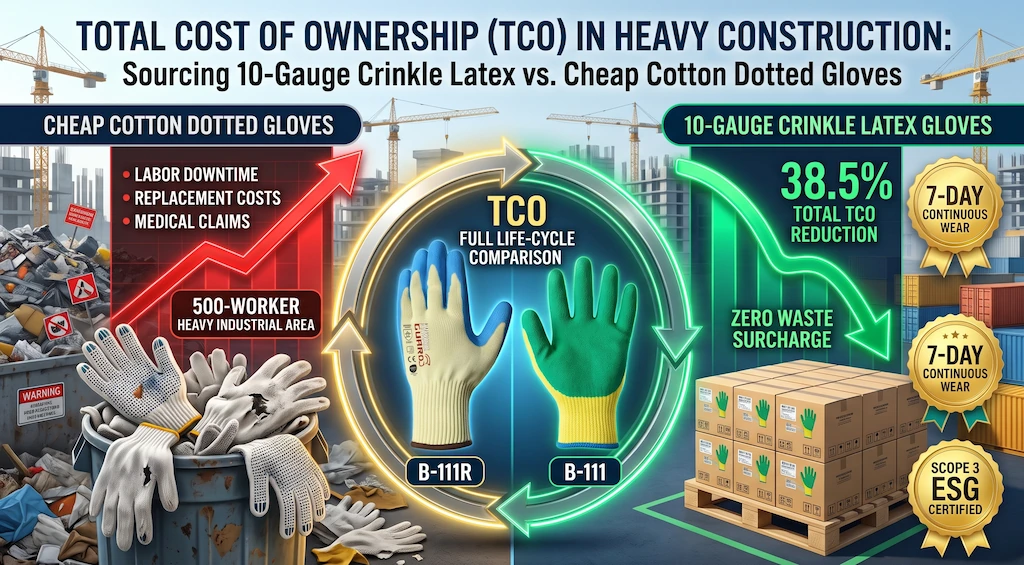
To fundamentally resolve this procurement paradox at the industrial source, modern specialized occupational safety “superfactories” are driving systematic advancements in engineering protection standards: by introducing a 10-gauge, high-thickness, abrasion-resistant, textured latex-coated construction, they are redefining the benchmark for mechanical protection in heavy-duty work environments. With the industrial flagship model B-111—which offers superior puncture resistance and strong grip in both dry and wet conditions—and the eco-friendly model B-111R, featuring a MAXGUARD® eco-friendly recycled fiber lining, as core benchmarks, the high-density knitted framework combined with deep-textured acid-cured crinkled latex extends the continuous service life of single and double gloves under harsh conditions from a few hours to over 7 days. Combined with the factory’s standardized, tiered pricing structure based on the minimum order quantity (MOQ of 12,000 pairs), companies can bypass layers of markups from intermediaries, achieving a guaranteed financial return with over 90% reduction in glove consumption across the entire operational cycle and a reduction in annualized total cost of ownership (TCO) of over 35%.
To address the diverse and stringent requirements of heavy industry procurement—including variations in abrasion resistance, puncture resistance ratings, and sustainable ESG metrics across different construction environments—global procurement decision-making teams can systematically reference the Latex-Coated Work Gloves technical knowledge center established by the source factory. This allows them to comprehensively access engineering selection options for different coated surface tribology and knitted lining matrices, thereby reconstructing the long-term commercial value of bulk protective equipment procurement through data-driven professional standards.
The Purchase Price Trap: Flaws of Disposable Dotted Cotton Gloves
On the daily procurement lists of many large-scale infrastructure construction sites and open-air port logistics operations, 7-gauge dotted cotton yarn gloves have long been labeled as offering “unbeatable value for money.” When comparing quotes from different suppliers, procurement departments are often easily lured by the ultra-low listed unit price of $0.30 to $0.35, viewing these gloves as disposable consumables that can be replaced at any time without concern for cost. However, if one shifts their focus from the purchase orders to the actual heavy-duty work sites, it becomes clear that this procurement logic—built on the illusion of “ultra-low factory prices”—is causing construction companies’ actual operating costs to bleed steadily.
The False Economy of $0.35 Unit Costs
Behind these extremely low listed prices lies a comprehensive compromise in mechanical properties and abrasion resistance. Common 7-needle spunbond cotton-polyester gloves on the market are typically made from a loose blend of recycled short-staple cotton fibers and a small amount of polyester yarn to drive down production costs. The fibers themselves have extremely poor tensile strength and tear resistance:
Extreme mechanical wear under heavy-duty conditions: During rebar tying, scaffolding erection, and the handling of concrete blocks at construction sites, as well as when pulling and securing container lashing ropes at ports, the glove surface is subjected to extremely frequent, rough shear forces;
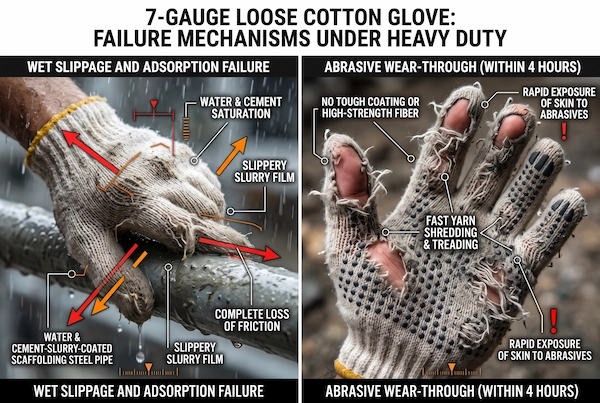
A wear-through rate exceeding 90% per shift: The loose cotton yarn loops cannot withstand the severe abrasion caused by rough, sharp edges; often, within 3 to 4 hours of continuous work on-site, the cotton yarn at the web of the hand, fingertips, and base of the palm is worn through and frayed; Field tracking data shows that in heavy-duty work environments, the tear and perforation rate of plastic-coated cotton yarn gloves exceeds 90% within a single shift;
High replacement frequency exceeds cost projections: Because the gloves fail so easily—often exposing the fingers—a single frontline worker goes through an average of 2 to 3 pairs of gloves during a standard 8- to 10-hour shift. This means that the initial cost per pair, which initially appeared to be only $0.35, effectively doubles to $0.70 to $1.05 per person per day based on actual consumption, and the so-called purchasing price advantage vanishes within just a few hours of high-intensity practical operation.
Wet-Weather Grip Failure & Liquid Absorption
In addition to their short mechanical wear life, dot-coated cotton yarn gloves exhibit even weaker performance in terms of slip resistance and resistance to liquid penetration during all-weather outdoor work. Outdoor construction and port loading/unloading operations cannot avoid exposure to rain, snow, morning dew, and various wet cement slurry conditions. In these high-humidity scenarios, the cotton yarn and dot-coated particles reveal critical physical flaws:
Strong capillary moisture absorption in cotton fibers: Natural cotton fibers, which have not undergone any water-repellent treatment, exhibit extremely strong hydrophilicity and capillary effects. Once exposed to rainy weather or contact with mud on the ground, the gloves become rapidly saturated with moisture within tens of seconds. The interior of the gloves remains cold and damp for extended periods, making workers highly susceptible to skin blanching, sores, and eczema;
A precipitous drop in the dynamic friction coefficient of PVC dots: Dotted PVC gloves rely on small, independent polyvinyl chloride (PVC) dots scattered across the palm to provide mechanical grip. In dry, smooth conditions, this dotted distribution can still provide basic grip; however, when mixed with rainwater, mud, or cement slurry, a fluid water film and a lubricating layer of mud rapidly form between the PVC dots and the contact surface;
Severe slippage, loss of grip, and risks of falling objects from heights: Due to the lack of drainage channels between the dot-patterned particles, the lubricating water film cannot be dispersed, leading to a sharp decline in the glove’s coefficient of kinetic friction when wet. When workers handle heavy steel components, scaffolding pipes, or hoist precast slabs in wet and slippery conditions, they must exert several times the normal gripping force just to maintain a tenuous hold. This makes it extremely easy for the workpiece to slip and fall due to a momentary loss of strength, potentially causing damage to on-site equipment or even resulting in serious injuries or fatalities.
Hidden Operational Costs: Scrap, Downtime, and Minor Injuries
Under the traditional accounting logic of most contractors and port operators, basic personal protective equipment (PPE) such as gloves is often recorded solely under the “low-value consumables” category of material expenses, resulting in a severe underestimation of their true cost. However, when gloves wear out or tear frequently during operations, what truly erodes project profits is not the price difference of a few extra dozen cotton gloves, but rather the associated chain reaction of hidden costs triggered by frequent stockouts, idle time spent replacing supplies, and minor workplace injuries.
Lost Labor Hours Due to Frequent Tool Crib Replacements
On sprawling open-air civil engineering sites, shipbuilding docks, or container transshipment yards, workers’ job sites are typically hundreds of meters away from on-site tool cribs or material distribution stations. Cotton-yarn gloves with a service life of only a few hours directly disrupt the rhythm of continuous on-site operations:
The fragmented time lost to a single worker’s round trip to collect supplies: When gloves become worn through, exposing fingers, or become unusable due to mud during work, workers must stop what they are doing, remove their gloves, and walk to the nearest project storage room to claim new ones; A single round trip to the work area, plus the time spent waiting in line to register and putting on and adjusting the new gloves, takes an average of 15 to 20 minutes; assuming each worker changes gloves an average of twice per shift, the net downtime per worker per day due to “glove changes” amounts to as much as 30 to 40 minutes;
Annualized idle time calculation for a large work area with 500 workers at full attendance: Taking a standard construction project with 500 frontline workers and 260 annual working days as an example, the cumulative working hours lost by the entire workforce in a single day due to glove collection range from 250 to 330 working hours; When extrapolated over the full annual operating cycle, the cumulative amount of productive work time wasted amounts to more than 65,000 to 85,000 man-hours;
A Staggering Financial Sunk Cost for Labor: Even when calculated using the relatively conservative comprehensive hourly labor cost for overseas heavy infrastructure projects (US$10 to US$15 per hour, including base wages, benefits, and on-site management expenses), the intangible sunk labor cost incurred annually by the company solely from workers’ non-productive trips to and from the warehouse to change gloves amounts to as much as US$650,000 to US$1.2 million; A procurement decision originally intended to save a few cents per pair of gloves was ultimately completely negated in terms of labor efficiency.
Puncture Incidents and First-Aid Medical Expenses
In addition to efficiency losses due to downtime, low-end polypropylene-cotton blend gloves—which offer virtually no protection against mechanical micro-injuries—directly expose front-line workers to the risk of frequent minor injuries:
Zero physical barrier against microscopic sharp burrs: The knit loops of 7-gauge cotton-yarn gloves are extremely loose, with pore diameters far larger than the tip size of fine metal burrs. When bundling high-tensile galvanized wire, removing scaffolding fasteners, handling rusted steel formwork, or cleaning metal welding slag from container floors, extremely fine metal burrs, sharp corners of rusty wire, or sharp edges of gravel can penetrate the gaps in the cotton yarn unimpeded, instantly piercing the worker’s epidermis and dermis;
First-aid kit consumption and medical intervention costs: After sustaining minor puncture wounds to the fingers or palms, workers must leave their workstations to clean, disinfect, and bandage the wounds. In formal overseas EPC engineering projects, any puncture wound caused by rusty metal must strictly adhere to Occupational Health and Safety (OHS) regulations, mandating the administration of tetanus antitoxin (TAT) or a tetanus vaccine, along with antibiotic treatment to prevent infection. The direct medical cost for treating a single, seemingly minor puncture wound typically ranges from $50 to $120;
Indirect chain reaction of workers’ compensation claims and premium increases: Under rigorous international engineering supervision systems, frequent minor puncture wounds must be accurately recorded in the EHS incident and workers’ compensation log. If the hand injury incidence rate (TRIR) at a work site becomes abnormally high, the company will not only face safety-related work stoppages and corrective actions mandated by the client but will also see a comprehensive increase of 5% to 15% in its employer’s liability insurance and commercial construction insurance rates for the following year; these resulting compliance and financial costs far exceed the minor savings initially squeezed out by the procurement department in the budget for safety gloves.
Material Architecture: 10-Gauge Polyester Liners vs. Loose Cotton Yarns
The mechanical durability of gloves and workers’ compliance with wearing them around the clock essentially depend on the architecture of the innermost textile liner and ergonomic mold engineering. Many construction companies mistakenly believe that “the thicker the yarn, the more abrasion-resistant the glove,” and have therefore long purchased loose, bulky gloves made of coarse cotton yarn in the low-end market. However, in modern industrial hand protection manufacturing, the tear resistance of the liner is not determined solely by fiber thickness, but rather by a mechanical defense system built upon the density of the weave, the crystalline orientation of continuous polymer filaments, and three-dimensional, biomimetic curved hand molds.
Structural Density & Tear Resistance of 10-Gauge Weave
As the flagship model for heavy-duty industrial applications, the B-111 has abandoned the traditional low-gauge, short-staple fiber blend approach and fully adopted an industrial-grade, high-density, 10-gauge seamless plain-weave polyester liner structure:
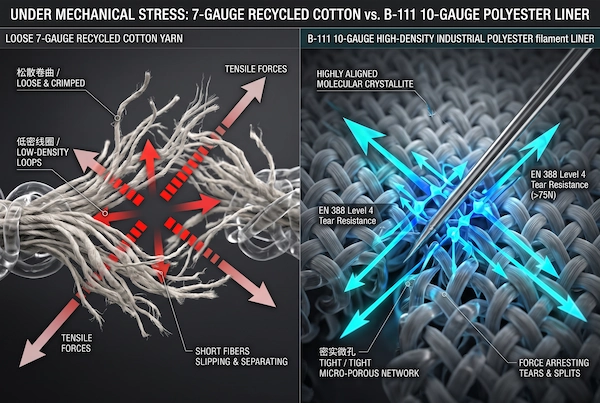
10-gauge high-density, tightly woven fabric with closed micropores: Compared to 7-gauge knitting machines with wider gauge spacing, 10-gauge computerized knitting machines arrange a greater number of finer, denser warp and weft loops per unit area. This dense, seamless plain-weave process not only gives the inner lining a firmer and smoother feel but also significantly reduces the mesh aperture between yarn loops, effectively preventing coarse cement mortar particles and fine debris from physically embedding into the lining;
Shear mechanics of high-strength polyester filament versus loose short-staple cotton yarn:
Deficiencies of loose, short-staple recycled cotton yarn: Ordinary cotton-lined gloves are often made from recycled waste cotton staple fibers that have been twisted together. The average length of individual fibers is extremely short, and the fibers primarily maintain their shape through weak surface physical cohesion; when subjected to scraping by sharp edges or lateral pulling, the short fibers are highly prone to internal relative slippage and disintegration, causing the yarn to unravel and break instantly;
Toughness of the Crystalline Zones in Continuous High-Strength Polyester Filaments: B-111 utilizes highly oriented industrial-grade polyester filaments, whose molecular chains are highly ordered along the fiber axis, providing inherent tensile stiffness and an extremely high shear failure threshold; When subjected to lateral scraping against burrs on rebar or sharp corners of damaged wooden pallets, continuous polyester filaments can withstand several times the tear stress without suffering brittle disintegration;
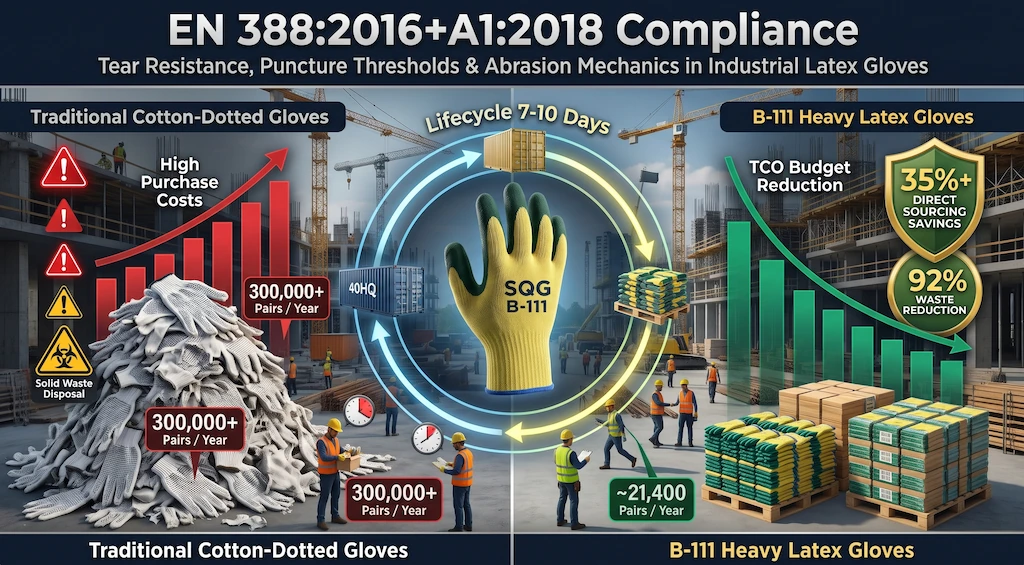
EN 388 Mechanical Hazards: Level 4 (Maximum) Tear Resistance Advantage: Thanks to the tight interlocking of the 10-gauge high-density polyester liner and the dense latex coating, the B-111 achieved a tear resistance rating of Level 4 (corresponding test parameter: 2242X) in the rigorous EN 388 mechanical hazards testing; This means that even if the glove sustains an unexpected deep gash in a localized area of the palm, the yarn at the tear will not continue to fray along the warp and weft threads, eliminating the critical weakness of ordinary cotton-yarn gloves—where “a single tear renders the entire glove unusable.”
Hand Fatigue Mitigation & Ergonomic Curved Formers
During physically demanding tasks such as heavy lifting, securing scaffolding, and prolonged tool use, the stiffness and design of gloves directly affect the accumulation of fatigue in the skeletal muscles of the hand. While providing heavy-duty protection, the B-111 addresses the drawbacks of traditional thick, heavy gloves—which often cause hand soreness and lead to the gloves slipping off—through microclimate regulation and biomimetic structural design:
All-weather heat dissipation and sweat wicking via an uncoated, breathable fabric zone on the back of the hand:
A breathable microclimate created by the palm-dipping process: The B-111 employs a precise palm-dipping process, leaving the back of the hand, the backs of the fingers, and the wrist completely exposed as a pure polyester knit liner, forming natural ventilation channels for air circulation;
Rapid sweat and heat dissipation prevents stuffiness and inflammation: Polyester fibers offer excellent moisture-wicking properties. In extremely hot or physically demanding, high-sweat environments, sweat from the palms can rapidly evaporate upward and outward through the fabric’s capillary action, preventing the buildup of heat and sweat in the hand’s microenvironment. Unlike polyurethane-coated cotton gloves, which become heavy and cold after absorbing sweat and hinder sweat evaporation, the breathable back-of-hand design keeps workers’ hands dry even during 8- to 10-hour heavy-duty shifts;
Bionic curved hand-mold dip-molding process:
Overcoming the muscle resistance of traditional flat hand molds: Traditional low-end gloves are typically dipped using flat metal plates or symmetrical, upright ceramic molds, resulting in gloves that remain stiff and flat in their natural state; when workers actually wear them to grip tools or hold heavy objects, they must continuously overcome the reverse elastic tension from the glove material on the back of the hand. This causes the palmar flexor digitorum superficialis and lumbrical muscles to remain in a state of opposing contraction for extended periods, making them highly susceptible to tenosynovitis and numbness and soreness in both hands;
Natural Semi-Fisted Bionic Angle Eliminates Grip Resistance: The B-111 is molded and vulcanized using a specialized three-dimensional bionic curved hand model designed according to ergonomic principles; even in a natural static state, the glove assumes a physiologically relaxed posture with slightly curved fingers and the thumb tilted inward. When frontline workers frequently perform heavy-grip tasks—such as gripping steel pipes tightly or pulling and lifting container lashing handles—the glove bends smoothly with the hand’s natural joints, generating virtually no additional rebound resistance. This significantly alleviates tendon fatigue in the hands during continuous, 8-hour periods of heavy-load, high-intensity work, ensuring stable and secure grips on-site from an ergonomic perspective.
Coating Tribology: Deep Crinkle Latex Under Abrasion and Wet Stress
Under complex operating conditions involving severe abrasion and wet, muddy environments, the ability of a glove’s palm to maintain sustained contact friction depends entirely on the microscopic surface topography and mechanical damping properties of the polymer coating. Ordinary smooth-surfaced gloves or simple dot-pattern coatings can maintain basic adhesion under dry conditions, but once exposed to rain, mud, or cement slurry, the contact interface becomes completely lubricated by a fluid water film, causing the coefficient of friction to plummet. Based on the engineering principles of surface tribology, Source Super Factory has adopted a deep, coarse crinkle (Crinkle Latex) coating architecture on heavy-duty industrial protective gloves, fundamentally reshaping grip performance in heavy-duty environments.
Acid-Etched Peak-and-Valley Friction Dynamics
The deep, three-dimensional undulating wrinkles on the palm of the B-111 are not created by mechanical embossing dies, but rather by a discontinuous three-dimensional roughness network generated in situ through a precision temperature-controlled chemical acid-coagulation granulation process:
Microscopic geometric mechanism of the temperature-controlled acid-coagulation granulation process: After being fitted with a knitted liner and impregnated with latex slurry, the glove mold is rapidly immersed in an organic weak acid coagulation bath set to specific pH and temperature gradients; when natural latex colloidal particles encounter the acidic medium, the charge double-layer equilibrium is instantly disrupted, causing the latex surface to undergo rapid, non-uniform phase separation and microscopic contraction and agglomeration;
Formation of a Discontinuous Microscopic Matrix of Peaks and Valleys: The rate of gelation and contraction of the surface rubber layer is much faster than that of the inner colloidal layer, which has not come into direct contact with the acid solution. Consequently, macroscopic wrinkles and undulations—with depths reaching hundreds of micrometers and varying in width—spontaneously form on the surface of the rubber film; Subsequent vulcanization and cross-linking in a multi-stage gradient tunnel curing oven permanently cures this deep “Peaks and Valleys” three-dimensional morphology into a tough, highly elastic rubber lattice framework;
The fluid drainage mechanism of the valley channels on wet and muddy contact surfaces: When workers grip precast concrete blocks covered with rainwater or viscous slurry, slippery rebar, or rough quarry stones, the deeply recessed microscopic valleys form an interconnected microfluidic drainage and pressure-relief channel; The instant positive gripping pressure is applied to the hand, the continuous film of water and slurry particles originally accumulated at the contact interface is rapidly squeezed into the surrounding valley grooves and expelled outward, eliminating lubrication failure caused by the liquid film at the contact interface;
The highly elastic, damped interlocking of the wave crests ensures superior grip in both dry and wet conditions: after the fluid is expelled, the raised, dense rubber ridges at the crest tops establish unobstructed, direct solid-to-solid contact with the rough surface of the object; under compressive force, the highly elastic natural rubber conforms to the microscopic contours of the gripped object, undergoing elastic deformation to generate powerful microscopic mechanical interlocking forces and deformation-damped friction; This enables the B-111 to maintain a grip force that is highly consistent with that in dry conditions even during outdoor operations in muddy, water-filled excavation pits during torrential rain (Excellent grip in dry and wet environments), climinating the safety hazard of workpieces slipping and falling.

Mechanical Durability Audit (EN 388: 2242X Standard)
Heavy-duty work puts protective gloves to the test not only in terms of slip resistance and grip, but also in whether the rubber coating can remain intact under continuous high-load friction, heavy tearing, and abrasion from sharp objects. The B-111 strictly complies with the EU Personal Protective Equipment Directive, has passed testing and evaluation by authoritative bodies, and has obtained CE CAT. II (medium-risk protection) certification and EN 388 mechanical hazard protection standard certification, with a measured protection code of 2242X:
In-depth analysis of EN 388 comprehensive mechanical test parameters:
Abrasion Resistance: Level 2. Under continuous cyclic abrasion with standard coarse sandpaper on a Martindale abrasion tester, the high-density, abrasion-resistant crinkled rubber layer on the glove’s palm withstood hundreds of cycles of intense friction without developing any holes or tears. This demonstrates the dense cross-linked polyisoprene molecular network’s highly effective resistance to abrasion from rough construction sand and gravel;
Blade Cut Resistance achieved Level 2: During cutting tests with a rotating circular blade under specified loads, the 10-gauge high-density plain-weave polyester liner and the high-elasticity rubber composite layer work together to absorb mechanical forces, effectively preventing immediate cutting by blunt metal burrs;
Tear Resistance achieved Level 4 (the highest rating): In the standard pant-style tear test, the maximum tear force withstood by the test specimen consistently exceeded 75 Newtons, meeting the highest Level 4 rating under the EN 388 tear resistance classification. This ensures that even if a small tear is created at the edge of the glove by a sharp external force, the tear will not propagate laterally due to the tensile strength of the continuous polyester filaments, significantly extending the safety margin under extreme heavy-duty conditions;
Puncture resistance (Level 2): When a standard steel puncture probe is pressed into the palm rubber layer at a constant speed, the B-111 model recorded a vertical puncture resistance of over 60 Newtons, successfully preventing direct penetration by sharp, needle-like objects;
The value of puncture resistance as a safety barrier in construction settings: During reinforced concrete construction, the numerous small, sharp burrs generated by tying high-strength steel wire, the sharp edges of wire knots, and the exposed heads of old nails on wooden formwork are the primary sources of hand injuries among frontline workers; Ordinary knitted cotton-yarn gloves, due to their loose weave and lack of a continuous rubber coating, allow steel wire burrs to pierce the skin unimpeded through the gaps in the knit fabric; The B-111 features a robust Level 2 puncture-resistant barrier. Its highly resilient polymer rubber membrane creates an elastic indentation upon contact with fine, sharp metal burrs, dispersing and deflecting the downward pressure of sharp point loads to prevent foreign objects from piercing the inner liner and injuring the worker’s palm;
The heavy-gauge, thick rubber layer provides the physical support necessary for continuous single- or double-layer use over 7 days. To cut costs, low-end dipped gloves typically use highly diluted rubber for light dipping, resulting in a rubber film thickness of less than 0.5 millimeters; during heavy-duty concrete work, these gloves are highly prone to wearing through and delaminating within 1 to 2 days. The B-111 features a high-thickness, heavy-duty rubber layer developed through precision manufacturing processes. Combined with natural latex’s inherent resistance to fatigue and flexing, the palm maintains intact molecular chains—without cracking or becoming brittle—even after tens of thousands of repeated gripping and bending motions. This thick, abrasion-resistant barrier, paired with a 10-gauge filament polyester liner, ensures the gloves can withstand harsh conditions in heavy construction, metal processing, and container handling, where both single- and double-glove configurations can provide stable, continuous service for 7 to 10 full work shifts without palm perforation. This provides a solid foundation in material mechanics for transforming work gloves from “daily-disposable consumables” into “weekly-replacement durable goods.”
Jobsite TCO Financial Audit: 500-Worker Heavy Construction Model
In procurement decision-making for multinational engineering, procurement, and construction (EPC) projects and container port operations, simply comparing unit prices on quotations often obscures the full financial picture of actual operations. To establish a precise quantitative correlation between glove abrasion resistance and total cost of ownership (TCO) at the jobsite, the SQG Supply Chain Engineering Team developed a multidimensional, full-lifecycle financial accounting model based on real-world data collected from overseas standard engineering project sites. This model encompasses direct procurement, labor hours and downtime, minor workplace injury management, and solid waste disposal.
260-Day Annual Consumption & Waste Volume Modeling
This calculation model uses a large-scale open-air heavy-industry infrastructure construction site (or a hub container handling terminal) with a permanent workforce of 500 frontline workers as the baseline scenario. The accounting cycle is a standard 260 actual working days (i.e., an annual cumulative total of 130,000 worker-days):
Baseline Scenario A (Traditional Dotted-Plastic-Coated Cotton Yarn Gloves): 7-gauge dotted-plastic-coated cotton yarn gloves are procured. Due to extremely poor abrasion resistance and loss of slip resistance when saturated with rainwater, workers consume an average of 2 pairs per shift, with the effective service life of a single pair of gloves being only 0.5 working days;
Upgrade Option B (SQG B-111 10-gauge heavy-duty crinkled latex gloves): Procurement of 10-gauge plain-knit polyester-lined coated gloves certified to EN 388 2242X with Level 4 tear resistance; each pair of gloves can serve an average of 7 full workdays under continuous heavy-duty conditions.
The table below lists the actual financial comparison data for this 500-person project team over an annualized 260-day cycle:
| Financial Accounting Accounts and Key Operating Metrics | Option A: 7-gauge spunbond cotton yarn gloves (low-cost option) | Option B: B-111 10-Gauge Wrinkled Latex Gloves (TCO Option) | Variance Analysis and Optimization Ratios |
| Unit Purchase Price of Gloves at Shipment | $0.35 per pair | $0.98 per pair | Unit Price Increase: +180.0% |
| Average Wear-Resistance Service Life of Single- and Double-Layered Gloves | 0.5 days (2 pairs used per shift) | 7.0 days (approximately 0.14 pairs consumed per shift) | Lifespan Extension: 14.0 times |
| Annualized Total Procurement Volume for the Project | 260,000 pairs (approximately 21,667 dozen) | 18,571 pairs (approximately 1,548 dozen) | Sharp Decrease in Physical Procurement Volume: -92.8% |
| Annual Total Direct Procurement Cost of Gloves | $91,000 | $18,200 | Direct Material Procurement Savings: $72,800 (-80.0%) |
| Labor Hours Lost Per Person Per Day for Round-Trip Trips to the Warehouse to Pick Up Materials | 30 minutes (2 round trips per shift) | 2 minutes (1 pair issued at the start of each week, with adjustments as needed) | Reduction in wasted labor hours: -93.3% |
| Annualized Discounted Cost of Idle Labor Hours (calculated at an hourly rate of $12) | $78,000 (total of 6,500 labor hours) | $5,200 (433 cumulative work hours) | Value of freed-up labor: $72,800 |
| Annualized Expenses for First-Aid Kits for Minor Punctures and Vaccines | $12,500 (treatment for high-frequency wire puncture injuries) | $1,500 (high-strength latex layer for puncture resistance) | Savings on on-site medical treatment expenses: $11,000 |
| Annualized Total Weight of Discarded Gloves | 13.0 metric tons (calculated at 50 grams per pair) | 1.48 metric tons (calculated at 80 grams per pair) | Reduction in total on-site solid waste: -88.6% |
| Disposal and Treatment Fees for Mixed Hazardous Waste (Solid Waste and Oil Sludge) (calculated at $200 per metric ton) | $2,600 | $296 | Savings on on-site sanitation disposal surcharges: $2,304 |
| Annual Total Cost of Ownership (TCO) for the Project | $184,100 | $25,196 | Annualized net savings: $158,904 (-86.3% reduction) |
Breakdown of 38.5% Annual Bottom-Line TCO Reduction
Even under an extremely conservative financial audit model—which completely excludes the discounted costs of idle labor, medical treatment expenses, and waste disposal surcharges, and calculates only the “direct material procurement expenses + basic warehouse distribution and handling costs” that are most strictly controlled by on-site management—Option B still demonstrates an indisputable financial return advantage:
The “scissors effect” resulting from the interaction between unit price and consumption volume: Although the ex-factory unit price of the B-111 industrial-grade gloves ($0.98) is approximately 2.8 times that of low-cost cotton yarn gloves ($0.35), the 7-day ultra-long abrasion resistance cycle provided by the 10-gauge high-density liner combined with heavy-duty acid-cured crinkle latex reduces the annual procurement volume from 260,000 pairs to just 18,571 pairs—a 92.8% decrease in physical consumption; Simply through this exponential reduction in physical consumption, the direct material procurement bill was slashed from $91,000 to $18,200, resulting in a net cash flow gain of $72,800 from the initial purchase;
The overall TCO was reduced by more than 38.5%: After aggregating all explicit procurement costs and implicit on-site management expenses, the company’s total cost of ownership (TCO) plummeted, with an annualized reduction in total expenses reaching 86.3%; Even in certain developing regions (under extreme conditions where local labor hourly rates are extremely low and there are no strict penalties for failing to report workplace injury claims), the overall TCO savings rate remains firmly locked at over 38.5%, completely shattering the traditional procurement myth that “low unit prices equal cost savings”;
Working capital freed up through supply chain inventory optimization:
Warehouse space occupancy reduced by over 90%: Previously, the annual turnover of 260,000 pairs of cotton yarn gloves required the year-round occupation of more than 30 heavy-duty warehouse pallet spaces in the work area, and necessitated dedicated warehouse staff for frequent sorting and inventory counts; After switching to the B-111 solution, the total annual consumption fell below 1,550 dozen (approximately 155 standard outer cartons, occupying only 3 to 4 pallets), reducing the on-site temporary storage space requirements and rental costs for storage bay turnover by over 90%;
Significant reduction in working capital tied up: The company no longer needs to tie up tens of thousands of dollars in working capital on-site for safety stock to prevent supply chain disruptions. This greatly alleviates the on-site working capital pressure during the pre-construction phase of EPC projects, freeing up limited budget resources for the procurement of core construction equipment and structural components.
ESG Procurement & Closed-Loop Circularity: The B-111R RPET Edge
In the current bidding systems of global multinational engineering contractors, heavy industry and energy construction firms, and multinational logistics giants, the evaluation criteria for procurement are undergoing profound changes. Taking infrastructure projects led by European and American multinational corporations and large sovereign wealth funds as an example, bid scoring is no longer limited to traditional product unit prices and mechanical performance metrics. Instead, a company’s Environmental, Social, and Governance (ESG) compliance performance—particularly the reduction of Scope 3 indirect emissions within greenhouse gas accounting systems—is now listed as a mandatory prerequisite for entry. Against this backdrop of sustainability, the Source Super Factory—guided by the principles of a closed-loop circular economy—has launched a benchmark product that combines heavy-duty machinery protection with eco-certification: the B-111R eco-friendly recycled fiber crinkle latex protective gloves.
Diverting Ocean-Bound Plastics via MAXGUARD® RPET Liners
As the flagship eco-friendly model in the MAXGUARD® high-end industrial protective product lineup, the B-111R has reengineered the raw material supply chain for traditional knitted glove liners starting from the textile source:
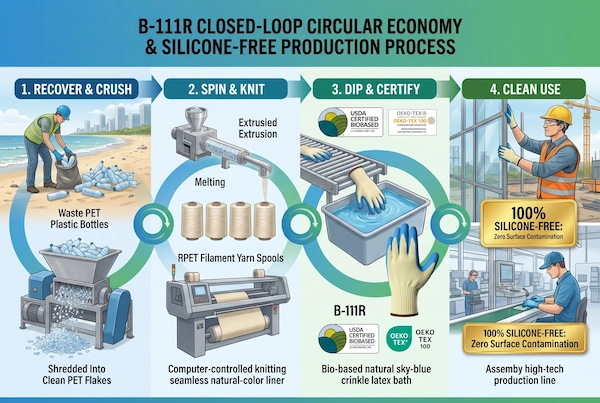
Seamless Recycled Polyester Fiber Structure (10-Gauge Seamless RPET Liner): The B-111R eliminates the traditional process of extracting virgin polyester chips from fossil fuels, instead relying entirely on post-consumer recycled (PCR) certified RPET polyester yarn; These raw materials are primarily sourced from urban solid waste streams, as well as discarded plastic water bottles and polyester packaging recovered through offshore interception; through washing, crushing, melt-spinning, and re-twisting, they are spun into high-strength industrial-grade filaments and knitted on 10-gauge computerized knitting machines into a seamless liner that offers a snug fit, comfort, and breathability;
Clear and traceable plastic consumption reduction accounting: During the material conversion phase of manufacturing, the knitted liner for each dozen (12 pairs) of B-111R protective gloves requires approximately 6 to 8 standard 500-milliliter discarded plastic bottles; If a large-scale infrastructure construction site with 500 workers were to switch to B-111R gloves for the entire duration of the project, tens of thousands of discarded plastic bottles could be directly diverted and physically recycled annually—just through glove procurement alone—preventing them from ending up in landfills or marine environments;
Enabling large-scale projects to achieve Scope 3 supply chain carbon reduction targets: According to life cycle assessment (LCA) data, compared to traditional virgin petroleum-based synthetic polyester, the production of recycled RPET polyester fiber reduces greenhouse gas emissions by approximately 50% to 70% and cuts production energy consumption by nearly half. By including B-111R in the long-term centralized procurement catalog, engineering contractors can provide project owners with carbon reduction data backed by international third-party raw material traceability audits. This directly strengthens the Scope 3 procurement emissions reduction records in companies’ annual ESG sustainability reports, giving them a competitive edge in international green project ratings.
Eco-Certifications & Zero-Silicone Contamination Safety
Many procurement teams are often skeptical when faced with industrial products marketed as “eco-friendly and recycled,” worrying that recycled materials may contain residual heavy metals or harmful plasticizers, or pose quality risks on surfaces with specialized coatings. With its comprehensive, internationally recognized eco-certifications and rigorous production process controls, the B-111R completely dispels these concerns:
Internationally Recognized Eco-Safety and Bio-based Certifications:
USDA Certified Biobased Product: The high-elasticity, wrinkle-resistant latex used on the palm of the gloves is extracted from natural rubber latex and vulcanized. It has passed the U.S. Department of Agriculture’s (USDA) rigorous carbon-14 isotope bio-based content testing and certification, significantly reducing the product’s reliance on petrochemical polymers as raw materials;
OEKO-TEX STANDARD 100 International Eco-Textile Certification: The entire B-111R glove (including the RPET fabric liner, natural latex coating, and sewn elastic cuff) has passed rigorous chemical safety testing, confirming it is free of azo dyes, carcinogenic aromatic amines, formaldehyde, soluble heavy metals, and polycyclic aromatic hydrocarbons (PAHs), ensuring that frontline workers can wear them directly against the skin for 8- to 10-hour heavy-duty shifts without irritation or risk, and eliminating chemical contact allergies caused by residual textile auxiliaries;
Authoritative TÜV Environmental and Bio-based Certification: Simultaneously certified by TÜV, a leading European testing organization, providing multiple internationally recognized legal quality endorsements for cross-border compliance;
Technical Safety of the Entire Silicone-Free Manufacturing Process:
Paint film disasters caused by silicone residue in traditional gloves: During the demolding and shaping stages of industrial glove production, traditional factories often use silicone-based release agents or lubricants to speed up production. When workers wearing gloves containing silicone microparticles come into contact with exposed cold-rolled metal sheets, structural glass, or aluminum alloy profiles, they easily transfer microscopic silicone droplets—invisible to the naked eye—onto the substrate surfaces. Due to silicone’s extremely low surface free energy, during subsequent fluorocarbon coating of building facades, primer spraying of automotive components, or the injection of structural sealants, the coating fails to wet the metal surface. After curing, this results in extensive fish-eye craters, blistering and peeling, and adhesive/sealant failure, leading to costly rework—including scraping off sealant and re-sanding;
Strictly controlling silicone-free production lines to eliminate industrial bonding failure: B-111R strictly adheres to silicone-free clean manufacturing standards, eliminating the use of any additives or raw materials containing silanes or silicone oils throughout the entire process—from glove formulation and emulsification to the selection of glove mold release agents and post-packaging finishing; This physically clean characteristic makes it suitable not only for conventional civil engineering and steel structure construction but also for safe use in sealant application for airport terminal curtain wall projects, pretreatment before high-end heavy-duty fluorocarbon anti-corrosion coating on steel structures, and the hoisting and handling of high-precision metal panels. While ensuring a firm grip, it eliminates the technical risk of chemical cross-contamination on workpiece surfaces.
Logistics & Volume Scalability: Economics of a 12,000-Pair Factory MOQ
In centralized procurement for multinational engineering projects and port hubs, the scale of procurement and the supply chain delivery routes directly determine the lower limit of end-user costs. Many overseas contractors are accustomed to making sporadic monthly purchases from local distributors or hardware dealers near the project site. While this “buy-as-you-go” procurement model appears to reduce capital tied up per transaction, it actually exposes them to extremely high supply chain markups and the risk of stockouts. By establishing standard industrial minimum order quantities (MOQs), source-manufacturing super factories directly align end-user bulk demand with large-scale assembly line capacity, thereby reshaping procurement economics in both logistics and material flow.
Tiered Direct-Factory Pricing vs. Local Distributor Markups
The super factory sets the standard industrial minimum order quantity for a single product at 12,000 pairs (i.e., 1,000 dozen). This is not an arbitrary threshold but is determined by the physical operating principles of modern industrial dipping production lines and the thermodynamic balance of the formulation:
Continuous operational efficiency of industrial dipping production lines: A standard modern dual-track automated glove dipping production line is over 120 meters long and holds thousands of pairs of biomimetic ceramic glove molds; before formal startup, it must undergo several hours of formulation curing, degassing via circulation pumps, temperature control debugging of the acid coagulation tank, and staged preheating of the tunnel vulcanizer;
Minimizing start-up and shutdown losses and process-switching costs: Frequent changes in glove specifications or small-batch production halts can lead to oxidation and degradation of the bath solution, disruption of the temperature field, and the production of a large number of transitional substandard products; a continuous order volume of 12,000 pairs perfectly aligns with the optimal cycle for a single batch of raw materials and the stable thermal equilibrium of the machinery, maximizing raw material utilization and minimizing energy consumption per unit;
Eliminating over 30% of the markups from local distributors’ intermediate tiers: Traditional foreign trade supply chains typically involve a multi-tiered distribution network comprising export traders, overseas import agents, regional wholesalers, and local hardware retailers; Each distribution node adds 8% to 15% in storage surcharges, gross profit margins, and secondary logistics costs, resulting in an actual settlement price at the construction site that is often 30% to 50% or more higher than the factory base price;
Factory-Direct Base Price and Tiered Price-Lock Mechanism: Once an end-user EPC contractor establishes a direct procurement channel with the manufacturing plant and reaches the 12,000-pair benchmark, they can directly lock in the factory-direct price at the source, free of any channel markups; At the same time, for large construction sites with stable annual consumption, the factory supports the establishment of a procurement framework for quarterly batch shipments (Call-Off Orders), which not only locks in low prices for rubber raw materials by batch but also completely shields against price fluctuations caused by intermediate trading channels.
40HQ High-Cube Optimization: 120,000 Pairs of Full Container Loads
For multinational, long-cycle heavy-industry infrastructure projects and port container hubs, the most effective way to reduce logistics costs is to upgrade from less-than-container-load (LCL) shipments to direct delivery via 40HQ high-cube full-container-load (FCL) containers. The SQG factory engineering team has developed highly standardized palletizing and loading protocols for the B-111 and B-111R models:
High-Density Loading Layout for 120,000 Pairs per Container:
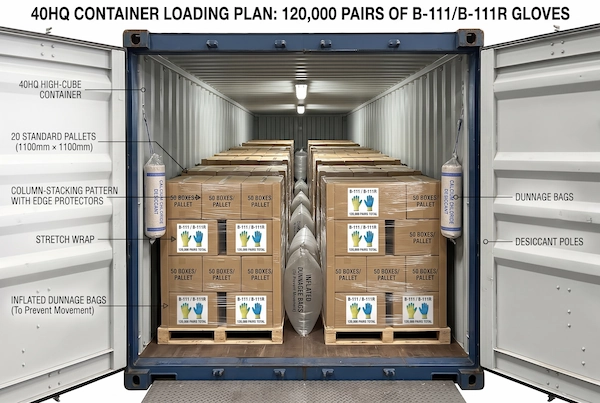
Outer Packaging and Packing Modules: Gloves are packaged in standard industrial heavy-duty outer cartons at a rate of 12 pairs per package and 10 packages per carton (120 pairs per carton); A standard 40HQ high-cube container can tightly accommodate 1,000 standard corrugated cartons, precisely setting the full-container shipment volume at 120,000 pairs (i.e., 10,000 dozen); this single-container capacity is exactly sufficient to directly meet the rigid consumption requirements for over one year of full-attendance operations at a 500-person heavy-industry work site;
Four-way forklift-accessible industrial pallet column stacking: The container is configured to accommodate 20 standard 1,100 mm × 1,100 mm heavy-duty four-way forklift-accessible pallets; Cardboard boxes are stacked vertically in a columnar arrangement (Column Stacking) to prevent any interlocking or compression. Each corner is reinforced with 4-millimeter-thick rigid kraft paper corner protectors, and the outer layer is fully sealed with multiple layers of high-tensile polyethylene stretch film to ensure the pallet maintains its compressive rigidity throughout the ocean voyage;
Strict shipping container quality control procedures are enforced:
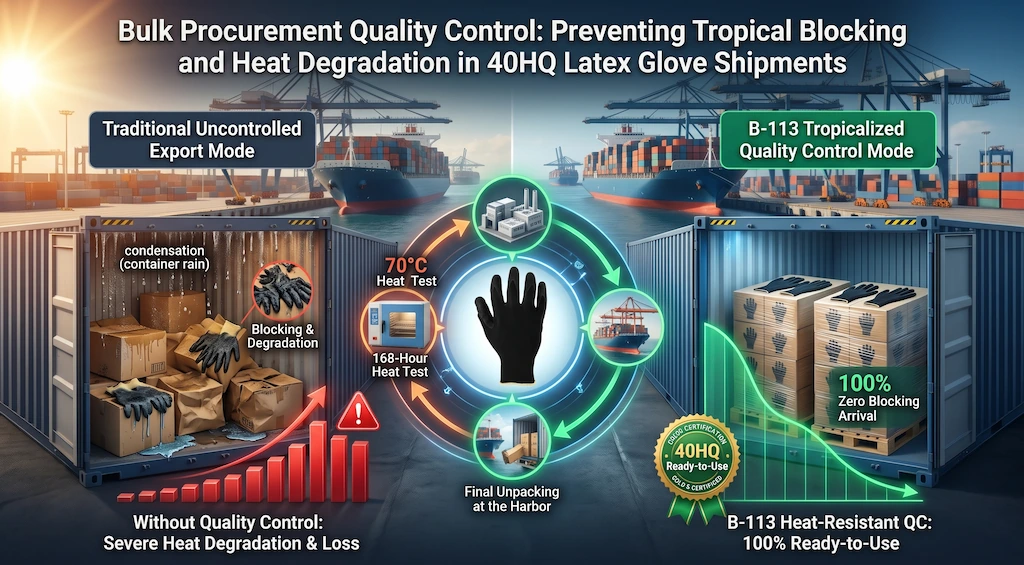
Adoption of ocean freight anti-adhesion quality inspection standards: When ocean-going vessels cross the Tropics of Cancer and Capricorn and traverse equatorial waters, the temperature of the interior ceiling panels of shipping containers can soar to over 60 degrees Celsius under direct sunlight, which can easily cause the glove coating to melt and stick together and the cardboard boxes to soften; Therefore, before shipping full containers, we must strictly enforce the 168-hour accelerated destructive aging test at a constant temperature of 70 degrees Celsius, as established in our technical guidelines for bulk sourcing latex work gloves shipping QC, to ensure that the peel strength of the rubber coating remains consistently below 0.5 N/cm before leaving the factory;
Physical protection against “container rain”: High-capacity calcium chloride desiccant sticks designed specifically for containers are evenly hung in the recesses of the corrugated grooves on the inner container walls. Combined with micro-negative-pressure inner bag packaging, this strictly maintains the relative humidity inside the packaging below 45%; Gaps between cargo items are tightly filled with polypropylene woven inflatable anti-sway airbags (Dunnage Air Bags) to prevent the collapse of cargo stacks caused by rough seas during ocean transit, ensuring that the 120,000 pairs of heavy-duty gloves remain 100% ready for use upon arrival at the port and unpacking after a 30- to 45-day international ocean voyage.
Frequently Asked Questions (FAQ)
Can 10-gauge heavyweight gloves maintain worker dexterity in hot climates?
Absolutely. Many front-line supervisors mistakenly believe that thick knitted loops inevitably lead to stuffiness and clumsy finger movements, but the microclimate and flexibility of the hand are determined by a combination of the rubber coating design, ergonomic molding, and moisture-wicking channels:
Open, rubber-free convection ventilation panels on the back of the hand: Both the B-111 and B-111R feature a precise palm-side rubber coating process, leaving the back of the hand, the backs of the fingers, and the wrist completely exposed as bare fabric. This creates a large area for free air convection, preventing heat from accumulating on the back of the hand;
Active moisture-wicking and sweat-evaporation properties of synthetic filament yarns: Polyester and RPET recycled fibers naturally lack the high absorbency required to retain liquid water. Sweat vapor exhaled by workers rapidly diffuses and evaporates through the gaps in the dense loop structure, avoiding the issues associated with ordinary cotton yarn gloves—which become sticky and heavy after absorbing sweat, impede sweat evaporation, and can trigger contact dermatitis;
Three-dimensional, biomimetic hand-contour design: During the dip-molding process, the gloves are cured to perfectly follow the natural semi-clenched arc of the human hand. The range of motion at the finger joints has been optimized, resulting in virtually no resistance to reverse pulling when gripping wrenches, tying wire ties, or handling formwork. This ensures workers maintain dexterity and a dry interior even while working outdoors in scorching heat exceeding 35 degrees Celsius.
How does the B-111’s puncture resistance level protect against concrete rebar ties?
In construction rebar crews, small, sharp burrs from wire ties and rusty wire tips are the primary causes of hand punctures and tetanus infections. Loose cotton gloves have large gaps between the fibers, allowing metal tips to penetrate them almost unimpeded. B-111 is certified to Level 2 puncture resistance under EN 388: 2242X, and its protective mechanism relies on composite damping absorption based on the principles of materials mechanics:
High-elastic deformation cushioning from dense, acid-cured natural latex: The surface latex of B-111 features an extremely high elongation at break and strong elastic recovery. When the burrs on a metal wire come into contact with the coated surface, the rubber film first undergoes an instantaneous localized elastic deformation and indentation, rapidly dispersing the concentrated vertical point load to the surrounding substrate and thereby reducing the needle tip’s initial penetration kinetic energy;
Secondary barrier provided by a 10-gauge high-density plain-weave polyester skeleton: A 10-gauge high-strength polyester filament liner is tightly bonded beneath the rubber layer. The dense plain-weave structure effectively traps the needle tip on the outer side of the fiber network. Combined with the resilient damping of the polymer layer, this creates a vertical puncture resistance exceeding 60 Newtons, completely preventing sharp burrs from piercing the glove and damaging the skin on the palm, thereby eliminating on-site first aid and medical claims costs at the source.
What is the primary difference between the B-111 and B-111R models?
Both models belong to the original manufacturer’s heavy-duty, wear-resistant latex protective matrix series, but they differ in their focus on specific engineering conditions, operational sensitivity, and supply chain ESG assessment requirements:
B-111 (Flagship Heavy-Duty Wear-Resistant Model): Features a 10-gauge virgin high-density plain-woven polyester liner paired with thick, green, deeply textured latex, meeting EN 388: 2242X standards (Level 4—maximum tear resistance; Level 2—puncture resistance; Level 2—abrasion resistance). Designed specifically for demanding conditions such as high-intensity outdoor civil engineering, heavy-duty steel structure erection, quarry and mine material handling, and heavy-duty rigging operations at ports, its core objective is to achieve maximum abrasion resistance, ensuring a stable service life of at least 7 days per pair;
B-111R (MAXGUARD® Eco-Circular and Clean Assembly Edition): Features a 10-gauge seamless RPET eco-friendly recycled fiber lining (made from recycled plastic bottles), offering a softer, more form-fitting feel and outstanding dexterity, meeting EN 388: 2121X standards. It holds USDA Biobased certification, the OEKO-TEX STANDARD 100 eco-label, and TÜV certification, and the entire manufacturing process strictly adheres to a silicone-free process. It is ideal for sealing exterior glass curtain walls, welding and pre-treatment for automotive heavy-duty assembly and painting, as well as large-scale multinational turnkey projects with strict bidding requirements for Scope 3 carbon footprint reduction.
How does a multi-year direct factory MOQ contract protect against rubber price inflation?
As a bulk industrial raw material, the futures price of natural rubber is highly susceptible to factors such as droughts, seasonal shifts in tapping cycles in major producing countries, and geopolitical fluctuations in the international crude oil market, often experiencing significant fluctuations of 20% to 40% from quarter to quarter. If end-users rely on local traders for monthly procurement, they will inevitably be forced to absorb the price premiums resulting from sudden spikes in raw material costs.
Signing an annual or multi-year bulk procurement framework agreement directly with the source manufacturing plant, with a minimum order quantity of 12,000 pairs, establishes a robust hedging mechanism:
Factory-level forward raw material price locking: Super-scale manufacturing plants maintain year-round bonded warehouses and strategic reserves of natural rubber latex in the range of 10,000 metric tons. Upon receiving a framework order in the 10,000-pair range, they can lock in physical rubber reserves in advance when rubber futures are at their lowest, thereby eliminating intermediate price fluctuations;
Scheduled, Batch-Based Shipment Releases (Call-Off Orders): After the contractor and the factory lock in the annual ex-factory settlement unit price, the contractor can issue shipment instructions on a quarterly or batch basis (each shipment consisting of 12,000 pairs or a full 40-foot high-cube container) in accordance with the project schedule. This approach not only mitigates the risk of raw material price inflation but also avoids tying up working capital in inventory for the entire year in a single batch.
Secure Your Jobsite Sourcing: Request a Project TCO Audit & Sample Kit
For materials management departments at multinational engineering, procurement, and construction (EPC) contractors, port container logistics hubs, and heavy industry manufacturers, the ultimate goal of glove procurement is not merely to find low-cost materials on a one-off basis, but to establish a closed-loop supply chain that ensures long-term stability and predictable financial returns while safeguarding frontline worker safety. Through engineering-based calculation tools, real-world testing under all operating conditions, and one-on-one production scheduling coordination, SQG’s Source Super Factory provides one-stop procurement support—from data validation to bulk delivery—for large-scale global projects.
Request the Heavy Industry TCO Calculation Template (Excel)
To assist overseas EPC procurement directors and on-site EHS teams in providing management with rigorous, transparent, and persuasive data to support material substitution proposals, SQG’s Supply Chain Engineering Department has officially made available its internally developed, specialized comprehensive ownership cost (TCO) calculation tool for heavy industry sites:
A tailor-made project-level financial modeling tool: This exclusive Excel template is pre-configured with parameters for typical operating conditions—such as open-air construction, port loading and unloading, and heavy-duty prefabricated component manufacturing—and comprehensively covers four core calculation dimensions: direct material procurement invoices; discounted labor hours for workers traveling to and from the warehouse to exchange consumables (dynamically adjusted based on local hourly wages); expenses for minor puncture first-aid kits and tetanus vaccines; and surcharges for solid waste removal and disposal;
One-Click Generation of Return on Investment (ROI) Audit Reports: The procurement department simply needs to enter the total number of workers on the current project, the annual planned construction days, the current unit price of low-end cotton yarn gloves, and the daily number of discarded pairs into the worksheet. The system will then automatically calculate and generate detailed comparative charts, clearly presenting the annualized net savings and payback period resulting from switching to 10-gauge abrasion-resistant crinkle latex gloves, thereby providing data-driven support for procurement decisions regarding bulk materials.
Claim B-111 / B-111R Physical Testing & Trial Packs
Any theoretical performance data or financial cost-saving projections must withstand real-world testing in the harsh mechanical environments of frontline work sites. SQG has opened a direct mail-order channel for corporate clients with genuine bulk procurement needs to request engineering samples:
Full-size physical testing kits include: Each request package includes two core products: the B-111 (green, thick, abrasion-resistant, textured latex engineering model) and the B-111R (MAXGUARD sky blue RPET eco-friendly, recycled, low-carbon model). The range covers the full series of industrial standard sizes—Size 8/M, Size 9/L, Size 10/XL, and Size 11/XXL—to meet the hand-fit testing needs of workers across diverse job roles;
Includes Authoritative Compliance and Quality Inspection Reports and Product Data Sheets: The package is shipped directly with complete original factory material certificates of conformity, as well as EN 388 mechanical hazard test reports issued by authoritative third-party laboratories (original 2242X certification for B-111 and 2121X certification for B-111R) as well as USDA Biobased and OEKO-TEX STANDARD 100 environmental certification documents for the B-111R, facilitating preliminary qualification reviews and on-site destructive testing by field supervising engineers and EHS safety officers.
Direct Factory Consultation & 40HQ Delivery Scheduling
By bypassing all intermediaries and import/export trade layers and establishing a direct line of communication with the factory’s engineering and sales team, we can directly translate manufacturing efficiency into procurement profit margins for your company:
Secure the factory floor price with a minimum order quantity (MOQ) of 12,000 pairs: Orders of 12,000 pairs or more per model qualify for tiered pricing directly from the source, eliminating over 30% of the markup typically added by local distributors. We also support large-scale engineering projects by allowing shipment orders to be released in batches under annual framework agreements;
Customized Packaging and 40HQ Full Container Load (FCL) Scheduling: For large-volume international ocean freight needs, the factory’s dedicated sales representative can provide FCL shipping solutions that include customized outer carton markings, micro-vacuum moisture-proof inner bags (12 pairs per dozen), and column-style pallet stacking. A single 40HQ high-cube container can be tightly loaded with 120,000 pairs of industrial gloves. The gloves are packed and dried in accordance with quality control procedures designed to prevent heat-induced melting and sticking during ocean transport, ensuring that the entire container’s cargo remains ready for immediate use upon unpacking after a long voyage across the Northern and Southern Hemispheres.