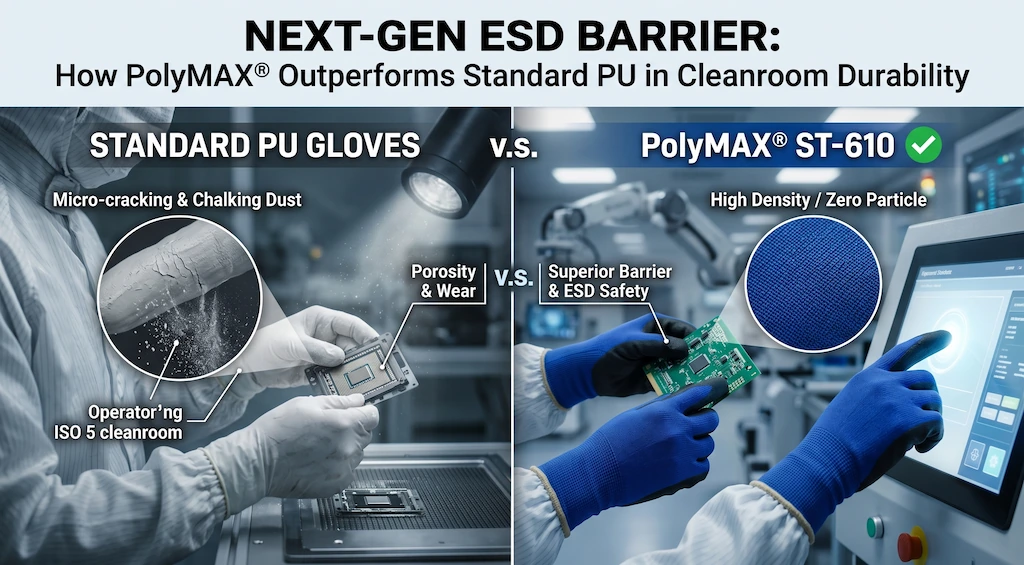
Evaluating polymax esd coating vs standard pu has become a critical engineering priority in advanced semiconductor packaging, high-generation OLED display panel manufacturing, and ISO Class 5–6 controlled cleanroom operations where contamination control directly governs yield. For a long time, traditional solvent-based polyurethane (PU) gloves have been widely used as basic anti-static protective gear on electronic manufacturing services (EMS) production lines worldwide. However, in actual production, this type of protective gear frequently reveals deep-seated defects in the polymer material: the organic solvent dimethylformamide (DMF), which remains from the synthesis process, is highly likely to cause skin allergies and emit unpleasant odors; under prolonged bending and flexing, as well as scraping against the sharp edges of surface-mount technology (SMT) components, the polymer network undergoes accelerated degradation and embrittlement, causing microcracks to continuously release large amounts of microscopic powder particles (chalking) invisible to the naked eye. This directly leads to airborne particle contamination (APC) and liquid leaching particle contamination (LPC) exceeding permissible limits, and may even result in trace silicone oil residue contamination, causing irreversible electrochemical corrosion and poor electrical contact in expensive bare chips and optical components.
To completely break the chain of micro-contamination caused by traditional solvent-based polymers, the field of polymer anti-static protection has ushered in an engineering-level technological advancement. The water-based PolyMAX® modified resin, based on a solvent-free, DMF-free green polymerization system, has emerged to address these challenges. By constructing a three-dimensional polymer network with higher cross-linking density within the molecular backbone, it not only completely eliminates the risks associated with solvent volatiles and silicone oil leaching from mold release agents but also establishes a dense physical barrier against micro-mechanical wear and particle shedding (Anti-Flaking).
As a flagship application of this material innovation, the ST-610 Antistatic PolyMAX® glove—featuring an ultra-dense 18-gauge nylon and conductive carbon fiber composite liner—sets a new standard for microscopic particle dissipation control, instantaneous touchscreen responsiveness, and continuous electrostatic discharge performance in harsh environments. In complex and high-precision modern electronics assembly environments, the scientific selection of gloves should not be limited to cost considerations for a single workstation; rather, it must be evaluated within the broader framework of the entire industrial manufacturing ESD protection system. To gain a thorough understanding of the complete spectrum of ESD protection technologies—including different thread counts, coating types, and compliance levels—please refer to the full product catalog of ESD Safe & Antistatic Gloves for electronics manufacturing protective gear.
Chemical Synthesis: Water-Based PolyMAX® vs. Solvent-Borne DMF PU
In cleanroom and ESD-sensitive work environments, the macroscopic mechanical performance and anti-flaking lifespan of glove surface coatings are fundamentally determined by the underlying polymerization and synthesis mechanisms. The differences between traditional solvent-borne polyurethanes and next-generation modified water-based polymers during the phase transition stage of the polymerization reaction directly define the physical boundaries between the two material types in terms of structural density, aging resistance thresholds, and chemical purity.
The Structural Degradation of Solvent-Formed Polyurethane
The dipping process for traditional industrial anti-static gloves generally relies on solvent-based polyurethane resin systems, which use N, N-dimethylformamide (DMF) as the primary organic solvent carrier. In such processes, after the polyester or nylon fabric liner is immersed in the solvent-based coating solution, it undergoes phase inversion extraction and curing via an aqueous solidification bath:
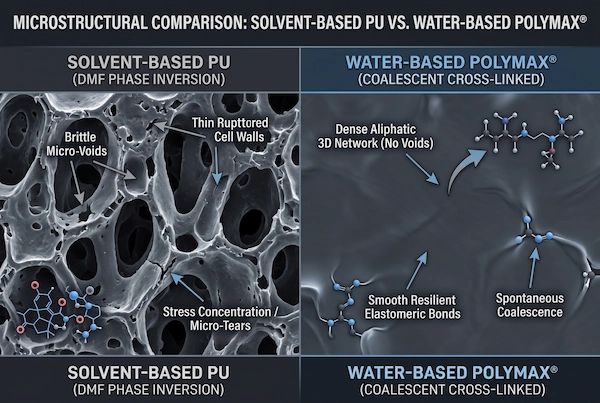
Formation of Brittle Micro-Voids: Within the solidification tank, water molecules undergo intense counter-directional diffusion and displacement with the DMF solvent. Since the rate at which solvent molecules diffuse outward is far greater than the rate at which polymer chains rearrange and settle, a large number of sponge-like, finger-like, through-holes irreversibly form within the coating film. The walls of these voids, formed by solvent evaporation and extraction, are extremely thin and uneven in thickness, creating natural points of mechanical stress concentration at the microscopic level;
Polymer chain breakage induced by thermal stress and mechanical shear: During operations on SMT production lines, the continuous heat dissipation from operators’ hands (skin surface temperature ranging from 34°C to 36°C) combined with repetitive bending motions creates a dynamic, low-frequency thermomechanical fatigue environment. Because the main-chain structure of solvent-based aromatic PU resins is relatively rigid, repeated tensile and compressive stresses rapidly generate microscopic fatigue cracks at the weak, uneven edges of the microporous structure, causing mechanical-chemical scission of the polyurethane carbamate linkages;
Chalking/Dusting Failure: Fragments of low-molecular-weight polymer that break off and flake away cannot be self-contained within the network. As the workpiece is pinched by fingers at high frequency, the adhesive surface rapidly loses its resilience and undergoes surface chalking. These detached fine resin particles detach directly from the adhesive matrix, becoming a source of lethal airborne particles in cleanroom environments that are imperceptible to the naked eye.
Aqueous PolyMAX® Polymerization Mechanism
To eliminate the structural brittleness and solvent evaporation defects associated with solvent-based resins, PolyMAX® employs a fundamentally different, fully water-based modified polymer synthesis pathway, using green chemical engineering to reconstruct the molecular topology of the coating:
Solvent-Free & DMF-Free Mechanism: PolyMAX® eliminates traditional volatile organic solvents (VOCs) such as DMF and toluene, instead utilizing ultrafine polymer particles to form a homogeneous colloidal dispersion directly in a deionized water phase. During the immersion, drying, and curing process, water evaporates gradually and in a controlled manner. At the microscopic level, the polymer particles interpenetrate and fuse under capillary pressure to form a continuous phase, eliminating the finger-like voids and honeycomb-like brittle pore walls caused by rapid solvent extraction, thereby forming a dense and continuous polymer protective layer;
Three-Dimensional Aliphatic Cross-Linked Network: This modification system incorporates polyfunctional cross-linking agents, promoting the formation of a dense, covalently cross-linked topological architecture between aliphatic polymer main chains. This highly cohesive cross-linked network endows the coating with exceptional elastic recovery modulus and tear-resistant flexural toughness; even when subjected to extreme high-frequency repeated flexing, its molecular segments remain capable of cooperatively dissipating mechanical shear stress, thereby eliminating the possibility of microcrack propagation and particle flaking at the physical level;
Environmental and Biocompatibility Compliance (OEKO-TEX Standard 100): Since the entire synthesis process strictly excludes the use of dimethylformamide and heavy-metal catalysts, the finished coating layer is not only completely odorless but also eliminates any secondary adsorption contamination of wafers and chip interfaces by volatile organic compounds. This material has strictly passed the internationally recognized OEKO-TEX Standard 100 certification for textile ecology and skin compatibility, proving that it is absolutely hypoallergenic and physiologically inert. Even when worn directly against the skin for full shifts under high workloads by front-line assembly personnel, it will not induce occupational health risks such as contact dermatitis or chemical erythema.
Cleanroom Particulate Containment: Eliminating Micro-Chalking
In ultra-clean, controlled environments, the release of fine dust particles is directly linked to defect rates in chip lithography and dead-pixel rates in display panels. While traditional gloves may meet basic particulate testing standards when at rest, once put into actual production, the operator’s continuous pinching, aligning, and bending motions subject the coating surface to cyclic shear stress, causing microscopic cracks within the material to evolve into micro-chalking.
Micro-Crack Propagation Under Dynamic Flex Cycles
On an electronics assembly line, a skilled worker performs an average of several thousand micro-flexion and extension movements with their fingers during a single shift. When the cumulative number of dynamic flexing cycles exceeds the critical threshold of 5,000, the fatigue behavior of different polymer coatings reaches a fundamental turning point:
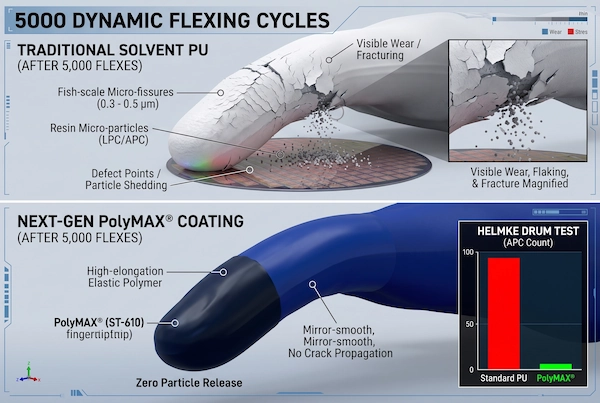
Microcracks in traditional solvent-based PU destabilize and propagate: Due to the formation of numerous spongy micropores with uneven wall thicknesses during the curing process, tensile strain causes stress concentration at the weak points of the pore walls when the finger joints are repeatedly flexed. After 5,000 cycles, submicron-scale microcracks begin to form at the edges of the micropores; as stress is repeatedly applied, these microcracks interconnect laterally, resulting in fish-scale-like micro-fissuring on the coating surface. Under macroscopic frictional shear forces, the cracked layer gradually loosens, leading to extensive surface peeling (macro-peeling) and the release of fine powder;
PolyMAX®’s Viscoelastic Self-Healing and Stress Dissipation: In contrast, the PolyMAX®-modified water-based system features an extremely high molecular crosslinking density and an excellent viscoelastic recovery modulus. Upon instantaneous compression or tension, its long-chain polymers can absorb and uniformly disperse external mechanical energy through conformational rearrangement, thereby preventing the concentration of strain energy at localized surfaces. Even after tens of thousands of cycles of high-frequency, intense flexural cycling, the coating film maintains a smooth, continuous, mirror-like, and resilient interface, completely eliminating issues such as surface hardening, cracking, and fatigue-induced spalling.
APC and LPC Airborne/Liquid Particle Testing
To quantify the risk of particle release during dynamic operations, a dual testing system comprising airborne particle count (APC) and liquid particle count (LPC) must be implemented and rigorously calibrated:
Helmke Drum Dynamic Particle Release Calibration: In accordance with the IEST-RP-CC003.4 cleanroom consumables testing procedure, gloves are placed in a sealed rotating drum operating at 10 revolutions per minute, and a laser particle counter is used to measure the concentration of particles released into the air in real time. Test results show that under ISO Class 5 (Class 100) conditions, after 2 hours of drum abrasion, the release rate of airborne particles greater than or equal to 0.5 micrometers from traditional solvent-based PU gloves rose sharply to several hundred particles per cubic foot; in contrast, PolyMAX®-coated gloves, featuring a dense cross-linked structure, maintained their APC release of particles ≥0.5 micrometers within the lower limit of detection range, demonstrating excellent low-particle-emission stability;
Ultrapure Water LPC Extraction and Ion Elution: In ultrapure water liquid leaching (LPC) testing simulating wet cleaning, traditional PU coatings exhibited a significantly higher total concentration of microscopic particles ≥0.2 micrometers in the leachate due to unreacted free substances trapped in pores and surface flaking; Thanks to its solvent-free synthesis and ultra-high polymer purity, PolyMAX® exhibits LPC leaching levels significantly lower than those of conventional polyurethane gloves;
Preventing chip short circuits and panel defects: In modern 8.5-generation and higher OLED glass substrate handling and flip-chip transfer stations, even a single resin particle as small as 0.3 micrometers in diameter that falls onto a film metallization mask (FMM) or in a precision wiring area can directly cause short circuits in thin-film transistor (TFT) patterns or permanent dark spots on the panel. PolyMAX®’s ultra-pure particle suppression capability eliminates the risk of entire panel scrapping caused by powdering of glove coatings at the source, establishing a physical dust barrier for high-generation display modules and semiconductor packaging.
Interface Purity: Zero-Silicone and Zero-Residue Optical Surface Protection
In the bonding of high-precision optical components, the assembly of in-vehicle display modules, and semiconductor micro- and nano-interconnection processes, process failures often stem not from coarse dust particles visible to the naked eye, but from microscopic chemical contamination at the single-molecule level at the interface. Silicone additives, commonly included in traditional gloves during dip-coating or demolding processes, cause molecular migration the moment the hand lightly touches the workpiece. This directly disrupts the physicochemical equilibrium at micro- and nano-scale interfaces, leading to costly, systemic scrapping of components.
The Failure Cost of Silicone Oil Migration
To improve demolding yield and reduce adhesion to the rubber surface, traditional polyurethane gloves often incorporate silicone lubricants and plasticizers, such as polydimethylsiloxane (PDMS), into their formulations. These small-molecule silicone oils not only do not participate in the cross-linking of the resin backbone but also possess extremely low surface tension and a strong ability for spontaneous surface diffusion:
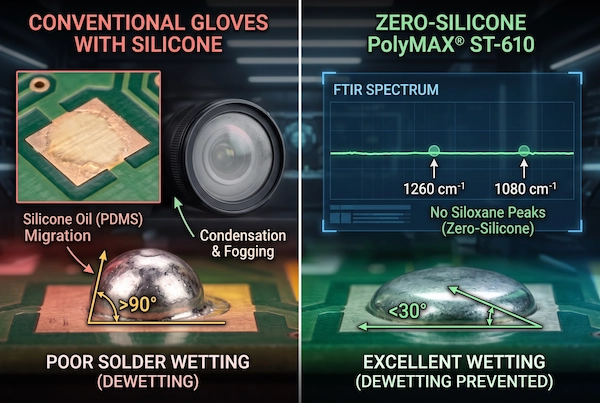
Dewetting at the interface between copper foil pads and wire bonding: When an operator’s finger comes into contact with exposed copper on a printed circuit board not covered by a solder mask, electroless nickel-in-gold (ENIG) pads, or the stress zone of a wire bond, trace amounts of free siloxane molecules rapidly spread across the metal surface, forming a continuous hydrophobic molecular film. During subsequent high-temperature reflow or wave soldering processes, this insulating silicone film prevents the flux from forming an eutectic alloy with the metal, causing the dynamic wetting angle of lead-free solder paste to increase sharply from the normal value of less than 30 degrees to over 90 degrees. This results in widespread cold solder joints, false solder joints, and catastrophic solder ball detachment (dewetting);
Lens Fogging in Optical Panels and Camera Lenses: In the assembly of in-vehicle central control displays, curved OLED cover glass, and precision optical camera modules (CCM), silicone oil residues pose a particularly critical hazard. Trace amounts of silicone molecules transferred to glass substrates not only cause microbubbles and delamination at the optical clear adhesive (OCA/OCR) bonding interface but also tend to thermally decompose and volatilize in high-temperature automotive environments. These substances then condense and deposit on the inner surfaces of optical lens assemblies, forming permanent optical haze, which leads to a comprehensive degradation of the optical resolution (MTF) of the entire optical imaging module.
Certified Silicone-Free Formulation in Modern EPAs
To eliminate the corrosive effects of silicone microcontaminants on cutting-edge manufacturing processes, modern Electrostatic Protection Areas (EPAs) impose stringent chemical purity requirements on polymer protective gear.
The PolyMAX® coating featured in ST-610 completely reengineers the processing aid system from the very source of molecular synthesis:
A fully inorganic silicone-free formulation system (Certified Silicone-Free): Throughout the entire manufacturing process—including emulsion polymerization, dip molding, water washing, and thermal vulcanization—the addition of any organosiloxane release agents, slip agents, or externally added silicone-based plasticizers is strictly prohibited. Relying on the unique surface self-lubrication and low-adhesion topological structure inherent to PolyMAX®’s self-crosslinking polymers, smooth mold release is achieved without the need for any silicone oil medium, ensuring the coating itself is 100% silicone-free (Silicone-Free);
Molecular-Level Zero-Residue Verification via Fourier Transform Infrared Spectroscopy (FTIR): In accordance with ASTM E595 cleanroom standards and the stringent requirements for microelectronic packaging, the glove surface was subjected to ultrasonic extraction using n-hexane or dichloromethane solvents, and the concentrated extract was analyzed via full-spectrum scanning with a high-precision Fourier transform infrared spectrometer (FTIR). Test results show that the characteristic absorption peaks of silicones—including those at 1260 cm^-1 (Si-CH3 symmetric bending vibration), 1080 cm⁻¹ to 1020 cm⁻¹ (Si-O-Si backbone stretching vibration), and 800 cm⁻¹—all characteristic absorption peaks of organosilicon compounds—were completely flat, with no signals from siloxane molecules detected, confirming the absence of chemical migration risk;
Ensuring Interface Purity for Semiconductors and High-Generation Display Modules: By eliminating any exogenous additives capable of migration, ST-610 ensures that contact surfaces maintain absolute surface free energy equilibrium and chemical inertness when handling bare wafers, OLED flexible displays, and automotive LiDAR optical windows—all of which are extremely sensitive to alignment and are handled directly by hand—thereby establishing a molecular-level clean barrier for high-yield production.
Comprehensive Engineering Specification Matrix
In the material qualification system for semiconductor packaging and testing and precision surface-mount technology (SMT) production lines, the qualification assessment of protective gear must be based on reproducible, standardized physical and electrical test data. To address the performance differences between modified water-based PolyMAX® gloves and traditional dimethylformamide (DMF)-based solvent-cured polyurethane (PU) gloves, the engineering team can use the following comprehensive engineering parameter matrix to visually compare the objective differences between the two materials in terms of chemical synthesis purity, mechanical protection levels, thermal sensitivity, ergonomics, and electrostatic dissipation capabilities.
Comparative Material & Compliance Matrix
| Engineering Metric | Traditional Solvent-Based PU (Standard Solvent PU) | Modified Water-Based PolyMAX® (ST-610) PNG | Testing Protocol |
| Solvent Carrier | Dimethylformamide (DMF solvent molding; risk of residual volatiles) | 100% Pure Water-Based Dispersion Polymer (Solvent/DMF-Free, Eco-Friendly) | GC-MS Analysis of Solvent Residues Using Gas Chromatography-Mass Spectrometry |
| Liner Gauge | 13-gauge polyester/carbon fiber coarse knit (single-layer thickness approximately 0.85 mm) | 18-Gauge Ultra-Dense Seamless Nylon/Carbon Fiber Weave (Single-Layer Thickness: Approx. 0.52 mm) | Industrial-Grade Precision Fabric Thickness Gauge and High-Magnification Visual Inspection |
| Martindale Abrasion | 500 to 1,000 abrasion cycles (meets EN 388 Level 1 abrasion limit) | 2,000+ abrasion cycles (meets EN 388 Level 3 extremely high abrasion resistance standard: 3121X) | EN 388:2016 Practical Testing for Protection Against Mechanical Hazards |
| Thermal Resistance and Flame Retardancy | No certified heat resistance or flame retardancy; tends to soften and stick to workpieces at high temperatures | Certified to EN 407 (X1XXXX) for protection against contact heat, withstanding short-term high temperatures | EN 407:2020 Testing for Protection Against Thermal Hazards |
| Silicone Content | Risk of trace migration of silicone release agents and plasticizers, which can cause solder pad rejection | Strictly compliant with Zero-Silicone certification (zero silicone residue, eliminating chemical contamination) | Fourier Transform Infrared Spectroscopy (FTIR) and Droplet Contact Angle Measurement |
| HMI Compatibility | The adhesive layer blocks electrical charge; requires high mechanical pressure to press; slow touch response | Full-finger micro-capacitive touchscreen support (instant touchscreen response) | Response Delay and Microampere-Level Current Sensitivity Testing for Industrial Capacitive Touchscreens |
| Point-to-Point Resistance (Rp) | 1.0×10⁶ to 1.0×10⁸ ohms (meets the electrostatic dissipative range when new) | 1.0×10⁶ to 1.0×10⁸ ohms (long-term stability maintained within the optimal dissipation range) | ANSI/ESD STM11.11 Standard Heavy-Hammer Electrode Method Testing |
| Vertical Resistance (Rv) | Susceptible to significant fluctuations in workshop relative humidity; tends to drift toward an insulating state during dry winter months | Strictly complies with the nominal technical requirements of EN 16350, with stable impedance under ultra-low humidity conditions | EN 16350 (Testing Procedure for Pre-conditioning at 25% RH Limit Low Humidity) |
Synthesis of Engineering Specifications
A cross-comparison of the engineering data matrix presented above reveals that the technological leap between PolyMAX® and traditional solvent-based PU is not merely a fine-tuning of individual mechanical parameters, but rather a systematic upgrade of the entire material chemistry system:
Positive decoupling of mechanical resistance and microscopic cleanliness: In traditional PU materials, “abrasion resistance” and “prevention of dusting and chipping” are often irreconcilable engineering contradictions. To increase the abrasion resistance cycles of traditional PU coatings, it is typically necessary to increase coating thickness or add fillers; however, this causes the coating film to stiffen under flexural stress, thereby accelerating the propagation of flexural cracks and the release of dust. The modified water-based PolyMAX® coating, with its dense three-dimensional aliphatic polymer network, directly increases the Martindale abrasion resistance to over 2,000 cycles (meeting EN 388 Level 3 standards), making it more than twice as scratch-resistant as traditional solvent-based gloves. While resisting abrasion from the sharp edges of PCBs, its elastic polymer network firmly traps resin debris, achieving both doubled abrasion resistance and ultra-clean, zero-dust performance;
Electrostatic dissipation continuity in extremely dry environments: Under harsh conditions—such as northern winters or cleanrooms with constant temperature and humidity, where relative humidity (RH) drops as low as 20% to 25%—conventional PU gloves rely on absorbing trace amounts of moisture from the air to aid in charge dissipation. As a result, their vertical resistance (Rv) is highly prone to a sharp rise, exceeding 1.0×10⁹ ohms and even becoming insulating. In contrast, the ST-610, featuring an 18-gauge ultra-dense carbon fiber skeleton and a solvent-free covalent conductive interface, eliminates its reliance on environmental moisture and electrolytes from human sweat for conductivity. It strictly complies with the testing specifications of the EN 16350 standard under the extreme low-humidity condition of 25% RH, ensuring that the dynamic charge dissipation path—from the coated contact surface to the ground terminal—remains unobstructed at all times;
A comprehensive balance between human-machine interaction efficiency and process safety: Production workstations in modern electronics factories are highly integrated with human-machine interface (HMI) industrial PCs, digital feeders, and mobile tablets. Traditional PU gloves, due to their thick insulating rubber layers, often require operators to remove their gloves to tap touchscreens, thereby posing significant risks of electrostatic discharge and contamination from bare-hand oils. Equipped with a micro-capacitive conductive system, the ST-610 eliminates the need for workers to repeatedly put on and take off gloves when switching between human-machine interaction and hardware assembly. It simultaneously meets the EN 407 standard for contact heat protection and enables touch-screen input, completely eliminating process control vulnerabilities caused by non-compliant operations.
Substrate Synergy: 18-Gauge Ultra-Thin Seamless Knitted Carbon Liner
The mechanical and antistatic performance of a polymer coating cannot exist in isolation from the underlying fiber substrate. If the liner fabric is too thick or has a sparse gauge, even a topcoat resin with the highest elasticity will severely dull the fingertip’s sensory perception during precision work. The ST-610 deeply integrates a modified water-based PolyMAX® resin with an ultra-high-gauge knitted framework, creating an engineered synergy where the coating and fibers complement each other.
Gauge Density and Tactile Transmissibility
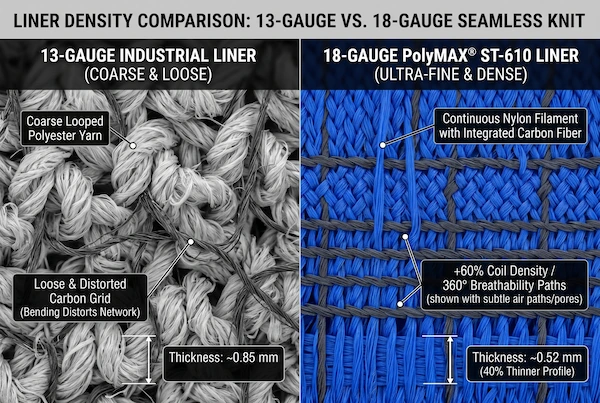
In the field of precision electronics assembly, a glove’s gauge directly determines the density of the fiber loops and the overall thickness tolerance. For many years, the industry has relied on 13-gauge inner liners. Their larger loop length and coarser yarn density typically result in a single-layer thickness of 0.85 mm or more for the finished gloves, inevitably creating a mechanical damping layer on the fingertips:
The transition from 13-gauge coarse loops to 18-gauge ultra-dense filaments: The ST-610 abandons conventional coarse-denier synthetic yarns and fully adopts an 18-gauge ultra-fine continuous nylon filament and conductive carbon fiber composite knitting system. Per square inch, the 18-gauge knitting technology increases loop density by more than 60%, resulting in a tight and even fiber arrangement that physically eliminates the surface irregularities—such as protrusions and depressions—typical of coarse-gauge liners;
Tactile Force Transmission Reduced by Approximately 40%: Thanks to the ultra-dense 18-gauge knit structure, the overall thickness of the ST-610 liner is strictly reduced to approximately 0.52 mm, significantly reducing the volumetric thickness by about 40% compared to traditional 13-gauge anti-static gloves. This ultra-thin design virtually eliminates shear slippage between the glove’s inner lining and the skin, allowing workers to clearly perceive micron-level workpiece contours and rebound sensations through their fingertip mechanoreceptors when assembling 0402 resistors and capacitors or fastening clips on ultra-fine coaxial cables, thereby achieving tactile force control comparable to that of bare hands;
High-strength nylon filaments ensure puncture resistance: the significant reduction in thickness does not come at the expense of physical strength. The use of high-purity continuous filament nylon (CFN) ensures that its tensile strength per filament and the interlocking force between fibers are far higher than those of ordinary polyester staple fibers. This not only completely eliminates fiber breakage and pilling during stretching but also endows the gloves with extremely high puncture resistance and burst strength, ensuring that fibers do not fray or break even during frequent contact with the sharp edges and corners of PCBs.
Microclimate and 360-Degree Breathability
In addition to tactile sensitivity, the inner liner’s weave topology directly regulates the thermal and humidity microenvironment inside the glove. In a cleanroom environment with constant temperature and humidity, the retention of heat and moisture from sweat on the hands is a major cause of operator fatigue and electrolyte loss:
360-Degree Microporous Air Permeability and Convection (360° Air Permeability): The PolyMAX® coating on the ST-610 precisely constructs an interconnected open-cell structure during the foam molding process. Combined with the ultra-fine microporous gaps of the 18-gauge liner, this forms continuous micro-convection air channels covering both the palm and the back of the hand. As the hand flexes and extends, it acts like a miniature air pump, continuously expelling trace amounts of moisture secreted by sweat glands through three-dimensional breathable pores. This prevents the formation of a closed, high-humidity “greenhouse effect” on the palm, keeping palm humidity consistently within a dry and comfortable range throughout the workday;
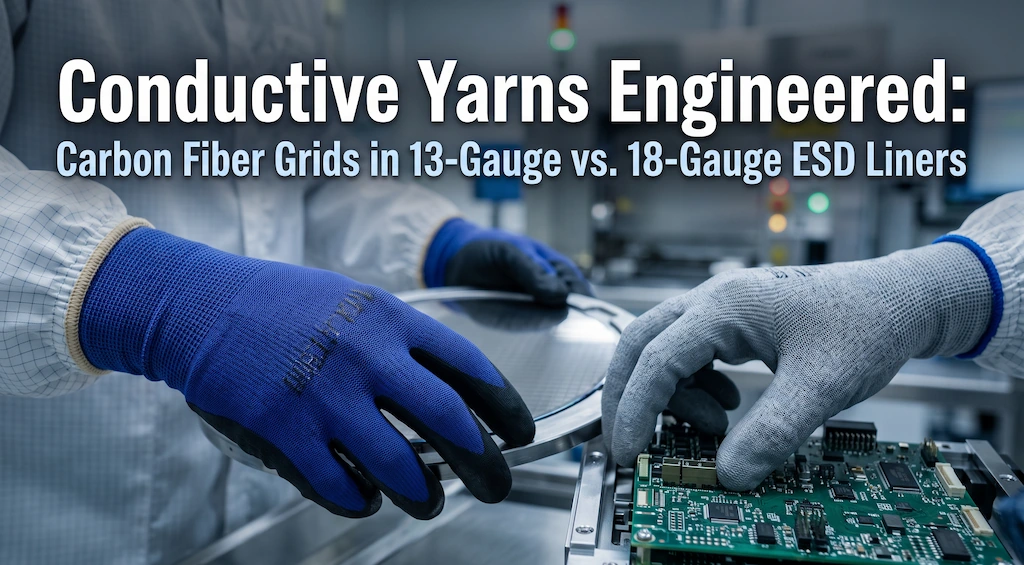
Stable Conductive Pathways and Fiber Spacing Control: The deformation patterns of carbon fiber grids in high- and low-gauge fabrics under mechanical tension have been thoroughly documented in the technical paper Conductive Yarns Engineered: Carbon Fiber Grids in 13-Gauge vs. 18-Gauge ESD Liners. Compared to 13-gauge coarse-knit fabrics, which are prone to localized stretching and deformation of the conductive grid—resulting in wider spacing—when joints are bent, the 18-gauge ultra-dense knitting technology securely locks the conductive carbon fiber filaments within the nylon lattice at a more compact, micro-spacing. Even when the fingers are flexed to their limit, the conductive carbon grid maintains a highly continuous three-dimensional pathway, ensuring that vertical resistance remains locked within controlled electrostatic dissipation thresholds over the long term without relying on conductivity from electrolytes in hand sweat.
Mechanical Longevity: EN 388 Abrasion and Line-Level TCO
In procurement decisions at large-scale electronic manufacturing services (EMS) facilities, gloves are often simply categorized as low-value, low-unit-cost consumables. However, if protective gear has an insufficient abrasion-resistant lifespan under high-frequency friction conditions, it not only leads to frequent daily replacement but also—due to localized coating wear exposing the base material—can trigger potential electrostatic breakdown and foreign object shedding, thereby increasing the overall process defect rate. The ST-610, featuring an abrasion-resistant network derived from modified water-based PolyMAX® resin, redefines the Total Cost of Ownership (TCO) evaluation model in terms of mechanical durability and process compatibility.
Wear Resistance and Light Oil Repellency
In modern SMT assembly and testing workstations, operators are constantly exposed to burr-laden metal stampings, micro-heatsinks, and the edges of glass-fiber PCBs after V-cut separation. These hard, rough surfaces subject the polymer coating to continuous micro-cutting and abrasion:
Martindale High-RPM Abrasion Resistance Certification: In tests conducted by a third-party laboratory in accordance with the EN 388:2016 standard for protection against mechanical risks, traditional solvent-based polyurethane gloves typically exhibited coating wear-through and liner exposure after 500 to 1,000 abrasion cycles, barely meeting the Level 1 abrasion rating; In contrast, the ST-610, featuring the PolyMAX® coating, withstood over 2,000 abrasion cycles under continuous rotational pressure from coarse sandpaper, successfully achieving Level 3—the highest abrasion resistance rating—under the EN 388 3121X certification. Its dense, aliphatic covalently cross-linked topology allows the coating to maintain structural integrity when subjected to lateral shear friction, eliminating the “edge peeling” and “rapid wear through at the fingertips” commonly seen in conventional PU coatings;
Resistance to Light Industrial Oils: In hybrid manufacturing processes that transition from precision machining to SMT assembly, trace amounts of stamping lubricants, cutting fluid volatiles, or rust-preventive oil films often remain on component surfaces. Traditional PU coatings are highly prone to swelling and softening upon contact with these oils, causing the originally dense polymer micropores to collapse and lose their gripping friction. The PolyMAX® modification system demonstrates excellent resistance to light oils. Oil molecules cannot penetrate the cross-linked network, which not only effectively prevents resin swelling and softening but also ensures a stable anti-slip gripping force even under conditions of minimal oil exposure, thereby preventing large circuit boards from slipping, falling, and being damaged.
Total Cost of Ownership (TCO) in High-Volume EMS Lines
If compared solely based on unit prices for single or double purchases, traditional solvent-based PU gloves appear to have an initial cost advantage. However, when production downtime losses, scrap and replacement rates, and process yield are factored into the total cost of ownership (TCO) calculation across the entire lifecycle, the cost-effectiveness of high-abrasion-resistant modified gloves becomes evident:
The frequency of glove changes extends from “one change per shift” to “service across shifts”: In continuous-operation workshops employing thousands of workers, standard PU gloves—due to rapid powdering and tearing at the fingertips—typically require operators to discard and replace them at the end of every 8-hour shift; in particularly demanding workstations, two pairs may need to be replaced per shift; In contrast, the ST-610, with its Level 3 abrasion resistance reserve and anti-powdering properties, can reliably serve continuously across multiple production cycles—spanning multiple shifts—while ensuring that dust-free particle and static dissipation performance metrics remain unchanged. This directly reduces the total consumption of production line consumables by more than 50%, not only significantly lowering the company’s hidden costs related to warehousing, material issuance and distribution, and industrial solid waste disposal, but also substantially reducing working capital tied up in procurement;
Full-finger touchscreen interaction eliminates the risk of non-compliant operations: With the widespread deployment of Industry 4.0 digital dashboards, SMT smart feeders, human-machine interfaces, and handheld inspection tablets in modern factories, operators frequently need to switch between physical assembly tasks and touchscreen input. Traditional anti-static gloves, due to uneven coating impedance or thickened insulation layers, cannot accurately trigger industrial projected capacitive touchscreens (PCAP), forcing workers to frequently remove their gloves to tap the screen. This process not only causes multiple interruptions in the workflow per hour (reducing labor productivity) but also, the moment the gloves are removed, exposes precision components to the direct risk of contact with oils from bare hands and static electricity from the body. The ST-610 features sensitive micro-capacitive touch screen sensing capabilities, allowing operators to tap and swipe on devices smoothly without removing their gloves. This eliminates the risk of batch defects caused by improper glove removal and establishes a closed-loop workflow for EMS manufacturing that combines high efficiency with high yield rates.
Electrical Verification: Charge Bleed Stability Under Extreme Low Humidity
In the engineering management of electrostatic discharge-sensitive areas (EPAs), the evaluation of the electrical performance of anti-static gloves must not rely solely on static compliance under normal temperature and humidity conditions. Extremely dry climatic conditions—such as northern winters or environments with continuous, intense convective dehumidification in cleanrooms—often serve as the litmus test for the conductive continuity of polymer coatings. Traditional, low-end gloves rely on absorbing water molecules from the air or electrolytes from the operator’s sweat to maintain a conductive path. Once the relative humidity (RH) drops sharply, impedance rises exponentially out of control, potentially causing irreversible latent electrostatic breakdown (Latent ESD Breakdown) in electronic devices.
Compliance Benchmarks Across EN 16350 and ANSI/ESD S20.20
Among the leading international anti-static compliance frameworks, the European anti-static glove standard EN 16350:2014 and the U.S. standard ANSI/ESD S20.20 form a rigorously complementary set of testing benchmarks:
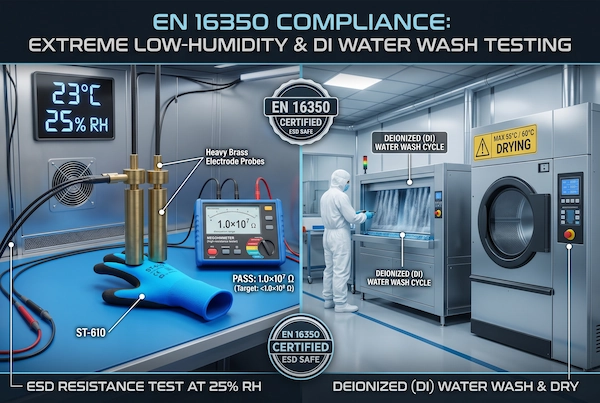
EN 16350 Vertical Resistance Threshold at Extremely Low Humidity (25% RH): The EN 16350 standard is widely recognized as one of the industry’s most stringent ESD testing protocols. It mandates that test specimens undergo rigorous pretreatment in an extremely dry environment—at a temperature of 23°C and relative humidity of 25%—prior to vertical resistance (Rv) measurement. The standard stipulates that the upper limit for vertical resistance at any point on the glove must be less than 1.0×10⁸ ohms. In such extremely dry environments, the vast majority of ordinary polyurethane gloves rapidly approach an insulating state exceeding 1.0×10⁹ ohms due to dehydration of the coating polymer, whereas the ST-610, thanks to its water-based PolyMAX® modification system and high-density conductive mesh, fully complies with EN 16350 certification and maintains a stable discharge path to ground even under conditions of direct exposure to dry airflow;
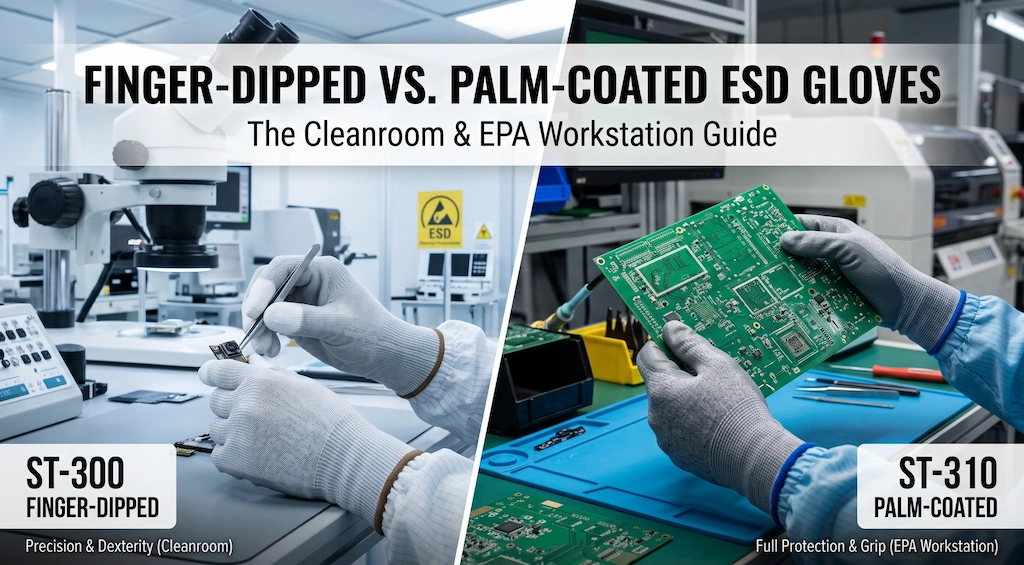
A protective architecture that comprehensively covers the hand’s electrical circuit: the ESD gloves, together with the operator’s body and a grounded wrist strap, form a comprehensive static discharge circuit at the operating terminal. For an analysis of how the scope of glove coating immersion affects the geometry of charge discharge pathways, please refer to the detailed discussion in the previous article, Finger-Dipped vs. Palm-Coated ESD Gloves. The ST-610 features a fully coated palm design (Palm Coated), with a polymer wear-resistant barrier extending smoothly from the fingertips to the lower edge of the palm. This ensures that when operators support large wafer cassettes with their entire palms or handle electrostatic-sensitive components, all outer contact surfaces of the hand are within a controlled, uniform dissipation network, completely eliminating the risk of localized conductive blind spots and induced electrostatic charge concentration.
Consistent Ground Continuity Without Electrolyte Dependence
Conventional anti-static gloves often rely on hygroscopic additives or on sodium and potassium electrolyte ions released from workers’ sweat to reduce surface resistance. This “pseudo-conductive” mechanism poses a significant risk of yield fluctuations in actual industrial manufacturing:
Inherent Conductive Channels in an Ultra-Dense, Continuous Carbon Fiber Skeleton: The ST-610 fundamentally eliminates chemical dependence on sweat from the skin’s surface; its antistatic capability is entirely built upon a continuous, bicomponent conductive carbon fiber network woven into an 18-gauge high-density composite liner. Thanks to the high needle-hole density achieved by the 18-needle micro-weaving process, the carbon fiber coils are distributed closely and equidistantly at the microscopic level, forming a high-density, three-dimensional microcurrent conduction grid within the fabric substrate. Once a charge is transferred from an external contact point to the glove’s surface, it is rapidly conducted longitudinally through the nanoscale conductive phase to the liner’s skeletal structure and then safely dissipated into the grounding system; the entire charge dissipation process is entirely physical and instantaneous;
Stable performance is maintained within the optimal dissipation range throughout the entire work shift: during actual continuous assembly operations lasting more than 8 hours, the ST-610’s point-to-point resistance (Rp) and surface resistance (Rs) consistently remain within the optimal electrostatic dissipation range of 1.0×10⁶ to 1.0×10⁸ ohms. This range not only ensures the elimination of electrostatic transients within microseconds (decay time less than 0.1 seconds), preventing spark discharges caused by charge accumulation; but it also eliminates the risk of transient overcurrent breakdown that occurs when resistance falls below 1.0×10⁵ ohms, providing round-the-clock, drift-free, intrinsically safe protection for today’s highly sensitive advanced-node integrated circuits (ICs), giant magnetoresistance (GMR) heads, and optoelectronic sensors.
Target Workstation Allocation for High-Yield Assembly Lines
In modern electronic manufacturing systems, anti-static protective gear is by no means a “one-size-fits-all” consumable procured uniformly across the entire factory. There are significant disparities among different workstations in terms of cleanliness class, mechanical wear resistance, and sensitivity to chemical purity. Based on the engineering characteristics of ST-610—including particle control, zero silicone oil leaching, and resistance to wear and oil—production line engineering teams can precisely match the following three demanding workstations requiring high yield rates:
Advanced Semiconductor & Memory Module Packaging
In wafer-level packaging (WLP), flip-chip bonding, and high-density memory module (DDR5/HBM) packaging processes, microscopic contamination and electrostatic transients are the primary causes of wafer failure:
Safe Transfer of Wafer Cassettes and Carriers: At the manual transfer point between the cleanroom yellow-light zone and the Automated Material Handling System (AMHS), operators must manually transfer quartz or polyetheretherketone (PEEK) cassettes filled with uncut wafers. The ST-610 relies on the micron-level finger sensitivity provided by its 18-pin high-density inner liner to ensure uniform and stable force feedback when gripping the cassette handle, eliminating the risk of an entire batch of wafers shattering due to bulky gloves slipping off;
Packaging and Testing Sorting and IC Substrate Particle Protection: At the discharge port of the sorter and the feed area of the substrate mounting machine, the pitch between exposed pins is typically less than 0.4 mm. With traditional PU coatings, microscopic resin particles shed during repeated loading and unloading of trays can easily become embedded in the gaps of ball grid arrays (BGAs), causing short circuits due to conductive foreign particles. Thanks to the anti-chalking molecular network of its modified water-based PolyMAX® coating, the ST-610 prevents particle shedding when in contact with ultra-thin organic substrates, effectively safeguarding high-yield production of advanced packaging and testing chips.
OLED, Micro-LED, and Optical Sensor Lamination
The manufacturing of display modules and precision optical lenses involves processes that are highly sensitive to chemical traces, with a “zero-tolerance” standard for residual oils and release agents at interfaces:
Optically Clear Adhesive (OCA) Lamination and Cover Glass Alignment: During the curved lamination of flexible AMOLED panels, micron-level transfer of Micro-LEDs, and the assembly of large-format triple-screen automotive displays, operators must manually assist with the peeling of large-format protective films and the precise positioning of edges. The ST-610 holds strict Zero-Silicone certification, which prevents any migration or diffusion of polysiloxane molecules when in contact with ultra-thin cover glass and optical adhesive surfaces. This eliminates, at the physical source, issues such as micro-bubbles during lamination, edge delamination, and interface wetting failure caused by silicone oil contamination;
Precision Assembly of In-Vehicle Camera Modules (CCM): At assembly stations for high-definition in-vehicle lenses used in autonomous driving (ADAS) and LiDAR lens assemblies, even trace amounts of chemical residue or silicone oil vapors can volatilize into the interior of the lenses during high-temperature reflow soldering, causing light scattering and haze. The ST-610’s fully water-based, solvent-free, and chemically pure formulation ensures that even if operators directly touch the outer edge of the lens barrel or the infrared cut filter (IRCF) holder with their fingers, no latent chemical fingerprints will be left on the optical surfaces, thereby guaranteeing that the imaging module meets resolution standards.
High-Density Automotive ECU and SMT Surface Inspection
The hardware assembly process for automotive electronic control units (ECUs) and domain controllers is extremely demanding, requiring both stringent ESD protection and the ability to withstand harsh mechanical cutting and light oil environments:
Handling and abrasion resistance for high-density double-sided PCB edges: Automotive-grade ECU backplanes typically feature thick copper foil and multilayer laminate designs. After being cut by a V-cut panel saw, the edges of the substrates are covered with hard, sharp glass fiber burrs and debris. The ST-610 meets the EN 388 Level 3 (3121X) standard for high abrasion resistance. Its palm-side polymer coating provides sustained protection against continuous scraping along board edges, offering a service life far exceeding that of traditional solvent-based PU gloves—which are prone to peeling and tearing—and eliminating the risk of instantaneous electrostatic breakdown caused by coating wear-through;
Resistance to light oils, slip resistance, and touchscreen interaction with digital equipment: After surface-mount technology (SMT) soldering, boards proceed to the conformal coating or industrial quality inspection stations, where the board surface and equipment often carry trace residues of process oils and cleaning agents. The ST-610’s resistance to light oils effectively prevents swelling and slippage; combined with full capacitive touchscreen sensitivity across the palm and fingertips, quality control inspectors no longer need to repeatedly remove and put on gloves when switching between inspecting circuit boards and operating the tablet terminals of AOI optical inspection machines, truly realizing a modern production line operation model characterized by “high-intensity protection, high-purity contamination prevention, and end-to-end digital interaction.”
Deionized (DI) Water Wash Cycling and Polymer Integrity Retention
In ISO Class 5 to Class 6 ultra-clean controlled environments, the wash-recycling capability of anti-static gloves is a key indicator for evaluating their cost-effectiveness over the entire life cycle and their ability to maintain cleanliness levels. Low-end solvent-based polyurethane gloves are highly susceptible to hydrolytic embrittlement, coating delamination, and even the shedding of large amounts of polymer debris upon contact with industrial cleaning water and surfactants. Leveraging a water-based, covalently modified network, the ST-610 demonstrates exceptional polymer chemical and mechanical stability during cleanroom laundry cycles.
Hydrolytic Stability of Water-Based Polymers
In standardized cleaning processes for cleanroom gloves, 18 megohm ultra-pure deionized water (DI Water) is typically used for multi-stage counter-current rinsing in industrial isolated washing machines to thoroughly remove free ions (such as chloride and sodium ions) and microscopic dust particles accumulated during packaging and handling:
Hydrolysis-Resistant Covalent Segments Resist Swelling in Warm Water: Traditional solvent-based PU film contains sponge-like, finger-like micropores and incompletely cross-linked oligomers, allowing warm water molecules to easily penetrate deep into the pores and induce the hydrolysis of ester or ether bonds. This causes the film to absorb water and swell; after drying, the glove fingertips rapidly harden and develop microscopic cracks. PolyMAX® employs a highly densely cross-linked aliphatic main-chain architecture, with polymer segments tightly bonded and chemically inert. Even under continuous agitation with deionized water at temperatures ranging from 40°C to 45°C, it maintains an extremely low water absorption and swelling rate, completely blocking the microscopic hydrolytic erosion of the polymer network by water molecules;
It eliminates curling at the edges of the rubber coating and surface tackiness: After more than three mechanical washes, ordinary gloves often exhibit microscopic delamination at the interface between the rubber-coated palm and the uncoated knitted liner, as well as curling and tearing at the edges of the coating; furthermore, surface polymer degradation frequently leads to spontaneous tackiness. PolyMAX® modified latex forms a molecular-level interlock with 18-gauge high-density nylon filament fibers during the initial dipping process. Even after multiple standardized industrial dust-free washes, the bond between the coating edge and the liner fibers remains tight and smooth, and the coating surface consistently feels dry and smooth to the touch, completely eliminating the risk of secondary particle shedding and coating delamination caused by washing.
Controlled Thermal Drying Protocols
The hot-air drying step following cleaning directly affects the molecular resilience of the polyurethane coating and the continuity of the internal conductive carbon fiber network; therefore, a controlled temperature window must be strictly adhered to:
Strictly enforce the temperature limit below 60°C (<60°C Thermal Limit): During the drying process, the exhaust temperature of the clean hot-air dryer must be strictly set within the range of 50°C to 55°C; exceeding the 60°C upper limit is strictly prohibited. Excessively high drying temperatures accelerate the thermal-oxidative aging of polymer chains, compromise the elastic tension of the foamed microporous structure, and cause the originally soft and breathable polymer coating to undergo thermal cross-linking and become brittle. Controlled, low-temperature dehumidifying drying gently removes residual moisture from deep within the fabric while maximizing the retention of the viscoelastic microstructure and the conforming fit to the hand that are characteristic of PolyMAX® resin;
Controlled Retesting of Surface Resistance (Rs) After Washing: After completing dehydration and temperature-controlled drying, quality control personnel must retest the surface resistance of the sampled batch on a point-to-point basis in accordance with the ANSI/ESD STM11.11 standard. Actual test data show that after undergoing standard multi-stage washing with deionized water and controlled drying cycles, the surface resistance (Rs) and vertical resistance (Rv) of the ST-610 remain consistently within the controlled electrostatic dissipation range of 1.0×10⁶ to 1.0×10⁸ ohms. Not only did the deionized water fail to damage the continuous carbon fiber conductive mesh woven into the inner liner, but it also removed non-conductive impurities and dust adhering to the fiber surface, making the charge dissipation pathways even more unobstructed. This demonstrates the product’s highly reliable, repeatable performance capability.
Frequently Asked Questions (FAQ)
How does PolyMAX® differ chemically from traditional solvent-based PU?
PolyMAX® eliminates dimethylformamide (DMF) and volatile aromatic solvents from its chemical synthesis pathway, employing a 100% pure aqueous dispersion polymerization process. This green synthesis route fundamentally eliminates the spongy, brittle voids that inevitably form during solvent-phase transformations, removes residual organic solvent volatiles, and imparts a denser, more uniform three-dimensional covalently cross-linked topology to the coating, thereby physically preventing surface chalking and the precipitation of submicron particles caused by fatigue under stress.
Does the 18-gauge ultra-thin liner in the ST-610 compromise mechanical tear resistance?
Not at all. The ST-610 is manufactured using an 18-gauge ultra-high-density knitting machine, with the fabric composed of a composite of high-strength continuous nylon filaments and conductive carbon fibers. Although the liner’s thickness is reduced by approximately 40% compared to traditional 13-gauge fabrics, the density of fiber loop interlacing points per unit area has increased by more than 60%; the inter-fiber interlocking friction and tensile strength are actually significantly higher than those of conventional coarse-gauge polyester liners. Combined with the durable PolyMAX® coating, it has successfully achieved Level 3—the highest abrasion resistance rating—under the EN 388:2016 standard for 3121X.
Why are certified silicone-free gloves mandatory for optical bonding?
In display module and precision optical assembly, trace amounts of organic silicon molecules (such as polydimethylsiloxane) left behind by traditional gloves can easily diffuse and migrate to the surface of exposed workpieces through even slight contact. The ultra-low surface energy of silicone molecules drastically increases the liquid-phase wetting angle of solder paste, leading to widespread cold solder joints and solder rejection during reflow soldering. At the same time, free silicone can contaminate optical clear adhesive (OCA), causing microbubbles and delamination at the bonding interface; it may even volatilize when heated, condense on the inner surface of lens elements, and form permanent optical haze. Zero-Silicone gloves certified by authoritative bodies are the minimum process requirement for preventing interfacial chemical contamination and protecting expensive modules.
Can operators directly operate touchscreen diagnostic consoles while wearing the ST-610?
Yes. The ST-610 is specifically designed for Industry 4.0 digital production lines. The continuous conductive carbon fibers evenly distributed throughout the glove liner, combined with the ultra-thin micro-foamed PolyMAX® coating on the palm and fingertips, create a micro-capacitive conductive coupling. When operators wear the gloves, the bioelectric field from their fingertips instantly activates the machine’s projected capacitive touchscreen (PCAP). Whether operating an SMT smart feeder terminal, an AOI quality inspection tablet, or a human-machine interface (HMI) industrial computer, operators can achieve sensitive taps, swipes, and precise input, eliminating the risk of electrostatic discharge and oil contamination caused by workers frequently removing their gloves to operate the screen.
Closing & Engineering Specification Advisory
Actionable Execution Plan: Transition Protocols to Zero-Silicone Alternatives
For high-end manufacturing facilities facing high rates of cold solder joints in SMT placement, excessive particulate levels in cleanrooms, or air bubbles in optical lamination, the engineering and procurement departments recommend implementing a phased validation plan to advance the eco-friendly upgrade of protective equipment:
Workstation Sensitivity-Based Screening: Prioritize wafer packaging and testing, OLED glass cover alignment, in-vehicle ADAS camera assembly, and pre-inspection stations for conformal coating application. Completely phase out traditional PU gloves containing residual DMF solvents and those without Zero-Silicone certification;
Small-Batch Production Line Destructive Testing and Cleanliness Measurements: Introduce a trial batch of ST-610 Antistatic PolyMAX® gloves; conduct continuous ANSI/ESD STM11.11 resistance monitoring under severe drying conditions; and verify through Helmke drum and Fourier-transform infrared spectroscopy (FTIR) spot checks that particle shedding and chemical transfer remain below controlled limits after 8 hours of operation;
Establishment of cross-shift service life management procedures: Based on the intensity of friction and wear at each workstation, the mandatory single-shift disposal policy for traditional gloves was replaced with a multi-shift service specification based on the PolyMAX® Level 3 abrasion resistance reserve. Combined with standards for cleaning and reusing gloves with deionized water, this systematically reduced the company’s total cost of ownership (TCO) for ESD personal protective equipment (PPE) across the entire lifecycle;
Standardize plant-wide PPE technical records: Incorporate water-based eco-friendly (DMF-free), thermal contact protection (EN 407), touchscreen compatibility, and EN 16350 low-humidity anti-static certification into enterprise-level PPE procurement and incoming material sampling standard operating procedures (SOPs), thereby building a zero-defect barrier for the modern electronics industry from the foundation of PPE.
To obtain complete technical specifications for semiconductor packaging and testing, micro-optical modules, and industrial-grade cleanrooms, as well as third-party RoHS/REACH/OEKO-TEX test reports, or to request production line testing samples, please refer to the Antistatic ESD Gloves Professional Product Overview for Electronics Manufacturing.