

Industry Insight: The Shift to Sustainable PPE Sourcing
PPE Carbon Liabilities vs. Price Tags
Under the traditional logic of industrial centralized procurement, high-volume consumables like PPE gloves were often simply lumped into cost centers. Procurement contracts were typically awarded to the lowest bidder, with at most a cursory glance at the gloves’ abrasion resistance or tear strength. But if you’re still using this outdated mindset to manage centralized procurement for multinational manufacturing giants, you’re not just buying consumables—you’re planting a massive financial landmine in the group’s supply chain.
As the global heavy industry sector advances its low-carbon transition (Go Carbon Neutral), the audit scope of overseas buyers has long extended beyond the products themselves. Under the rigorous audits of the International Greenhouse Gas Accounting System and Scope 3 supply chain carbon accounting, the amount of electricity consumed and carbon emissions generated by a single pair of gloves in the factory are directly converted into invisible “carbon liabilities” on the balance sheets of multinational manufacturers. This means that if suppliers cannot provide authoritative, certified evidence of carbon reduction, even the cheapest gloves become a compliance black hole. Should they encounter increasingly stringent overseas carbon tax policies and trade barriers, companies will face an extremely high risk of order cancellations and refunds.
Eliminating Greenwashing in the Supply Chain
Today, advertisements for PPE suppliers worldwide are flooded with slogans like “eco-friendly” and “biodegradable,” and compliance officers and EHS audit teams overseas have long lost trust in this kind of slogan-driven “greenwashing.” Any product claiming to be sustainable must be put through the rigors of an actual production line and undergo a comprehensive, rigorous audit based on manufacturing facilities, equipment, energy consumption, and wastewater discharge.
A truly reliable green supply chain must be backed by tangible physical assets and transparent data. As a benchmark for the industry’s green transition, SQG has built a modern, low-carbon production park covering an area of 28,000 square meters, with 360 skilled frontline employees and a team of 30 professionals in management, laboratory, and R&D on-site. This clear-cut, physically verifiable manufacturing scale—open to on-site inspections at any time—is the cornerstone that ensures long-term, stable delivery for major multinational manufacturers.
As cross-national procurement departments face tightening regulations, establishing a metrics-driven framework for Sustainable PPE Sourcing has become the ultimate imperative for eliminating invisible supply chain liabilities.
The Compliance Mandate: Sourcing Blueprints for Corporate EHS
Pitfalls of Slogan-Based Packaging
Anyone who has conducted factory audits for multinational corporations knows just how subtle “greenwashing” tactics in the supply chain have become. The most common pitfall is “slogan-based packaging”—factories make no changes whatsoever to their raw materials or production processes, yet simply print a green recycling symbol on cardboard boxes or packaging bags, throw in a few flashy marketing phrases, and dare to claim their products are sustainable. This superficial “greenwashing” is nothing more than a thin veil that shatters at the slightest scrutiny during rigorous third-party ESG audits.
These cottage-industry suppliers often cannot produce a single word of accurate, third-party Life Cycle Assessment (LCA) data, let alone account for how much fossil fuel was actually consumed during the extraction and polymerization stages of raw materials. For compliance teams at major manufacturers, purchasing such consumables—which lack verifiable compliance documentation—is tantamount to leaving a massive loophole in the company’s own green procurement metrics. Hidden microplastics and unquantified carbon footprints in the supply chain could easily result in the entire group receiving a non-compliance report during its annual audit.
The SQG® 9-Sector Auditing Matrix
The only way to put an end to this chaotic state of environmental protection—which relies entirely on empty rhetoric—is to introduce a rigorous verification mechanism based on hard, physical data. Developed by SQG Safety in collaboration with industry experts, the 9-Sector Sustainable Supply Chain Auditing Matrix (The SQG® 9-Sector Auditing Matrix) directly breaks down the audit focus into nine core areas: physical facility scale, digital traceability, laboratory stress testing, front-end material substitution, manufacturing decarbonization engineering, water recycling, and plastic-free packaging.
The underlying logic of this matrix is straightforward: reject all “experience and intuition” lacking source documentation, and rely solely on rigorous verification against internationally recognized standards. Applying a highly structured green audit matrix to high-volume consumables like gloves is a mandatory step for multinational manufacturing groups to mitigate compliance risks at the supply chain level. During the weighting verification phase for suppliers’ upstream Scope 3 carbon footprints, compliance officers should refer to our previously published guide, Integrating Scope 3 Carbon Accounting in Industrial Procurement, to directly access detailed supply chain carbon accounting logic and ton-kilometer conversion tables.
Upstream Traceability: Evaluating Factory Scale and Export Data
SQG’s 20-Year Operational History
When auditing sustainable supply chains, the primary task of the overseas centralized procurement team is to ascertain the supplier’s long-term track record, thereby immediately filtering out fly-by-night traders with no manufacturing foundation. Suppliers who truly understand eco-friendly PPE must possess manufacturing expertise that has withstood the test of industrial cycles.
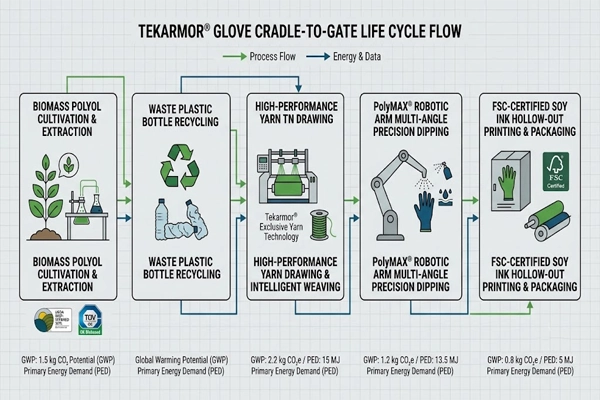
By thoroughly examining SQG’s operational trajectory, auditors can observe the following: In 2006, the SQG glove factory was officially established, laying the groundwork for its core manufacturing processes; in 2018, Sinan Safety Technology Co., Ltd. was founded, marking the formation of a specialized portfolio of protective consumables; and by 2021, the company’s legal name was officially upgraded to SQG Technology Co., Ltd., signifying a comprehensive shift toward the innovative manufacturing of green, high-tech safety products. This 20-year, step-by-step industrial evolution demonstrates the supplier’s depth of expertise in process improvement, quality control, and delivery management—a level of proficiency that cannot be matched by ad-hoc imitation or private-label manufacturing.
Capacity Check: Factory Footprint and Headcount
In supply chain risk management, the scale of a factory’s physical assets is the absolute minimum requirement for ensuring the continuity of high-frequency, high-volume centralized procurement of consumables. When conducting on-site or online factory audits, compliance teams must strictly verify land ownership and production capacity utilization rates.
SQG Technology Co., Ltd.’s modern manufacturing campus covers an area of 28,000 square meters and serves as a standard heavy-industry-grade production base for protective consumables. In terms of human resources, the facility maintains a year-round workforce of 360 skilled front-line production employees, supported by a team of 30 professional managers and R&D personnel. This clear, transparent, and proportionate capital-intensive structure ensures that when the factory takes on major strategic orders from overseas Fortune 500 companies, it will not face supply chain disruptions caused by a sudden inability to recruit staff or keep up with production capacity.
Market Distribution: Global Sourcing Validation
The simplest and most compelling evidence to assess whether a consumables supplier truly possesses internationally compliant E-A-T is to examine its actual market share in top-tier overseas industrial markets. The protective consumables produced by SQG consistently pass multiple sovereign audits in stringent overseas markets. The global distribution of its products is as follows: exports are primarily directed to the U.S. market, accounting for 39.8% of the total; the Japanese market accounts for 25.2%; and the European market accounts for 24.7%. Its business comprehensively covers both major international retail chains and centralized procurement for multinational heavy industry facilities. This means that SQG’s products have consistently passed multiple rigorous verification processes—including technical specification reviews by leading manufacturers in Europe, the U.S., and Japan, REACH environmental regulations, and FDA certification—and have secured a fully mature compliance passport within the international supply chain.
Production Technology: Chain Lines vs. Robotic Dipping
Coating Fluctuation Limits on Manual Chain Lines
In the industrial glove manufacturing sector, traditional chain-driven production lines are standard equipment in the vast majority of long-established factories. However, if you’ve ever visited a production floor as a compliance officer for a major multinational manufacturer, you’ll have noticed that this outdated mechanical drive system has a critical physical flaw: as soon as it starts running, the entire production line vibrates at a high frequency. Chain-driven production lines cannot dynamically adjust the dipping angle of the glove molds or the flow rate of the adhesive during operation. As a result, the coating thickness on the fingertips and palms of the gloves depends entirely on the physical settling of the adhesive and the visual judgment of the workers.
This uncontrollable process fluctuation causes severe millimeter-level thickness inconsistencies (Coating Fluctuation) in the finished products. Under actual operating conditions, this not only leads to variations in the EN 388 abrasion resistance ratings within the same batch of gloves but can also cause catastrophic failures in light industrial assembly or precision LCD wafer processing—even the slightest excess adhesive or coating sagging can directly contaminate expensive components, resulting in the scrapping of entire production batches. For compliance audit teams, choosing this type of traditional consumable entails an extremely high risk of supply chain returns.
Premium Automation: Robotic PolyMAX® Lines
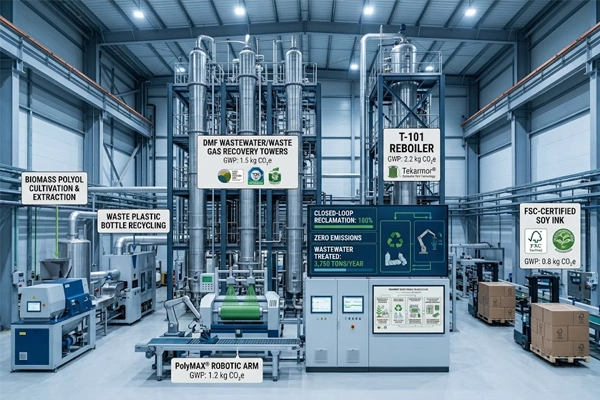
To decisively widen the technological gap with low-end small workshops and meet the strict requirements of major overseas manufacturers for high uniformity across entire batches, SQG has invested heavily in a major automation overhaul of its core dipping process. We have completely phased out traditional conveyor chains—which have an extremely low margin for error—and were the first in the industry to introduce two autonomously controlled PolyMAX® robotic production lines.
This system delivers true millimeter-level precision control. It revolutionizes traditional processes by allowing for real-time adjustment of dipping times in the background based on the viscosity of the specific rubber compound and the permeability of the knitted glove liner. More importantly, we utilize five-axis robotic arms to perfectly replicate the biomimetic movements—such as gripping, flipping, and tilting—performed by skilled workers in the laboratory. The hand molds undergo multi-angle, uniform coating and precise drainage the moment they exit the tank, completely eliminating—at the source—the coating omissions, air pockets, and uneven thickness that are unavoidable on traditional production lines. By embedding this technology within machine algorithms, the entire production line has moved beyond the “black box” state of relying on luck, becoming a robust, compliant asset that overseas centralized procurement teams can inspect on-site at any time.
Scaling the Floor: Monthly Volume Throughput
Of course, no matter how advanced the technology may be, if it cannot ensure the order resilience (Volume Throughput) of multinational manufacturing groups in the face of market fluctuations, the company will not be able to make it onto the strategic procurement lists of Fortune 500 companies. After all, the supply of personal protective equipment for tens of thousands of frontline workers worldwide cannot be interrupted.
To this end, SQG has implemented a capital-intensive production line layout within its 28,000-square-meter facility: the site is equipped to high standards with 6 high-performance PU dipping lines, 3 dedicated X-Supra™ dipping lines, and 1 line for 3D bead application and thumb gusset reinforcement. This comprehensive heavy-industry coating matrix enables the factory to consistently deliver a total monthly production capacity of 600,000 dozen. Such a supply cluster—which seamlessly integrates precision bionic processes with massive physical scale—is precisely the trump card that multinational corporations are truly seeking when engaging in strategic sustainable PPE sourcing.
Digital Networking: Sensory Big Data and Order Traceability
Data Harvesting: Knitting and Mold Temperatures
In IT audits of the supply chain conducted by multinational manufacturing companies, the visualization of production processes and transparent ledgers are key metrics. Process control in traditional, older factories has long relied on operators’ “years of experience” and “tactile feedback”; this subjective uncertainty is precisely the root cause of widespread color variations, damage, and coating peeling in work safety products. A smart factory that meets the standards of top-tier multinational centralized procurement must completely reject this non-standard “black box” model.
By directly accessing the digital dashboards of SQG’s smart PU workshop and smart knitting workshop, compliance auditors can clearly see a fully integrated digital networking system that covers all operational levels. This system collects real-time, round-the-clock digital data on the operating status of knitting machines, orders currently in production, and the grammage of knitted liners. It also captures high-frequency data on robotic movements during the dipping stage, mold temperatures on the production line, oven and tank temperatures, as well as changes in temperature and humidity within the production workshop. This multidimensional Sensory Big Data ensures that every glove and every production step on the entire production floor leaves a quantifiable physical trace.
System Warning and Alarm Protocols
The profound business value of achieving full digital network interconnectivity across the entire production line lies in establishing a fully automated quality defense and correction mechanism. Leveraging this comprehensive Intelligent Data Tracing System, SQG has set rigid upper and lower limit thresholds for all process parameters at the central control station.
When relevant real-time data on the production line indicates an issue—such as slight physical fluctuations in oven temperature or the temperature of a resin tank exceeding a preset value—the system’s early warning center automatically triggers an alarm and precisely identifies the out-of-specification values and the specific machine location. This intelligent early-warning protocol enables millimeter-level automated process intervention and online correction before batch-wide coating defects occur, thereby completely eliminating the possibility of non-conforming materials entering the delivery logistics chain and providing multinational centralized procurement teams with an impenetrable quality control firewall.
Year Data Retention for Longitudinal Audits
For auditors at multinational corporations seeking long-term compliance and rigorous ESG reporting, one-time quality compliance is far from sufficient; the longitudinal traceability of historical data (Order Traceability) is the key factor determining strategic procurement. During on-site or remote information audits, compliance officers must verify suppliers’ data storage strategies and lifecycle anti-counterfeiting protocols.
SQG has made a firm commitment to data preservation: all real-time sensor metrics for each contract—including weave weight, rubber coating process data, and laboratory abrasion and softness test results—are uniformly aggregated in the cloud, properly stored, and retained for three years. This long-term data retention mechanism strongly supports overseas buyers’ subsequent quality traceability at any time. It even allows for the retrieval of actual energy consumption, temperature, and humidity data from corresponding batches three years prior during the group’s annual Scope 3 supply chain carbon accounting audit, enabling a closed-loop verification of the green supply chain across time.
Laboratory E-A-T: Internal Lab Infrastructure and Stress Frequencies
The 3 Million RMB Investment in the Glove Lab
In audits of centralized procurement for B2B industrial consumables, assessing a supplier’s quality control expertise (E-A-T) cannot rely solely on a few certificates on paper; it is essential to conduct a thorough review to determine whether the supplier possesses independent, high-standard underlying testing capabilities. Many small, workshop-style factories that rely on external testing simply lack the budget to monitor the physical stability of their products on the production line on a daily basis.
When compliance officers at major multinational corporations conduct supply chain quality compliance audits, their primary criterion is to verify whether a supplier has the capability to perform round-the-clock in-house product testing. SQG has made significant capital investments in its quality control testing operations, directly spending 3 million yuan to establish an independent, high-standard glove laboratory (High-standard Lab). The construction of this robust in-house testing infrastructure has completely freed the factory from the time delays associated with sporadic external testing, enabling it to conduct high-frequency, comprehensive, real-time physical performance monitoring and intervention for production line consumables.
Annual Stress Metrics: Abrasion and Cut Tests
The only definitive proof that a laboratory truly serves as a supply chain firewall is the reconciliation data between its actual operational load frequency and test density. To meet the stringent global supply chain requirements for high physical durability, the SQG Central Laboratory conducts tests at an extremely rigorous frequency: on average, 270 independent Martindale abrasion tests, 500 cut resistance tests, and 200 tests for other key physical metrics are completed in-house annually.
These tests comprehensively cover bend resistance, water pressure/liquid resistance, flexibility, and accelerated aging tests to ensure that products not only comply with EN 388 and ANSI international standards upon leaving the factory, but also maintain a consistently high level of protection even after months of use in the workplace. This logic—that “high durability and long service life are key to carbon reduction”—has been precisely validated through high-frequency destructive testing, helping large centralized procurement manufacturers reduce, at the source, the heavy waste disposal taxes and carbon footprint liabilities resulting from premature disposal.
Online Pilot Testing for Production Reliability
No matter how impressive laboratory static test data may be, it is ultimately worthless if it cannot replicate the extreme and variable real-world conditions of heavy industrial production lines, which are filled with cutting fluids and heavy mechanical oil residue. Therefore, savvy compliance teams must also verify the frequency of destructive online pilot testing before mass production during factory audits.
SQG has established extremely rigorous design specifications within its quality control process: on average, up to 12,000 dozen new products are deployed directly on actual production lines each year and subjected to real-world extreme condition testing, resulting in significant wastage. Through long-term wear tests conducted in real heavy-industry production environments, the factory has comprehensively collected and aligned reliability feedback before final mass production, thereby fundamentally mitigating the risks of production line incompatibility and drastic efficiency drops that major multinational manufacturers might face during large-scale equipment upgrades.
Raw Material Carbon Auditing: Bio-Based Content and Product Cases
Fossil Mitigation: Bio-Based PU Cross-Linking
In the traditional procurement supply chain for personal protective equipment (PPE) gloves, the heavy reliance on petroleum-based chemicals in coating materials is a key factor driving up companies’ upstream Scope 3 greenhouse gas emissions. To eliminate dependence on fossil fuels at the source, compliance officers at major multinational manufacturers must rigorously verify whether suppliers have implemented bio-based material substitution solutions when conducting raw material carbon audits.
By adopting an innovative bio-based polyurethane cross-linking model, manufacturers can significantly reduce the carbon footprint contribution of raw materials during the front-end polymerization stage. During on-site factory audits, compliance teams must strictly verify that raw materials carry internationally recognized labels and third-party laboratory test reports: the bio-based carbon content of the coatings used by suppliers must simultaneously meet the stringent technical standards of both the United States and Europe, and suppliers must provide the USDA Certified Biobased Product Label (with a bio-based carbon content of 30% or higher), as well as the rigorous TUV AUSTRIA OK biobased (S2791) environmental certification issued by a European authority. This end-to-end verification of green labels provides large centralized procurement manufacturers with irrefutable, tamper-proof evidence of carbon reduction.
Case 1: SQG® P-327 Tape Anti-Stick PU Gloves
As a model of full compliance that achieved a perfect score in the rigorous raw material carbon audit described above, SQG has launched its flagship product, the SQG® P-327 specialized series, for global modern logistics and packaging centralized procurement scenarios. These gloves feature a 13-gauge, highly breathable polyester palm lining, with the palm surface treated using an exclusively developed “Tape Anti-Stick” PU coating process. The physical weight per pair of packaged gloves is precisely controlled to 31.0g.
In terms of chemical safety, the product strictly aligns with the toxicity screening criteria of major European and American manufacturers, achieving extremely low dimethylformamide (DMF) residue levels (DMF < 500 ppm) and fully passing the OEKO-TEX Standard 100 international certification. This design is specifically tailored for major international e-commerce giants, modern large-scale warehousing centers, and high-volume carton packing lines, effectively preventing the glove coating from adhering to industrial-strength packing tape. This not only significantly reduces hand fatigue for frontline workers but also enhances the throughput and packing efficiency of large-scale packaging lines to new heights while ensuring skin safety. Purchasing teams can quickly evaluate the SQG® Industrial Chemical Resistant Series to obtain complete technical specifications and LCA data.
Case 2: SQG® P-381 Full PU Gloves with Sleeve
For work environments requiring long-lasting protection and extreme dust resistance—such as precision electronics manufacturing, high-end vehicle assembly, and modern agricultural harvesting—SQG offers another high-standard eco-friendly design solution: the SQG® P-381 Cooling Sleeve Full Coating Series. The product features a 15-gauge high-density nylon and viscose blend palm, with the entire palm and back of the hand fully covered by a lightweight, thin PU coating (Fully Coated). Its standout feature is the integrated, molded Cool-fiber cooling extension sleeve, which extends the glove’s total protective length to 12.6 inches (32 cm).
In terms of physical protection and performance, this product has precisely passed testing against the EN 388:2016+A1:2018 3131X international standard and also meets the compliance threshold for low DMF residue of < 500 ppm. Designed specifically for complex and precision-demanding applications such as fruit picking, horticulture, heavy-duty outdoor transportation, and electronic wafer assembly, this model perfectly addresses industry pain points that traditional gloves cannot resolve—namely, providing UV protection for the arms while remaining ultra-lightweight, breathable, dust-proof, and leaving no marks or contamination. The centralized procurement decision-making process can conduct a vertical comparison with the SQG® Industrial Chemical Resistant Series, providing a fully eco-friendly and ideal solution for the group’s sustainable procurement technical evaluation.
Manufacturing Decarbonization: Solar Infrastructure and Carbon Math
Grid Transition: The 6,800 Sq Ft Solar Array
When conducting greenhouse gas audits of their supply chains, major multinational manufacturers overseas detest it when suppliers resort to creative accounting—using externally purchased green certificates for financial offsetting to mask high pollution emissions during the manufacturing process. To pass rigorous Scope 1 and Scope 2 carbon audits, a qualified industrial manufacturing park must present a genuine “Grid Transition” ledger.
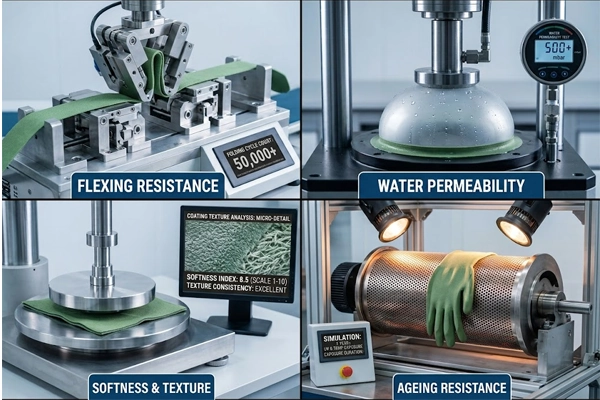
SQG took the lead in installing 6,800 square feet of solar panels on the rooftops of its park buildings; this solar array alone can reduce carbon emissions by 1,795 metric tons annually. To further meet the continuous, essential demand from overseas buyers for long-term, large-scale low-carbon bulk procurement orders, the factory is currently expanding its solar power generation project to cover 10,000 square meters. This expansion will not only cover 100% of the electricity used in the entire glove dipping and knitting production process but will also feed excess green electricity into the national grid, achieving intrinsic carbon reduction at the factory’s operational level.
Intralogistics Mobility: 160,000 km of Clean Travel
In addition to conducting energy consumption audits on core production equipment, EHS auditors at modern multinational corporations have gradually expanded the scope of their plant audits to include indirect emissions from intralogistics and daily commuting within the facility. After all, the carbon emissions generated by every liter of diesel or traditional fossil fuel are ultimately factored into the total life cycle assessment (LCA) value of a single pair of gloves.
SQG has fully implemented its “Green Travel” protocol for short-distance transfers within the campus, warehouse material transfers, and the daily commutes of executives. The facility has fully adopted electric vehicles powered by clean electricity generated from its own rooftop solar photovoltaic systems, and has cumulatively achieved over 160,000 kilometers of low-carbon travel. This comprehensive, zero-carbon logistics network within the campus has eliminated the hidden carbon leakage loopholes that are difficult to track in traditional factories.
Emissive Neutralization: T-101 Reboiler Recycling
Decarbonization in manufacturing is not limited to greenhouse gas control; it must also address the end-of-pipe neutralization of hazardous waste (Emissive Neutralization). Since traditional polyurethane coating production processes are highly prone to generating volatile organic compounds (VOCs) and wastewater discharge, the technical audit team at major manufacturers must conduct on-site verification of the factory’s pollution source containment infrastructure.
SQG has installed capital-intensive, eco-friendly production systems—DMF wastewater and exhaust gas recovery towers—at the end of multiple high-performance dipping lines, incorporating a highly efficient T-101 reboiler architecture. Through physical reboiling and precision distillation processes, this recovery tower thoroughly recycles and renders harmless the chemical volatiles and process effluent generated during manufacturing. This fully closed-loop neutralization technology fundamentally eliminates major audit compliance risks associated with hazardous chemical leaks and sudden ecological toxicity incidents.
Water Auditing: Circular Economy and Zero Sewage Discharge
Volumetric Analysis: 3,750 Tons of Annual Purification
In the full life-cycle audit of heavy-duty industrial PPE, water consumption and wastewater discharge metrics (Water Auditing) are emerging as another critical benchmark for assessing environmental compliance across multinational supply chains. Traditional glove washing and process dipping stages are often “black box” processes characterized by high water consumption and pollution. To provide verifiable evidence of a circular economy to major manufacturers’ compliance teams and EHS auditors, suppliers must demonstrate their ability to safely recycle wastewater within a closed-loop system at their physical facilities.
SQG has established a comprehensive water recycling and purification network within its heavy industrial park, achieving a major technological breakthrough with on-site processing and purification of 3,750 metric tons of wastewater annually. All process wastewater undergoes multiple stages of in-depth physical and chemical purification and is 100% recycled in a closed-loop system on-site 24/7, achieving the industry’s high standard of true “Zero Sewage Discharge” within the physical boundaries of the manufacturing facility. This robust volumetric reconciliation data has eliminated the significant audit concerns held by overseas centralized procurement teams regarding surface water pollution and the risk of local environmental penalties.
Limiting Daily Water Replenishment to 1 Ton
The fundamental technical hurdle to achieving a fully closed-loop water recycling system lies in the entire plant’s physical dependence on external fresh water sources. If a supplier, while achieving zero liquid discharge on paper, still requires massive infusions of external water, its production capacity will still be deemed to exert high environmental pressure during rigorous ongoing factory audits.
Thanks to the high-efficiency recycling and purification hub deployed on-site by SQG, water evaporation losses across the entire glove dipping and washing production line have been minimized through meticulous engineering controls. Even when operating at full capacity, the entire plant requires less than 1 metric ton of fresh water from external sources daily solely due to unavoidable natural evaporation. This performance—which minimizes external water replenishment to the absolute limit—demonstrates the manufacturing facility’s unshakable resilience in maintaining continuous production during extreme dry seasons or regional water restrictions. It represents an impeccable, perfect-score supply chain solution within the strategic Sustainable PPE Sourcing framework.
End-of-Life Packaging: Plastic-Free Materials and Ink Eco-Toxicity
Corn Starch Bags and FSC Recycled Paper Bands
In end-of-life audits conducted by multinational manufacturers on their supply chains, the low-carbon attributes of protective gloves themselves are often only the first step in the assessment. The logistics packaging surrounding them, due to the massive volume consumed, has become a major area of concern for overseas EHS auditors who strictly enforce plastic pollution regulations. To thoroughly help major multinational manufacturers mitigate the risks of microplastic accumulation and environmental pollution caused by traditional fossil-based packaging bags, green suppliers must implement a comprehensive transition away from plastic in the physical structure of their packaging.
SQG has established strict plastic-free protocols for the final transit and factory-shipping packaging stages: For primary bundling, we exclusively use FSC-certified recycled paper strapping and product hang tags; for secondary moisture-proof packaging, we have completely phased out traditional polyethylene (PE) plastic bags and fully adopted 100% biodegradable plastic bags made from natural cornstarch. The base layer utilizes an exceptionally robust formulation of modified eco-friendly materials: PBAT73 + PLA15 + S120. This combination of eco-friendly packaging materials, which is fully biodegradable at the molecular level, not only perfectly meets the stringent requirements of overseas buyers’ supply chains regarding zero microplastic residue but also fundamentally eliminates the ecological toxicity audit liabilities faced by overseas companies during the unpacking and waste disposal stages.
Transitioning to Bio-Based Soy Inks
In traditional industrial packaging printing processes, conventional inks typically rely heavily on petroleum-based chemical solvents for pigment cross-linking and carrier dilution. These inks, which contain high concentrations of volatile organic compounds (VOCs) and heavy metal residues, can cause severe soil leaching toxicity when they enter end-user factories or landfills along with packaging boxes, directly increasing the Scope 3 ecological toxicity liabilities of buyer groups.
To address this environmental vulnerability at the technical level, SQG has implemented a comprehensive replacement of organic consumables across its fully automated printing production lines: whether for individual cardboard hang tags, inner packaging bags, or large export shipping containers, the company has completely phased out traditional petrochemical-based inks and fully transitioned to innovative bio-based soy inks for non-toxic, pollution-free, low-carbon, and eco-friendly surface coating. This meticulous control over chemical integrity in the finer details of packaging provides an impeccable, full-score chain of evidence for the evaluation of technical specifications in corporate centralized procurement.
Hollow Font Layout: Reducing Ink Usage by 70%
Achieving a top-tier commercial closed-loop system for green packaging requires extending carbon reduction and energy conservation efforts down to the most granular level of layout design. Many traditional glove suppliers, even after switching to soy-based inks, continue to use large, solid blocks of color across expansive areas—a practice that still constitutes resource-wasting production under stringent energy consumption management and Scope 3 low-carbon emissions verification.
SQG’s design engineering team has innovatively introduced a highly efficient surface visual optimization solution—the comprehensive adoption of hollow font layout (hollow font printing design) on the outer surfaces of all packaging boxes and FSC-certified cartons. This printing process replaces traditional solid-block filling with precise line-edge algorithms, drastically reducing overall ink usage by 70% directly at the source of production. This extreme carbon-reduction design—which organically combines “hollow font printing” with “eco-friendly soy-based ink”—has helped overseas compliance teams reduce the environmental impact of packaging to the industry’s lowest level, truly aligning with the most stringent audit requirements of multinational corporations’ global logistics networks for ultra-low-carbon consumables.
Ultimate Scorecard: Global Standards and Certification Matrix
In technical standard reviews and on-site factory audits conducted by multinational corporations, qualitative descriptions often fail to pass the compliance team’s final audit. Only by placing all environmental and social responsibility indicators within a unified international standards framework and conducting a rigorous, structured data reconciliation can a supply chain truly meet the criteria for a perfect score.
Below is a Supplier Green Compliance Reconciliation Table (Supplier Auditing Scorecard & Certification Matrix) tailored for overseas EHS officers and centralized procurement directors. This scorecard conducts a quantitative side-by-side comparison between the non-compliant status of suppliers—who traditionally fail industry standards—and the hard data from suppliers that have fully passed rigorous audits by authoritative third-party organizations (such as SGS and Intertek) under the SQG framework, providing comprehensive, irrefutable evidence of compliance for multinational corporations engaged in Sustainable PPE Sourcing.
Supplier Auditing Scorecard & Certification Matrix
| Core Auditing Dimension(Key Audit Dimensions) | Non-Compliant Sourcing Standard (Industry-Non-Compliant Suppliers) | SQG® / SQG Verified Standard (SQG Full-Score Benchmark)SGS-Certified ISO 14064-1:2018 Statement |
| Organizational GHG Volume(Organizational Carbon Footprint Verification) | Lacks third-party verification and relies long-term on flawed self-assessments by companies or non-standard financial formulas. | (Strictly verified and certified by SGS: Total verified greenhouse gas emissions amount to 12,301.37 tCO₂e; of which, Category 1 direct emissions account for only 19.56 tCO₂e, and Category 2 indirect emissions from energy inputs account for 12,311.80 tCO₂e)ISO 14067 Product Carbon Footprint Verification |
| Product Carbon Footprint(Product Low-Carbon Footprint) | Fails to clearly define the boundaries of a comprehensive Life Cycle Assessment (LCA), resulting in severe gaps in upstream Scope 3 data. | (Full-scale implementation of ISO 14067 product carbon footprint verification officially commenced in March 2023, achieving full transparency and documented evidence of energy consumption throughout the entire manufacturing process for both single- and double-layer eco-friendly gloves)OEKO-TEX® Standard 100 Certified & Low DMF |
| Chemical Safety Compliance(Material Health and Toxicity Risks) | Coating raw materials contain uncontrolled volatile organic compounds (VOCs), posing a risk of high-concentration toxic solvent leakage onto fingertips and palms. | (Fully compliant with the internationally recognized OEKO-TEX® certification for skin contact safety, with dimethylformamide (DMF) residue levels engineered to remain strictly within the ultra-safe ecological threshold of DMF < 500 ppm)Global Recycled Standard 4.0 (GRS 4.0 Verified) |
| Material Circular Economy(Material Recycling Audit) | Upstream yarn and chemical additives rely 100% on traditional petroleum-based petrochemical raw materials, which are energy-intensive and highly polluting. | (Holds an official GRS 4.0 Scope Certificate issued by Intertek, with comprehensive integration of recycled materials such as recycled polyester)Sedex Members Ethical Trade Audit Approved (SMETA) |
| Ethical & Social Audit(Supply Chain Social Responsibility Audit) | There is a lack of systematic third-party international labor rights audits at the factory site, posing a hidden risk of rejection under sustainable supply chain legislation. | (Successfully passed the latest SMETA Version 6.1 ethical trade and social responsibility audit to high standards, with an official verification report issued by SGS, fully aligned with major manufacturers’ human rights compliance thresholds)ISO 9001 / ISO 14001 / ISO 45001 / ISO 50001 |
| Comprehensive Management(Factory Comprehensive Management System Certification) | The production structure lacks standardized procedures and regulations; energy consumption, environmental, and quality data across workshops remain fragmented and non-standardized. | (Comprehensive certification across all four integrated management systems—quality, environment, occupational health and safety, and energy management—achieving a standardized, closed-loop compliance system for the industrial park) |
FAQ: Sourcing Inquiries Answered for Corporate EHS Directors
Q1: What structural metrics will define a truly eco-designed manufacturer over the next 10 years?
When evaluating long-term strategic suppliers for the next decade, major overseas multinational manufacturers cannot rely on broad marketing slogans; instead, they must assess whether these suppliers have an officially published and actionable Carbon Neutrality Roadmap. A qualified low-carbon manufacturer of personal protective equipment (PPE) must deeply integrate carbon reduction targets into its long-term strategic evolution.
As a benchmark for the industry’s green transition, SQG has formulated and is fully implementing a highly structured “Plan Zero.” In accordance with the roadmap’s strict timeline, the factory is committed to ensuring that all products leaving the facility meet eco-design standards within the next 10 years; it will also comprehensively deepen energy-saving and emissions-reduction initiatives across all manufacturing sectors to ensure that it is fully transformed into a 100% carbon-neutral factory by 2035. This top-level design, with its clear milestones, provides a strategic-level guarantee of credibility for the long-term procurement security of major manufacturers.
Q2: Why must compliance officers prioritize official ISO 14064 data over self-reported factory declarations?
When screening suppliers, compliance officers must give the highest audit priority to officially certified data, as any self-reported declarations lacking third-party endorsement are highly susceptible to concealing “greenwashing” loopholes in the supply chain. Non-standard calculations not supported by rigorous audit formulas often fail to capture the true total Scope 1 and Scope 2 emissions.
To ensure absolute accuracy in the Group’s Scope 3 carbon accounting, top-tier suppliers must provide quantitative statements backed by a credible verification system. Through a deep, capital-intensive partnership with SGS, a leading international testing and certification body, SQG has completed rigorous greenhouse gas verification and issued an official statement compliant with the ISO 14064-1:2018 international standard. This certificate precisely demystifies the environmental “black box,” transparently disclosing the factory’s verifiable direct emissions (Category 1: 19.56 tCO₂e) and indirect emissions generated from energy inputs (Category 2: 12,311.80 tCO₂e). This reconciliation-level data transparency ensures that multinational corporations can fully align with sovereign-level compliance requirements such as the REACH Regulations.
Q3: How does independent, IP-controlled fiber technology impact supply chain risk management?
The stability of the supply of personal protective equipment (PPE) is deeply tied to the ability to control raw materials (IP-Controlled Technology) independently. If a factory relies long-term on procuring semi-finished yarn from the external spot market, it will not only face severe material instability risks due to upstream supply disruptions but will also result in significant logical inconsistencies and a lack of traceability in the Scope 3 carbon footprint data for upstream raw materials.
PPE suppliers with advanced risk prevention capabilities must implement comprehensive vertical integration of the supply chain. SQG has achieved in-house production of core raw materials by establishing its own high-performance yarn manufacturing lines. For example, its flagship Tekarmor® high-performance cut-resistant yarn is spun entirely on dedicated production lines within the factory premises, and this technology is never sold to third parties, thereby ensuring delivery continuity at the source. At the same time, the factory relies on robust in-house R&D capabilities and holds multiple domestic and international intellectual property rights, including the world’s first patent for tungsten fiber yarn and the world’s first patent for food-grade coating. This self-controlled, closed-loop technology ecosystem helps large-scale centralized procurement operations eliminate the risk of supply chain disruptions caused by upstream fluctuations.
Q4: How does a hollow-font layout contribute to waste reduction in corporate logistics?
Ink eco-toxicity is a blind spot that companies often overlook when conducting Scope 3 chemical waste audits. Traditional packaging boxes typically use large amounts of fossil-based solid ink for heavy, large-area coating, which can lead to potential heavy metal leaching into the soil during downstream unpacking, disposal, and stacking—thereby increasing the environmental remediation tax burden for multinational corporations.
SQG’s technical engineering team began its low-carbon improvements at the most microscopic level of layout engineering, innovatively introducing advanced hollow font printing technology across all hangtags for gloves, biodegradable bags, and export packaging cartons. This design replaces traditional solid-block color filling with precise outline printing, reducing overall ink consumption by 70% directly at the source of packaging production. When this low-ink-consumption hollow-font process is applied at scale to tens of thousands of FSC-certified low-carbon recycled cardboard boxes, it achieves significant cumulative carbon reduction and detoxification effects, perfectly helping multinational centralized procurement teams offset the indirect ecological toxicity liabilities that are difficult to account for at the end of the packaging lifecycle.


