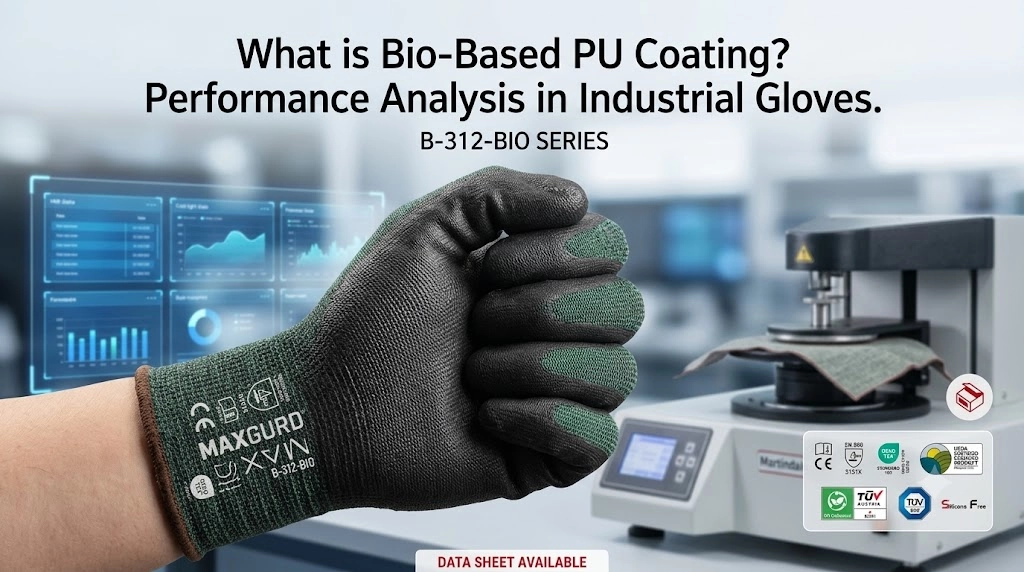
Bio-Based PU Coating is a groundbreaking, eco-friendly technology that utilizes plant-based polyurethane resins. Extracting biomass from non-food crops, it reduces carbon emissions by 25% to 40% at the raw material source. During the thermal curing stage, this technology maintains a highly dense three-dimensional cross-linked network, ensuring that protective gloves retain uncompromising mechanical abrasion resistance and exceptional durability even under high-load friction in heavy industry.
As global supply chains subject environmental compliance to rigorous scrutiny, procurement teams at major manufacturers are focusing their Scope 3 emissions reduction efforts on the carbon footprint of externally purchased goods (Scope 3 Category 1). As high-frequency consumables, standard industrial gloves accumulate a significant carbon footprint. However, front-line workshops often worry that eco-friendly PPE will compromise mechanical performance, fearing that cuts caused by gloves lacking durability could lead to workplace injuries. Therefore, selecting industrial safety gloves that balance low-carbon credentials with robust cut resistance and abrasion resistance has become the business solution with the greatest marginal benefit for companies optimizing their ESG supply chain footprint.
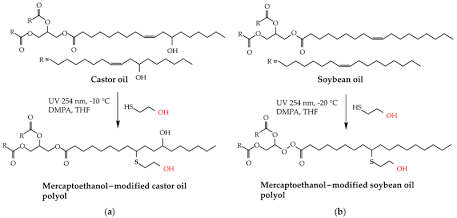
The Molecular Chemistry: Deconstructing How Plant Biomass Replaces Petroleum Resins
The Carbon Footprint and Toxicity Issues of Legacy Petroleum-Based PU
The surface coatings of traditional protective gloves rely entirely on petroleum-based polymers at the microscopic level. These fossil-derived resins not only consume enormous amounts of industrial energy during the initial stages of crude oil extraction, catalytic cracking, and high-temperature polymerization, but also carry a significant carbon footprint. Even more critically, during the stabilization of curing agents, formulation, and subsequent thermal processing, traditional petroleum-based polyurethanes tend to retain and release volatile organic compounds (VOCs)—such as dimethylformamide (DMF), a common solvent in the industry—from within their molecular chains. Under the harsh, enclosed, and high-intensity conditions of front-line workshop operations, prolonged exposure to this environment of microscopic chemical irritants can easily lead to contact dermatitis or chronic occupational chemical allergies among front-line workers. This is classified as a key risk area requiring thorough investigation during occupational health compliance audits conducted by major multinational manufacturers.
Verifiable Empirical Data Supporting Renewable Plant Biomass Synthesis
To address the high carbon emissions associated with traditional manufacturing processes, modern protective engineering has begun to adopt renewable plant biomass technology. By selecting sustainable castor oils—which do not compete with food crops—and agricultural byproducts as core sources, advanced extraction processes are used to produce high-purity, natural plant-based polyols. This shift from fossil fuels to biomass at the source provides quantifiable data on carbon footprint reduction for life cycle assessment (LCA) calculations in multinational procurement—analyses indicate that this technology can directly reduce CO₂ equivalent emissions by 25%–40% during the upstream synthesis stage of glove coating, effectively meeting the stringent green procurement standards of multinational corporations.
Overcoming Durability Skepticism Through Thermal Cross-Linking Density
Addressing the durability concerns raised by safety engineers, bio-based materials have also achieved molecular-level validation in their curing processes. During the thermal curing stage of production, these plant-derived molecules undergo intense chemical polymerization reactions, forming an extremely dense cross-linking network. This high-density, three-dimensional, tightly woven network structure ensures excellent polymer matrix stability in practical physical performance. Thanks to this robust molecular-level cross-linking network, bio-based coatings demonstrate highly stable resistance to delamination and peeling when subjected to high-intensity operational friction and scratches from sharp objects, thereby dispelling the technical misconception that “environmentally friendly materials are prone to premature peeling in industrial applications.”
EN388 and ANSI Certification Standards: Empirical Mechanical Destruction Testing
In the B2B industrial procurement system, standardized international test reports serve as objective evidence for assessing the compliance of consumables. To quantify the differences in physical resistance between bio-based polymers and traditional petroleum-based materials, an independent third-party testing organization conducted comprehensive standardized mechanical destruction testing. This series of stress tests fully complies with the internationally recognized EN 388 certification specifications and the latest ANSI protocols. The empirical laboratory mechanical matrix data presented below clearly demonstrate that, while significantly reducing dependence on fossil fuels, biomass coatings fully preserve the rigid mechanical foundation required for safety protection.

Mechanical Performance Matrix: Bio-Based vs. Petroleum PU
| Mechanical Criteria | Test Protocol | Traditional Petroleum PU | SQG® Bio-Based PU | Plant Floor Benefits |
| Abrasion Resistance | EN 388:2016 Martindale | Level 3 / Level 4 | Level 4 Certified | Maximizes the operational lifespan of gloves on abrasive fabrication lines. |
| Tensile Elasticity of the Film | ASTM D412 Protocol | 350% Stretch | 380% Flexural Stretch | Provides exceptional tactile feedback and delays the formation of micro-fractures in the coating. |
| Breathability Matrix | Air Permeability | Standard Micro-pores | Enhanced Microporous | Continuous air circulation accelerates sweat evaporation on the shop floor. |
| Volatile Organic Compound Emissions | Gas Chromatography | High Residual VOCs | Zero Odor / Ultra-Low | Complet |
Real-World Scenarios: Managing Complex Risks on the Digitized Shop Floor

In today’s highly digitized lean manufacturing facilities, front-line workers must switch between complex tasks frequently on a daily basis. On automotive assembly lines, in metal stamping operations, and in parts machining environments, their hands are inevitably exposed for extended periods to stainless steel cutting fluids, hydraulic oil, and heavy-duty industrial lubricants. At the same time, lean production lines require employees to frequently interact with workstation tablets, barcode scanners, and HMI (Human-Machine Interface) terminal touchscreens. If the provided protective gloves are not touchscreen-compatible or lack sufficient oil resistance, workers often violate safety protocols by removing their gloves to perform touchscreen tasks. According to heavy industry EHS workplace accident statistics, this “frequent, non-compliant removal of gloves” is one of the primary causes of sudden, localized cuts and physical pinches to the hands among front-line workers.
Chemical Inertness Against Aggressive Industrial Oils and Fluids
When traditional petroleum-based gloves are subjected to prolonged exposure to heavy machine oils or synthetic cutting fluids, their outer polymer film is prone to swelling and softening. In contrast, advanced bio-based coatings demonstrate greater chemical inertness. From a microstructural perspective in materials science, the refined bio-based polyol molecules possess inherent hydrophobic properties, enabling them to form a high-density physical barrier against corrosive industrial oils and polar liquids. This excellent resistance to liquid penetration securely locks the bonding interface between the outer elastomer film and the underlying knitted fibers, effectively preventing layer delamination caused by oil dissolving the resin bonding area, thereby ensuring the practical replacement cycle required for large-scale centralized procurement of consumables.
High-Gauge Tactile Sensitivity, Anti-Slip Grip, and HMI Capacitive Interface
To strike a balance between safety and efficiency on digital assembly lines, the R&D team endowed the bio-based PU with exceptional high-gauge tactile sensitivity while maintaining its ultra-thin profile. The coating’s unique micro-porous structure instantly overcomes surface tension in slightly oily or damp conditions, providing a stable anti-slip grip coefficient. More importantly, this micro-porous film seamlessly integrates highly conductive filaments during the synthesis process, enabling perfect signal transmission with the capacitive interfaces found in modern smart factories. Workers experience a sensitive capacitive signal response when operating digital workstation terminals, avoiding occasional disconnections caused by signal lag and fundamentally eliminating the safety hazard of workers “removing their gloves in violation of safety regulations just to tap the screen.”
Cross-Linking the Portfolio: The SQG® BIO-FIRST® Production Fleet
In the practical implementation of industrial procurement, a single coating technology must be combined with a diverse range of fiber linings to meet the safety protection needs of different workplace roles. As an international brand that integrates material R&D with large-scale weaving, the SQG® BIO-FIRST® series has built a comprehensive product matrix—ranging from precision assembly in light industry to extreme cut resistance in heavy industry—by cross-weaving biomass coating technology with various high-performance fibers. This modular R&D approach not only meets the physical protection requirements of various working conditions but also establishes a traceable, auditable, closed-loop supply chain for sustainable PPE for major multinational manufacturers.
The MAXGUARD Precision Series (B-312 Fleet for Light Mechanical Tasks)
In precision assembly applications—such as electronic component assembly, semiconductor manufacturing, and automotive precision sensor assembly—the selection criteria for protective consumables are extremely stringent. These working conditions demand protective gear that offers exceptional tactile sensitivity, dust control, and protection against sporadic electrostatic discharge damage. Furthermore, in modern smart logistics and fully automated warehousing and sorting lines for clean-room logistics, the high frequency of package handling requires coatings that balance breathability with durability. For these specialized light industrial applications, the following four bio-based, lightweight models offer precise, job-specific selection options:
B-312-BIO-BL (Midnight-Black Bio-PU Matrix): Features a 13-gauge seamless, recycled RPET eco-friendly fiber liner paired with an all-black bio-based PU coating. This pure black design effectively conceals the trace amounts of industrial oil and dust commonly found in workshops, thereby extending the service life of single and double gloves and reducing overall consumable procurement costs.
B-312-BIO-G (Slate-Gray Tech Armor): This model features a deep gray plant-based polyol film firmly bonded to a 13-gauge gray eco-friendly knitted liner. Designed as a standard neutral option for general factory maintenance and equipment inspections, it strikes an excellent industrial balance between stain resistance and visual cleanliness.
B-312-BIO-GBL (Forest-Green High-Visibility Shield): Innovatively combines a high-contrast forest-green recycled fiber lining with bio-based elastomer resin. This highly recognizable color combination greatly facilitates workshop EHS safety supervisors in quickly tracking and auditing frontline employees’ compliance rates from a distance.
B-312-BIO-WL (Contamination-Free Pure White): Designed specifically for specialized roles requiring medical-grade standards for dust-free environments and protection against secondary contamination. Featuring a pure-white-on-pure-white 13-gauge RPET eco-friendly filament matrix, it serves as the standard protective equipment for optical lens inspection, high-precision laboratories, and semiconductor cleanrooms.
The BLADEGUARD Laceration Defense Series (High-Performance Cut Resistance)
Unlike precision assembly, in heavy-duty manufacturing environments—such as large-scale metal stamping, high-intensity steel plate handling, heavy-duty machining, and glass cutting—frontline workers’ hands face extreme shear forces and the threat of abrasion from sharp objects. To achieve robust laceration defense, traditional heavy-duty cut-resistant gloves often compromise comfort by using thicker coatings and coarser fibers. This can easily lead to hand muscle fatigue and soreness during 12-hour shifts, which in turn indirectly causes operational errors and safety hazards. To address this critical pain point, a new composite weaving technology combining high-strength polyethylene (HPPE) and ultra-fine cut-resistant glass fibers has been incorporated into the fiber base layer, while the outer layer has been fully integrated with innovative bio-based soft PU coating technology. This low-modulus, plant-based soft polyurethane matrix offers excellent micro-damping and ergonomic fit, significantly reducing high-intensity hand strain and grip resistance for employees while maintaining the required cut-resistant rating.
For diverse working conditions in heavy industry, this series has spawned a comprehensive range of cut-resistant gloves, allowing procurement teams to select the precise model based on the risk rating of specific job roles: The B2-310-BIO serves as a balanced mechanical core for moderate physical risks, seamlessly integrating a 13-gauge high-strength HPPE/RPET/glass fiber composite matrix with bio-based resin; B2-340-BIO is specifically designed for high-friction, high-tensile production lines, enhancing the extreme shear resistance of its plant-based outer film; while B3-340-BIO, the technical benchmark for comfort across the entire line, features a proprietary renewable soft polyurethane matrix over an elite-level cut-resistant core, performing exceptionally well during long work shifts; For extremely harsh work environments involving combined piercing and serrated-edge shearing, the robust B4-310-BIO provides top-tier defense against piercing and tearing vectors; In low-light or dimly lit heavy industrial environments, the B4-319-BIO ensures that the hands of healthcare workers remain under safe and compliant visual monitoring even in low-visibility conditions, thanks to its high-contrast, fluorescent lemon-green lining combined with a highly flexible bio-protective film.
People Also Ask: Frequently Asked Questions on Sustainable PPE Compliance
When conducting large-scale centralized procurement of eco-friendly personal protective equipment (PPE) for multinational supply chains, procurement decisions are not only about the initial list price but also involve subsequent asset depreciation rates, employee compliance with wearing requirements, and audit compliance. To provide clear decision-making criteria for central procurement teams and Environmental, Health, and Safety (EHS) departments at major manufacturers, the following standardized technical answers address the full lifecycle performance of bio-based protective consumables:
Q1: Do bio-based PU coatings wash off or degrade prematurely during industrial laundering cycles?
From the perspective of polymer science, after undergoing a thermal curing reaction, plant-derived polyols undergo irreversible molecular chain polymerization, transforming into a network-like thermosetting elastomer with a highly cross-linked structure. This means that, at the microscopic level, bio-based coatings are insoluble in water and possess exceptional thermal stability, making them fully capable of withstanding the high-concentration alkaline detergents used in industrial centralized washing lines as well as the extreme stress tests of high-temperature continuous drying tunnels. Unlike low-end degradable materials, they do not experience premature peeling, delamination, or embrittlement during repeated washing. As verified by standardized industrial washing tests, these gloves maintain a stable EN 388 Level 4 abrasion resistance rating even after multiple rigorous recycling and washing cycles, effectively reducing the cost per use and perfectly aligning with the economic efficiency model of enterprises requiring high-volume, high-frequency turnover.
Q2: Are plant-based safety gloves safe for workers with sensitive skin and completely allergen-free?
Traditional petroleum-based protective gloves often require the addition of chemical solvents such as dimethylformamide (DMF) during the curing process to stabilize the coating. This results in finished products that tend to contain high concentrations of volatile organic compounds (VOCs) and emit a pungent odor, posing a risk of contact allergies and dermatitis for factory workers. In contrast, advanced plant-based protective gloves eliminate the chain of toxic chemicals at the raw material source, demonstrating excellent biocompatibility—they are non-toxic, odorless, and hypoallergenic. The entire product line has achieved 100% compliance with the extremely stringent international OEKO-TEX Standard 100 certification for eco-textiles, ensuring that all fibers and coated areas in direct contact with workers’ skin are free of harmful substances. This not only significantly improves wearer satisfaction among frontline factory workers but also effectively helps purchasing companies mitigate occupational health risks associated with these consumables.
Q3: How do 13-gauge seamless RPET liners contribute to corporate ESG carbon accounting?
In the environmental accounting of supply chains for multinational corporations and publicly traded companies, purchasing high-gauge, seamless, recycled RPET fiber-lined gloves can directly improve the greenhouse gas emissions reduction ledger for Scope 3 Category 1 (purchased goods and services). This fiber matrix is made entirely from discarded post-consumer plastic bottles through physical recycling and melt-spinning. According to third-party life cycle assessment (LCA) data, every dozen gloves used in this series represents the recovery and utilization of several discarded plastic bottles from the environment. Compared to directly purchasing gloves made from petroleum-based virgin nylon, this directly offsets significant carbon liabilities at the source. This traceable carbon reduction data can not only be directly included in the purchasing company’s annual ESG (Environmental, Social, and Governance) report but also serves as legitimate, quantifiable evidence for carbon tariffs and cross-border compliance audits.
Conclusion: Specifying the SQG® BIO-FIRST® Series for Zero-Compromise Manufacturing Safety
In summary, the green transition in industrial procurement should not be a compromise that sacrifices frontline protective performance, but rather a full-cycle efficiency upgrade of the supply chain based on advancements in modern materials science. Both destructive mechanical testing in empirical laboratories and real-world operational verification in digital lean workshops have demonstrated that advanced bio-based elastomer coatings—while eliminating reliance on traditional fossil fuels and providing quantifiable upstream carbon reduction benefits—perfectly preserve a high-grade, abrasion- and tensile-resistant mechanical foundation, while also endowing gloves with superior occupational health and skin-friendliness, as well as enhanced capacitive touchscreen conductivity. This underlying material logic—which combines environmental compliance with high protective performance—not only provides legitimate data to support Scope 3 carbon footprint reduction for central EHS audits at major multinational manufacturers but also effectively achieves a commercial win-win by reducing the overall cost of B2B bulk-purchased consumables through extended depreciation and replacement cycles in actual operations.
Explore our comprehensive Sustainable Compliance Category Portfolio to download detailed technical data sheets, or contact the SQG® Technical Support Team directly to arrange a complimentary site-wide green PPE safety diagnostic audit and request production-grade testing samples.