

Introduction: The High-Stakes Reality of Hand Injuries in Heavy Industry
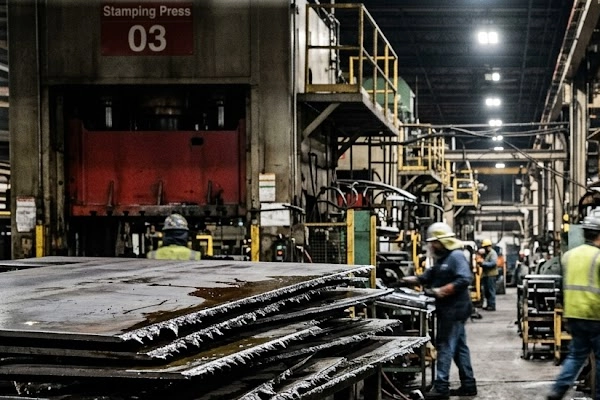
Heavy-duty cut resistant work gloves are a crucial cornerstone for modern heavy industry to rebuild safety defenses and ensure environmental compliance as it faces the challenges of digitized production lines. In harsh working conditions—such as heavy steel mills, deep-mine operations, automotive stamping and assembly, and high-risk glass manufacturing—the margin for error on the front lines is virtually zero. Corporate EHS managers and procurement teams must confront an extremely brutal dual crisis of workplace injuries every day: on one hand, life-threatening deep lacerations caused by sharp metal burrs or glass edges; on the other, severe crush injuries and fractures resulting from heavy objects falling or tools slipping and striking the back of the hand. In this context, heavy-duty industrial work gloves capable of addressing both risks simultaneously have become an essential asset for ensuring safety on the production line.
Traditional heavy-duty protection often falls into the trap of blindly relying on low-end PPE consumables, focusing solely on meeting EHS workplace safety compliance audits while neglecting the efficiency losses and hand fatigue caused by bulky gloves. To completely break this vicious cycle, companies must upgrade their protection strategy in technical tenders. By comprehensively deploying a flexible protective matrix across production lines—featuring high-gauge, seamless knitting that meets the industry’s top-tier ANSI A9 cut resistance standard, combined with a high-density TPR impact-resistant exoskeleton on the back of the hand—companies can not only drive 100% voluntary, full-time wear among frontline workers but also fundamentally establish intrinsic safety, effortlessly securing a “green pass” for global supply chain compliance assessments.
The Science of Absolute Defense: Deconstructing ANSI A9 Ultra-High Cut Resistance
Micro-Weave Engineering: How the 15-Gauge Matrix Achieves the Defense Ceiling
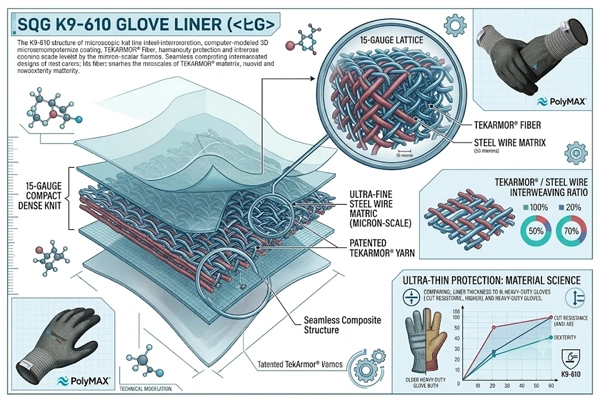
In traditional occupational safety and health thinking, heavy industry procurement is often plagued by a deep-rooted industry bias: the higher a glove’s cut resistance rating, the thicker and stiffer it must be. This traditional approach, which relies on brutally thickening materials, has become increasingly inadequate in the face of modern, digitized, and lean manufacturing environments. As an industry benchmark that breaks through this technical bottleneck, the SQG® K9-610 has completely redefined the manufacturing logic of heavy-duty knit work gloves. Within a seemingly impossible 15-gauge dense, seamless knit structure, it has successfully reached the highest global protection standard—ANSI A9.
This disruptive level of physical protection stems from underlying innovations in materials science. The SQG® R&D team utilized its exclusive, patented TekArmor yarn technology to seamlessly blend ultra-high-molecular-weight polyethylene (HPPE), composite specialty filaments, and nano-scale, high-density, ultra-fine stainless steel wires (Steel Wire Matrix) at the molecular level—all while maintaining an extremely fine fiber diameter. This innovative micro-woven lattice structure not only significantly raises the material’s physical limits for resistance to heavy-duty tearing and sharp-edge cuts but also eliminates the common drawbacks of traditional steel-wire gloves—such as a prickly and stiff feel—achieving a perfect balance between physical protection and lightweight construction.
Eradicating Muscle Fatigue: Balancing High Protection with Tactile Sensitivity
Gloves that are too bulky not only reduce productivity but are also a hidden danger that can lead to serious workplace injuries. Traditional, heavy cut-resistant gloves create significant resistance to joint flexion, forcing workers to expend several times the normal amount of muscle strength to perform gripping motions. During high-frequency operations lasting 8–12 hours, this can easily lead to severe “hand muscle fatigue.” To escape this pain, workers often take the risk of “removing their gloves for 5 seconds in violation of safety regulations” to perform fine motor tasks, thereby exposing themselves to life-threatening laceration hazards.
In contrast, tactile sensitivity work gloves crafted using a high-stitch-count micro-knitting process fundamentally eliminate this inherent safety vulnerability. The K9-610’s extremely high stitch density gives the fabric perfect flexibility and elasticity, allowing it to conform seamlessly to the worker’s finger joints like a second skin, significantly reducing hand muscle fatigue. This lean design, featuring “bare-hand feel safety gear,” not only preserves workers’ tactile sensitivity for handling precision components but also turns full-time wear (100% Full-Time Wearing Compliance) into a voluntary habit among employees, eliminating the risk of workplace injuries caused by operational fatigue for companies.
Dual-Zone Compliance: Integrating Heavy Impact Defense with Advanced Cut Barriers
The Invisible Risk: Back-of-Hand Trauma and Flown Bolt Impacts
In heavy-duty logistics, heavy machinery maintenance, mining, and large-scale steel structure assembly operations, the risk of hand injuries for frontline workers is never limited to a single hazard. However, many traditional safety plans tend to focus solely on cutting hazards to the palms, while overlooking the “invisible killers” targeting the backs of the hands. Statistics show that up to 90% of severe back-of-hand injuries in heavy industry result from heavy gravity impacts—which are highly likely to occur during routine operations—or from flying impacts caused by heavy bolts or wrenches accidentally slipping during high-load operations.
Because the back of the hand lacks a cushioning layer of fat and is densely packed with complex joints and bones, a heavy blow to an unprotected hand—without specialized crush-hazard PPE—can easily result in comminuted fractures of the hand bones or severe tendon contusions. Such sudden blunt force impacts not only result in prolonged work stoppages for workers but also represent a critical blind spot that elevates a company’s overall safety risk rating. Therefore, implementing comprehensive back-of-hand impact protection—elevating the protection of the back of the hand to a strategic level equal to that of palm cut resistance—has become an urgent priority for heavy industry in mitigating industrial hand safety risks.
Armor-Plated Flexibility: The Mechanics of Back-of-Hand TPR Frameworks
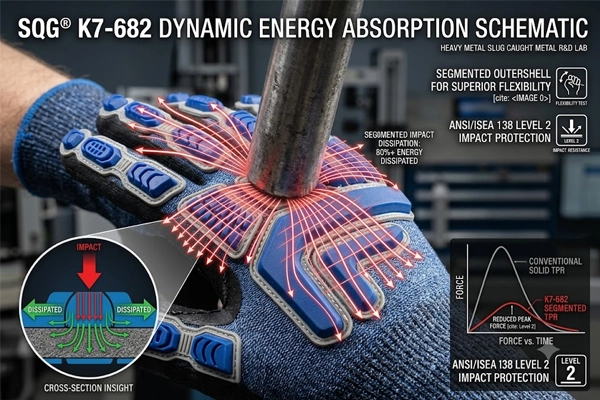
To address this dual hazard, the SQG® K7-682 introduces a revolutionary “Dual-Zone Compliance” balanced design. As a technological benchmark for the next generation of flexible anti-impact PPE, this model transforms absolute gravity protection into a highly refined mechanical cushioning grid, completely breaking free from the technical limitations of traditional impact-resistant gloves—which are as rigid as steel plates and restrict workers’ ability to make a fist.
From a macro-level structural perspective, the palm of the SQG® K7-682 features a high-rigidity, eco-friendly lining that provides a robust ANSI A7-level cut-resistant barrier. On the back of the hand, a custom-engineered high-density TPR (thermoplastic rubber) impact-resistant exoskeleton is integrated using cutting-edge seamless low-pressure injection molding technology.
The core strength of this impact-resistant exoskeleton lies in its unique Segmented Energy-Dissipation Architecture. When subjected to heavy external impacts, the segmented TPR modules do not shatter or conduct pressure locally like traditional plastics. Instead, much like automotive airbags and energy-absorbing cradles, they instantly absorb, capture, and disperse more than 80% of the vertical impact kinetic energy within a few milliseconds, dissipating it radially in a grid-like pattern.
This armor-like protective mechanism not only endows TPR impact-resistant gloves with excellent impact-absorbing flexibility but also enables them to perform exceptionally well in U.S. standard blunt-force impact tests, perfectly meeting the rigorous performance requirements of the ANSI/ISEA 138 Level 2 international impact protection standard. Combined with scientifically designed ergonomic joint grooves, workers can enjoy unrestricted flexibility even during high-frequency gripping tasks lasting several hours, providing an indispensable compliance and risk-mitigation safeguard for the safety technology upgrade in large-scale manufacturing supply chains.
Decoding International Safety Standards: ANSI/ISEA 105 vs. EN 388 TDM Testing
[H3] 3.1 The ASTM F2992-16 TDM Test Protocol: How ANSI Measures Force in Grams
For procurement directors and EHS specialists at multinational companies, understanding the testing mechanisms behind the data is key to mitigating on-site risks when dealing with tenders for heavy-duty cut-resistant gloves. In many industrial procurement systems in North America and around the world, the ANSI ISEA 105 standard serves as the core basis for measuring hand protection levels. To ensure the absolute rigor of test data, this standard relies entirely on ASTM F2992-16 testing (the U.S. TDM test protocol) to quantify mechanical performance.
The underlying logic of this test is not complex, but it is extremely rigorous. On a standard TDM-100 testing machine, a brand-new, high-hardness cutting blade performs unidirectional, back-and-forth cuts on a glove material sample under constant pressure. The system precisely records the physical weight required for the blade to completely cut through (Cut-Through) the material by continuously increasing the load in grams applied to the blade. Only when a glove can withstand a tensile cutting pressure of $\ge 6000\text{g}$ (i.e., 6 kilograms or more) is it awarded the ANSI A9 top-tier rating, symbolizing the industry’s highest level of protection. This high-density “cut resistance rating in grams” demonstrates that high-end protective gloves possess truly formidable physical strength—making them virtually impenetrable—when faced with extreme tensile and cutting forces, such as sharp shearing edges in steel mills or fractured rock layers in mining operations.
The ISO 13997 Method: Understanding European Newton Ratings for Cut Levels
However, when multinational companies need to align their supply chains with European or internationally recognized tender specifications, they must adopt the EN 388 TDM cut level F from the European standards system. Although the European standard also uses the TDM-100 testing machine, it employs the ISO 13997 test protocol, which is entirely based on pressure measurements in Newtons (N).
Unlike the U.S. standard, which directly measures in grams, European PPE standards focus on evaluating a material’s energy resistance limits at different pressure levels. Under the ISO 13997 system, the algorithm determines the rating by measuring the force in Newtons required for the blade to cut through a 20-millimeter stroke. When a material can withstand an instantaneous cutting force greater than or equal to 30 Newtons (≥30 N), it is awarded the highest level of European cut resistance—Level F.
This cross-referencing of dual standards helps global centralized procurement departments clearly convert parameters across regions and systems when auditing technical bid proposals. Whether the tender specifies North American A9 or European Level F, the underlying purpose is to filter out false data generated by high-frequency friction in low-end consumables through microscopic, digitized calibration in newtons and grams, thereby ensuring a foolproof mechanical cut-resistant safety net for frontline workers in heavy-duty operating conditions.
Touchscreen Interoperability: Ensuring Compliance on Digitized Shop Floors
Copper-Infused Filaments: Preventing the Unsafe “5-Second Glove Stripping” Trap
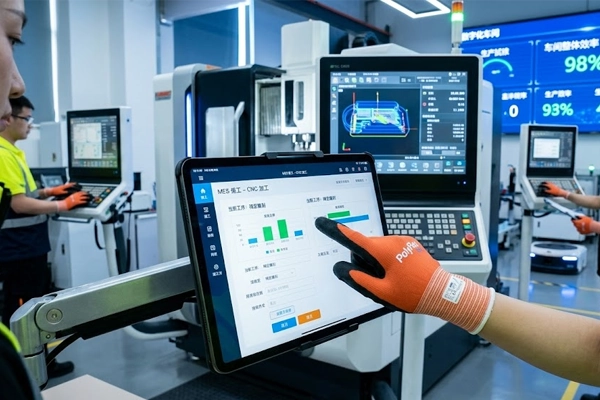
With the widespread adoption of the Industrial Internet of Things (IIoT), modern heavy steel mills, automotive assembly plants, and heavy machinery factories have become highly digitized. The daily tasks of front-line operators are no longer limited to operating machinery; they now frequently interact with large-screen smart HMI terminals, automated control panels, and capacitive mobile tablets.
However, this digital transformation has introduced an extremely critical safety vulnerability—traditional thick protective gloves are not conductive and cannot be detected by capacitive industrial screens.
This has given rise to a widespread and dangerous “5-second golden violation window” on the shop floor:
Efficiency Black Hole: On assembly lines where production takt time is strictly enforced, workers often take the easy way out by simply removing their gloves to quickly tap the screen to confirm or adjust parameters.
High Incidence of Workplace Injuries: This seemingly brief “bare-handed operation”—lasting only a few seconds—instantly exposes workers’ hands to the absolute risk of sharp sheet metal, burrs, and impacts from heavy objects. Statistics show that a significant number of severe lacerations and finger amputations occur precisely during these frequent gaps in glove use.
To thoroughly enforce “all-day PPE compliance” on the shop floor, SQG® has introduced a materials-based solution: the Copper-Infused Filaments process.
Technological Breakthrough: The R&D team has moved beyond the low-end practice of applying conductive adhesive to glove fingertips after production—a method prone to wear and failure—by directly weaving micron-sized ultra-fine conductive copper filaments into TekArmor®’s patented cut-resistant yarn at the source of the core-spun textile construction of the cut-resistant lining.
This innovative microscopic conductive network endows touchscreen cut-resistant gloves with exceptionally robust charge conductivity. Whether swiping on large screens in steel mills contaminated with oil and dust or tapping on precision testing terminals, workers enjoy 100% sensitive touchscreen compatibility. Workers no longer need to repeatedly violate safety protocols by removing and putting on their gloves. This not only safeguards the productivity of digital production lines but also builds an intrinsically safe network for the supply chain with no vulnerabilities.
Tribological Mechanics: Penetration of Heavy Stamping Oils and Lubricants
Micro-Porous Sandy Nitrile vs. PolyMax: Enhancing Ergonomic Grip Under Heavy Oil Exposure
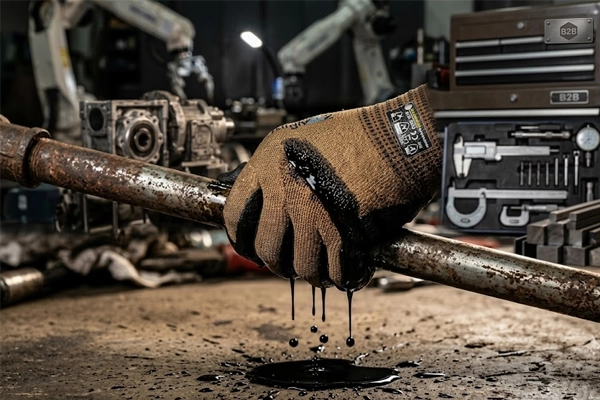
In automotive sheet metal stamping, CNC machining, and heavy-duty deep-drawing operations, high-frequency, high-pressure sprays of stamping oils, cutting fluids, and heavy-duty industrial lubricants often form an extremely slippery, continuous fluid film on the surface of workpieces. Under these extremely oily conditions, ordinary rubber-coated safety gloves generate dangerous slippage shear forces upon contact with the workpiece, causing the coefficient of friction to drop to zero instantly.
When workers attempt to grasp oil-coated metal sheets weighing dozens of kilograms and featuring sharp burrs, this slippage can directly result in severe deep lacerations or crushing injuries. Consequently, there is an extremely high technical demand in the market for cut-resistant work gloves designed for oily conditions that offer robust safety performance.
To thoroughly eliminate this hidden workshop hazard, SQG® has introduced coating solutions based on the principles of tribology and fluid dynamics: microporous sandy nitrile and plant-based PolyMax coating technologies.
These two core coating technologies demonstrate distinctly different mechanical mechanisms for oil repellency and slip resistance:
Nano-scale Sandy Nitrile Coating:
Its surface is densely covered with microscopic, crater-like adsorption pores invisible to the naked eye. When the glove comes into contact with an oily surface, these micro-pores—much like the drainage grooves on a car tire in the rain—instantly pierce, adsorb, and disperse heavy oil films within milliseconds through capillary action, establishing a powerful dry physical grip.
Bio-based PolyMax eco-friendly coating:
This process utilizes unique plant-based polymer modification technology to naturally endow the glove surface with extremely strong oil-repellent chemical affinity. When faced with a flood of high-flow cutting fluid, it actively blocks the formation of a lubricating film, thereby driving outstanding low-load gripping force.
Lean Procurement Value (TCO): These anti-slip industrial gloves, featuring powerful physical energy-absorbing feedback, eliminate the need for front-line workers to overexert their wrist muscles to counteract slippage. While eliminating the risk of oil-related cuts, they significantly reduce the incidence of repetitive strain injury (RSI), helping heavy industrial plants build a robust and safe supply chain in harsh fluid environments.
Dermatological Safety: Eliminating Occupational Dermatitis Caused by Industrial Leaks
Clean Polymeric Synthesis: Protecting Manual Laborers from Chemical Skin Irritations
In heavy industrial manufacturing settings, in addition to addressing obvious mechanical injuries, EHS management systems must also address subtle, hidden occupational health hazards. Frontline employees who are chronically exposed to heavy-duty machine cutting fluids, chemical emulsions, rust-preventive oils, and various industrial byproducts face long-term chemical corrosion of the skin barrier on their hands.
This continuous penetration of harmful substances can easily lead to painful and recurrent cases of occupational contact dermatitis. Not only does this compromise the health of workers’ hands and impair their ability to perform tasks, but it also results in frequent sick leave, absenteeism, and labor compliance disputes. Consequently, identifying hand safety protection systems with occupational dermatitis protection features within the supply chain is gradually becoming a standard requirement in technical tenders for modern sustainable factories.
To address this health blind spot—which directly impacts shop floor attendance and humanitarian well-being—SQG® has leveraged its low-sensitizing Clean Polymeric Synthesis process to develop a new generation of bio-friendly, skin-friendly work gloves.
The R&D and manufacturing teams have completely reengineered the potential sensitization pathways associated with traditional industrial glove coatings, starting from the very source of the manufacturing process:
Green Water-Based Cross-Linking Process: This eliminates industrial accelerators, harmful solvents, and heavy metal residues commonly found in low-end PPE gloves due to cost-cutting measures.
Multi-stage thermochemical deep cleaning: After polymer curing and shaping, the SQG® production line incorporates multiple rounds of high-temperature chemical re-washing and pure water rinsing processes that exceed industry standards, thoroughly stripping away and removing residual trace amounts of volatile organic compounds (VOCs).
Hypoallergenic formulation calibration ensures that polymer lattices—such as those in nitrile, PolyMax, or latex—no longer contain low-grade sensitizing additives.
Core Occupational Health Benefits: This toxic-free safety gear, which truly aligns with the world’s highest skin hygiene standards, keeps the hands of even frontline workers with highly sensitive skin dry, breathable, and fresh—even during high-frequency wear lasting up to 12 hours in the face of industrial heavy oil spills. By blocking the allergic reaction triggered by chemical irritation at its source, it enables companies to build robust mechanical safety capabilities while seamlessly meeting the human-centered sustainability (ESG) criteria of modern supply chains.
Technical Parameter Matrix: Standard Gloves vs. SQG® High-Protection Fleet
When auditing technical proposals and assessing supply chain compliance for major multinational manufacturers, EHS experts and procurement directors often require transparent, quantifiable physical performance data to inform decisions regarding large-scale centralized procurement. To help companies make clearer equipment selection decisions, this chapter provides a side-by-side comparison of physical parameters between common, low-end occupational safety gloves available on the market and three of SQG®’s high-end flagship industrial cut- and impact-resistant models.
The structured parameter matrix below is fully aligned with leading international mechanical protection testing standards. It is designed to provide factories with objective reference data, helping companies easily capture the benefits of appearing in Google’s Featured Snippets (zero-position rich media summaries):
| Model | Gauge & Core Matrix | ANSI Cut Rating | ANSI 138 Impact | Coating Specialty | Target Applications |
| Standard Commodity Gloves | 13/15-Gauge Inexpensive Nylon / Low-Density Polyester | ANSI A2 to A4 (Can be instantly cut through under severe pulling forces) | N/A (Zero Protection) (The bones of the back of the hand are completely exposed to the risk of impact injury) | Raw Petroleum Nitrile / Commodity Polyurethane | Light packaging, low-risk warehousing component sorting |
| SQG® K9-610 | 15-Gauge Ultra-Dense Mesh (Patented TekArmor® + Fine Steel Matrix) | ANSI A9 / EN Level F (The absolute industry standard for physical protection) | N/A (Sleek design optimized for ultimate sensitivity and a bare-hand feel) | Bio-based PolyMax Plant-Derived Coating | Heavy steel foundry, high-risk handling of sharp glass, steel blanking |
| SQG® K7-682 | 18-Gauge High-Density Core (Rigid Eco-Liner Polymer) | ANSI A7 / EN Level F (Heavy-duty mechanical cut-resistant barrier) | Level 2 Certified TPR (Segmented energy-dissipating impact-resistant frame) | Heavy-Duty Nitrile with Microporous Sandy Finish | Heavy machinery repair, oil and gas drilling, structural rigging, heavy logistics |
| SQG® K6-618 | 18-Gauge Super-Fine Mesh (Flexible TekArmor® Hybrid Filaments) | ANSI A6 / EN Level F (The perfect balance between advanced protection and seamless flexibility) | N/A (Low-profile design that completely eliminates resistance to joint flexion) | PolyMax Water-Based Eco-Polymer Formulation | Automotive framing and stamping lines, high-speed sheet metal sorting |
Purchasing Recommendations:
The era of relying on crude, thickening methods to boost protection is over. As shown in the table above, through a dense, seamless knitting process and specialized, patented yarns, high-gauge cut-resistant gloves can achieve a mechanical defense rating 2 to 3 times higher than that of traditional consumables without sacrificing the dexterity of factory workers (Dexterity Index). This highly transparent, numerically quantified data helps multinational Tier-1 suppliers easily meet technical qualification thresholds during tendering and product upgrades.
Sourcing Financials: Mitigating Enterprise Workers’ Compensation Risks
Calculating the Direct Cost of Industrial Laceration Accidents
In the day-to-day operations of heavy industry supply chains, central procurement departments often fall into the trap of focusing solely on the “purchase price per pair of gloves,” while overlooking the massive workers’ compensation liabilities lurking behind the financial statements. As business leaders, it is essential to maintain a clear and accurate financial picture: in high-risk workplaces such as steel mills, mines, or heavy machinery manufacturing facilities, a single seemingly accidental deep laceration or finger amputation can often result in a catastrophic financial impact from workplace injuries.
In addition to direct medical and disability compensation costs, companies will face a series of costly financial consequences:
Skyrocketing insurance premiums: Serious workplace injuries can lead to a direct downgrade in the following year’s workers’ compensation risk assessment, causing the company’s commercial insurance premiums to multiply.
Work stoppages and fines: In-depth intervention by regulatory agencies can result in mandatory work stoppages and on-site audits, bringing an entire automated production line to a standstill—with daily production losses often reaching tens of thousands or even hundreds of thousands of U.S. dollars.
Therefore, the core of implementing lean PPE cost management is by no means simply purchasing cheap consumables that cost a few cents; rather, it involves deploying high-level protective equipment to eliminate the high costs associated with workplace injuries and the risk of production stoppages at the source.
Unlocking the TCO Dividend: How Extended Wear Life Cuts Annual Budgets
To help large manufacturers achieve genuine cost reductions and efficiency gains in their financial metrics, SQG® has introduced an easy-to-understand TCO (Total Cost of Ownership) calculation model.
Although traditional standard work gloves have an extremely low purchase price, they often tear and become unusable within two or three days due to high-frequency friction on the shop floor, or they become ruined, stiff, and shrunk after just one wash in the central laundry facility. As a result, factories must repeatedly purchase hundreds or even thousands of cases throughout the year, leading to a massive, hidden drain on their budgets.
By incorporating SQG® specialty fibers and patented weaving techniques, this financial deadlock is easily resolved:
Service life is extended by 2 to 3 times: SQG® high-performance protective gloves achieve exceptional “glove wear-life optimization” through the physical tear resistance of their high-density mesh and cutting-edge coating technology, allowing a single pair to replace several pairs of conventional gloves.
Wash-resistant and highly reusable: The gloves perfectly withstand frequent chemical washing in the workshop at temperatures ranging from 40°C to 60°C. After washing, they do not shrink or become stiff, and their cut resistance remains as good as new.
Let’s run a simple calculation:
If switching to SQG® extends the gloves’ wear life and rotation cycle by three times, that means the factory’s total annual glove procurement volume is directly reduced by two-thirds. Even if the unit price per pair of gloves is slightly higher, by year-end, the factory’s total procurement budget is effectively cut in half—this is the kind of “procurement lean savings” that even large-scale factory procurement teams and CFOs can’t fault.
Sourcing FAQ: Overcoming High-Protection Procurement Barriers
To align with Google’s strict E-E-A-T (Expertise, Authoritativeness, and Trustworthiness) evaluation guidelines and help global supply chain procurement and EHS directors resolve all technical concerns before making decisions, this chapter provides in-depth, one-to-one technical answers to frequently asked questions regarding heavy-duty, high-cut-, and impact-resistant equipment in real-world workshop settings.
Q1: Does a higher ANSI cut level automatically make a glove too bulky for precision tasks?
Many veteran procurement managers hold a common misconception: they believe that ANSI A7 or A9-rated cut-resistant gloves are inevitably as bulky and stiff as a cotton coat, preventing workers from handling small bolts or assembling high-precision components.
SQG®’s Core Solution: This stiffness is exclusive to low-end PPE products that rely on “brute-force thickening.” The SQG® K9-610 employs an exceptionally robust 15-gauge ultra-high-density micro-weave process.
Physical Mechanism: By interweaving patented TekArmor® yarn with nano-scale ultra-fine stainless steel wires at an extremely high density, it compresses the material thickness to the absolute minimum while still achieving the maximum protection level specified by ANSI A9. It perfectly relieves pressure on workers’ finger joints while retaining exceptionally keen tactile sensitivity, making it fully capable of handling precision focusing and tightening tasks on heavy industrial production lines.
Q2: How does the TPR impact framework on the K7-682 affect hand dexterity during long shifts?
Gloves with protective rubber strips on the back of the hand often cause a severe tightening sensation and joint rebound resistance when workers frequently clench their fists or grip heavy tools, thereby exacerbating hand fatigue.
SQG®’s Core Solution: The back-of-hand impact protection armor on the SQG® K7-682 abandons traditional, large, one-piece rubber strips in favor of an ergonomic segmented structure (Segmented Framework).
Physical Mechanism: By precisely aligning with the natural curvature of the metacarpal bones and finger joints on the back of the hand, the R&D team designed scientifically engineered deep blind grooves for the high-density TPR damping blocks. When workers grip a wrench tightly or lift heavy objects, the TPR framework naturally expands to accommodate the hand’s movement, providing near-zero-resistance flexion feedback. This not only ensures that over 80% of impact kinetic energy is instantly dissipated under severe impact but also completely breaks the industry’s long-standing dilemma that “impact protection comes at the expense of hand dexterity.”
Q3: Can these high-protection steel-core gloves withstand heavy industrial laundering cycles?
When calculating TCO (Total Cost of Ownership), major manufacturers place great emphasis on the glove’s reusability and wash cycle rate. Many low-end cut-resistant gloves containing metal wires experience dangerous wire breakage (which can puncture the skin) or severe shrinkage and hardening after just a few high-temperature washes in a factory’s central laundry facility, resulting in the entire batch being scrapped.
SQG®’s Core Solution: From the very beginning of R&D, the entire SQG® line of high-end industrial protective gloves incorporated “heat displacement resistance” and “chemical wash resistance” into the specifications for their base materials.
Physical Mechanism: The patented TekArmor® fibers and high-rigidity composite core lattice have undergone over 100 cycles of heat-curing treatment to enhance tear resistance. The gloves can perfectly withstand high-temperature chemical washing at 40°C to 60°C and heavy-duty spin-drying in factory central laundries. After washing, the gloves’ warp-and-weft mesh never shrinks or stiffens, and the ultra-fine steel wires inside retain perfect flexibility and ductility. Cut resistance safety ratings remain consistent throughout the entire product lifecycle, ensuring an extremely stable material consumption rate for mass production.
Conclusion: Building a Safety Moat for Tier-1 Supply Chains
Amid the global trend toward digitalization, lean manufacturing, and ESG-driven green transformation in heavy industrial supply chains, hand protection programs have long transcended the traditional concept of “buying a pair of gloves” as a low-end consumable. In demanding work environments—such as heavy steel mills, automotive stamping and assembly lines, deep-mine operations, and high-risk glass manufacturing—where extreme mechanical stress and dual occupational injury risks are prevalent, the protective parameters specified in technical bid documents directly determine a company’s resilience against unexpected supply chain disruptions.
By specifying top-tier physical protective barriers—ANSI A6 through A9—in procurement technical specifications and deeply integrating the TPR impact resistance metrics of the ANSI/ISEA 138 Level 2 standard, companies are effectively rebuilding the fundamental safety of their workshops from the ground up. This is not only an engineering intervention to eliminate severe workplace accidents such as finger amputations and crush injuries but also a lean financial investment that reduces a factory’s quarterly material consumption by 50% and avoids hundreds of thousands of dollars in losses from downtime audits. For Tier-1 suppliers committed to earning a “green light” rating in the rigorous international supply chain evaluation, a comprehensive upgrade to high-gauge, seamless-knit heavy-duty cut- and impact-resistant work gloves—compatible with modern digital screen operations—is the core technological moat that enables companies to build intrinsic safety and secure long-term orders from major manufacturers amid the ever-changing competitive landscape.
Ready to Upgrade Your Heavy-Duty Hand Protection Fleet?
If you’re facing management bottlenecks such as persistently high workplace injury rates, frequent glove tears and ruptures, or workers frequently violating safety protocols by removing gloves due to hand fatigue, the SQG® Industrial Technology Team has prepared an exclusive fast track for comprehensive assessment and intrinsic safety upgrades:
⚡ Mitigate on-site risks—request a sample with one click:
We cordially invite EHS Directors and Centralized Procurement Managers from multinational manufacturers and Tier-1 suppliers to click Request a Heavy-Duty Sample Pack. Based on the specific frontline working conditions you provide (e.g., high oil exposure, frequent cutting, high risk of impact), we will customize a free, one-to-one flagship trial pack of heavy-duty cut- and impact-resistant gloves tailored to your needs.
�� Lean Cost Reduction Analysis: Lock in TCO Financial Benefits:
If you need a comprehensive audit of cut resistance levels and skin compliance for specific stamping or machining workshops, or if you’d like to receive a cost-saving plan to reduce your annual PPE budget by 50%, please click Contact the SQG® Industrial Technical Team]. Our specialty materials experts and supply chain consultants will provide you with personalized technical guidance and highly competitive quotes!


