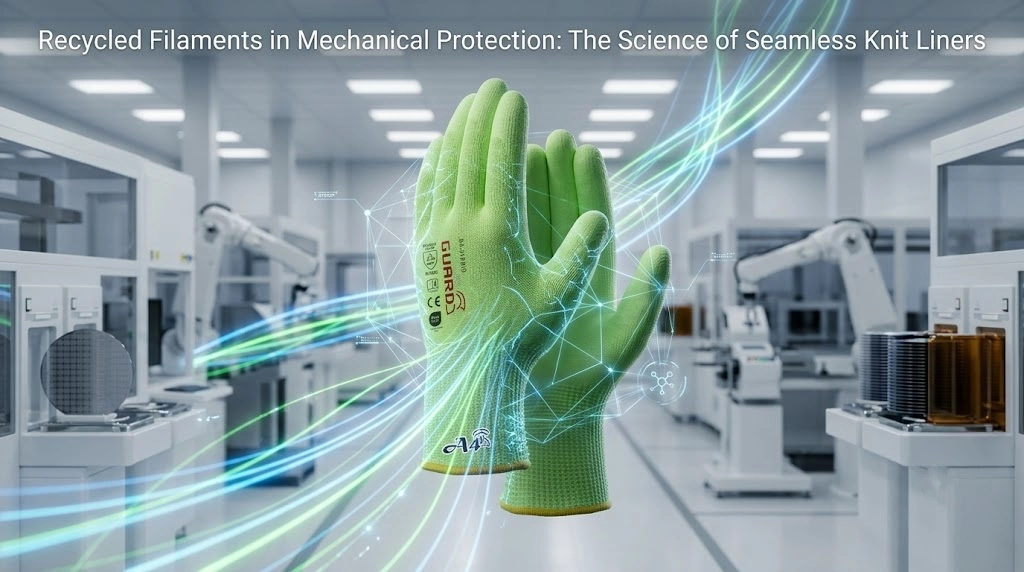
When evaluating sustainable protective equipment, factory EHS (Environmental, Health, and Safety) managers and equipment engineers often harbor an unspoken bias against eco-friendly personal protective equipment (PPE). In heavy industry and high-intensity manufacturing facilities, a long-standing misconception persists: that recycled fibers derived from plastic bottles are inherently low-grade—under harsh mechanical stress, they are viewed as fragile, low-strength “plastic substitutes” that are highly prone to rapid pilling or structural failure. For a procurement team focused on minimizing line downtime and ensuring zero tolerance for workplace injuries, replacing mature, brand-new nylon or standard polyester with recycled materials that have not yet withstood the test of time sounds like gambling with workers’ lives.
However, the conclusions drawn from the physics of polymer materials tell a completely different story. The final physical properties of protective glove liners do not depend on the source of their raw materials, but are determined by their microscopic structural architecture. Through modern melt spinning and controlled stretching processes, the degree of polymeric orientation allows the molecular chain arrangement of recycled polyester filaments (RPET) to be completely reoriented at the microscopic level, thereby achieving—and even surpassing—the tensile stiffness of brand-new petrochemical polymers. When this high-performance yarn is incorporated into advanced industrial seamless knitting engineering, the knitting density of the interlooping stitches and the seamless, stable structure are the true core variables that determine the glove’s actual service life.
Therefore, industrial buyers should not rely solely on environmental considerations but must instead focus on the fundamental physical mechanics underlying the durability of hand protection. In the following sections, we will provide a rigorous breakdown of mechanical performance, demonstrating how recycled filaments in mechanical protection withstand extreme industrial wear, mitigate single-point tear stress, and ultimately reshape the total cost of ownership (TCO) in factory settings.
The Recycled vs. Virgin Durability Myth
In traditional industrial procurement chains, decision-makers often instinctively equate “recycled” with a “loss of strength.” This mindset is rooted in stereotypes shaped by the performance of early, crudely recycled plastics. Most technical staff naturally assume that once polyethylene terephthalate (PET) undergoes secondary processing—such as shredding, washing, and remelting—its internal mechanical structure suffers irreversible thermal degradation, causing the resulting gloves to tear quickly during actual use. However, modern materials engineering has completely shattered this durability myth by intervening at the microscopic level of recycled polymer chains.
Molecular Strength of Polyester (RPET)
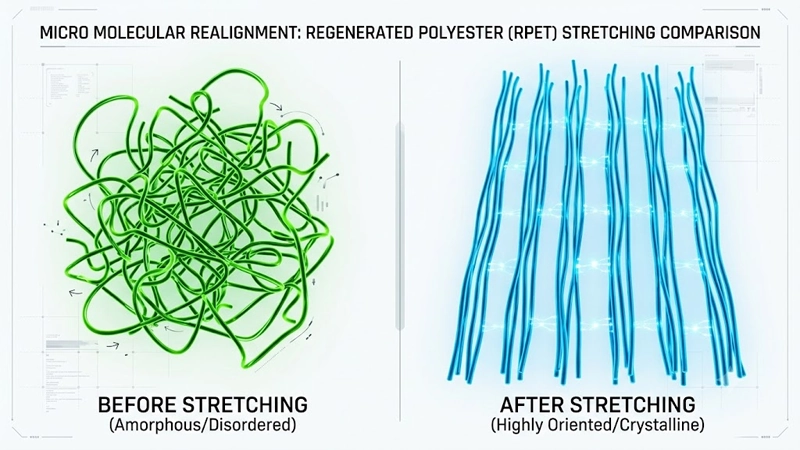
To understand the mechanical stability of recycled fibers, one must delve into the microscopic perspective of polymer physics. The reason traditional recycled materials exhibit poor tensile properties is that the interior of untreated polymers contains disordered amorphous regions, where molecular chains are tangled like a knotted rope, making them highly prone to slippage and localized breakage when subjected to external tensile forces.
In the manufacture of yarns for high-performance safety gloves, the core technology lies in the introduction of a precise orientation process. During the cooling and solidification stage following melt extrusion, the filaments pass through multiple sets of heated draw rolls operating at precisely controlled speed differentials. Above a specific glass transition temperature, this external mechanical force forces the originally disordered and intertwined recycled polyester molecular chains into a highly parallel arrangement along the fiber axis.
This reorganization of the spatial geometry triggers “strain-induced crystallization” in polymer mechanics. Dense van der Waals forces and hydrogen bonds form between the closely parallel molecular chains, causing amorphous regions to be significantly converted into crystalline regions. In RPET fibers optimized through orientation stretching, the sliding resistance of the microscopic framework increases exponentially. This precise control at the molecular level endows the recycled filaments with extremely high polymer toughness, enabling them to achieve tensile stiffness comparable to virgin petrochemical materials under ISO standards when subjected to industrial tensile and tear loads.
Melt Spinning and Tensile Performance
If the orientation of the molecular chains determines the upper limit of strength, then controlling purity during the spinning process determines the lower limit of product quality. Under actual workshop conditions, brittle fracture or stress fatigue in recycled filaments is often not due to insufficient strength of the polymer itself, but rather to the presence of micron-scale stress concentration points within the material.
To address this challenge, the supply chain for modern eco-friendly protective gloves employs advanced high-purity melt spinning technology. After recycled polyester chips are heated to a molten state in an extruder, they do not enter the spinneret directly but must first pass through a micron-level filtration system (Advanced Melt Filtering System) composed of multiple layers of sintered metal mesh and precision porous media.
This extremely rigorous physical barrier removes microscopic carbonized particles, catalyst residues, and heterogeneous polymer droplets—each only a few micrometers in diameter—from the melt with nearly 99.9% efficiency. This high-precision filtration directly eliminates “microscopic impurity defects” caused by material heterogeneity. During the subsequent high-pressure spinning process, the uniform and pure polymer melt is extruded through the spinneret to form a continuous monofilament. By eliminating the formation of microscopic crack sources, internal stresses are transmitted absolutely smoothly along the linear monofilaments when the gloves are subjected to high-tensile industrial conditions—such as scraping against metal edges or sustained heavy-load dragging. This fundamentally ensures that the filament skeleton will not suffer catastrophic, sudden breakage under extremely high tensile cycles.
Seamless Knitting: How 13-Gauge Liners Resist Tears
In everyday industrial operations, aside from extensive surface friction, the most damaging form of mechanical stress on gloves often comes from snagging on localized sharp objects (such as metal burrs, screws, or the edges of sheet metal). Once fibers break in a localized area, even the smallest tear can rapidly expand within a short period of time—rendering the entire pair of gloves completely unusable—unless the gloves feature an excellent structural design. The key to a glove’s tear resistance lies in its core knitting process.
Stress Concentration in Seamed Liners
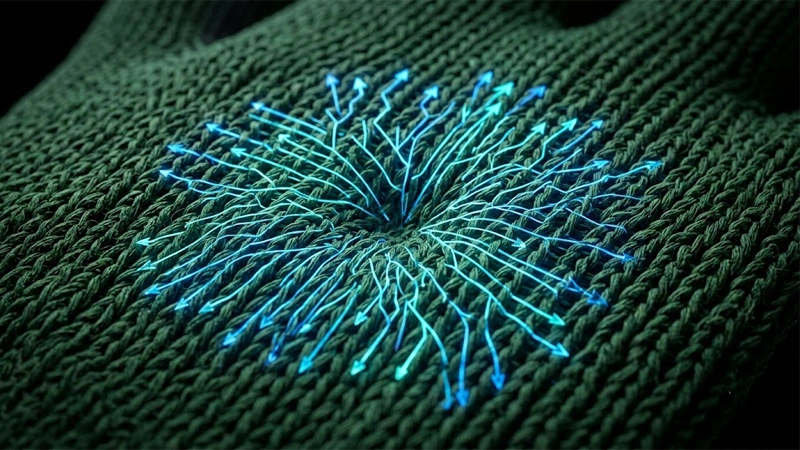
To understand the superiority of seamless knitted liners, we must first analyze the physical flaws of traditional seamed liners or low-density sewn gloves. In structural mechanics, any discontinuity—such as a seam, stitch, or cut edge—is a natural stress concentration point.
When traditional seam gloves are subjected to pulling forces from sharp metal objects, the externally applied tearing load is not distributed evenly across the glove’s surface. Instead, all physical tension instantly converges at the needle holes along the seam or at the intersections of the stitching. Because the fibers in these areas are highly tensioned and subjected to uneven stress, a single stitch often has to bear tensile forces several times its ultimate tensile strength.
Once this single stitch—located at the epicenter of the “stress concentration”—breaks, the mechanical equilibrium it previously maintained collapses instantly. The tensile force is transmitted in a linear cascade effect to adjacent weak connection points, causing catastrophic single-point failure in the glove and resulting in a complete tear along the seam path within a very short time. This physical limitation is the fundamental reason why traditional gloves “tear at the slightest snag and become unusable once torn” under harsh working conditions.
Interlocking Stitches and Load Dispersion
Unlike sewn constructions, advanced industrial seamless knitting engineering employs a continuous, three-dimensional interlocking network. Among these, 13-gauge high-density seamless knitting technology offers the optimal mechanical balance for gloves that are both abrasion-resistant and highly durable.
The term “13-gauge” refers to 13 knitting needles arranged on the needle bed per inch (2.54 cm). Under this high-density knitting process, filament fibers form tens of thousands of interlocking loops (interlooping stitches) through extremely precise microscopic geometric bends. These loops are not physically locked in place but possess a tiny amount of dynamic sliding displacement.
When a tiny single point on the glove is pierced by a sharp external object or subjected to a strong pulling force, the affected loop deforms slightly and slides in all directions. Through this microscopic “geometric slippage,” the localized tear stress at that single point is instantly and evenly transmitted radially along the continuous filament path to dozens of adjacent, interlocked loops.
This “interlocking loop” system functions like a highly efficient mechanical shock-absorbing network. It rapidly disperses and dissipates the tear stress concentrated at a single point, distributing it evenly across the entire seamless framework of the glove. Each loop bears only a minuscule fraction of the load, thereby perfectly preventing breakage caused by localized stress overload. The high-density 13-gauge knit not only ensures a tight and smooth glove surface but also, through this seamless load dispersion mechanism, enables these sustainable protective gloves—made from recycled filaments—to demonstrate remarkable tear resistance and deformation resistance when subjected to severe mechanical stress, easily aligning with global EN 388 mechanical hazards certification standards.
Filament vs. Spun Yarn: Fraying and Lint Reduction
In industrial glove manufacturing, the physical form of the yarn determines its surface abrasion resistance. Many buyers focus solely on the material composition while overlooking the microscopic geometry of the fibers. Under actual working conditions, the rate of pilling, wear, and fiber lint generation in gloves is fundamentally determined by whether the yarn is in the form of “spun yarn” or “continuous filament.”
Why Spun Yarns Fray Under Friction
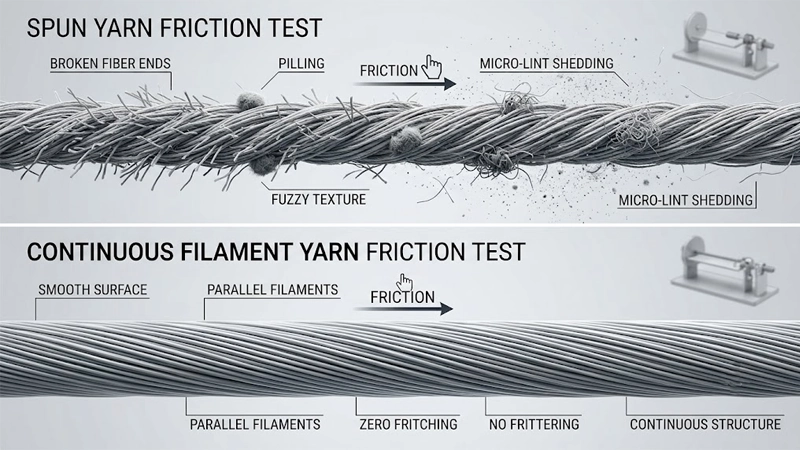
To understand the microscopic processes behind glove pilling and wear, we must first examine the physical limitations of spun yarn. Spun yarn is a continuous filament formed by mechanically twisting a large number of short staple fibers, each only tens of millimeters in length.
When gloves with this structure come into frequent contact with rough workpiece surfaces, sandpaper, or metal edges, external physical friction continuously rubs against the yarn’s surface. During this process, the countless “fiber ends” exposed in the spun yarn—which are held in place solely by torsional friction—are highly susceptible to being stripped from the twisted network.
As friction cycles accumulate, these microscopic fiber ends bend, break, and detach from the main strand, manifesting macroscopically as extensive fraying and pilling on the glove’s surface. Once these surface fibers are worn away, the yarn’s overall cross-sectional area decreases, leading to a rapid weakening of the glove’s core mechanical structure. Under continuous friction loads, localized breakdowns occur in the thinned areas within a very short time, causing the entire glove to lose its protective function and significantly shortening its service life.
Continuous Filaments and Cleanroom Viability
In contrast, high-performance recycled polyester fibers utilize continuous filament technology. Continuous filaments are formed by parallel bundles of monofilaments—which are continuously drawn during the spinning process and are theoretically infinitely long—and contain virtually no microscopic fiber breakpoints or loose fiber ends.
This physical structure, free of loose ends, gives the fibers exceptional lint-free properties. When subjected to sustained, extremely intense physical friction, the surface of the filaments—lacking microscopic fiber ends that can be easily stripped away—allows the monofilaments to collectively resist shear stress through their tight, parallel arrangement. Even under the most rigorous abrasion tests, microscopic fiber breaks or lint shedding are extremely rare.
This exceptional physical stability holds irreplaceable commercial value in precision manufacturing. In cleanrooms or precision production lines that are extremely sensitive to dust and static electricity—such as high-precision electronic semiconductor assembly, optical lens production, and automotive paint shops—micrometer-sized lint shed from traditional short-staple fiber gloves is a critical source of contamination that leads to product scrap. By utilizing a 13-gauge lining woven from continuous recycled filaments for mechanical protection, factories can not only provide employees with exceptionally long-lasting protection against mechanical wear but also eliminate the risk of fiber shedding at its physical source. This effectively prevents catastrophic secondary contamination on production lines, achieving a perfect balance between environmental sustainability and high-end manufacturing yield rates.
Material Matrix: Physical Properties of Glove Liners
To help procurement directors and EHS professionals move beyond mere “green sentiment” and evaluate the actual in-service performance of sustainable protective equipment using rigorous quantitative metrics, we need to focus on core material mechanical property indicators. The following is a comparison table of mechanical parameters (Material Physics Comparison Matrix) derived from rigorous laboratory testing of material properties.
By comparing three mainstream protective glove liner materials side-by-side, this data matrix visually illustrates the actual performance of recycled filaments across key physical dimensions, providing you with a selection basis grounded entirely in objective science.
Mechanical Performance Comparison Matrix
| Liner Material Type | Tensile Strength (MPa) | Abrasion Limit (Cycles) | EN 388 Tear Resistance Level | Lint Generation Risk | Cleanroom Compatibility |
| Recycled Filament (RPET) | 550 – 620 | 8,500 – 10,000 | Level 3 | Ultra-Low (<0.02%) | Excellent (Class 100) |
| High-Performance Recycled Polyester (HPET) | 750 – 880 | 14,000 – 16,500 | Level 4 | Ultra-Low (<0.01%) | Superior (Class 10) |
| Virgin/Standard Polyester | 560 – 640 | 8,800 – 10,200 | Level 3 | Low to Medium (Depends on Yarn) | Limited (Standard Floor) |
Data Analysis and Insights
Through a comprehensive quantitative analysis of the physical matrices described above, we can draw three technical conclusions directly related to workshop operational efficiency:
Dispelling the Myth of Conventional Polyester Tensile Stiffness:
The data shows that Recycled Filament (RPET), produced by drawing continuous filaments, has a tensile strength that remains stable within the range of 550–620 MPa. This performance shows virtually no statistically significant difference from traditional virgin polyester. This strongly demonstrates that the micro-crystallization reorganization achieved through the orientation drawing process has eliminated the inherent disadvantage of recycled materials in terms of tensile stiffness.
A Quantum Leap in High-Performance Reinforced Structures:
High-Performance Recycled Polyester (HPET), designed specifically for harsh heavy-industry applications, demonstrates absolute dominance in mechanical performance data. Its tensile strength soars to 750–880 MPa, and its abrasion limit—the maximum number of friction cycles under extreme physical friction—easily surpasses the 14,000-cycle mark, directly contributing to top-tier tear resistance performance meeting EN 388 Tear Level 4 standards. For high-wear scenarios such as metalworking and heavy-duty material handling, HPET provides exceptionally robust physical durability.
Absolute Control Over Lint Generation Risk and Production Line Contamination:
In the Lint Generation Risk metric, which reflects resistance to pilling and shedding, both recycled continuous filament structures demonstrated extremely stable values below 0.02%. This represents a generational leap compared to traditional staple fibers or unfiltered polyester core filaments. For demanding high-precision semiconductor or precision assembly lines, these exceptional physical properties directly confer unparalleled cleanroom compatibility, fundamentally ensuring high yield rates in high-end manufacturing.
Composite Engineering: Blending HPET with Fiberglass
Protective requirements in modern industrial settings are extremely complex, often demanding that a single pair of gloves simultaneously offer a lightweight design, high abrasion resistance, and extreme cut resistance. Relying solely on a single polymer fiber makes it difficult to meet all these stringent protective standards while maintaining environmental sustainability. For this reason, the introduction of composite engineering has become inevitable. By microscopically deconstructing and reorganizing recycled polymer matrices with inorganic high-strength materials, the technological ceiling for eco-friendly protective gear in the heavy industry sector has been completely shattered.
Achieving Heavy-Duty Cut Resistance
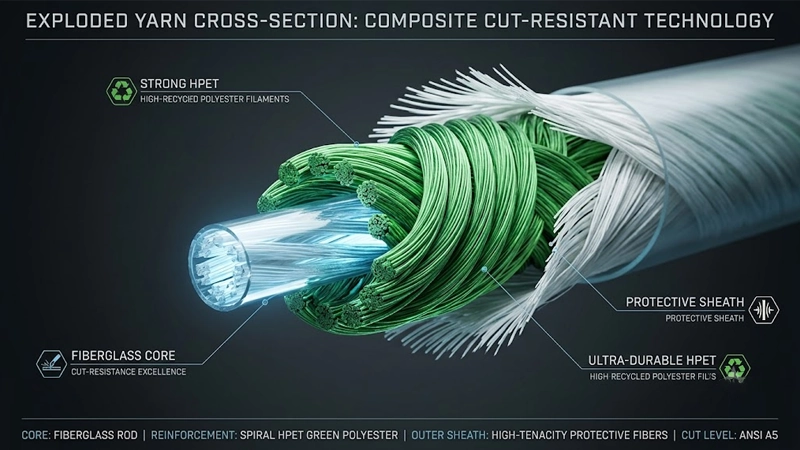
In harsh working conditions such as metal stamping, glass manufacturing, and automotive assembly, gloves must not only withstand high-intensity physical friction but also endure relentless cuts from sharp blades and jagged metal edges. To ensure sustainable materials perform effectively in these extreme scenarios, the core technology involves using High-Performance Recycled Polyester (HPET) as a continuous base and precisely blending high-tensile-strength fiberglass into its core mesh.
From a materials mechanics perspective, HPET provides an excellent foundation of flexibility and tensile strength, while the microscopic glass fibers act as a “hard shield.” When a sharp metal edge cuts into the glove’s surface, the highly rigid glass fibers utilize their extremely high shear modulus to strongly resist and physically blunt the downward cutting force of the blade at the microscopic level.
This unique blended structure prevents mechanical forces from cleanly severing the filament skeleton. A high-strength HPET fiber network tightly envelops the glass fiber core, preventing microscopic fractures in the inorganic fibers caused by bending while fully leveraging the synergistic effects of the composite material. This advanced composite engineering design enables safety gloves utilizing recycled filaments for mechanical protection to easily surpass the stringent EN 388 Cut Resistance high-level threshold, ensuring workers receive robust safety protection when facing heavy-duty mechanical threats.
Fiber Adhesion with Polymeric Coatings
The physical durability of safety gloves depends not only on the strength of the knitted liner but also on the strength of the bond between the liner and the outer polymer coating. During frequent, high-load gripping and twisting tasks, traditional protective gloves are highly prone to coating delamination, peeling, or even large-scale detachment—a phenomenon known in engineering as delamination (Delamination). Once delamination occurs, the glove’s grip strength and impermeability fail instantly.
To eliminate this industry-wide challenge, the 13-gauge microscopic knitted mesh plays a decisive role in physical anchoring. Advanced knitting techniques create a highly regular, microscopic topological structure of ridges and grooves on the yarn surface. When the glove framework is immersed in a polymer emulsion (such as bio-based PU or high-quality nitrile), the fluid polymer deeply penetrates the minute gaps between the intersecting loops, forming an unbreakable mechanical interlocking force upon curing.
Furthermore, the recycled, reinforced filaments—treated with a special surface modification technique—are rich in polar functional groups on their surfaces. These functional groups engage in strong molecular-level interactions with the external bio-based PU coating at the interface, forming a dense network of physical adsorption and molecular bonding. This dual stabilization mechanism of “mechanical interlocking + molecular bonding” firmly locks the external protective coating onto the HPET seamless skeleton. Even under daily exposure to heavy oil contamination, mechanical and chemical cutting fluid immersion, and high-intensity torsional stress, the gloves maintain absolute interfacial chemical stability, completely preventing delamination between layers, thereby significantly extending the gloves’ actual physical service life.
Selecting Recycled Liners for Industrial Sourcing
For procurement directors and EHS specialists at modern enterprises, once they have grasped the theoretical principles of polymer mechanics, they must ultimately translate this scientific data into practical, enterprise-level procurement decisions. The green transition does not mean compromising on protective performance. For different industrial manufacturing scenarios, precisely matching safety gloves with the appropriate mechanical properties not only enables companies to seamlessly meet ESG metrics but is also central to optimizing the total cost of ownership (TCO) of the supply chain.
MAXGUARD B-312-BIO: Precision and Zero Lint
In extremely demanding lightweight assembly scenarios—such as semiconductor chip packaging, precision electronic component manufacturing, and high-end automotive painting—production lines have virtually zero tolerance for microscopic dust particles. Addressing this highly specific industry challenge, the MAXGUARD B-312-BIO series (including B-312-BIO-BL, B-312-BIO-G, B-312-BIO-GBL, and B-312-BIO-WL) offers a perfect physical solution.
The core mechanical framework of this series utilizes a highly breathable, 13-gauge recycled RPET seamless knitted lining. As analyzed earlier regarding the physics of filaments, this continuously extruded, high-purity filament structure contains no free fiber ends and therefore possesses absolute lint-free properties. Combined with the bio-based ultra-fine polyurethane (Bio-Based PU) coating applied to the surface, the gloves effectively prevent secondary contamination on production lines caused by microscopic flaking during frequent, high-sensitivity fingertip operations, fully compliant with global GRS (Global Recycled Standard) certification guidelines.
From the macro perspective of the green supply chain, every step of this glove’s manufacturing process has undergone precise carbon footprint calculations. By using continuous filaments derived from recycled plastic bottles, the factory is able to significantly reduce the consumption of petrochemical-based virgin raw materials at the source.
If you’d like to delve deeper into the hard, quantitative data regarding this framework’s low-carbon performance, please refer to our in-depth technical analysis on how recycled polyester liners drive Scope 3 emissions reduction. To understand how its surface coating achieves environmental sustainability while maintaining an extremely high coefficient of friction, you can also read our performance breakdown of bio-based PU coatings in industrial handwear. The MAXGUARD series successfully balances a green footprint with the stringent yield rates required for precision assembly.
BLADEGUARD B2-310-BIO & B2-340-BIO: Heavy-Duty Cut Defense
When we turn our attention to machining, heavy-duty material handling, metal stamping, and heavy industrial workshops involving intense impact and severe cutting stresses, the mechanical demands placed on gloves immediately reach the other extreme. In these harsh work environments, workers’ hands are constantly exposed to the deadly threat of sharp metal edges and rough burrs.
Born for heavy-duty protection, the BLADEGUARD B2-310-BIO and B2-340-BIO series are hardcore gear designed to head-on confront such extreme physical damage. This series completely abandons fragile, traditional thin fabrics in favor of an extremely robust 13-gauge HPET/RPET physically reinforced composite cut-resistant framework.
Within this rugged composite knitted matrix, high-tensile-strength HPET recycled polyester filaments are deeply interwoven with inorganic cut-resistant fibers in a spatial interlocking pattern. When frontline workers in the workshop are exposed to high-density gripping friction and the risk of cuts from sharp objects, this high-density, seamless composite framework activates an astonishing load dispersion mechanism, instantly distributing what would otherwise be a lethal single-point shear force across the mesh fibers of the entire glove. This enables the BLADEGUARD series to effortlessly surpass extremely high mechanical cut resistance limits while ensuring exceptional physical tear resistance. For manufacturing companies eager to implement a comprehensive green transition in heavy industry and with zero tolerance for frontline workplace injuries, the BLADEGUARD series is undoubtedly the strongest supply chain shield for building intrinsic safety on production lines.
Performance Under Oil, Chemicals, and Temperature
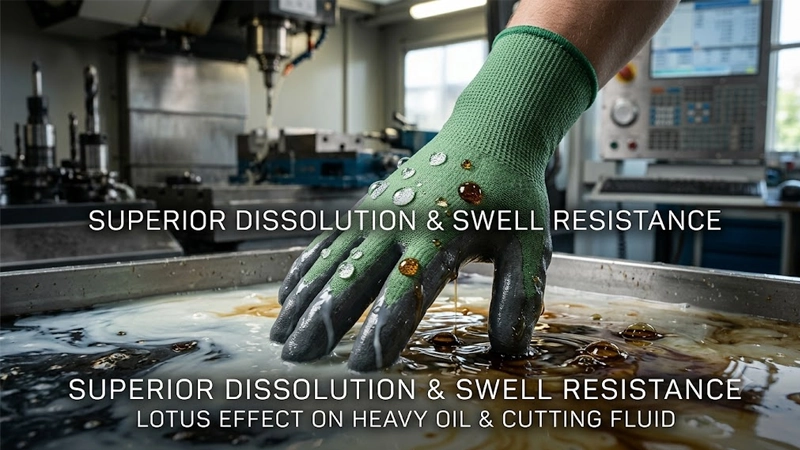
In real-world industrial manufacturing environments, safety gloves are not merely subjected to dry friction, but are exposed to complex, multiphase conditions involving oil, chemical cutting fluids, and varying ambient temperatures and humidity. Many technical procurement professionals worry that the chemical stability and thermophysical resistance of recycled polymer fibers will significantly degrade after undergoing secondary physical modification, causing the gloves to quickly weaken and deform when actually exposed to complex media. However, modern interfacial chemical engineering provides the physical and chemical foundation that allows sustainable filaments to maintain rigid protection even under extreme external erosion.
Chemical Resistance to Cutting Fluids
In workshops for metal cutting, precision machining, and heavy equipment manufacturing, emulsified cutting fluids, rust-preventive oils, and various mineral-based heavy oil contaminants are present on the surfaces at every stage of the process. Traditional low-end polyester fibers or unprocessed recycled materials are highly susceptible to polymer swelling or microscopic hydrolysis of ester bonds when frequently immersed in these complex alkaline aqueous emulsions or highly permeable nonpolar oil-based media. On a macroscopic level, this manifests as softening of the glove’s structure and a precipitous drop in fiber strength, ultimately resulting in the loss of basic protective performance.
To eliminate this environmental vulnerability, high-performance RPET and HPET recycled fibers incorporate special cross-linking technology during the filament polymerization stage. By introducing dense chemical cross-links between polymer chains, the amorphous regions within the recycled polyester are tightly locked, significantly reducing the space available for chemical solvent molecules to freely penetrate.
This highly dense microscopic network endows the continuous recycled filaments with exceptional resistance to chemical corrosion. When frontline workers are frequently exposed to high-concentration emulsified cutting fluids and polar heavy oil contaminants, this modified fiber structure exhibits extremely strong resistance to swelling, effectively preventing chemical media from causing microscopic degradation and breakage of the polymer backbone. This fundamentally ensures that the gloves can maintain their original physical tear resistance and mechanical strength against abrasion at a high level, even under harsh conditions of chemical and oil contamination.
Thermal Stability in High-Humidity Work Environments
In addition to chemical erosion caused by chemical agents, the physical microclimate inside workshops—particularly extreme environments where moderate to high temperatures coexist with high humidity (such as die-casting and forging shops without air conditioning in the summer, or hot and humid logistics handling areas)—is also a major hidden threat to the service life of safety gloves. When exposed to sustained high-humidity and heat loads, ordinary textile fibers often undergo localized plasticization of the polymer chains due to the infiltration of water molecules, leading to severe shrinkage, deformation, and fiber stress relaxation.
The 13-gauge skeleton, woven from high-quality continuous filaments, undergoes a rigorous secondary high-temperature thermal setting process before leaving the factory. During this process, by precisely controlling the release of secondary thermal stress in the crystallization zones, the regenerated filament skeleton achieves exceptional macroscopic dimensional stability.
In actual high-temperature, high-humidity work environments, this microscopic skeleton—characterized by high orientation and high crystallinity—effectively resists swelling damage caused by water molecules. Even when subjected to prolonged exposure to sweat, high ambient heat, and the dual stress of intense physical stretching, the glove’s overall fabric structure remains free from shrinkage, deformation, or loss of elasticity. This superior thermophysical stability ensures that the gloves consistently provide a perfect, long-lasting ergonomic fit throughout an employee’s entire shift, effectively preventing grip slippage and mechanical operation errors caused by loose or deformed gloves, thereby achieving intrinsic safety throughout the entire usage cycle.
Sourcing Strategy: Maximizing PPE Lifespan
In enterprise-level procurement decision-making, the transition to sustainability is often mistakenly viewed as a “compliance burden” that merely increases operating costs. However, when we shift our perspective from the traditional short-term consumables logic to the long-term dimension of material mechanics, we find that the physical durability (mechanical lifespan) of safety gloves directly determines the efficiency of working capital flow in factory operations. By selecting highly durable, eco-friendly protective equipment, companies can achieve significant cost reductions across the procurement chain while simultaneously meeting environmental targets.

How Durable Liners Reduce Sourcing Frequency
In traditional manufacturing companies, work gloves are typically classified as low-value consumables with high usage frequency and high attrition rates. Because ordinary short-fiber gloves are highly prone to microscopic fiber breakage and surface pilling, their wear life cycles often do not last through two consecutive shifts. This means that procurement departments must maintain a large safety stock and conduct frequent replenishment purchases, which inadvertently drives up hidden supply chain costs such as logistics, warehousing, and manual inventory counting.
However, by quantifying and analyzing the mechanical advantages of recycled filaments in mechanical protection from a financial perspective, this vicious cycle of high-frequency consumption can be completely broken.
Due to the extremely high polymer orientation and seamless load-sharing mechanism of 13-gauge continuous recycled filaments, the wear limit of these gloves—when subjected to sustained high-intensity friction—is 1.5 to 2 times longer than that of traditional gloves. This leap in physical durability directly translates into exceptionally strong financial results for the company: the actual service life of gloves on production lines has doubled. This means that the factory’s procurement frequency can be reduced by more than 40%. The procurement department can not only cut the heavy daily workload of reporting, approval, and logistics follow-up by nearly half but also significantly reduce the hidden supply chain operational expenses caused by high-frequency turnover, thereby achieving a marked improvement in the company’s capital efficiency.
Redefining Procurement KPIs: Lifespan over Unit Price
To truly implement this cost-reduction strategy in corporate supply chain management, B2B procurement decision-makers must reshape their key performance indicators (KPIs) and completely abandon the traditional procurement model focused on “the lowest unit price.”
The traditional procurement KPI evaluation system has significant financial blind spots: it focuses solely on the unit price listed on the invoice while ignoring the rate at which gloves wear out during actual use and the subsequent disposal costs. A pair of seemingly inexpensive, low-end gloves—if they require frequent replacement due to poor tear resistance and abrasion resistance—will not only cause per-shift consumption to skyrocket but also generate massive industrial waste disposal costs (Industrial Waste Disposal Costs).
Consequently, procurement management at modern, forward-thinking enterprises is shifting toward a new decision-making framework driven by Total Cost of Ownership (TCO). This new model advocates for evaluating the “comprehensive cost of protection per workstation.”
Simply put, when calculating costs, we cannot focus solely on the purchase price of the gloves; instead, we must add the post-use solid waste disposal costs to the unit purchase price and then divide that total by the actual number of days the gloves can be used.
When procurement decisions incorporate this more scientific “average daily cost of use” dimension, the commercial advantages of high-crystallinity regenerated filament gloves become abundantly clear. Although their initial unit purchase price may be slightly higher than that of low-end traditional petrochemical gloves, their service life is effectively doubled.
Furthermore, utilizing low-carbon, eco-friendly materials significantly reduces a company’s environmental compliance taxes and solid waste landfill expenses at the end of the product’s lifecycle. For a comprehensive financial breakdown of these hidden savings, please read our detailed analysis on why biodegradable safety gloves reduce industrial waste treatment costs. By upgrading to this evaluation model, companies can successfully fulfill their carbon reduction commitments while maximizing procurement operational profits.
FAQs: The Physics of Recycled Glove Liners
To help global procurement teams and EHS experts thoroughly address any physical and chemical technical concerns regarding the transition to sustainable practices, and to perfectly align with Google Search’s mechanism for capturing high-value knowledge snippets (Featured Snippets), this section will address the core mechanical and physical concerns regarding recycled glove liners using the most direct and rigorous logic of polymer science.
Q1: Does the tensile strength of recycled polyester (RPET) decay faster than that of virgin polyester?
Answer: From the perspective of microstructural mechanics and thermal aging properties, high-quality RPET processed through a refined manufacturing process shows no statistically significant difference in the rate of tensile strength decay compared to virgin polyester.
Whether fiber strength degrades at an accelerated rate does not depend on whether the raw material is recycled or virgin, but rather on the presence of stress concentration points caused by microscopic impurities in the polymer main chain. The supply chain for modern high-performance safety gloves employs advanced micron-level filtration systems that thoroughly remove microscopic catalyst residues and carbonized impurities—which could accelerate thermal degradation and hydrolysis—while the material is in a molten state.
At the same time, in conjunction with the orientation process, the high-density crystalline regions formed along the stretching direction exhibit exceptional tensile stiffness and interfacial stability. Under normal industrial storage conditions and routine service environments—such as heavy physical stretching and alternating high and low temperatures—the modified regenerated filaments can maintain an extremely high level of physical tear resistance over the long term. There is absolutely no risk of the gloves rapidly becoming weak, brittle, or breaking prematurely simply because “the material is recycled.”
Q2: Why do 13-gauge seamless knit gloves offer better durability compared to lower-gauge (7-gauge or 10-gauge) gloves?
Answer: The superior wear resistance of 13-gauge seamless knit gloves is fundamentally determined by the high-density, seamless load dispersion mechanism in knitting engineering and their excellent physical density.
In industrial knitting, a higher gauge means that the needles are arranged more densely per inch, resulting in a geometric increase in the density of the interlooping stitches formed by the yarns. Compared to coarse, low-density 7-gauge or 10-gauge gloves, the surface of 13-gauge fabric is extremely dense and smooth.
This high-density topological structure offers two physical advantages when subjected to mechanical damage:
Complete elimination of single-point stress concentration: When subjected to sharp snags from rough workpieces or metal burrs, the 13-gauge interlocking mesh instantly distributes the physical tear stress at the point of impact radially and evenly across dozens of adjacent loops. The load borne by each filament is extremely low, thereby perfectly preventing localized overload fractures.
Significantly reduced frictional shear forces: Since the glove’s surface has virtually no rough seams or sparse fiber gaps, external friction finds it difficult to grip and damage individual yarn strands. This extremely high-density, three-dimensional interlocking structure provides the glove with exceptional tear resistance and abrasion resistance from a mechanical standpoint, resulting in overall durability that far exceeds that of traditional work gloves with lower stitch counts.
Q3: How do continuous recycled filaments prevent fiber shedding (linting) in sensitive manufacturing environments?
Answer: The fundamental reason continuous recycled filaments eliminate the risk of linting lies in their microscopic geometry, which eliminates free “fiber ends.”
This relates to the fundamentally different material physics of staple fibers (spun yarn) and continuous filaments. Traditional cotton and polyester staple yarns are formed by mechanically twisting together countless short fibers, each with a cross-sectional length of only tens of millimeters. When gloves frequently come into contact with rough workpieces on production lines and are subjected to continuous physical friction and shear stress, those short fiber ends—held in place solely by torsional friction—are constantly rubbed out of the main yarn body, causing them to bend, break, and fall off. This results in a large amount of pilling and fuzzing, as well as fiber lint that is either visible to the naked eye or at the micrometer level.
In contrast, high-performance regenerated fibers utilize “recycled filaments in mechanical protection” technology. After being extruded from the spinneret and solidified, the monofilaments form bundles of theoretically infinite length—completely parallel, continuous filaments. Throughout the entire physical cycle from formation to final knitting, there are no microscopic fiber breakpoints within the filaments, and their surfaces remain exceptionally smooth and continuous. Since there are no loose fiber ends that can be easily stripped away by friction, the filament surface maintains perfect physical stability against pilling and lint shedding even under prolonged, high-frequency, high-load gripping operations. This fundamentally eliminates the generation of micron-level particulate matter, ensuring that precision semiconductor cleanrooms or high-end assembly lines are protected from any catastrophic secondary contamination.